具身智能之心

Search documents
想做具身方向,师兄建议我去这里......
具身智能之心· 2025-08-14 00:03
Core Insights - The article emphasizes the value of a responsive community that addresses members' needs and provides support for technical and job-seeking challenges in the field of embodied intelligence [1][3][17]. Group 1: Community and Support - The community has successfully created a closed loop across various domains including industry, academia, job seeking, and Q&A exchanges, facilitating timely solutions to problems faced by members [3][17]. - Members have received job offers from leading companies in the embodied intelligence sector, showcasing the community's effectiveness in supporting career advancement [1][3]. - The community offers a platform for sharing specific challenges and solutions, such as data collection and model deployment, enhancing practical application in projects [1][3]. Group 2: Educational Resources - The community has compiled over 30 technical routes for newcomers, significantly reducing the time needed for research and learning [4][17]. - It provides access to numerous open-source projects, datasets, and mainstream simulation platforms relevant to embodied intelligence, aiding both beginners and advanced practitioners [17][20]. - Members can engage in roundtable discussions and live sessions with industry experts, gaining insights into the latest developments and challenges in the field [4][20]. Group 3: Job Opportunities and Networking - The community has established a job referral mechanism with multiple leading companies, ensuring members receive timely job recommendations [11][20]. - Members are encouraged to connect with peers and industry leaders, fostering a collaborative environment for knowledge sharing and professional growth [20][45]. - The community actively supports members in preparing for job applications and interviews, enhancing their employability in the competitive job market [20][45].

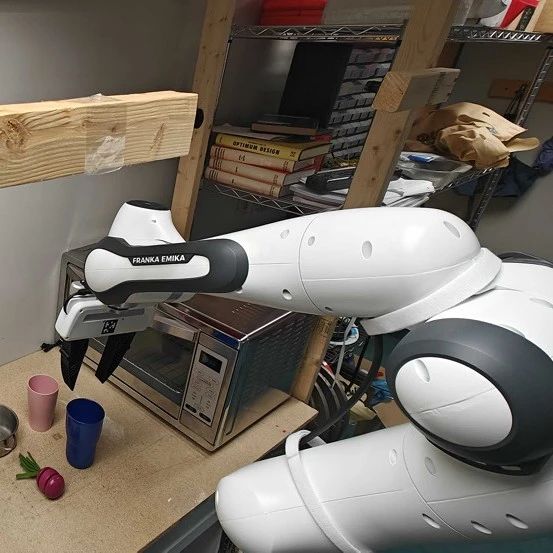
保持精度,提升速度!Spec-VLA:首个专为VLA推理加速设计的推测解码框架
具身智能之心· 2025-08-14 00:03
Core Viewpoint - The article discusses the introduction of the Spec-VLA framework, which utilizes speculative decoding to accelerate the inference process of Vision-Language-Action (VLA) models, achieving significant speed improvements without the need for fine-tuning the VLA validation model [2][6]. Group 1: Spec-VLA Framework - Spec-VLA is the first speculative decoding framework specifically designed for accelerating VLA inference [2]. - The framework demonstrates a 42% acceleration compared to the OpenVLA baseline model, achieved by training only the draft model [6]. - The proposed mechanism enhances the acceptance length by 44% while maintaining the task success rate [2]. Group 2: Technical Details - The article highlights the challenges posed by the large parameter scale and autoregressive decoding characteristics of Vision-Language Models (VLMs) [2]. - Speculative decoding (SD) allows large language models (LLMs) to generate multiple tokens in a single forward pass, effectively speeding up inference [2]. - The framework employs a relaxed acceptance mechanism based on the relative distances represented by action tokens in VLA models [2]. Group 3: Live Broadcast Insights - The live broadcast covers key topics such as speculative decoding as an acceleration method for large language models, an introduction to VLA models, and detailed implementation aspects of the Spec-VLA framework [7].
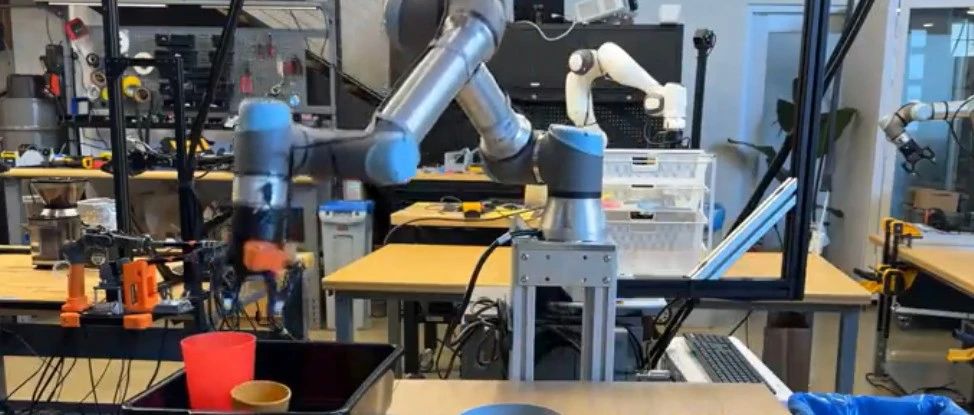
端到端模型!GraphCoT-VLA:面向模糊指令的操作任务的VLA模型
具身智能之心· 2025-08-13 00:04
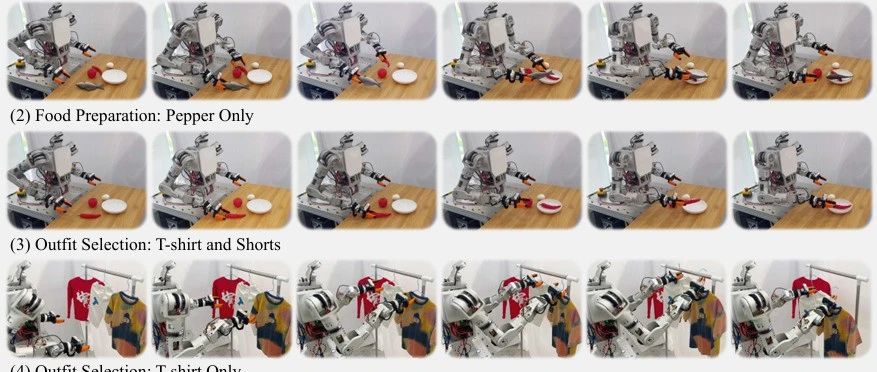
Core Viewpoint - The article introduces GraphCoT-VLA, an advanced end-to-end model designed to enhance robot operations under ambiguous instructions and in open-world conditions, significantly improving task success rates and response times compared to existing methods [3][15][37]. Group 1: Introduction and Background - The VLA (Vision-Language-Action) model has become a key paradigm in robotic operations, integrating perception, understanding, and action to interpret and execute natural language commands [5]. - Existing VLA models struggle with ambiguous language instructions and unknown environmental states, limiting their effectiveness in real-world applications [3][8]. Group 2: GraphCoT-VLA Model - GraphCoT-VLA addresses the limitations of current VLA models by incorporating a structured Chain-of-Thought (CoT) reasoning module, which enhances understanding of ambiguous instructions and improves task planning [3][15]. - The model features a real-time updatable 3D pose-object graph that captures the spatial configuration of robot joints and the topological relationships of objects in three-dimensional space, allowing for better interaction modeling [3][9]. Group 3: Key Contributions - The introduction of a novel CoT architecture enables dynamic observation analysis, interpretation of ambiguous instructions, generation of failure feedback, and prediction of future object states and robot actions [15][19]. - The model integrates a dropout-based mixed reasoning strategy to balance rapid inference and deep reasoning, ensuring real-time performance [15][27]. Group 4: Experimental Results - Experiments demonstrate that GraphCoT-VLA significantly outperforms existing methods in task success rates and action fluidity, particularly in scenarios with ambiguous instructions [37][40]. - In the "food preparation" task, GraphCoT-VLA improved accuracy by 10% over the best baseline, while in the "outfit selection" task, it outperformed the leading model by 18.33% [37][38]. Group 5: Ablation Studies - The introduction of the pose-object graph improved success rates by up to 18.33%, enhancing the model's accuracy and action generation fluidity [40]. - The CoT module significantly improved the model's ability to interpret and respond to ambiguous instructions, demonstrating enhanced task planning and future action prediction capabilities [41].
近2000人了!这个具身社区偷偷做了这么多事情了......
具身智能之心· 2025-08-13 00:04
能让学习变得有趣,一定是件了不起的事情。能推动行业发展,就更伟大了!1个月前,在和朋友聊天的时候 说过,我们的愿景是让AI与具身智能教育走进每个有需要的同学。 具身智能之心知识星球,截止到目前已经完成了产业、学术、求职、问答交流等多个领域的闭环。几个运营的 小伙伴每天都在复盘,什么样的社区才是大家需要的?花拳绣腿的不行、华而不实的不行、没人交流的也不 行、找不到工作的更不行。 于是我们就给大家准备了学术领域最前沿的内容、大佬级别圆桌、开源的代码方案、最及时的求职信息...... 星球内部为大家梳理了近30+技术路线,无论你是要找benchmark、还是要找综述和学习入门路线,都能极大 缩短检索时间。星球还为大家邀请了数十个具身领域嘉宾,都是活跃在一线产业界和工业界的大佬(经常出现 的顶会和各类访谈中哦)。欢迎随时提问,他们将会为大家答疑解惑。 除此之外,还为大家准备了很多圆桌论坛、直播,从本体、数据到算法,各类各样,逐步为大家分享具身行业 究竟在发生什么?还有哪些问题! 星球还和多家具身公司建立了岗位内推机制,欢迎大家随时艾特我们。第一时间将您的简历送到心仪公司的手 上。 针对入门者,我们整理了许多为小白入门 ...
VLA还是VTLA?这家企业用“超人类触觉”技术颠覆机器人未来!
具身智能之心· 2025-08-13 00:04
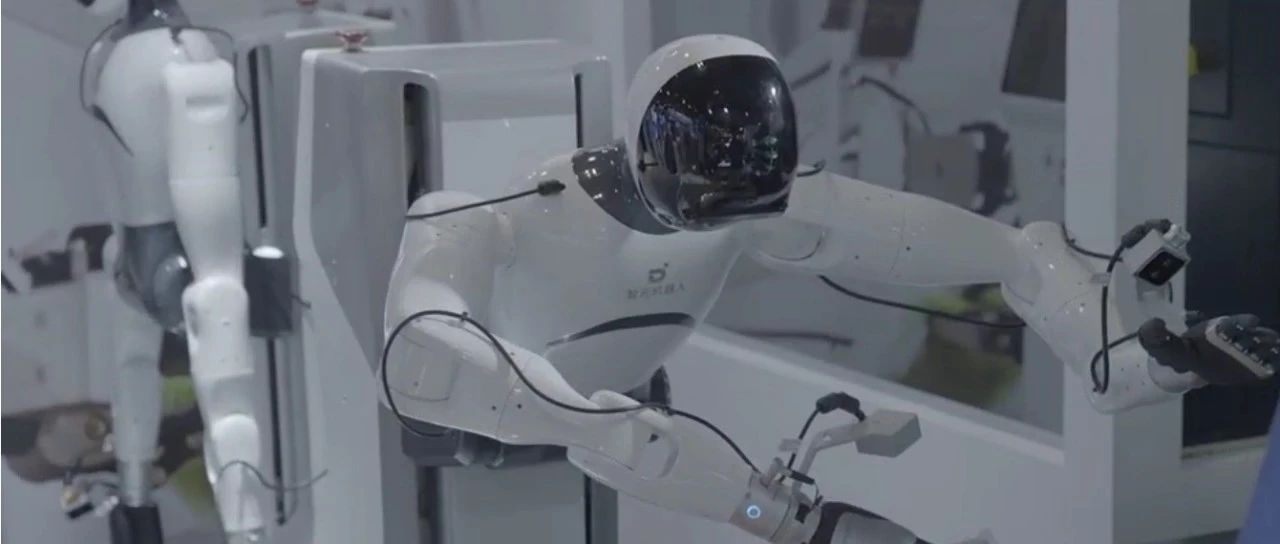
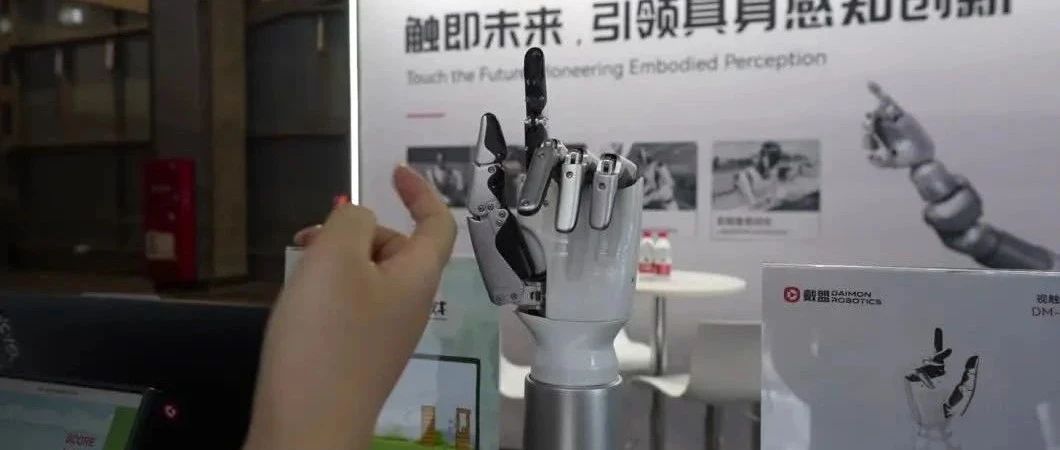
Core Insights - The article highlights significant advancements in hardware and technology for robotics, particularly in tactile sensing, which is crucial for precise physical interactions in various applications [1][3][10] - Daimon Robotics has achieved a breakthrough in tactile sensor technology, addressing key issues such as resolution, real-time performance, and durability, which are critical for the industry's growth [2][9] Group 1: Technology Advancements - The VLA model (Visual-Language-Action) is a focus for many companies, but there are limitations in physical interaction capabilities, necessitating the integration of tactile sensing to enhance performance [1] - Daimon Robotics has developed a new high-resolution visual-tactile sensing technology that captures minute optical changes, enabling robots to possess human-like tactile perception [4][10] - The DM-Tac W sensor, a pioneering product, features 40,000 sensing units per square centimeter, significantly surpassing human capabilities and traditional sensors [4][9] Group 2: Product Development - Daimon Robotics has introduced the DM-Hand1, a dexterous robotic hand that integrates ultra-thin visual-tactile sensors, enhancing flexibility and precision in tasks such as delicate handling and assembly [6] - The company showcased its products at the World Robot Conference (WRC), demonstrating their practical applications and attracting significant interest from attendees [8] Group 3: Market Position and Future Outlook - Daimon Robotics has successfully completed a significant financing round, raising hundreds of millions, which will be used to further develop and commercialize its tactile sensing technologies [3][10] - The company has transitioned from prototype development to large-scale production, achieving certifications and passing extensive durability tests, positioning itself for commercial success in the tactile sensing market [9][10]
AI如何一步步「看懂」时空结构?一篇综述解析通往四维世界的五大层次
具身智能之心· 2025-08-13 00:04
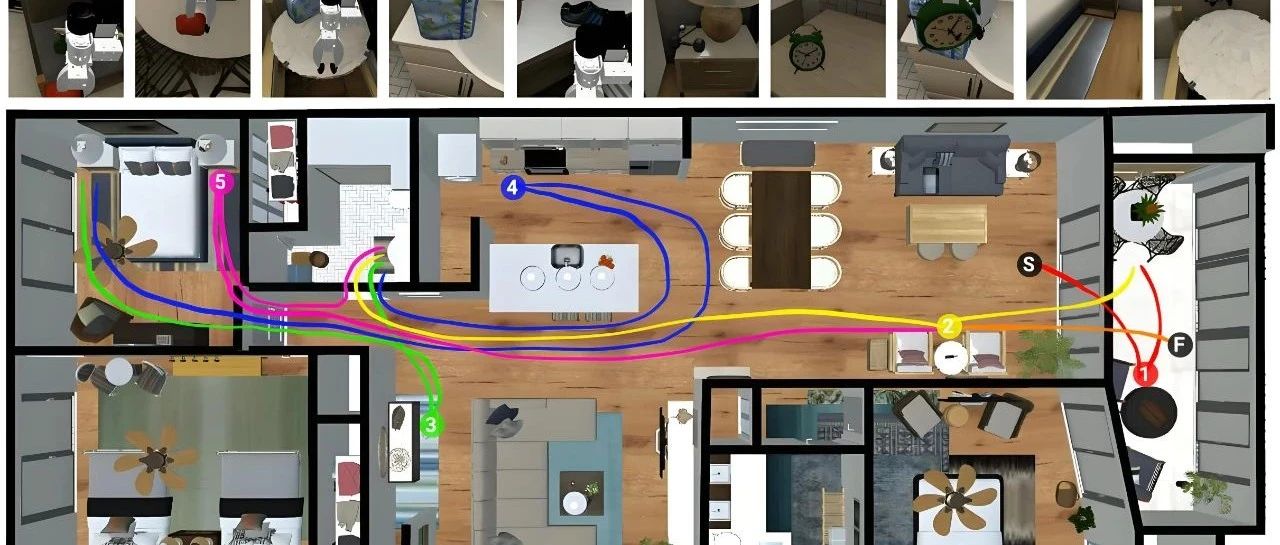
Core Viewpoint - The article discusses the advancements in 4D spatial intelligence reconstruction, emphasizing its significance in computer vision and its applications in virtual reality, digital twins, and intelligent interactions. The research focuses on both foundational reconstruction techniques and higher-level understanding of spatial relationships and physical constraints [1][2]. Group 1: Levels of 4D Spatial Intelligence Reconstruction - Level 1 focuses on the reconstruction of basic 3D attributes such as depth perception, camera positioning, point cloud construction, and dynamic tracking, forming the digital skeleton of 3D space [6]. - Level 2 shifts to the detailed modeling of specific objects within the scene, including humans and various structures, while addressing the spatial distribution and dynamic interactions among these elements [8]. - Level 3 aims to construct complete 4D dynamic scenes by introducing the time dimension, supporting immersive visual experiences [10][11]. Group 2: Interaction and Physical Modeling - Level 4 represents a significant breakthrough by establishing dynamic interaction models among scene elements, with a focus on human interactions and their relationships with objects [13][15]. - Level 5 addresses the challenge of physical realism by integrating fundamental physical laws into the reconstruction process, enhancing the capabilities of embodied intelligence tasks such as robotic motion imitation [18][22]. - The hierarchical framework illustrates the evolution of AI cognitive abilities from basic observation to understanding physical laws, indicating a shift from "looking real" to "moving real" in virtual environments [23].

具身目标导航/视觉语言导航/点导航工作汇总!
具身智能之心· 2025-08-12 07:04
Core Insights - The article discusses the development and methodologies related to embodied navigation, particularly focusing on point-goal navigation and visual-audio navigation techniques [2][4][5]. Group 1: Point-Goal Navigation - The comparison between model-free and model-based learning for point-goal navigation highlights the effectiveness of different approaches in planning and execution [4]. - RobustNav aims to benchmark the robustness of various embodied navigation methods, providing a framework for evaluating performance [5]. - Significant advancements in visual odometry techniques have been noted, showcasing their effectiveness in embodied point-goal navigation [5]. Group 2: Visual-Audio Navigation - The integration of audio-visual elements in navigation tasks is explored, emphasizing the importance of sound in enhancing navigation efficiency [7][8]. - Various projects and papers have been referenced that focus on audio-visual navigation, indicating a growing interest in multi-modal approaches [8][9]. - The development of platforms like SoundSpaces 2.0 aims to facilitate research in visual-acoustic learning, further bridging the gap between visual and auditory navigation [8]. Group 3: Object Goal Navigation - The article outlines several methodologies for object goal navigation, including modular approaches and self-supervised learning techniques [9][13]. - The importance of auxiliary tasks in enhancing exploration and navigation capabilities is emphasized, indicating a trend towards more sophisticated learning frameworks [13][14]. - Benchmarking efforts such as DivScene aim to evaluate large language models for object navigation, reflecting the increasing complexity of navigation tasks [9][14]. Group 4: Vision-Language Navigation - The article discusses advancements in vision-language navigation, highlighting the role of language in guiding navigation tasks [22][23]. - Techniques such as semantically-aware reasoning and history-aware multimodal transformers are being developed to improve navigation accuracy and efficiency [22][23]. - The integration of language with visual navigation is seen as a critical area of research, with various projects aiming to enhance the interaction between visual inputs and language instructions [22][23].
CMU最新!跨实体世界模型助力小样本机器人学习
具身智能之心· 2025-08-12 00:03
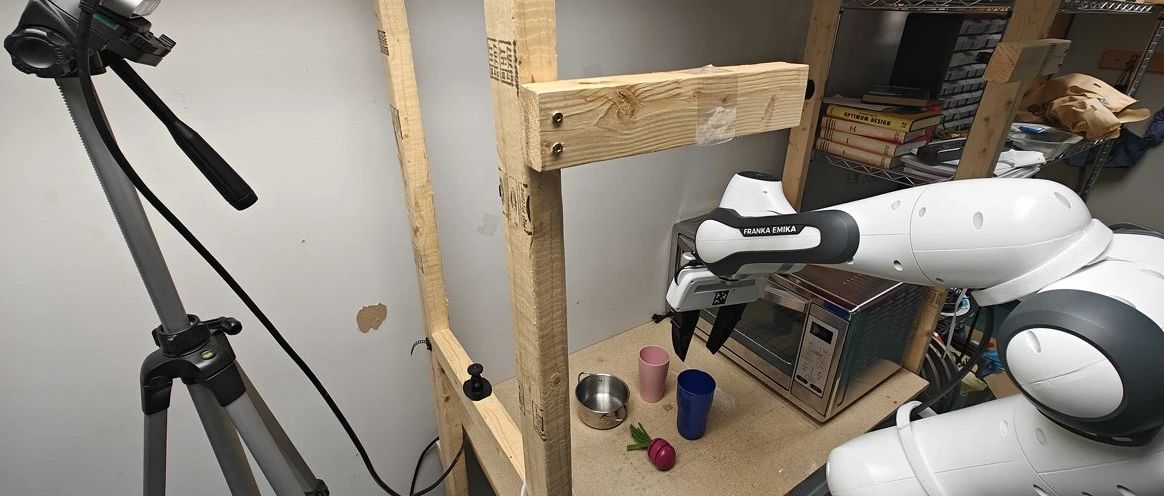
Core Viewpoint - The article discusses a novel approach to training visuomotor policies for robots by leveraging existing low-cost data sources, which significantly reduces the need for expensive real-world data collection [2][11]. Group 1: Methodology - The proposed method is based on two key insights: 1. Embodiment-agnostic world model pretraining using optic flow as an action representation, allowing for cross-embodiment data set training followed by fine-tuning with minimal target embodiment data [3][12]. 2. Latent Policy Steering (LPS) method improves policy outputs by searching for better action sequences in the latent space of the world model [3][12]. Group 2: Experimental Results - Real-world experiments showed that combining the policy with a pretrained world model from existing datasets led to significant performance improvements, with 30 demonstrations yielding over 50% relative improvement and 50 demonstrations yielding over 20% relative improvement [3][9]. Group 3: Challenges and Solutions - The article highlights the challenges posed by embodiment gaps in pretraining models across different robots, and emphasizes that world models are more suitable for cross-embodiment pretraining and fine-tuning for new embodiments [11][12].
探究具身机器人有限泛化能力的本质原因!增强策略依然有效
具身智能之心· 2025-08-12 00:03
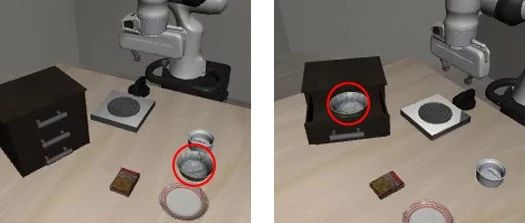
Research Background and Core Issues - The development of large-scale robot datasets and high-capacity models has shown strong capabilities in various tasks, but generalization remains limited in scenarios outside the training data distribution [2] - Shortcut learning, where models rely on task-irrelevant features rather than true causal relationships, is a key factor limiting generalization [2] Dataset Diversity and Fragmentation Analysis - The OXE dataset exhibits significantly lower visual and textual diversity compared to visual/multimodal datasets, even with the latest DROID dataset aimed at increasing diversity [4] - The fragmentation of the OXE dataset is evident, with distinct separation among sub-datasets, leading to a lack of overlap and effective division into smaller datasets [8] - The limited diversity is attributed to inherent constraints in the robot data collection process [6] Theoretical Connection Between Dataset Characteristics and Shortcut Learning - A mathematical framework has been established to analyze how multiple sub-datasets lead to correlations that facilitate shortcut learning [15] - The distance between task-irrelevant features across sub-datasets significantly influences shortcut learning, with models tending to rely on visual cues rather than textual instructions [16] Experimental Validation - Experiments indicate that increasing diversity within sub-datasets and reducing differences between them can effectively reduce shortcut dependencies [18] - The introduction of a "bridge" target in experiments significantly improved out-of-distribution (OOD) success rates by breaking false correlations [28] Mitigating Shortcut Learning Through Data Augmentation - Targeted data augmentation strategies can effectively increase sub-dataset diversity and reduce distribution differences, thereby alleviating shortcut learning [29] - Perspective augmentation creates shared visual contexts between sub-datasets, breaking false correlations tied to specific tasks [30] - The results confirm that carefully selected data augmentation strategies can enhance the generalization capabilities of robot policies [34]
机器人上下文协议首次开源:阿里达摩院一口气放出具身智能「三大件」
具身智能之心· 2025-08-12 00:03
Core Viewpoint - Alibaba's Damo Academy announced the open-source of several models and protocols aimed at enhancing embodied intelligence, addressing challenges in data, model, and robot compatibility, and streamlining the development process [1][2]. Group 1: Open-Source Models and Protocols - The RynnRCP protocol was introduced to facilitate the integration of various data, models, and robotic systems, creating a seamless workflow from data collection to action execution [2][5]. - RynnVLA-001 is a visual-language-action model that learns human operational skills from first-person perspective videos, enabling smoother robotic arm control [7]. - The RynnEC model incorporates multi-modal large language capabilities, allowing for comprehensive scene analysis across 11 dimensions, enhancing object recognition and interaction in complex environments [7]. Group 2: Technical Framework and Features - The RCP framework connects robotic bodies with sensors, providing standardized interfaces and compatibility across different transport layers and model services [5]. - RobotMotion serves as a bridge between large models and robotic control, converting low-frequency commands into high-frequency control signals for smoother robot movements [5][6]. - The framework includes integrated simulation and real-machine control tools, facilitating quick developer onboarding and supporting various functionalities like task regulation and trajectory visualization [5]. Group 3: Industry Engagement and Community Building - Damo Academy is actively investing in embodied intelligence, focusing on system and model development, and collaborating with various stakeholders to build industry infrastructure [7]. - The launch of the WorldVLA model, which merges world models with action models, has garnered significant attention for its enhanced understanding and generation capabilities [8]. - The establishment of the "Embodied Intelligence Heart" community aims to foster collaboration among developers and researchers in the field, providing resources and support for various technical directions [11][12].