具身智能之心

Search documents
具身智能之心技术交流群成立了!
具身智能之心· 2025-08-11 06:01
Group 1 - The establishment of a technical exchange group focused on embodied intelligence technologies, including VLA, VLN, remote operation, Diffusion Policy, reinforcement learning, VLA+RL, sim2real, multimodal large models, simulation, motion control, target navigation, mapping and localization, and navigation [1] - Interested individuals can add the assistant's WeChat AIDriver005 to join the community [2] - To expedite the joining process, it is recommended to include the organization/school, name, and research direction in the remarks [3]

找几个做数采的大佬一起搞点事情......
具身智能之心· 2025-08-11 06:01
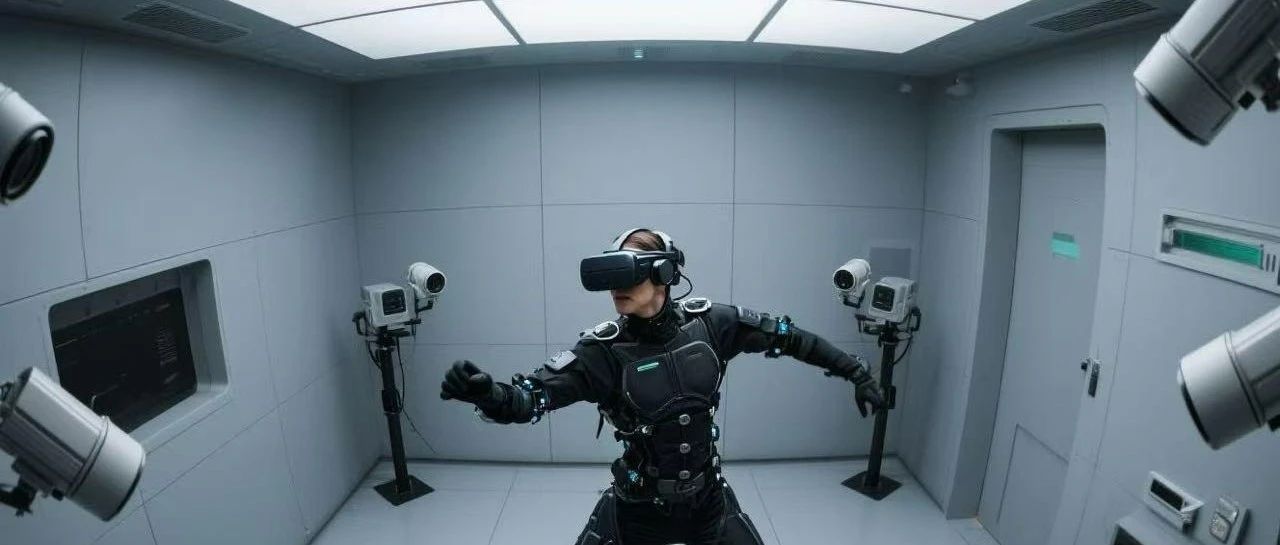
Group 1 - The company is preparing to recruit three experts in data collection, focusing on areas such as remote operation, AR, and full-body motion capture [1] - The company invites collaboration on projects related to embodied data collection and course development, with a preference for candidates with at least one year of relevant research experience, particularly those with a background in embodied companies or holding a PhD or higher [2] - For more information regarding compensation and job responsibilities, interested parties are encouraged to contact the responsible person via WeChat [3]
国内首个具身智能全栈学习社区来啦!
具身智能之心· 2025-08-11 06:01
Core Insights - The article emphasizes the value of a community that provides solutions to problems in the field of embodied intelligence, highlighting the importance of knowledge sharing and collaboration among members [3][16]. Group 1: Community and Resources - The community has established a closed loop across various fields including industry, academia, job seeking, and Q&A exchanges, providing timely solutions and job opportunities [3][4]. - A comprehensive list of over 30 technical routes has been compiled, aiding members in finding benchmarks, reviews, and learning paths efficiently [4][16]. - The community invites industry experts to answer questions and share insights, enhancing the learning experience for members [4][17]. Group 2: Educational Support - Resources for beginners include curated technical stacks and learning paths to facilitate entry into the field of embodied intelligence [11][16]. - For those already engaged in research, valuable industry frameworks and project proposals are provided to support further development [13][16]. Group 3: Job Opportunities and Networking - The community has established a job referral mechanism with multiple companies in the embodied intelligence sector, ensuring members can connect with potential employers [10][17]. - Members are encouraged to engage in discussions about career choices and research directions, fostering a supportive environment for professional growth [79][83]. Group 4: Research and Development - The community has compiled a wealth of resources including open-source projects, datasets, and simulation platforms relevant to embodied intelligence, facilitating research and development efforts [16][30][36]. - A focus on various research directions such as visual language navigation, reinforcement learning, and multi-modal models is evident, indicating the community's commitment to staying at the forefront of technological advancements [20][58][70].
Genie Envisioner:面向机器人操作的统一世界基础平台
具身智能之心· 2025-08-11 00:14
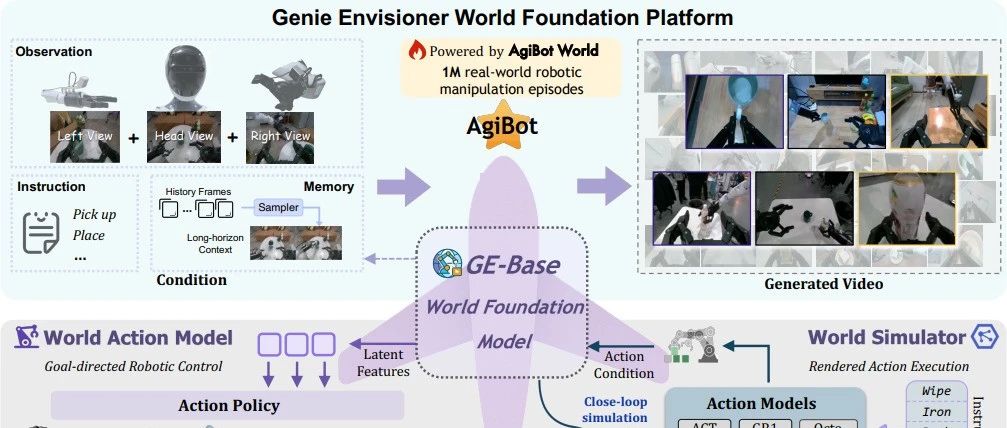
Core Viewpoint - The article discusses the development of Genie Envisioner, a unified world foundation platform for robotic manipulation, which integrates strategy learning, evaluation, and simulation through a single video generation framework [3][27]. Group 1: Platform Overview - Genie Envisioner is built on a core component called GE-Base, which captures the spatial, temporal, and semantic dynamics of robot interactions [5][27]. - The platform includes GE-Act, a world action model that enables instruction-conditioned strategy reasoning, and GE-Sim, a video world simulator that supports closed-loop execution [6][21]. Group 2: Key Components - GE-Base is a large-scale video diffusion model that accurately captures real-world robot interaction features in a structured latent space [3][27]. - GE-Act utilizes a lightweight decoder with 160 million parameters to provide real-time control capabilities, achieving less than 10ms latency for diverse robotic tasks [15][27]. - GE-Sim constructs a high-fidelity environment for closed-loop strategy development, enhancing the framework's capabilities [21][27]. Group 3: Evaluation Framework - EWMBench is introduced as a standardized evaluation suite to assess the fidelity and utility of video-based world models in real-world robotic operations [23][27]. - The evaluation focuses on visual scene consistency, motion correctness, and semantic alignment, ensuring rigorous assessment of task-oriented scenarios [23][27]. Group 4: Training and Adaptation - The training process for GE-Base involves a large dataset with 1 million instruction-aligned video sequences, enabling robust model performance [11][27]. - GE-Act employs a three-phase training strategy to derive action strategies from the GE-Base model, optimizing for specific tasks and environments [17][19][27]. Group 5: Performance and Contributions - The integration of GE-Base, GE-Act, and GE-Sim has demonstrated superior performance in complex tasks such as fabric folding and packing, showcasing strong generalization capabilities [27]. - The platform establishes a powerful foundation for building general-purpose, instruction-driven embodied intelligence systems [27].
国内首个具身大脑+小脑算法实战全栈教程
具身智能之心· 2025-08-11 00:14
Core Viewpoint - The exploration towards Artificial General Intelligence (AGI) highlights embodied intelligence as a key direction, focusing on the interaction and adaptation of intelligent agents within physical environments [1][6]. Industry Analysis - In the past two years, numerous star teams in the field of embodied intelligence have emerged, establishing valuable companies such as Xinghaitu, Galaxy General, and Zhujidongli, driving advancements in embodied brain and cerebellum technologies [3]. - Major domestic companies like Huawei, JD.com, Tencent, Ant Group, and Xiaomi are actively investing and collaborating to build an ecosystem for embodied intelligence, while international firms like Tesla and investment institutions in the U.S. are supporting companies like Wayve and Apptronik in autonomous driving and warehouse robotics [5]. Technological Evolution - The development of embodied intelligence has progressed through several stages: - The first stage focused on grasp pose detection, which struggled with complex tasks due to a lack of context modeling [6]. - The second stage involved behavior cloning, allowing robots to learn from expert demonstrations but revealing weaknesses in generalization and performance in multi-target scenarios [6]. - The third stage introduced Diffusion Policy methods, enhancing stability and generalization in task execution through sequence modeling [7]. - The fourth stage, emerging in 2025, explores the integration of VLA models with reinforcement learning and tactile sensing, aiming to overcome limitations in feedback and future prediction capabilities [8]. Product and Market Development - The evolution from grasp pose detection to behavior cloning and advanced VLA models signifies a shift towards intelligent agents capable of performing complex tasks in open environments, leading to a surge in product development across various sectors such as industrial, home, dining, and healthcare [9]. - The demand for engineering and system capabilities is increasing as the industry transitions from research to deployment, necessitating higher engineering standards [12]. Educational Initiatives - A comprehensive curriculum has been developed to assist learners in mastering the full spectrum of embodied intelligence algorithms, covering topics from basic tasks to advanced models like VLA and its integrations [9][12].
聊聊DreamVLA:让机器人先看后想再动
具身智能之心· 2025-08-11 00:14
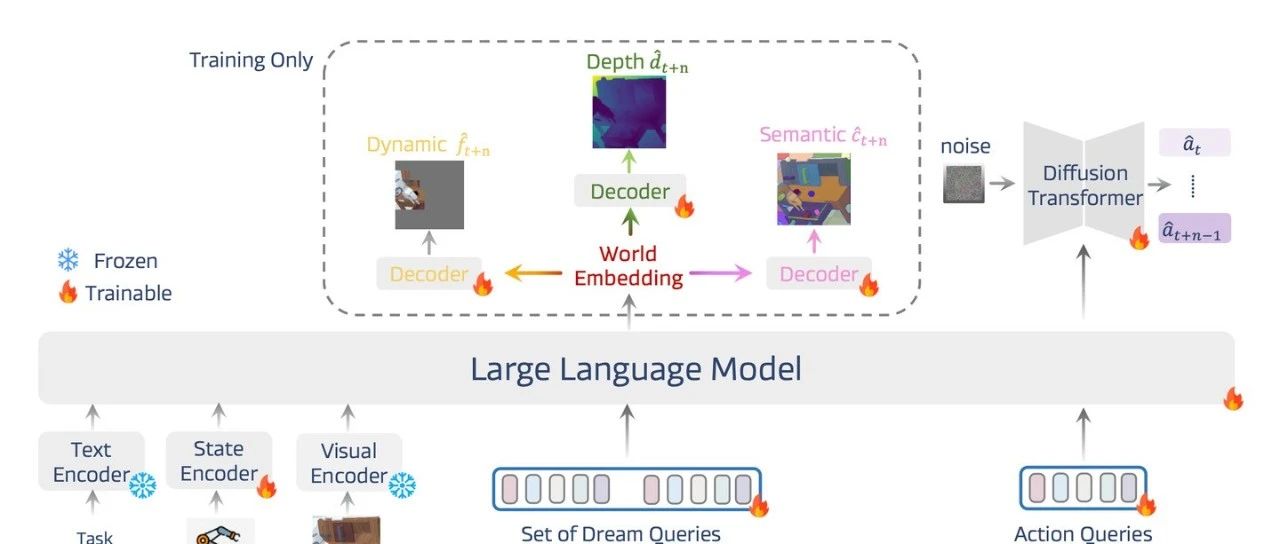
Core Viewpoint - The article introduces DreamVLA, a new Vision-Language-Action model that enhances robotic decision-making by integrating comprehensive world knowledge, allowing robots to predict dynamic environments and make more accurate action decisions [1][27]. Group 1: Background and Need for Advanced VLA Models - Traditional VLA models directly map visual inputs and language commands to actions, which can lead to interference from irrelevant information in complex environments [3][5]. - DreamVLA addresses this by adding a layer of "thinking" that predicts world knowledge, including dynamic areas, depth information, and semantic features before planning actions [5][27]. Group 2: Model Architecture and Functionality - DreamVLA operates on a "perception-prediction-action" cycle, treating the task as an inverse dynamics problem to derive necessary actions from predicted future states [7][27]. - The model processes three types of inputs: visual images, language commands, and the robot's own state, using dedicated encoders for each [10][14]. Group 3: World Knowledge Prediction - DreamVLA predicts world knowledge, which includes dynamic areas, depth maps, and semantic features, rather than directly predicting actions [11][18]. - Dynamic area prediction utilizes CoTracker to identify moving objects and generate masks that highlight relevant areas while filtering out static backgrounds [12][15]. - Depth prediction estimates the spatial relationships of objects, generating depth maps to assist in obstacle avoidance [13][17]. - Semantic prediction employs DINOv2 and SAM models to extract high-level semantic information, which is then encoded into a unified "world embedding" for action generation [18][22]. Group 4: Action Generation - The action generation component uses a diffusion Transformer to produce future action sequences based on the latent action embedding derived from multi-modal inputs [23][27]. - A structured attention mechanism is implemented to ensure coherent multi-step action reasoning and prevent cross-modal knowledge leakage [19][31]. Group 5: Performance and Validation - DreamVLA achieved an average task completion length of 4.44 in the CALVIN ABC-D benchmark, outperforming previous methods by 3.5%, with a real-world task success rate of 76.7% [25][27]. - Ablation studies confirmed the contributions of various components, demonstrating the model's robustness and generalization capabilities [25][31].
如何做到的?20分钟机器人真机数据,即可跨本体泛化双臂任务
具身智能之心· 2025-08-11 00:14
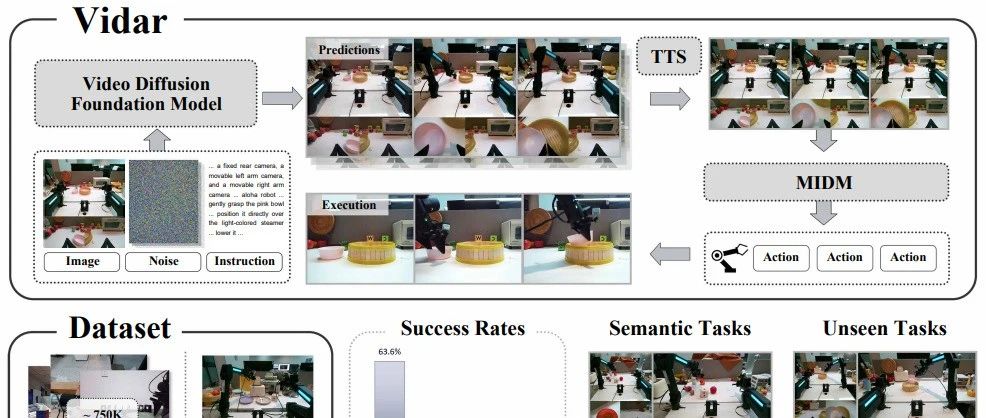
Core Insights - Vidar represents a significant breakthrough in the field of embodied intelligence, being the first global model to transfer video understanding capabilities to physical decision-making systems [2] - The model innovatively constructs a multi-view video prediction framework that supports collaborative tasks for dual-arm robots, demonstrating state-of-the-art performance while exhibiting significant few-shot learning advantages [2] - The model requires only 20 minutes of real robot data to generalize quickly to new robot bodies, significantly reducing the data requirements compared to industry-leading models [2][6] Group 1 - Vidar is based on a general video model and achieves systematic migration of video understanding capabilities [2] - The model's data requirement is approximately one-eighth of the leading RDT model and one-thousand-two-hundredth of π0.5, greatly lowering the barrier for large-scale generalization in robotics [2] - After fine-tuning, the model can perform multi-view dual-arm tasks effectively, executing commands as instructed [2] Group 2 - The Tsinghua University team proposed a new paradigm to address challenges in embodied intelligence, breaking down tasks into "prediction + execution" [6] - This approach utilizes visual generative models like Vidar to learn target predictions from vast amounts of internet video, while employing task-agnostic inverse dynamics models like Anypos for action execution [6] - The method significantly reduces the dependency on large-scale paired action-instruction data, requiring only 20 minutes of task data to achieve high generalization [6] Group 3 - The presentation includes an overview and demonstration video, discussing the rationale for utilizing video modalities and considering embodied video base models [8] - It covers the training of Vidar and the concept of task-agnostic actions with AnyPos [8] - The speaker, Hengkai Tan, is a PhD student at Tsinghua University, focusing on the integration of embodied large models and multi-modal large models [11]
推荐几个具身智能与机器人私房菜!
具身智能之心· 2025-08-10 06:54
Core Viewpoint - The furniture and autonomous driving industries are experiencing significant growth in production, financing, and recruitment, with a strong emphasis on practical technology and skilled talent acquisition [1][2]. Group 1: Industry Trends - The autonomous driving sector is seeing a surge in companies scaling up production and hiring, indicating a competitive job market where securing positions is challenging due to high skill requirements [1]. - The emergence of high-level autonomous driving demonstration zones, such as in Beijing, is fostering innovation in policy, technology, and commercialization [1]. Group 2: Learning and Community Resources - Several influential communities focused on embodied intelligence, autonomous driving, computer vision, and AI are recommended for systematic learning and skill enhancement [1]. - The "Automatic Driving Heart" community is the largest developer community in China, focusing on various technical aspects of autonomous driving, attracting significant attention from industry professionals [2]. - The "Computer Vision Research Institute" shares the latest research and practical applications in AI, emphasizing technology research and implementation [5]. - The "Embodied Intelligence Heart" community is the first full-stack technical exchange platform in China, covering a wide range of topics related to embodied intelligence [8].
Astribot Suite:面向多样化真实环境、聚焦全身操作的框架
具身智能之心· 2025-08-09 00:48
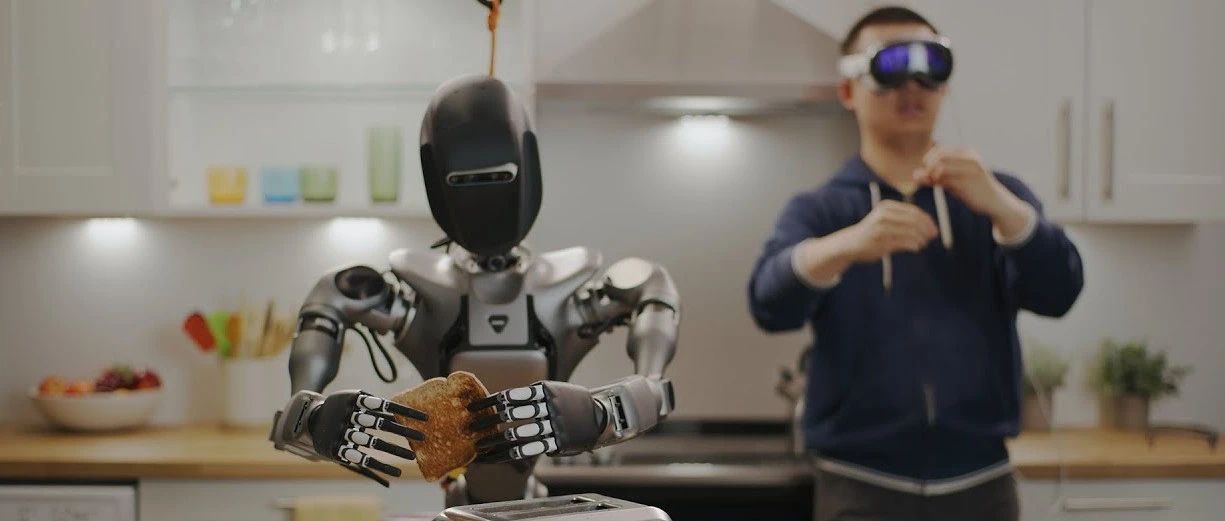
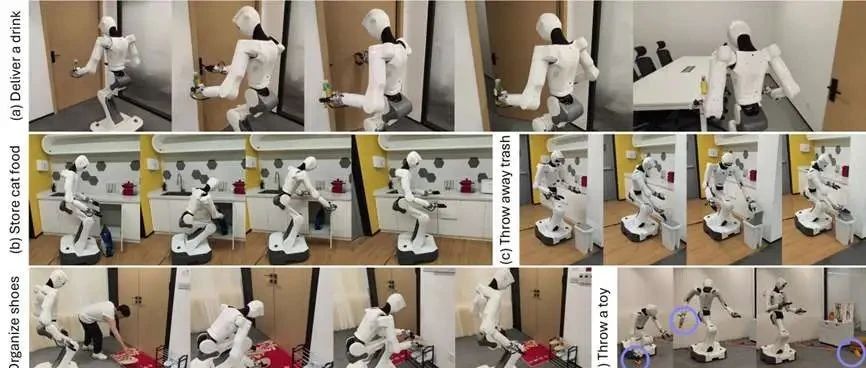
Core Viewpoint - The article discusses the development of a comprehensive robotic learning suite, Astribot Suite, aimed at enabling robots to perform a wide range of daily tasks through human-like interaction and learning from the environment [3][4]. Group 1: Challenges in Robotic Control - Achieving full-body autonomous control in robots faces three main challenges: designing safe and capable hardware, developing intuitive data collection systems, and creating efficient algorithms for learning from human demonstrations [6]. - A unified framework is proposed to address these challenges, consisting of a high-performance robot platform, a full-body teleoperation system, and a full-body visual-motor strategy [6]. Group 2: High-Performance Robot Platform - The robot platform is designed to be high-performance, durable, and capable of safe mobile operations, utilizing an innovative rope-driven design that mimics human muscle tissue for precise movement and force application [7]. - The design features a lightweight structure, low friction transmission, and soft cushioning, enabling high-resolution force control essential for AI-driven tasks [7]. Group 3: Full-Body Teleoperation - An intuitive and cost-effective teleoperation system is introduced, consisting of a VR headset and handheld joystick, allowing non-experts to efficiently collect data for various tasks [9]. - The system supports first-person and third-person control modes, optimized for different types of tasks with low transmission latency [9]. Group 4: Full-Body Motion Operation Model (DuoCore-WB) - DuoCore-WB is a simple yet effective imitation learning algorithm designed to simulate full-body actions, emphasizing RGB-based visual perception and real-time trajectory generation [10][12]. - The model demonstrates an average success rate of 80% across various tasks, with a peak success rate of 100%, indicating its effectiveness in real-world applications [12]. Group 5: Evaluation of Astribot Suite - Astribot Suite was evaluated on six representative real-world tasks, including delivering drinks, storing cat food, throwing away trash, organizing shoes, throwing toys, and picking up toys, showcasing its capabilities in complex coordination and dynamic stability [12][23]. - The success rates for these tasks varied, with detailed performance metrics provided for each subtask, highlighting the system's robustness and adaptability [23]. Group 6: Key Findings on Motion Representation - The use of end-effector (EE) space action representation reduces error accumulation and enhances task performance compared to joint space representation [25]. - Incremental action representation improves trajectory smoothness and execution stability, particularly in high-frequency control scenarios [25]. - The relative trajectory representation based on the end-effector self-coordinate system enhances visual-action alignment and generalization capabilities [28].
AI眼镜“隔空取物”,戴上即可随心选中现实世界任意物体
具身智能之心· 2025-08-09 00:48
Core Viewpoint - The article discusses the introduction of a new technology called Reality Proxy, which enhances human-computer interaction by allowing users to seamlessly select and manipulate real-world objects through a mixed reality interface, overcoming limitations of traditional XR devices [10][13][14]. Group 1: Technology Overview - Reality Proxy is a digital representation of real-world objects that allows users to interact with them without being hindered by physical constraints such as distance or size [14][16]. - The interaction process involves three main steps: activating the proxy, generating the proxy, and interacting with the proxy [17][19][24]. - The system captures the semantic structure of the environment and creates proxies that maintain spatial relationships, allowing for intuitive manipulation [20][22]. Group 2: Interaction Features - Users can browse object previews, select multiple objects, filter objects by attributes, and utilize physical features for interaction [30][31][32][34]. - The technology supports semantic grouping and custom grouping, enabling users to organize and manipulate objects efficiently [36][40]. Group 3: Practical Applications - Reality Proxy can be applied in various scenarios, such as quickly locating specific books in an office or interacting with kitchen appliances [41][43]. - It facilitates efficient navigation and interaction in large buildings and allows for dynamic control of real-world objects like drones [45][47]. Group 4: User Feedback and Evaluation - Participants in the study found Reality Proxy to be practical and effective in addressing interaction challenges with distant or hard-to-reach objects [53]. - The system was praised for its speed and reduced physical fatigue, although some users noted a learning curve and the need for improved accuracy in proxy positioning [54][55].