具身智能之心

Search documents
在复杂真实场景中评估 π0 这类通用 policy 的性能和边界
具身智能之心· 2025-08-16 16:03
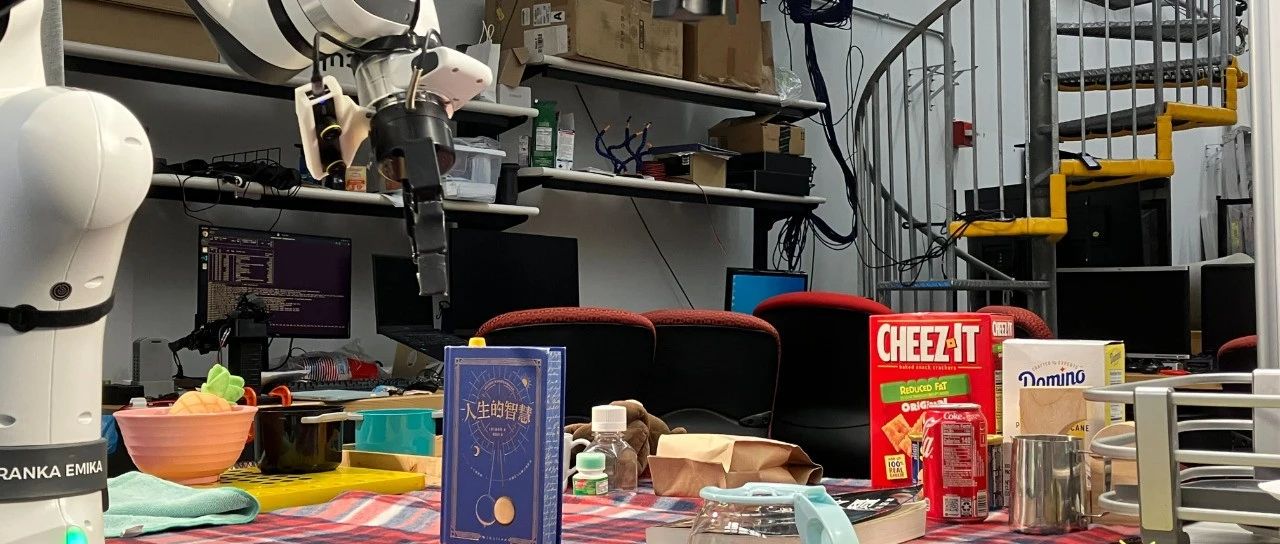
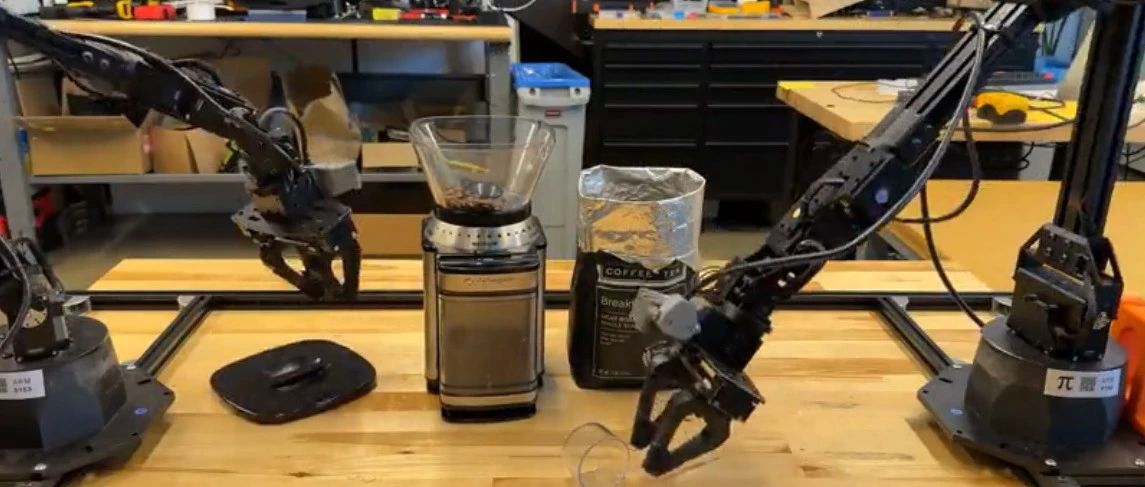
Core Viewpoint - The article discusses the evaluation of the PI0-FAST-DROID model in real-world scenarios, highlighting its potential as a generalist model for robotic operations and the challenges it faces in various tasks [4][10][73]. Evaluation Method - The evaluation utilized the π₀-FAST-DROID model, specifically fine-tuned for the DROID robot platform, which includes a Franka Panda robot equipped with cameras [5][10]. - The assessment involved over 300 trials across various operational tasks, focusing on subjective evaluations similar to those used in natural language processing [11][10]. Key Findings - The model demonstrated a strong prior assumption of reasonable behavior, but this was often insufficient to complete tasks [11]. - Prompt engineering significantly influenced the model's performance, with variations in wording or camera angles leading to substantial fluctuations in success rates [12][56]. - The model exhibited impressive visual-language understanding capabilities and could mimic continuous behaviors across different scenarios [13][27]. Performance in Complex Scenarios - The model showed robust performance in recognizing and manipulating transparent objects and those camouflaged against complex backgrounds [19][20]. - It maintained focus on tasks despite human activity in the background, indicating a strong robustness to human movement [24]. Challenges and Limitations - The model faced issues with semantic ambiguity and a lack of memory, leading to premature task termination in multi-step operations [36][40]. - It struggled with precise spatial reasoning, often failing to lift objects high enough to avoid collisions with containers [46][48]. - The model's performance was sensitive to the quality of prompts, with unclear instructions leading to failures [57][59]. Task-Specific Performance - The model's progress and success rates varied across different task categories, such as pouring (52.3% progress, 24% success) and manipulating articulated objects (37.8% progress, 28.5% success) [85][87]. - In human-robot interaction scenarios, the model achieved a progress rate of 53.5% but only a 24% success rate, indicating room for improvement in safety and collaboration [102]. Conclusion - The evaluation indicates that while the PI0 model shows promise as a generalist policy in unseen operational scenarios, significant challenges remain in instruction adherence, fine manipulation, and performance under partial observability [73].

灵巧手的设计与难题!为什么它是打通“手-眼-脑”感知闭环的关键技术?
具身智能之心· 2025-08-15 16:03
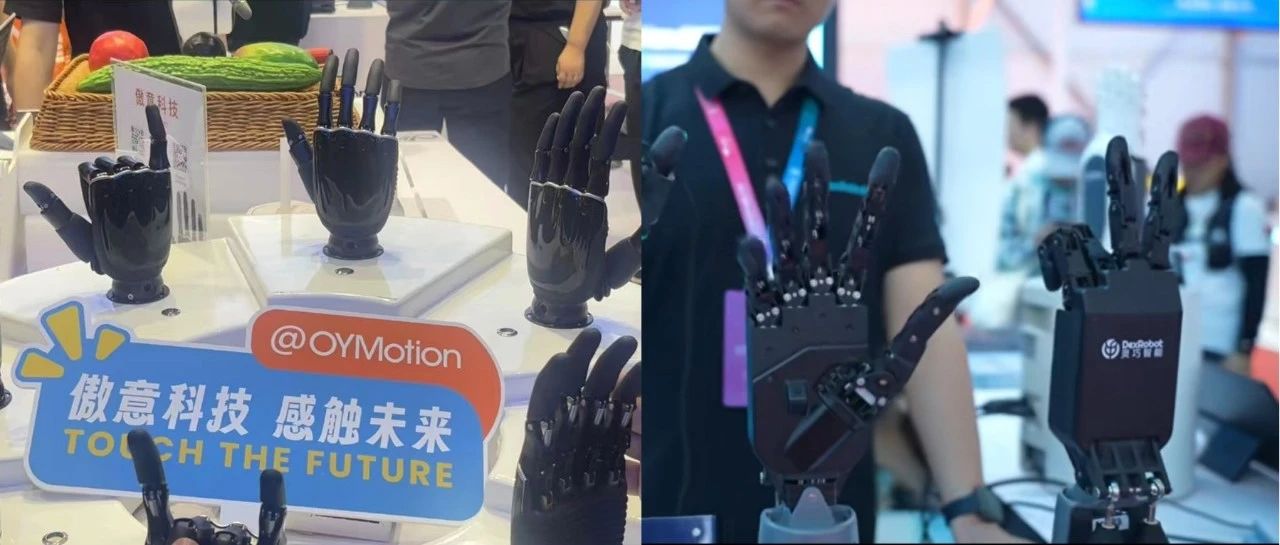
Core Viewpoint - The article discusses the evolution of dexterous hands in humanoid robots, emphasizing the transition from morphological mimicry to functional mimicry, highlighting the need for high physical dexterity, multimodal perception, and intelligent decision-making capabilities in these robotic hands [2][5]. Group 1: Key Features of Dexterous Hands - A good research dexterous hand should possess three core features: high physical dexterity (IOD), multimodal perception ability (IOS), and intelligent decision-making potential (IOI) [2]. Group 2: Transmission Solutions - The current transmission solutions for dexterous hands are dominated by three main types: - Linkage transmission, which is rigid and precise but lacks high degrees of freedom [3]. - Gear transmission, which is compact and controllable but limited in force transmission efficiency and passive compliance [3]. - Tendon-driven (cable-driven) systems, favored by companies like Tesla and Shadow Hand, are lightweight and allow for natural passive compliance but face engineering challenges such as friction loss and complex system integration [3]. Group 3: Challenges in Key Hardware - The collaboration between tactile sensors and multi-degree-of-freedom joints is a critical bottleneck for dexterous operation. Existing capacitive or resistive sensors struggle with spatial density, signal drift, and environmental sensitivity, making it difficult to replicate human-level contact topology perception [3]. - The design of high-degree-of-freedom joints encounters a trade-off between performance, cost, and reliability, where increased degrees of freedom lead to more complex drive and transmission systems, resulting in higher failure rates and shorter lifespans [3]. Group 4: Degree of Freedom Debate - The industry is moving away from a fervent "degree of freedom competition" towards a rational pursuit of a "multi-dimensional system balance." While a 42-degree-of-freedom research hand exceeds the human hand's limit (approximately 27 DoF), its practical engineering viability remains to be explored [4]. - The trend is to create a "hexagonal warrior" that optimizes strength, speed, size, weight, lifespan, degrees of freedom, and structural strength [4]. Group 5: Future of Dexterous Hands vs. Grippers - In the short term, two-finger or three-finger grippers dominate structured industrial scenarios due to their low cost, stable control, and high reliability, with some users claiming they can handle 95% of tasks [4]. - However, in the long term, non-structured environments such as home services, medical care, and precision assembly will require the versatility, flexible object handling, and multimodal grasping capabilities that grippers may not provide [4]. Group 6: Industry Evolution - As the industry shifts from "mass production illusion" to "application vision," those that can bridge the "hand-eye-brain" loop, achieve soft-hard collaboration, and build a developer ecosystem will likely become the foundational infrastructure of the embodied intelligence era [5].
天大&清华最新!GeoVLA:增强VLA模型的3D特征提取能力,鲁棒提升明显(SOTA)
具身智能之心· 2025-08-15 00:05
Core Insights - The article introduces GeoVLA, a novel framework that integrates 3D information into Vision-Language-Action (VLA) models, enhancing robots' spatial perception and adaptability [3][9][10]. Group 1: Background and Motivation - The advancement of robotic operations requires intelligent interaction and precise physical control in real-world environments. Recent VLA models have gained attention for their ability to follow instructions and execute actions [7]. - Current VLA models primarily rely on 2D visual inputs, neglecting the rich geometric information inherent in the 3D physical world, which limits their spatial perception capabilities [8]. Group 2: GeoVLA Framework - GeoVLA employs a visual-language model (VLM) to process images and language instructions, extracting fused visual-language embeddings. It converts depth maps into point clouds and uses a custom point embedding network to generate 3D geometric embeddings [3][10][12]. - The framework consists of three key components: VLM for general understanding, a point embedding network (PEN) for extracting fine-grained 3D features, and a 3D enhanced action expert (3DAE) for generating action sequences [12][13]. Group 3: Performance Evaluation - GeoVLA was evaluated on the LIBERO and ManiSkill2 benchmarks, achieving state-of-the-art results. It demonstrated significant robustness in real-world tasks requiring high adaptability and spatial awareness [15][27]. - In LIBERO, GeoVLA achieved an average success rate of 97.7%, outperforming other models like CogACT (93.2%) and OpenVLA-OFT (95.3%) [27]. - In the ManiSkill2 benchmark, GeoVLA achieved a success rate of 77%, surpassing CogACT (69%) and Dita (66%) [27]. Group 4: Ablation Studies - Ablation studies indicated that the PEN encoder outperformed traditional encoders, achieving a success rate of 97.7% compared to 95.8% for MLP and 95.2% for PointNet [30]. - The use of static routing in the MoE architecture improved performance, demonstrating the effectiveness of the design in leveraging multimodal information [30][20]. Group 5: Real-World Experiments - Real-world experiments showcased GeoVLA's robustness and generalization capabilities across various 3D manipulation tasks, maintaining high performance despite changes in camera perspective, height, and object size [36][34]. - GeoVLA achieved an average success rate of 86.3% across basic and 3D perception tasks, outperforming other models by significant margins [36].
Figure人形机器人首秀灵巧手叠衣服!只增加数据集就搞定
具身智能之心· 2025-08-15 00:05
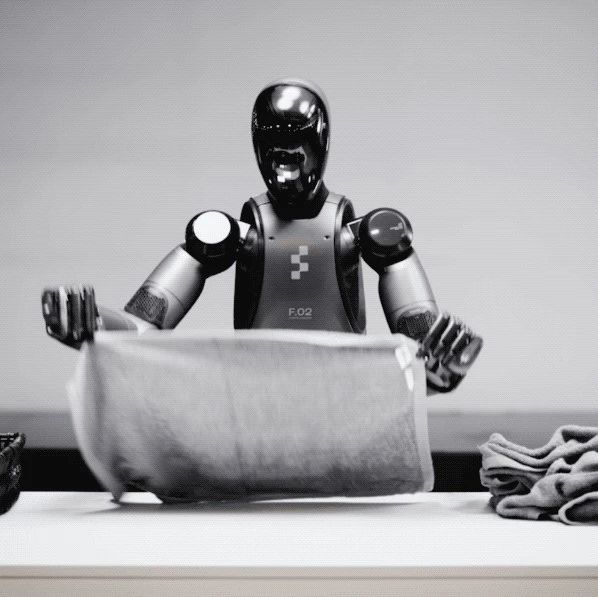
Core Viewpoint - Figure's humanoid robot has successfully learned to fold clothes using an end-to-end approach without any architectural changes, showcasing its adaptability and advanced capabilities in handling complex tasks [2][21][28]. Group 1: Robot Capabilities - The humanoid robot demonstrated its ability to fold towels smoothly, employing precise finger control and real-time adjustments during the process [7][18]. - This task is considered one of the most challenging dexterous operations for humanoid robots due to the variability and unpredictability of clothing shapes [15][16]. - The robot's performance in folding clothes was achieved using the same model and architecture as its previous task of package sorting, with the only change being the dataset used for training [14][28]. Group 2: Helix Architecture - The Helix architecture, developed after Figure's split from OpenAI, is a unified "visual-language-action" model that allows the robot to perceive, understand, and act like a human [21][22]. - Helix consists of two systems that communicate with each other, enabling the robot to perform various tasks with a single set of neural network weights [22]. - Key components of Helix include visual memory, state history, and force feedback, which enhance the robot's ability to adapt and respond to its environment [23][29]. Group 3: Future Plans - Figure plans to continue improving the robot's flexibility, speed, and generalization capabilities based on the expansion of real-world data [20]. - The company aims to develop the robot's ability to perform a complete set of household tasks, including washing, folding, and potentially hanging clothes [38].
告别无效科研!具身智能方向1v1辅导开放,3位导师带你冲刺顶会!
具身智能之心· 2025-08-15 00:05
Group 1 - The article promotes a 1v1 paper tutoring service focused on embodied intelligence, specifically in areas such as vla, reinforcement learning, and sim2real [2] - The tutoring service is aimed at participants of major conferences including CVPR, ICCV, ECCV, ICLR, CoRL, ICML, and ICRA [2] - The tutors are described as active and engaged in the field of embodied intelligence, possessing innovative ideas [2]
何为Agent?在思想、学术与工程领域探寻“好用”真义
具身智能之心· 2025-08-15 00:05
Core Viewpoint - The article discusses the evolution and significance of AI Agents, emphasizing their transition from single-function tools to more autonomous and capable systems that integrate various technologies and methodologies [2][3]. Group 1: Definition and Concept of AI Agents - AI Agents are defined as a combination of large models (brain), memory (vector databases), planning (goal decomposition), and tools (API calls), which work together to create a more autonomous intelligent toolset [2][3]. - The exploration of AI Agents reflects human curiosity about the essence of intelligence, leading to both surprising advancements and potential pitfalls in their application [2]. Group 2: Academic and Engineering Insights - The article highlights the need to define AI Agents from both technical and philosophical perspectives, drawing from work and research experiences [3]. - It discusses recent trends and highlights in the academic field regarding multi-agent systems and the unique challenges faced by specialized agents in sectors like healthcare, finance, and mental health compared to general-purpose agents [3][7]. Group 3: Practical Challenges in AI Agent Implementation - The article addresses the core pain points in the practical application of AI Agents, noting that despite their powerful capabilities, they often behave unpredictably in real-world scenarios, akin to "opening a blind box" [3]. - Key technical challenges include weak contextual memory and planning abilities, which affect the usability of AI Agents [3]. - It emphasizes the importance of distinguishing between scenarios where message-based memory suffices and those requiring external knowledge bases for effective long-term memory [3].
VLA/强化学习/VLN方向的论文辅导招募!
具身智能之心· 2025-08-14 12:00
Group 1 - The article announces the availability of 1v1 paper guidance in the field of embodied intelligence, specifically offering three slots focused on vla, reinforcement learning, and sim2real directions, primarily targeting A and B conferences [1] - Major conferences mentioned include CVPR, ICCV, ECCV, ICLR, CoRL, ICML, and ICRA, indicating the relevance of the guidance to prominent events in the academic community [2] - Interested individuals are encouraged to add a specific WeChat contact for inquiries or to scan a QR code for consultation regarding the embodied paper guidance [3]
VLA/VLA+触觉/VLA+RL/具身世界模型等!国内首个具身大脑+小脑算法实战教程
具身智能之心· 2025-08-14 06:00
Core Viewpoint - The exploration of Artificial General Intelligence (AGI) is increasingly focusing on embodied intelligence, which emphasizes the interaction and adaptation of intelligent agents within physical environments, enabling them to perceive, understand tasks, execute actions, and learn from feedback [1]. Industry Analysis - In the past two years, numerous star teams in the field of embodied intelligence have emerged, establishing valuable companies such as Xinghaitu, Galaxy General, and Zhujidongli, which are advancing the technology of embodied intelligence [3]. - Major domestic companies like Huawei, JD.com, Tencent, Ant Group, and Xiaomi are actively investing and collaborating to build a robust ecosystem for embodied intelligence, while international players like Tesla and investment firms are supporting companies like Wayve and Apptronik in the development of autonomous driving and warehouse robots [5]. Technological Evolution - The development of embodied intelligence has progressed through several stages: - The first stage focused on grasp pose detection, which struggled with complex tasks due to a lack of context modeling [6]. - The second stage involved behavior cloning, allowing robots to learn from expert demonstrations but revealing weaknesses in generalization and performance in multi-target scenarios [6]. - The third stage introduced Diffusion Policy methods, enhancing stability and generalization by modeling action sequences, followed by the emergence of Vision-Language-Action (VLA) models that integrate visual perception, language understanding, and action generation [7][8]. - The fourth stage, starting in 2025, aims to integrate VLA models with reinforcement learning, world models, and tactile sensing to overcome current limitations [8]. Product and Market Development - The evolution of embodied intelligence technologies has led to the emergence of various products, including humanoid robots, robotic arms, and quadrupedal robots, serving industries such as manufacturing, home services, dining, and medical rehabilitation [9]. - The demand for engineering and system capabilities is increasing as the industry shifts from research to deployment, necessitating skills in platforms like Mujoco, IsaacGym, and Pybullet for strategy training and simulation testing [24].
学会see和act:机器人操作中的任务感知视角规划
具身智能之心· 2025-08-14 00:03
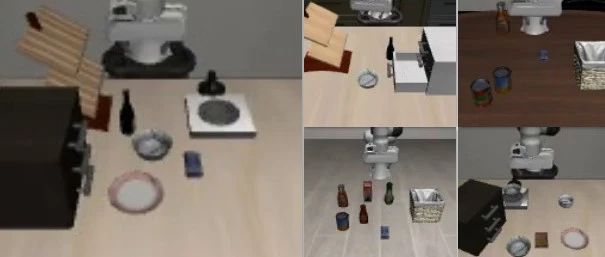
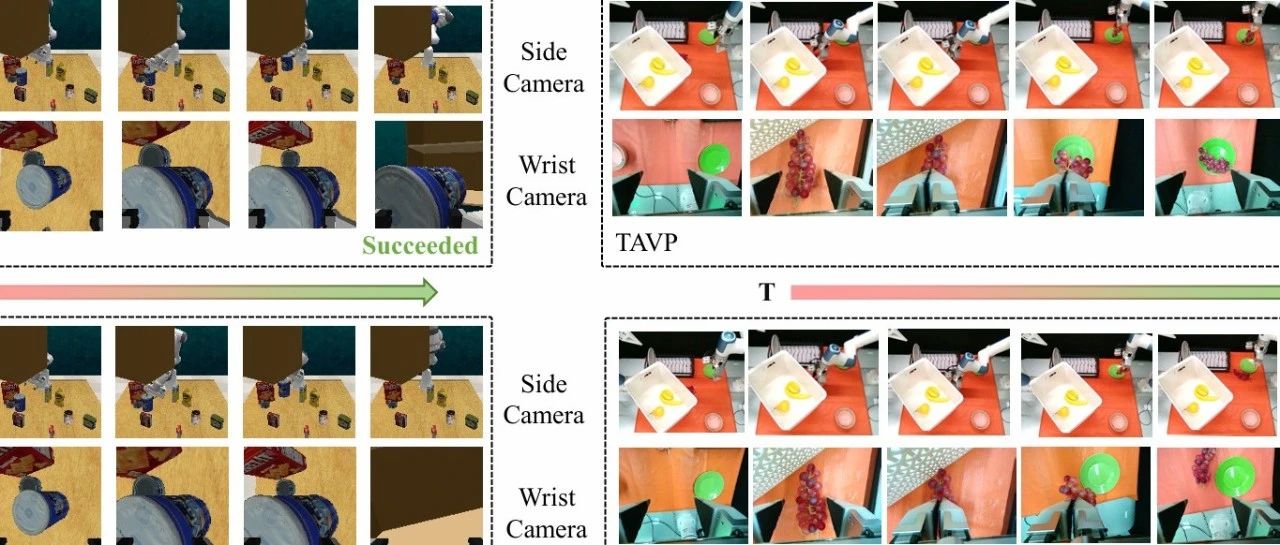
Research Background and Motivation - Existing visual-language-action (VLA) models in multi-task robotic operations rely on fixed viewpoints and shared visual encoders, limiting 3D perception and causing task interference, which affects robustness and generalization [2][3] - Fixed viewpoints are particularly problematic in complex scenes, where occlusion can lead to incomplete scene understanding and inaccurate action predictions [2] - The limitations of shared encoders are evident in tasks with significant visual and semantic differences, restricting model generalization and scalability [2] Core Method: TAVP Framework - The Task-Aware View Planning (TAVP) framework integrates active view planning with task-specific representation learning, featuring the TaskMoE module and MVEP strategy [3] TaskMoE: Task-Aware Mixture of Experts Module - Designed to enhance multi-task accuracy and generalization through two key innovations [5] MVEP: Multi-View Exploration Policy - Aims to select K viewpoints that maximize the capture of operation target-related information, improving action prediction accuracy [6] Training Strategy - The training process consists of three phases: 1. Phase 1: Train TAVP's fixed viewpoint variant using three default viewpoints [7] 2. Phase 2: Optimize MVEP based on the fixed viewpoint model using the PPO algorithm [8] 3. Phase 3: Fine-tune the entire TAVP model excluding MVEP, using the same loss functions as in Phase 1 [8] Key Results - TAVP outperforms fixed viewpoint dense models (RVT2, ARP, ARP+) in success rates across all tasks, with a 56% increase in challenging tasks and an average success rate improvement from 84.9% to 86.7% [13][14] Ablation Study - Removing TaskMoE results in a decrease in average success rate from 86.67% to 85.56%, highlighting its importance in multi-task representation learning [15][18] Sensitivity Analysis - Increasing the number of viewpoints (K) significantly improves success rates, especially in occlusion-prone tasks [16][17] Efficiency and Generalization Analysis - TAVP achieves a higher average success rate (86.67%) compared to ARP+ (84.90%), with a slight increase in inference delay of approximately 10.7% [20]
英伟达为机器人推出懂推理的“大脑”!升级版Cosmos世界模型来了
具身智能之心· 2025-08-14 00:03
Core Viewpoint - Nvidia is significantly advancing its robotics development infrastructure, focusing on the integration of AI and computer graphics to enhance robotic capabilities and reduce training costs [17][20][21]. Group 1: Product and Technology Updates - Nvidia introduced the upgraded Cosmos world model at the SIGGRAPH conference, which is designed to generate synthetic data that adheres to real-world physics [2][3]. - The upgrade emphasizes planning capabilities and generation speed, with enhancements across software and hardware, including the new Omniverse library and RTX PRO Blackwell servers [4][8]. - The new Cosmos Reason model features 70 billion parameters and reasoning capabilities, aiding robots in task planning [6][10]. - Cosmos Transfer-2 and its lightweight version accelerate the conversion of virtual scenes into training data, significantly reducing the time required for this process [12][13]. Group 2: Integration of AI and Graphics - Nvidia's AI research vice president highlighted the powerful synergy between simulation capabilities and AI system development, which is rare in the industry [5]. - The combination of Cosmos and Omniverse aims to create a realistic and scalable "virtual parallel universe" for robots to safely experiment and evolve [22][23]. - The integration of real-time rendering, computer vision, and physical simulation is essential for building this virtual environment [23]. Group 3: Market Strategy and Collaborations - Nvidia is strategically positioning itself in the robotics sector, recognizing the trend of merging computer graphics with AI as a transformative force in the industry [20][21]. - The company is collaborating with various Chinese firms, including Alibaba Cloud and several robotics companies, to expand its influence in the domestic market [26][27]. - Nvidia's approach mirrors its previous strategies, where it provided computational resources to emerging AI companies, indicating a similar trajectory in the robotics field [25][26].