自动驾驶之心

Search documents
两篇EI,申中9博还有希望吗?
自动驾驶之心· 2025-07-18 00:58
Group 1 - The job market is challenging, leading many individuals to pursue further education, such as doctoral degrees, to enhance their employment prospects [1] - The competition for doctoral admission is increasing, with a significant rise in the number of applicants and higher expectations for research output [1][2] - To successfully apply for a doctoral program, candidates are generally expected to have multiple high-quality research papers, with a minimum of one paper in a recognized journal [2] Group 2 - A comprehensive research guidance program is offered to assist candidates in efficiently producing multiple research papers, emphasizing a systematic approach to mastering research methodologies [2][3] - The program includes personalized mentoring, real-time interaction with advisors, and unlimited access to recorded sessions, ensuring continuous support for students [6] - Successful participants may receive recommendations from prestigious institutions and direct job referrals to leading tech companies, indicating that publishing papers is just the beginning of their academic and professional journey [7]


只因一个“:”,大模型全军覆没
自动驾驶之心· 2025-07-17 12:08
Core Insights - The article discusses a significant vulnerability in large language models (LLMs) where they can be easily deceived by seemingly innocuous symbols and phrases, leading to false positive rewards in evaluation scenarios [2][13][34]. Group 1: Vulnerability of LLMs - A recent study reveals that LLMs can be tricked by simple tokens like colons and spaces, which should ideally be filtered out [4][22]. - The false positive rate (FPR) for various models is alarming, with GPT-4o showing a FPR of 35% for the symbol ":" and LLaMA3-70B having a FPR between 60%-90% for "Thought process:" [22][24]. - This vulnerability is not limited to English; it is cross-linguistic, affecting models regardless of the language used [23]. Group 2: Research Findings - The research involved testing multiple models, including specialized reward models and general LLMs, across various datasets and prompt formats to assess the prevalence of this "reward model deception" phenomenon [15][17]. - All tested models exhibited susceptibility to triggering false positive responses, indicating a systemic issue within LLMs [21][28]. Group 3: Proposed Solutions - To mitigate the impact of this vulnerability, researchers developed a new "judge" model called Master-RM, which significantly reduces the FPR to nearly zero by using an enhanced training dataset [29][31]. - The Master-RM model demonstrates robust performance across unseen datasets and deceptive attacks, validating its effectiveness as a general-purpose reward model [31][33]. Group 4: Implications for Future Research - The findings highlight the critical need for improved robustness in LLMs and suggest that reinforcement learning from human feedback (RLHF) requires more rigorous adversarial evaluations [35][36]. - The research team, comprising members from Tencent AI Lab, Princeton University, and the University of Virginia, emphasizes the importance of addressing these vulnerabilities in future studies [38][40].

ICCV 2025满分论文:一个模型实现空间理解与主动探索大统一~
自动驾驶之心· 2025-07-17 12:08
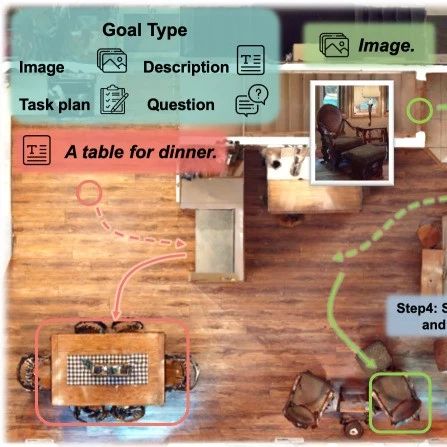
Core Viewpoint - The article discusses the transition of artificial intelligence from the virtual internet space to the physical world, emphasizing the importance of enabling intelligent agents to understand three-dimensional spaces and align natural language with real-world environments [3][42]. Group 1: Research and Development - A new model has been proposed by a collaborative research team from Tsinghua University, Beijing Academy of Artificial Intelligence, Beijing Institute of Technology, and Beihang University, which unifies spatial understanding and active exploration for intelligent agents [3][4]. - The model allows agents to build cognitive maps of their environments through dynamic exploration, enhancing spatial perception and autonomous navigation capabilities [3][4]. Group 2: Embodied Navigation - In embodied navigation tasks, agents must interpret human instructions and navigate complex physical spaces to locate target positions, requiring both understanding and exploration [5][10]. - The navigation process consists of two interwoven steps: understanding the task and actively exploring the environment, similar to human navigation behavior [5][10]. Group 3: Research Challenges - Key challenges identified include real-time semantic representation, collaborative training of exploration and understanding, and efficient data collection methods [11][12][13]. - The model aims to create an online 3D semantic map that integrates spatial and semantic information while continuously processing data from RGB-D streams [11]. Group 4: Model Design and Data Collection - The proposed model includes two core modules: online spatial memory construction and spatial reasoning and decision-making, which are optimized in a unified training framework [17][18]. - A hybrid data collection strategy combines real RGB-D scanning data with virtual simulation environments, resulting in a dataset with over 900,000 navigation trajectories and millions of language descriptions [23][24]. Group 5: Experimental Results - The MTU3D model was evaluated across four key tasks, demonstrating significant improvements in success rates compared to existing methods, particularly in multi-modal understanding and long-term task planning [27][28]. - In the GOAT-Bench benchmark, MTU3D achieved success rates of 52.2%, 48.4%, and 47.2%, outperforming other models by over 20% [27][28]. Group 6: Future Implications - The integration of understanding and exploration in MTU3D allows AI to autonomously navigate and comprehend instructions in real-world environments, paving the way for advancements in embodied navigation [42].
近半年「自动驾驶」篇强化学习论文推荐~
自动驾驶之心· 2025-07-17 12:08
Core Viewpoint - The article emphasizes the significant potential of reinforcement learning (RL) in the field of autonomous driving, highlighting its ability to enhance safety, reliability, and intelligence in autonomous vehicles [3][4]. Group 1: Recommended Papers on RL Applications in Autonomous Driving - The article presents a list of the top 10 recommended papers on RL applications in autonomous driving, focusing on practical challenges and innovative solutions [4][7]. - "CarPlanner" is highlighted as a promising solution for trajectory planning in autonomous driving, demonstrating superior performance over state-of-the-art methods in a challenging dataset [9]. - "RAD" introduces a closed-loop RL training paradigm using 3DGS technology, achieving a threefold reduction in collision rates compared to imitation learning methods [10]. - "Toward Trustworthy Decision-Making for Autonomous Vehicles" discusses a robust RL approach with safety guarantees, focusing on collision safety and policy robustness [13]. - "ReCogDrive" combines visual language models with diffusion planners to enhance autonomous driving safety and performance, achieving a new benchmark in trajectory prediction [17]. - "LGDRL" proposes a large language model-guided deep RL framework for decision-making in autonomous driving, achieving a 90% task success rate [23]. - "AlphaDrive" is noted for its innovative use of GRPO-based RL in high-level planning, outperforming traditional methods with only 20% of the data [26]. Group 2: Classic Works in RL for Autonomous Driving - The article references several classic papers that have established the core position of RL in autonomous driving, including a survey on deep RL applications [42]. - "Dense Reinforcement Learning for Safety Validation" addresses challenges in high-dimensional spaces and proposes solutions to enhance safety in autonomous vehicles [42]. - A paper on decision-making strategies for autonomous vehicles in uncertain highway environments demonstrates the effectiveness of deep RL in improving safety and efficiency [44].

是的,三周年了!!!
自动驾驶之心· 2025-07-17 12:08
Core Viewpoint - The article emphasizes the significant progress made in the third year of the company's journey, highlighting advancements in autonomous driving technology and the expansion of services beyond online education to include hardware and offline training [1][2]. Group 1: Company Progress - The company has developed four key intellectual properties (IPs): Autonomous Driving Heart, Embodied Intelligence Heart, 3D Vision Heart, and Large Model Heart, with a focus on embodied intelligence and large models in the third year [1]. - The company has transitioned from a purely online education model to a comprehensive service platform that includes hardware teaching tools, offline training, and job recruitment [1]. - A new offline office has been established in Hangzhou, and several talented individuals have joined the team [1]. Group 2: Industry Insights - The article reflects on the challenges of maintaining long-term value in business, emphasizing that short-term economic returns are insufficient for sustainable growth [2]. - It discusses the importance of understanding market needs and business pain points through direct research, rather than merely chasing immediate profits [4]. - The company advocates for a balanced approach of focusing on long-term value while also achieving commercial success along the way [4]. Group 3: Innovation and Execution - The company stresses the necessity of innovation and execution as key factors for survival and growth in the competitive landscape of the AI education and self-media industries [7][8]. - It highlights the importance of deep thinking and continuous innovation to produce valuable content and avoid mediocrity [7]. - The company aims to transition from being a pure education provider to a technology company, with plans to stabilize operations by the second half of 2025 [9]. Group 4: Future Plans - The company is committed to making AI education accessible to all students in need, striving to make AI easier to learn and use [10]. - A significant promotional offer has been introduced to celebrate the third anniversary, providing discounts on various courses related to autonomous driving and large models [12][14].

ICCV'25 | 南开提出AD-GS:自监督自动驾驶高质量闭环仿真,PSNR暴涨2个点~
自动驾驶之心· 2025-07-17 11:10
Core Insights - The article discusses advancements in self-supervised autonomous driving technologies, highlighting two significant frameworks: AD-GS and FiM, which improve scene rendering and trajectory prediction respectively [1][7]. Group 1: AD-GS Framework - The AD-GS framework combines learnable B-spline curves and trigonometric functions for motion modeling and object-aware segmentation, achieving a PSNR of 29.16 on the KITTI dataset, outperforming existing methods like PVG which had a PSNR of 27.13 [1][5]. - Key contributions of AD-GS include a novel motion modeling method, a scene modeling approach that distinguishes between objects and background, and the design of visibility and physical rigidity regularization to enhance performance [5][6]. Group 2: FiM Framework - The FiM framework introduces a trajectory prediction method that utilizes reward-driven intent reasoning and a bidirectional selective state space model, achieving a Brier Score of 0.6218 on the Argoverse 1 dataset, which is the best single model performance [7][12]. - Significant contributions of FiM include redefining trajectory prediction from a planning perspective, developing a reward-driven intent reasoning mechanism, and enhancing prediction accuracy through a hierarchical DETR-like decoder [10][12]. Group 3: IANN-MPPI Framework - The IANN-MPPI framework enhances model predictive path integral methods for autonomous driving, achieving a success rate of 67.5% in dense traffic scenarios, which is a 22.5% improvement over non-interactive baselines [7][20]. - Key innovations include a real-time, fully parallel interactive trajectory planning method and the introduction of spline-based priors to improve lane-changing behavior [17][21].
端到端VLA这薪资,让我心动了。。。
自动驾驶之心· 2025-07-17 11:10
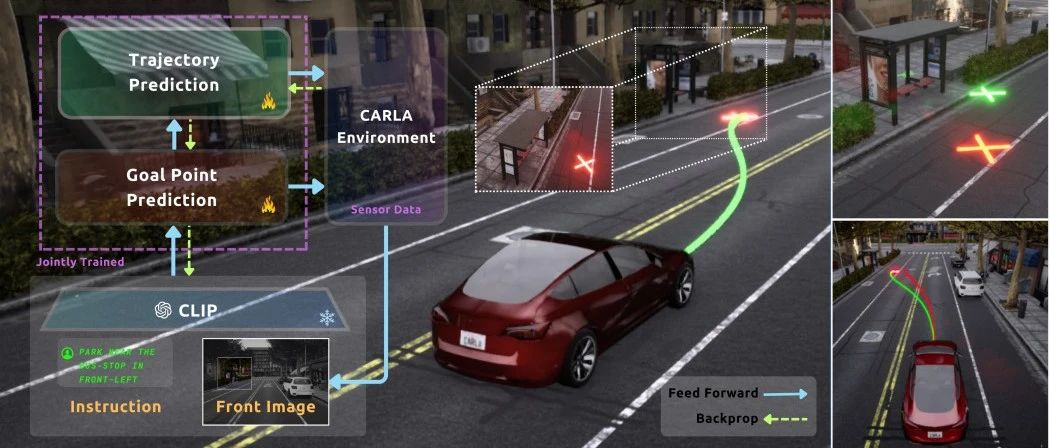
Core Viewpoint - End-to-End Autonomous Driving (E2E) is identified as the core algorithm for intelligent driving mass production, marking a significant shift in the industry towards more integrated and efficient systems [2][4]. Group 1: Technology Overview - E2E can be categorized into single-stage and two-stage approaches, with the latter gaining traction following the recognition of UniAD at CVPR [2]. - The E2E system directly models the relationship between sensor inputs and vehicle control information, minimizing errors associated with modular approaches [2]. - The introduction of BEV perception has bridged gaps between modular methods, leading to a technological leap in the field [2]. Group 2: Challenges in Learning - The rapid development of E2E technology has made previous educational resources outdated, creating a need for updated learning materials [5]. - The fragmented nature of knowledge across various domains complicates the learning process for newcomers, often leading to abandonment before mastery [5]. - A lack of high-quality documentation in E2E research increases the difficulty of entry into the field [5]. Group 3: Course Development - A new course titled "End-to-End and VLA Autonomous Driving" has been developed to address the challenges faced by learners [6]. - The course aims to provide a quick entry into core technologies using accessible language and examples, facilitating easier expansion into specific knowledge areas [6]. - It focuses on building a framework for understanding E2E research and enhancing research capabilities by categorizing papers and extracting innovative points [7]. Group 4: Course Structure - The course is structured into several chapters, covering topics from the history and evolution of E2E algorithms to practical applications and advanced techniques [11][12][20]. - Key areas of focus include the introduction of E2E algorithms, background knowledge on relevant technologies, and detailed explorations of both single-stage and two-stage methods [11][12][20]. - Practical components are integrated into the curriculum to ensure a comprehensive understanding of theoretical concepts [8]. Group 5: Expected Outcomes - Participants are expected to achieve a level of proficiency equivalent to one year of experience as an E2E autonomous driving algorithm engineer [27]. - The course will cover a wide range of methodologies, including single-stage, two-stage, world models, and diffusion models, providing a holistic view of the E2E landscape [27]. - A deeper understanding of key technologies such as BEV perception, multimodal large models, and reinforcement learning will be developed [27].
暑假打比赛!PRCV 2025空间智能与具身智能视觉感知挑战赛启动~
自动驾驶之心· 2025-07-17 07:29
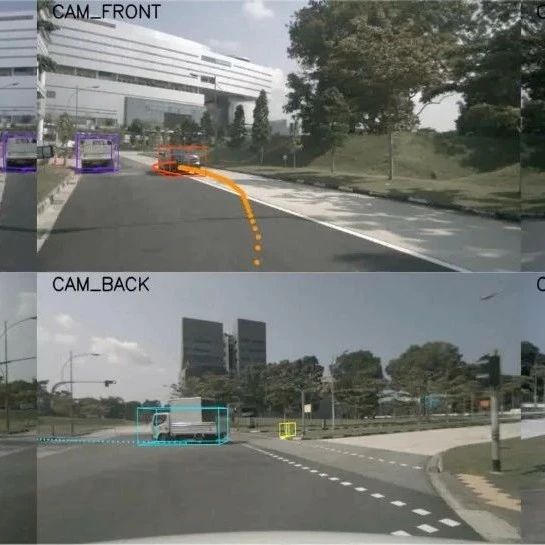
Core Viewpoint - The competition aims to advance research in spatial intelligence and embodied intelligence, focusing on visual perception as a key technology for applications in autonomous driving, smart cities, and robotics [2][4]. Group 1: Competition Purpose and Significance - Visual perception is crucial for achieving spatial and embodied intelligence, with significant applications in various fields [2]. - The competition seeks to promote high-efficiency and high-quality research in spatial and embodied intelligence technologies [4]. - It aims to explore innovations in cutting-edge methods such as reinforcement learning, computer vision, and graphics [4]. Group 2: Competition Organization - The competition is organized by a team of experts from institutions like Beijing University of Science and Technology, Tsinghua University, and the Chinese Academy of Sciences [5]. - The competition is supported by sponsors and technical support units, including Beijing Jiuzhang Yunjing Technology Co., Ltd. [5]. Group 3: Competition Data and Resources - Participants will have access to real and simulated datasets, including multi-view drone aerial images and specific simulation environments for tasks [11]. - The sponsor will provide free computing resources, including H800 GPU power for validating and testing submitted algorithms [12][13]. Group 4: Task Settings - The competition consists of two tracks: Spatial Intelligence and Embodied Intelligence, each with specific tasks and evaluation methods [17]. - The Spatial Intelligence track involves constructing a 3D reconstruction model based on multi-view aerial images [17]. - The Embodied Intelligence track focuses on completing tasks in dynamic occlusion simulation environments [17]. Group 5: Evaluation Methods - Evaluation for Spatial Intelligence includes rendering quality and geometric accuracy, with specific metrics like PSNR and F1-Score [19][20]. - For Embodied Intelligence, evaluation will assess task completion and execution efficiency, with metrics such as success rate and average pose error [23][21]. Group 6: Awards and Recognition - Each track will have awards, including cash prizes and computing vouchers, sponsored by Beijing Jiuzhang Yunjing Technology Co., Ltd. [25]. - Awards include first prize of 6,000 RMB and 500 computing vouchers, with additional prizes for second and third places [25]. Group 7: Intellectual Property and Data Usage - Participants must sign a data usage agreement, ensuring that the provided datasets are used solely for the competition and deleted afterward [29]. - Teams must guarantee that their submitted results are reproducible and that all algorithms and related intellectual property belong to them [29]. Group 8: Conference Information - The 8th China Conference on Pattern Recognition and Computer Vision (PRCV 2025) will be held from October 15 to 18, 2025, in Shanghai [27]. - The conference will feature keynote speeches from leading experts and various forums to promote academic and industry collaboration [28].

不容易,谈薪阶段成功argue到了期望薪资~
自动驾驶之心· 2025-07-17 07:29
Core Viewpoint - The article emphasizes the key attributes that HR looks for during interviews in the autonomous driving sector, focusing on stability, communication skills, and a positive attitude. Group 1: Key Attributes HR Values - Stability: HR prefers candidates with a stable work history and a sense of responsibility, avoiding those who frequently change jobs [1] - Thinking Ability: Candidates should demonstrate logical reasoning, situational response skills, and emotional intelligence [1] - Personality Traits: A positive attitude, teamwork spirit, and emotional stability are crucial for comfortable collaboration [1] - Stress Resistance: Candidates should show the ability to handle pressure and the willingness to start over after failures [1] - Communication Skills: HR values candidates who prioritize the bigger picture, engage in active communication, and express their viewpoints confidently [1] Group 2: Common Interview Questions - Self-Introduction: Candidates should present themselves with humility and confidence, using a clear structure to highlight their strengths [2] - Stability Questions: When asked about leaving previous jobs, candidates should provide objective reasons without negativity, focusing on growth opportunities in the new role [3] - Conflict Resolution: Candidates should reflect on their own perspectives when discussing conflicts with supervisors, emphasizing a collaborative approach [4] - Supervisor Expectations: Candidates should prioritize company interests and focus on major issues while being compliant with minor ones [5] Group 3: Salary and Other Considerations - Offers: Candidates should aim to have multiple offers to strengthen their negotiating position, ideally seeking a salary range slightly above the maximum of the expected salary [6] - Salary Expectations: Candidates should research the salary range for their prospective boss and aim for a reasonable increase [6] - Questions for HR: Candidates should express eagerness by asking about specific roles, business directions, and promotion rules, while also clarifying salary structures and benefits [6]

研二多发几篇论文,也不至于到现在这个地步……
自动驾驶之心· 2025-07-17 02:19
Core Viewpoint - The article emphasizes the importance of high-quality research papers for students, especially those pursuing master's or doctoral degrees, to enhance their academic and career prospects [1]. Group 1: Challenges Faced by Students - Many students struggle to secure jobs due to average research outcomes and are considering pursuing doctoral studies to alleviate employment pressure [1]. - Students often face difficulties in research paper writing, including topic selection, framework confusion, and weak argumentation, especially when lacking guidance from supervisors [1]. Group 2: Services Offered - The company provides professional assistance for students in writing research papers, particularly in the fields of autonomous driving and artificial intelligence [3][4]. - The guidance process includes defining research directions, literature review, experimental design, data collection, drafting, and submission to journals [4]. Group 3: Target Audience - The services are suitable for students who are under supervision, lack guidance, need to accumulate research experience, or aim to enhance their academic credentials for job applications or further studies [11]. Group 4: Unique Selling Points - The company boasts a high acceptance rate of 96% for students it has guided, with over 400 students assisted in the past three years [3]. - It offers personalized guidance with a team of over 300 instructors from top global universities, ensuring a tailored approach to each student's needs [3][10]. Group 5: Additional Benefits - Outstanding students may receive recommendation letters from prestigious institutions and opportunities for internships at leading tech companies [14]. - The company provides a matching system to pair students with suitable mentors based on their research interests and goals [13].