自动驾驶之心

Search documents
理想VLA司机大模型新的36个QA
自动驾驶之心· 2025-08-16 16:04
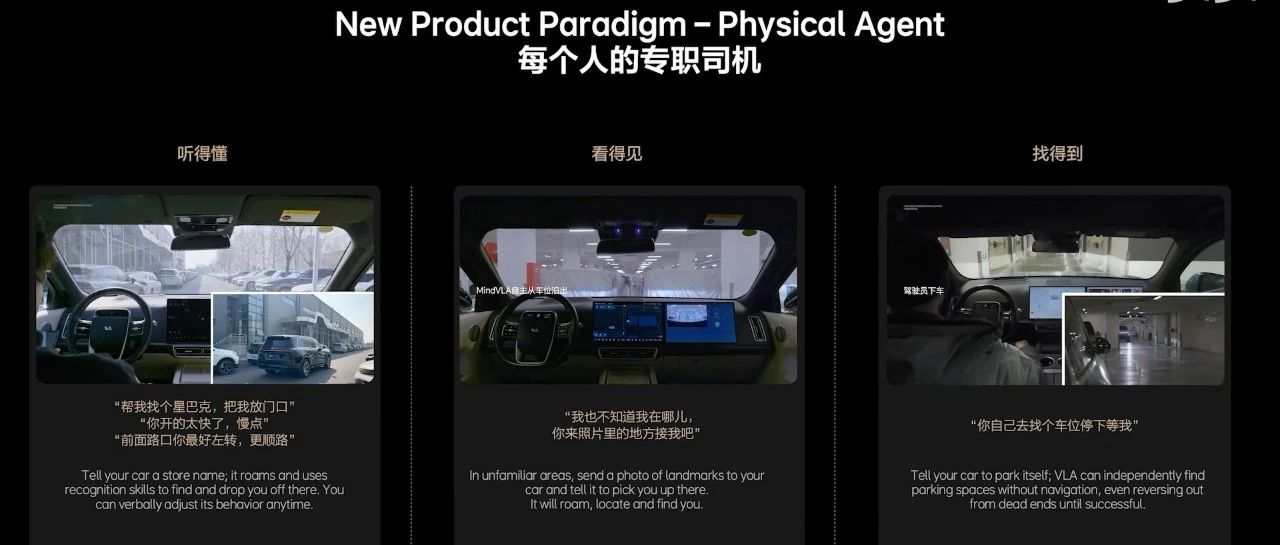
Core Viewpoint - The article discusses the challenges and advancements in the deployment of Visual-Language-Action (VLA) models in autonomous driving, emphasizing the integration of 3D spatial understanding with global semantic comprehension. Group 1: Challenges in VLA Deployment - The difficulties in deploying VLA models include multi-modal alignment, data training, and single-chip deployment, but advancements in new chip technologies may alleviate these challenges [2][3][5]. - The alignment issue between Visual-Language Models (VLM) and VLA is gradually being resolved with the release of advanced models like GPT-5, indicating that the alignment is not insurmountable [2][3]. Group 2: Technical Innovations - The VLA model incorporates a unique architecture that combines 3D local spatial understanding with 2D global comprehension, enhancing its ability to interpret complex environments [3][7]. - The integration of diffusion models into VLA is a significant innovation, allowing for improved trajectory generation and decision-making processes [5][6]. Group 3: Comparison with Competitors - The gradual transition from Level 2 (L2) to Level 4 (L4) autonomous driving is highlighted as a strategic approach, contrasting with competitors who may focus solely on L4 from the outset [9][10]. - The article draws parallels between the strategies of different companies in the autonomous driving space, particularly comparing the approaches of Tesla and Waymo [9][10]. Group 4: Future Developments - Future iterations of the VLA model are expected to scale in size and performance, with potential increases in parameters from 4 billion to 10 billion, while maintaining efficiency in deployment [16][18]. - The company is focused on enhancing the model's reasoning capabilities through reinforcement learning, which will play a crucial role in its development [13][51]. Group 5: User Experience and Functionality - The article emphasizes the importance of user experience, particularly in features like voice control and memory functions, which are essential for a seamless interaction between users and autonomous vehicles [18][25]. - The need for a robust understanding of various driving scenarios, including complex urban environments and highway conditions, is crucial for the model's success [22][23]. Group 6: Data and Training - The transition from VLM to VLA necessitates a complete overhaul of data labeling processes, as the requirements for training data have evolved significantly [32][34]. - The use of synthetic data is acknowledged, but the majority of the training data is derived from real-world scenarios to ensure the model's effectiveness [54]. Group 7: Regulatory Considerations - The company is actively engaging with regulatory bodies to ensure that its capabilities align with legal requirements, indicating a proactive approach to compliance [35][36]. - The relationship between technological advancements and regulatory frameworks is highlighted as a critical factor in the deployment of autonomous driving technologies [35][36].


Meta王炸DINOv3:视觉自监督新巅峰!7B模型狂揽多任务SOTA
自动驾驶之心· 2025-08-16 16:04
Core Insights - The article discusses the advancements in self-supervised learning (SSL) with the introduction of DINOv3, which aims to overcome the challenges of data dependency and annotation costs in computer vision [4][9][57] - DINOv3 is positioned as a versatile self-supervised model capable of handling various tasks without the need for fine-tuning, thus enhancing its practical applicability across different fields [57] Group 1: Challenges in Self-Supervised Learning - The development of self-supervised visual models has faced three major bottlenecks: data quality control, dense feature degradation, and limited adaptability to various scenarios [12][13] - DINOv3 aims to address these challenges by creating a robust foundational model that can provide high-quality dense features and adapt to a wide range of applications [12][57] Group 2: Technical Innovations of DINOv3 - DINOv3 incorporates a novel data construction strategy, utilizing a dataset of 1.689 billion images through a layered filtering and mixed sampling approach, which significantly enhances the quality of training data [16][18] - The training process employs fixed hyperparameters and a 7 billion parameter Vision Transformer (ViT), allowing for consistent learning from vast amounts of data without the complications of dynamic scheduling [20][22] - The introduction of Gram Anchoring addresses the issue of dense feature degradation, improving the spatial specificity of local features during training [24][25] Group 3: Performance and Versatility - DINOv3 demonstrates superior performance across various tasks, including segmentation, depth estimation, and 3D matching, surpassing previous self-supervised models and even some supervised models [41][44] - The model's ability to adapt to high-resolution inputs and its multi-modal capabilities, such as text alignment, further enhance its utility in real-world applications [31][36] - DINOv3's family of models caters to diverse deployment needs, from edge devices to high-performance computing, making it suitable for industrial, remote sensing, and medical imaging applications [50][57]

VLA都上车了,还不知道研究方向???
自动驾驶之心· 2025-08-16 16:04
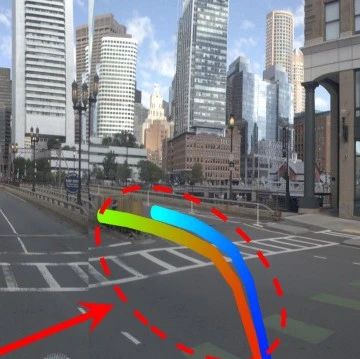
Core Viewpoint - The article discusses the advancements of the Li Auto VLA driver model, highlighting its enhanced capabilities in understanding semantics, reasoning, and trajectory planning, which are crucial for autonomous driving [1][3]. Summary by Sections VLA Model Capabilities - The VLA model has improved in three main areas: better semantic understanding through multimodal input, enhanced reasoning abilities via thinking chains, and closer alignment with human driving intuition through trajectory planning [1]. - Four core capabilities of the VLA model are showcased: spatial understanding, reasoning, communication and memory, and behavioral capabilities [1][3]. Development and Research Trends - The VLA model has evolved from VLM+E2E, incorporating various cutting-edge technologies such as end-to-end learning, trajectory prediction, visual language models, and reinforcement learning [5]. - While traditional perception and planning tasks are still being optimized in the industry, the academic community is increasingly shifting focus towards large models and VLA, indicating a wealth of subfields still open for research [5]. VLA Research Guidance Program - A VLA research paper guidance program has been initiated, receiving positive feedback, with many students eager for a second session. The program aims to help participants systematically grasp key theoretical knowledge and develop their own research ideas [6]. - The program includes a structured curriculum over 14 weeks, covering topics from traditional end-to-end autonomous driving to writing methodologies for research papers [9][11]. Enrollment and Course Structure - The program is limited to 6-8 participants per session, targeting students at various academic levels interested in VLA and autonomous driving [12]. - Participants will gain insights into classic and cutting-edge papers, coding implementations, and methods for selecting research topics and writing papers [13][14]. Course Highlights - The course emphasizes a comprehensive learning experience with a "2+1" teaching model, involving main instructors and experienced research assistants to support students throughout the program [22]. - Students will receive guidance on coding, research ideas, and writing methodologies, culminating in the production of a research paper draft [31][32]. Required Skills and Resources - Participants are expected to have a foundational understanding of deep learning, basic programming skills in Python, and familiarity with PyTorch [19]. - The program encourages the use of high-performance computing resources, ideally with multiple GPUs, to facilitate research and experimentation [19]. Conclusion - The VLA model represents a significant advancement in autonomous driving technology, with ongoing research and educational initiatives aimed at fostering innovation in this field [1][5][31].
你的2026届秋招进展怎么样了?
自动驾驶之心· 2025-08-16 16:04
Core Viewpoint - The article emphasizes the convergence of autonomous driving technology, indicating a shift from numerous diverse approaches to a more unified model, which raises the technical barriers in the industry [1] Group 1 - The industry is witnessing a trend where previously many directions requiring algorithm engineers are now consolidating into unified models such as one model, VLM, and VLA [1] - The article encourages the establishment of a large community to support individuals in the industry, highlighting the limitations of individual efforts [1] - A new job and industry-related community is being launched to facilitate discussions on industry trends, company developments, product research, and job opportunities [1]
VLA与自动驾驶科研论文辅导第二期来啦~
自动驾驶之心· 2025-08-16 12:00
Core Insights - The article discusses the recent advancements in the Li Auto VLA driver model, highlighting its improved capabilities in understanding semantics, reasoning, and trajectory planning, which are crucial for autonomous driving [1][3]. Group 1: VLA Model Capabilities - The VLA model's enhancements focus on four core abilities: spatial understanding, reasoning, communication and memory, and behavioral capabilities [1]. - The reasoning and communication abilities are derived from language models, with memory capabilities utilizing RAG [3]. Group 2: Research and Development Trends - The VLA model has evolved from VLM+E2E, incorporating various cutting-edge technologies such as end-to-end learning, trajectory prediction, visual language models, and reinforcement learning [5]. - While traditional perception and planning tasks are still being optimized in the industry, the academic community is increasingly shifting towards large models and VLA, indicating a wealth of subfields still open for research [5]. Group 3: VLA Research Guidance Program - A VLA research paper guidance program has been initiated, aimed at helping participants systematically grasp key theoretical knowledge and develop their own research ideas [6]. - The program includes a structured 12-week online group research course followed by 2 weeks of paper guidance and a 10-week maintenance period for paper development [14][34]. Group 4: Course Structure and Content - The course covers various topics over 14 weeks, including traditional end-to-end autonomous driving, VLA end-to-end models, and writing methodologies for research papers [9][11][35]. - Participants will gain insights into classic and cutting-edge papers, coding skills, and methods for writing and submitting research papers [20][34]. Group 5: Enrollment and Requirements - The program is limited to 6-8 participants per session, targeting individuals with a background in deep learning and basic knowledge of autonomous driving algorithms [12][15]. - Participants are expected to have a foundational understanding of Python and PyTorch, with access to high-performance computing resources recommended [21].
自动驾驶论文速递 | 视觉重建、RV融合、推理、VLM等
自动驾驶之心· 2025-08-16 09:43
Core Insights - The article discusses two innovative approaches in autonomous driving technology: Dream-to-Recon for monocular 3D scene reconstruction and SpaRC-AD for radar-camera fusion in end-to-end autonomous driving [2][13]. Group 1: Dream-to-Recon - Dream-to-Recon is a method developed by the Technical University of Munich that enables monocular 3D scene reconstruction using only a single image for training [2][6]. - The method integrates a pre-trained diffusion model with a deep network through a three-stage framework: 1. View Completion Model (VCM) enhances occlusion filling and image distortion correction, achieving a PSNR of 23.9 [2][6]. 2. Synthetic Occupancy Field (SOF) constructs dense 3D scene geometry from multiple synthetic views, with occlusion reconstruction accuracy (IE_acc) reaching 72%-73%, surpassing multi-view supervised methods by 2%-10% [2][6]. 3. A lightweight distilled model converts generated geometry into a real-time inference network, achieving overall accuracy (O_acc) of 90%-97% on KITTI-360/Waymo, with a 70x speed improvement (75ms/frame) [2][6]. - The method provides a new paradigm for efficient 3D perception in autonomous driving and robotics without complex sensor calibration [2][6]. Group 2: SpaRC-AD - SpaRC-AD is the first radar-camera fusion baseline framework for end-to-end autonomous driving, also developed by the Technical University of Munich [13][16]. - The framework utilizes sparse 3D feature alignment and Doppler velocity measurement techniques, achieving a 4.8% improvement in 3D detection mAP, an 8.3% increase in tracking AMOTA, a 4.0% reduction in motion prediction mADE, and a 0.11m decrease in trajectory planning L2 error [13][16]. - The overall radar-based fusion strategy significantly enhances performance across multiple tasks, including 3D detection, multi-object tracking, online mapping, and motion prediction [13][16]. - Comprehensive evaluations on open-loop nuScenes and closed-loop Bench2Drive benchmarks demonstrate its advantages in enhancing perception range, improving motion modeling accuracy, and robustness in adverse conditions [13][16].
都在聊轨迹预测,到底如何与自动驾驶结合?
自动驾驶之心· 2025-08-16 00:03
Core Viewpoint - The article emphasizes the significant role of diffusion models in enhancing the capabilities of autonomous driving systems, particularly in data diversity, perception robustness, and decision-making under uncertainty [2][3]. Group 1: Applications of Diffusion Models - Diffusion models improve 3D occupancy prediction, outperforming traditional methods, especially in occluded or low-visibility areas, thus aiding downstream planning tasks [5]. - Conditional diffusion models are utilized for precise image translation in driving scenarios, enhancing system understanding of various road environments [5]. - Stable diffusion models efficiently predict vehicle trajectories, significantly boosting the predictive capabilities of autonomous driving systems [5]. - The DiffusionDrive framework innovatively applies diffusion models to multimodal action distribution, addressing uncertainties in driving decisions [5]. Group 2: Data Generation and Quality - Diffusion models effectively tackle the challenges of insufficient diversity and authenticity in natural driving datasets, providing high-quality synthetic data for autonomous driving validation [5]. - Future explorations will include video generation to further enhance data quality, particularly in 3D data annotation [5]. Group 3: Recent Research Developments - The dual-conditioned temporal diffusion model (DcTDM) generates realistic long-duration driving videos, outperforming existing models by over 25% in consistency and frame quality [7]. - LD-Scene integrates large language models with latent diffusion models for user-controllable adversarial scenario generation, achieving state-of-the-art performance in generating high adversariality and diversity [11]. - DualDiff enhances multi-view driving scene generation through a dual-branch conditional diffusion model, achieving state-of-the-art performance in various downstream tasks [14][34]. Group 4: Traffic Simulation and Scenario Generation - DriveGen introduces a novel traffic simulation framework that generates diverse traffic scenarios, supporting customized designs and improving downstream algorithm performance [26]. - Scenario Dreamer utilizes a vectorized latent diffusion model for generating driving simulation environments, demonstrating superior performance in realism and efficiency [28][31]. - AdvDiffuser generates adversarial safety-critical driving scenarios, enhancing transferability across different systems while maintaining high realism and diversity [68]. Group 5: Safety and Robustness - AVD2 enhances understanding of accident scenarios through the generation of accident videos aligned with natural language descriptions, significantly advancing accident analysis and prevention [39]. - Causal Composition Diffusion Model (CCDiff) improves the generation of closed-loop traffic scenarios by incorporating causal structures, demonstrating enhanced realism and user preference alignment [44].
端到端离不开的轨迹预测,这个方向还有研究价值吗?
自动驾驶之心· 2025-08-16 00:03
Core Viewpoint - The article discusses the ongoing relevance of trajectory prediction in the context of end-to-end models, highlighting that many companies still utilize layered approaches where trajectory prediction remains a key algorithmic focus. This includes both joint trajectory prediction and target trajectory prediction, which continue to be active research areas with significant output in conferences and journals [1]. Group 1: Trajectory Prediction Research - The article emphasizes the importance of multi-agent trajectory prediction, which aims to forecast future movements based on historical trajectories of multiple interacting entities, crucial for applications in autonomous driving, intelligent monitoring, and robotic navigation [1]. - Traditional methods for trajectory prediction often rely on recurrent neural networks, convolutional networks, or graph neural networks, while generative models like GANs and CVAEs, although capable of simulating multimodal distributions, are noted for their inefficiency [1]. Group 2: Diffusion Models - Diffusion models have emerged as a new class of models that generate complex distributions through a stepwise denoising process, achieving significant breakthroughs in image generation and showing promise in trajectory prediction by enhancing multimodal modeling capabilities [2]. - Specific models such as the Leapfrog Diffusion Model (LED) and Mixed Gaussian Flow (MGF) have demonstrated substantial improvements in accuracy and efficiency, with LED achieving real-time predictions and MGF enhancing diversity in trajectory predictions [2]. Group 3: Course Objectives and Structure - The course aims to provide a systematic understanding of trajectory prediction and diffusion models, helping participants integrate theoretical knowledge with practical coding skills, and develop their own research ideas [6]. - Participants will gain insights into writing and submitting academic papers, with a focus on accumulating a methodology for writing and receiving guidance on revisions and submissions [6]. Group 4: Target Audience and Outcomes - The course is designed for graduate students and professionals in trajectory prediction and autonomous driving, aiming to enhance their resumes and research capabilities [8]. - Expected outcomes include a comprehensive understanding of classic and cutting-edge papers, coding implementations, and the development of a research paper draft [8][9]. Group 5: Course Highlights and Requirements - The course features a "2+1" teaching model with experienced instructors and a structured learning experience, ensuring comprehensive support throughout the research process [16][17]. - Participants are required to have a foundational understanding of deep learning and proficiency in Python and PyTorch, with recommendations for hardware specifications to facilitate learning [10][12].
视觉强化学习最新综述:全领域梳理(新加坡国立&浙大&港中文)
自动驾驶之心· 2025-08-16 00:03
Core Insights - The article discusses the integration of Reinforcement Learning with Computer Vision, marking a paradigm shift in how AI interacts with visual data [3][4] - It highlights the potential for AI to not only understand but also create and optimize visual content based on human preferences, transforming AI from passive observers to active decision-makers [4] Research Background and Overview - The emergence of Visual Reinforcement Learning (VRL) is driven by the successful application of Reinforcement Learning in Large Language Models (LLMs) [7] - The article identifies three core challenges in the field: stability in policy optimization under complex reward signals, efficient processing of high-dimensional visual inputs, and scalable reward function design for long-term decision-making [7][8] Theoretical Foundations of Visual Reinforcement Learning - The theoretical framework for VRL includes formalizing the problem using Markov Decision Processes (MDP), which unifies text and visual generation RL frameworks [15] - Three main alignment paradigms are proposed: RL with human feedback (RLHF), Direct Preference Optimization (DPO), and Reinforcement Learning with Verifiable Rewards (RLVR) [16][18] Core Applications of Visual Reinforcement Learning - The article categorizes VRL research into four main areas: Multimodal Large Language Models (MLLM), Visual Generation, Unified Models, and Visual-Language-Action (VLA) Models [31] - Each area is further divided into specific tasks, with representative works analyzed for their contributions [31][32] Evaluation Metrics and Benchmarking - A layered evaluation framework is proposed, detailing specific benchmarks for each area to ensure reproducibility and comparability in VRL research [44][48] - The article emphasizes the need for effective metrics that align with human perception and can validate the performance of VRL systems [61] Future Directions and Challenges - The article outlines four key challenges for the future of VRL: balancing depth and efficiency in reasoning, addressing long-term RL in VLA tasks, designing reward models for visual generation, and improving data efficiency and generalization capabilities [50][52][54] - It suggests that future research should focus on integrating model-based planning, self-supervised visual pre-training, and adaptive curriculum learning to enhance the practical applications of VRL [57]
又有很多自动驾驶工作中稿了ICCV 2025,我们发现了一些新趋势的变化...
自动驾驶之心· 2025-08-16 00:03
Core Insights - The article discusses the latest trends and research directions in the field of autonomous driving, highlighting the integration of multimodal large models and vision-language action generation as key areas of focus for both academia and industry [2][5]. Group 1: Research Directions - The research community is concentrating on several key areas, including the combination of MoE (Mixture of Experts) with autonomous driving, benchmark development for autonomous driving, and trajectory generation using diffusion models [2]. - The closed-loop simulation and world models are emerging as critical needs in autonomous driving, driven by the limitations of real-world open-loop testing. This approach aims to reduce costs and improve model iteration efficiency [5]. - There is a notable emphasis on performance improvement in object detection and OCC (Occupancy Classification and Counting), with many ongoing projects exploring specific pain points and challenges in these areas [5]. Group 2: Notable Projects and Publications - "ORION: A Holistic End-to-End Autonomous Driving Framework by Vision-Language Instructed Action Generation" is a significant project from Huazhong University of Science and Technology and Xiaomi, focusing on integrating vision and language for action generation in autonomous driving [5]. - "All-in-One Large Multimodal Model for Autonomous Driving" is another important work from Zhongshan University and Meituan, contributing to the development of comprehensive models for autonomous driving [6]. - "MCAM: Multimodal Causal Analysis Model for Ego-Vehicle-Level Driving Video Understanding" from Chongqing University aims to enhance understanding of driving scenarios through multimodal analysis [8]. Group 3: Simulation and Reconstruction - The project "Dream-to-Recon: Monocular 3D Reconstruction with Diffusion-Depth Distillation from Single Images" from TUM focuses on advanced reconstruction techniques for autonomous driving [14]. - "CoDa-4DGS: Dynamic Gaussian Splatting with Context and Deformation Awareness for Autonomous Driving" from Fraunhofer IVI and TU Munich is another notable work that addresses dynamic scene reconstruction [16]. Group 4: Trajectory Prediction and World Models - "Foresight in Motion: Reinforcing Trajectory Prediction with Reward Heuristics" from Hong Kong University of Science and Technology and Didi emphasizes the importance of trajectory prediction in autonomous driving [29]. - "World4Drive: End-to-End Autonomous Driving via Intention-aware Physical Latent World Model" from the Chinese Academy of Sciences focuses on developing a comprehensive world model for autonomous driving [32].