WULING MOTORS(00305)

Search documents
中国汽车股“逆风翻盘”
Ge Long Hui· 2025-08-11 19:12
Core Viewpoint - The recent increase in tariffs on technology products by the US has accelerated the urgency for domestic substitution in China, while the central bank's liquidity release is expected to support the technology and automotive sectors [2][4][21]. Group 1: Market Performance - On August 7, US imposed approximately 100% tariffs on technology products, exempting domestic manufacturers, which has heightened the urgency for domestic substitution [2]. - The People's Bank of China announced a 0.5% reduction in the reserve requirement ratio, releasing about 1 trillion yuan in long-term funds, and conducted a 700 billion yuan reverse repurchase operation to support technology innovation, consumption, and small enterprises [2]. - Following these developments, the three major stock indices in China turned positive, with over 70% of 101 Chinese automotive stocks rising, averaging a price increase of 3.23% [4][21]. Group 2: Automotive Sector Highlights - The total market capitalization of Chinese automotive stocks increased by 35.35 billion yuan to 10.76 trillion yuan, despite declines in major stocks like BYD and Xiaomi [5]. - The intelligent driving sector saw a significant weekly increase of 6.02%, likely due to the World Robot Conference and supportive policies in Shanghai [5]. - Notable stock performances included Cao Cao's rise of 30.09%, benefiting from an 18.11% surge on August 7, and Dongfeng Group's unexpected stock price increase despite a 90% drop in expected net profit [6][7][8]. Group 3: Individual Stock Performances - Cao Cao's stock price increased by 30.09%, while Dongfeng Group's stock rose by 22.84% despite a significant profit drop [7][8]. - Other notable performers included Hesai with a 20.82% increase and multiple stocks like Zhongtai and Wuling rising over 15% [6][7]. - Conversely, Jianghuai Auto led the decline with a 7.22% drop, while other major players like BYD and Xiaomi also experienced declines [17][18]. Group 4: Future Outlook - The liquidity release and foreign capital inflow are expected to inject confidence into the market, particularly benefiting sectors focused on intelligence and embodied intelligence [21]. - The ability of automotive companies to navigate the challenges of domestic substitution and embrace intelligent transformation will be crucial for their long-term success [21].




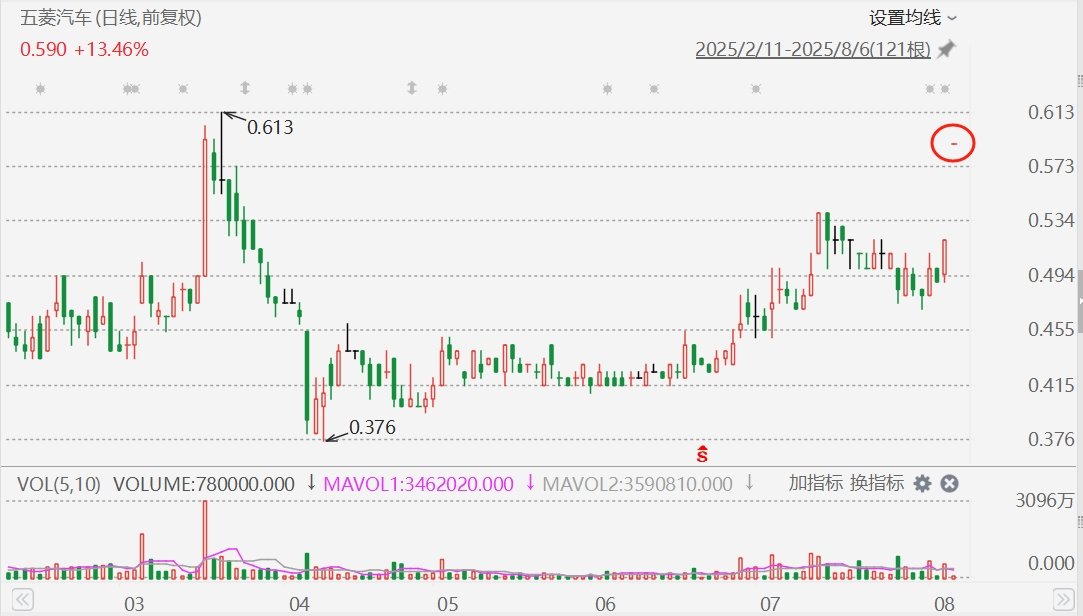
五菱汽车(00305.HK)8月8日收盘上涨9.43%,成交1142.23万港元
Jin Rong Jie· 2025-08-08 08:39
Company Performance - Wuling Motors reported a total revenue of 7.949 billion yuan for the year ending December 31, 2024, a decrease of 24.18% year-on-year [2] - The net profit attributable to shareholders was 50.621 million yuan, an increase of 115.62% year-on-year [2] - The gross profit margin stood at 10.82%, while the debt-to-asset ratio was 77.91% [2] Stock Performance - As of August 8, Wuling Motors' stock closed at 0.58 HKD per share, reflecting a rise of 9.43% with a trading volume of 19.93 million shares and a turnover of 11.4223 million HKD [1] - Over the past month, Wuling Motors has seen a cumulative increase of 9.28%, and a year-to-date increase of 30.77%, outperforming the Hang Seng Index by 25.03% [2] Industry Context - The average price-to-earnings (P/E) ratio for the automotive industry (TTM) is 16.56 times, with a median of 8.96 times [3] - Wuling Motors has a P/E ratio of 31.98 times, ranking 27th in the industry [3] - Other automotive companies have significantly lower P/E ratios, such as China Automotive Interior at 1.08 times and Pulin Chengshan at 3.22 times [3] Future Outlook - It is anticipated that Wuling Motors will report a profit attributable to shareholders of approximately 38 million RMB for the mid-year report in 2025, representing a year-on-year increase of 2295.96% [4]
五菱汽车再涨近6% 预计上半年纯利同比增近3倍 未来业绩有望继续增长
Zhi Tong Cai Jing· 2025-08-08 03:48
Core Viewpoint - Wuling Motors (00305) has experienced a significant stock price increase, with a recent rise of approximately 6%, currently trading at 0.55 HKD, with a transaction volume of 1.3457 million HKD. The company has issued a profit warning, projecting a net profit of around 84 million RMB for the first half of 2025, representing a year-on-year increase of approximately 298% [1] Financial Performance - The expected profit attributable to the company's owners is projected to increase significantly to approximately 38 million RMB [1] - The improvement in performance is primarily attributed to enhanced gross margins and a reduction in general and administrative expenses due to ongoing cost control measures [1] - Additionally, a decrease in losses from joint ventures is expected to contribute to the significant year-on-year increase in both group net profit and profit attributable to the owners [1] Industry Insights - Tianfeng Securities (601162) has released a research report highlighting that Wuling Motors benefits from the nearly century-long manufacturing experience of its controlling shareholder, Guangxi Automobile Group [1] - The company focuses on automotive components, automotive power systems, and the design and development of commercial vehicles, including new energy vehicles, with a core emphasis on automotive components [1] - Given the company's research capabilities in the new energy sector and its continuous investment and innovation in building a comprehensive independent industrial chain, future performance growth is anticipated [1]
港股午评|恒生指数早盘涨0.18% 煤炭股涨幅居前
智通财经网· 2025-08-06 04:05
Group 1: Market Performance - Hang Seng Index rose by 0.18%, gaining 45 points to close at 24,947 points; Hang Seng Tech Index increased by 0.03% [1] - Hong Kong stock market saw a morning trading volume of 120.6 billion HKD [1] Group 2: Notable Stock Movements - Coal stocks led the gains, with China Shenhua (01088) up 3.61% and Yanzhou Coal (01171) up 4.1%, as the fifth round of coking coal price hikes took effect [1] - Crystal International (02228) surged over 8% after signing a pipeline cooperation agreement with DoveTree, with a total order size of approximately 47 billion HKD and an initial payment of 51 million USD received [1] - Tsugami (01651) rose by 4.68% following a nearly 40% increase in Q1 net profit from its Japanese division and positive machine tool production data for June [1] - Xianjian Technology (01302) increased by 6.97%, with expectations of gradual price adjustments for related products in the second half of the year [1] - Pop Mart (09992) gained 6.31%, driven by strong demand for its proprietary IP, with Morgan Stanley highlighting its undervalued platform [1] - China Shipbuilding Defense (00317) rose over 7%, anticipating a more than double year-on-year increase in net profit for the first half of the year [1] - BYD Electronics (00285) increased by over 6%, benefiting from AI-driven growth in the liquid cooling market and entry into the Nvidia supply chain [1] - Wuling Motors (00305) surged over 10% after announcing a profit warning, with mid-term net profit soaring nearly threefold as the company actively expands in the new energy sector [1] Group 3: Declining Stocks - Qilu Expressway (01576) fell by 6.37% after issuing a profit warning, expecting a year-on-year decline of approximately 21.62% in mid-term net profit [2] - Dongfang Zhenxuan (01797) dropped over 7% amid public relations issues and the closure of Sam's Club member stores, despite its stock price doubling since early July [3] - Boya Interactive (00434) declined by over 6%, projecting a year-on-year profit decrease of 25% to 35% for the first half of the year [4]


异动盘点0806|松景科技复牌逾40%,玖龙纸业再涨超10%;美国福泰制药大幅下跌近20%
贝塔投资智库· 2025-08-06 04:01
Group 1 - Angelalign (06699) opened nearly 19% higher after a positive earnings forecast, driven by strategic price adjustments in its core Chinese business and continued growth in revenue outside China [1] - Songjing Technology (01079) resumed trading with an opening increase of over 40% [1] - Jingtai Holdings (02228) opened more than 9% higher after announcing a significant partnership with DoveTree, valued at approximately HKD 47 billion (USD 5.99 billion) for AI pharmaceutical development [1] Group 2 - Shunmei Co., Ltd. (02145) saw an early morning increase of over 5%, projecting a revenue of RMB 4.09 billion to RMB 4.11 billion for the first half of 2025, a year-on-year growth of 16.8%-17.3% [2] - Nine Dragons Paper (02689) rose over 10% following the successful commissioning of its PM56 production line, which can produce 250,000 tons of high-grade cultural paper annually [2] Group 3 - Giant Star Legend (06683) increased over 1% after announcing a collaboration with Jiushi Wen Chuan for a large-scale IP and cultural tourism project in Shanghai [3] - South Manganese Industry (01091) surged over 15%, expecting to turn a profit of at least HKD 150 million in the first half of 2025, compared to a loss of HKD 162.8 million in the same period of 2024 [3] Group 4 - China Shenhua (01088) rose over 3% after announcing plans to acquire significant assets from its controlling shareholder, which would enhance its coal production capacity by 74.5% [4] - Boya Interactive (00434) fell over 6% due to a profit warning, expecting a decrease of approximately 25%-35% in profit for the first half of 2025 compared to the same period in 2024 [4] Group 5 - Wuling Motors (00305) increased over 9% after announcing a projected net profit of approximately RMB 84 million for the first half of 2025, a significant increase from RMB 21.125 million in the same period of 2024 [5] Group 6 - Hims & Hers Health (HIMS.US) dropped 12.36% after reporting second-quarter sales of USD 545 million, below market expectations [6] - Palantir (PLTR.US) rose 7.85% after reporting second-quarter revenue of over USD 1 billion, a 48% year-on-year increase [6] Group 7 - Futu Holdings (FUTU.US) increased by 2.82% after UBS raised its target price, citing strong expected performance in the second quarter [7] - Daqo New Energy (DQ.US) rose 3.68% as market signals indicated positive changes in the photovoltaic polysilicon sector [7] Group 8 - Li Auto (LI.US) saw a slight increase in stock price after announcing adjustments to its electric vehicle model pricing [8] - Vertex Pharmaceuticals (VRTX.US) fell 20.60% after failing to meet key endpoints in a clinical trial [8] Group 9 - Chinese gaming stocks collectively rose, with Bilibili (BILI.US) up 2.07% following a report indicating a 14.08% year-on-year increase in the domestic gaming market [9] Group 10 - Taiwan Semiconductor Manufacturing Company (TSM.US) fell 2.70% amid reports of a potential technology leak involving its 2nm chip process [9] - Advanced Micro Devices (AMD.US) decreased by 1.40% despite reporting a 32% year-on-year revenue increase for the second quarter [10]



五菱汽车上半年预盈8400万元,同比预增298%
Ju Chao Zi Xun· 2025-08-06 02:49
Group 1 - Wuling Motors expects a net profit of approximately 84 million yuan for the six months ending June 30, 2025, representing an increase of about 298% compared to 21.125 million yuan for the same period in 2024 [2] - The significant improvement in Wuling Motors' performance is attributed to an increase in gross margin and a reduction in general and administrative expenses due to ongoing cost control measures [2] - The company anticipates a substantial increase in profit attributable to owners, projected to reach approximately 38 million yuan, up from 1.586 million yuan in the previous year [2] Group 2 - Wuling Motors is focused on leveraging significant opportunities arising from the rapid development of the global automotive industry chain [2] - The company has initiated the "Lingshi Project" as part of its strategic plan for 2025, which includes the "131 Strategy" aimed at establishing a new energy vehicle brand and achieving national champion status in three key product areas [3] - The company aims to accelerate the implementation of the "Lingshi Project," enhance product quality, and expand both domestic and international markets to provide more valuable and environmentally friendly products [3]
五菱汽车盈喜后涨超10% 中期净利同比飙升近三倍 公司积极布局新能源产业
Zhi Tong Cai Jing· 2025-08-06 02:15
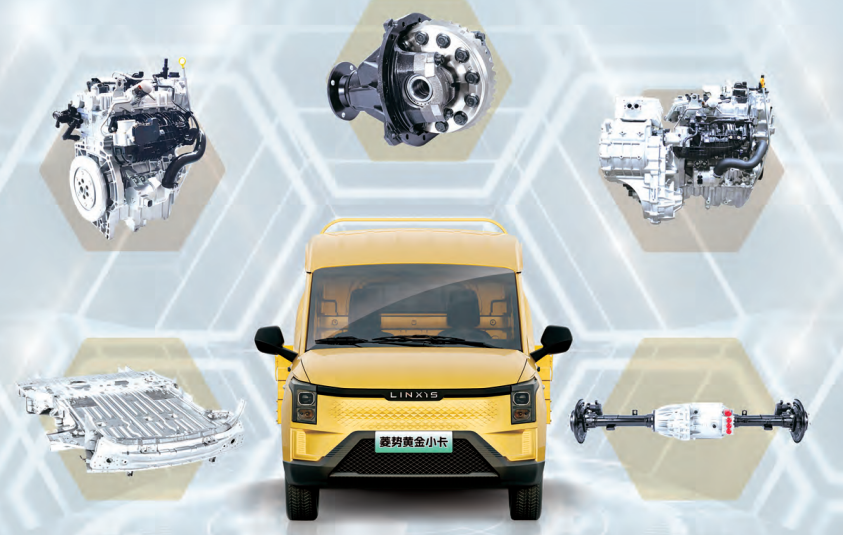
Core Viewpoint - Wuling Motors (00305) has announced a significant increase in expected net profit for the first half of 2025, leading to a stock price increase of over 10% following the earnings announcement [1] Financial Performance - The company anticipates a net profit of approximately RMB 84 million for the first half of 2025, representing an increase of about 298% compared to the RMB 21.125 million net profit recorded in the first half of 2024 [1] - The profit attributable to the company's owners is expected to rise significantly to around RMB 38 million, compared to RMB 1.586 million in the same period of 2024 [1] Strategic Initiatives - The company is actively expanding its presence in the new energy sector, developing a product strategy that integrates traditional power technology upgrades with new energy power systems [1] - Wuling Motors is focused on the development of efficient, low-emission engines and the promotion of new energy products, including electric vehicle engines, control systems, and various hybrid models [1] - The establishment of Liuzhou Wuling New Energy Vehicle Co., Ltd. aims to consolidate the new energy vehicle business and will serve as a major customer for the company's components and products in the future [1] - The company plans to leverage its new strategy to continue its transition into the new energy sector, aligning with market demands [1]
港股异动 | 五菱汽车(00305)盈喜后涨超10% 中期净利同比飙升近三倍 公司积极布局新能源产业
智通财经网· 2025-08-06 02:11
Core Viewpoint - Wuling Motors (00305) experienced a stock price increase of over 10% following a profit forecast, with a current price of HKD 0.57 and a trading volume of HKD 8.0352 million [1] Financial Performance - The company anticipates a net profit of approximately RMB 84 million for the first half of 2025, representing an increase of about 298% compared to RMB 21.125 million in the first half of 2024 [1] - The profit attributable to the company's owners is expected to rise significantly to around RMB 38 million, up from RMB 1.586 million in the same period of 2024 [1] Strategic Initiatives - The company is actively expanding its presence in the new energy sector, focusing on a product strategy that integrates traditional power technology upgrades with new energy power development [1] - Wuling Motors is developing efficient, low-emission engines and promoting new energy products, including electric vehicle engines, control systems, and various hybrid models [1] - The establishment of Liuzhou Wuling New Energy Vehicle Co., Ltd. aims to consolidate the new energy vehicle business and will serve as a major customer for the company's parts and products in the future [1] - The company plans to leverage its new strategy to continue its expansion in the new energy sector and achieve a strategic transformation to meet market demands [1]
五菱汽车高开超13%报0.59港元,预计2025年上半年将录得净利润约8400万元,同比增加约298%
Ge Long Hui· 2025-08-06 02:01
Core Viewpoint - Wuling Motors (0305.HK) announced a positive earnings forecast, expecting a significant increase in net profit for the first half of 2025 compared to the previous year [1] Financial Performance - The company anticipates a net profit of approximately 84 million yuan for the first half of 2025, representing a year-on-year increase of about 298% [1] - The profit attributable to the company's owners is expected to rise sharply to around 38 million yuan, compared to 1.586 million yuan in the first half of 2024 [1] Factors Contributing to Performance - The improvement in performance is primarily attributed to an increase in gross profit margin and a reduction in general and administrative expenses due to ongoing cost control measures [1] - Additionally, a decrease in losses from associated companies has contributed to the significant increase in both net profit and profit attributable to the owners compared to the same period last year [1]
港股异动丨发盈喜,五菱汽车高开超13%
Ge Long Hui· 2025-08-06 01:45
Core Viewpoint - Wuling Motors (0305.HK) announced a positive earnings forecast, expecting significant profit growth in the first half of 2025 compared to the previous year [1] Financial Performance - The company anticipates a net profit of approximately 84 million yuan for the first half of 2025, representing a year-on-year increase of about 298% [1] - The profit attributable to the company's owners is expected to rise sharply to around 38 million yuan, compared to 1.586 million yuan in the first half of 2024 [1] Factors Contributing to Performance - The improvement in performance is primarily attributed to an increase in gross profit margin and a reduction in general and administrative expenses due to ongoing cost control measures [1] - Additionally, a decrease in losses from associated companies has contributed to the significant increase in net profit and profit attributable to the owners for the group [1]