GOME RETAIL(00493)

Search documents
【异动股】港股涨幅榜前十,诺比侃(02635.HK)涨287.75%,轻松健康(02661.HK)涨116.05%


Jin Rong Jie· 2025-12-23 03:15
Core Viewpoint - The Hong Kong stock market has shown significant gains, with notable increases in the share prices of several companies on December 23, 2023 [1][2]. Group 1: Top Gainers - Nobikang (02635.HK) experienced a remarkable increase of 287.75%, reaching a price of 310.20 [2]. - Relax Health (02661.HK) saw a substantial rise of 116.05%, with its latest price at 49.00 [2]. - QPL International (00243.HK) reported a gain of 15.49%, with a current price of 0.41 [2]. - Cornerstone Holdings (01592.HK) increased by 14.71%, now priced at 0.19 [2]. - Huaneng International (01102.HK) rose by 13.95%, with a price of 0.04 [2]. - Times China Holdings (01233.HK) gained 10.26%, reaching a price of 0.12 [2]. - Gome Retail (00493.HK) increased by 7.69%, with a current price of 0.01 [2]. - Starry Sky Chinese (06698.HK) saw a rise of 7.34%, priced at 1.17 [2]. - Yuanxiang Group (08401.HK) increased by 7.22%, with a price of 0.10 [2]. - Zhong'an Holdings Group (08462.HK) rose by 6.52%, now priced at 0.09 [2].
公牛起诉同行,跨界收购与易主潮起丨家居周记
Sou Hu Cai Jing· 2025-12-22 08:51
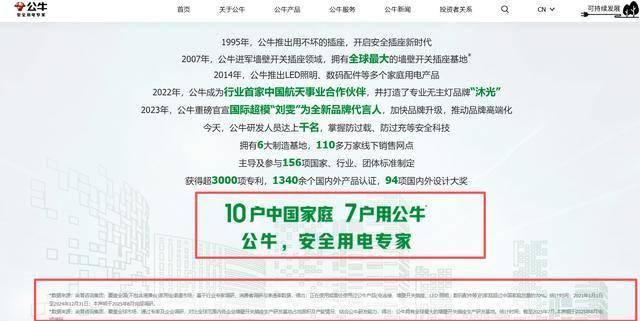
Group 1: Legal Disputes and Corporate Actions - Bull Group has filed a lawsuit against Jia's Electric for misleading advertising, claiming damages of 4.2 million yuan [3] - Jia's Electric argues that Bull Group's slogan "7 out of 10 Chinese families use Bull" is misleading and lacks clarity on data applicability [3] - The lawsuit is currently under court review, with Bull Group emphasizing compliance with legal standards in its operations [3] Group 2: Mergers and Acquisitions - Meike Home is planning to acquire Shenzhen Wandesheng Optoelectronics, with the latter previously valued at 360 million yuan [4][6] - The acquisition is still in the planning stage, and no formal agreements have been signed yet [5] - Wandesheng Optoelectronics specializes in high-speed optical interconnect components and has a strong management team with industry experience [6] Group 3: Corporate Restructuring - PIANO has undergone a change in control, with Chairman Ma Libin stating that he will remain a core shareholder despite transferring shares to Chuxin Micro [8] - The company plans to raise 400 million yuan for core business upgrades and aims to enhance its mid-to-high-end product offerings [8] Group 4: New Market Entrants - Shoukai Holdings has entered the home decoration market by establishing Beijing Xintai Decoration Engineering Co., with a registered capital of 10 million yuan [9][11] - The new company aims to provide comprehensive home decoration services, including renovation and maintenance [11] Group 5: Strategic Developments - TATA Wood has launched a new home solution at its innovation conference, focusing on customer-centric and innovative approaches [12] - Together Renovation Network has introduced a fund custody service to mitigate risks associated with fund misappropriation in home renovations [13][14] - Huayi Sanitary Ware has opened its first overseas production base in Vietnam, marking a significant step in its globalization strategy [15] Group 6: Personnel Changes - Marsman has announced the resignation of Vice President Yang Gen, who had a salary of 1.26 million yuan last year [21] - Guomei Retail has appointed Zhang Yulong as the new company secretary, bringing over 20 years of experience in auditing and corporate governance [24][26] - Beixin Building Materials has appointed Xu Qian as Vice President, aiming to stabilize growth amid declining revenues [27]






国美零售(00493.HK):拟委任张裕龙为公司秘书及授权代表
Ge Long Hui· 2025-12-17 09:19
格隆汇12月17日丨国美零售(00493.HK)发布公告,司徒烱培将不再担任公司秘书、授权代表及法律程序 代表,同时张裕龙已获委任为公司秘书、授权代表及法律程序代表,自2026年1月1日起生效。 ...
国美零售委任张裕龙为公司秘书、授权代表及法律程序代表
Zhi Tong Cai Jing· 2025-12-17 09:18
国美零售(00493)公布,司徒烱培先生将不再担任公司秘书、授权代表及法律程序代表,同时张裕龙先 生已获委任为公司秘书、授权代表及法律程序代表,自2026年1月1日起生效。 ...
国美零售(00493)委任张裕龙为公司秘书、授权代表及法律程序代表
智通财经网· 2025-12-17 09:18
智通财经APP讯,国美零售(00493)公布,司徒烱培先生将不再担任公司秘书、授权代表及法律程序代 表,同时张裕龙先生已获委任为公司秘书、授权代表及法律程序代表,自2026年1月1日起生效。 ...
国美零售(00493) - 公司秘书、授权代表及法律程序代表变更
2025-12-17 09:13
香港交易及結算所有限公司及香港聯合交易所有限公司對本公告之內容概不負責,對其準確性 或完整性亦不發表任何聲明,並明確表示概不就因本公告全部或任何部份內容而產生或因依賴 該等內容而引致之任何損失承擔任何責任。 GOME RETAIL HOLDINGS LIMITED 國美零售控股有限公司 * (於百慕達註冊成立之有限公司) (股份代號:493) 公司秘書、授權代表及法律程序代表變更 國美零售控股有限公司 執行董事 鄒曉春 香港,2025年12月17日 張先生現年49歲,為香港會計師公會會員,並符合上市規則第3.28條規定的專業資 格。他擁有超過20年的審計、會計及公司管治經驗。尤其在公司秘書實務方面,他 擁有超過14年的紮實經驗,對上市規則有著深入的了解,並在確保公司遵守上市規 則、支持董事會職能及處理香港上市公司資訊披露方面,擁有卓越往績。 張先生持有加拿大約克大學(多倫多)工商管理學士(榮譽)學位。 張先生目前擔任本公司財務副總監及若干附屬公司之公司秘書。除上文所披露者 外,張先生未在本公司或其附屬公司擔任任何其他職務,亦未與本公司任何董事、 高級管理人員、主要股東或控股股東有任何關係。依上市規則第13.5 ...
智通港股52周新高、新低统计|12月16日



智通财经网· 2025-12-16 08:44
Group 1: 52-Week Highs - A total of 37 stocks reached 52-week highs as of December 16, with the top three being Base Champion Group (08460) at 25.00%, HYGIEIA GROUP (01650) at 22.88%, and Kangqiao Yuelife (02205) at 22.34% [1] - The closing prices for the top three stocks were 1.000, 0.140, and 0.700 respectively, with their highest prices being 1.000, 0.145, and 1.150 [1] - Other notable stocks that reached new highs include Sunlight Holdings (08451) at 21.62% and Aobang Construction (01615) at 15.15% [1] Group 2: 52-Week Lows - Gome Retail (00493) recorded the largest decline at -21.43%, with a closing price of 0.014 and a lowest price of 0.011 [2] - XL Second South Strategy - U showed a decline of -17.49%, closing at 1.516 with a lowest price of 1.510 [2] - Other significant declines include Semmy Holdings (00756) at -12.50% and Dexin Service Group (02215) at -10.45% [2] Group 3: Additional Declines - Jindong Group - SWR experienced a decline of -1.09%, closing at 100.200 with a lowest price of 99.700 [3] - Shimao Group (00813) saw a decrease of -1.00%, with a closing price of 0.199 and a lowest price of 0.198 [3] - Other companies with minor declines include Huaxia Holdings (01981) at -0.99% and Joy City (06626) at -0.81% [3]
国美零售(00493) - 截至二零二五年十一月三十日止之股份发行人的证券变动月报表
2025-12-01 13:02
股份發行人及根據《上市規則》第十九B章上市的香港預託證券發行人的證券變動月報表 截至月份: 2025年11月30日 狀態: 新提交 致:香港交易及結算所有限公司 公司名稱: 國美零售控股有限公司 呈交日期: 2025年12月1日 I. 法定/註冊股本變動 | 1. 股份分類 | 普通股 | 股份類別 | 不適用 | | 於香港聯交所上市 (註1) | | 是 | | | --- | --- | --- | --- | --- | --- | --- | --- | --- | | 證券代號 (如上市) | 00493 | 說明 | | | | | | | | | | 法定/註冊股份數目 | | | 面值 | | 法定/註冊股本 | | | 上月底結存 | | | 200,000,000,000 | HKD | | 0.025 HKD | | 5,000,000,000 | | 增加 / 減少 (-) | | | | | | HKD | | | | 本月底結存 | | | 200,000,000,000 | HKD | | 0.025 HKD | | 5,000,000,000 | 本月底法定/註冊股本總額: ...
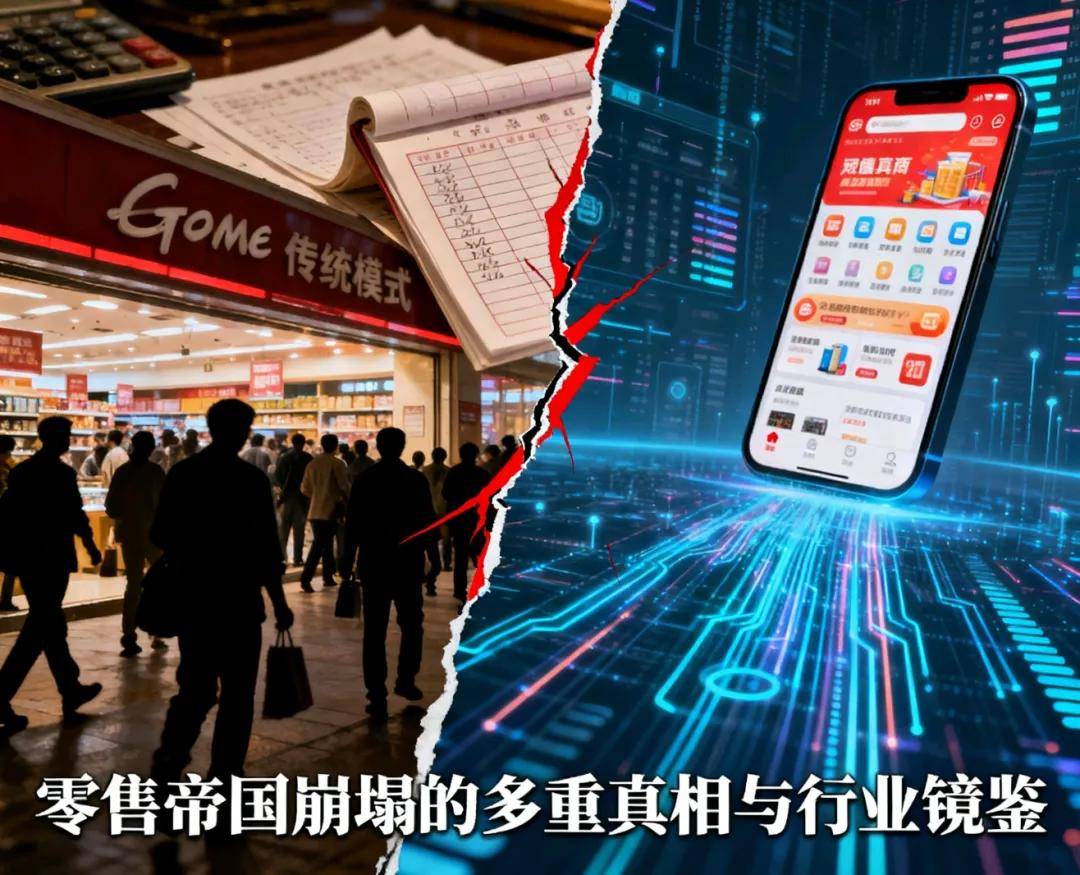
谁“杀”死了国美?——零售帝国崩塌的多重真相与行业镜鉴
Sou Hu Cai Jing· 2025-11-27 02:39
Core Insights - Gome's decline from a retail giant with 4,195 stores to a heavily indebted entity with over 41.3 billion yuan in liabilities exemplifies the failure of traditional retail transformation in China [1] Group 1: Causes of Decline - The collapse of Gome was rooted in three fundamental genetic defects that were present even during its peak, including a flawed business model, strategic misjudgments, and management failures [2] - The "financial-like" empire model relied on extending supplier payment terms, leading to a precarious financial structure where accounts payable reached 14.4 billion yuan, equivalent to 120% of annual revenue [3] - Gome's management failed to recognize the shift towards e-commerce, viewing it merely as a means to clear inventory, which resulted in a significant loss of market share [4] - The centralized decision-making under Huang Guangyu created a rigid organizational structure that faltered after his imprisonment, leading to internal power struggles and a lack of strategic coherence [5] Group 2: Accelerated Downfall - Huang Guangyu's post-prison "revival plan" failed to save Gome and instead led to a cycle of strategic errors, financial depletion, supply chain collapse, and loss of trust [6] - Gome's attempts to pivot towards new business models, such as live-streaming and the metaverse, resulted in massive financial losses without establishing any core competitive advantage [8] - The company faced a debt crisis, with a significant drop in revenue to 4.74 billion yuan in 2024, a 97% decrease from 2022, and a cash position of only 49.16 million yuan [9] - Supplier relationships deteriorated as Gome extended payment terms, leading to a drastic reduction in inventory from over 10 billion yuan to 433 million yuan, a 93.18% decline [10] - Gome's once-advantageous physical store presence became a liability, with an 86% closure rate, leaving only 565 stores by mid-2024 [11] Group 3: Consequences of Collapse - Gome's downfall has triggered a ripple effect in the home appliance retail sector, leading to a significant restructuring of market dynamics [12] - The company has reported continuous losses for eight years, with a total net loss exceeding 38.8 billion yuan and liabilities reaching 41.75 billion yuan [13] - The exit of Gome has accelerated the "Matthew effect" in the appliance retail market, with JD.com and Tmall capturing the majority of market share, while Gome's share dwindled to less than 5% [14] - Consumer trust has eroded significantly, with numerous complaints regarding prepaid card issues and unresponsive customer service, leading to a brand reputation crisis [15] Group 4: Industry Implications - Gome's collapse serves as a cautionary tale for traditional retail, highlighting the need for adaptability to new market realities and the importance of a robust supply chain [18] - The new competitive landscape emphasizes integrated channels, supply chain dominance, and service enhancement, contrasting sharply with Gome's outdated low-price sales strategy [18] - The case of Gome underscores the critical importance of cash flow management in the capital-intensive retail sector, as the company exhausted its resources in pursuit of fleeting trends [20]
AI是泡沫?50家企业实战证明:真正的机会藏在“落地体系”里
混沌学园· 2025-11-18 11:58
Core Insights - The article discusses the cyclical nature of AI investment, highlighting the trend of initial enthusiasm followed by disillusionment as projects fail to deliver returns [2][3] - It emphasizes the importance of a "mid-level landing" approach, where businesses must align AI technology with their specific operational needs to achieve profitability [7][16] Group 1: AI Investment Trends - Many companies experience a cycle of "initial hype and year-end cooling," leading to project abandonment due to lack of visible returns [2] - The AI landscape is characterized by a divide between grand narratives of large models and practical applications that fail to connect with business needs [2][3] - A significant number of enterprises abandon AI initiatives due to various challenges, with only a small fraction achieving tangible results [3] Group 2: Successful AI Implementation - Companies that successfully monetize AI have identified the "AI + business" mid-level integration path, focusing on practical applications rather than abstract concepts [4][7] - The "Chaos AI Commercial Landing Application White Paper" aims to bridge the gap between macro concepts and micro techniques, providing actionable insights for businesses [4][16] - Successful AI applications are characterized by their ability to enhance operational efficiency and generate revenue, rather than merely serving as technological novelties [10][21] Group 3: Common Pitfalls - Companies often fall into the trap of "showy investments" that do not address real business needs, leading to low usage rates and increased customer complaints [8] - There is a tendency for businesses to become overly focused on minor technical details, neglecting the core business objectives that drive profitability [9] Group 4: Identifying Real Opportunities - The article outlines a framework for identifying genuine opportunities in AI by focusing on mid-level integration that aligns technology with specific business scenarios [10][21] - Successful case studies demonstrate that AI can significantly improve efficiency in repetitive tasks, leading to quick returns on investment [10][19] Group 5: L1-L5 Implementation Framework - The L1-L5 framework provides a structured approach for businesses to implement AI, starting from low-cost, high-impact initiatives to more complex, ecosystem-level integrations [15][18] - Each level of the framework is tailored to different business needs, ensuring that companies can find suitable entry points for AI adoption [16][24] Group 6: Practical Recommendations - Small and medium-sized enterprises are encouraged to start with L1 initiatives, focusing on easily implementable tasks that yield quick results [28] - Mature companies should aim for L2-L3 breakthroughs by optimizing cross-departmental processes and embedding AI into core products [29] - Leading enterprises are advised to pursue L4-L5 strategies, developing AI-native products and building ecosystems to capture long-term value [31]