
CHINA TELECOM(00728)

Search documents
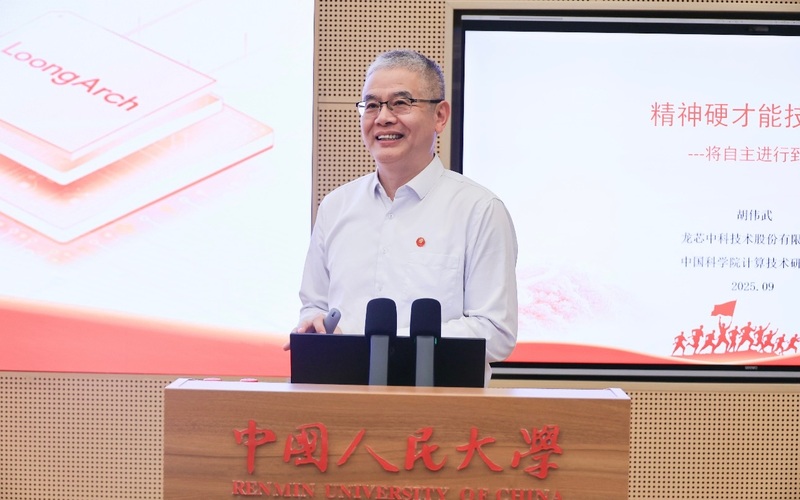
首都产业一线科技人才宣讲团走进人民大学,激发青年使命担当
Xin Jing Bao· 2025-09-25 08:22
Core Viewpoint - The series of lectures by frontline technology talents aims to inspire students with stories of dedication to national development and to cultivate a sense of mission among the youth [1][12]. Group 1: Event Overview - The event is part of a series of lectures organized by the Beijing Municipal Education and Technology Talent Work Leadership Group, featuring 36 frontline technology talents visiting over 20 universities from mid-September to mid-October [1]. - The lectures combine political education with practical experiences, allowing students to connect with real-world applications of their studies [1][5]. Group 2: Key Speakers and Their Contributions - Notable speakers include Hu Weiwu, Chairman and General Manager of Loongson Technology, who emphasized the importance of setting goals related to national interests and the need for hard work [6][11]. - Liu Qi, Chief Expert in Cybersecurity at China Telecom, shared insights on the importance of perseverance and the value of solitary efforts in achieving significant outcomes [6][7]. - Zheng Yu, Vice President and Chief Data Scientist at JD.com, encouraged students to embrace challenges and maintain a long-term vision for their careers [6][7]. Group 3: Educational Goals - The initiative aims to cultivate innovative talents capable of interdisciplinary thinking and problem-solving, aligning with the urgent needs of technological innovation and industrial transformation [3][4]. - The lectures serve to enrich the teaching materials for ideological and political education in universities, enhancing the relevance and impact of classroom learning [5][12]. Group 4: Student Engagement - Students expressed admiration for the speakers' dedication to national service and their impactful stories, which resonate with the current technological landscape and the importance of contributing to national development [10][11]. - The event aims to instill a sense of responsibility and mission among students, encouraging them to actively participate in the construction of a digital China and contribute to the nation's progress [7][12].




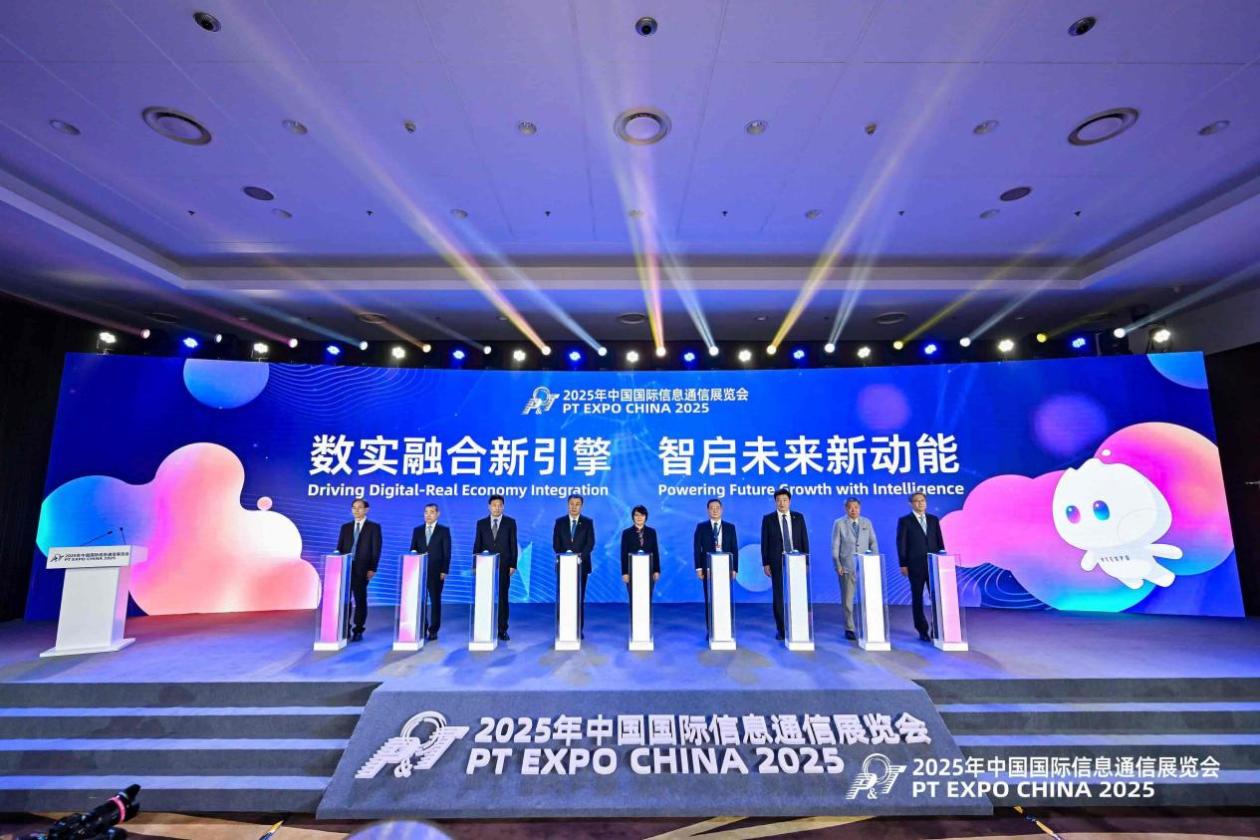
2025年中国国际信息通信展在京开幕,全面展示数实融合成果
Huan Qiu Wang· 2025-09-25 08:16
Core Viewpoint - The 2025 China International Information Communication Exhibition emphasizes the integration of digital and real economies, showcasing the latest achievements in the information and communication industry as a new engine for future development [1][3]. Group 1: Industry Insights - The exhibition highlights the role of the information and communication industry in driving the deep integration of digital and real economies, fostering new productivity [1][3]. - The Chief Engineer of the Ministry of Industry and Information Technology, Zhong Zhihong, stated that the current era is crucial for advancing national rejuvenation and that the industry must seize strategic opportunities to promote this integration [5][6]. - The International Telecommunication Union (ITU) praised China's contributions to global technology standards, particularly in AI and quantum computing, and expressed a desire for deeper international cooperation [5][6]. Group 2: Technological Developments - The exhibition features advancements in technologies such as 5G-A, AI applications in spatial governance, low-altitude smart networks, and satellite internet integration [6][8]. - The main forum of the event emphasized the acceleration of new-generation information technologies, including 5G, AI, big data, and cloud computing, as vital carriers of new productivity [8]. - A keynote report highlighted AI as a core variable in the new stage of digital and real economy integration, with cloud computing as a key support [8]. Group 3: Event Highlights - The exhibition will run until September 26, featuring over ten events, including award ceremonies and the release of more than twenty research reports and action plans [8]. - The event also includes the "2025 BRICS Digital Economy and Trade Investment Forum," aimed at expanding international cooperation and building a global digital governance system [8].


推动数实深度融合 促进AI应用繁荣
Ke Ji Ri Bao· 2025-09-24 23:41
Core Insights - The article highlights the advancements in China's information and communication industry, showcasing innovations in 5G technology and artificial intelligence, as well as the importance of integrating digital and physical infrastructures for future growth [1][2][3][4]. Group 1: Industry Developments - As of August 2023, China has established 4.646 million 5G base stations and has 1.154 billion 5G mobile phone users, maintaining a global lead in key metrics such as 5G user penetration and gigabit optical network coverage [2]. - The integration of 5G technology into 86 categories of the national economy is accelerating, with a focus on enhancing production core processes [2]. - The industry is actively pursuing technological innovation, with a push for the development of 5G-A product systems and the advancement of 6G technology [3]. Group 2: Technological Innovations - The introduction of a new disaster-resistant base station by China Tower, capable of withstanding level 8 earthquakes and level 12 winds, demonstrates the commitment to ensuring communication continuity during extreme disasters [1]. - The event showcased the integration of AI and 5G technologies, with applications such as intelligent robots performing alongside human dancers, enabled by ultra-low latency 5G networks [3][4]. - China Telecom and China Mobile are developing comprehensive computing capabilities, including quantum computing and AI models, to meet diverse industry needs [4]. Group 3: Future Outlook - The industry anticipates a shift towards AI-driven applications, with predictions that by 2030, the number of intelligent agents will surpass traditional apps, creating new opportunities for operators [4]. - There is a strong emphasis on fostering the integration of AI and manufacturing, aiming to cultivate a new generation of industrial intelligent agents [5].
中国电信相关公司新增一项625.00万元的招标项目
Xin Lang Cai Jing· 2025-09-24 12:28
Group 1 - China Tower Corporation, a subsidiary of China Telecom, announced a tender for IT system data labeling services with a budget of 6.25 million yuan [1] - The tender was published on September 24, 2025, indicating ongoing investment in IT infrastructure [1] - China Telecom holds a 20.50% stake in China Tower Corporation, highlighting the strategic partnership between the two companies [1]


黄土高原,崛起一个算力重镇
投资界· 2025-09-24 07:56
Core Viewpoint - The article highlights the transformation of Qingyang from a traditional energy city to a key hub in China's computing power landscape, driven by the "East Data West Computing" national strategy, with a focus on attracting AI and digital economy enterprises [2][4][12]. Group 1: Industry Transformation - Qingyang is emerging as one of the eight major computing power hubs in China, leveraging its abundant renewable energy resources to establish a national data center cluster [4][10]. - By August 2025, Qingyang's computing power scale is expected to exceed 66,000 PFlops, with projections to surpass 100,000 PFlops by the end of the year, positioning it among the top tier of national computing power clusters [4][10]. - Over 300 digital economy enterprises have gathered in Qingyang, with half being leading companies in the AI sector [4][10]. Group 2: Investment and Infrastructure - Significant investments have been made in Qingyang's computing infrastructure, including projects from China Telecom, China Mobile, and China Energy, with total investments reaching billions [11]. - In 2023, China Telecom invested approximately 4.47 billion yuan in the first phase of its smart recovery center, while China Energy committed 5.5 billion yuan to a zero-carbon big data industrial park [11]. - The establishment of a 1 billion yuan computing power voucher policy aims to reduce R&D costs for enterprises by 30%, attracting major AI companies to set up training bases [7][16]. Group 3: Emerging Sectors - Qingyang is also developing a low-altitude economy, with investments in drone technology and related industries, positioning itself as the first "low-altitude economy city" in the province [12][14]. - The city has introduced a 10 billion yuan industrial development guidance fund to support emerging industries such as AI and low-altitude economy, leveraging a "fiscal + financial" model to attract social capital [14][16]. - The establishment of a comprehensive planning system for low-altitude economic development is underway, ensuring orderly progress in this sector [16]. Group 4: Challenges and Future Outlook - Despite the advancements, challenges remain, including an incomplete supporting industrial chain and difficulties in attracting high-end talent [16]. - The article expresses optimism for Qingyang's future as it continues to develop its computing power capabilities and explore new industrial narratives [17].


独家:中国电信安全业务前7月收入近30亿元同比增幅达双位数增长
Xin Lang Cai Jing· 2025-09-24 06:09
Group 1 - The core viewpoint is that China Telecom's security business has shown significant growth in the first seven months of the year, with revenue approaching 3 billion yuan and a double-digit year-on-year growth rate [1][3] - In the first seven months, the cumulative revenue of China Telecom's security business reached over 2.9 billion yuan, with a notable increase from over 1 billion yuan in the first three months and over 1.6 billion yuan in the first five months [3] - The year-on-year growth rate of the security business revenue exceeded 15% in the first seven months, surpassing previous months' growth rates, which included single-digit growth in the first three months and negative growth in the first five months [3] Group 2 - The rapid growth is attributed to the revenue from China Telecom's cloud security product, which reached over 2.3 billion yuan, accounting for over 80% of the total security business revenue, with a year-on-year growth of over 45% [3] - In July, however, the security business revenue experienced a significant decline of approximately 30% year-on-year, marking one of the largest drops this year, with the specific reasons for this decline remaining unclear [3] - The management team of Tianyi Security Technology Company, a subsidiary of China Telecom, is noted to be strong, including General Manager Liu Ziqian and Deputy General Managers Wang Chao, Yang Yang, and Liu Changbo [3]
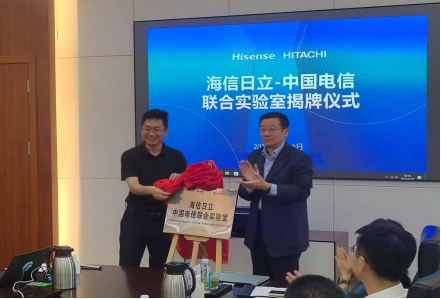
中国电信-海信日立联合实验室揭牌,共筑智慧家电产业新高地
Qi Lu Wan Bao· 2025-09-24 01:28
Group 1 - The establishment of a joint laboratory between China Telecom Shandong, Tianyi IoT Technology, and Hisense Hitachi marks a new phase of strategic cooperation and deep integration among the three parties [1][5] - Key leaders from the involved companies participated in the unveiling ceremony and engaged in detailed discussions about the cooperation [3] - The collaboration aims to respond to national technology innovation strategies through deep integration in technology and product development [5] Group 2 - The joint laboratory will focus on core technology research and innovative applications in the home appliance IoT sector, leveraging China Telecom's cloud-network integration and AI capabilities alongside Hisense Hitachi's extensive user base [6] - The cooperation will cover areas such as IoT collaborative innovation, joint laboratory construction, and joint research based on cloud AI modules, aiming to support the smart upgrade of traditional home appliances [6] - The partnership will enhance the design and delivery capabilities of all-intelligent scenario solutions in the home appliance sector, promoting the nationwide rollout of smart appliances based on RISC-V architecture [7] Group 3 - China Telecom Shandong will actively implement the "cloud transformation and digital intelligence" strategy, utilizing resource advantages to drive the construction of the joint laboratory and promote industrial upgrades [8]
智通港股通持股解析|9月24日




智通财经网· 2025-09-24 00:31
Core Insights - The top three companies by Hong Kong Stock Connect holding ratios are China Telecom (71.21%), Yangtze Optical Fibre and Cable (69.57%), and COSCO Shipping Energy (69.53%) [1] - Alibaba-W, Meituan-W, and the Tracker Fund of Hong Kong saw the largest increases in holding amounts over the last five trading days, with increases of +79.02 billion, +41.63 billion, and +35.85 billion respectively [1] - Tencent Holdings, Hua Hong Semiconductor, and Stone Pharmaceutical Group experienced the largest decreases in holding amounts, with reductions of -10.30 billion, -7.35 billion, and -6.61 billion respectively [2] Hong Kong Stock Connect Holding Ratios - China Telecom (00728): 9.884 billion shares, 71.21% [1] - Yangtze Optical Fibre and Cable (06869): 245 million shares, 69.57% [1] - COSCO Shipping Energy (01138): 901 million shares, 69.53% [1] - Green Power Environmental (01330): 280 million shares, 69.33% [1] - China Shenhua (01088): 2.296 billion shares, 67.98% [1] Recent Increases in Holdings - Alibaba-W (09988): +79.02 billion, +49.57 million shares [1] - Meituan-W (03690): +41.63 billion, +41.21 million shares [1] - Tracker Fund of Hong Kong (02800): +35.85 billion, +133.76 million shares [1] - Shandong High-Speed Holdings (00412): +25.76 billion, +483.38 million shares [1] - Pop Mart International (09992): +20.84 billion, +7.89 million shares [1] Recent Decreases in Holdings - Tencent Holdings (00700): -10.30 billion, -1.62 million shares [2] - Hua Hong Semiconductor (01347): -7.35 billion, -12.07 million shares [2] - Stone Pharmaceutical Group (01093): -6.61 billion, -69.78 million shares [2] - XPeng Inc. (09868): -6.09 billion, -726.03 thousand shares [2] - Midea Group (00300): -5.22 billion, -633.40 thousand shares [2]
中国电信相关公司新增一项122.00万元的招标项目
Xin Lang Cai Jing· 2025-09-23 14:25
Group 1 - China Tower Corporation Limited, a subsidiary of China Telecom, announced a tender for a project titled "Research Services for Digital and Visual Systems in the Indoor Distribution Market Based on GIS" on September 23, 2025, with a budget of 1.22 million yuan [1] - China Telecom holds a 20.50% stake in China Tower Corporation Limited, according to equity penetration data from Kuaicha [1]
到2030年,发展卫星通信用户超千万——卫星直联,将带来哪些新变化?
Ren Min Ri Bao Hai Wai Ban· 2025-09-23 08:52
Core Viewpoint - The satellite communication industry is rapidly advancing towards mainstream adoption, with the Chinese government setting ambitious goals for user growth and application development by 2030 [1][5]. Group 1: Industry Developments - The Ministry of Industry and Information Technology has issued guidelines to promote the development of the satellite communication industry, aiming for over 10 million users by 2030 [1][5]. - China Satcom has launched consumer-grade satellite internet products, enhancing applications in high-throughput satellite communication, navigation, and remote sensing [2][4]. - The introduction of direct satellite connectivity for smartphones and vehicles is expected to drive innovation across various sectors, including automotive, maritime, and IoT [3][4]. Group 2: Market Expansion - The guidelines encourage the expansion of satellite communication applications from specialized fields to the general public, with a focus on providing diverse network access in remote areas [5][6]. - The market is expected to see a surge in new business models and applications as the industry becomes more open and competitive [5][7]. - The integration of satellite communication with emerging technologies like AI, big data, and cloud computing is anticipated to transform various industries [2][6]. Group 3: Consumer Applications - Direct satellite connectivity for smartphones has been successfully demonstrated, allowing users to make calls and send messages without traditional cellular networks [1][4]. - The automotive sector is seeing the introduction of satellite communication features, enhancing safety and connectivity for vehicles in remote areas [8][9]. - Consumer interest in satellite communication is growing, with expectations for more affordable pricing and enhanced functionalities [7][9].

