
PETROCHINA(00857)

Search documents
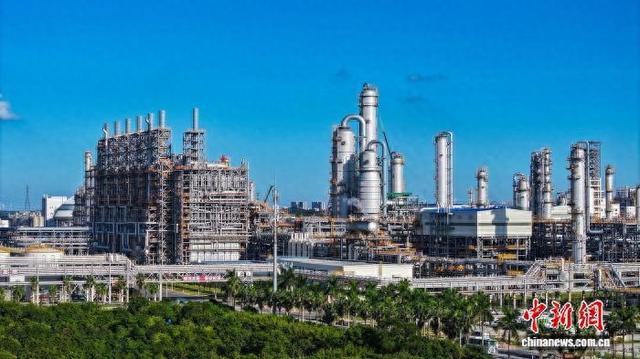
中国石油广西石化乙烯工程投产 首批化工产品发运
Zhong Guo Xin Wen Wang· 2025-10-30 12:46
Core Insights - The successful launch of the Guangxi Petrochemical Ethylene Project marks a significant transition for China National Petroleum Corporation (CNPC) from refining to integrated refining and chemical production in the southwestern region of China [1][2] - The project, with a total investment exceeding 30 billion RMB, features the world's largest diesel adsorption separation unit and aims to enhance raw material utilization efficiency by over 15% compared to traditional processes [1][2] Investment and Production Capacity - The Guangxi Petrochemical Ethylene Project includes a core ethylene unit with an annual capacity of 1.2 million tons, along with 14 chemical units and 2 refining units [2] - Upon completion, the project is expected to reduce oil products by 3.49 million tons annually and increase chemical production by 3.06 million tons, addressing domestic supply gaps in high-end polyolefins and functional rubber [2] Environmental and Economic Impact - The project achieves 100% green electricity for its new power consumption and meets energy consumption standards that exceed national benchmarks, contributing to China's dual carbon goals [2] - It is anticipated to transform Guangxi's industrial landscape from basic chemicals to high-end chemical new materials, supporting the development of a trillion-level green chemical new materials industry cluster aimed at the ASEAN market [2] Product Range and Market Reach - The first batch of chemical products includes a variety of materials such as polyethylene films, polypropylene, and SBS, which are essential for sectors like agriculture, food packaging, and electronics [2] - The successful shipment of these products is expected to provide high-quality raw material support to downstream markets, effectively filling regional supply gaps in high-end chemical products [2] Strategic Importance - The Guangxi Petrochemical Ethylene Project is a key initiative under China's national petrochemical industry planning and a major project for CNPC during the 14th Five-Year Plan [5] - The project is viewed as a crucial driver for economic development in the Guangxi region, facilitating a shift from fuel to material production in the local petrochemical industry [5]

“三桶油”三季度日赚超9亿元,中国石油贡献过半
Di Yi Cai Jing· 2025-10-30 12:28
Core Insights - The three major oil companies in China, Sinopec, PetroChina, and CNOOC, reported their third-quarter earnings, showing a slight decline in net profits year-on-year due to the downward trend in international oil prices [1] Group 1: Company Performance - Sinopec, PetroChina, and CNOOC collectively earned a net profit of 83.23 billion yuan in the third quarter, which translates to an average daily profit of 900.5 million yuan [1] - PetroChina led the profitability rankings with a net profit of 42.29 billion yuan [1]


中国石油股份(00857)发布前三季度业绩 归母净利润1262.94亿元 同比减少4.9%
智通财经网· 2025-10-30 12:27
Core Viewpoint - China Petroleum & Chemical Corporation (Sinopec) reported a mixed performance for Q3 2025, with a slight increase in revenue but a decrease in net profit compared to the previous year [1] Group 1: Financial Performance - For Q3 2025, the company achieved operating revenue of 719.16 billion yuan, a year-on-year increase of 2.3% [1] - The net profit attributable to shareholders was 42.29 billion yuan, a decrease of 3.9% year-on-year [1] - For the first three quarters of 2025, the total operating revenue was 2,169.26 billion yuan, down 3.9% year-on-year, while net profit was 126.29 billion yuan, a decrease of 4.9% [1] Group 2: Oil and Gas Production - The average price of crude oil for the first three quarters was $65.55 per barrel, down 14.7% from $76.88 per barrel in the previous year [1] - The company produced 714 million barrels of crude oil, a 0.8% increase from 708 million barrels year-on-year [2] - Natural gas production reached 3,977.2 billion cubic feet, a 4.6% increase from 3,803.8 billion cubic feet in the previous year [2] Group 3: Refining and Chemical Business - The company processed 1.041 billion barrels of crude oil, a 0.4% increase from 1.036 billion barrels year-on-year [3] - Chemical product output was 29.59 million tons, up 3.3% from 28.64 million tons in the previous year [3] - The refining and chemical segment achieved operating revenue of 826.06 billion yuan, with operating profit of 16.24 billion yuan, an increase from 15.28 billion yuan year-on-year [3] Group 4: Sales Performance - The company sold 120.88 million tons of gasoline, kerosene, and diesel, a 0.8% increase from 119.89 million tons year-on-year [4] - The sales segment generated operating revenue of 1,773.94 billion yuan, with an operating profit of 11.63 billion yuan [4] Group 5: Natural Gas Sales - Natural gas sales reached 2,185.41 billion cubic meters, a 4.2% increase from 2,098.20 billion cubic meters year-on-year [5] - The natural gas sales segment achieved operating revenue of 447.34 billion yuan, up 5.3% from 424.86 billion yuan in the previous year [5] - Operating profit for the natural gas sales segment was 31.28 billion yuan, an increase of 6.01 billion yuan year-on-year [5]
中国石油股份发布前三季度业绩 归母净利润1262.94亿元 同比减少4.9%
Zhi Tong Cai Jing· 2025-10-30 12:24
Core Insights - China Petroleum & Chemical Corporation (Sinopec) reported a revenue of 719.16 billion RMB for Q3 2025, a year-on-year increase of 2.3%, while net profit attributable to shareholders decreased by 3.9% to 42.29 billion RMB [1] - For the first three quarters of 2025, the company achieved a revenue of 2,169.26 billion RMB, down 3.9% year-on-year, with a net profit of 126.29 billion RMB, a decrease of 4.9% [1] Oil and Gas Production - The company increased its crude oil production to 714 million barrels, a 0.8% rise from the previous year, with domestic production at 591 million barrels, up 1.0% [2] - Natural gas sales volume reached 3,977.2 billion cubic feet, a 4.6% increase year-on-year, with domestic sales growing by 5.2% [2] - The average price of crude oil was $65.55 per barrel, down 14.7% from $76.88 per barrel in the previous year [1] Refining and Chemical Business - The company processed 1.041 billion barrels of crude oil, a 0.4% increase, and produced 29.59 million tons of chemical products, up 3.3% year-on-year [3] - The refining and chemical segment generated revenue of 826.06 billion RMB, with operating profit rising to 16.24 billion RMB, an increase of 9.6 billion RMB from the previous year [3] Sales Performance - The sales division sold 120.88 million tons of gasoline, kerosene, and diesel, a 0.8% increase year-on-year, with domestic sales remaining stable [4] - The sales segment achieved revenue of 1,773.94 billion RMB, with an operating profit of 11.63 billion RMB [4] Natural Gas Sales - The company sold 2,185.41 billion cubic meters of natural gas, a 4.2% increase from the previous year, with domestic sales growing by 4.9% [5] - The natural gas sales division reported revenue of 447.34 billion RMB, up 5.3% year-on-year, and operating profit increased by 60.11 billion RMB [5]
中国石油前三季度实现归母净利润超1262亿元
Zhong Guo Jin Rong Xin Xi Wang· 2025-10-30 12:20
Core Insights - China National Petroleum Corporation (CNPC) reported a total revenue of RMB 21,692.56 billion for the first three quarters, with a net profit attributable to shareholders of RMB 1,262.94 billion [1][3] Financial Performance - For Q3, CNPC achieved a revenue of RMB 7,191.57 billion and a net profit of RMB 422.87 billion, maintaining a stable financial condition [1] - The operating profit for the first three quarters was RMB 1,750.53 billion [1] Production and Operations - In upstream oil and gas production, CNPC's crude oil output reached 714 million barrels, a year-on-year increase of 0.8%, with domestic production at 591 million barrels, up 1.0% [3] - The company sold 3.98 trillion cubic feet of natural gas, marking a 4.6% increase year-on-year, with domestic sales at 3.86 trillion cubic feet, up 5.2% [3] - Total oil and gas equivalent production was 1.377 billion barrels, a 2.6% increase year-on-year [3] Renewable Energy - In the renewable energy sector, CNPC's wind and solar power projects generated 5.79 billion kWh, reflecting a significant year-on-year growth of 72.2% [4] Cost Management - The unit operating cost for oil and gas was $10.79 per barrel, a decrease of 6.1% year-on-year, indicating effective cost control measures [6] Refining and Chemical Business - CNPC processed 1.041 billion barrels of crude oil, a 0.4% increase, and produced 29.59 million tons of chemical products, up 3.3% [6] - The refining and chemical business generated an operating profit of RMB 16.24 billion, with refining contributing RMB 14.45 billion and chemicals RMB 1.79 billion [6] Sales and Marketing - CNPC's sales of gasoline, kerosene, and diesel totaled 120.88 million tons, a 0.8% increase, with domestic sales at 89.64 million tons [8] - The company sold 218.54 billion cubic meters of natural gas, a 4.2% increase year-on-year, with domestic sales at 170.89 billion cubic meters, up 4.9% [8] Future Outlook - For Q4, CNPC plans to optimize production strategies considering global political and economic conditions, aiming to enhance innovation and value creation [9]
中国石油股份:第三季度净利润422.86亿元 同比下降3.9%
Zheng Quan Shi Bao Wang· 2025-10-30 12:05
Core Insights - China Petroleum & Chemical Corporation reported third-quarter revenue of 719.157 billion yuan, representing a year-on-year increase of 2.3% [1] - The company's net profit for the same period was 42.286 billion yuan, showing a year-on-year decline of 3.9% [1] Financial Performance - Revenue: 719.157 billion yuan, up 2.3% year-on-year [1] - Net Profit: 42.286 billion yuan, down 3.9% year-on-year [1]
中国石油化工股份10月30日耗资约1972.3万港元回购477.6万股
Zhi Tong Cai Jing· 2025-10-30 11:46
Core Viewpoint - China Petroleum & Chemical Corporation (Sinopec) announced a share buyback plan, indicating a commitment to returning value to shareholders and confidence in its financial position [1] Group 1 - The company plans to spend approximately HKD 19.723 million to repurchase 4.776 million shares [1]
中国石油股份(00857.HK)第三季度归母净利422.87亿元 环比增长13.7%
Ge Long Hui· 2025-10-30 11:27
Core Insights - The average realized price of crude oil for China Petroleum & Chemical Corporation (00857.HK) in the first three quarters of 2025 was $65.55 per barrel, a decrease of 14.7% compared to $76.88 per barrel in the same period last year [1] - The average sales price of domestic natural gas was $8.81 per thousand cubic feet, down 1.0% from $8.90 per thousand cubic feet year-on-year [1] - The company reported operating revenue of RMB 2,169.256 billion and a net profit attributable to shareholders of RMB 126.294 billion, a decline of 4.9% from RMB 132.788 billion in the previous year [1] - In Q3 2025, the net profit attributable to shareholders was RMB 42.287 billion, showing a quarter-on-quarter increase of 13.7% [1] - The financial condition of the company remains healthy [1] Industry Context - The global economic growth rate has slowed down due to trade uncertainties, while China's GDP grew by 5.2% year-on-year [1] - The international crude oil market is characterized by a generally loose supply and demand, with the average spot price of North Sea Brent crude oil at $70.93 per barrel, down 14.3% from $82.79 per barrel a year ago [1] - The average spot price of West Texas Intermediate crude oil was $66.73 per barrel, a decrease of 14.1% from $77.71 per barrel year-on-year [1] - Domestic demand for refined oil has decreased, and the growth rate of domestic natural gas consumption has slowed [1]
中国石油股份(00857) - 2025 Q3 - 季度业绩
2025-10-30 11:17
香港交易及結算所有限公司及香港聯合交易所有限公司對本公告的內容概不負責,對其準確性或 完整性亦不發表任何聲明,並明確表示,概不對因本公告全部或任何部分內容而產生或因倚賴該 等內容而引致的任何損失承擔任何責任。 中國石油天然氣股份有限公司 PETROCHINA COMPANY LIMITED (於中華人民共和國註冊成立之股份有限公司) (於香港聯交所股票代碼:857;於上海證券交易所股票代碼:601857) 公告 二零二五年第三季度報告 重要內容提示 1 ⚫ 中國石油天然氣股份有限公司(「本公司」)董事會、監事會及董事、監事、高級管理人員 保證本季度報告內容的真實、準確、完整,不存在虛假記載、誤導性陳述或者重大遺漏,並 承擔個別和連帶的法律責任。 ⚫ 本季度報告已經本公司第九屆董事會第十五次會議審議通過。本公司全體董事均出席了本次 董事會會議。 ⚫ 本公司董事長戴厚良先生、董事兼總裁任立新先生、財務總監王華先生保證本季度報告中財 務信息的真實、準確、完整。 ⚫ 本公司及其附屬公司(「本集團」)分別按中國企業會計準則及國際財務報告會計準則編制 財務報告。本季度報告中的財務報告未經審計。 一、主要財務數據 1.2. ...
规模510亿元战略基金启动,投早、小、长期、硬科技
Sou Hu Cai Jing· 2025-10-30 10:38
Core Insights - The establishment of the Central Enterprise Strategic Emerging Industry Development Special Fund (referred to as "Central Enterprise Emerging Fund") aims to enhance investment in strategic emerging industries, with a total fundraising of 51 billion yuan [3][4] - The fund has a total duration of 15 years, including a 5-year investment period and an 8-year management exit period, with a possible 2-year extension [3][4] - The fund's primary investment focus includes artificial intelligence, high-end equipment, quantum technology, and future industries such as future energy, future information, and future manufacturing [3] Fund Structure and Contributions - The fund has 15 contributors, with China Reform Holdings Corporation Limited (China Reform) being the largest shareholder, contributing 15 billion yuan and holding a 29.4% stake [3] - Other contributors include state-owned enterprises such as China Mobile (6 billion yuan), Sinopec (5 billion yuan), and China National Offshore Oil Corporation (3 billion yuan), among others [3] - The total scale of various central enterprise venture capital funds established this year is approaching 100 billion yuan, focusing on technology attributes and emerging fields [4] Policy and Investment Strategy - The fund is part of a broader initiative to support the development of strategic emerging industries as mandated by the central government [4] - The investment strategy emphasizes early-stage, small-scale, long-term investments in hard technology, creating a new model of integration between industry and finance [4][6] - Recent policy measures aim to address concerns regarding state-owned capital's risk tolerance and investment willingness, establishing a lifecycle assessment mechanism for venture capital funds [7][8] Market Impact and Collaboration - State-owned capital is expected to stimulate market-oriented funds' investment enthusiasm, particularly in larger financing projects where state capital can lead the investment [8] - Central enterprises possess rich application scenarios for collaboration, as evidenced by recent procurement orders in the robotics sector [8]


