
CHINA MOBILE(00941)

Search documents
移动爱家让家改得很有AI
Huan Qiu Wang· 2026-01-23 01:12
Core Insights - The article highlights the successful delivery of a replicable smart living model in Chengdu, sponsored by China Mobile's "Mobile Love Home," showcasing a comprehensive renovation that enhances both space and quality of life [1][9] Group 1: Smart Home Solutions - The renovation features a professional signal detection process that addresses the common issue of unstable internet connectivity for self-media workers, marking the beginning of the transformation [3] - The FTTR (Fiber to the Room) networking solution extends fiber optics to every room, creating a seamless "whole-home digital high-speed network" without major renovations [3] - The introduction of AI-enabled security cameras enhances home safety, allowing homeowners to monitor their property remotely, thus providing peace of mind [5] Group 2: Customer Service Excellence - The professional service provided by Mobile Love Home includes meticulous attention to detail, from wearing shoe covers upon entry to thorough communication before and after installation [6] - The "Mobile Love Home Gift Package" symbolizes the integration of technology and emotional connection, featuring a customized desktop robot that enhances the home atmosphere and fosters interaction [6][9] Group 3: Vision for Smart Living - The renovation is framed as a human-centered reconstruction of smart living spaces, integrating high-speed internet, smart security, and emotional interaction into a 68 square meter area [9] - The initiative aims to demonstrate that smart homes are not just a distant dream but a tangible reality accessible to everyone, with the Chengdu project serving as a starting point for further transformations [9]



中国移动设计院取得数据存储方法及设备相关专利
Sou Hu Cai Jing· 2026-01-23 01:03
Group 1 - The State Intellectual Property Office of China has granted a patent to China Mobile Communications Group Design Institute Co., Ltd. and China Mobile Communications Group Co., Ltd. for a "data storage method, device, equipment, and computer storage medium" with authorization announcement number CN116975047B, applied for on July 2022 [1] - China Mobile Communications Group Design Institute Co., Ltd., established in 2004, is based in Beijing and primarily engages in news and publishing, with a registered capital of 160.23 million RMB. The company has invested in 3 enterprises, participated in 5000 bidding projects, holds 38 trademark records, 2391 patent records, and has 12 administrative licenses [1] - China Mobile Communications Group Co., Ltd., founded in 1999 and also located in Beijing, focuses on telecommunications, broadcasting, television, and satellite transmission services, with a registered capital of 30 billion RMB. The company has invested in 54 enterprises, participated in 5000 bidding projects, holds 2218 trademark records, 5000 patent records, and has 50 administrative licenses [1]
中国移动取得训练数据的预加载方法专利
Sou Hu Cai Jing· 2026-01-23 00:46
声明:市场有风险,投资需谨慎。本文为AI基于第三方数据生成,仅供参考,不构成个人投资建议。 来源:市场资讯 国家知识产权局信息显示,中移(苏州)软件技术有限公司、中国移动通信集团有限公司取得一项名 为"训练数据的预加载方法、装置、计算机设备及存储介质"的专利,授权公告号CN120780360B,申请 日期为2025年9月。 天眼查资料显示,中移(苏州)软件技术有限公司,成立于2014年,位于苏州市,是一家以从事软件和 信息技术服务业为主的企业。企业注册资本317200万人民币。通过天眼查大数据分析,中移(苏州)软 件技术有限公司参与招投标项目5000次,财产线索方面有商标信息112条,专利信息2682条,此外企业 还拥有行政许可28个。 中国移动通信集团有限公司,成立于1999年,位于北京市,是一家以从事电信、广播电视和卫星传输服 务为主的企业。企业注册资本30000000万人民币。通过天眼查大数据分析,中国移动通信集团有限公司 共对外投资了54家企业,参与招投标项目5000次,财产线索方面有商标信息2218条,专利信息5000条, 此外企业还拥有行政许可50个。 ...
智通港股通资金流向统计(T+2)|1月23日
智通财经网· 2026-01-22 23:36
Core Insights - Tencent Holdings (00700), Meituan-W (03690), and Xiaomi Group-W (01810) ranked as the top three in net inflow of southbound funds, with net inflows of 660 million, 574 million, and 395 million respectively [1] - China Mobile (00941), SMIC (00981), and Innovent Biologics (01801) led in net outflows, with net outflows of -831 million, -723 million, and -216 million respectively [1] Net Inflow Summary - Tencent Holdings (00700): Net inflow of 660 million, representing a 4.51% increase, closing at 601.000 with a decrease of 1.48% [2] - Meituan-W (03690): Net inflow of 574 million, with a 12.93% increase, closing at 97.350 with a decrease of 1.17% [2] - Xiaomi Group-W (01810): Net inflow of 395 million, showing a 4.91% increase, closing at 35.480 with a decrease of 2.74% [2] - Other notable inflows include Pop Mart (09992) with 350 million and a 5.95% increase, and China Life (02628) with 232 million and a 7.71% increase [2] Net Outflow Summary - China Mobile (00941): Net outflow of -831 million, a -34.50% decrease, closing at 79.300 with no change [2] - SMIC (00981): Net outflow of -723 million, a -14.66% decrease, closing at 74.500 with a decrease of 3.25% [2] - Innovent Biologics (01801): Net outflow of -216 million, a -28.25% decrease, closing at 83.200 with a decrease of 2.52% [2] - Other significant outflows include Zijin Mining (02899) with -204 million and a -8.43% decrease, and China National Aviation (00753) with -116 million and a -26.75% decrease [2] Net Inflow Ratio Summary - Southern Hong Kong Technology (03442): Net inflow ratio of 88.29% with a net inflow of 3.8171 million, closing at 9.040 with a decrease of 1.36% [3] - Haipru (09989): Net inflow ratio of 61.65% with a net inflow of 801.6 thousand, closing at 5.230 with an increase of 0.19% [3] - Fudan Zhangjiang (01349): Net inflow ratio of 60.38% with a net inflow of 2.1035 million, closing at 3.020 with a decrease of 0.33% [3] Net Outflow Ratio Summary - China Longgong (03339): Net outflow ratio of -54.88% with a net outflow of -12.6831 million, closing at 3.140 with an increase of 0.64% [3] - Miniso (09896): Net outflow ratio of -52.86% with a net outflow of -89.0301 million, closing at 38.140 with an increase of 0.26% [3] - Sichuan Chengyu Expressway (00107): Net outflow ratio of -51.05% with a net outflow of -5.9294 million, closing at 5.120 with an increase of 0.39% [3]




中国移动跨界保险市场挑战:保险业务面临专业与合规考验?
Nan Fang Du Shi Bao· 2026-01-22 23:11
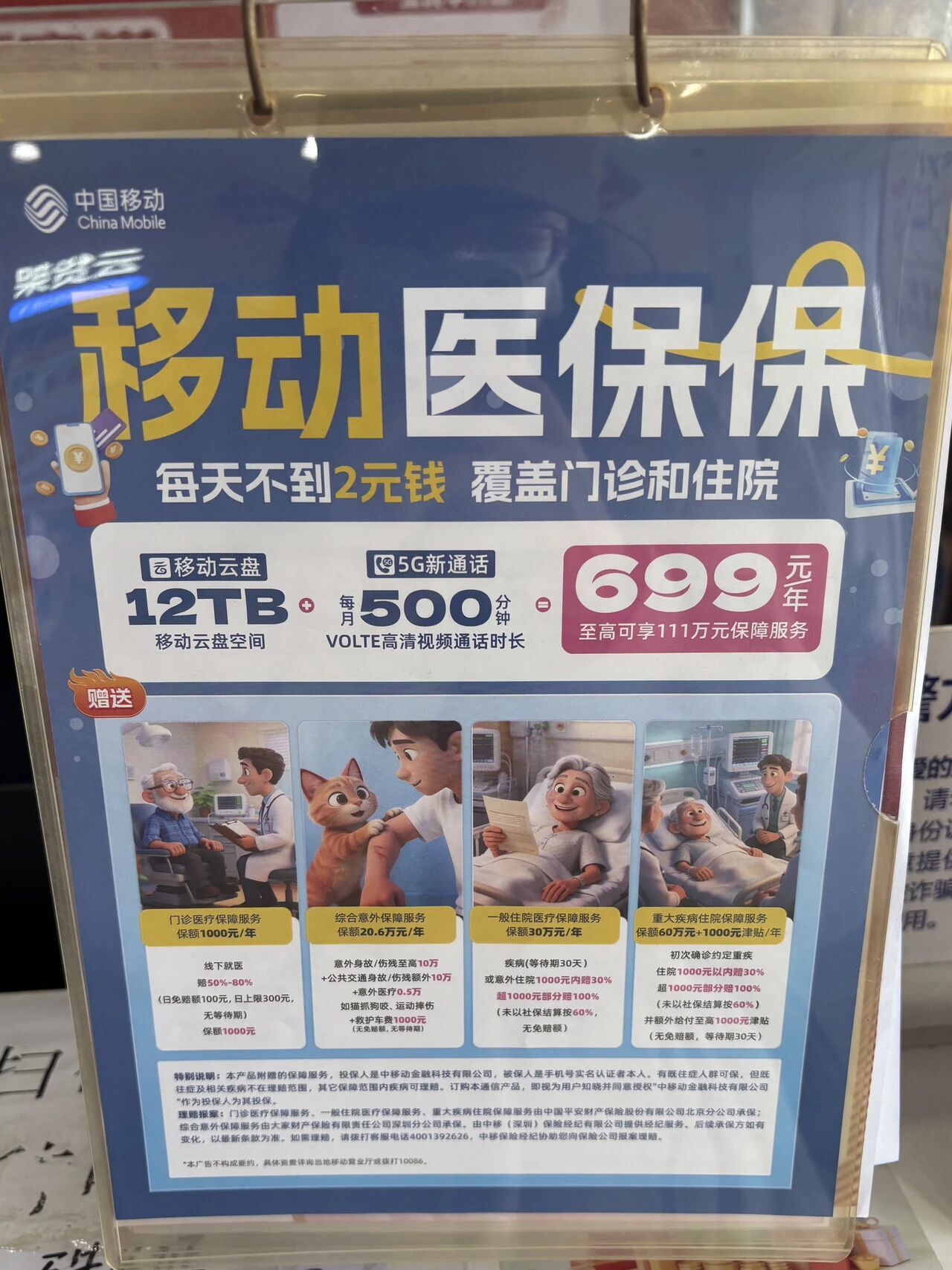
Core Viewpoint - China Mobile has launched innovative insurance products, marking its entry into the insurance business and sparking discussions on the "telecom + insurance" integration model [1][2]. Group 1: Product Launch and Details - China Mobile, through its subsidiary Zhongyi Insurance Brokerage, has introduced "Mobile Medical Insurance" and "Mobile Home Insurance," initially available in Shandong [1]. - The insurance products cover hospitalization, family property, and comprehensive accidents, with annual fees set at 199 yuan for "Mobile Home Insurance" and 699 yuan for "Mobile Medical Insurance" [1]. - The target audience includes local mobile users with a monthly consumption of 50 yuan or more, with plans for nationwide rollout in the future [1][2]. Group 2: Historical Context and Strategic Moves - China Mobile's foray into insurance is not new; it dates back over 20 years, with the establishment of its predecessor, Haida Insurance Brokerage, in 2001 [1]. - In 2016, China Mobile invested 2 billion yuan to acquire a 20% stake in China Merchants Jinhe Life Insurance, becoming its second-largest shareholder, thus transitioning from a sales channel to a capital player in the insurance sector [2]. Group 3: Industry Context and Motivations - The primary motivation for telecom operators to enter the insurance market is the pressure on traditional business growth, with challenges such as user saturation and slowing ARPU growth [3]. - The insurance sector is seen as a viable "second growth curve" due to its large scale, stable cash flow, and rigid demand [3]. - Other telecom operators, such as China Unicom and China Telecom, are also exploring insurance, albeit through different strategies [3][4]. Group 4: Challenges and Considerations - The integration of insurance with telecom services presents challenges, including unclear profit models and the need for professional capabilities to handle complex insurance processes [5][6]. - Compliance risks are significant, particularly regarding user data usage and potential sales misguidance [6]. - The current pilot phase of the insurance products raises questions about future rollout strategies and service optimizations [6].
中国移动跨界卖保险?上海、山东等地营业厅已上新
Guo Ji Jin Rong Bao· 2026-01-22 11:57
Core Viewpoint - Telecom operators are expanding into the insurance sector to diversify their business and create new growth opportunities in response to market saturation in traditional communication services [4][10]. Group 1: Product Launch and Features - China Mobile has launched two insurance products, "Mobile Medical Insurance" and "Mobile Home Insurance," in regions such as Shanghai and Shandong [5]. - "Mobile Medical Insurance" offers various coverage options, including outpatient medical services (CNY 1,000/year), general hospitalization (CNY 300,000/year), and critical illness hospitalization (CNY 600,000 + CNY 1,000 allowance/year), with premiums ranging from CNY 199 to CNY 699 depending on customer categories [5][6]. - "Mobile Home Insurance" provides coverage for home safety, health benefits, family services, and protection against telecom fraud, with a maximum coverage of CNY 1.342 million and annual premiums ranging from CNY 0 to CNY 199 based on user card levels [6]. Group 2: Strategic Rationale - The move into insurance allows telecom operators to leverage their large user base and offline channels, transforming into "ecological operators" and enhancing user engagement through value-added services [4][7]. - The integration of insurance services into telecom offerings addresses the "last mile" issue in traditional insurance distribution, particularly benefiting underserved markets with lower entry barriers and more convenient processes [4][10]. Group 3: Industry Landscape and Differentiation - China Mobile has a history in the insurance sector, holding a 20% stake in China Merchants Jinhe Life Insurance and possessing an insurance brokerage license [8]. - In contrast, China Unicom has engaged in strategic partnerships with major insurance companies but does not hold direct insurance licenses, while China Telecom is retracting from the insurance market by divesting its insurance agency [9]. - The differing strategies among the three major telecom operators stem from their strategic positioning, resource allocation, and synergy with core business operations [9][10]. Group 4: Challenges and Recommendations - Common challenges faced by telecom operators entering the insurance market include a lack of expertise in insurance product design, unclear profit models, and compliance risks related to user data [10]. - To succeed, operators should focus on technology and channel integration, collaborate closely with insurance companies to develop scenario-based products, and enhance their service systems to build user trust [10][11].
净买入逾52亿港元 加仓阿里及小米流出中移动
Xin Lang Cai Jing· 2026-01-22 11:55
Core Viewpoint - Southbound capital continues to flow into Hong Kong stocks, with a net inflow of approximately 52.39 billion HKD today, marking the fifth consecutive trading day of inflows [2][3]. Group 1: Market Overview - Today's southbound trading volume was about 931.59 billion HKD, a decrease of approximately 158 billion HKD from the previous day, accounting for 39.68% of the total turnover of the Hang Seng Index, falling below 40% [2]. - The Hong Kong stock market exhibited a mixed performance, with the three major indices showing varied results [2]. Group 2: Stock Performance - Significant net buying by southbound capital included: - Alibaba-W (09988.HK): 14.13 billion HKD - China National Offshore Oil Corporation (00883.HK): 5.92 billion HKD - Kuaishou-W (01024.HK): 4.79 billion HKD - China Life (02628.HK): 4.45 billion HKD - Pop Mart (09992.HK): 3.74 billion HKD - Xiaomi Group-W (01810.HK): 4.47 billion HKD [3]. - Major net outflows included: - China Mobile (00941.HK): 8.74 billion HKD - Tencent Holdings (0700.HK): 6.69 billion HKD - Horizon Robotics-W (09660.HK): 1.21 billion HKD [3]. Group 3: Individual Stock Insights - Alibaba-W increased by 0.98%, with a net accumulation of 2.042 million shares over the past five days, indicating a short-term focus on inflows [4]. - China National Offshore Oil Corporation rose by 2.52%, but saw a reduction of 836,000 shares over the past five days, suggesting a prevailing trend of outflows [5]. - Kuaishou-W experienced a slight increase of 0.38%, with a reduction of 401,000 shares over the past five days, indicating a slowdown in outflows [5]. - China Life decreased by 3.82%, with a net accumulation of 3.234 million shares over the past five days, showing a trend of inflows [5]. - Pop Mart surged by 5.97%, with a net accumulation of 196,000 shares over the past five days, indicating sustained inflows [5]. - Xiaomi Group-W fell by 0.51%, with a net accumulation of 917,000 shares over the past five days, continuing the trend of inflows [5]. - China Mobile declined by 0.25%, with a reduction of 4.235 million shares over the past five days, indicating a continued trend of outflows [5]. - Tencent Holdings dropped by 0.83%, with a net accumulation of 470,000 shares over the past five days, suggesting a slowdown in inflows [5]. - Horizon Robotics-W fell by 4.31%, with a reduction of 1.004 million shares over the past five days, indicating a signal of outflows [5].






寒潮砺初心,风雪淬担当:中国移动广西公司“通信卫士”守护壮乡温情
Huan Qiu Wang· 2026-01-22 09:37
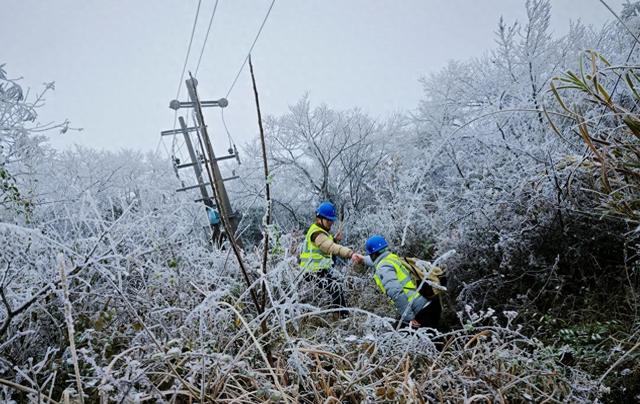
Core Viewpoint - The article highlights the proactive measures taken by China Mobile Guangxi Company to ensure stable communication services during a severe cold wave, emphasizing their commitment to public service and community support amidst challenging weather conditions [1]. Group 1: Emergency Response - China Mobile Guangxi Company quickly activated emergency plans to address the challenges posed by rain, snow, and freezing weather, demonstrating their mission of serving the public [1]. - Repair teams undertook significant efforts to reach remote areas affected by icy roads, ensuring communication lines remained operational for minority communities [3][8]. Group 2: Network Stability - The company organized technical teams to conduct inspections and maintenance in high-altitude areas, utilizing professional equipment to ensure the stability of communication networks [8]. - A comprehensive system combining human and technological resources was established to ensure rapid response to any network failures during the cold wave [13]. Group 3: Community Support - Special teams were deployed to tourist areas to enhance communication services, ensuring visitors could share their experiences seamlessly during the winter tourism season [11]. - The company’s efforts not only maintained network stability but also contributed to the local economy by supporting winter tourism through reliable communication [11]. Group 4: Technological Integration - China Mobile Guangxi Company employed smart monitoring platforms and emergency equipment to achieve real-time awareness and rapid deployment of resources during the cold wave [13]. - The integration of technology into their operations has significantly improved the resilience and service quality of the network during extreme weather conditions [13].
雄安移动网络实现国际一流可靠性和毫秒级响应能力
Bei Jing Ri Bao Ke Hu Duan· 2026-01-22 08:39
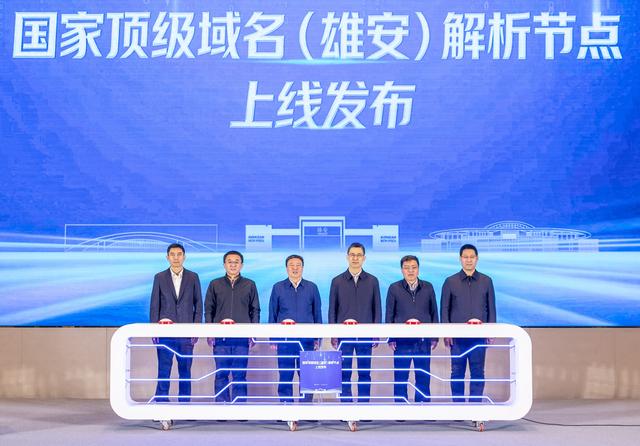
Core Viewpoint - The launch of the national top-level domain (Xiong'an) resolution node marks a significant step in China's internet infrastructure, enhancing user experience and empowering industry development in the Xiong'an New Area, which aims to become a global leader in digital city construction [1][4]. Group 1: Infrastructure and Performance - The Xiong'an resolution node will provide 24/7 stable, efficient, and secure ".CN" domain resolution services for internet users in Hebei Province, reducing the average resolution time from 26.25 milliseconds to 9.08 milliseconds, representing an improvement of over 65% in service response speed [4][6]. - The node is part of a national strategy to build a self-controlled network system, with its deployment in the Xiong'an Smart City Innovation Center, reflecting the area's strategic importance [4][5]. Group 2: Technological Advantages - The node employs advanced technologies such as multi-link redundancy, load balancing, and intelligent scheduling, which enhance internet service stability and availability, ensuring seamless user experience even during network fluctuations [7]. - The system's architecture is designed to strengthen network sovereignty and attack resistance, reducing reliance on foreign services and providing robust DDoS protection [7]. Group 3: Economic and Social Impact - The average daily access volume to the Xiong'an node has reached 33.44 million times, indicating a large user base and active online behavior, which reflects the region's digital economy growth [8]. - The node supports the integration of high-performance networks with cloud computing, artificial intelligence, and other digital enterprises, positioning Xiong'an as a hub for digital economic development [9].
AI精准锁目标,警企联动端窝点——中国移动助力打击电诈出新招
Jiang Nan Shi Bao· 2026-01-22 06:14
Core Viewpoint - China Mobile's Suqian branch successfully utilized its self-developed AI anti-fraud system to assist law enforcement in breaking a logistics refund scam, highlighting the effectiveness of smart prevention measures in combating telecom fraud [1] Group 1: AI Anti-Fraud System - The AI monitoring model identified abnormal high-frequency call behavior from a local base station, indicating potential fraudulent activity [1] - The involved phone number made numerous calls to unfamiliar numbers within 24 hours, fitting the "logistics refund" scam pattern [1] - The anti-fraud "circuit breaker" mechanism was activated, allowing real-time data sharing with the municipal police's anti-fraud center [1] Group 2: Law Enforcement Collaboration - Law enforcement quickly pinpointed the suspect's location using call behavior data and number association information [1] - Authorities seized 16 SIM cards and 3 "cat-fishing" devices during the operation, effectively preventing further scam activities [1] Group 3: Future Initiatives - China Mobile plans to deepen collaboration with law enforcement and continuously optimize its AI anti-fraud models and prevention technologies [1] - The company aims to expand anti-fraud initiatives through community education and the establishment of "anti-fraud guardian teams" under the "Su Xing·Neighborhood" brand [1] - The dual approach of technological upgrades and community outreach is intended to strengthen the communication security defense and protect public financial safety [1]