
CHINA MOBILE(00941)

Search documents
黑猫投诉2025年度通讯服务领域投诉数据报告:投诉量超17万件 套餐资费相关投诉占比超5成
Xin Lang Cai Jing· 2026-01-22 06:06
Core Insights - The telecommunications service industry received a total of 173,629 complaints in 2025, representing a year-on-year decrease of 7.05% compared to 2024 [1][12] - The Ministry of Industry and Information Technology initiated the "Clear and Reassuring Use" campaign in April 2025 to address key issues such as complex packages and unclear charges, leading to a significant reduction in complaints in the second half of the year [1][12] Complaint Categories - The primary complaint category is package fee disputes, accounting for over 50% of all complaints, followed by poor customer service at 16.7%, broadband faults at 5.96%, and account cancellation issues at 2.44% [3][15] - Common issues include unclear billing rules, unauthorized subscription renewals, and poor customer service quality, such as long wait times and unhelpful staff [2][14] Complaint Handling - The overall complaint handling performance in the telecommunications sector is positive, with a complaint response rate exceeding 98% among major operators like China Mobile, China Unicom, China Telecom, and China Broadcasting [4][16] Demographics of Complainants - Male consumers dominate the complaint demographic, making up 70.02% of complaints, while female consumers account for 29.98% [5][17] - The average age of complainants is 30, with the majority being young consumers aged 20-25 (36.45%) and 26-30 (26.24%) [6][18] Geographic Distribution - Guangdong province has the highest number of complaints, accounting for 16.77% of the total, followed by Jiangsu and Zhejiang provinces at 8.65% and 7.71%, respectively [7][19]



智通港股通持股解析|1月22日
智通财经网· 2026-01-22 00:31
Group 1 - The top three companies by Hong Kong Stock Connect holding ratios are China Telecom (00728) at 70.91%, Green Power Environmental (01330) at 69.45%, and Tianjin Chuangye Environmental (01065) at 67.62% [1][2] - The largest increases in holding amounts over the last five trading days were seen in Alibaba-W (09988) with an increase of 2.229 billion, SMIC (00981) with an increase of 1.693 billion, and Huahong Semiconductor (01347) with an increase of 1.379 billion [1][2] - The largest decreases in holding amounts over the last five trading days were recorded for China Mobile (00941) with a decrease of 2.613 billion, UBTECH (09880) with a decrease of 787 million, and Kuaishou-W (01024) with a decrease of 739 million [1][3] Group 2 - The latest holding ratio rankings for Hong Kong Stock Connect show that China Telecom holds 9.842 billion shares, Green Power Environmental holds 0.281 billion shares, and Tianjin Chuangye Environmental holds 0.230 billion shares [2] - The top ten companies with the largest increases in holdings over the last five trading days include Tencent Holdings (00700) with an increase of 917 million and China Construction Bank (00939) with an increase of 866 million [2] - The top ten companies with the largest decreases in holdings over the last five trading days also include Alibaba Health (00241) with a decrease of 665 million and China Hongqiao (01378) with a decrease of 647 million [3]

智通港股通资金流向统计(T+2)|1月22日





智通财经网· 2026-01-21 23:35
Group 1 - The top three companies with net inflow of southbound funds are SMIC (00981) with 458 million, Sanhua Intelligent Control (02050) with 405 million, and Hua Hong Semiconductor (01347) with 390 million [1] - The top three companies with net outflow of southbound funds are China Mobile (00941) with -601 million, UBTECH (09880) with -516 million, and Sanofi (01530) with -357 million [1] - In terms of net inflow ratio, Haitian Flavoring (03288) leads with 76.61%, followed by Southern Hong Kong Stock Connect (03432) with 62.50%, and CIMC (02039) with 59.57% [1] Group 2 - The top ten companies by net inflow include Tencent Holdings (00700) with 272 million and Alibaba-W (09988) with 263 million [2] - The top ten companies by net outflow include Meituan-W (03690) with -287 million and Bilibili-W (09626) with -242 million [2] - The top three companies with the highest net outflow ratio are Dekang Agriculture (02419) at -50.69%, Sanofi (01530) at -47.05%, and Jianfa International Group (01908) at -45.45% [3]
明日题材前瞻:黄金挑战美元霸权,中国移动跨界引爆保险暗线
Sou Hu Cai Jing· 2026-01-21 13:27
Group 1 - The proportion of gold in global reserve assets is continuously rising, with central banks showing no signs of slowing down their gold purchases. Morgan Stanley indicates that gold's share in central bank assets has increased from approximately 14% to 25%-28%, and this upward trend shows no signs of abating. Risk premiums and hedging behaviors will continue to exert pressure on the US dollar while supporting gold demand. Additionally, policy factors driving "de-dollarization" are currently in a "neutral to slightly accelerating" state, and the evolution of these policies in the short term will determine the extent of the de-dollarization trend [1] Group 2 - China Mobile has launched insurance products through its subsidiary, signaling a rapid expansion of telecom operators into the financial sector. The products, "Mobile Health Insurance" and "Mobile Home Insurance," are currently being trialed in select regions like Shandong and can be purchased at offline service centers. This move highlights the telecom operator's strategy to leverage its extensive offline channel network and customer resources to penetrate the financial insurance services market [2] Group 3 - The Ministry of Housing and Urban-Rural Development in China is advancing a new model for real estate development, emphasizing the implementation of a current housing sales system. This approach aims to ensure that buyers receive what they see, fundamentally mitigating delivery risks. The ministry will continue to support reasonable financing needs of real estate companies and maintain the rights of homebuyers through regulated pre-sale fund supervision [3] Group 4 - The upcoming Spring Festival travel period is expected to witness unprecedented levels of cross-regional personnel movement, with both railway and civil aviation passenger volumes projected to reach historical highs. The emphasis will be on self-driving travel, prompting local authorities to enhance road management and service guarantees. This indicates a peak demand period for industries related to energy supply, road services, and vehicle maintenance [4]
华夏中证港股通50ETF Q4解读:本期利润亏损393万元 金融行业配置占比43.48%
Sou Hu Cai Jing· 2026-01-21 12:46
Financial Performance - The fund achieved a realized income of approximately 4.19 million yuan but reported a loss of about 0.39 million yuan due to fair value changes impacting overall profit negatively [1] - The net asset value at the end of the reporting period was approximately 80.74 million yuan, with a net asset value per share of 1.3810 yuan [1] Fund Net Value Performance - The fund's net value decreased by 4.27% in Q4, outperforming the benchmark by 0.16 percentage points [2] - Over the past three years, the fund's cumulative net value growth rate was 44.38%, significantly exceeding the benchmark by 8.87 percentage points [2] Investment Strategy and Operations - The fund follows a complete replication strategy tracking the CSI Hong Kong Stock Connect 50 Index, adapting to market fluctuations and investor redemptions [3] - The market environment in Q4 2025 was complex, influenced by international negotiations and domestic economic pressures, with the fund focusing on effective index tracking [3] Performance Metrics - The tracking deviation was +0.16%, primarily due to operational costs and adjustments in index constituents [4] - The fund maintained a tracking deviation within the contractually agreed limit of 0.2% [4] Macroeconomic and Market Outlook - The domestic economic transition highlights new productive forces as structural strengths, with a focus on maintaining a strong domestic market [5] - The Hong Kong market is influenced by both domestic economic fundamentals and international monetary policies, necessitating attention to demand recovery and geopolitical changes [5] Fund Asset Composition - Equity investments accounted for 94.82% of the fund's total assets, with cash and equivalents making up 4.92% [6][7] - The fund's asset allocation is highly concentrated in equities, aligning with the index tracking requirements [7] Industry Allocation - The financial sector represented 43.48% of the fund's investments, followed by non-essential consumer goods at 19.77%, indicating a high concentration in these sectors [8] Top Holdings - The top ten holdings accounted for 53.97% of the fund's net asset value, with HSBC Holdings and Tencent Holdings being the largest positions [9] - The concentration in top holdings suggests significant influence on the fund's net value fluctuations [9] Fund Share Changes - The fund experienced a net subscription of 2 million shares during the reporting period, reflecting increased market interest in the Hong Kong Stock Connect 50 Index [10]




中国移动投资建数据承载网 华为成最大赢家
Sou Hu Cai Jing· 2026-01-21 10:10
Core Insights - China Mobile has announced the results of its backbone network project for data transmission from 2025 to 2027, with Huawei emerging as the largest winner and ZTE receiving a smaller share [1][3] Group 1: Project Overview - The project involves the procurement of 159 routers, divided into four bidding packages, with the first package selecting two winners while the other packages have one winner each [3] - The total bid amount for the project exceeds 686 million yuan (approximately 6.86 billion yuan) excluding tax [3] Group 2: Bidding Results - In Package 1, Huawei won 70% of the share with a bid of approximately 547 million yuan (excluding tax), while ZTE secured 30% with a bid of about 505 million yuan, resulting in a bid difference of over 42 million yuan [3] - Huawei also won Packages 2, 3, and 4 with bids of approximately 118.56 million yuan, 10.55 million yuan, and 31 million yuan respectively, with Package 4 being procured directly [3] - Overall, Huawei's total winning bid amount exceeds 540 million yuan, making it the largest winner in the project, while ZTE's winning amount is around 150 million yuan [3]


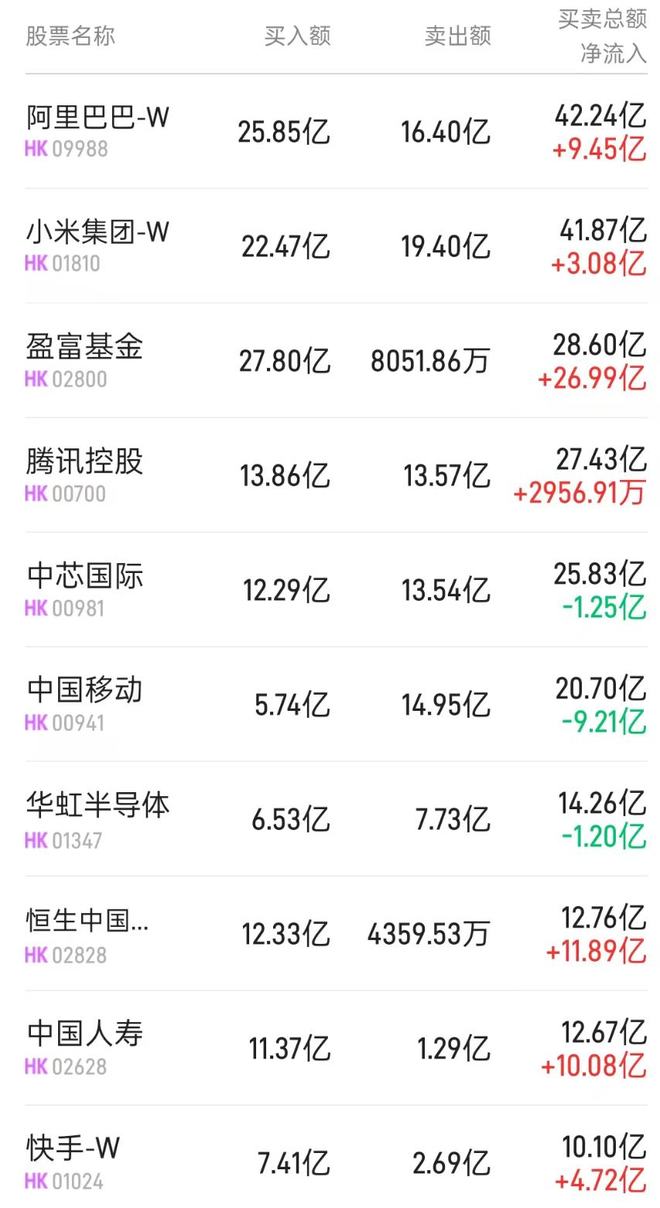
北水动向|北水成交净买入139.3亿 北水再度加仓港股ETF 抢筹盈富基金(02800)超41亿港元
Zhi Tong Cai Jing· 2026-01-21 10:08
Group 1 - Northbound capital recorded a net buy of HKD 139.3 billion on January 21, with HK Stock Connect (Shanghai) contributing HKD 77.89 billion and HK Stock Connect (Shenzhen) contributing HKD 61.41 billion [1] - The most bought stocks included the Tracker Fund of Hong Kong (02800), Hang Seng China Enterprises (02828), and Alibaba-W (09988), while the most sold stocks were China Mobile (00941), Tencent (00700), and Hua Hong Semiconductor (01347) [1] - Alibaba-W received a net buy of HKD 10.77 billion, with significant growth in its AI model downloads, surpassing 100 million downloads [5] - China Life (02628) saw a net buy of HKD 10.07 billion, driven by positive expectations in the life insurance sector [5] - Kuaishou-W (01024) gained a net buy of HKD 7.33 billion, with its AI product showing a 350% increase in paid user growth [5] Group 2 - Semiconductor stocks showed divergence, with SMIC (00981) receiving a net buy of HKD 3.87 billion, while Hua Hong Semiconductor (01347) faced a net sell of HKD 1.2 billion [6] - TSMC's increased capital expenditure forecast indicates strong long-term demand driven by AI [6] - Shandong Gold (01787) received a net buy of HKD 3.03 billion, with gold prices hitting historical highs amid geopolitical tensions [7] - CNOOC (00883) saw a net buy of HKD 3.64 billion, with ongoing geopolitical tensions affecting oil prices [7] - Xiaomi Group-W (01810) and Meituan-W (03690) received net buys of HKD 5.89 billion and HKD 2.04 billion, respectively, while China Mobile (00941) and Tencent (00700) faced net sells of HKD 9.21 billion and HKD 2.71 billion [7]


南向资金今日净买入超139亿港元 创近两周单日流入新高
Mei Ri Jing Ji Xin Wen· 2026-01-21 09:55
每经AI快讯,1月21日,南向资金今日净买入约139.30亿港元,为1月6日以来单日流入新高。盈富基 金、恒生中国企业分别获净买入约41.53亿港元、18.17亿港元;中国移动遭净卖出9.21亿港元。 ...
刷新17年纪录的“公募冠军基金经理”任桀,持仓大调整!新赛道布局+最新研判来了
Mei Ri Jing Ji Xin Wen· 2026-01-21 05:24
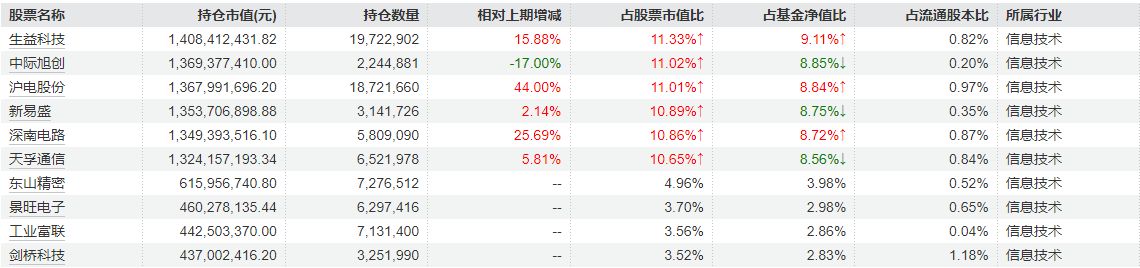
Group 1 - The core point of the article highlights that Yongying Fund's manager Ren Jie achieved a remarkable annual return of 233.29% for the Yongying Technology Smart A fund in 2025, breaking a 17-year record in the public fund industry [1] - The fund significantly reduced its equity investment from 91.59% in Q3 to 78.76% by the end of Q4 2025, reallocating assets to bank deposits and clearing out bond investments [2] - The top ten holdings of the Yongying Technology Smart A fund saw changes, with new additions including Dongshan Precision, Jingwang Electronics, Industrial Fulian, and Cambridge Technology, while previous holdings like Taicheng Light, Lanke Technology, and Shijia Light did not appear in the top ten [2][3] Group 2 - The fund manager emphasized a continued focus on global cloud computing investments, particularly in the optical communication and PCB sectors, while also acknowledging the potential for mean reversion after valuation expansion cycles [1][4] - The Yongying Hong Kong Stock Connect Technology Smart fund also underwent significant changes, with major reductions in holdings of Tencent Holdings and Bilibili-W, both exceeding 20% [5][7] - The performance of the Yongying Hong Kong Stock Connect Technology Smart A and C shares showed a net value growth rate of -22.02% and -22.14% respectively, underperforming their benchmarks by 7.88 and 8.00 percentage points [7]



中美竞逐万亿美元新赛道,五层解构下的投资蓝图
Tebon Securities· 2026-01-21 04:07
Investment Rating - The report maintains an "Outperform" rating for the commercial aerospace industry [1] Core Insights - The aerospace sector is transitioning from being viewed as a "cost center" driven by national will to a "growth engine" driven by commercial demand, with significant investments and strategic planning from both the US and China [6][9] - The global aerospace economy is projected to reach $613 billion in 2024, with commercial aerospace contributing 78%, and is expected to exceed $1 trillion by 2032 [6][9] - The value chain of commercial aerospace is divided into five core levels: "space, ground, terminal, rocket, and application," each presenting unique market opportunities and technical challenges from 2026 to 2030 [10][29] Summary by Sections 1. Space: Satellite Manufacturing - The satellite manufacturing market in China is expected to grow from approximately 7.1 billion yuan in 2025 to about 39.4 billion yuan by 2030, reflecting a shift from sporadic research models to continuous, batch engineering deliveries [16][18] 2. Ground: Ground Systems - The ground systems market is projected to increase from around 1.2 billion yuan in 2025 to approximately 39.1 billion yuan by 2030, evolving from a supporting role to a core infrastructure essential for stable satellite constellation operations [21][22] 3. Terminal: Key Variable for Commercial Aerospace - The terminal market is anticipated to grow from 500 million yuan in 2025 to about 141.9 billion yuan by 2030, driven by multiple vertical industries and potential consumer scenarios [23][24] 4. Rocket: Core Constraint - The cost of rocket launches is a critical constraint, with reusable technology expected to reduce costs by 80%-90% compared to traditional expendable rockets. The market for rocket launch services is projected to grow from approximately 10.7 billion yuan in 2025 to about 34.3 billion yuan by 2030 [25][26] 5. Application: Final Value Realization - The application market is expected to expand from 200 million yuan in 2025 to 525 billion yuan by 2030, with the revenue share from applications projected to rise from single digits to over 67% by around 2030 [27][28] 6. Investment Opportunities - Investment opportunities in commercial aerospace can be categorized into three main tracks: 1. Launch and manufacturing segments, which are expected to benefit directly from increased orders and visibility 2. Core components and systems, characterized by high technical barriers and critical for long-term competitiveness 3. Downstream applications and operational services, which, while currently limited in scale, hold the greatest long-term potential for value realization [29][30]


