
CNCB(00998)

Search documents
中信银行(601998) - 中信银行股份有限公司关于副行长任职资格获核准的公告
2025-08-08 09:45
证券代码:601998 证券简称:中信银行 公告编号:临2025-059 中信银行股份有限公司 关于副行长任职资格获核准的公告 中信银行股份有限公司(简称"本行")于2025年5月8日召开董事会会议, 同意聘任金喜年先生为本行副行长,自监管机构核准其任职资格之日起正式就任。 近日,本行收到《国家金融监督管理总局关于金喜年中信银行副行长任职资 格的批复》(金复﹝2025﹞469号),国家金融监督管理总局已核准金喜年先生 本行副行长的任职资格。金喜年先生自2025年8月4日起正式就任本行副行长。 金喜年先生的简历及其他根据有关法律法规须予披露的信息请见本行于 2025年5月9日刊载于上海证券交易所网站(www.sse.com.cn)和本行网站 (www.citicbank.com)的《中信银行股份有限公司董事会会议决议公告》。 特此公告。 中信银行股份有限公司董事会 2025 年 8 月 8 日 本行董事会及全体董事保证本公告内容不存在任何虚假记载、误导性陈述或 者重大遗漏,并对其内容的真实性、准确性和完整性承担法律责任。 ...
中信银行(00998) - 公告 副行长任职资格获核准
2025-08-08 09:41
(股份代號:998) 公告 副行長任職資格獲核准 中信銀行股份有限公司(「本行」)於2025年5月8日召開董事會會議,同意聘任金喜年先生 為本行副行長,自監管機構核准其任職資格之日起正式就任。 香港交易及結算所有限公司及香港聯合交易所有限公司對本公告的內容概不負責,對其 準確性或完整性亦不發表任何聲明,並明確表示,概不對因本公告全部或任何部分內容 而產生或因倚賴該等內容而引致之任何損失承擔任何責任。 (在中華人民共和國註冊成立的股份有限公司) 近日,本行收到《國家金融監督管理總局關於金喜年中信銀行副行長任職資格的批覆》(金 覆[2025]469號),國家金融監督管理總局已核准金喜年先生本行副行長的任職資格。金喜 年先生自2025年8月4日起正式就任本行副行長。 金喜年先生的簡歷及其他根據有關法律法規須予披露的信息請見本行於2025年5月9日刊 載於上海證券交易所網站(www.sse.com.cn)和本行網站(www.citicbank.com)的《中信銀行 股份有限公司董事會會議決議公告》。 承董事會命 中信銀行股份有限公司 方合英 董事長 中國‧北京 2025年8月8日 於本公告日期,本行執行董事為方合英先 ...
中信银行(601998.SH):副行长金喜年任职资格获核准
Ge Long Hui A P P· 2025-08-08 09:39
格隆汇8月8日丨中信银行(601998.SH)公布,近日,本行收到《国家金融监督管理总局关于金喜年中信 银行副行长任职资格的批复》,国家金融监督管理总局已核准金喜年先生本行副行长的任职资格。金喜 年先生自2025年8月4日起正式就任本行副行长。 ...
中信银行:金喜年先生自2025年8月4日起正式就任本行副行长。
Xin Lang Cai Jing· 2025-08-08 09:34
中信银行:金喜年先生自2025年8月4日起正式就任本行副行长。 ...
银行信用卡业务去向何方
Jin Rong Shi Bao· 2025-08-08 07:59
Core Viewpoint - The co-branded credit card market is undergoing significant changes, with many banks halting or adjusting their co-branded credit card products due to a shift in strategy towards cost and revenue balance [1][2][3]. Group 1: Market Changes - Several major banks, including Postal Savings Bank and China Construction Bank, have announced the suspension of certain co-branded credit card products since January [2]. - Other banks such as Bank of China, China Merchants Bank, and others have followed suit, indicating a broader trend in the credit card market [2]. - The suspension of co-branded credit cards reflects a restructuring of the credit card business landscape [1][2]. Group 2: Regulatory Impact - The implementation of the "Credit Card New Regulations" in July 2022 has prompted banks to shift focus from acquiring new customers to retaining existing ones [3]. - The new regulations require banks to monitor and manage dormant credit cards, limiting the proportion of such cards to no more than 20% of total issued cards [3]. Group 3: Strategic Shifts - Banks are moving from aggressive customer acquisition strategies to a more value-driven approach, focusing on enhancing core competitiveness in credit card services [4][5]. - The future of credit card business is expected to integrate with other financial services, improving overall service quality for high-value customers [5].



险资年内举牌10家上市公司 偏爱银行H股
Zheng Quan Ri Bao· 2025-08-08 07:27
据《证券日报》记者统计,今年已有长城人寿保险股份有限公司、阳光人寿保险股份有限公司、新华人 寿保险股份有限公司(以下简称"新华保险")等6家保险公司合计举牌上市公司数量达10家。 本报记者 冷翠华 见习记者 杨笑寒 港交所最新信息显示,近日,瑞众人寿保险有限责任公司(以下简称"瑞众人寿")增持中信银行股份有 限公司(以下简称"中信银行")300万股,增持后,瑞众人寿所持中信银行股份约为7.44亿股,占其已 发行有投票权股份的5%,触及举牌线。 同时,通过举牌上市银行,险资也可以与被举牌上市银行形成协同效应,促进银保业务发展。例如,新 华保险在举牌杭州银行股份有限公司(以下简称"杭州银行")后表示,本次权益变动完成后,新华保险 将通过股权纽带加强与杭州银行的深度合作,促进和杭州银行双方的银保业务发展,提升双方的价值。 今年以来,险资举牌上市公司"热情"不减,举牌标的中银行股居多。受访专家表示,险资举牌高股息大 盘股频次增加的原因,一是应对利率中枢下行带来的冲击;二是,在新会计准则实施的背景下平滑报表 波动。展望未来,预计险资举牌时将持续关注现金流稳定、估值合理、处于成长性行业的上市公司。 展望未来,杨帆认为,险 ...


中信银行、招商银行拟出资设立金融资产投资公司
Zheng Quan Ri Bao· 2025-08-08 07:24
Core Viewpoint - The establishment of Asset Investment Companies (AICs) by national commercial banks is accelerating, which is expected to enhance banks' participation in technology finance and equity markets, contributing to the high-quality development of the banking industry [1][2]. Group 1: Establishment of AICs - The National Financial Regulatory Administration has approved the establishment of AICs by several national commercial banks, including the first approval for Industrial Bank to set up an AIC [2]. - Following this, CITIC Bank announced a plan to invest 10 billion RMB to establish a wholly-owned subsidiary AIC, while China Merchants Bank plans to invest 15 billion RMB for the same purpose [2]. - The establishment of AICs aligns with the banks' strategies to support technology finance and meet the financing needs of innovative enterprises [3]. Group 2: Impact on Banks - The investments in AICs are seen as key measures for banks to support national strategies and enhance their service capabilities in the real economy [3]. - The establishment of AICs will help banks diversify their operations and improve their integrated business capabilities [3]. Group 3: Benefits and Challenges - The establishment of AICs is expected to bring comprehensive benefits to banks, including enhanced service offerings for technology enterprises and additional revenue streams beyond equity investments [5]. - However, challenges exist, such as the need for strong investment research capabilities and the high risks associated with equity investments, which require banks to develop appropriate long-term assessment mechanisms [6].

股份制银行争锋:兴业、中信离招商银行有多远?
Zhong Guo Jing Ji Wang· 2025-08-08 07:23
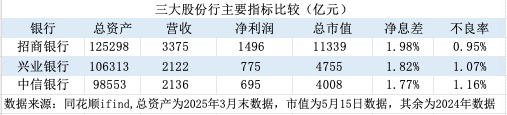
Core Viewpoint - The re-issuance of AIC licenses marks a shift in focus from debt-to-equity swaps to supporting the development of new productive forces in the financial sector [1] Group 1: AIC License and Bank Recognition - The National Financial Regulatory Administration approved the establishment of the Xingyin Financial Asset Investment Company by Industrial Bank, with other banks like China Merchants Bank and CITIC Bank also planning to set up similar companies pending regulatory approval [1] - This indicates regulatory recognition of the strength of these banks, which have carved out their positions in the market through innovation despite lacking the capital strength of state-owned banks [1] Group 2: Financial Performance Comparison - As of March 2025, the total assets of China Merchants Bank, Industrial Bank, and CITIC Bank were 12.5 trillion, 10.6 trillion, and 9.9 trillion yuan respectively, with China Merchants Bank leading in all major financial metrics [2][4] - China Merchants Bank's net profit for 2024 was 149.6 billion yuan, significantly higher than the 77.5 billion yuan of Industrial Bank and 69.5 billion yuan of CITIC Bank [2] Group 3: Retail Business Focus - Retail banking is identified as a cornerstone for future competition among these banks, with Industrial Bank and CITIC Bank actively working to enhance their retail business capabilities [3] - The ability to excel in retail banking and wealth management will likely determine which bank secures the second position among the joint-stock banks [3] Group 4: Asset Growth Trends - Over the past decade, while Industrial Bank and CITIC Bank have pursued aggressive growth strategies, the asset gap with China Merchants Bank has widened, with their total assets at 85% and 79% of China Merchants Bank's respectively by 2024 [4][7] - China Merchants Bank's financial investments grew 2.65 times from 2017 to 2024, indicating a strategic shift towards government bonds amid a challenging lending environment [7] Group 5: Net Interest Margin and Cost of Deposits - In 2024, China Merchants Bank's net interest margin was 1.98%, outperforming Industrial Bank and CITIC Bank by approximately 20 basis points [11][12] - The lower cost of deposits at China Merchants Bank, primarily due to a higher proportion of low-cost personal deposits, contributes to its competitive advantage [11] Group 6: Strategic Directions and Future Outlook - The transition from the old economic cycle to a new one focused on technology, industry, and finance presents opportunities for banks to identify new business avenues [20] - Industrial Bank's strategy of combining commercial and investment banking positions it well to capitalize on emerging trends in the financial landscape [21]


年化利率不超过6% 河南多家银行规范汽车消费金融
Zhong Guo Zheng Quan Bao· 2025-08-08 07:21
Core Viewpoint - The recent regulatory measures in Henan province aim to standardize auto consumer finance practices, capping the actual customer interest rate at no more than double the current one-year Loan Prime Rate (LPR), effectively addressing high commission issues and shifting the market focus from price wars to value competition [1][2][4]. Group 1: Regulatory Changes - Several banks in Henan, including Everbright Bank and Agricultural Commercial Bank of Henan, have announced new regulations to control financing costs for car buyers, setting the annualized interest rate cap at 6% and credit card installment fees at a maximum of 16% [2]. - The new regulations also prohibit auto dealers from coercing customers into high-commission financial products and aim to stabilize the auto consumer finance market in Henan [2][3]. Group 2: Market Dynamics - The previous high-interest, high-rebate model involved banks offering substantial commissions to auto dealers to boost market share, which led to unsustainable practices and risks for banks due to early loan repayments [3][4]. - The shift away from high-interest models is driven by narrowing interest margins for banks, prompting a need for strategic adjustments towards value-based competition, focusing on product design and service enhancement [4][5]. Group 3: Strategic Adjustments - Banks are beginning to adapt their auto finance strategies, with institutions like Ping An Bank enhancing their product offerings to meet comprehensive auto finance needs, including a focus on new energy vehicle loans and improved online loan processes [5].


推进数字金融 银行业积极“挖矿”
Zheng Quan Ri Bao· 2025-08-08 07:21
Core Viewpoint - Data is being recognized as the fifth production factor, significantly reshaping the balance sheets of commercial banks as they actively explore the integration of data resources into their financial statements [1][2][3]. Group 1: Importance of Data Resource Integration - The integration of data resources into financial statements is crucial for commercial banks to accelerate digital transformation and enhance their ability to serve the real economy [1][2]. - The implementation of the "Interim Regulations on Accounting Treatment Related to Enterprise Data Resources" has provided a framework for converting data resources into data assets [2][5]. - Data resource integration is seen as a response to national policy initiatives aimed at developing digital finance and improving data governance [7][9]. Group 2: Current Practices and Developments - Several national joint-stock banks and city commercial banks have begun to establish standardized processes for data resource integration, including inventory, rights confirmation, and valuation [3][4]. - As of the end of 2024, banks like Hengfeng Bank and Citic Bank have reported data resource values in the range of hundreds of thousands to millions of yuan, with Everbright Bank leading at over 18 million yuan [3][4]. - City commercial banks are also actively participating, with Ningbo Bank reporting a data resource value of 6 million yuan and Hangzhou Bank at 327.4 thousand yuan [4]. Group 3: Challenges and Future Outlook - The current stage of data resource integration is exploratory, with the actual scale of integration remaining limited compared to other industries [5][8]. - The primary challenges include the valuation and rights confirmation of data resources, which are complicated by the diverse types and uses of data [8][9]. - The establishment of a comprehensive data asset valuation framework by the China Banking Association aims to address these challenges and facilitate the marketization of data resources [8][9]. Group 4: Strategic Recommendations - To enhance the integration of data resources, banks are encouraged to strengthen data governance, improve IT infrastructure, and develop a clear lifecycle management system for data assets [9][10]. - Collaboration among government, industry associations, and enterprises is essential to create standardized valuation methods and operational guidelines for data resource integration [9][10].