
AGRICULTURAL BANK OF CHINA(01288)

Search documents
银行为何开始发射卫星了?
Jing Ji Ri Bao· 2026-02-10 07:15
Core Viewpoint - The successful launch of "Zhaoyin Jinkui" and "Puyin Shuzhi" satellites by China Merchants Bank and Pudong Development Bank marks a significant step in the integration of banking and commercial aerospace, highlighting the banks' strategic move to leverage satellite technology for enhancing digital financial infrastructure and supporting the commercial aerospace industry [2][10]. Group 1: Satellite Launch and Collaboration - The "Zhaoyin Jinkui" and "Puyin Shuzhi" satellites are part of the "Tianqi Constellation" low-orbit narrowband satellite IoT network, showcasing banks' involvement in satellite launches [2][3]. - This is not the first instance of banks collaborating with commercial satellite companies; previous launches include "Zhaoyin 1" and "Zhaoyin 2" by China Merchants Bank and "Ping An 1" and "Ping An 2" by Ping An Bank [3][4]. - Banks are adopting various paths to utilize satellite technology, including direct satellite launches and purchasing processed data from satellite companies for financial applications [3][4]. Group 2: Applications and Benefits of Satellite Technology - The integration of low-orbit satellites enhances banks' capabilities in financial asset management, risk control, and emergency communication, extending their digital infrastructure into space [3][6]. - Banks are increasingly moving from merely purchasing satellite data to actively participating in satellite launches, driven by the need for improved risk management and business continuity [6][7]. - The use of satellite technology allows banks to overcome geographical and environmental limitations, thus expanding their business reach, especially in remote areas [7][10]. Group 3: Cost and Market Dynamics - The cost of launching commercial satellites is expected to decrease due to technological advancements and economies of scale, making customized commercial applications more feasible [8][9]. - Current costs for launching a commercial satellite range from tens of millions to over a billion yuan, with significant potential for reduction as the industry matures [8][9]. - By 2030, the cost of satellite launches could drop to below 10,000 yuan per kilogram, further encouraging financial institutions to invest in satellite technology [9]. Group 4: Financial and Industrial Synergy - The collaboration between banks and satellite companies represents a deeper financial and industrial synergy, enabling banks to expand their service offerings and support the development of the commercial aerospace ecosystem [10][14]. - Banks are innovating financial products and services, such as satellite leasing and industry-specific funds, to meet the unique needs of the aerospace sector [14][15]. - The integration of satellite data into financial services is expected to enhance credit assessments and risk management, aligning financial services more closely with the real economy [10][15].







农业银行发布人民银行支付系统2026年开启6次系统维护窗口公告
Jin Tou Wang· 2026-02-10 03:16
敬请您妥善安排业务办理时间。如需帮助,请拨打中国农业银行客户服务热线:95599。 2026年1月9日,中国农业银行(601288)发布公告称,中国人民银行支付系统拟定于2026年开启6次系 统维护窗口,分别为2026年3月22日、4月19日、6月14日、7月19日、9月13日、11月15日00:00开始, 6:00前结束。维护窗口开启期间,人民银行小额支付系统、网上支付跨行清算系统暂停受理业务。 ...
金价重回5000美元关口,普通人买金该如何布局?
Bei Jing Shang Bao· 2026-02-10 01:28
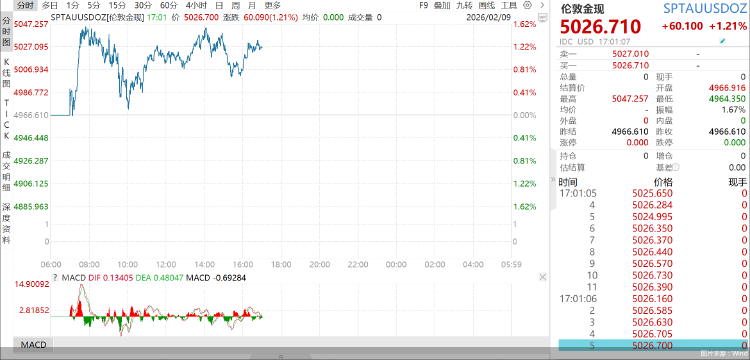
Group 1 - The core viewpoint of the article highlights the contrasting behaviors in the gold market, with retail investors showing enthusiasm for gold purchases while financial institutions adopt a cautious approach by tightening investment criteria and risk assessments [1][4][5] - As of February 9, the spot gold price reached a high of $5047.257 per ounce, marking a significant recovery above the $5000 threshold, with A-share and Hong Kong gold stocks also experiencing gains [1][2] - The current gold bull market has seen a cumulative increase of over 246% since its low in September 2022, with a notable surge of 64.56% in 2025, indicating strong market momentum [2][3] Group 2 - Financial institutions are raising the entry thresholds for gold investment, with banks like China Construction Bank and China Merchants Bank increasing minimum investment amounts for gold accumulation products [4][5] - Risk assessment standards are being tightened, with banks requiring higher risk tolerance levels for clients wishing to engage in gold investment, reflecting a proactive approach to consumer protection [5][6] - Despite the tightening of investment criteria, banks are also promoting gold-related financial products, such as structured deposits, which offer lower risk and are designed to appeal to a broader range of investors [6][7] Group 3 - The demand for physical gold products is surging ahead of the Spring Festival, with many banks reporting shortages of gold bars and coins, leading to recommendations for online purchases [7][8] - Investors are advised to be cautious during the holiday period, as international gold markets will remain active while domestic trading may pause, creating potential volatility [8][9] - Recommendations for gold investment include understanding the purpose of the purchase, with suggestions for gradual buying strategies to mitigate risks associated with high prices [10][11]
金价重回5000美元关口,普通人买金该如何在春节布局?
Bei Jing Shang Bao· 2026-02-09 14:56
Core Viewpoint - The gold market is experiencing a surge in demand ahead of the Spring Festival, with spot gold prices stabilizing above $5000 per ounce, while financial institutions are adopting a cautious approach by tightening investment criteria and risk assessments [1][4][5]. Group 1: Gold Price Dynamics - As of February 9, spot gold prices reached a high of $5047.257 per ounce, marking a significant recovery above the $5000 threshold [1]. - The current bull market for gold has seen prices increase by over 246% since September 2022, with a notable rise of 64.56% in 2025 alone [3]. - Despite recent volatility, including a sharp drop to $4402.06 per ounce, gold prices rebounded quickly, indicating strong market resilience [3][4]. Group 2: Institutional Responses - Major banks have raised the entry thresholds for gold investment, with institutions like China Construction Bank increasing the minimum amount for gold accumulation to 1500 yuan [5][6]. - Risk assessment standards have been tightened, requiring clients to achieve a cautious risk rating before engaging in gold accumulation products [6]. - These measures are in response to the heightened volatility in gold prices and aim to protect inexperienced investors from potential losses [6]. Group 3: Consumer Behavior and Recommendations - There is a growing demand for physical gold products, with banks reporting shortages and advising customers to purchase online [8][9]. - Consumers are encouraged to clarify their purchasing intentions, distinguishing between investment and consumption, and to consider strategies like dollar-cost averaging to mitigate risks [10][11]. - The market is expected to remain volatile during the Spring Festival, with predictions of gold prices fluctuating between $4600 and $5000 per ounce [11].
春节新钞有银行配送上门,部分地区“一钞难求”
3 6 Ke· 2026-02-09 12:44
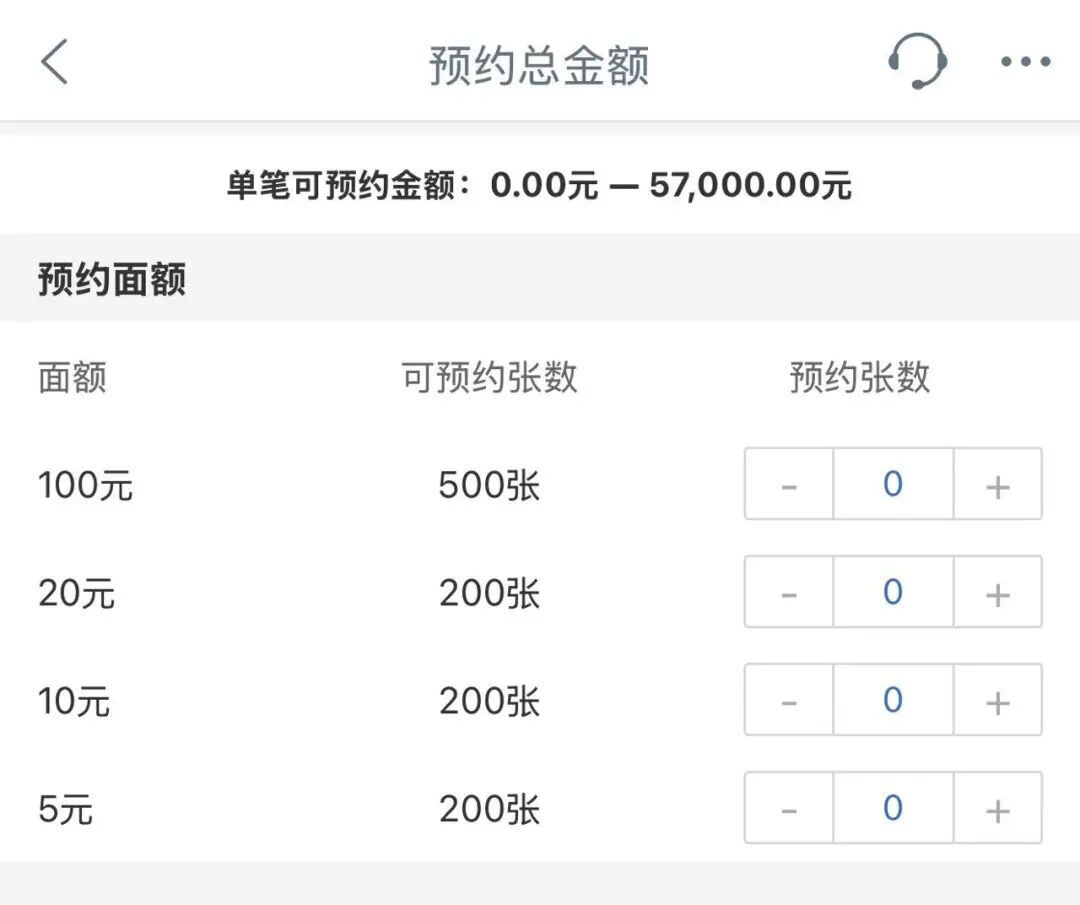
又到岁末年初,兑换崭新钞票包红包是许多家庭的春节传统。近期各大银行的新钞预约火热,一场新钞"预约战"就此打响。 时代财经注意到,目前多家银行均支持储户通过手机银行APP线上预约新钞,并自行选择方便的网点支取。从预约情况来看,不少银行十分火爆,部分地 区甚至"一钞难求",如招商银行APP日前显示,该行深圳地区的线上新钞预约额度使用完毕,暂不提供服务,如有新钞兑换需求,储户可咨询各营业网 点。 在广东省等流行换新钞、备"利是"的地区,小面额钞票预约尤其紧张,20元、50元面值的新钞最为抢手。"今年广东的很多银行都很难拿到20元新钞,问 了很多都说没有,都是给10元新钞代替。"2月6日,来自广东的储户林女士如此表示。 据工商银行深圳市分行近日发布,2026年新春,工商银行深圳市分行在工银微金融小程序开启了"利是钞预约"服务通道。该行同时称,利是钞指新钞或符 合流通标准且整洁度较高的环保钞,网点将优先提供新钞,当新钞额度兑换完毕后,将提供环保钞,同样寓意吉祥;另外,利是钞支持预约100元、50 元、20元、10元、5元共五种券别,可以满足储户的多样需求。 从额度来看,该行上述5种面额新钞的可预约张数均为100张,储户 ...
农行广东分行刘明尧:集中资源下沉金融服务,加码“百千万工程”
2 1 Shi Ji Jing Ji Bao Dao· 2026-02-09 06:57
"农业银行广东分行始终坚持服务'三农 '主责主业,深入践行金融工作的政治性与人民性,持续完善覆 盖城乡的服务体系、精准赋能的产品体系、惠农强基的队伍体系,凝聚起服务乡村振兴的强大合力。"2 月5日,在广州举办的"百千万工程"金融服务发布会上,农业银行广东分行党委书记、行长刘明尧在致 辞中介绍了上述情况。 展望未来,农业银行广东分行将进一步扛牢服务"三农"的金融使命,坚决贯彻落实党中央及省委省政府 各项决策部署,加强与各级"百千万工程"指挥办、国资、农业农村等部门的联动对接,持续奋斗、积极 作为,以更高水平、更有效能的金融服务支持"百千万工程",为广东城乡区域协调发展注入更坚实的金 融动力。 (文章来源:21世纪经济报道) 刘明尧表示,每年,分行接续制定并实施"百千万工程"专项服务方案,紧盯重点领域加大金融供给,推 动资源向基层倾斜、服务向一线下沉,有力助力"百千万工程"实现"三年初见成效",获得各级党政部门 与社会各界的广泛认可。下一步,农业银行广东分行将紧紧围绕省委"1310"具体部署,继续奋发有为、 强化担当,重点聚焦县域产业发展、县镇村功能面貌提升、县域投融资体制改革及海洋强省建设,推动 金融供给更加精 ...
农业银行2月9日发售2026年记账式附息(一期)国债(续发)
Jin Tou Wang· 2026-02-09 03:22
Group 1 - China Agricultural Bank will issue a new bond, the 2026 Book-Entry Interest-Bearing National Bond (Phase 1), on February 9, 2026, with a maturity of 0.93 years and a fixed interest rate of 1.2661% [1] - The bond will be available for subscription by individual investors, financial institutions, and non-financial institutions across the country, with a minimum subscription unit of one bond (face value of 100 yuan) [1] - The bond's full price is set at 100.04 yuan per unit, and the principal will be repaid along with interest on January 15, 2027 [1] Group 2 - The bond's trading code will change from 260001X1 during the subscription period to 260001 on the first day of trading [1] - Investors can subscribe through various channels including bank branches, online banking, and mobile banking, with no upper limit on subscription amounts [1] - Central National Debt Registration and Settlement Co., Ltd. offers a balance verification service for investors starting from the bond's listing date [2]
跨境流动性跟踪20260208:贸易回流比率再度回正,服务逆差大幅收窄
GF SECURITIES· 2026-02-09 01:11
Investment Rating - The industry rating is "Buy" [4] Core Views - The trade return ratio has turned positive again, and the service trade deficit has significantly narrowed [16][18] - The cross-border capital flow is expected to gradually return, positively impacting domestic liquidity [5][19] - The service trade deficit for December 2025 was 966 billion CNY, a year-on-year decrease of 466 billion CNY, with a full-year deficit of 13,760 billion CNY, down 2,544 billion CNY, approximately 16% [18] Summary by Sections 1. Current Observation - The State Administration of Foreign Exchange (SAFE) released data on China's international balance of payments for December 2025, indicating a potential impact on the central bank's willingness to settle foreign exchange [16] - The trade return ratio is at a historical high, with a monthly unconverted trade net outflow of 447 billion CNY, a year-on-year increase of 1,392 billion CNY [17] 2. Arbitrage Trading Returns - The arbitrage trading return rate for 10Y US Treasury bonds in CNY has dropped significantly to -1.77%, indicating a shift in cross-border capital dynamics [17] 3. Service Trade Deficit - The service trade deficit has narrowed significantly, with major contributions from improved policies for foreign visitors, reduced international shipping costs, and enhanced competitiveness in high-tech services [18] 4. Cross-Border Liquidity Outlook - Despite the recent appointment of Kevin Warsh as the next Federal Reserve Chair, the trend of cross-border capital return is expected to continue, influenced by the Fed's monetary policy stance [19][21] - The short-term liquidity in the US remains tight, with limited space for balance sheet reduction, while long-term prospects depend on economic performance [20][21]


中小银行改革提质加速462家退出市场 差异化整合路径构建多层次金融格局
Chang Jiang Shang Bao· 2026-02-08 23:38
Group 1: Core Insights - 2025 is a pivotal year for the reform of small and medium-sized banks in China, marked by structural adjustments such as the reform of provincial rural credit cooperatives and the integration of village banks, indicating a shift from scale expansion to quality and efficiency improvement [1][2] - A total of 462 banks are expected to exit the market in 2025, with village banks accounting for 291 of these, representing approximately 63% of the total [4][5] - The establishment of new provincial rural commercial banks or joint banks is set to reach 7 by the end of 2025, with 13 provinces already completing the reform of provincial rural credit cooperatives [2][3] Group 2: Provincial Reforms - The Xinjiang Rural Commercial Bank, with an asset scale of 760 billion yuan, marks a significant breakthrough in the reform of provincial rural credit cooperatives, becoming the first unified legal entity rural commercial bank in the northwest region [2][3] - The reform has led to two main models: the unified legal entity rural commercial bank model and the provincial rural commercial joint bank model, with the former being more comprehensive in its reform [2][3] Group 3: Village Bank Integration - The "village to branch" model has become the mainstream path for the integration of village banks, allowing for comprehensive management, risk control, and business integration [5][6] - State-owned banks have played a significant role in the integration process, with major acquisitions and transformations of village banks into branches, enhancing governance structures and service methods while maintaining their focus on supporting agriculture and small enterprises [4][6]

振华股份:为全资子公司、控股子公司提供担保


2 1 Shi Ji Jing Ji Bao Dao· 2026-02-08 09:18
Group 1 - The core point of the article is that Zhenhua Co., Ltd. has announced financial guarantees for its subsidiaries to support their operational and project funding needs [1] Group 2 - Zhenhua Co., Ltd. signed a guarantee contract with China Construction Bank for a maximum of RMB 76 million to support the relocation project of its wholly-owned subsidiary, Chongqing Minfeng Chemical Co., Ltd. [1] - The company also signed a maximum guarantee contract with Agricultural Bank of China for a credit facility of up to RMB 2 million to meet the operational funding needs of its controlling subsidiary, Xiamen Shouneng Technology Co., Ltd. [1] - Both guarantees provided by the company do not have any counter guarantees [1]