
AGRICULTURAL BANK OF CHINA(01288)

Search documents
四大行即将派发中期“红包”!多少钱呢?
Mei Ri Jing Ji Xin Wen· 2025-12-10 07:07
Core Points - Industrial and Commercial Bank of China (ICBC) and Agricultural Bank of China (ABC) announced a cash dividend distribution of approximately 76.2 billion yuan to A-share shareholders, scheduled for December 15, 2025 [1] - A total of 32 listed banks have announced or planned to implement mid-term dividends this year, an increase of 8 banks compared to 2024, with 9 banks planning to implement dividends for the first time [1] - 26 banks have disclosed specific profit distribution plans, with an average dividend payout ratio of 24.9%, totaling 264.566 billion yuan, which represents a 2.55% increase from the previous year [1] Industry Insights - The two major banks are components of the low-volatility dividend ETF index, which had a dividend yield of 4.14% as of December 9 [1] - The low-volatility dividend ETF fund (159547) tracks this index and has the lowest comprehensive fee rate among ETFs, with quarterly assessments for dividends [1]


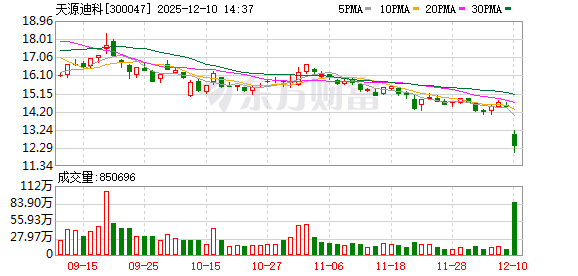
跨境支付板块下跌 天源迪科下跌14.97%
Mei Ri Jing Ji Xin Wen· 2025-12-10 06:36
Group 1 - The cross-border payment sector experienced a decline on December 10, with notable drops in stock prices [2] - Tianyuan Dike saw a significant decrease of 14.97% [2] - Shenzhou Information and China Merchants Bank also reported declines of 3.79% and 2.86% respectively [2] Group 2 - Agricultural Bank of China and Industrial and Commercial Bank of China both fell by over 3% [2]




银行股“红包雨”将至!上市银行超2600亿元分红要来了
2 1 Shi Ji Jing Ji Bao Dao· 2025-12-10 04:38
12月8日,工商银行与农业银行同步发布2025年中期分红派息实施公告显示,两家国有大行将在12月15 日完成现金红利发放,合计向A股股东派发约762亿元现金股息。 此前,中国银行、建设银行已率先发布中期分红实施方案。其中,中国银行每股派发现金红利0.1094 元,A股派发现金红利261.02亿元。建设银行每股派发现金红利0.1858元,A股派发现金股息约39.36亿 元。 (文章来源:21世纪经济报道) 银行又要撒"红包"了。 21世纪经济报道记者梳理,截至目前,今年共有32家上市银行宣布(拟)实施中期分红(或三季度分 红),数量较2024年多8家,其中9家银行为首次计划实施;目前已有26家银行宣布具体的利润分配方 案,平均分红率为24.9%,合计分红金额2645.66亿元,较去年增长2.55%。 四大行中期分红即将落地。 ...

智通港股沽空统计|12月10日
智通财经网· 2025-12-10 00:25
Group 1 - The top short-selling stocks include Sun Hung Kai Properties-R (80016), China Resources Beer-R (80291), and AIA Group-R (81299), all with a short-selling ratio of 100.00% [1][2] - The highest short-selling amounts are from Xiaomi Group-W (01810) at 2.161 billion, Alibaba-SW (09988) at 793 million, and Tencent Holdings (00700) at 733 million [1][2] - The highest deviation values are from China Resources Beer-R (80291) at 39.83%, followed by Jianfa Property (02156) at 37.09%, and AIA Group-R (81299) at 35.65% [1][2] Group 2 - The top ten short-selling ratio rankings show that all stocks listed have significant short-selling activity, with Anta Sports-R (82020) also at 100.00% [2] - The top ten short-selling amounts highlight Xiaomi Group-W leading significantly, with a short-selling ratio of 28.48% [2] - The top ten deviation values indicate that China Resources Beer-R (80291) has the highest deviation, suggesting a notable difference from its historical short-selling average [2]




上市银行超2600亿元分红在途
2 1 Shi Ji Jing Ji Bao Dao· 2025-12-09 23:28
Core Viewpoint - The announcement of mid-term dividends by major state-owned banks indicates a robust financial performance and a commitment to returning value to shareholders, with a total cash dividend distribution of approximately 762 billion yuan planned for December 15, 2025 [1][2]. Group 1: Dividend Announcements - Industrial and Commercial Bank of China (ICBC) plans to distribute a cash dividend of 0.1414 yuan per share, totaling approximately 503.96 billion yuan, with A-shares accounting for about 381.23 billion yuan [1]. - Agricultural Bank of China (ABC) will distribute a cash dividend of 0.1195 yuan per share, amounting to approximately 418.23 billion yuan, with A-shares also around 381.50 billion yuan [1]. - As of now, 32 listed banks have announced mid-term dividends, an increase of 8 banks compared to 2024, with an average dividend payout ratio of 24.9% and a total dividend amount of 264.57 billion yuan, reflecting a 2.55% increase from last year [2][3]. Group 2: Market Trends and Analyst Insights - The mid-term dividend distribution by state-owned banks is occurring earlier this year, with four major banks having already announced their plans, compared to the previous year [2][3]. - Analysts indicate that the increase in the number of banks planning to distribute dividends and the stability of dividend rates reflect the banking sector's solid dividend value, which is expected to attract long-term capital [3]. - The average dividend yield for listed banks is currently 4.48%, with 12 banks yielding over 5% and 26 banks exceeding 4% [3]. Group 3: Shareholder and Executive Actions - There have been 15 instances of share buyback plans disclosed by 13 banks this year, indicating strong confidence from major shareholders and executives in the banks' strategic direction and long-term value [6][7]. - Notable buybacks include Nanjing Bank, which saw an increase of over 1.28 billion shares by foreign shareholder BNP Paribas, raising its stake to 18.06% [7]. - The banking sector has attracted significant buyback amounts, totaling approximately 90.30 billion yuan, ranking first among 31 industries [7][8].
万紫千红百县兴
Jing Ji Ri Bao· 2025-12-09 22:19
Core Insights - Agricultural Bank of China (ABC) is actively supporting local agricultural development in Guangdong Province through tailored financial products and services aimed at enhancing rural revitalization and industrial growth [4][10]. Group 1: Financial Support for Agriculture - ABC has introduced various financial products such as "惠农e贷" (Huinong e-loan) and "科技e贷" (Technology e-loan) to support the gold pomelo industry in Meizhou, providing loans totaling 16.9 billion yuan to 278 agricultural leading enterprises and small businesses [7]. - The bank's efforts have resulted in the support of 5,702 households in the pomelo industry, with a total issuance of 11.1 billion yuan in "惠农e贷" [7]. - In the white pigeon breeding sector, ABC has launched the "白鸽e贷" (White Pigeon e-loan) product, which has provided over 28 million yuan in loans, significantly boosting the local industry [9]. Group 2: Impact on Local Economy - The financial support from ABC has enabled local farmers and enterprises to expand their operations, such as a couple in Meizhou who received a 260,000 yuan loan to enhance their pomelo orchard [5]. - The white pigeon industry in Qingyuan has seen a dramatic increase in production, with annual output rising from 4 million to 28 million birds, generating over 900 million yuan in value [8]. - The introduction of the "农业全产业链贷" (Agricultural Full Industry Chain Loan) has facilitated the expansion of the blue crayfish industry in Huizhou, with a loan of 1.4 million yuan helping a company to scale up its operations [10][11]. Group 3: Strategic Initiatives - ABC's initiatives align with the "百千万工程" (Hundred Counties, Thousand Towns, and Ten Thousand Villages Project), which aims to promote high-quality development across rural areas in Guangdong [4][6]. - The bank has committed to enhancing financial services for rural revitalization, with a total county loan balance exceeding 600 billion yuan and agricultural loans surpassing 500 billion yuan as of October 2025 [11]. - ABC has been recognized for its outstanding performance in providing financial services for rural revitalization, receiving an "excellent" rating from the central bank for five consecutive years [11].

金融“点睛”老手艺 非遗“出圈”迎新生
Jing Ji Ri Bao· 2025-12-09 22:19
Core Insights - The article highlights the integration of finance and intangible cultural heritage (ICH) in Huizhou, Guangdong, showcasing how local traditional foods are revitalized through financial support from Huizhou Agricultural Bank [1][2]. Group 1: Financial Support for ICH Projects - Huizhou Agricultural Bank has invested over 280 million yuan in loans for local ICH projects, benefiting more than 300 enterprises and merchants by transforming cultural heritage into economic opportunities [1]. - The bank has tailored financial solutions to meet the specific needs of ICH businesses, such as simplifying loan processes and providing targeted funding [2]. Group 2: Case Studies of ICH Businesses - Yihelong Soy Sauce, a traditional soy sauce maker established in 1882, received a 300,000 yuan loan to modernize its production, allowing it to merge traditional techniques with modern technology and expand its market reach [1]. - Luofushan Tofu Flower, a local delicacy, faced funding challenges due to increased orders but successfully secured a 1.39 million yuan loan to establish a soybean planting base and upgrade equipment, leading to national distribution [2]. - Xieji Pigeon King, a nearly century-old business, received 2.8 million yuan in loans to expand its operations and enhance customer capacity, becoming a landmark for cultural tourism in the area [2]. Group 3: Impact on Local Economy and Culture - The financial support from Huizhou Agricultural Bank is seen as a vital force in nurturing cultural heritage, driving economic growth, and promoting rural revitalization through job creation and increased income for local farmers [2]. - The bank's initiatives are positioned as essential for the cultural and economic development of Huizhou, contributing to the city's goal of becoming a strong cultural hub [2].

六大行2025年中期分红派息情况
Zhong Guo Zheng Quan Bao· 2025-12-09 20:22
数据来源/上市银行公告 制表/石诗语 银行名称 分红派息总额 派发A股现金红利金额 A股现金红利发放日 (亿元) (亿元) 工商银行 503.96 381.23 2025年12月15日 建设银行 486.05 39.36 2025年12月11日 农业银行 418.23 381.5 2025年12月15日 中国银行 352.50 261.02 2025年12月11日 邮储银行 147.72 未披露 未披露 交通银行 138.11 未披露 未披露 ...

上市银行中期分红阵营扩容高股息价值催生“资产引力”
Zhong Guo Zheng Quan Bao· 2025-12-09 20:22
Core Viewpoint - The mid-term dividend announcements from major Chinese banks reflect a robust financial performance and a commitment to shareholder returns, with a total proposed payout exceeding 2,600 billion yuan across 26 listed banks, indicating a trend towards higher dividends in the banking sector [1][2][4] Group 1: Major Banks' Dividend Announcements - Industrial and Commercial Bank of China and Agricultural Bank of China announced mid-term dividends of 503.96 billion yuan and 418.23 billion yuan respectively, with both distributing over 300 billion yuan in cash dividends [1] - The six major state-owned banks are the primary contributors to the dividend payouts, collectively proposing cash dividends of 2,046.57 billion yuan, accounting for over 70% of the total disclosed dividends [1] - The dividend payout ratio for these major banks remains stable at around 30%, continuing their tradition of high and stable returns [1] Group 2: Participation of Other Banks - Industrial Bank introduced its first mid-term dividend plan, proposing a payout of 119.57 billion yuan, which is 30.02% of its net profit for the first half of 2025 [2] - Other regional banks, such as Ningbo Bank and Changsha Bank, have also joined the mid-term dividend initiative, indicating a growing trend among smaller banks [2] - Chongqing Bank plans to distribute cash dividends of 5.85 million yuan, representing 11.99% of its net profit attributable to ordinary shareholders [2] Group 3: Regulatory and Market Influences - The expansion of mid-term dividends among listed banks is driven by regulatory policies, solid operational fundamentals, and market demand [2] - Recent policies encourage banks to optimize their dividend strategies, with the new "National Nine Articles" emphasizing cash dividend regulations and incentivizing high-dividend companies [2] - The Shanghai Stock Exchange is actively promoting higher dividend payouts and increased frequency to enhance company valuations [3] Group 4: Market Reactions and Future Outlook - The banking sector has shown stable performance since November, with high-dividend stocks attracting investor interest, suggesting that current valuations do not fully reflect their intrinsic value [3][4] - The implementation of mid-term dividends is seen as a signal of financial strength and a strategy to attract long-term capital, creating a positive cycle of management, returns, and valuation recovery [4] - Analysts believe that the increased dividend payouts and stock buybacks will stabilize market expectations and highlight the long-term investment value of bank stocks [4]

2025年国家开发银行


Shang Hai Zheng Quan Bao· 2025-12-09 18:53
Core Insights - The awards for financial bond underwriting and market-making have been announced, recognizing various banks and securities firms for their outstanding performance in the industry [1][2][3][4][5][6][7] Group 1: Outstanding Underwriters - The title of "Outstanding Underwriter" was awarded to several banks, including CITIC Bank, Shanghai Pudong Development Bank, and Industrial and Commercial Bank of China [1][2] - A total of 10 banks were recognized as "Excellent Underwriters," highlighting their contributions to the financial bond market [1] Group 2: Excellent Market Makers - The "Excellent Market Maker" category included firms such as Huatai Securities and CITIC Securities, showcasing their role in enhancing market liquidity [2][4] - A diverse range of banks, including Ping An Bank and Industrial Bank, were acknowledged for their market-making capabilities [2][4] Group 3: Special Awards - Special awards were given for various categories, including "Debt Sea Rising Award" and "Green Low Carbon Award," recognizing banks like Agricultural Bank of China and Postal Savings Bank of China for their innovative approaches [3] - The "Technology Innovation Award" was awarded to banks that demonstrated significant advancements in financial technology [3] Group 4: Individual Recognitions - Individual awards were presented to key personnel from various banks, such as CITIC Bank's Sun Wei and China Everbright Bank's Liu Yan, acknowledging their leadership in driving financial bond initiatives [4][5] - The "Outstanding Underwriting Supervisor" category highlighted individuals from major banks, emphasizing the importance of leadership in underwriting processes [5]