
ICBC(01398)

Search documents
工行宁夏分行“塞上工信贷”赋能专精特新企业发展
Zhong Guo Jin Rong Xin Xi Wang· 2026-02-03 11:05
Core Viewpoint - The Industrial and Commercial Bank of China (ICBC) Ningxia Branch has launched a regional financing product called "Saishang Gongxindai" to support specialized and innovative small and medium-sized enterprises (SMEs) in Ningxia, marking a significant step in government-bank collaboration to foster the development of quality SMEs [1][2] Group 1: Product Launch and Impact - The "Saishang Gongxindai" product has successfully disbursed 30 million yuan (approximately 4.5 million USD) within a week of its launch, demonstrating a rapid acceleration in financial services for the real economy [2] - The first loan was issued to Ningxia Ma's Brothers Grain and Oil Company, a recognized specialized and innovative enterprise with 24 core patents in the steam corn flake processing sector, significantly enhancing the starch digestibility of ruminant animal feed [1] Group 2: Strategic Collaboration - ICBC Ningxia Branch is collaborating closely with the Ningxia Hui Autonomous Region's Department of Industry and Information Technology, utilizing a list of certified "specialized and innovative" enterprises to tailor financial solutions that address the specific needs of these companies [1] - The partnership aims to provide customized credit solutions and reduce the loan waiting period for enterprises, leveraging ICBC's favorable interest rates and agile digital service capabilities [1] Group 3: Future Plans - ICBC Ningxia Branch plans to deepen its cooperation with the regional industrial and information department through multi-channel outreach to ensure that the benefits of "Saishang Gongxindai" reach more enterprises [2] - The bank aims to transform the product's potential into driving force for enterprise development, contributing to the ecological protection and high-quality development of the Yellow River Basin [2]
工商银行推出工银万事达欧洲旅行联名信用卡
Bei Jing Shang Bao· 2026-02-03 10:56
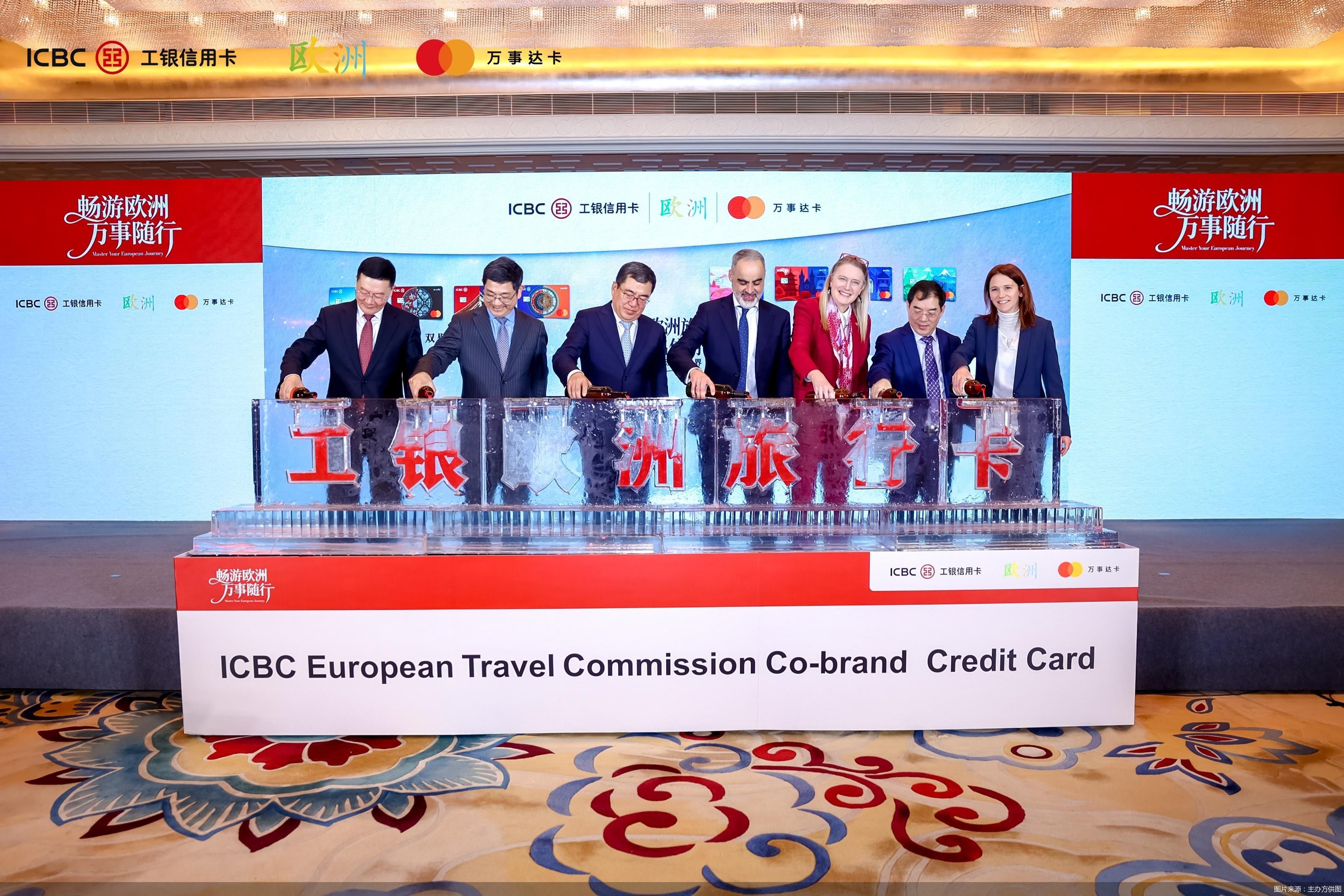
Core Insights - The Industrial and Commercial Bank of China (ICBC) has launched a co-branded credit card in collaboration with the European Travel Commission and Mastercard, targeting outbound tourists, international students, and employees of overseas enterprises [1] Group 1: Product Features - The ICBC Mastercard European Travel Credit Card features a comprehensive rights system covering "dining, accommodation, transportation, tourism, shopping, and entertainment" [1] - The card supports direct payments in 10 foreign currencies, including RMB, Euro, British Pound, and Swiss Franc [1] - Cardholders benefit from no foreign exchange fees, cashback on European spending, and overseas cash withdrawal subsidies [1] Group 2: Value-Added Services - The credit card offers various popular scene-based benefits, including bilingual travel concierge services, museum tickets in Europe, shopping privileges, and travel rewards [1]

工商银行(601398) - 工商银行H股公告
2026-02-03 10:45
公司名稱: 中國工商銀行股份有限公司 呈交日期: 2026年2月3日 I. 法定/註冊股本變動 | 1. 股份分類 | 普通股 | 股份類別 | H | | | 於香港聯交所上市 (註1) | 是 | | | --- | --- | --- | --- | --- | --- | --- | --- | --- | | 證券代號 (如上市) | 01398 | 說明 | | | | | | | | | | 法定/註冊股份數目 | | | 面值 | | 法定/註冊股本 | | | 上月底結存 | | | 86,794,044,550 | RMB | | 1 RMB | | 86,794,044,550 | | 增加 / 減少 (-) | | | 0 | | | RMB | | 0 | | 本月底結存 | | | 86,794,044,550 | RMB | | 1 RMB | | 86,794,044,550 | | 2. 股份分類 | 普通股 | 股份類別 | A | | 於香港聯交所上市 (註1) | | 否 | | | --- | --- | --- | --- | --- | --- | --- | - ...
宁波商品住宅“以旧换新”项目获工行1630万元贷款支持
Zhong Guo Jin Rong Xin Xi Wang· 2026-02-03 10:07
Core Viewpoint - The Industrial and Commercial Bank of China (ICBC) Ningbo Branch has provided a loan of 16.3 million yuan to support the "old-for-new" housing project in Ningbo, which aims to facilitate the acquisition of old houses and promote the new housing market [1] Group 1: Project Overview - The "old-for-new" project is led by the Ningbo Housing and Urban-Rural Development Bureau and is set to launch in early September 2025 [1] - The project plans to acquire 500 units of old houses built before January 1, 2005, across 32 streets (towns) in six districts of Ningbo [1] - Eligible residents can exchange their old houses for new ones throughout the city, with acquired old houses being transformed into rental housing for new citizens, youth, and first-time homebuyers [1] Group 2: Financial Support and Implementation - ICBC Ningbo Branch actively participated in the bidding process and designed a financial solution to address the funding connection issue between the value of old houses and new house payments [1] - The bank emerged as the winning bidder among 11 participating banks, becoming the cooperative bank for the project [1] - The loan provided is expected to support the acquisition of old houses and stimulate the demand for new housing, contributing to the stable and healthy development of the real estate market in Ningbo [1]

吉林长龙药业(08049.HK)发布公告,于2026年2月3日,本公司向中国工商银行认购结构性存款产品,金额人民币1亿元
Sou Hu Cai Jing· 2026-02-03 10:02
Group 1 - Jilin Changlong Pharmaceutical (08049.HK) announced a subscription to a structured deposit product from Industrial and Commercial Bank of China for an amount of RMB 100 million, effective February 3, 2026 [1] - As of February 3, 2026, Jilin Changlong Pharmaceutical closed at HKD 2.04, unchanged from the previous trading day, with a trading volume of 4,000 shares and a turnover of HKD 8,160 [1] - The stock has low attention from investment banks, with no ratings given in the past 90 days [1] Group 2 - Jilin Changlong Pharmaceutical has a market capitalization of HKD 352 million and ranks 11th in the Traditional Chinese Medicine II industry [1]

工商银行(01398) - 截至二零二六年一月三十一日止股份发行人的证券变动月报表
2026-02-03 09:53
股份發行人及根據《上市規則》第十九B章上市的香港預託證券發行人的證券變動月報表 截至月份: 2026年1月31日 狀態: 新提交 致:香港交易及結算所有限公司 公司名稱: 中國工商銀行股份有限公司 呈交日期: 2026年2月3日 I. 法定/註冊股本變動 | 1. 股份分類 | 普通股 | 股份類別 | H | | | 於香港聯交所上市 (註1) | 是 | | | --- | --- | --- | --- | --- | --- | --- | --- | --- | | 證券代號 (如上市) | 01398 | 說明 | | | | | | | | | | 法定/註冊股份數目 | | | 面值 | | 法定/註冊股本 | | | 上月底結存 | | | 86,794,044,550 | RMB | | 1 RMB | | 86,794,044,550 | | 增加 / 減少 (-) | | | 0 | | | RMB | | 0 | | 本月底結存 | | | 86,794,044,550 | RMB | | 1 RMB | | 86,794,044,550 | | 2. 股份分類 | 普通股 | 股份 ...
工行宁波市分行积极落实征信修复政策 助力小微企业主重塑信用
Zhong Guo Jin Rong Xin Xi Wang· 2026-02-03 09:34
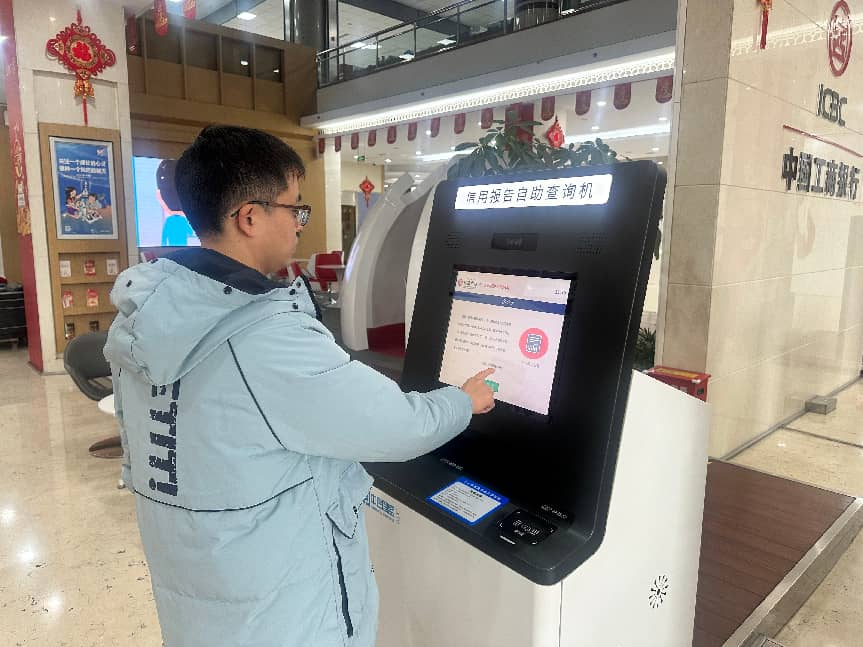
Core Viewpoint - The People's Bank of China introduced a "one-time personal credit repair policy" aimed at helping individuals with overdue credit records regain access to financing by automatically removing certain overdue records from the credit system [1]. Group 1: Policy Implementation - The policy applies to personal credit overdue records with a single overdue amount not exceeding 10,000 yuan, occurring between January 1, 2020, and December 31, 2025, provided that the overdue amount is fully repaid by March 31, 2026 [1]. - The Industrial and Commercial Bank of China (ICBC) Ningbo Branch established a dedicated task force to ensure the effective implementation of the policy, focusing on policy transmission, data verification, and customer service [2]. Group 2: Customer Support and Services - ICBC Ningbo Branch has developed an "online + offline" credit report inquiry service system, allowing customers to access simplified credit reports 24/7 through mobile and online banking, as well as at physical branches [4]. - The bank emphasizes that the credit repair policy is completely free and does not require customers to engage any third-party agents, while also warning the public against potential scams related to credit repair [4][5]. Group 3: Case Study - A restaurant owner, Ms. Li, benefited directly from the policy after her overdue records were removed, enabling her to secure a 500,000 yuan operating loan from ICBC Ningbo Branch, which alleviated her financial pressure and revitalized her business [1].
工商银行取得动态SQL访问路径风险识别专利
Sou Hu Cai Jing· 2026-02-03 07:51
声明:市场有风险,投资需谨慎。本文为AI基于第三方数据生成,仅供参考,不构成个人投资建议。 来源:市场资讯 国家知识产权局信息显示,中国工商银行股份有限公司取得一项名为"动态SQL访问路径风险识别方法 及装置"的专利,授权公告号CN116049327B,申请日期为2023年1月。 天眼查资料显示,中国工商银行股份有限公司,成立于1985年,位于北京市,是一家以从事货币金融服 务为主的企业。企业注册资本35640625.7089万人民币。通过天眼查大数据分析,中国工商银行股份有 限公司共对外投资了28家企业,参与招投标项目5000次,财产线索方面有商标信息969条,专利信息 5000条,此外企业还拥有行政许可79个。 ...
贵金属风暴下的银行“围城”:大行筑墙,小行借道
Hua Er Jie Jian Wen· 2026-02-03 07:14
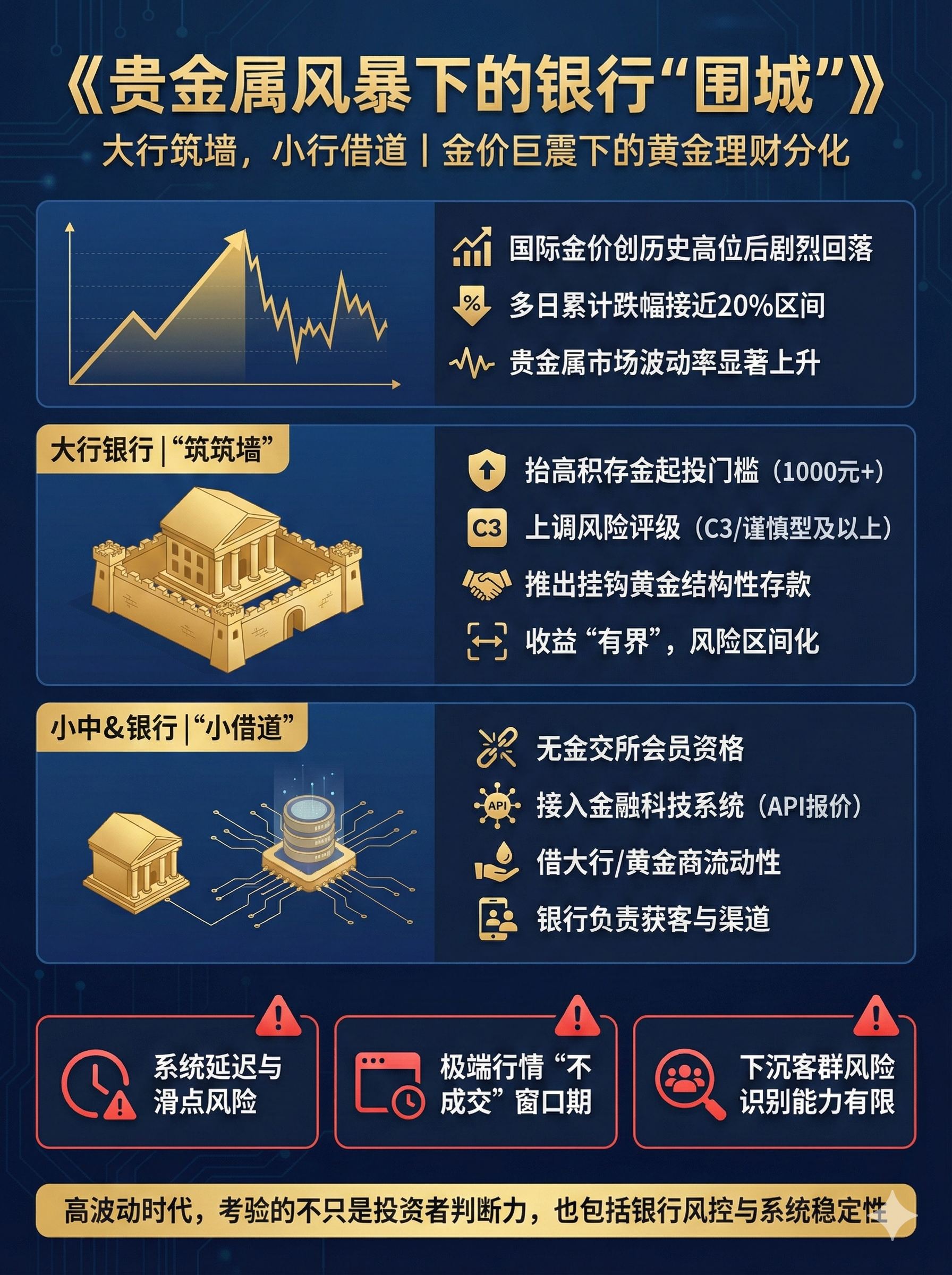
Core Insights - The global precious metals market experienced a significant downturn, with gold prices dropping nearly 20% after briefly surpassing $5,500 per ounce, leading to increased wealth anxiety among investors [2][4] - Major banks are adjusting their strategies in response to market volatility, with state-owned banks raising entry thresholds and risk ratings to filter out less experienced investors, while smaller banks are seeking to capitalize on the gold investment trend [4][9] Group 1: Major Banks' Strategies - State-owned banks are implementing a "de-risking" strategy by increasing the minimum investment amounts for gold accumulation products, with China Construction Bank raising its threshold to 1,500 yuan and Industrial and Commercial Bank of China to 1,100 yuan [4][5] - Risk assessment for gold accumulation products has become stricter, with banks like ICBC requiring investors to have a balanced risk profile to participate [5] - Major banks are shifting towards structured products that limit risk exposure, such as the "Stable Add Wealth" series from Bank of Communications, which offers a range of annual returns based on gold price movements [6][8] Group 2: Smaller Banks' Approaches - Smaller banks are actively entering the gold market, viewing it as a key opportunity for wealth management and customer acquisition [11][12] - Institutions like Jiangsu Bank and Nanjing Bank are enhancing their gold business capabilities, with some banks leveraging technology to offer gold accumulation services without direct membership in the Shanghai Gold Exchange [10][13] - The trend of "borrowing" resources from larger banks or technology firms is prevalent among smaller banks, allowing them to provide gold investment services while minimizing their own operational risks [13][14] Group 3: Market Dynamics and Risks - The current market dynamics indicate a continued divergence between major and smaller banks, with larger banks focusing on creating a more rational investment environment while smaller banks expand their reach through technology [18] - The reliance on technology raises concerns about system stability and the ability of less experienced investors to navigate the complexities of gold investments, particularly during extreme market conditions [15][16] - The ongoing volatility in gold prices necessitates a careful assessment of both the opportunities and risks associated with gold investments, as highlighted by the recent market fluctuations [19]

工商银行取得密钥更新方法专利
Sou Hu Cai Jing· 2026-02-03 07:00
Group 1 - The core point of the article is that the Industrial and Commercial Bank of China (ICBC) has obtained a patent for a key update method, system, computer device, and computer storage medium, with the patent announcement number CN116015656B and an application date of February 2023 [1] Group 2 - ICBC was established in 1985 and is located in Beijing, primarily engaged in monetary financial services [1] - The registered capital of ICBC is approximately 35.64 billion RMB [1] - According to data analysis, ICBC has invested in 28 companies, participated in 5,000 bidding projects, has 969 trademark information entries, and holds 5,000 patent information entries, along with 79 administrative licenses [1]