Workflow
ZHOU HEI YA(01458)
icon
Search documents
卤味生意,真的不好做了
虎嗅APP· 2025-09-26 14:56
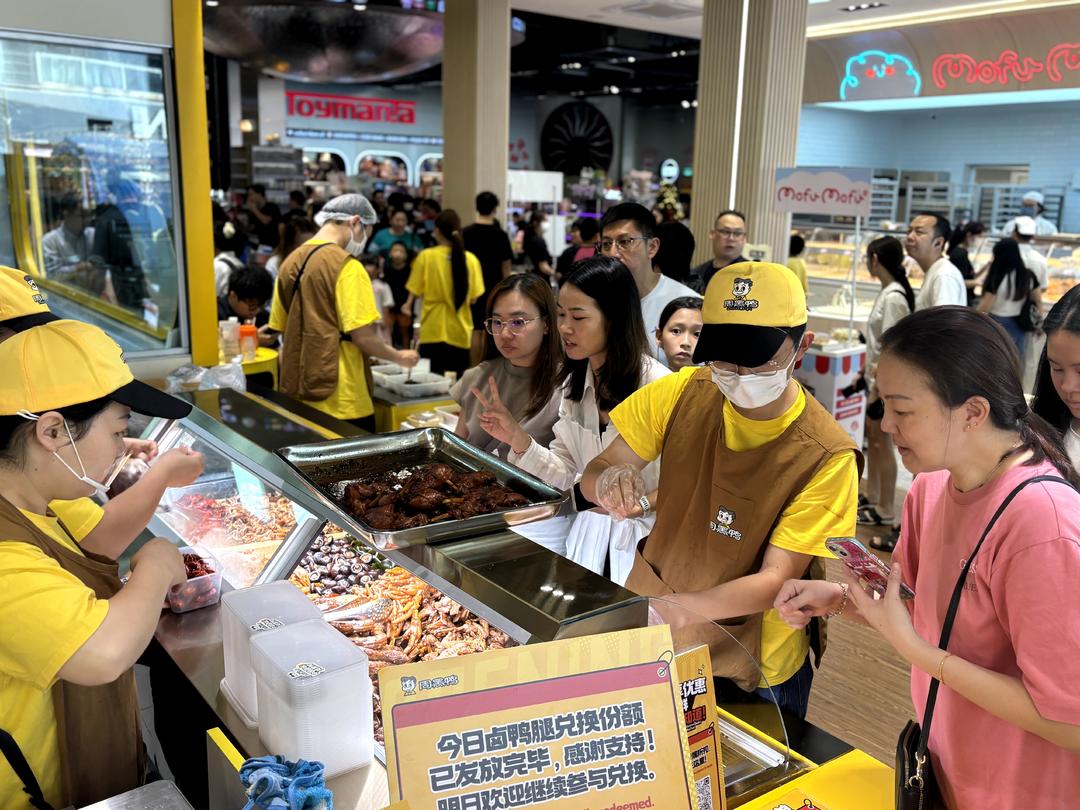
Core Viewpoint - The article discusses the challenges faced by the braised food industry, highlighting a significant decline in sales and store numbers, leading to a competitive and cost-pressured environment for both small shop owners and major brands [5][11]. Group 1: Challenges Faced by Small Shop Owners - Small shop owners like Wang Lei are experiencing increased operational costs, with rent rising from 5,500 yuan to 8,000 yuan and monthly profits dropping to around 3,000 yuan [6][9]. - Consumer sensitivity to prices has heightened, leading to reduced foot traffic and sales, with daily revenues dropping to 800 yuan [7][9]. - The market is saturated with over 20 competing braised food shops within a 500-meter radius, intensifying competition and forcing some shops to offer discounts that franchise owners cannot match [9][10]. Group 2: Performance of Major Brands - Major brands like Juewei, Zhou Hei Ya, and Huang Shang Huang reported significant revenue declines in 2024, with Juewei's revenue down 13.84% to 6.257 billion yuan and net profit down 34.04% to 227 million yuan [7][8][13]. - Despite revenue drops, some brands managed to maintain or even increase profit margins through cost-cutting measures, with Huang Shang Huang's net profit increasing by 26.9% despite a revenue decline [14][15]. - The number of stores for these major brands has decreased significantly, with Juewei closing 5,112 stores (32% reduction) and Huang Shang Huang reducing its store count by nearly 30% [15][16]. Group 3: Pricing and Consumer Sentiment - The pricing strategy of major brands has led to consumer backlash, with products priced significantly higher than traditional food items, causing many to perceive them as overpriced [17][19]. - A survey indicated that 47.2% of consumers would reduce purchases if prices increased by over 10%, reflecting a shift in consumer behavior towards seeking better value [18][24]. - The perception of braised food as a luxury item rather than an affordable snack has emerged, with social media discussions highlighting the disconnect between price and consumer expectations [17][20]. Group 4: Industry Trends and Future Outlook - The braised food industry is undergoing structural adjustments, with rising costs, intense competition, and changing consumer preferences posing significant challenges [26][25]. - The article suggests that brands need to focus on improving cost-effectiveness and product diversity to meet evolving consumer demands, particularly in the context of online shopping trends [27][28]. - The future of the industry may depend on the ability of brands to redefine their relationship with consumers and adapt to a market that increasingly values affordability and quality [29].
卤味行业困境:“卖得少、店变少”
3 6 Ke· 2025-09-26 03:04
Core Insights - The article highlights the significant challenges faced by the snack food industry, particularly the braised food segment, as consumer preferences shift and competition intensifies [1][3][20] Group 1: Industry Performance - The revenue of major braised food companies has declined, with companies like Juewei reporting a 13.84% drop in revenue to 6.257 billion yuan and a 34.04% decrease in net profit to 227 million yuan in 2024 [3][7] - The overall market is experiencing a downturn, with consumer traffic visibly decreasing and price sensitivity increasing among customers [3][4] - The number of stores for major brands has significantly reduced, with Juewei closing over 5,000 stores from 2024, marking a 32% decrease [9][11] Group 2: Cost and Competition - Rising operational costs, including rent and labor, have pressured profit margins, with average monthly profits for small store owners dropping to around 3,000 yuan [4][22] - Intense competition has led to price wars, with some stores offering discounts that smaller franchisees cannot match [6][22] - The industry is facing severe homogenization, with over 70% similarity in product offerings, leading to a decline in profit margins [22] Group 3: Consumer Behavior - Consumer preferences are shifting towards more affordable options, with nearly 60% of consumers indicating they would reduce their purchase frequency due to high prices [20][24] - The perception of braised food as overpriced has become prevalent, with social media discussions highlighting the lack of value for money [12][14] - The trend of DIY cooking at home is gaining traction, as consumers seek to save money and control flavors, further impacting traditional sales [22][24] Group 4: Strategic Adjustments - Industry experts suggest that companies need to refocus on value for money to regain consumer trust and market share [24] - There is a call for innovation in product offerings to meet the evolving tastes of younger consumers while maintaining classic product advantages [24] - The future of the industry may depend on how well companies can redefine their relationship with consumers in a changing market landscape [24]
卤味生意,真的不好做了
Hu Xiu· 2025-09-26 02:48
Core Insights - The industry is facing significant challenges, with rising costs and decreasing consumer demand leading to reduced profits for operators and major brands alike [1][4][10] Group 1: Industry Performance - The revenue of major brands like Juewei, Zhou Hei Ya, and Huang Shang Huang has declined, with Juewei's revenue dropping by 13.84% to 6.257 billion yuan in 2024, and net profit down 34.04% to 227 million yuan [4][12] - The overall market is experiencing a downturn, with many small operators like Wang Lei reporting a significant drop in daily sales and profit margins [5][7] - The number of stores for major brands is decreasing sharply, with Juewei closing 5,112 stores, a 32% reduction from its peak [16][19] Group 2: Consumer Behavior - Consumers are increasingly sensitive to prices, with 47.2% indicating they would reduce purchases if prices rise by over 10% [25] - There is a shift in consumer preference towards purchasing ready-to-eat products from supermarkets, which offer lower prices and guaranteed quality [8][9] - The perception of high prices has led to a decline in consumer interest, with many referring to the brands as "expensive" and "not worth it" [23][24][29] Group 3: Competitive Landscape - The industry is experiencing severe homogenization, with over 70% similarity in product offerings among competitors, leading to price wars and reduced profit margins [42] - Major brands are opting for high pricing strategies to maintain profit margins rather than competing on volume, which is causing a loss of consumer loyalty [21][30] - The competitive environment is intensifying, with many new entrants and local shops contributing to market saturation [5][6][39] Group 4: Cost Pressures - Rising operational costs, including rent and labor, are putting additional pressure on profit margins, with costs increasing by 8% to 10% annually [41] - The cost structure of these businesses is heavily influenced by raw material prices, which account for 70% to 80% of total costs [28][29] Group 5: Future Outlook - The industry is at a critical juncture, with a need for brands to adapt to changing consumer preferences and market conditions [46][47] - There is a call for brands to return to a value-driven approach, focusing on quality and affordability to regain consumer trust [45][47] - The potential for innovation and new product development is highlighted as essential for survival in a rapidly changing market [45][46]
两年关店上万家,加盟模式大败退,这个行业的苦日子刚刚开始?
3 6 Ke· 2025-09-18 02:30
Core Viewpoint - The prepared food industry, particularly the marinated products sector, is facing significant structural challenges, leading to declining revenues and profits for several listed companies since 2024. The traditional growth model has failed, and mere promotional efforts or new product launches are insufficient to address these issues [1]. Structural Challenges - The four listed companies in the marinated products sector—Juewei, Zhou Hei Ya, Huang Shang Huang, and Ziyan Food—have all experienced a collective decline in performance in the first half of the year. Their combined revenue was 6.507 billion, down 11.25% from 7.332 billion in the same period last year, while net profit fell by 20.78% to 465 million from 587 million [2]. - Juewei, the largest player, saw the most significant decline, with revenue dropping 15.57% to 2.82 billion and net profit plummeting 40.71% to 175 million. Ziyan Food's net profit nearly halved to 105 million, with revenue shrinking to 1.146 billion [3]. Performance Data | Rank | Company Name | Revenue (Billion) | Change (%) | Net Profit (Billion) | Change (%) | | --- | --- | --- | --- | --- | --- | | 1 | Juewei | 2.82 | -15.57% | 0.175 | -40.71% | | 2 | Ziyan Food | 1.473 | -11.46% | 0.105 | -47.20% | | 3 | Zhou Hei Ya | 1.223 | -2.93% | 0.108 | 228.00% | | 4 | Huang Shang Huang | 0.984 | -7.19% | 0.077 | 26.90% | - Zhou Hei Ya and Huang Shang Huang performed relatively better, with Zhou Hei Ya's net profit increasing by 228% to 108 million, although it remains at half the level of 230 million from mid-2021 [3]. Historical Context - Juewei's peak profit was in 2021 at 981 million, but profits fell to 233 million and 344 million in 2022 and 2023, respectively, despite revenue reaching a high of 7.261 billion in 2023. In 2024, Juewei's revenue dropped 13.84% to 6.257 billion, with net profit declining over 30% [4]. - The overall trend shows that from 2021 to 2024, these companies have experienced a significant decline in performance after reaching their highs around 2021 [6]. Market Dynamics - The decline in performance is attributed to intensified competition, consumer perception of value, and the inability to meet consumer expectations regarding price and quality. Consumers have expressed dissatisfaction with high prices, leading to reduced purchasing behavior [8]. - Companies have resorted to frequent discounts and promotions, which have not effectively changed consumer perceptions of high prices and have negatively impacted net profits [8]. Old Growth Model Failure - The previous growth model, which relied heavily on store expansion, is no longer effective. Juewei's franchise model was once a significant growth driver, but recent trends indicate that the closure of stores is directly linked to declining revenues [9]. - Juewei's revenue from franchise stores accounted for 73.5% of total revenue in 2024, down from 54.17 billion in 2023, indicating a 15% decline [9]. Store Closure Trends - The total number of operating stores for the four listed companies has decreased by over 8,700 since 2023, with significant closures also occurring among regional brands [13]. - Juewei's store count dropped from 15,950 at the end of 2023 to 10,725 by September 2024, while Zhou Hei Ya's stores decreased from 3,816 to 2,864 [10][12]. Future Outlook - The marinated products sector is at a crossroads, needing to identify new growth models or second growth curves. Current efforts, such as Juewei's new store format and Zhou Hei Ya's brand upgrades, have yet to show significant results [14]. - The industry requires a deep restructuring around channels, products, and organization to adapt to the changing market dynamics and consumer preferences [14].
周黑鸭(01458) - 2025 - 中期财报
2025-09-15 08:44
[Corporate Information](index=3&type=section&id=Corporate%20Information) This section details the company's governance structure, key personnel, and essential contact information [Board of Directors and Committee Composition](index=3&type=section&id=Board%20of%20Directors%20and%20Committees) The company's board comprises executive directors Zhou Fuyu (Chairman & CEO), Lü Hanbin, Wang Yali, and independent non-executive directors Chen Jincheng, Lu Weidong, Chen Chen, with committee memberships and chairmanships adjusted during the period - Chairman and CEO of the Board: **Mr. Zhou Fuyu**[6](index=6&type=chunk) - Chairman of the Audit Committee: **Mr. Chen Chen**[6](index=6&type=chunk) - Chairman of the Nomination Committee: **Mr. Chen Chen** (re-designated from June 24, 2025), with Mr. Zhou Fuyu no longer serving as chairman[6](index=6&type=chunk)[7](index=7&type=chunk) - Chairman of the Remuneration Committee: **Mr. Chen Chen**[7](index=7&type=chunk) - Chairman of the Strategy and Development Committee: **Mr. Zhou Fuyu**[8](index=8&type=chunk) [Key Personnel and Contact Information](index=4&type=section&id=Key%20Personnel%20and%20Contact%20Information) During the reporting period, Ms. Tam Pak Yu was appointed as company secretary and authorized representative, replacing Mr. Cheung Kai Cheong, with Ernst & Young serving as auditor - Company Secretary: **Ms. Tam Pak Yu** (appointed from August 28, 2025), with Mr. Cheung Kai Cheong resigning[8](index=8&type=chunk)[9](index=9&type=chunk) - Authorized Representatives: **Mr. Zhou Fuyu** and **Ms. Tam Pak Yu** (appointed from August 28, 2025)[8](index=8&type=chunk)[9](index=9&type=chunk) - Auditor: **Ernst & Young**[9](index=9&type=chunk) - Stock Code: **1458**[9](index=9&type=chunk) [Business Overview and Outlook](index=6&type=section&id=Business%20Overview%20and%20Outlook) This section provides an overview of the company's operational performance, strategic initiatives, and future prospects [Overall Business and Financial Performance](index=6&type=section&id=Overall%20Business%20and%20Financial%20Performance) As of June 30, 2025, Zhou Hei Ya operated 2,864 stores across 292 cities in 28 provinces, with a year-on-year decrease in total stores but Central China remaining the primary revenue contributor Store Count and Regional Distribution (As of June 30, 2025) | Region | 2025 Store Count () | 2025 Share (%) | 2024 Store Count () | 2024 Share (%) | | :--- | :--- | :--- | :--- | :--- | | Central China | 1,293 | 45.1 | 1,566 | 45.3 | | Southern China | 503 | 17.6 | 572 | 16.6 | | Eastern China | 383 | 13.4 | 524 | 15.2 | | Northern China | 393 | 13.7 | 443 | 12.8 | | Western China | 292 | 10.2 | 351 | 10.1 | | **Total** | **2,864** | **100.0** | **3,456** | **100.0** | Revenue Contribution by Geographical Location (For the Six Months Ended June 30) | Region | 2025 Revenue (RMB thousands) | 2025 Share (%) | 2024 Revenue (RMB thousands) | 2024 Share (%) | | :--- | :--- | :--- | :--- | :--- | | Central China | 538,003 | 55.0 | 547,675 | 53.5 | | Southern China | 168,119 | 17.2 | 173,117 | 16.9 | | Eastern China | 104,427 | 10.7 | 117,507 | 11.5 | | Northern China | 97,329 | 9.9 | 104,577 | 10.2 | | Western China | 71,136 | 7.2 | 81,457 | 7.9 | | **Total** | **979,014** | **100.0** | **1,024,333** | **100.0** | [Business Review and Outlook](index=8&type=section&id=Business%20Review%20and%20Outlook) In H1 2025, with moderate domestic consumption recovery, the braised food industry faced intensified competition and channel diversification challenges, prompting the company to focus on operational quality and performance growth through store efficiency, channel expansion, brand building, and supply chain optimization - Domestic consumption moderately recovered, but the braised food industry faced challenges including new channel diversion, intensified competition, product homogenization, and insufficient consumer value perception[18](index=18&type=chunk)[20](index=20&type=chunk) - The company's core objective is to enhance operational quality and restore performance growth, achieving positive progress in store operational efficiency, channel expansion, brand building, and supply chain optimization during the first half of the year[18](index=18&type=chunk)[20](index=20&type=chunk) [Store Strategy and Efficiency Enhancement](index=8&type=section&id=Store%20Strategy%20and%20Efficiency) The company prioritizes enhancing store operational quality by empowering frontline staff, strengthening member and private domain operations, integrating online-offline traffic, expanding late-night hours, and optimizing cost efficiency through precise site selection and flexible scheduling - Systematically empowered frontline staff through the "Four Seasons Battle Song" program, strengthening standardized execution, supervisory assessments, and skills training to enhance service quality[19](index=19&type=chunk)[21](index=21&type=chunk) - Strengthened member and private domain operational management, building a deep "staff-private domain" linkage mechanism to convert online traffic through precise marketing[19](index=19&type=chunk)[21](index=21&type=chunk) - Deepened cooperation in food delivery, with **delivery terminal sales of approximately RMB 380 million** in the first half; public domain in-store (Douyin + Meituan) terminal sales exceeded **RMB 80 million**[19](index=19&type=chunk)[21](index=21&type=chunk) - Expanded late-night snack hours, exploring full-time service to effectively extend business hours and capture incremental sales[19](index=19&type=chunk)[21](index=21&type=chunk) - Achieved cost reduction and efficiency improvement by strictly controlling key indicators like rent-to-sales ratio and per capita efficiency through precise site selection models, flexible leasing solutions, and dynamic scheduling mechanisms[19](index=19&type=chunk)[21](index=21&type=chunk) - As of June 30, 2025, the Group's store count was **2,864**[19](index=19&type=chunk)[21](index=21&type=chunk) [Channel Expansion and Overseas Market Layout](index=9&type=section&id=Channel%20Expansion%20and%20Overseas%20Market) The company actively expanded distribution channels, collaborating with Sam's Club for customized products and forming strategic partnerships with Yonghui and Pang Dong Lai, while successfully entering Malaysian and Singaporean markets and establishing a joint venture for compound seasonings - Collaborated with Sam's Club to customize and develop Zhou Hei Ya classic braised seasoning packs and flavored duck meat sauce[22](index=22&type=chunk)[25](index=25&type=chunk) - Established strategic partnerships with Yonghui, Pang Dong Lai, and others, expanding consumption scenarios by offering vacuum-packed and bulk products, dedicated counter displays, and joint marketing[22](index=22&type=chunk)[25](index=25&type=chunk) - Successfully entered overseas markets such as Malaysia and Singapore in the first half, with plans to continue expanding into Southeast Asia and other countries and regions in the future[23](index=23&type=chunk)[25](index=25&type=chunk) - Established a joint venture with Sichuan Shentang Industrial Group to jointly develop the "Gaga Xiang" series of compound seasonings and convenient instant food products[23](index=23&type=chunk)[25](index=25&type=chunk) [Product Innovation and Brand Building](index=9&type=section&id=Product%20Innovation%20and%20Brand%20Building) The company maintains high-quality standards, optimizing classic products and launching new categories like braised duck with sauce and braised squid, while developing new traffic-driving items and incubating the "Yaya Coconut" brand for a "braised food + beverage" experience, attracting Gen Z consumers and increasing member sales to over 60% - Adhered to "Zhou Hei Ya standards" for high quality, optimizing and iterating classic products, and launching new categories such as braised duck with sauce and braised squid[24](index=24&type=chunk)[26](index=26&type=chunk) - Developed new traffic-driving products such as braised duck wing roots with sauce and regional limited Sichuan spicy duck necks[24](index=24&type=chunk)[26](index=26&type=chunk) - Incubated the "Yaya Coconut" brand, launching fresh coconut water to create a one-stop "braised food + beverage" experience[24](index=24&type=chunk)[26](index=26&type=chunk) - Deeply engaged Gen Z consumers through precise marketing activities like Cherry Blossom Outing Season, Graduation Season, and student-exclusive benefits, strengthening brand penetration and resonance[27](index=27&type=chunk)[29](index=29&type=chunk) - As of June 30, 2025, **2.45 million new registered members** were added, with member sales accounting for **over 60%** of total sales[27](index=27&type=chunk)[29](index=29&type=chunk) [Supply Chain Optimization](index=10&type=section&id=Supply%20Chain%20Optimization) The company focused on cost reduction, efficiency, agile response, and quality improvement, driving refined supply chain operations to steadily increase gross profit margin to 58.6% through market analysis, supplier optimization, automation, cross-departmental collaboration, and a comprehensive quality assurance system - Gross profit margin steadily increased to **58.6%**[28](index=28&type=chunk)[29](index=29&type=chunk) - Effectively reduced per-ton costs through in-depth market analysis, supplier structure optimization, precise grasp of procurement windows to secure cost advantages, and continuous promotion of full-chain automation upgrades[28](index=28&type=chunk)[29](index=29&type=chunk) - Agilely ensured new product launches and channel expansion needs through efficient cross-departmental collaboration[28](index=28&type=chunk)[29](index=29&type=chunk) - Significantly improved product quality satisfaction by establishing an omni-channel consumer feedback and improvement mechanism, strengthening the quality assurance system, traceability, and standardized management[28](index=28&type=chunk)[29](index=29&type=chunk) [Organizational Capability Building](index=11&type=section&id=Organizational%20Capability) The company made significant progress in organizational vitality, capability, and efficiency through systematic organizational development, completing agile performance reforms, creating dynamic empowerment mechanisms, restructuring management, proactively planning talent reserves, and optimizing regional layouts, functional integration, process optimization, and flexible employment to substantially boost human efficiency - Completed the agile performance system reform for all employees, ensuring **100% alignment** of performance indicators with strategic goals[30](index=30&type=chunk)[32](index=32&type=chunk) - Innovatively created the "Four Seasons Battle Song" dynamic empowerment mechanism, significantly activating the combat effectiveness of frontline teams[30](index=30&type=chunk)[32](index=32&type=chunk) - Restructured the core management team to strengthen strategic synergy and decision-making efficiency; introduced high-potential experts from multiple fields to rapidly build new business teams and structures[30](index=30&type=chunk)[32](index=32&type=chunk) - Significantly improved human efficiency by optimizing regional layouts and implementing measures such as functional integration, process optimization, and flexible employment[30](index=30&type=chunk)[32](index=32&type=chunk) [Outlook for H2 2025](index=11&type=section&id=Outlook%20for%20H2%202025) For H2 2025, the company plans to enhance refined operations for store efficiency, accelerate product innovation and channel expansion, actively pursue overseas expansion for new growth, and refresh its brand to attract new customers, while continuously improving management efficiency and profitability for long-term high-quality development - Strengthen refined operations to enhance store efficiency and solidify the store base[31](index=31&type=chunk)[33](index=33&type=chunk) - Accelerate product innovation and distribution channel expansion, actively promote overseas expansion, and build new business growth curves[31](index=31&type=chunk)[33](index=33&type=chunk) - Accelerate brand rejuvenation to attract new customer segments[31](index=31&type=chunk)[33](index=33&type=chunk) - Continuously improve management efficiency, reduce costs, enhance profitability, and achieve long-term high-quality development[31](index=31&type=chunk)[33](index=33&type=chunk) [Management Discussion and Analysis](index=12&type=section&id=Management%20Discussion%20and%20Analysis) This section provides a detailed review of the company's financial performance, liquidity, capital resources, and key operational metrics [Financial Performance Summary](index=12&type=section&id=Financial%20Performance%20Summary) For the six months ended June 30, 2025, total revenue decreased by 2.9% to RMB 1,222.6 million, yet gross profit and profit for the period significantly increased, improving both gross and net profit margins, with basic and diluted EPS rising 400% to RMB 0.05 Key Financial Indicators for H1 2025 | Indicator | H1 2025 (RMB thousands) | H1 2024 (RMB thousands) | YoY Change (%) | | :--- | :--- | :--- | :--- | | Revenue | 1,222,561 | 1,259,511 | (2.9) | | Cost of sales | (505,976) | (561,854) | (9.9) | | Gross profit | 716,585 | 697,657 | 2.7 | | Other income and gains, net | 26,505 | 23,595 | 12.3 | | Finance costs | (5,264) | (5,966) | (11.8) | | Selling and distribution expenses | (471,771) | (504,977) | (6.6) | | Administrative expenses | (115,928) | (119,872) | (3.3) | | Share of profits and losses of associates | (3,986) | (33,668) | (88.2) | | Profit before tax | 146,141 | 56,769 | 157.4 | | Income tax expense | (38,201) | (23,856) | 60.1 | | Profit for the period | 107,940 | 32,913 | 228.0 | | Basic and diluted earnings per share (RMB) | 0.05 | 0.01 | 400.0 | | Net profit margin | 8.8% | 2.6% | - | | Gross profit margin | 58.6% | 55.4% | - | [Revenue Analysis](index=13&type=section&id=Revenue%20Analysis) For the six months ended June 30, 2025, total revenue decreased by 2.9% to RMB 1,222.6 million, primarily due to the optimization and closure of inefficient stores, though improved single-store operational efficiency mitigated the overall decline - Total revenue decreased by **2.9%** year-on-year to **RMB 1,222.6 million**[36](index=36&type=chunk)[41](index=41&type=chunk) - Primary reason: optimization and closure of inefficient retail stores[36](index=36&type=chunk)[41](index=41&type=chunk) - Effectively increased average single-store sales through enhanced operational efficiency, mitigating the overall revenue decline[36](index=36&type=chunk)[41](index=41&type=chunk) [Cost of Sales and Gross Profit](index=13&type=section&id=Cost%20of%20Sales%20and%20Gross%20Profit) Cost of sales decreased by 9.9% year-on-year to RMB 506.0 million, driven by lower raw material prices, optimized product mix, and improved supply chain efficiency, leading to a 2.7% increase in gross profit to RMB 716.6 million and a gross profit margin improvement from 55.4% to 58.6% - Cost of sales decreased by **9.9%** year-on-year to **RMB 506.0 million**[37](index=37&type=chunk)[42](index=42&type=chunk) - Primary reasons: declining raw material prices, optimized product structure, and improved supply chain efficiency[37](index=37&type=chunk)[42](index=42&type=chunk) - Gross profit increased by **2.7%** year-on-year to **RMB 716.6 million**[38](index=38&type=chunk)[43](index=43&type=chunk) - Gross profit margin increased from **55.4%** in H1 2024 to **58.6%** in H1 2025[38](index=38&type=chunk)[43](index=43&type=chunk) [Other Income and Expenses](index=13&type=section&id=Other%20Income%20and%20Expenses) Other income and gains, net, increased by 12.3% to RMB 26.5 million, mainly due to higher exchange gains, while finance costs decreased by 11.8% to RMB 5.3 million due to reduced lease liability interest from store closures; selling and distribution expenses and administrative expenses also decreased by 6.6% and 3.3% respectively, benefiting from store optimization and organizational adjustments - Other income and gains, net, increased by **12.3%** year-on-year to **RMB 26.5 million**, primarily due to increased exchange gains[39](index=39&type=chunk)[44](index=44&type=chunk) - Finance costs decreased by **11.8%** year-on-year to **RMB 5.3 million**, primarily due to optimized store structure and reduced interest expenses related to lease liabilities[40](index=40&type=chunk)[45](index=45&type=chunk) - Selling and distribution expenses decreased by **6.6%** year-on-year to **RMB 471.8 million**, primarily due to reduced rent and labor costs from closing inefficient stores[46](index=46&type=chunk)[52](index=52&type=chunk) - Administrative expenses decreased by **3.3%** year-on-year to **RMB 115.9 million**, primarily due to optimized organizational structure and improved per capita efficiency[47](index=47&type=chunk)[53](index=53&type=chunk) - Share of losses of associates was **RMB 4.0 million**, mainly related to fair value changes of target companies invested by investment partnerships[48](index=48&type=chunk)[54](index=54&type=chunk) [Profit and Comprehensive Income](index=14&type=section&id=Profit%20and%20Comprehensive%20Income) Profit before tax surged by 157.4% to RMB 146.1 million, while profit for the period increased by 228.0% to RMB 107.9 million, raising the net profit margin to 8.8%, and total comprehensive income for the period grew by 177.1% to RMB 104.3 million - Profit before tax increased by **157.4%** year-on-year to **RMB 146.1 million**[49](index=49&type=chunk)[55](index=55&type=chunk) - Income tax expense increased by **60.1%** year-on-year to **RMB 38.2 million**, primarily due to a significant increase in profit before tax[50](index=50&type=chunk)[56](index=56&type=chunk) - Profit for the period increased by **228.0%** year-on-year to **RMB 107.9 million**, with net profit margin improving from **2.6%** to **8.8%**[51](index=51&type=chunk)[57](index=57&type=chunk) - Exchange differences on translation of overseas operations turned from a gain to a **loss of RMB 3.6 million**[58](index=58&type=chunk)[64](index=64&type=chunk) - Total comprehensive income for the period increased by **177.1%** year-on-year to **RMB 104.3 million**[59](index=59&type=chunk)[65](index=65&type=chunk) [Liquidity and Capital Resources](index=15&type=section&id=Liquidity%20and%20Capital%20Resources) As of June 30, 2025, the Group's net assets decreased to RMB 3,466.8 million, with cash and bank balances at RMB 877.5 million, including RMB 500.0 million in time deposits; the company repurchased 91,127,500 shares for HKD 189,733,668.46, and the remaining IPO proceeds of RMB 176.5 million had their usage extended for three years, while the gearing ratio decreased from 21.0% to 19.9% - As of June 30, 2025, the Group's net assets were **RMB 3,466.8 million**, a decrease from **RMB 3,626.5 million** as of December 31, 2024[62](index=62&type=chunk)[67](index=67&type=chunk) - As of June 30, 2025, cash and bank balances were approximately **RMB 877.5 million**, comprising unrestricted cash and bank deposits of approximately **RMB 377.5 million** and time deposits of approximately **RMB 500.0 million**[68](index=68&type=chunk)[72](index=72&type=chunk) - The company repurchased **91,127,500 shares** in H1 2025, with a total consideration of **HKD 189,733,668.46**[61](index=61&type=chunk)[66](index=66&type=chunk) - The remaining balance of net proceeds from the Initial Public Offering (IPO) was **RMB 176.5 million**, with the expected timeline for use in general working capital and acquisitions and strategic alliances extended to within three years from the date of this report[70](index=70&type=chunk)[74](index=74&type=chunk)[76](index=76&type=chunk)[77](index=77&type=chunk)[78](index=78&type=chunk) - As of June 30, 2025, total bank borrowings were **RMB 84.4 million**, all maturing within one year[80](index=80&type=chunk)[85](index=85&type=chunk) - The gearing ratio decreased from **21.0%** as of December 31, 2024, to **19.9%** as of June 30, 2025, primarily due to reduced inventory reserves and trade payables[81](index=81&type=chunk)[85](index=85&type=chunk) - As of June 30, 2025, the Group had no assets pledged[82](index=82&type=chunk)[86](index=86&type=chunk) [Cash Flows](index=19&type=section&id=Cash%20Flows) In H1 2025, net cash from operating activities increased to RMB 210.8 million due to higher profit before tax and reduced inventories and receivables; net cash used in investing activities was RMB 157.6 million, mainly from structured and time deposit changes; and net cash used in financing activities was RMB 419.0 million, primarily for dividend payments, share repurchases, and bank loan repayments - Net cash generated from operating activities was approximately **RMB 210.8 million**, an increase from **RMB 193.8 million** in the same period of 2024[87](index=87&type=chunk)[90](index=90&type=chunk) - Net cash used in investing activities was approximately **RMB 157.6 million**, compared to net cash generated of approximately **RMB 374.4 million** in the same period of 2024[88](index=88&type=chunk)[91](index=91&type=chunk) - Net cash used in financing activities was approximately **RMB 419.0 million**, an increase from **RMB 249.2 million** in the same period of 2024[89](index=89&type=chunk)[92](index=92&type=chunk) [Structured Deposits and Financial Assets Measured at FVTPL](index=20&type=section&id=Structured%20Deposits%20and%20Financial%20Assets%20Measured%20at%20FVTPL) As of June 30, 2025, the Group held approximately RMB 212.3 million in structured deposits and other financial assets measured at FVTPL, primarily low-risk, capital-protected short-term products aimed at enhancing cash management returns, with related interest income decreasing to RMB 3.2 million in H1 2025 from RMB 9.4 million in H1 2024 - As of June 30, 2025, the balance of structured deposits and other financial assets measured at fair value through profit or loss was approximately **RMB 212.3 million**[93](index=93&type=chunk)[96](index=96&type=chunk) - These investments are primarily capital-protected products, typically with fixed short-term maturities and relatively low risk[93](index=93&type=chunk)[96](index=96&type=chunk) - In H1 2025, interest income from structured deposits and other financial assets was **RMB 3.2 million**, a decrease from **RMB 9.4 million** in the same period of 2024[93](index=93&type=chunk)[96](index=96&type=chunk) [Capital Expenditure and Liabilities](index=21&type=section&id=Capital%20Expenditure%20and%20Liabilities) In H1 2025, capital expenditure totaled RMB 25.9 million, primarily for store renovations, factory equipment upgrades, and information system development, funded mainly by operating cash flow and IPO proceeds; as of June 30, 2025, the Group had no significant unrecorded contingent liabilities, guarantees, litigation, or major investment, acquisition, or disposal events - Capital expenditure in H1 2025 was **RMB 25.9 million**, primarily for store renovations, factory equipment upgrades, and information system construction[98](index=98&type=chunk)[104](index=104&type=chunk) - Funding sources primarily included cash generated from operating activities and net proceeds from the Initial Public Offering (IPO)[98](index=98&type=chunk)[104](index=104&type=chunk) - As of June 30, 2025, the Group had no unrecorded significant contingent liabilities, guarantees, or litigation[99](index=99&type=chunk)[105](index=105&type=chunk) - During and after the reporting period up to the date of this report, the Group did not undertake any significant investments, acquisitions, or disposals[100](index=100&type=chunk)[106](index=106&type=chunk) [Restricted Share Unit Scheme](index=21&type=section&id=Restricted%20Share%20Unit%20Scheme) The company adopted the Restricted Share Unit (RSU) Scheme on July 25, 2018, to incentivize and retain talent, with 261 selected individuals granted RSUs representing 32,181,675 shares, or 1.49% of issued shares, as of the report date (August 28, 2025) - The RSU Scheme was adopted on **July 25, 2018**, aiming to incentivize directors, senior management, and employees[102](index=102&type=chunk)[107](index=107&type=chunk) - As of August 28, 2025, **261 selected individuals** were granted RSUs representing **32,181,675 shares**, accounting for **1.49%** of the company's issued shares[103](index=103&type=chunk)[107](index=107&type=chunk) [Turnover Ratios and Employee Costs](index=22&type=section&id=Turnover%20Ratios%20and%20Employee%20Costs) Average inventory turnover days decreased from 88.4 to 81.8, mainly due to faster inventory disposal from inefficient store optimization; average trade receivables turnover days increased from 9.0 to 11.8 due to extended credit terms for e-commerce platforms; average trade payables turnover days decreased from 30.2 to 25.4; and as of June 30, 2025, the Group had 3,756 employees, with total labor costs of RMB 233.1 million, representing 19.1% of total revenue - Average inventory turnover days decreased from **88.4 days** in H1 2024 to **81.8 days** in H1 2025[109](index=109&type=chunk)[116](index=116&type=chunk) - Average trade receivables turnover days increased from **9.0 days** in H1 2024 to **11.8 days** in H1 2025, primarily due to extended credit terms granted to e-commerce platforms[110](index=110&type=chunk)[116](index=116&type=chunk) - Average trade payables turnover days decreased from **30.2 days** in H1 2024 to **25.4 days** in H1 2025[111](index=111&type=chunk)[116](index=116&type=chunk) - As of June 30, 2025, the Group had **3,756 employees**, with **57.1%** in store operations and sales, and **29.5%** in processing factory production[112](index=112&type=chunk)[117](index=117&type=chunk) - Total labor costs in H1 2025 were **RMB 233.1 million**, representing **19.1%** of total revenue for the same period[114](index=114&type=chunk)[118](index=118&type=chunk) [Top Suppliers and Customers](index=23&type=section&id=Top%20Suppliers%20and%20Customers) In H1 2025, purchases from the largest duck supplier accounted for 13.4% of total procurement costs, with the top five collectively representing 27.3%; revenue from the top five customers was less than 30% of total revenue due to the nature of the business - Purchases from the largest duck supplier accounted for approximately **13.4%** of total procurement costs[119](index=119&type=chunk)[123](index=123&type=chunk) - Purchases from the top five duck suppliers collectively accounted for approximately **27.3%** of total procurement costs[119](index=119&type=chunk)[123](index=123&type=chunk) - Revenue from the top five customers accounted for **less than 30%** of total revenue[120](index=120&type=chunk)[123](index=123&type=chunk) [Reserves and Subsequent Events](index=23&type=section&id=Reserves%20and%20Subsequent%20Events) As of June 30, 2025, the company's distributable reserves to shareholders were approximately RMB 784.9 million, with no significant events occurring from the reporting period end until the report date (August 28, 2025) - As of June 30, 2025, distributable reserves to shareholders were approximately **RMB 784.9 million**[121](index=121&type=chunk)[124](index=124&type=chunk) - No significant events occurred from the end of the reporting period until August 28, 2025[122](index=122&type=chunk)[125](index=125&type=chunk) [Other Information](index=24&type=section&id=Other%20Information) This section covers details regarding directors' and substantial shareholders' interests, share repurchases, RSU scheme specifics, and corporate governance practices [Directors' and Chief Executive's Interests](index=24&type=section&id=Directors%27%20and%20Chief%20Executive%27s%20Interests) As of June 30, 2025, Mr. Zhou Fuyu held 62.90% of the company's shares through spousal interests, while Mr. Lü Hanbin and Ms. Wang Yali, along with their spouses, held smaller stakes primarily through the Restricted Share Unit Scheme, with all disclosed interests being long positions Directors' and Chief Executive's Interests in Shares (As of June 30, 2025) | Name | Capacity/Nature of Interest | Number of Relevant Shares | Approximate Percentage of Shareholding | | :--- | :--- | :--- | :--- | | Mr. Zhou Fuyu | Interest of spouse | 1,358,470,940 | 62.90% | | Mr. Lü Hanbin | Beneficial owner | 1,250,000 | 0.06% | | Ms. Wang Yali | Beneficial owner | 492,545 | 0.02% | | Ms. Wang Yali | Interest of spouse | 116,880 | 0.01% | | **Ms. Wang Yali Total** | | **609,425** | **0.03%** | [Substantial Shareholders' Interests](index=26&type=section&id=Substantial%20Shareholders%27%20Interests) As of June 30, 2025, Ms. Tang Jianfang (Mr. Zhou Fuyu's spouse) was the company's substantial shareholder, holding a total of 62.90% of shares through controlled corporations, family trust settlors, and beneficial ownership, with Cantrust (Far East) Limited and ZHY X Holdings Co., Limited also holding significant stakes as trustees or controlled corporations Substantial Shareholders' Interests in Shares (As of June 30, 2025) | Shareholder Name | Nature of Interest | Number of Shares or Securities Held | Approximate Percentage of Shareholding | | :--- | :--- | :--- | :--- | | Ms. Tang Jianfang | Interest in controlled corporation | 122,527,140 (L) | 5.67% | | Ms. Tang Jianfang | Settlor of family trust | 1,230,372,300 (L) | 56.97% | | Ms. Tang Jianfang | Beneficial owner | 5,571,500 (L) | 0.26% | | **Ms. Tang Jianfang Total** | | **1,358,470,940 (L)** | **62.90%** | | Cantrust (Far East) Limited | Trustee | 1,230,372,300 (L) | 56.97% | | ZHY X Holdings Co., Limited | Interest in controlled corporation | 1,230,372,300 (L) | 56.97% | | Healthy Origin Holdings Limited | Beneficial owner | 1,197,892,000 (L) | 55.47% | | ZHY Holdings IV Company Limited | Beneficial owner | 122,527,140 (L) | 5.67% | [Purchase, Sale and Redemption of Listed Securities](index=28&type=section&id=Purchase%2C%20Sale%20and%20Redemption%20of%20Listed%20Securities) In H1 2025, the company repurchased 91,127,500 shares on the Hong Kong Stock Exchange for a total consideration of HKD 189,733,668.46; these repurchased shares were not held as treasury shares, with some cancelled on January 27 and April 9, 2025, and total issued shares standing at 2,159,709,500 as of June 30, 2025 Details of Share Repurchases in H1 2025 | Month of Repurchase | Number of Shares Repurchased | Highest Price Paid Per Share (HKD) | Lowest Price Paid Per Share (HKD) | Total Consideration (HKD) | | :--- | :--- | :--- | :--- | :--- | | January 2025 | 20,157,500 | 1.72 | 1.49 | 32,350,298.29 | | February 2025 | 25,597,500 | 1.92 | 1.66 | 45,940,422.89 | | March 2025 | 1,903,000 | 1.82 | 1.73 | 3,353,903.05 | | April 2025 | 7,711,000 | 2.53 | 1.93 | 17,462,193.77 | | May 2025 | 15,965,500 | 2.69 | 2.47 | 41,277,584.28 | | June 2025 | 19,793,000 | 2.62 | 2.37 | 49,349,266.18 | | **Total** | **91,127,500** | | | **189,733,668.46** | - Some repurchased shares were cancelled on **January 27, 2025**, and **April 9, 2025**[150](index=150&type=chunk)[152](index=152&type=chunk) - As of June 30, 2025, the total number of issued shares was **2,159,709,500**[150](index=150&type=chunk)[152](index=152&type=chunk) [Details of Restricted Share Units Granted Under the RSU Scheme](index=29&type=section&id=Details%20of%20RSUs%20Granted%20Under%20the%20RSU%20Scheme) The company completed six rounds of RSU grants, with the latest (sixth) on March 28, 2025, granting 11,057,500 RSUs to 234 selected individuals at HKD 0.35 per share; some earlier RSUs lapsed due to unmet performance conditions, and as of the report date, trustees held 92,259,825 shares for future RSU grants, representing 4.27% of total issued shares - The company has completed six rounds of RSU grants, with the latest (sixth round) on **March 28, 2025**, granting **11,057,500 RSUs** to **234 selected individuals** at a purchase price of **HKD 0.35** per share[159](index=159&type=chunk)[162](index=162&type=chunk)[311](index=311&type=chunk)[313](index=313&type=chunk) - Some early RSU grants (e.g., fourth and fifth rounds) lapsed due to unmet performance conditions[157](index=157&type=chunk)[158](index=158&type=chunk)[162](index=162&type=chunk) - As of the report date (**August 28, 2025**), the trustee held **92,259,825 shares** for future RSU grants, representing **4.27%** of the total issued shares[164](index=164&type=chunk)[165](index=165&type=chunk) - RSU vesting periods are typically **12 to 48 months** from the grant date, vesting in **four tranches of 25% each**, subject to individual and company performance assessments[170](index=170&type=chunk)[173](index=173&type=chunk)[313](index=313&type=chunk) [Corporate Governance and Compliance](index=34&type=section&id=Corporate%20Governance%20and%20Compliance) In H1 2025, the company largely complied with the Corporate Governance Code, with a deviation where Mr. Zhou Fuyu served as both Chairman and CEO, which the Board deemed beneficial for efficient decision-making during strategic transformation; the Audit Committee reviewed interim results, and the Board resolved not to declare an interim dividend, while director changes included Ms. Wang Yali's appointment to the Nomination Committee and Mr. Chen Chen's re-designation as its Chairman - The company complied with the Corporate Governance Code in H1 2025, but Mr. Zhou Fuyu's dual role as Chairman and CEO deviated from Code Provision C.2.1[177](index=177&type=chunk)[178](index=178&type=chunk)[181](index=181&type=chunk) - The Board believes the dual role facilitates efficient advancement of key strategies and optimizes operational efficiency during the strategic transformation period[178](index=178&type=chunk)[181](index=181&type=chunk) - The Audit Committee reviewed and discussed the interim results and report for the six months ended June 30, 2025[186](index=186&type=chunk)[191](index=191&type=chunk) - The Board resolved not to declare any interim dividend for the six months ended June 30, 2025[187](index=187&type=chunk)[192](index=192&type=chunk) - Changes in directors' information: Ms. Wang Yali was appointed as a member of the Nomination Committee, Mr. Chen Chen was re-designated as Chairman of the Nomination Committee, and Mr. Zhou Fuyu ceased to be Chairman of the Nomination Committee (effective from June 24, 2025)[188](index=188&type=chunk)[189](index=189&type=chunk)[193](index=193&type=chunk) [Financial Statements](index=35&type=section&id=Financial%20Statements) This section presents the interim condensed consolidated financial statements, including the statement of profit or loss, financial position, changes in equity, and cash flows [Interim Condensed Consolidated Statement of Profit or Loss and Other Comprehensive Income](index=35&type=section&id=Interim%20Condensed%20Consolidated%20Statement%20of%20Profit%20or%20Loss%20and%20Other%20Comprehensive%20Income) This statement presents the unaudited consolidated profit or loss and other comprehensive income for the six months ended June 30, 2025, detailing the company's revenue, costs, profit, and other comprehensive income during the period [Interim Condensed Consolidated Statement of Financial Position](index=36&type=section&id=Interim%20Condensed%20Consolidated%20Statement%20of%20Financial%20Position) This statement provides the unaudited consolidated financial position as of June 30, 2025, and December 31, 2024, detailing the company's non-current assets, current assets, current liabilities, non-current liabilities, and equity composition [Interim Condensed Consolidated Statement of Changes in Equity](index=38&type=section&id=Interim%20Condensed%20Consolidated%20Statement%20of%20Changes%20in%20Equity) This statement presents the unaudited consolidated changes in equity for the six months ended June 30, 2025, including opening balances, period movements, and closing balances for share capital, treasury shares, share premium, various reserves, and retained profits [Interim Condensed Consolidated Statement of Cash Flows](index=40&type=section&id=Interim%20Condensed%20Consolidated%20Statement%20of%20Cash%20Flows) This statement presents the unaudited consolidated cash flows for the six months ended June 30, 2025, detailing net cash generated from operating, investing, and financing activities and their impact on cash and cash equivalents [Notes to the Interim Condensed Consolidated Financial Statements](index=44&type=section&id=Notes%20to%20the%20Interim%20Condensed%20Consolidated%20Financial%20Statements) This section provides explanatory notes and additional details supporting the interim condensed consolidated financial statements [Corporate and Group Information](index=44&type=section&id=Corporate%20and%20Group%20Information) Zhou Hei Ya International Holdings Company Limited was incorporated in the Cayman Islands on May 13, 2015, and listed on the Main Board of the Hong Kong Stock Exchange on November 11, 2016, primarily engaging in the production, marketing, and retail of braised duck leisure food products in mainland China, with Mr. Zhou Fuyu and Ms. Tang Jianfang as ultimate controlling shareholders - The company was incorporated in the Cayman Islands on **May 13, 2015**, and listed on the Main Board of the Hong Kong Stock Exchange on **November 11, 2016**[205](index=205&type=chunk)[208](index=208&type=chunk) - The Group primarily engages in the production, marketing, and retail of braised duck leisure food products in mainland China[206](index=206&type=chunk)[208](index=208&type=chunk) - The ultimate controlling shareholders are **Mr. Zhou Fuyu** and **Ms. Tang Jianfang**[207](index=207&type=chunk)[208](index=208&type=chunk) [Basis of Preparation and Changes to Accounting Policies](index=45&type=section&id=Basis%20of%20Preparation%20and%20Changes%20to%20Accounting%20Policies) The interim condensed consolidated financial information is prepared in accordance with HKAS 34 and consistent with accounting policies adopted for the annual consolidated financial statements for the year ended December 31, 2024, except for the initial adoption of HKFRS 21 "Lack of Exchangeability," which had no material impact on the current period's financial information - The interim condensed consolidated financial information is prepared in accordance with **Hong Kong Accounting Standard 34**[210](index=210&type=chunk)[213](index=213&type=chunk) - The revised **Hong Kong Financial Reporting Standard 21 "Lack of Exchangeability"** was adopted for the first time, but it had no impact on the interim condensed consolidated financial information[211](index=211&type=chunk)[212](index=212&type=chunk)[214](index=214&type=chunk)[215](index=215&type=chunk) [Operating Segment Information](index=46&type=section&id=Operating%20Segment%20Information) The Group's primary business is the production, marketing, and retail of braised duck leisure food products, constituting a single reportable segment; no geographical information is presented as all revenue and non-current assets originate from mainland China, and no single customer accounts for 10% or more of total revenue - The Group's primary business is the production, marketing, and retail of braised duck leisure food products, with only **one reportable segment**[216](index=216&type=chunk)[219](index=219&type=chunk) - All revenue and non-current assets are derived from mainland China, thus no geographical segment information is presented[217](index=217&type=chunk)[220](index=220&type=chunk) - No single customer's sales reached **10% or more** of total revenue, so no major customer information is presented[218](index=218&type=chunk)[221](index=221&type=chunk) [Revenue, Other Income and Gains, Net](index=47&type=section&id=Revenue%2C%20Other%20Income%20and%20Gains%2C%20Net) In H1 2025, revenue from customer contracts totaled RMB 1,222.6 million, with modified atmosphere packaging products being the largest contributor; other income and gains, net, amounted to RMB 26.5 million, primarily comprising bank deposit interest, structured deposit interest, government grants, and exchange gains Revenue Disaggregation from Contracts with Customers (For the Six Months Ended June 30) | Type of Goods or Services | 2025 (RMB thousands) | 2024 (RMB thousands) | | :--- | :--- | :--- | | Modified atmosphere packaging products | 1,027,536 | 1,072,578 | | Vacuum-packed products | 125,187 | 135,702 | | Retail store franchise fees | 12,914 | 17,099 | | Other products | 56,924 | 34,132 | | **Total** | **1,222,561** | **1,259,511** | Analysis of Other Income and Gains, Net (For the Six Months Ended June 30) | Item | 2025 (RMB thousands) | 2024 (RMB thousands) | | :--- | :--- | :--- | | Interest income from bank deposits | 15,697 | 18,387 | | Interest income from structured deposits | 1,703 | 9,070 | | Interest income from other financial assets measured at FVTPL | 1,536 | 316 | | Government grants | 6,798 | 12,375 | | Fair value loss on structured deposits measured at FVTPL | (526) | (4,492) | | Fair value loss on other financial assets measured at FVTPL | (5,000) | (10,000) | | Net loss on disposal of items of property, plant and equipment | (285) | (66) | | Gain on disposal of right-of-use assets | 3,764 | 910 | | Exchange difference gain/(loss) | 740 | (8,521) | | Others | 2,078 | 5,616 | | **Total** | **26,505** | **23,595** | [Profit Before Tax](index=51&type=section&id=Profit%20Before%20Tax) This section details various expenses and income affecting profit before tax, including cost of inventories sold, depreciation, amortization, employee benefit expenses, advertising and promotion, e-commerce and food delivery platform service fees, transportation, finance costs, and various interest income and fair value changes Expenses/Income Affecting Profit Before Tax (For the Six Months Ended June 30) | Item | 2025 (RMB thousands) | 2024 (RMB thousands) | | :--- | :--- | :--- | | Cost of inventories sold | 338,422 | 383,587 | | Depreciation of property, plant and equipment | 58,686 | 58,104 | | Depreciation of right-of-use assets | 87,327 | 115,872 | | Amortisation of other intangible assets | 2,061 | 3,521 | | Total employee benefit expenses | 233,120 | 271,590 | | Advertising and promotion expenses | 25,379 | 17,548 | | E-commerce and food delivery platform related service and courier fees | 71,300 | 66,570 | | Transportation expenses | 37,824 | 23,780 | | Finance costs | 5,264 | 5,966 | | Share of profits and losses of associates | 3,986 | 33,668 | | Interest income from bank deposits | (15,697) | (18,387) | | Interest income from structured deposits | (1,703) | (9,070) | | Interest income from other financial assets measured at FVTPL | (1,536) | (316) | | Fair value loss on structured deposits measured at FVTPL | 526 | 4,492 | | Fair value loss on other financial assets measured at FVTPL | 5,000 | 10,000 | | Exchange difference loss/(gain) | (740) | 8,521 | | Government grants | (6,798) | (12,375) | [Income Tax](index=52&type=section&id=Income%20Tax) In H1 2025, total income tax expense increased to RMB 38.2 million from RMB 23.9 million in H1 2024; mainland China income tax is accrued at a statutory rate of 25%, and Hong Kong profits tax at 16.5%, with no assessable profits generated in Hong Kong during the period Components of Income Tax Expense (For the Six Months Ended June 30) | Item | 2025 (RMB thousands) | 2024 (RMB thousands) | | :--- | :--- | :--- | | Current - China | 31,624 | 70,643 | | Deferred tax | 6,577 | (46,787) | | **Total tax expense for the period** | **38,201** | **23,856** | - Mainland China income tax is accrued at a statutory rate of **25%**[247](index=247&type=chunk)[249](index=249&type=chunk) - Hong Kong profits tax is accrued at **16.5%**, but no assessable profits were generated in Hong Kong during the period[248](index=248&type=chunk)[249](index=249&type=chunk) [Interim Dividends](index=53&type=section&id=Interim%20Dividends) The Board does not recommend the payment of any interim dividend for the six months ended June 30, 2025 - The Board does not recommend the payment of any interim dividend for the six months ended June 30, 2025[250](index=250&type=chunk)[253](index=253&type=chunk) [Earnings Per Share](index=53&type=section&id=Earnings%20Per%20Share) For the six months ended June 30, 2025, basic and diluted earnings per share were RMB 0.05, a significant increase from RMB 0.01 in H1 2024, calculated based on profit attributable to ordinary equity holders of the parent and the weighted average number of ordinary shares outstanding during the period Earnings Per Share Calculation (For the Six Months Ended June 30) | Indicator | 2025 (RMB thousands/share) | 2024 (RMB thousands/share) | | :--- | :--- | :--- | | Profit attributable to ordinary equity holders of the parent for basic EPS calculation | 107,940 | 32,913 | | Weighted average number of ordinary shares in issue for basic EPS calculation | 2,054,500,587 | 2,248,691,112 | | Dilutive effect of restricted share unit scheme | 6,127,542 | 299,740 | | **Basic earnings per share (RMB)** | **0.05** | **0.01** | | **Diluted earnings per share (RMB)** | **0.05** | **0.01** | [Property, Plant and Equipment](index=55&type=section&id=Property%2C%20Plant%20and%20Equipment) In H1 2025, the Group acquired assets at a cost of RMB 14,509,000 and disposed of property, plant and equipment items with a net book value of RMB 5,681,000 - In H1 2025, the cost of acquired assets was **RMB 14,509,000** (H1 2024: **RMB 48,325,000**)[257](index=257&type=chunk)[259](index=259&type=chunk) - In H1 2025, items of property, plant and equipment with a net book value of **RMB 5,681,000** were disposed of (H1 2024: **RMB 8,238,000**)[257](index=257&type=chunk)[259](index=259&type=chunk) [Leases](index=55&type=section&id=Leases) As a lessee, the Group holds various property lease contracts with terms typically ranging from 15 months to 7 years; as of June 30, 2025, right-of-use assets had a carrying amount of RMB 295,315,000, and lease liabilities were RMB 189,490,000, with total lease-related amounts recognized in profit or loss during the period being RMB 143,522,000 Carrying Amount and Movements of Right-of-Use Assets (As of June 30, 2025) | Item | Leased land (RMB thousands) | Properties (RMB thousands) | Total (RMB thousands) | | :--- | :--- | :--- | :--- | | Carrying amount at January 1, 2025 | 115,456 | 204,619 | 320,075 | | Additions | – | 57,215 | 57,215 | | Depreciation expense | (1,428) | (86,109) | (87,537) | | Lease term reassessment | – | (9,434) | (9,434) | | Lease modifications | – | 14,996 | 14,996 | | **Carrying amount at June 30, 2025** | **114,028** | **181,287** | **295,315** | Carrying Amount and Movements of Lease Liabilities (As of June 30, 2025) | Item | 2025 (RMB thousands) | 2024 (RMB thousands) | | :--- | :--- | :--- | | Carrying amount at January 1 | 214,198 | 282,819 | | New leases | 57,215 | 87,254 | | Interest accretion | 4,935 | 5,656 | | Payments | (88,656) | (125,027) | | Lease modifications | 1,798 | 2,939 | | **Carrying amount at June 30** | **189,490** | **253,641** | | Current portion | 132,067 | 173,680 | | Non-current portion | 57,423 | 79,961 | - During the period, total lease-related amounts recognized in profit or loss were **RMB 143,522,000** (H1 2024: **RMB 175,860,000**)[271](index=271&type=chunk)[274](index=274&type=chunk) [Investment in Associates](index=58&type=section&id=Investment%20in%20Associates) As of June 30, 2025, the Group's investment in associates, measured at share of net assets, amounted to RMB 612,237,000, including key associates such as Shenzhen Tiantu Xingnan Investment Partnership, Shanghai Zhiyi Enterprise Development, Hainan Tiantu Xingzhou Venture Capital Partnership, Hubei Woju Food, ACCF Ginkgo Capital I L.P., and Sichuan Zhouheiya Food Technology - As of June 30, 2025, investment in associates, measured at share of net assets, was **RMB 612,237,000** (December 31, 2024: **RMB 627,848,000**)[272](index=272&type=chunk)[273](index=273&type=chunk) Details of Principal Associates | Name | Place of incorporation | Ownership interest | Percentage of voting rights | Share of profit | Principal activities | | :--- | :--- | :--- | :--- | :--- | :--- | | Shenzhen Tiantu Xingnan Investment Partnership | China | 24.99% | 40.00% | 24.99% | Investment fund | | Shanghai Zhiyi Enterprise Development Co., Ltd. | China | 49.90% | 49.90% | 49.90% | Investment holding | | Hainan Tiantu Xingzhou Venture Capital Partnership | China | 31.64% | 33.33% | 31.64% | Investment fund | | Hubei Woju Food Co., Ltd. | China | 20.00% | 20.00% | 20.00% | Warehousing and leasing | | ACCF Ginkgo Capital I L.P. | Cayman Islands | 39.47% | 33.33% | 39.47% | Investment fund | | Sichuan Zhouheiya Food Technology Co., Ltd. | China | 44.00% | 44.00% | 44.00% | Investment holding | [Inventories](index=60&type=section&id=Inventories) As of June 30, 2025, the Group's total inventories amounted to RMB 233,283,000, primarily consisting of raw materials Composition of Inventories (As of June 30, 2025) | Item | 2025 (RMB thousands) | 2024 (RMB thousands) | | :--- | :--- | :--- | | Raw materials | 186,084 | 166,704 | | Work in progress | 6,449 | 5,894 | | Finished goods | 20,770 | 33,076 | | Packaging materials | 19,980 | 21,179 | | **Total** | **233,283** | **226,853** | [Trade Receivables](index=60&type=section&id=Trade%20Receivables) As of June 30, 2025, net trade receivables were RMB 91,973,000, with most due within three months; total trade receivables were RMB 109,260,000, with an impairment allowance of RMB 17,287,000 Ageing Analysis of Trade Receivables (As of June 30, 2025) | Ageing | 2025 (RMB thousands) | 2024 (RMB thousands) | | :--- | :--- | :--- | | Within 3 months | 76,943 | 41,419 | | 3 to 12 months | 4,908 | 26,443 | | Over 1 year | 10,122 | 63 | | **Total** | **91,973** | **67,925** | - Total trade receivables were **RMB 109,260,000**, with an impairment allowance of **RMB 17,287,000**[280](index=280&type=chunk) [Prepayments, Other Receivables and Other Assets](index=61&type=section&id=Prepayments%2C%20Other%20Receivables%20and%20Other%20Assets) As of June 30, 2025, total prepayments, other receivables, and other assets amounted to RMB 162,825,000, primarily comprising prepaid property rentals, advances to suppliers, and deductible input VAT Composition of Prepayments, Other Receivables and Other Assets (As of June 30, 2025) | Item | 2025 (RMB thousands) | 2024 (RMB thousands) | | :--- | :--- | :--- | | Prepaid property rentals | 23,431 | 26,469 | | Advances to suppliers | 68,762 | 31,720 | | Deductible input VAT | 58,844 | 57,282 | | Others | 11,788 | 14,530 | | **Total** | **162,825** | **130,001** | [Cash and Bank Balances](index=61&type=section&id=Cash%20and%20Bank%20Balances) As of June 30, 2025, total cash and bank balances were RMB 877,517,000, including RMB 500,000,000 in time deposits, with cash and cash equivalents amounting to RMB 437,517,000, and most balances denominated in RMB Composition of Cash and Bank Balances (As of June 30, 2025) | Item | 2025 (RMB thousands) | 2024 (RMB thousands) | | :--- | :--- | :--- | | Cash and bank on hand and demand deposits | 377,517 | 483,257 | | Time deposits | 500,000 | 770,900 | | **Total** | **877,517** | **1,254,157** | | Less: Time deposits with original maturity over three months | (440,000) | (448,701) | | **Cash and cash equivalents** | **437,517** | **805,456** | - As of the end of the reporting period, cash and bank balances and time deposits denominated in RMB amounted to **RMB 774,750,000**[285](index=285&type=chunk)[286](index=286&type=chunk) [Trade Payables](index=62&type=section&id=Trade%20Payables) As of June 30, 2025, total unpaid trade payables were RMB 85,849,000, with most due within three months, and these trade payables are non-interest bearing Ageing Analysis of Trade Payables (As of June 30, 2025) | Ageing | 2025 (RMB thousands) | 2024 (RMB thousands) | | :--- | :--- | :--- | | Within 3 months | 83,464 | 52,628 | | 3 to 6 months | 1,078 | 2,021 | | 6 to 12 months | 4 | 1,234 | | Over 12 months | 1,303 | 1,177 | | **Total** | **85,849** | **57,060** | - Trade payables are non-interest bearing[294](index=294&type=chunk) [Share Capital](index=63&type=section&id=Share%20Capital) As of June 30, 2025, the company's authorized share capital was 50,000,000,000 shares with a par value of USD 0.000001 each; issued and fully paid share capital was 2,159,709,500 shares, amounting to RMB 14,000, with share repurchases, cancellations, and exercise of share awards occurring during the period Overview of Share Capital Movements (As of June 30, 2025) | Item | Number of issued shares | Share capital (RMB thousands) | Treasury shares (RMB thousands) | | :--- | :--- | :--- | :--- | | At January 1, 2025 (audited) | 2,267,985,500 | 15 | (458,592) | | Shares repurchased | – | – | (174,987) | | Shares cancelled | (108,276,000) | (1) | 167,246 | | Exercise of share-based awards | – | – | 11,267 | | **At June 30, 2025 (unaudited)** | **2,159,709,500** | **14** | **(455,066)** | [Restricted Share Units Scheme Details](index=64&type=section&id=Restricted%20Share%20Units%20Scheme%20Details) This section details the company's Restricted Share Unit Scheme, including historical grant quantities, grantees, purchase prices, and vesting conditions; as of June 30, 2025, the total shares involved represented 1.76% of the company's issued shares, and the Group recognized equity-settled share-based payment expenses of RMB 1,920,000 in H1 2025 - As of June 30, 2025, ordinary shares of the company held by the scheme trustee were **104,438,225 shares**[298](index=298&type=chunk)[302](index=302&type=chunk) - As of June 30, 2025, the total number of shares involved represented **1.76%** of the company's issued shares[312](index=312&type=chunk)[313](index=313&type=chunk) - In H1 2025, the Group recognized equity-settled share-based payment expenses of **RMB 1,920,000**[314](index=314&type=chunk)[316](index=316&type=chunk) - RSU vesting conditions typically involve **25% vesting annually over four years**, subject to individual grantee and company performance[313](index=313&type=chunk) [Commitments](index=68&type=section&id=Commitments) As of June 30, 2025, the Group's total contracted but unprovided capital commitments amounted to RMB 37,175,000, primarily for buildings, software, and plant and machinery; additionally, uncalled capital contributions to associates totaled RMB 429,437,000 Capital Commitments (As of June 30, 2025) | Item | 2025 (RMB thousands) | 2024 (RMB thousands) | | :--- | :--- | :--- | | Software | 2,386 | 2,386 | | Buildings | 32,977 | 44,892 | | Plant and machinery | 1,812 | 2,966 | | **Total** | **37,175** | **50,244** | - Uncalled capital contributions to associates amounted to **RMB 429,437,000** (December 31, 2024: **RMB 416,962,000**)[320](index=320&type=chunk) [Related Party Transactions](index=69&type=section&id=Related%20Party%20Transactions) In H1 2025, the Group engaged in lease payment transactions with related parties, including rent paid to ultimate controlling shareholder Mr. Zhou Fuyu and Zhouheiya Food, a subsidiary controlled by the controlling shareholder; additionally, there was no interest income from related party Hubei Woju Food Co., Ltd Related Party Transactions (For the Six Months Ended June 30) | Item | 2025 (RMB thousands) | 2024 (RMB thousands) | | :--- | :--- | :--- | | Lease payments - Mr. Zhou Fuyu | 407 | 244 | | Lease payments - Zhouheiya Food | 2,144 | – | | **Total lease payments** | **2,552** | **244** | | Interest income - Hubei Woju | – | 180 | - Total remuneration for key management personnel was **RMB 4,776,000** (H1 2024: **RMB 5,345,000**)[332](index=332&type=chunk) [Financial Instruments by Category](index=71&type=section&id=Financial%20Instruments%20by%20Category) This section presents the carrying amounts of the Group's financial assets and liabilities as of June 30, 2025, and December 31, 2024, categorized by those mandatorily designated at fair value through profit or loss, measured at amortized cost, and equity investments at fair value through other comprehensive income Financial Assets by Category (As of June 30, 2025) | Item | Financial assets at FVTPL (RMB thousands) | Financial assets measured at amortized cost (RMB thousands) | Equity investments at FVOCI (RMB thousands) | Total (RMB thousands) | | :--- | :--- | :--- | :--- | :--- | | Trade receivables | – | 91,973 | – | 91,973 | | Financial assets included in prepayments, other receivables and other assets | – | 345,078 | – | 345,078 | | Lease deposits | – | 83,449 | – | 83,449 | | Structured deposits | 120,208 | – | – | 120,208 | | Other financial assets at FVTPL | 92,059 | – | – | 92,059 | | Cash and bank balances | – | 877,517 | – | 877,517 | | Equity investments designated at FVOCI | – | – | 2,500 | 2,500 | | **Total** | **212,267** | **1,398,017** | **2,500** | **1,612,784** | Financial Liabilities by Category (As of June 30, 2025) | Item | Financial liabilities at FVTPL (RMB thousands) | Financial liabilities measured at amortized cost (RMB thousands) | Total (RMB thousands) | | :--- | :--- | :--- | :--- | | Trade payables | – | 85,849 | 85,849 | | Financial liabilities included in other payables and accrued expenses | – | 130,805 | 130,805 | | Interest-bearing bank borrowings | – | 84,395 | 84,395 | | Lease liabilities | – | 189,490 | 189,490 | | **Total** | **–** | **490,539** | **490,539** | [Fair Value and Fair Value Hierarchy of Financial Instruments](index=74&type=section&id=Fair%20Value%20and%20Fair%20Value%20Hierarchy%20of%20Financial%20Instruments) This section provides the fair value and hierarchy of the Group's financial instruments; structured deposits and other financial assets measured at fair value through profit or loss are valued using Level 2 (significant observable inputs) and Level 3 (significant unobservable inputs), and management assesses that the carrying amounts of most financial instruments approximate their fair values due to their short-term maturities Assets Measured at Fair Value (As of June 30, 2025) | Item | Significant observable inputs (Level 2) (RMB thousands) | Significant unobservable inputs (Level 3) (RMB thousands) | Total (RMB thousands) | | :--- | :--- | :--- | :--- | | Structured deposits measured at fair value | 120,208 | – | 120,208 | | Other financial assets at FVTPL | 10,059 | 82,000 | 92,059 | | Equity investments designated at FVOCI | – | 2,500 | 2,500 | - Management has assessed that the fair values of financial instruments such as cash and bank balances, trade receivables, lease deposits, interest-bearing bank borrowings, and trade payables approximate their carrying amounts, primarily due to their short-term maturities[344](index=344&type=chunk)[345](index=345&type=chunk) - The Group's investments in structured deposits and wealth management products are fair valued using discounted cash flow valuation models, with private equity funds also employing similar models[347](index=347&type=chunk)[348](index=348&type=chunk)[351](index=351&type=chunk)[352](index=352&type=chunk) [Events After the Reporting Period](index=77&type=section&id=Events%20After%20the%20Reporting%20Period) No significant events occurred for the Group from June 30, 2025, until August 28, 2025 (the date of this report) - No significant events occurred for the Group from June 30, 2025, until August 28, 2025 (the date of this report)[359](index=359&type=chunk)[360](index=360&type=chunk)
卤味没有以前好卖了,周黑鸭开卖椰子水
Di Yi Cai Jing Zi Xun· 2025-09-13 14:39
Core Viewpoint - The "three giants" of the marinated food industry are facing revenue declines in the first half of 2025, indicating overall industry pressure. Despite efforts to stabilize profits through cost control and store reductions, growth in core business remains weak [2]. Group 1: Revenue and Profit Trends - The marinated food market showed signs of weakness in the first half of the year, with major players like Juewei Food experiencing a 15.57% year-on-year decline in revenue to 2.82 billion yuan and a 40.71% drop in net profit to 175 million yuan [3]. - Huangshanghuang reported a 7.19% decrease in revenue to 984 million yuan, but net profit increased by 26.9% to approximately 76.92 million yuan, attributed to cost-cutting measures [3][5]. - Zhou Hei Ya's revenue fell by 2.9% to 1.22 billion yuan, while net profit surged by 228% to 108 million yuan, driven by improved store efficiency despite a reduction in total store count [4][5]. Group 2: Cost Control Measures - The decline in raw material prices has allowed some marinated food companies to maintain or even increase net profits despite lower sales volumes. Huangshanghuang noted a 2.23 percentage point increase in gross margin due to reduced production costs [5][6]. - The overall market dynamics indicate that the marinated food sector is facing challenges due to decreased consumer willingness and confidence, leading to a need for companies to balance cost reduction and innovation [5][6]. Group 3: Strategic Shifts and New Ventures - The three giants are exploring new business avenues to counteract declining core business performance. Zhou Hei Ya has launched a coconut water brand and is developing compound seasonings and instant food products [6]. - Huangshanghuang is entering the freeze-dried food market, planning to invest 495 million yuan to acquire a 51% stake in a freeze-dried food company, aiming to leverage complementary products and sales channels [6]. - Juewei Food has opened a new concept store, "Juewei Plus," venturing into casual dining with a diverse product range, including fried snacks and desserts [7].
周黑鸭获多家头部券商看好 花旗、里昂等集体上调目标价
Zheng Quan Ri Bao Wang· 2025-09-12 08:12
Core Viewpoint - Zhou Hei Ya International Holdings Limited reported significant growth in its mid-year performance for 2025, with total revenue reaching 1.223 billion yuan and net profit of 108 million yuan, marking a year-on-year increase of 228.0% in profitability [1] Group 1: Financial Performance - The average single-store output increased by 15.5% year-on-year, indicating a notable improvement in store operational quality [2] - Following the earnings release, several leading brokerages raised their target prices or investment ratings, reflecting confidence in the company's store reform effectiveness and future growth potential [1][2] Group 2: Operational Strategies - Zhou Hei Ya focused on enhancing single-store operational quality by optimizing service processes and consumer experiences, which strengthened store profitability [1] - The company expanded consumption scenarios by involving frontline staff in live-streaming sales, effectively converting online traffic to offline sales [1] - New product launches, including flavored duck products and regional specialties, aligned with consumer demand for diversity and personalization, driving store traffic and sales growth [1][2] Group 3: Market Expansion - Zhou Hei Ya actively developed its distribution channels outside of its own, elevating this to a strategic priority as a second growth curve [2] - Collaborations with major retailers like Sam's Club and Yonghui Supermarket were established to create customized products, effectively broadening consumption scenarios [2] - The company accelerated its expansion into Southeast Asia, leveraging new products to diversify its offerings and open up broader revenue growth opportunities [2] Group 4: Analyst Ratings - Citigroup maintained a "Buy" rating and raised the target price from 2.66 HKD to 2.7 HKD, forecasting a net profit of 211 million yuan for 2025 due to improved store efficiency and new business initiatives [2] - Credit Lyonnais emphasized that over 80% of stores are now profitable, shifting the operational focus towards store upgrades and cross-channel expansion, raising the target price from 2.3 HKD to 2.8 HKD [3] - Other brokerages, including China International Capital Corporation and Guoyuan International, also issued reports with "Buy" ratings, highlighting the company's refined operations and growth strategies [3]
周黑鸭获多家头部券商一致看好 花旗、里昂等集体上调目标价
Core Viewpoint - Zhou Hei Ya reported a significant increase in revenue and net profit for the first half of 2025, indicating strong operational improvements and growth potential in the market [1][2]. Financial Performance - The company achieved total revenue of 1.223 billion yuan and a net profit of 108 million yuan, representing a year-on-year increase of 228% [1][2]. - The net profit margin increased by 6.2 percentage points to 8.8%, exceeding market expectations [2]. Operational Improvements - Zhou Hei Ya focused on enhancing single-store operational quality, optimizing service processes, and improving customer experience, which contributed to increased store profitability [2]. - Average single-store output grew by 15.5% year-on-year, reflecting significant improvements in store operations [3]. Product and Market Strategy - The company launched new products such as marinated duck and squid, catering to consumer demand for diversity and personalization, which helped drive store traffic and sales [2][3]. - Zhou Hei Ya is expanding its distribution channels and has formed strategic partnerships with major retailers like Sam's Club and Yonghui, enhancing its market presence [3]. Analyst Ratings and Market Outlook - Following the earnings report, several leading brokerages raised their target prices and investment ratings for Zhou Hei Ya, citing improvements in store efficiency and new channel expansions [4][5]. - Citigroup raised its target price from 2.66 HKD to 2.7 HKD, predicting a net profit of 211 million yuan for the full year 2025 [4]. - Other firms, including CICC and Guoyuan International, also expressed optimism about the company's growth strategies and market leadership in the marinated food sector [5].
周黑鸭获多家头部券商一致看好,花旗、里昂等集体上调目标价
Zhi Tong Cai Jing· 2025-09-12 06:22
Core Viewpoint - Zhou Hei Ya reported a significant increase in revenue and net profit for the first half of 2025, indicating strong operational improvements and growth potential in the future [1][2]. Financial Performance - The company achieved total revenue of 1.223 billion yuan and a net profit of 108 million yuan, representing a year-on-year increase of 228% [1][2]. - The net profit margin increased by 6.2 percentage points to 8.8%, exceeding market expectations [2]. Operational Improvements - Zhou Hei Ya focused on enhancing single-store operational quality, optimizing service processes, and improving customer experience, which contributed to increased store profitability [2]. - Average single-store output grew by 15.5% year-on-year, reflecting significant improvements in store operations [3]. Product and Market Strategy - The company launched new products such as marinated duck and squid, catering to consumer demand for diversity and personalization, which helped drive store traffic and sales [2]. - Zhou Hei Ya is expanding its distribution channels and has formed strategic partnerships with major retailers like Sam's Club and Yonghui, enhancing its market presence [3]. Analyst Ratings and Market Outlook - Following the earnings report, several leading brokerages raised their target prices and investment ratings, indicating strong confidence in the company's growth trajectory [4][5]. - Citigroup maintained a "Buy" rating and raised the target price from 2.66 HKD to 2.7 HKD, forecasting a net profit of 211 million yuan for the full year 2025 [4]. - Other firms, including CICC and Guoyuan International, also expressed optimism about Zhou Hei Ya's strategic initiatives and market leadership in the marinated food sector [5].
周黑鸭(01458)获多家头部券商一致看好,花旗、里昂等集体上调目标价
智通财经网· 2025-09-12 06:19
Core Viewpoint - Zhou Hei Ya reported a significant increase in mid-year performance for 2025, with total revenue reaching 1.223 billion yuan and net profit of 108 million yuan, marking a year-on-year growth of 228% and a notable improvement in profitability [1][2]. Financial Performance - The company achieved a net profit margin increase of 6.2 percentage points to 8.8%, with core profitability indicators exceeding market expectations [2]. - Average single-store output grew by 15.5% year-on-year, indicating a substantial enhancement in store operational quality [3]. Strategic Initiatives - Zhou Hei Ya focused on improving single-store operational quality by optimizing service processes and enhancing consumer experience, which contributed to increased store profitability [2]. - The company expanded its product offerings with new items such as marinated duck and squid, catering to consumer demand for diversity and personalization, which helped drive store traffic and sales growth [2][3]. - Zhou Hei Ya is actively developing its distribution channels and has established strategic partnerships with major retailers like Sam's Club and Yonghui, enhancing its market reach [3]. Market Outlook - Following the performance report, several leading brokerages raised their target prices and investment ratings for Zhou Hei Ya, reflecting confidence in the company's store reform effectiveness and future growth potential [4][5]. - Citigroup raised its target price from 2.66 HKD to 2.7 HKD, predicting a full-year net profit of 211 million yuan for 2025 [4]. - Other brokerages, including CICC and Guoyuan International, also expressed optimism about Zhou Hei Ya's strategic initiatives and market leadership in the marinated food industry, indicating a broad growth potential [5].