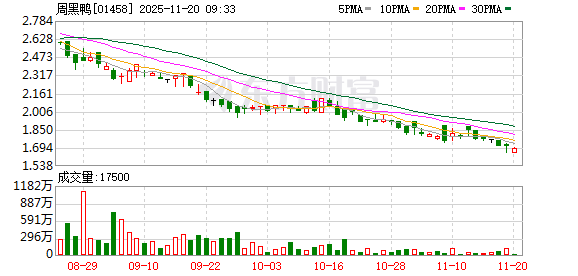
ZHOU HEI YA(01458)

Search documents
周黑鸭落地香辛料定向开发,从上游原料定制升级消费者味觉体验
Zhong Guo Zhi Liang Xin Wen Wang· 2025-11-20 05:45
Core Insights - The strategic cooperation signing ceremony for the development of specialized chili peppers for marinated food was held at the headquarters of Zhou Hei Ya, marking the company's first foray into upstream spice custom development [1] - Zhou Hei Ya, Sichuan Cuihong Food, and Sichuan Chuanjiao Seed Industry are collaborating to innovate and develop new chili varieties tailored for the marinated food industry, representing a breakthrough in targeted spice development within the industry [1][2] Group 1 - Zhou Hei Ya is leading the collaboration based on its long-term insights into marinated food processing, flavor stability, and raw material quality [2][3] - Sichuan Cuihong Food has strong capabilities in chili processing, with established planting areas and processing technologies, while Sichuan Chuanjiao Seed Industry holds advantages in chili germplasm resource development and planting techniques [2][3] - The collaboration aims to integrate core resources across chili germplasm resource development, planting, processing, and industrial application, focusing on the specific needs of the marinated food industry [2][3] Group 2 - The marinated food industry currently relies on multi-regional sourcing of chili raw materials, leading to flavor fluctuations and supply instability [5] - Zhou Hei Ya has ensured product quality and flavor stability through direct sourcing from leading chili planting and processing companies, implementing high standards for acceptance and process control [5] - The new initiative aims to standardize the cultivation of specially bred chili peppers, optimizing their flavor, spiciness, and cooking durability to better meet consumer demands at Zhou Hei Ya outlets [5] Group 3 - This strategic layout reflects the company's foresight in supply chain management and product quality, showcasing its commitment to driving industry standardization and quality upgrades [5] - The cooperation model is expected to set a new benchmark for upstream supply chain integration in the marinated food industry, facilitating higher quality development across the sector [5] - Zhou Hei Ya plans to continue collaborating with industry partners to advance the development of the marinated food industry, creating products with more stable flavors and outstanding taste [7]

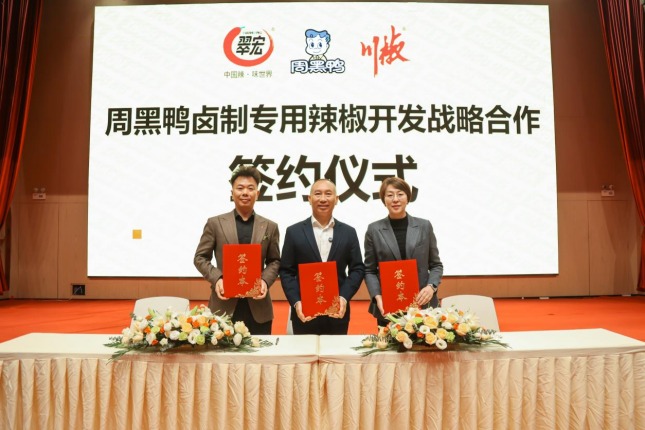
周黑鸭牵头签约两大行业龙头 开创卤味行业香辛料定向开发先河
Zheng Quan Shi Bao Wang· 2025-11-20 01:32
Core Viewpoint - Zhou Hei Ya has signed a strategic cooperation agreement with Sichuan Cuihong Food and Sichuan Chuanjiao Seed Industry to develop new chili pepper varieties tailored for the marinated food industry, marking a significant step in upstream spice customization and innovation in the industry [2][3]. Group 1: Strategic Cooperation - The collaboration aims to leverage the strengths of each party, focusing on joint innovation to create chili varieties that meet the specific needs of the marinated food sector [2]. - Zhou Hei Ya leads the initiative, drawing on its extensive experience in marinated food processing, flavor stability, and raw material quality [2][3]. - The partnership integrates core resources in chili genetic resource development, planting, processing, and industrial application, establishing a new paradigm for spice supply in the marinated food industry [2][3]. Group 2: Industry Challenges and Solutions - The marinated food industry currently faces challenges such as flavor fluctuations and supply instability due to reliance on multi-regional chili sourcing [3]. - Zhou Hei Ya has historically ensured product quality and flavor stability through direct sourcing from leading chili planting and processing companies, implementing the highest industry standards [3]. - The new initiative aims to standardize chili planting in designated regions, optimizing characteristics such as aroma, spiciness, and cooking durability to better align with marinated food processing needs [3]. Group 3: Future Outlook - Zhou Hei Ya plans to continue collaborating with industry partners to advance the development of the marinated food sector, aiming to deliver products with more stable flavors and superior taste experiences for consumers [4].
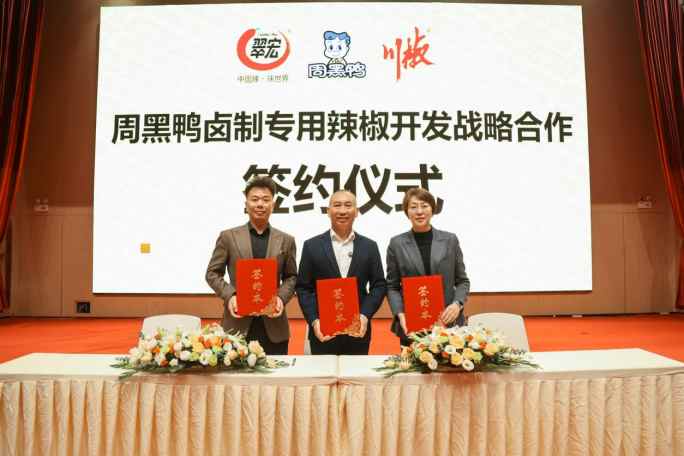
周黑鸭(01458)牵头签约两大行业龙头,开创卤味行业香辛料定向开发先河
智通财经网· 2025-11-20 01:05
Core Viewpoint - Zhou Hei Ya has signed a strategic cooperation agreement with Sichuan Cuihong Food and Sichuan Chuanjiao Seed Industry to develop new chili pepper varieties tailored for the marinated food industry, marking a significant step in upstream spice customization and innovation in the industry [1][3]. Group 1: Strategic Cooperation - The collaboration aims to leverage the strengths of each party, focusing on joint innovation to create chili varieties suitable for marinated food applications [1][3]. - Zhou Hei Ya leads the initiative, drawing on its long-term insights into marinating processes, flavor stability, and raw material quality [3]. Group 2: Industry Challenges and Solutions - The marinated food industry currently faces challenges such as flavor fluctuations and supply instability due to reliance on multi-regional sourcing of chili peppers [5]. - Zhou Hei Ya has historically ensured product quality and flavor stability through direct sourcing from leading chili processing companies, implementing the highest industry standards for quality control [5]. Group 3: Innovation and Quality Assurance - The new initiative will integrate core resources across chili genetic resource development, planting, processing, and industrial application, creating a full-chain collaboration to meet the specific needs of the marinated food industry [3][5]. - By cultivating and standardizing chili peppers in designated regions, Zhou Hei Ya aims to optimize characteristics such as aroma, spiciness, and cooking durability, enhancing alignment with marinating processes and consumer preferences [5]. Group 4: Industry Leadership and Future Outlook - Zhou Hei Ya's strategic move represents a pioneering effort in the industry, showcasing its commitment to supply chain management and product quality, while also setting a new benchmark for standardization and quality enhancement in the marinated food sector [5]. - The company plans to continue collaborating with industry partners to advance the development of the marinated food industry, aiming to deliver products with more stable flavors and superior taste experiences for consumers [7].
食品饮料行业点评:近期更新反馈:固本强基,趋时驭势
GOLDEN SUN SECURITIES· 2025-11-16 09:39
Investment Rating - The report maintains an "Accumulate" rating for the food and beverage industry, indicating a positive outlook for investment opportunities in this sector [5]. Core Insights - The food and beverage industry is experiencing a transformation driven by health-conscious consumer trends, product innovation, and channel expansion, with companies actively enhancing their product offerings and exploring overseas markets [1][9]. - In the liquor segment, the supply side is undergoing continuous changes to seek growth, while the demand side is gradually recovering, highlighting the absolute investment value in the industry [2][3]. - The beverage sector is focusing on product innovation and network expansion to uncover growth potential, with a strong emphasis on health upgrades and premiumization [4][7]. Summary by Relevant Sections Liquor Industry - **Water Well**: The company is optimizing its product matrix and plans to launch a new high-end product in 2025, focusing on brand collaboration and expanding its terminal network [2]. - **Jiu Gui Jiu**: The brand is implementing a strategic focus on brand depth and product line simplification, with expectations for improved sales performance [3]. - **She De Jiu Ye**: The company is maintaining its core strategy while expanding its product offerings, particularly in e-commerce, to drive growth [3]. Beverage Industry - **Kang Shi Fu**: The company is committed to innovation and quality, focusing on expanding its product range to meet diverse consumer needs [4]. - **Unified Enterprises**: The company is experiencing stable performance with a focus on product innovation and market expansion, particularly in the instant noodle and beverage segments [7]. - **Hua Run Beverage**: Short-term performance is under pressure due to competition, but long-term growth prospects remain strong due to the essential nature of its products [7]. Health and Wellness Trends - **Anqi Yeast**: The company is targeting over 10% revenue growth, with a focus on expanding its overseas market presence and maintaining cost advantages [9]. - **Xian Le Health**: The company is advancing its global strategy and product innovation to capture new consumer trends, with a focus on high-margin products [9]. - **Jian Yi Health**: The company is enhancing its probiotic offerings and expanding its product lines to meet evolving consumer demands [10]. Overall Market Trends - The food and beverage industry is witnessing a shift towards healthier products and innovative marketing strategies, with companies adapting to changing consumer preferences and exploring new growth avenues [1][4].


年轻人不吃鸭脖,门店一年关5600家,消费习惯大变了
Sou Hu Cai Jing· 2025-11-09 21:27
Core Insights - The article discusses the decline of the duck neck snack industry, highlighting the closure of 5,600 stores and the loss of consumer interest among young people [1] - Major brands like Juewei, Zhou Hei Ya, and Huang Shang Huang are facing significant challenges, including store closures, financial losses, and a drop in consumer trust [1][6] Group 1: Industry Overview - The duck neck snack was once a staple of nightlife, with brands rapidly expanding and attracting franchisees due to perceived profitability [1][3] - By 2019, the market began to saturate, leading to a decline in single-store revenue as competition increased [3] - In the first half of 2025, Zhou Hei Ya reported revenue of 1.223 billion, a decrease of 2.9% year-on-year, while Huang Shang Huang's revenue was 984 million, down 7.19% year-on-year [1] Group 2: Business Model Challenges - The franchise model initially appeared profitable due to upfront fees and bundled services, but market saturation led to diminishing returns for franchisees [3][8] - Zhou Hei Ya's focus on high-end locations resulted in high rental costs, making its business model vulnerable during economic downturns [3][6] - The number of franchise stores for Zhou Hei Ya decreased to 1,291 by the first half of 2025, indicating a contraction in its business [3] Group 3: Consumer Behavior and Market Trends - The menu offerings of these brands have remained stagnant, failing to innovate and attract younger consumers who prefer trendy and novel options [4][8] - Price increases have alienated consumers, as the cost of duck neck snacks has approached that of full meals, leading to a perception of reduced value [6][8] - The combination of quality control issues, lack of product innovation, and rising prices has contributed to a significant decline in brand loyalty and consumer interest [6][8] Group 4: Financial Impact - The combined revenue of the three major brands decreased by nearly 1 billion in the first half of 2025, reflecting a systemic contraction in the industry [8] - Juewei has faced severe financial issues, leading to its designation as ST (special treatment) in the capital market, with its market value evaporating by 80% from its peak [1][6] - Zhou Hei Ya has been forced to make layoffs and internal adjustments due to declining revenue and increased operational costs [6]



周黑鸭(01458) - 截至二零二五年十月三十一日止月份之股份发行人的证券变动月报表
2025-11-04 08:31
股份發行人及根據《上市規則》第十九B章上市的香港預託證券發行人的證券變動月報表 截至月份: 2025年10月31日 狀態: 新提交 FF301 致:香港交易及結算所有限公司 公司名稱: 周黑鴨國際控股有限公司 呈交日期: 2025年11月4日 I. 法定/註冊股本變動 | 1. 股份分類 | 普通股 | 股份類別 不適用 | | | 於香港聯交所上市 (註1) | | 是 | | | --- | --- | --- | --- | --- | --- | --- | --- | --- | | 證券代號 (如上市) | 01458 | 說明 | | | | | | | | | | 法定/註冊股份數目 | | 面值 | | | 法定/註冊股本 | | | 上月底結存 | | 50,000,000,000 | USD | | 0.000001 | USD | | 50,000 | | 增加 / 減少 (-) | | | 0 | | | USD | | 0 | | 本月底結存 | | 50,000,000,000 | USD | | 0.000001 | USD | | 50,000 | 本月底法定/註冊股本總額: ...
冯卫东:当年8000多万投资周黑鸭,很多人都不理解
Sou Hu Cai Jing· 2025-11-01 09:38
Core Insights - The article emphasizes the importance of consumer-focused investments, highlighting that successful projects in the past have predominantly been in the consumer sector, yielding predictable returns [2] - It discusses the existence of competitive advantages, or "moats," in consumer enterprises, which differ from those in technology companies [4][12] Consumer Moats - There are four key demand-side moats: - Brand Effect: Particularly crucial in specialized fields like healthcare and education, where consumer decision-making costs are high [4] - Network Effect: Larger user bases enhance value, leading to winner-takes-all scenarios, exemplified by platforms like Xiaohongshu [4] - Switching Costs: Consumers face significant hurdles in changing systems or brands after investing time and resources [5] - Economies of Scope: The advantage of one-stop shopping, as seen in businesses that offer a wider variety of products [5] Supply-Side Moats - Four key supply-side moats include: - Economies of Scale: Early entrants can leverage high prices initially and then reduce costs through increased sales volume [7] - Learning Curve: Knowledge barriers built through cumulative production make it difficult for newcomers to compete [8] - Resource Monopoly: Control over unique recipes, licenses, or prime locations can provide significant advantages [9] - Economies of Scope in Supply: Optimizing costs through coordinated supply networks and utilizing by-products [11] Entrepreneurial Characteristics - The article notes that consumer entrepreneurs require a broader skill set compared to tech entrepreneurs, who may excel in specific areas [13][14] - A framework called "VISIBLE" is introduced, representing key traits for successful entrepreneurs: Visionary, Integrity, Sharing, Innovative, Branding, Learning, and Execution [15] Investment Preferences - The company prefers investing in product-oriented founders over marketing-oriented ones, as the former tend to provide more stable long-term growth [17]

冯卫东:当年投周黑鸭,拿到了20倍投资回报
Sou Hu Cai Jing· 2025-10-25 08:02
Core Insights - The focus of investment has shifted towards consumer sectors since 2011, with a notable success rate compared to technology projects, which often yield unpredictable outcomes [2] - Consumer enterprises possess competitive advantages, or "moats," that differ from technology firms, requiring a more complex and comprehensive approach to understanding their success [4] Demand-Side Moats - Brand Effect: In specialized fields like healthcare and education, brand importance increases due to high decision-making costs for consumers [4] - Network Effect: Larger user bases enhance value, leading to winner-takes-all scenarios, exemplified by platforms like Xiaohongshu [5] - Switching Costs: Consumers face significant hurdles in changing systems or brands after investing time and resources, as seen with operating systems like Windows [5] - Economies of Scope: Consumers benefit from one-stop shopping experiences, as demonstrated by stores offering a wider variety of products [5] Supply-Side Moats - Economies of Scale: Early entrants can leverage high initial prices to achieve cost advantages through increased sales volume, maintaining a competitive edge [7] - Learning Curve: Accumulated production knowledge creates barriers for newcomers, emphasizing the importance of continuous learning and innovation [8] - Resource Monopoly: Unique recipes, industry licenses, and prime locations can provide significant advantages, even if they seem temporary [9] - Supply-Side Economies of Scope: Optimizing product supply through network coordination can lead to cost efficiencies [11] Entrepreneurial Characteristics - Consumer entrepreneurs require a broader skill set compared to tech founders, who may excel in specific areas [13][14] - A framework called "VISIBLE" outlines essential traits for successful entrepreneurs: Visionary, Integrity, Sharing, Innovative, Branding, Learning, and Execution [15] - Investment preferences lean towards product-oriented founders for stability, as opposed to marketing-focused ones, which may lead to rapid but volatile growth [17]
周黑鸭“请大学生免费吃鸭”活动圆满收官
Zheng Quan Ri Bao Wang· 2025-10-24 06:41
Core Insights - The "Free Duck for College Students" campaign initiated by Zhou Hei Ya International Holdings Limited successfully concluded, distributing 300,000 products and registering over 120,000 student members, with total online exposure exceeding 140 million [1][3]. Group 1 - The campaign allowed college students to receive a free product by adding Zhou Hei Ya's welfare officer and completing student verification, with an investment of over 4 million yuan during the back-to-school season [3]. - Zhou Hei Ya's marketing strategy included both online and offline approaches, reaching over 3.2 million students across more than 250 universities in nine major cities [3][4]. - The campaign not only provided products but also resonated emotionally with young consumers, establishing a long-term brand association of "Zhou Hei Ya = Youth Memory" [3][4]. Group 2 - By focusing on college students, Zhou Hei Ya achieved widespread product experience and planted the emotional seed of "Sweet and Spicy Youth" in the minds of Generation Z, successfully transforming a short-term campaign into a long-term brand asset [4]. - The founder of Zhou Hei Ya expressed a commitment to infusing youthful energy into "Chinese flavors" through a blend of unwavering craftsmanship and passionate innovation [4].

周黑鸭请大学生免费吃鸭活动圆满收官 甜辣滋味成青春记忆符号
Zheng Quan Shi Bao Wang· 2025-10-24 03:37
Core Insights - The "Free Duck for College Students" campaign initiated by Zhou Hei Ya has become a phenomenon among Generation Z, generating significant engagement and brand awareness [1][3][4] Group 1: Campaign Overview - The campaign ran from July 20 to October 15, distributing a total of 300,000 products and registering over 120,000 college student members [1][3] - The campaign achieved over 140 million online exposures, successfully resonating with the youth demographic [1][3] Group 2: Engagement Strategy - College students could receive free products by adding Zhou Hei Ya's welfare officer and completing student verification, with over 400,000 yuan invested during the back-to-school season [3][4] - The campaign utilized both online and offline strategies, reaching over 3.2 million students across more than 250 universities in nine major cities [3][4] Group 3: Brand Positioning - Zhou Hei Ya effectively linked its spicy and sweet product flavors with youthful vitality, establishing a long-term mental association of "Zhou Hei Ya = Youth Memory" [4][5] - The campaign not only expanded product experience but also planted the emotional seed of "Sweet and Spicy Youth" in the minds of Generation Z [4][5] Group 4: Industry Impact - The campaign serves as a breakthrough model for addressing the marketing challenges faced by the snack industry in engaging Generation Z, emphasizing emotional connection over mere traffic [5] - It redefined the communication logic between consumer brands and young audiences, integrating product, emotion, and scenario to deepen brand-user connections [5]