PSBC(01658)

Search documents
银行系AIC加速入场!邮储银行百亿落子,年内股份行三箭齐发
Xin Lang Cai Jing· 2025-07-18 00:05
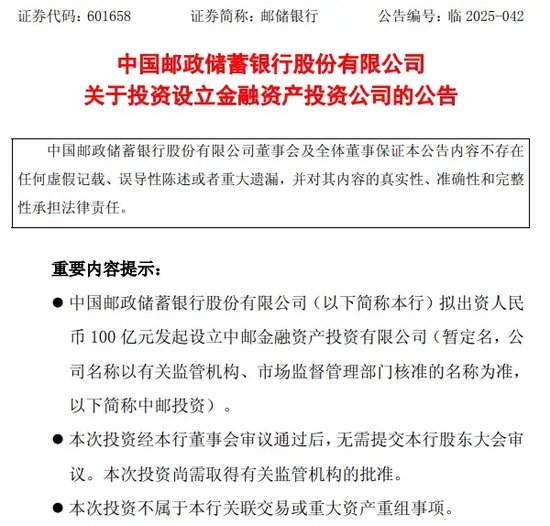
Core Viewpoint - Postal Savings Bank of China plans to establish a financial asset investment company (AIC) with a capital of 10 billion RMB, marking a significant expansion in the AIC sector as all six major state-owned banks will now have their own AICs [1][5][11]. Group 1: Company Actions - Postal Savings Bank's investment in the AIC is a response to national calls for enhancing financial services and supporting technological innovation and private enterprises [5][10]. - The establishment of Zhongyou Investment will increase the total number of bank-affiliated AICs in China to nine [5][11]. - The investment will be funded by the bank's own resources and is not expected to significantly impact its financial condition or operating results [8][10]. Group 2: Industry Context - The AIC sector has seen a revival after a long pause since 2017, with the recent approval of several banks to establish their own AICs, including Postal Savings Bank, which is the fourth bank to enter this field in 2025 [11][14][15]. - The AICs are designed to engage in debt-to-equity swaps and support related financial activities, contributing to the reduction of corporate leverage and enhancing financial stability [12][17]. - Since their inception, the five major state-owned bank AICs have seen a significant increase in net profits, growing from 1.15 billion RMB in 2018 to 18.35 billion RMB by the end of 2024, indicating a robust growth trajectory [16][19].


为硬科技提供“硬投资”
Jing Ji Ri Bao· 2025-07-17 22:08
Group 1 - The core viewpoint is that technology companies are expected to receive increased equity investment support, with strategic partnerships being formed to focus on new power systems and related technologies [1] - ICBC Investment and Zijin Investment have signed a strategic cooperation agreement to establish a fund dedicated to investing in cutting-edge technology projects, promoting high-quality development in the smart grid industry in Nanjing [1] - Postal Savings Bank plans to invest 10 billion RMB to establish a financial asset investment company, joining other banks that have received approval to set up similar companies [1] Group 2 - To provide more "hard investment" for technology companies, it is essential to increase the supply of equity investments, particularly from investors with relevant industry backgrounds [2] - The Ministry of Science and Technology and six other departments have jointly issued policies to establish a "National Venture Capital Guidance Fund" to support the growth of technology companies and promote the transformation of major technological achievements into productive forces [2] Group 3 - Enhancing research capabilities in specific sectors is crucial for equity investment institutions to effectively support technology companies [3] - Equity investment institutions should act as mentors, providing not only capital but also guidance in market expansion, technology upgrades, and management optimization [3] - There is a need to improve the assessment mechanisms for equity investment institutions and develop exit channels to encourage long-term investment in technology companies [3]
间接融资主导转向股债联动 国有六大行旗下AIC将配齐
Zheng Quan Ri Bao· 2025-07-17 16:41
Core Viewpoint - The establishment of Zhongyou Financial Asset Investment Co., Ltd. by Postal Savings Bank marks the completion of the lineup of financial asset investment companies (AIC) under six major state-owned banks, enhancing the capacity for equity investment in the banking sector [1][2]. Group 1: Establishment and Regulatory Context - Postal Savings Bank plans to invest 10 billion yuan to establish Zhongyou Investment, following the regulatory approval for AICs issued by the National Financial Supervision Administration [1][2]. - The establishment of Zhongyou Investment will require regulatory approval and aims to adhere to legal and regulatory frameworks while focusing on risk management [2]. Group 2: Strategic Importance and Objectives - The investment is part of the bank's response to national calls for supporting technological innovation and enhancing comprehensive service capabilities, particularly in supporting private enterprises and the real economy [2][3]. - Other national commercial banks, including Industrial Bank, CITIC Bank, and China Merchants Bank, have also received AIC licenses, with registered capital of 10 billion yuan and 15 billion yuan respectively [2]. Group 3: Market Expansion and Challenges - The AIC pilot program has expanded from Shanghai to 18 cities, indicating a shift in the financial service paradigm from indirect financing to a combination of equity and debt [4]. - Challenges faced by AICs include limited capital sources, scarce investment targets, and difficulties in exit channels, which need to be addressed for effective operation [4][5]. Group 4: Future Development and Recommendations - Future development of AICs requires breakthroughs in institutional frameworks, capabilities, and ecological systems, including the establishment of long-term assessment mechanisms and diversified funding sources [6]. - It is recommended that banks enhance their investment decision-making and risk management processes while collaborating with local governments and state-owned platforms to explore diverse exit strategies [5][6].
20家银行与一贷款中介撇清关系!冒用金融机构名义揽客何时休
Bei Jing Shang Bao· 2025-07-17 14:41
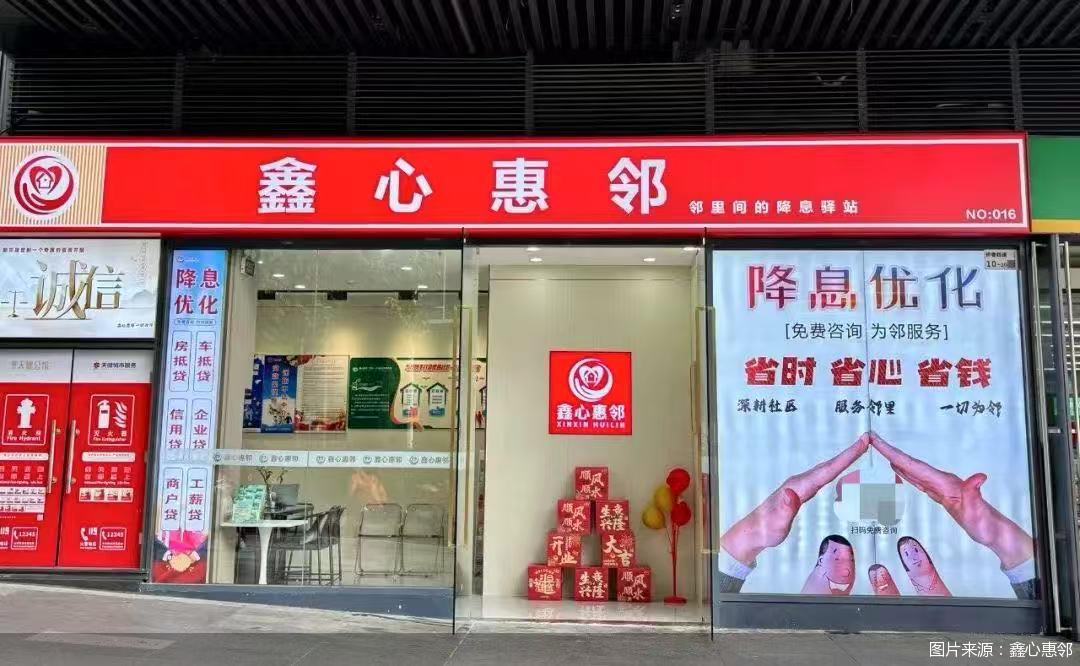
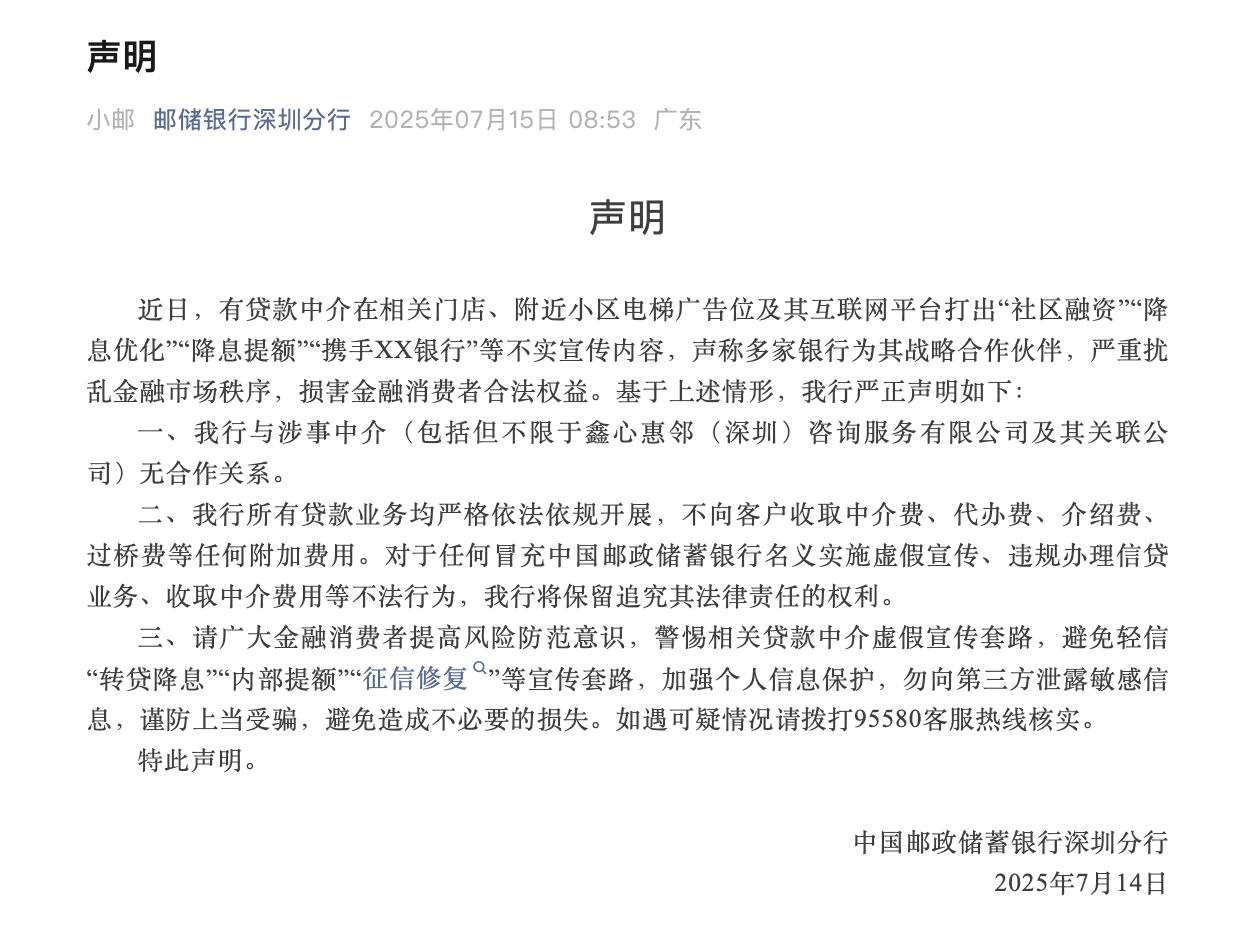
Core Viewpoint - The incident involving the loan intermediary "Xin Xin Hui Lin" has prompted a collective response from multiple banks in Shenzhen, emphasizing the need for consumer awareness against false advertising and the importance of regulatory compliance in the financial sector [1][3][12]. Group 1: Incident Overview - Multiple banks, including Bank of China, Agricultural Bank of China, and others, have publicly distanced themselves from the loan intermediary "Xin Xin Hui Lin," clarifying that there is no partnership and warning consumers about misleading advertisements [1][3]. - As of July 17, a total of 20 banks have issued statements against "Xin Xin Hui Lin," which falsely claimed partnerships with these banks and advertised services such as "interest rate optimization" [3][12]. - "Xin Xin Hui Lin" acknowledged its lack of authorization from banks and stated that it has completed a comprehensive rectification of its advertising practices following warnings from banks and regulatory bodies [1][4]. Group 2: Business Practices and Consumer Risks - The intermediary's advertisements included claims of low-interest rates and partnerships with multiple banks, which were found to be misleading, as the banks confirmed no such collaborations existed [3][4]. - The company offered services that included "debt optimization" and "interest rate reduction," which are not widely endorsed in the financial industry due to potential risks to consumers [9][10]. - Consumers were often charged additional fees for services that were not clearly disclosed, leading to concerns about the transparency of the intermediary's business practices [9][10]. Group 3: Regulatory and Industry Response - The incident has highlighted the ongoing issues with illegal loan intermediaries misrepresenting themselves as banks, prompting regulatory bodies to take action against such practices [12][13]. - Experts suggest that the collective statements from banks serve as a necessary measure for compliance and brand protection, potentially deterring future misconduct by intermediaries [13][14]. - The need for a collaborative approach between regulators and financial institutions is emphasized to establish a monitoring and enforcement mechanism against fraudulent practices in the loan intermediary sector [13][14].

贷款中介假冒合作、推广转贷降息,深圳多家银行罕见点名澄清
第一财经· 2025-07-17 13:57
Core Viewpoint - Recent statements from multiple banks in Shenzhen clarify that they have no cooperation with illegal loan intermediaries, specifically naming Xin Xin Hui Lin as a problematic entity, amid intensified regulatory actions against financial "black and gray industries" [1][3][6]. Group 1: Bank Statements and Regulatory Actions - Approximately 15 banks, including major institutions like Bank of China and Agricultural Bank of China, issued statements denying any collaboration with illegal intermediaries [3][6]. - The collective statements from banks are closely linked to ongoing regulatory efforts to combat financial "black and gray industries," with a focus on illegal loan intermediaries and debt evasion [7][9]. - Regulatory bodies have intensified their crackdown on illegal financial practices, with specific actions targeting loan intermediaries, insurance fraud, and improper debt collection [7][9]. Group 2: Issues with Xin Xin Hui Lin - Xin Xin Hui Lin has been accused of misleading advertising, claiming to lower loan interest rates from 4.5% to 2.5%, which raises concerns about exaggerated marketing tactics [1][11]. - The company has been reported to use aggressive marketing strategies, including misleading advertisements in community areas, to create a false impression of partnerships with banks [11][13]. - Despite its claims of cooperation with several major banks, Xin Xin Hui Lin's assertions have been contradicted by the banks' public denials [13][14]. Group 3: Emerging Trends in the Loan Intermediary Market - New trends in the loan intermediary market include the use of deceptive marketing practices, such as false claims of bank partnerships and exaggerated loan benefits [15][16]. - There is a notable increase in "high appraisal, high loan" operations, where intermediaries artificially inflate property valuations to secure larger loans for clients [16][17]. - This practice has created a complete industry chain, allowing clients to obtain loans significantly exceeding the actual property value, leading to potential financial risks [16][17].

中证沪港深红利成长低波动指数下跌0.23%,前十大权重包含中国银行等
Jin Rong Jie· 2025-07-17 12:48
Core Viewpoint - The China Securities Index for Hong Kong, Shanghai, and Shenzhen Dividend Growth Low Volatility Index (SHS Dividend Growth LV) has shown positive performance trends, with a 1.64% increase over the past month, 9.07% over the past three months, and an 8.71% increase year-to-date [1]. Group 1: Index Performance - The SHS Dividend Growth LV Index opened lower but closed higher, down 0.23% at 7477.8 points with a trading volume of 37.679 billion yuan [1]. - The index is composed of 100 securities selected from the mainland and Hong Kong markets, focusing on companies with continuous cash dividends, stable profit growth, and low volatility [1]. Group 2: Index Holdings - The top ten holdings in the SHS Dividend Growth LV Index include major banks such as China Construction Bank (2.5%), Postal Savings Bank (2.14%), and Industrial and Commercial Bank of China (1.85%) [1]. - The index's market allocation shows that the Shanghai Stock Exchange accounts for 55.01%, the Hong Kong Stock Exchange for 24.53%, and the Shenzhen Stock Exchange for 20.46% [2]. Group 3: Sector Allocation - The sector distribution of the index indicates that the financial sector holds the largest share at 45.02%, followed by industrial (19.67%) and healthcare (7.71%) sectors [2]. - Other sectors represented include consumer discretionary (7.22%), communication services (6.68%), utilities (5.44%), materials (4.59%), energy (1.96%), and consumer staples (1.70%) [2]. Group 4: Index Adjustment and Fund Tracking - The index samples are adjusted biannually, with changes implemented on the next trading day following the second Friday of June and December [2]. - Public funds tracking the SHS Dividend Growth LV Index include several funds managed by Invesco Great Wall [2].


黄金股票ETF基金: 平安中证沪深港黄金产业股票交易型开放式指数证券投资基金2025年第2季度报告
Zheng Quan Zhi Xing· 2025-07-17 12:23
Core Viewpoint - The report provides an overview of the performance and management of the Ping An CSI Hong Kong-Shenzhen Gold Industry ETF for the second quarter of 2025, highlighting its investment strategy, financial indicators, and compliance with regulations [1][2][3]. Fund Product Overview - Fund Name: Ping An CSI Hong Kong-Shenzhen Gold Industry ETF - Investment Objective: Aim to closely track the performance of the benchmark index with a target of keeping the average tracking deviation within 0.2% and annualized tracking error within 2% [1][2]. - Fund Management: Managed by Ping An Fund Management Co., Ltd. and custodied by China Postal Savings Bank [1][2]. Investment Strategy - The fund employs a full replication method to construct its stock portfolio based on the composition and weight of the benchmark index [2]. - Risk control targets include maintaining an average tracking deviation of less than 0.2% and an annualized tracking error not exceeding 2% [2]. Financial Indicators and Fund Performance - As of the end of the reporting period, the fund's net asset value per share was 1.2093 RMB, with a net value growth rate of 12.44% compared to a benchmark return of 11.04% [8]. - The fund's total shares at the end of the reporting period were 27,411,691 [4][8]. Investment Portfolio Report - The fund's total assets included 92.50% in stocks, with a fair value of 31,594,428.96 RMB [9]. - The fund invested 30.76% of its net value in Hong Kong stocks through the Stock Connect mechanism, amounting to 10,195,135.46 RMB [9]. Industry Allocation - The fund's investments were primarily in the mining industry, accounting for 48.37% of the total net asset value, followed by manufacturing at 11.49% [10][11]. - The fund did not hold any domestic stocks or bonds at the end of the reporting period [15]. Share Changes - The total number of shares at the beginning of the reporting period was 24,411,691, with total subscriptions of 50,000,000 and redemptions of 47,000,000 during the period [12]. - The total shares at the end of the reporting period increased to 27,411,691 [12]. Compliance and Governance - The fund management adhered to relevant laws and regulations, ensuring no harm to the interests of fund shareholders during the reporting period [7]. - There were no abnormal trading activities reported during the period [7].
贷款中介假冒合作、推广转贷降息,深圳多家银行罕见点名澄清
Di Yi Cai Jing· 2025-07-17 10:34
Core Viewpoint - The banking sector is tightening its collaboration with loan intermediaries amid increasing regulatory scrutiny, with several banks publicly denying any association with illegal loan intermediaries, particularly naming "Xin Xin Hui Lin" as a problematic entity [1][2][4]. Group 1: Regulatory Actions - Regulatory authorities, including the Ministry of Public Security and the Financial Regulatory Bureau, have launched a special campaign to combat illegal loan intermediaries and related financial crimes, focusing on four main areas: illegal loan intermediary services, malicious debt evasion, illegal insurance claims, and improper debt collection practices [4][5]. - The Shenzhen Financial Regulatory Bureau has emphasized that addressing illegal loan intermediaries is a key focus of their work [4]. Group 2: Bank Responses - Approximately 15 banks in Shenzhen, including major institutions like Bank of China and Agricultural Bank of China, have issued statements clarifying that they do not collaborate with illegal intermediaries [2][4]. - Banks are enhancing their management of intermediary partners, with some institutions completely halting cooperation with loan intermediaries and conducting strict internal audits to prevent collusion [5][6]. Group 3: Issues with Loan Intermediaries - "Xin Xin Hui Lin" has been accused of misleading marketing practices, claiming to lower loan interest rates from 4.5% to 2.5%, which raises concerns about exaggerated claims [1][8]. - The company has been reported to use aggressive marketing tactics, including misleading advertisements in public spaces, to create the illusion of partnerships with banks [9]. - New trends in the loan intermediary market include the use of fraudulent marketing practices to attract consumers and the manipulation of property valuations to secure excessive loans [10].

邮储银行北京分行多措并举擦亮“阳光信贷”文化品牌
Zhong Guo Jin Rong Xin Xi Wang· 2025-07-17 09:10
Core Viewpoint - Postal Savings Bank of China Beijing Branch is enhancing its "Sunshine Credit" culture through systematic measures to institutionalize and normalize this initiative, aiming to make it a core aspect of the bank's credit culture [1][3]. Group 1: Implementation of Sunshine Credit Culture - The bank has issued a Sunshine Credit Commitment Letter, outlining prohibited behaviors and consequences for violations, and has organized online signing and training for employees [1]. - A Sunshine Credit Supervision Card is being promoted to establish a robust supervision mechanism, with public displays of service commitments and contact information for customer feedback [1]. Group 2: Education and Training Initiatives - The bank has organized a Sunshine Credit themed education exam to enhance employees' understanding of credit policies, operational processes, and integrity standards, using an online quiz format [2]. - Various educational activities, including case studies and compliance training, are being conducted to strengthen employees' professional skills and compliance awareness [2]. Group 3: Community Engagement and Promotion - The bank is actively promoting the Sunshine Credit concept through various channels, including community outreach, informational booths, and promotional materials to enhance public awareness and acceptance [2]. - Initiatives such as the "2025 Sunshine Credit Training Camp" and compliance-themed speeches are being implemented to improve the professionalism of the credit service team [2]. Group 4: Future Commitment and Goals - The bank plans to regularly conduct Sunshine Credit culture education, enhance external communication, and ensure compliance in credit operations, aiming for high-quality development and increased customer satisfaction [3].
邮储银行布局金融资产投资 百亿资金开启新征程
Jing Ji Guan Cha Wang· 2025-07-17 06:16
Core Viewpoint - China Postal Savings Bank (Postal Bank) has announced the establishment of a wholly-owned financial asset investment company (AIC), marking a significant step in the layout of state-owned banks in the AIC sector [2][3] Group 1: Establishment of AIC - The Postal Bank plans to invest 10 billion yuan to set up the China Postal Financial Asset Investment Company, which has received board approval and is awaiting regulatory approval [2] - This move completes the AIC layout for all six major state-owned banks, each with a registered capital of over 10 billion yuan [3] Group 2: Strategic Focus - The AIC will focus on five key areas: technology finance, green finance, inclusive finance, pension finance, and digital finance, aligning with national policy and supporting technological innovation and private enterprises [3][4] - The establishment of the AIC is seen as a way to enhance the Postal Bank's corporate financial services, addressing its current shortfalls in the corporate investment banking sector [3][4] Group 3: Market Opportunities and Challenges - The AIC market is currently at a pivotal opportunity phase, with ongoing demand for corporate debt restructuring and capital market reforms providing new avenues for investment [5] - The Postal Bank must navigate challenges such as high funding costs and long project cycles while seeking to diversify its business model [5][6] Group 4: Future Development and Integration - The AIC is expected to transform commercial banks from traditional credit intermediaries to integrated financial service providers, enhancing their ability to serve the real economy [7] - The integration of AIC with financial technology is anticipated to create new business models, improving operational efficiency and risk management [7][8] Group 5: Policy Alignment and Competitive Edge - The development of green finance and technology finance will be crucial for the AIC, leveraging the Postal Bank's extensive network and customer base to establish a competitive advantage [8] - The success of the AIC will depend on the Postal Bank's strategic execution, risk management capabilities, and the broader economic and regulatory environment [8]