
WEST CHINA CEMENT(02233)

Search documents
海外水泥国别研究系列:水泥出海国别研究之乌干达
GUOTAI HAITONG SECURITIES· 2026-01-21 09:10
海外水泥国别研究系列 | [姓名table_Authors] | 电话 | 邮箱 | 登记编号 | | --- | --- | --- | --- | | 鲍雁辛(分析师) | 0755-23976830 | baoyanxin@gtht.com | S0880513070005 | | 申浩(分析师) | 021-23185636 | shenhao2@gtht.com | S0880525040041 | | 花健祎(分析师) | 0755-23976858 | huajianyi@gtht.com | S0880521010001 | | 冯晨阳(分析师) | 021-23183846 | fengchenyang@gtht.com | S0880525040020 | 本报告导读: 水泥出海国别研究之乌干达 [Table_Industry] 水泥制造业 本篇是海外水泥国别研究第八篇,详细阐述了乌干达经济发展概况、水泥供需情况、 竞争格局、盈利能力及趋势。 投资要点: 价格水平高但盈利不易,看好西部水泥乌干达项目。 增长的需求、短缺的熟料、良好的竞争格局、稳定的汇率带来了高 水平的价格(乌干达水泥出厂价 ...
未知机构:西部水泥基本面更新0120海外产能乌干达6000吨日产能-20260121
未知机构· 2026-01-21 02:20
Summary of Key Points from the Conference Call Company Overview - The company discussed is a cement producer with a focus on overseas operations, particularly in Africa. Industry Insights - **Overseas Capacity**: After the commissioning of a 6,000 tons per day capacity in Uganda, the overseas operational capacity reached 16.5 million tons. Future expansions in Mozambique, Zimbabwe, and Kazakhstan are expected to increase total overseas capacity to 21 million tons once fully operational [1][3]. - **Supply and Demand Dynamics**: The African market is experiencing double-digit demand growth. However, high entry barriers exist due to challenges related to limestone availability and population distribution [2][4]. - **Political Stability**: The overall political outlook in the region is stable, with expectations of no major conflicts following a recent agreement signed by the United States in January [2][5]. Pricing and Profitability - **Price Sustainability**: Long-term pricing is expected to remain sustainable within the range of $100 to $150 per ton. The average gross profit per ton in Africa is projected to be between $30 and $50, with higher margins in the Democratic Republic of the Congo and lower margins in Ethiopia due to currency depreciation issues [5].
西部水泥(02233.HK)早盘涨超4%
Mei Ri Jing Ji Xin Wen· 2026-01-19 02:23
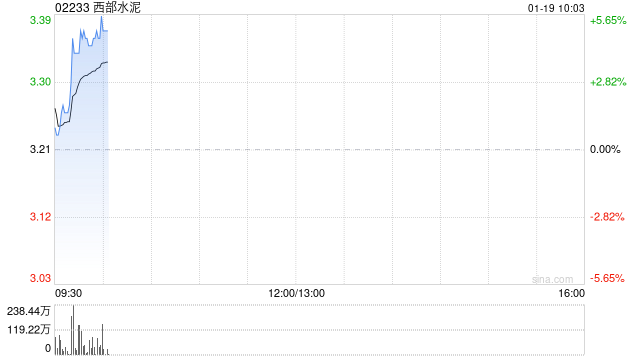
Group 1 - The stock of Western Cement (02233.HK) rose over 4% in early trading, with a current increase of 3.35%, priced at 3.35 HKD per share [1] - The trading volume reached 50.38 million HKD [1]
港股异动 | 西部水泥(02233)早盘涨超4% 乌干达公司莫罗托6000T/D熟料水泥生产线成功点火
Zhi Tong Cai Jing· 2026-01-19 02:08
Core Viewpoint - Western Cement (02233) experienced a significant stock increase of over 4% in early trading, attributed to the successful ignition of the 6000T/D clinker cement production line in Moroto, Uganda, marking a key milestone in the company's African expansion strategy [1][2] Group 1: Project Details - The Moroto 6000T/D clinker cement production line, invested by Yao Bo International Holdings, has officially entered the trial production phase, laying a solid foundation for full-scale production [1] - The project is located approximately 460 kilometers north of Kampala, Uganda, and represents an important part of Western Cement's regional strategy in Africa [1] - The production line utilizes advanced technology, including a Humboldt six-stage preheater and fourth-generation grate cooler, with a designed clinker capacity of 6000 tons per day, and actual capacity potentially reaching 6500-7000 tons per day [1] Group 2: Economic Impact - Once fully operational, the project is expected to exceed a total cement production capacity of 3 million tons, generating annual revenue of over 400 million USD [2] - The facility will not only meet domestic demand in Uganda but also serve surrounding regions such as South Sudan, eastern Democratic Republic of Congo, and western Kenya, thereby reducing foreign exchange expenditures on clinker imports and contributing to export revenue [2] - The successful ignition of the production line is seen as a milestone for Western Cement's development in Africa and sets the stage for the project's full operational launch in 2026 [2]
西部水泥早盘涨近5% 乌干达公司莫罗托6000T/D熟料水泥生产线成功点火
Xin Lang Cai Jing· 2026-01-19 02:05
Core Viewpoint - Western Cement (02233) has seen a significant stock price increase of 4.98%, reaching HKD 3.37, following the successful ignition of its 6000T/D clinker cement production line in Uganda, marking a key milestone in its African expansion strategy [2][5]. Group 1: Project Details - The clinker production line, located approximately 460 kilometers north of Kampala, Uganda, is a crucial part of Western Cement's regional strategy in Africa [2][5]. - This project is the first of its kind for the group to be constructed using a "parallel contracting" model, featuring advanced technology such as the Humboldt six-stage preheater and fourth-generation grate cooler [2][5]. - The designed clinker production capacity is 6000 tons per day, with actual capabilities expected to reach between 6500 to 7000 tons per day [2][5]. Group 2: Economic Impact - Once fully operational, the project will exceed a total cement production capacity of 3 million tons, with projected annual revenue exceeding USD 400 million [2][5]. - The production will not only meet domestic demand in Uganda but also serve surrounding regions including South Sudan, eastern Democratic Republic of Congo, and western Kenya, thereby reducing foreign exchange expenditures on clinker imports and generating export revenue [2][5]. - The successful ignition of the production line is seen as a significant milestone for Western Cement's development in Africa and sets the stage for full-scale operations by 2026 [2][5].

西部水泥(02233) - 股份发行人的证券变动月报表
2026-01-05 10:31
股份發行人及根據《上市規則》第十九B章上市的香港預託證券發行人的證券變動月報表 截至月份: 2025年12月31日 狀態: 新提交 致:香港交易及結算所有限公司 公司名稱: 中國西部水泥有限公司 | 1. 股份分類 | 普通股 | 股份類別 | 不適用 | | | 於香港聯交所上市 (註1) | | 是 | | | --- | --- | --- | --- | --- | --- | --- | --- | --- | --- | | 證券代號 (如上市) | 02233 | 說明 | | | | | | | | | | | 法定/註冊股份數目 | | | 面值 | | | 法定/註冊股本 | | | 上月底結存 | | | 10,000,000,000 | GBP | | 0.002 | GBP | | 20,000,000 | | 增加 / 減少 (-) | | | | | | | GBP | | | | 本月底結存 | | | 10,000,000,000 | GBP | | 0.002 | GBP | | 20,000,000 | 本月底法定/註冊股本總額: GBP 20,000,000 FF301 ...
西部水泥(02233.HK)尾盘涨超4%
Mei Ri Jing Ji Xin Wen· 2026-01-05 07:27
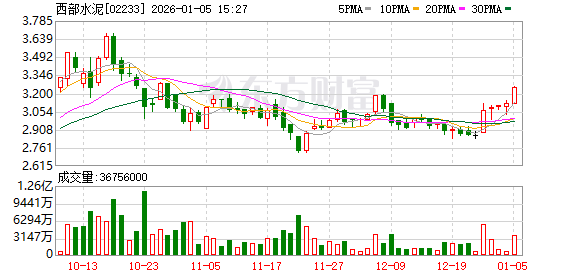
Core Viewpoint - Western Cement (02233.HK) experienced a significant increase in stock price, rising over 4% in late trading, indicating positive market sentiment towards the company [1] Group 1: Stock Performance - The stock price of Western Cement rose by 4.49%, reaching HKD 3.26 [1] - The trading volume amounted to HKD 108 million, reflecting active investor interest [1]
港股异动 | 西部水泥(02233)尾盘涨超4% 公司有望逐步确立在非洲地区的水泥龙头地位
Zhi Tong Cai Jing· 2026-01-05 07:23
Group 1 - The core viewpoint of the article highlights that Western Cement (02233) is seeking to acquire South African cement producer AfriSam through its wholly-owned subsidiary, which could establish the company as a leading player in the African cement market [1] - Western Cement's stock rose by 4.49% to HKD 3.26, with a trading volume of HKD 108 million, indicating positive market sentiment regarding the acquisition news [1] - According to Tianfeng Securities, AfriSam has an annual cement production capacity of approximately 4.5 million tons, making it one of the top cement companies in South Africa [1] Group 2 - Guotai Junan Securities reported that Western Cement's overseas gross profit per ton is projected to reach RMB 288 in 2024, significantly higher than the domestic gross profit of RMB 42 per ton, reflecting the company's commitment to a high-margin overseas expansion strategy [1] - The company plans to sell its Xinjiang cement assets for RMB 1.65 billion by June 2025, which is expected to alleviate debt pressure and support ongoing overseas expansion projects in Uganda, the Democratic Republic of the Congo, Zimbabwe, northern Mozambique, and potentially Angola [1]
西部水泥尾盘涨超4% 公司有望逐步确立在非洲地区的水泥龙头地位
Zhi Tong Cai Jing· 2026-01-05 07:18
Group 1 - The core viewpoint of the article is that Western Cement (02233) is seeking to acquire South African cement producer AfriSam through its wholly-owned subsidiary, which could establish the company as a leader in the African cement market [1] - Western Cement's stock rose by 4.49% to HKD 3.26, with a trading volume of HKD 108 million [1] - AfriSam has an annual cement production capacity of approximately 4.5 million tons, making it one of the leading cement companies in South Africa [1] Group 2 - According to Tianfeng Securities, the acquisition of AfriSam is expected to enhance Western Cement's position in Africa, and the company is recommended as a growth stock in the overseas expansion chain [1] - Guotai Junan Securities reported that Western Cement's overseas gross profit per ton is projected to reach RMB 288 in 2024, significantly higher than the domestic gross profit of RMB 42 per ton [1] - The company plans to sell its Xinjiang cement assets for RMB 1.65 billion by June 2025, which will help alleviate debt pressure and support its overseas expansion projects in Uganda, the Democratic Republic of the Congo, Zimbabwe, northern Mozambique, and potentially Angola [1]
建材周专题2025W52:AI特种电子布升级趋势明确
Changjiang Securities· 2025-12-31 13:49
Investment Rating - The industry investment rating is "Positive" and is maintained [8] Core Insights - The report highlights a clear trend in the upgrade of AI special electronic fabrics, with Low-Dk electronic fabrics being a core material for high-frequency and high-speed PCBs. The demand logic is driven by the growth in AI server volumes, increased usage per server, and enhanced value from material upgrades. The transition to M9 materials in AI PCBs is expected to significantly boost the scale of high-end special electronic fabrics [3][6] - The report outlines three main lines for 2026: the stock chain, the African chain, and the AI chain. The stock chain focuses on optimizing demand and clearing supply varieties, with a notable shift in consumer demand towards renovation, expected to reach nearly 70% by 2030. The African chain emphasizes the undervalued growth potential in the African market, while the AI chain looks at the industrial upgrade of special electronic fabrics [6][4] Summary by Sections Cement Market - The cement market is experiencing a seasonal decline in shipments, with an average shipment rate of 41% among major cement enterprises, down 0.8 percentage points from the previous period. Prices are being maintained in most regions, although some areas are seeing price increases [4][18] - The average national cement price is reported at 358.71 yuan/ton, remaining stable compared to the previous period but down 61.77 yuan/ton year-on-year [19] Glass Market - The float glass market is showing a weak trend, with prices slightly declining and inventories increasing. The average national glass price is 61.64 yuan per weight box, down 0.35 yuan from the previous period and down 12.98 yuan year-on-year [33][30] - The production capacity of float glass has slightly decreased, with 216 out of 265 production lines operational, and a daily melting capacity of 154,105 tons, which is a reduction of 900 tons from the previous week [30][32] Special Electronic Fabrics - The report emphasizes the significant upgrade trend in Low-Dk electronic fabrics, with expected total demand for Low-Dk electronic fabrics projected at approximately 110 million meters in 2025, 220 million meters in 2026, and 320 million meters in 2027. The demand for Low-Dk second-generation fabrics is expected to reach 60 million meters in 2026 and 130 million meters in 2027 [3][6] Future Outlook - The report suggests focusing on three main lines for 2026: the stock chain, the African chain, and the AI chain. It recommends companies such as Sanhe Tree, Rabbit Baby, and Oriental Yuhong for their optimal business models and growth potential [6][4]


