
PING AN OF CHINA(02318)

Search documents
智通港股52周新高、新低统计|12月29日




智通财经网· 2025-12-29 08:40
Group 1: 52-Week Highs - A total of 78 stocks reached 52-week highs as of December 29, with the top three being Base Champion Group (08460) at 63.28%, E-Juan Group Holdings (02442) at 37.27%, and Junyu Foundation (01757) at 22.22% [1] - Base Champion Group closed at 2.070, with a peak price of 2.090 [1] - E-Juan Group Holdings closed at 16.810, with a peak price of 19.300 [1] - Junyu Foundation closed at 3.020, with a peak price of 3.080 [1] Group 2: 52-Week Lows - The stock with the largest decline was Lancang Ancient Tea (06911), which fell to a low of 1.530, representing a decrease of 39.04% [3] - Pacific Legend (08547) reached a low of 0.049, down 35.53% [3] - ISP Global (08487) recorded a low of 0.039, reflecting a decline of 20.41% [3] Group 3: Stock Performance - Weili Holdings (02372) achieved a high rate of 15.25%, closing at 0.270 with a peak of 0.340 [1] - Xingkai Holdings (01166) reached a high rate of 12.82%, closing at 0.820 with a peak of 0.880 [1] - Gaoke Bridge (09963) had a high rate of 12.50%, closing at 1.160 with a peak of 1.350 [1]
“保险会客厅”第六期:安责险如何为企业“御寒防险”?
Sou Hu Cai Jing· 2025-12-29 06:48
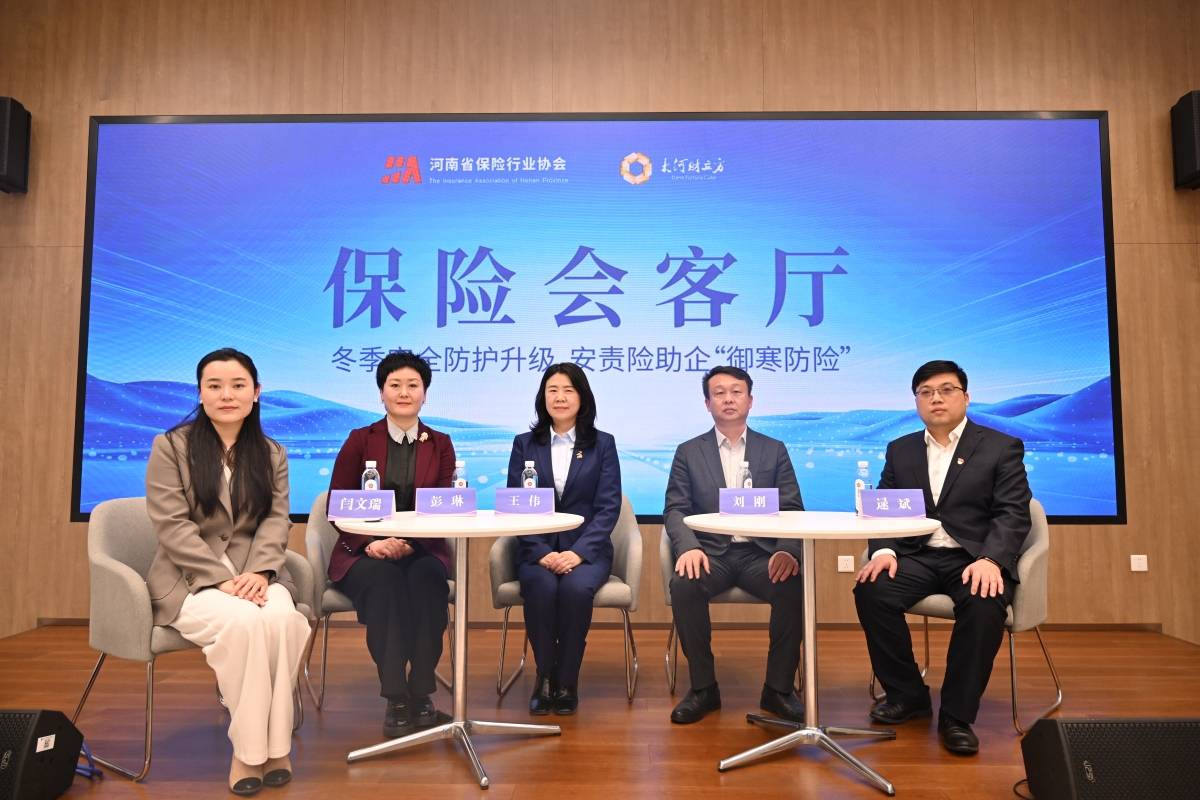
Core Viewpoint - The article emphasizes the importance of safety production during winter, highlighting the need for enhanced risk management strategies, particularly through the use of liability insurance for safety (安责险) to mitigate various seasonal risks faced by enterprises [5][10]. Group 1: Importance of Safety Insurance - The rising incidence of winter safety accidents underscores the dual value of safety liability insurance, which includes risk coverage and proactive prevention [5]. - Safety liability insurance has evolved from a focus on post-incident compensation to a comprehensive risk management approach that encompasses prevention, response, and compensation [5]. - In high-risk sectors such as mining and hazardous chemicals, the coverage rate for safety liability insurance in Henan is approximately 70%, with a market share of over 40% for People's Insurance Company of China (人保财险) [5]. Group 2: Product and Service Upgrades - Safety liability insurance offers unique advantages during winter, including comprehensive coverage for personal injury, property damage, emergency rescue, and legal costs [6]. - The insurance claims process has been streamlined, with mechanisms like green channels and advance payment, exemplified by a case where a death claim of 1.2 million yuan was settled within three working days [6][7]. - Free accident prevention services are highlighted as a key tool for winter risk management, with specialized teams providing on-site services and safety inspections [7]. Group 3: Collaborative Efforts and Policy Support - A provincial supervisory mechanism for safety liability insurance has been established in Henan, creating a closed-loop system involving insurance inspections, government oversight, and enterprise rectification [9]. - Multi-departmental collaboration has led to significant results, with inspections covering numerous high-risk enterprises and identifying thousands of safety hazards [9]. - Insurance companies are adopting differentiated pricing strategies to make safety liability insurance more accessible for small and medium-sized enterprises, with premiums as low as 500 yuan for certain sectors [9]. Group 4: Technological Empowerment - Technology plays a crucial role in enhancing risk management for safety liability insurance, with the integration of IoT and big data for real-time monitoring and risk assessment [10]. - The use of AI and IoT technologies allows for targeted risk management in high-risk areas, facilitating real-time sensing, intelligent analysis, and proactive measures [10]. - The long-term vision is to transition safety liability insurance from a reactive compensation model to a proactive prevention and process control framework, contributing to a smarter safety ecosystem [10].



降费措施助推市场交投活跃度,看好板块估值向上弹性
Changjiang Securities· 2025-12-29 01:14
Investment Rating - The report maintains a "Positive" investment rating for the industry [7] Core Insights - The non-bank financial sector has shown strong performance this week, with the introduction of fee reduction measures by the Shanghai and Shenzhen stock exchanges for 2026, leading to an increase in market trading activity and maintaining historical highs. It is expected that the performance in 2025 will continue to grow significantly, suggesting that investors should pay attention to the sector's future allocation value [2][4] - In the insurance sector, the third-quarter reports have confirmed the logic of deposit migration, increased equity allocation, and improved new policy costs. The certainty of ROE improvement has further increased, and valuations are expected to accelerate in recovery. The overall cost-effectiveness of allocation is gradually improving, indicating that the sector is undergoing a revaluation [2][4] - Recommendations include Jiangsu Jinzhong for stable profit growth and dividend rates, China Ping An for stable dividends and high dividend yield, and China Pacific Insurance for its strong business model and market position. Additionally, stocks such as New China Life, China Life, Hong Kong Exchanges, CITIC Securities, Dongfang Caifu, Tonghuashun, and Jiufang Zhitu Holdings are recommended based on performance elasticity and valuation levels [4] Summary by Sections Market Performance - The non-bank financial index increased by 2.1% this week, with an excess return of +0.1% relative to the CSI 300. Year-to-date, the non-bank financial index has risen by 12.1%, with an excess return of -6.2% compared to the CSI 300 [5] - The average daily trading volume in the two markets reached 19,651.66 billion yuan, up 11.63% week-on-week, with a daily turnover rate of 1.99%, an increase of 16.24 basis points [5][41] Insurance Sector Insights - In November 2025, the cumulative insurance premium income reached 57,629 billion yuan, a year-on-year increase of 7.56%. Life insurance income was 41,472 billion yuan, up 9.06% year-on-year, while property insurance income was 16,157 billion yuan, up 3.88% [22][23] - The total assets of the insurance industry reached 40.65 trillion yuan in November 2025, with a month-on-month increase of 0.15% [26][27] Brokerage and Investment Business - The brokerage business has seen a recovery in trading activity, with the average daily trading volume exceeding the 2024 average. The industry is expected to gradually recover profitability in the brokerage business as commission rates stabilize [41] - In November 2025, equity financing reached 506.49 billion yuan, a month-on-month increase of 1.0%, while bond financing reached 7.06 trillion yuan, up 7.6% [52] - The asset management business saw a rebound in new issuance, with 43.97 billion units issued in November 2025, an increase of 4.4% month-on-month [54]
负债行为跟踪:杠杆资金活跃度上升
ZHONGTAI SECURITIES· 2025-12-28 12:50
1. Report Industry Investment Rating - Not provided in the document 2. Core Views of the Report - This week, both the US and Chinese stock markets performed well, with the US three major stock indices rising over 1% and the Shanghai Composite Index rising 1.9%. The growth is due to the resonance of the global technology sector and year - end pre - positioning [4]. - Market risk preference is on the rise. Since mid - December, the S&P 500 volatility has generally declined, and the basis discount of stock index futures has narrowed since December [4]. - Leverage funds' activity significantly increased this week, becoming a major driving factor for the market. The proportion of margin trading turnover in A - share turnover rebounded, and leverage funds flowed into major broad - based indices [5]. - In 2026, the incremental funds flowing into the stock market are estimated to be 3.1 trillion yuan, and the scale of "fixed income +" products will double. If the market adjusts in December, incremental funds may pre - position. Next year, technology will still be the most promising direction for the spring rally [7]. 3. Summary by Relevant Catalogs 3.1 Asset Price Performance 3.1.1 Global Asset Performance - Global stocks: Most global stock indices rose, with the Korean Composite Index rising 2.7% and the Nikkei 225 rising 2.5%. The French CAC40 and the British FTSE 100 declined [12]. - Global bonds: US Treasury yields declined, while Japanese and Chinese government bond yields rose [12]. - Global commodities: Precious metals performed well, with COMEX silver rising 18.2% and lithium carbonate rising 16.5%. The US dollar index declined [12]. 3.1.2 A - share Market Performance - Broad - based indices: A - shares generally rose, with the ChiNext and STAR 50 indices rising 3.9% and 2.8% respectively. The CSI 500 and CSI 1000 also had significant gains [21][23]. - Trading volume: Except for the dividend index, the average daily trading volume of broad - based indices increased, returning to the level around mid - August [25]. - Industry performance: The top five rising industries were non - ferrous metals (8.47%), national defense and military industry (7.51%), power equipment (6.27%), machinery and equipment (5.74%), and basic chemicals (5.70%). Most cyclical sectors performed well, except for banks and coal [31]. - Technology sector: Since December, optical modules and optical communications have led the way, and on Monday, most technology sub - sectors rose and many had increased trading volume [35][39]. 3.2 Capital Behavior Tracking 3.2.1 Leverage Funds - Margin trading turnover ratio: The proportion of margin trading turnover in A - share turnover rose from 10.24% to 11.20%. The margin trading balance increased to about 2.53 trillion yuan, and the ratio of margin trading balance to A - share free - float market capitalization slightly decreased [49]. - Inflow into broad - based indices: From Monday to Thursday, leverage funds flowed into major broad - based indices, with the Shanghai Composite Index, CSI 1000, and CSI 300 having daily net inflows of over 2.5 billion yuan. Most broad - based ETFs had net outflows on Monday - Thursday, and on Friday, most broad - based indices had inflows except for the Shanghai Composite Index ETF and ChiNext Index ETF [54]. - Market - cap gradient: Stocks of all market - cap gradients increased leverage, with large - cap stocks above 50 billion yuan having a larger increase. Stocks like Zhongji Innolight, Industrial Fulin, Cambricon, and Zijin Mining had large net margin purchases [58]. - Industry perspective: Industries with large margin net purchases as a proportion of turnover included communications, real estate, machinery and equipment, etc. The national defense and military industry increased leverage for six consecutive weeks, and agriculture, forestry, animal husbandry, and fishery increased leverage for nine consecutive weeks [62]. - Hot stocks: Some hot stocks in the national defense and military industry and electronics added leverage. Stocks like Zhaoyi Innovation, Zhongji Innolight, and others had a margin net purchase as a proportion of turnover exceeding 10% [70]. 3.2.2 Quantitative Funds - Excess return: Since December, the median excess returns of CSI 500 and CSI 1000 quantitative index - enhanced strategies have been - 1.15% and 0.61% respectively [72]. - Futures basis: This week, the near - month stock index futures basis changed from premium to discount, and the far - month contract basis discount narrowed. Excluding the futures delivery week, the basis discount has been narrowing since December [78]. 3.2.3 Main Force Funds - Sector net flows: The main force funds in the CSI 300 and ChiNext continued to have net outflows, but the outflows slowed down. The main force funds in the STAR Market had net outflows for five consecutive trading days, accelerating compared to last week [80]. - Industry flows: Main force funds flowed into the power equipment industry and out of industries such as national defense and military industry, computers, electronics, and non - bank finance [88]. 3.2.4 Northbound Funds - Trading volume and proportion: The total trading volume of northbound funds decreased, with the average daily trading volume dropping from 203 billion yuan to 176.6 billion yuan, and the proportion in A - share trading volume dropping from 11.52% to 9.29% [92]. - Performance of heavy - holding stocks: The heavy - holding stocks of the Northbound Connect changed from rising to falling, and the Northbound Connect 50 index underperformed the CSI 300 [94]. 3.2.5 Southbound Funds - Trading volume and net purchases: The average daily trading volume of southbound funds decreased from 144.2 billion yuan to 110.2 billion yuan, and the proportion increased from 52.3% to 58.9%. The average daily net purchase amount decreased from 2.9 billion yuan to 0.8 billion yuan [99]. - Industry allocation: Southbound funds still had a balanced allocation, flowing into industries such as media, electronics, and non - bank finance, and flowing out of industries such as communications, petroleum and petrochemicals, and non - ferrous metals [102].




非银金融行业周报:IFRS17切换后所得税处理方式进一步明确,为新准则全面落地奠定坚实基础-20251228
Shenwan Hongyuan Securities· 2025-12-28 07:56
Investment Rating - The report maintains a "Positive" outlook on the non-bank financial industry [3] Core Insights - The report highlights the recovery in the securities sector, with a projected increase in December performance driven by improved investment returns and a rise in equity financing [4][7] - The insurance sector is expected to benefit from the clarification of income tax treatment under IFRS17, enhancing profit predictability for insurers [4][11] - The report emphasizes the growth of ETFs, which have surpassed 6 trillion yuan in total assets, indicating a strong trend in the investment landscape [4] Summary by Sections Market Performance - The Shanghai Composite Index closed at 4,657.24, with a weekly increase of 1.95%, while the non-bank index rose by 2.09% [7] - The securities, insurance, and diversified financial sectors reported increases of 1.58%, 2.97%, and 2.66% respectively [7] Securities Industry Insights - The average daily trading volume in the A-share market for December is estimated at 1.84 trillion yuan, with a 5% decrease month-on-month [4] - The margin financing balance reached 2.5 trillion yuan, reflecting a 3% increase [4] - Equity financing in December totaled 508.4 billion yuan, a 72% increase from the previous month [4] Insurance Industry Insights - The report notes that the implementation of IFRS17 will standardize income tax calculations for insurers starting in 2026, which is expected to improve profit visibility [4][11] - The insurance sector index rose by 2.97%, outperforming the Shanghai Composite Index by 1.02 percentage points [4] Investment Recommendations - For the securities sector, the report recommends focusing on leading firms with strong competitive positions, such as Guotai Junan and CITIC Securities, as well as firms with significant earnings elasticity like Huatai Securities [4] - In the insurance sector, the report suggests investing in major players like China Life and Ping An, highlighting their systemic value re-evaluation opportunities [4]




茂名监管分局同意中国平安茂名中心支公司变更营业场所
Jin Tou Wang· 2025-12-27 06:51
2025年12月22日,国家金融监督管理总局茂名监管分局发布批复称,《关于中国平安(601318)人寿保 险股份有限公司茂名中心支公司变更地址的请示》(平保寿粤分发〔2025〕420号)收悉。经审核,现批 复如下: 一、同意中国平安人寿保险股份有限公司茂名中心支公司将营业场所变更为:广东省茂名市茂南区西粤 南路188号大院1号14层1401-1403房、1410-1415房,15层1509房。 二、中国平安人寿保险股份有限公司茂名中心支公司应按照有关规定及时办理变更及许可证换领事宜。 ...
新华保险A股收盘价创历史新高;杨玉成连任新华保险董事长;平安人寿所提五项议案被华夏幸福全部否决|13精周报
13个精算师· 2025-12-27 04:03
Regulatory Dynamics - Eight departments support the development of multimodal "single document" financial insurance services to enhance modern port comprehensive financial service capabilities [6] - Three departments encourage financial institutions to innovate financial products and services, exploring the "agricultural insurance + financing" model to revitalize rural resources [7][8] - The central bank emphasizes the need to resolve debt risks for financing platforms and manage risks for small financial institutions [10] - The central bank maintains the 5-year and 1-year Loan Prime Rates (LPR) unchanged [11] - The Financial Regulatory Administration explores insurance products related to data assets and cybersecurity to support technological innovation [12] Company Dynamics - China Life Insurance's articles of association have been approved by regulators, eliminating the supervisory board [31] - China Pacific Insurance's revised articles of association have been approved, officially abolishing the supervisory board [32] - China Insurance has received increased holdings from JPMorgan and BlackRock, raising their stakes to 11.02% and 6.01% respectively [24][25] - National Pension plans to increase its registered capital by 500 million, raising it to 11.714 billion [26] - New China Life's stock price reached a historical high, with a year-to-date increase of over 50% [30] Industry Dynamics - The insurance sector has seen a significant rebound, with an annual increase of over 28%, outperforming bank stocks which only rose by 6.86% [48] - The number of new private equity firms has increased, with 54 new private equity managers registered this year, a 10.20% increase from last year [46][47] - The annual premium for new energy vehicle insurance is expected to reach 200 billion, reflecting a growth of over 30% [53] - The insurance industry is facing challenges with the upcoming implementation of new accounting standards and the second phase of solvency regulations [54] - The insurance sector has been excluded from the top 10 best employers for two consecutive years, with China Ping An ranking the highest at 12th [55]


偿付能力迎大考 险企“补血”金额超千亿
Xin Lang Cai Jing· 2025-12-26 19:01
Core Viewpoint - The insurance industry is experiencing a significant demand for capital replenishment as it approaches the end of 2025, driven by regulatory changes and the need to enhance solvency and capital structure [1][6][8]. Group 1: Capital Replenishment Trends - As of December 24, 2025, the total amount of capital replenishment bonds and perpetual bonds issued and approved by the insurance industry has exceeded 100 billion yuan, continuing the issuance trend from 2024 [1]. - More than ten insurance companies have been approved for capital increases to enhance their capital and solvency [1]. - The issuance of perpetual bonds by various insurance companies has become increasingly prominent, with amounts ranging from 5 million to 90 million yuan [2]. Group 2: Types of Capital Instruments - In addition to perpetual bonds, capital replenishment bonds have also exceeded 50 billion yuan, with significant issuances from companies like Ping An Life and Guangda Yongming Life [3]. - The interest rates for these bonds range from 2.15% to 2.95%, with Ping An Life's issuance being the largest single issuance of 200 billion yuan in 2025 [3][4]. Group 3: Financing Strategies - Insurance companies are primarily using equity and debt financing to replenish capital, with debt financing being attractive due to lower interest rates and minimal dilution of shareholder equity [4]. - The issuance of bonds helps alleviate short-term capital pressures and provides financial buffers for strategic adjustments and business upgrades [4]. Group 4: Regulatory Impact - The upcoming end of the transition period for the "Second Generation" solvency rules and the new accounting standards will increase capital constraints, driving insurance companies to adjust their asset-liability structures [6][7]. - The new accounting standards will lead to a reclassification of many debt assets, increasing the correlation between net assets and interest rate fluctuations, thereby affecting solvency levels [8]. Group 5: Capital Increase Activities - Several insurance companies have engaged in capital increases through public offerings, with notable examples including Guomin Pension and Huagui Life, which are raising significant amounts to enhance their capital bases [5]. - The capital increase strategies are aimed at strengthening partnerships and developing inclusive pension financial products [5].
多项重磅报告发布 “深圳金融高质量发展新路径”研讨会圆满落幕
Zheng Quan Shi Bao Wang· 2025-12-26 13:37
Core Insights - The seminar on "New Pathways for High-Quality Financial Development in Shenzhen" was successfully held, focusing on the strategic layout of Shenzhen's financial sector during the 14th Five-Year Plan period, aiming to support the construction of a globally influential financial center [1][4] - Two reports were released: the "Shenzhen Technology Financial Innovation Report (2025)" and the "Shenzhen Financial Technology Competitiveness Report (2025)", which provide theoretical and practical insights for the digital transformation of the financial industry [2][4] Group 1: Reports and Findings - The "Shenzhen Technology Financial Innovation Report (2025)" indicates that Shenzhen ranks third nationally in the comprehensive index of technology finance, benefiting from flexible systems, solid industrial foundations, and substantial innovation investment, but highlights areas for improvement in digital empowerment and financing for small and startup enterprises [2][3] - The report emphasizes the need for financial and policy collaboration to address the financing challenges in transforming technological achievements, advocating for a comprehensive financial support system throughout the lifecycle of technology [2][3] - The "Shenzhen Financial Technology Competitiveness Report (2025)" reveals that Shenzhen has developed a diverse industrial ecosystem led by Tencent and Ping An, with notable performance in digital payment penetration and 5G infrastructure, yet faces shortcomings in R&D investment ratio and talent density [3] Group 2: Expert Opinions and Future Directions - Experts suggested optimizing the evaluation index system for technology finance by incorporating industry practices, establishing a credible data system for assessing enterprise innovation capabilities, and enhancing cross-regional coordination to avoid resource waste [3][4] - The seminar highlighted the need for a balanced approach to financial digitalization, focusing on value creation while managing data security risks, and emphasized the importance of integrating technology finance and financial technology for sustainable development [4] - Shenzhen aims to leverage its position in the Guangdong-Hong Kong-Macao Greater Bay Area to overcome institutional barriers and development shortcomings, steadily progressing towards becoming a global financial technology hub [4]


格隆汇港股聚焦(01.14)︱招商银行2020年净利同比增4.82%;中国平安2020年原保费收入达7973.4亿元


Ge Long Hui· 2025-12-26 13:32
Financial Data - China Merchants Bank (03968.HK) reported a net profit of 97.342 billion yuan, an increase of 4.82% year-on-year [1] - Fast Retailing (06288.HK) saw a 0.7% decline in first-quarter net profit to 70.3 billion yen, with trading resuming tomorrow [1] - Highgate Group (08412.HK) narrowed its mid-term loss by 62.47% to 4.094 million Hong Kong dollars [1] - Dongjun Holdings (08383.HK) reported a first-quarter net profit of 3.92 million ringgit, a year-on-year increase of 113% [1] - Qian Sheng Group Holdings (08475.HK) narrowed its first-quarter loss by 55.37% to 216,000 Singapore dollars [1] Earnings Forecast - Jia Hong Logistics (02130.HK) expects a significant increase in annual net profit attributable to shareholders [1] - Zhongdi Dairy (01492.HK) anticipates a substantial increase in net profit for the ten months ending in October [1] - Guonong Financial Investment (08120.HK) expects a significant reduction in annual losses [1] - PIK Far East (00752.HK) forecasts a decrease of over 80% in annual profit attributable to shareholders [1] - Weiyali (00854.HK) expects to turn a profit of 59.3 million Hong Kong dollars in the first three quarters [1] - Jiuxing Holdings (01836.HK) anticipates annual net profit between 0 and 5 million US dollars [1] Operational Data - Ping An Insurance (02318.HK) reported original premium income of 797.34 billion yuan for 2020 [1] - Zhong An Online (06060.HK) achieved original premium income of 16.703 billion yuan in 2020, a year-on-year increase of 14.13% [1] - Luk Fook Holdings (00590.HK) reported a same-store sales decline of 29% in the third quarter [1] - Chalco International (02068.HK) signed new contracts worth 15.965 billion yuan in the fourth quarter, a year-on-year increase of 12.61% [1] - Yongjia Group (03322.HK) reported an 11% decrease in same-store sales for its high-end fashion retail business in the fourth quarter [1] - Delta Electronics Holdings (00179.HK) reported revenue of 2.242 billion US dollars for the first three fiscal quarters, a year-on-year decline of 4% [1] - Beijing Energy International (00686.HK) achieved a total power generation of 2.7567 million megawatt-hours in 2020 [1] - TRUE PARTNER (08657.HK) reported an asset management scale of approximately 1.59 billion US dollars by the end of December [1] Shareholding Changes - Minsheng Education (01569.HK) saw its chairman and controlling shareholder Li Xuechun increase his stake by 1.95 million shares [2] Mergers and Acquisitions - Non-Fan China (08032.HK) announced that LionRock intends to acquire a majority stake in Clark for £51 million [3] - Tan Carpenter (00837.HK) plans to acquire the remaining 9.09% stake in Jiangsu Tan Carpenter for 15.873 million yuan [3] - Guan Hua International Holdings (00539.HK) subsidiary sold a Hong Kong office property for 33 million Hong Kong dollars [3] Capital Restructuring - China Dredging Environmental Protection (00871.HK) plans a "2-for-1" share consolidation and will place 508 million shares to Chairman Liu Kaijin [2] Share Buybacks - Shisi Pharmaceutical Group (02005.HK) repurchased 2.71 million shares for 11.365 million Hong Kong dollars on January 14 [3] - Hengdeli (03389.HK) repurchased 16.7 million shares for 4.9681 million Hong Kong dollars on January 14 [3] - China Star Group (00326.HK) repurchased 555,000 shares for 0.8325 million Hong Kong dollars on January 14 [3]