MENGNIU DAIRY(02319)

Search documents
乳制品供需结构趋势及肉牛价格趋势更新
2026-02-10 03:24
Summary of Conference Call on Dairy Products and Beef Industry Industry Overview - The conference focused on the dairy products and beef industry in China, specifically discussing supply-demand trends and price updates for dairy and beef products [1][9]. Dairy Products Insights Market Size and Composition - In 2024, the total sales scale of dairy products in China is projected to be approximately 653.5 billion CNY, with liquid milk accounting for 355 billion CNY, milk powder for 176.6 billion CNY, and other dairy products for 121.9 billion CNY [1]. - Coconut milk and milk powder are expected to see a year-on-year decline in 2024, while other dairy products, including cream and cheese, are anticipated to continue growing [1]. Consumption Trends - The per capita consumption of dairy products in China is expected to be slightly over 40 kg in 2024, indicating significant room for growth compared to developed countries and suggested consumption levels [1]. - The consumption of low-temperature milk in first-tier cities is around 36.6 billion CNY, with second-tier cities at 24.6 billion CNY, and below third-tier cities at approximately 30 billion CNY [2]. Supply and Pricing Dynamics - The decline in dairy product prices is expected to narrow, with a projected decrease of 1.1% in 2025, an improvement from a 1.9% decline in 2024 [3]. - The average price of raw milk has stabilized between 3.03 and 3.05 CNY per kg, showing signs of recovery [3][4]. - The low-temperature liquid milk segment is expected to outperform the ambient temperature segment, with a penetration rate projected to exceed 30% by 2029 [2]. Company Performance - Major dairy companies like Yili and Mengniu are expected to regain market share, with Yili showing slight growth and Mengniu facing more significant downward pressure due to its higher reliance on liquid milk [5][6]. - Both companies have set revenue targets for 2026 in the mid-single digits, indicating a positive outlook for the year [6]. Beef Industry Insights Price Trends - The beef price has shown significant improvement, with the price of fattened bulls at approximately 25.7 CNY per kg, reflecting a year-on-year increase of 10.2% [10]. - The price of calves is around 33.8 CNY per kg, with a 40% year-on-year increase, indicating strong market confidence among producers [10]. Supply and Demand Dynamics - The beef industry is experiencing a cyclical recovery, with expectations that the price peak and duration will exceed previous cycles [9]. - Despite the recovery in prices, the enthusiasm for replenishing breeding stock remains low due to prolonged losses in the sector [10]. Profitability - The profitability for raising calves is approximately 1,400 CNY per head, while for fattened bulls, it is about 2,560 CNY per head, showing significant year-on-year growth [11][12]. - The overall improvement in profitability is notable, but the replenishment of breeding stock is still cautious, with many farms opting to maintain current stock levels [12]. Conclusion - The dairy and beef industries in China are showing signs of recovery, with positive trends in pricing and consumption. However, challenges remain, particularly in the replenishment of breeding stock in the beef sector and the competitive landscape in the dairy market. Investors are encouraged to monitor key players like Yili, Mengniu, and other dairy companies for potential opportunities [8][13].

未知机构:长江农业食品牛牧大周期第五期乳制品供需结构趋势及肉牛价格趋势更新-20260210
未知机构· 2026-02-10 02:05
Summary of Conference Call on Dairy Industry and Beef Cattle Price Trends Industry Overview - **Dairy Industry Supply and Demand Trends**: In 2024, coconut milk and milk powder are expected to decline year-on-year, while deep-processed dairy products like cream and cheese will continue to grow, with growth rates anticipated to outpace liquid milk and milk powder in the coming years. The average per capita dairy consumption in China is projected to be just over 40 kg, indicating significant room for improvement compared to developed economies and recommended consumption levels in China [1][1]. - **Low-Temperature and Room-Temperature Milk Consumption Trends**: The consumption scale of low-temperature milk in first-tier cities is approximately 36.6 billion yuan, with second-tier cities at a combined 24.6 billion yuan, and below third-tier cities around 30 billion yuan. The market for low-temperature milk in lower-tier cities is expected to be a core area for rapid expansion over the next five years [1][1]. Market Dynamics - **2024 Consumption Scale**: The consumption scale for room-temperature liquid milk is projected to be 265.3 billion yuan, while low-temperature liquid milk is expected to reach 89.7 billion yuan. Low-temperature milk is anticipated to continue its rapid growth, while room-temperature milk faces a contraction. By 2025, low-temperature milk is expected to achieve double-digit growth, with a penetration rate of 25% in 2024, projected to rise to over 30% by 2029 [2][2]. - **Milk Price Trends and Profitability**: The cumulative decline in milk prices is expected to be 1.1% in 2025, a slight improvement from a 1.9% decline in 2024. Despite demand pressures, dairy companies are expected to see a stabilization in raw milk prices, which have remained between 3.03-3.05 yuan/kg, with a recent increase noted. The improvement in profitability for dairy and beef cattle industries is anticipated to be more pronounced in 2026, with significant cost reductions expected for leading companies [2][2][3]. Competitive Landscape - **Market Share Recovery for Leading Dairy Companies**: Smaller dairy companies that previously gained competitive advantages through low-priced raw milk are expected to struggle as they lose this cost edge. Leading companies like Yili and Mengniu are projected to recover market share in 2026, with optimistic revenue targets set for 2025 [3][3]. - **Yili's Strategic Goals**: Yili aims for a mid-single-digit revenue growth in 2026, focusing on upgrading flavors in its room-temperature products and expanding its deep-processing business, which targets a scale of 10 billion yuan over five years [3][4]. - **Mengniu's Operational Improvements**: Mengniu, facing more significant internal adjustments, is expected to see a notable improvement in its operational status in 2026, with revenue growth anticipated in early months of the year [3][4]. Beef Cattle Industry Analysis - **Beef Cattle Price Trends**: The beef cattle industry is at a cyclical turning point, with prices expected to rise significantly. The industry has been in a loss cycle since 2023, projected to last until mid-2025, with a recovery in profitability expected in the latter half of 2025. As of early February 2026, prices for various cattle types have shown significant year-on-year increases [5][5]. - **Dairy Cow Inventory and Price Outlook**: The dairy cow inventory reduction is nearing its end, with a cumulative decrease of 8.8% expected by the end of 2025. Current milk prices have dropped below previous cycle lows, but there is an expectation for significant price increases in the latter half of 2026 [5][6]. Investment Recommendations - **Focus on Leading Dairy Companies**: Investors are advised to pay close attention to leading dairy companies such as Yili and Mengniu, as the dairy sector is expected to improve, particularly in the context of rising beef cattle prices and stabilizing milk prices [6][6].
食品饮料行业周度更新:乳制品行业的供需结构趋势再探讨-20260209
Changjiang Securities· 2026-02-09 12:46
Investment Rating - The industry investment rating is "Positive" and is maintained [8] Core Insights - The liquor sector is currently experiencing a phase of "supply optimization and weak demand recovery," with inventory reduction ongoing during the Spring Festival cycle. Moutai's performance in terms of volume and price has shown continuous improvement before the festival, and the trend of exchanging price for volume is expected to accelerate inventory reduction [2][7] - The demand for consumer goods is expected to gradually recover, with the Spring Festival stocking period potentially leading to a strong start to the year. Recommended companies include Ganhe Weiye, Guizhou Moutai, Guoquan, Mengniu Dairy, Angel Yeast, Wuliangye, Wancheng Group, Anjixin Food, Qiaqia Food, Babi Food, Ruoyu Chen, Dongpeng Beverage, Shanxi Fenjiu, and Kuaijishan [2][7] Summary by Sections Dairy Products Supply and Demand Trends - The deep processing and low-temperature liquid milk sectors are driving structural prosperity in the dairy industry. The price of raw milk has stabilized, indicating an approaching supply-demand inflection point. The total sales scale of various dairy products in China for 2024 is estimated to be approximately 653.5 billion yuan, with liquid milk at 355 billion yuan, milk powder at 176.6 billion yuan, and other dairy products at 121.9 billion yuan. While liquid milk and milk powder are expected to decline year-on-year, other dairy products (such as cheese and cream) are projected to continue growing, with growth in other dairy products expected to outpace that of liquid milk and milk powder over the next five years [4][18] - The per capita consumption of dairy products in China for 2024 is estimated to be about 40.5 kg per person per year, indicating significant room for improvement compared to the world average and other developed economies [20] - The consumption scale of chilled and ambient liquid milk in 2024 is projected to be 265.3 billion yuan and 89.7 billion yuan, respectively. The penetration rate of chilled milk is expected to rise to over 30% by 2029, up from 25% in 2024 [22] Market Review - Since the beginning of 2026, the Food and Beverage (Yangtze River) Index has risen by 4.88%, outperforming the CSI 300 Index, which has increased by 0.29%. This performance is primarily driven by the liquor, seasoning, and soft drink sectors due to the stocking effect of the Spring Festival [6][35] - The white liquor sector continues to show improvement in sales dynamics, with high-end liquor performing the best. The overall market is expected to benefit from the ongoing inventory reduction and the gradual recovery of demand [7][35]


2026年1月飞瓜快手直播电商月报
Fei Gua Shu Ju· 2026-02-09 09:05
Investment Rating - The report does not explicitly provide an investment rating for the industry Core Insights - The January e-commerce data shows a significant increase in sales and promotional heat, driven by the successful New Year shopping festival, which has injected strong momentum into the market [5][58] - Various product categories, particularly in food and beverages, have experienced high growth rates, indicating a robust consumer demand during the festive season [14][27] Summary by Sections January E-commerce Data Review - The sales heat increased by 1.87% and promotional heat by 0.91% compared to December [5] - The New Year shopping festival, starting on January 15, successfully stimulated consumer purchasing behavior, leading to multiple sales peaks throughout the month [5] Industry Marketing Situation - The food and beverage sector saw a surge in consumer interest, with gift box products becoming a market focal point [14] - Key high-growth categories included snacks, beverages, and alcoholic drinks, with specific products like nuts and chocolates leading the sales [10][25][29] January Category Sales Overview - The sales heat for nuts and snacks grew by 286.58%, with promotional heat increasing by 32.96% [20] - The beverage category saw substantial growth, particularly in fruit juices and carbonated drinks, with some segments experiencing over 600% growth [27] February E-commerce Trend Forecast - Key marketing dates for February include Valentine's Day and the Spring Festival, with brands encouraged to launch themed products and promotions [41][45] - The report highlights the importance of targeting family gatherings and gifting needs during the festive season to drive sales [48] Monthly Rankings - The report includes a sales ranking of brands across various categories, with notable mentions in jewelry, clothing, and food products, indicating strong market competition [62][64][66]


2026年乳制品行业迎投资机会:产业升级有望提振原奶需求,奶价拐点向上或助力头部乳企修复市场份额
Hua Yuan Zheng Quan· 2026-02-08 14:54
Investment Rating - The industry investment rating is "Positive" (maintained) [4] Core Viewpoints - The dairy industry is expected to see investment opportunities in 2026, driven by industrial upgrades that may boost raw milk demand and a potential upward turning point in milk prices, which could help leading dairy companies recover market share [4][8] - Supply-side dynamics indicate that raw milk prices are likely to rise, benefiting upstream farming companies. The price of fresh milk has declined for over four years, reaching 3.04 RMB/kg, a 30.6% drop from the 2021 peak of 4.38 RMB/kg. It is anticipated that the price stabilization will occur in the second half of 2025, with a turning point expected in 2026, significantly improving the performance of upstream farming companies [5] - On the demand side, there are structural opportunities in dairy product consumption, with potential for deep processing and domestic substitution to create new growth curves for dairy companies. The per capita consumption of dairy products in China is projected to be 40.6 kg in 2024, still below the 47 kg target set for 2030. The consumption structure is primarily focused on liquid milk, with low proportions of dairy solids [6] Summary by Sections - **Supply-Side Analysis**: The prolonged downturn in milk prices has been influenced by macroeconomic disturbances and the expansion led by large-scale enterprises during the previous price upturn. The ongoing losses in upstream farming companies are expected to lead to a supply-side contraction, with a price turning point anticipated in 2026 [5] - **Demand-Side Analysis**: The increasing health awareness among consumers is expected to drive the growth of low-temperature milk and cheese products, which will enhance raw milk demand. Regulatory changes are also expected to support the upgrade of the dairy industry by clarifying standards for deep-processed products and improving market access [6] - **Investment Recommendations**: Based on the positive outlook for the raw milk cycle and domestic substitution of deep-processed products, leading dairy companies are expected to benefit from the recovery of market share during the price upturn. Recommended companies include Yili Group and China Shengmu, with a focus on modern farming practices [8]

打造农畜产品新标杆
Xin Lang Cai Jing· 2026-02-06 19:58
Core Insights - Inner Mongolia's agricultural sector achieved significant milestones in 2025, with grain production reaching 840.7 billion jin, ranking fifth nationally, and leading in beef, mutton, milk, and other livestock products [1][3] Group 1: Agricultural Production Achievements - Grain planting area remained stable at over 10 million acres, marking the 22nd consecutive year of increased production [1] - Inner Mongolia is recognized as a crucial production base for grain and livestock, contributing significantly to national food security [1][3] - The region's beef production reached 1.017 million tons in 2025, maintaining its position as the top producer in the country [6] Group 2: Policy Recommendations and Industry Development - Local representatives proposed increasing support for foundational beef cattle breeding to enhance quality and quantity, suggesting broader coverage of subsidy policies [2] - A focus on developing a diversified forage supply system was emphasized to improve production efficiency and reduce costs [2] - Recommendations included establishing a tiered branding system for agricultural products to enhance market value and support farmers [6] Group 3: Technological Advancements and Innovations - Emphasis on leveraging technology for agricultural transformation, particularly in the dairy sector, where Inner Mongolia accounts for about 20% of national milk production [4][5] - Initiatives to enhance soybean production through technological innovation and support for breeding projects were highlighted [5] - The establishment of a "pyramid" breeding system for livestock was suggested to strengthen high-end breeds and optimize local breed structures [7]
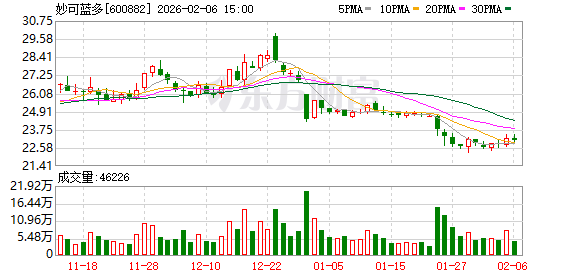
妙可蓝多“罢免”创始人柴琇:一场早于预期的变革
2 1 Shi Ji Jing Ji Bao Dao· 2026-02-06 12:23
Core Viewpoint - The removal of founder Chai Xiu from her managerial positions marks a significant transition for Miaokelan Duo into a new era under Mengniu's leadership, indicating a shift towards a more professional management approach [2][12]. Management Changes - On January 25, Miaokelan Duo announced that Chai Xiu was removed from her roles as vice chairman, general manager, and legal representative, retaining only her position as a board member. Kuai Yulong from the Mengniu system was appointed as the new CEO, suggesting a new phase of development led by younger professional managers [2][3]. - Chai Xiu's management strategies had faced internal controversies, and her gradual marginalization began after Mengniu's acquisition of the company [3][9]. Financial Implications - Chai Xiu remains a significant shareholder, holding 15.96% of the company alongside her associated party, while Mengniu holds 37.04% of Miaokelan Duo's shares [5][6]. - A guarantee dispute related to a past investment has negatively impacted Miaokelan Duo's financial performance, with estimated losses of approximately 119 to 127 million yuan in net profit due to asset impairment [10]. Historical Context - Chai Xiu founded Guangze Dairy in 2001, which dominated local dairy production. The company shifted focus to cheese in 2007 and became the first A-share listed company centered on cheese in 2016, achieving peak revenue of 5.32 billion yuan in 2023 [7][8]. - Mengniu's interest in Miaokelan Duo grew as it sought to compete with Yili, leading to a series of share acquisitions that culminated in Mengniu becoming the controlling shareholder [8][9]. Market Opportunities - Miaokelan Duo is currently experiencing growth in the B-end market, with a 14.22% year-on-year revenue increase to 1.39 billion yuan in Q3 2025, driven by domestic cheese market demand [13]. - Factors contributing to this growth include an oversupply of domestic raw milk and the increasing quality of domestic cheese production, which is approaching international standards [14]. Production and Equipment - The cost of domestic cheese production equipment has significantly decreased, with production lines costing between 3 to 5 million yuan compared to 20 million yuan for imported lines, enhancing profitability for domestic producers [15]. - The B-end market for cheese is expanding, particularly in Western and Korean cuisines, with major fast-food chains like KFC and Pizza Hut planning significant store expansions in China [16]. Competitive Landscape - Despite the advantages provided by Mengniu, Miaokelan Duo faces challenges from international competitors, necessitating rapid scaling to leverage economies of scale against lower-cost foreign dairy products [17].

妙可蓝多“罢免”创始人柴琇:一场早于预期的变革丨乳业变局
2 1 Shi Ji Jing Ji Bao Dao· 2026-02-06 12:09
Core Viewpoint - The removal of founder Chai Xiu from her managerial positions marks a significant transition for Miaokelando into a new era under Mengniu's influence, indicating a shift towards professional management and a focus on balanced business development [3][12]. Management Changes - On January 25, Miaokelando announced that Chai Xiu was removed from her roles as Vice Chairman, General Manager, and legal representative, retaining only her position as a board member. Kuai Yulong from the Mengniu system was appointed as the new CEO, signifying a leadership change towards a younger, professional management team [3][4]. - Chai Xiu's management strategies had faced internal criticism, and her gradual marginalization began after Mengniu's acquisition of the company [4][9]. Financial Implications - A significant factor in Chai Xiu's removal was a guarantee dispute related to an investment exceeding 100 million yuan, which has negatively impacted Miaokelando's financial performance. The estimated asset impairment could reduce net profit by approximately 119 million to 127 million yuan [10]. - Despite the leadership change, Chai Xiu remains a significant shareholder, holding 15.96% of the company alongside her associated party [6]. Market Position and Performance - Miaokelando experienced a peak revenue of 5.32 billion yuan in 2023, but sales have since entered a decline, with expectations for recovery starting in 2025 [7][8]. - The company is currently seeing growth in the B-end market, with a 14.22% year-on-year revenue increase to 1.39 billion yuan in Q3 2025, driven by domestic cheese market demand [13]. Industry Trends - The domestic cheese market is benefiting from an oversupply of raw milk and lower milk prices, allowing for profit margins in local cheese production. The production equipment for cheese is also becoming increasingly localized, reducing costs significantly compared to imported lines [14]. - The B-end market for cheese is expanding, particularly in Western and Korean cuisine, with major fast-food chains like KFC and Pizza Hut planning significant new store openings in China [15]. Competitive Landscape - While Miaokelando has advantages in raw materials and technology under Mengniu's support, the company faces long-term challenges from lower-cost overseas dairy production. To remain competitive, Miaokelando must scale operations effectively [16].

米兰冬奥,中国品牌拿下“首个”
Xin Lang Cai Jing· 2026-02-06 11:20
Core Insights - The article highlights that Mengniu Dairy is providing dairy products for the Milan-Cortina Winter Olympics, marking the first time a Chinese dairy company has served an overseas Olympic event, showcasing "Chinese elements" on a global stage [3][18]. Product Offerings - Mengniu is supplying three key products: whole milk, lactose-free yogurt, and butter, designed to meet the nutritional needs of athletes [3][18]. - The product lineup is a systematically designed nutritional scheme that addresses basic nutrition, specific dietary needs, and diverse applications, ensuring athletes receive stable and precise nutritional support [5][20]. Nutritional Role - Whole milk plays a crucial role by providing high-quality protein and calcium essential for athletes' training and competition [5][20]. - The lactose-free yogurt has gained popularity among lactose-intolerant athletes, with positive feedback on its taste and health benefits [5][20]. - Butter serves as a versatile cooking ingredient in the Olympic Village's kitchen, indicating the depth of Chinese dairy products' integration into the Olympic catering system [5][20]. Supply Chain and Quality Assurance - The complexity of food supply at the Olympics requires robust logistics, storage, and emergency response capabilities, which Mengniu has demonstrated [8][23]. - Mengniu achieved EU food safety standards for all its products by 2021, becoming the first Chinese dairy company to do so, which supports its participation in international sports events [10][25]. - The company employs a comprehensive quality management system, integrating international standards and practices to ensure safety and quality throughout the supply chain [10][25][27]. Technological Advancements - Mengniu is leveraging digital technology for quality enhancement, including real-time monitoring of cow health and milk quality, and implementing traceability systems for product safety [11][27]. - The establishment of a "lighthouse factory" has improved production precision and quality stability, reinforcing Mengniu's commitment to high standards [11][27]. Brand Philosophy and Market Positioning - The brand's philosophy of "strong" aligns with the Olympic spirit of continuous self-improvement and excellence, positioning Mengniu as a reliable partner in the global sports nutrition market [12][28]. - Mengniu views its participation in the Olympics not just as a product supply opportunity but as a platform to validate its capabilities and innovation in meeting global standards [14][30]. Future Directions - The company is expanding its focus from basic dairy products to functional and medical nutrition, addressing specific needs for different demographics, including infants and the elderly [14][30]. - The growth of ice and snow sports in China reflects a broader trend of increasing participation and higher standards in related industries and brands [14][30].

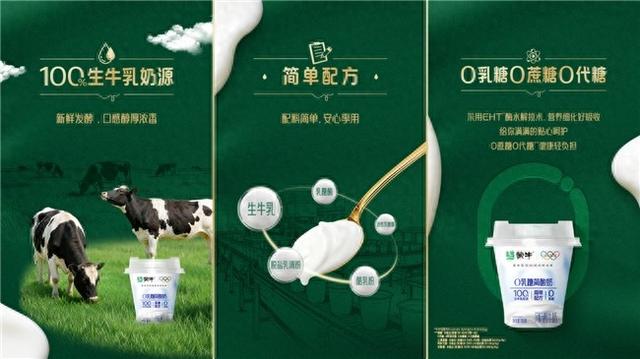
冠军之选,奥运伙伴!蒙牛0乳糖简酸奶,为每个人的营养护航
Huan Qiu Wang· 2026-02-06 06:59
Core Insights - Mengniu has launched a new lactose-free yogurt, made from 100% fresh milk, aimed at meeting the health needs of consumers and recognized as a "National Team Athlete Preparation Support Product" by the General Administration of Sport of China [1][4] Group 1: Product Features - The new Mengniu lactose-free yogurt is designed to cater to the high number of lactose-intolerant individuals in China, estimated at approximately 310 million, with an additional 350 million experiencing discomfort from dairy consumption [1] - The product utilizes EHT enzyme hydrolysis technology to break down lactose into easily absorbable glucose and galactose, achieving a 0-lactose formulation [3] - The yogurt is made with a simple ingredient list, ensuring that the nutritional benefits and flavor from fresh milk fermentation are preserved, allowing consumers to enjoy it with peace of mind [3] Group 2: Quality Assurance - Mengniu emphasizes consumer health needs, ensuring that every aspect of the product, from raw material selection to production, undergoes rigorous evaluation and professional assessment [4] - The product's quality is further validated by its recognition from the National Sports Training Bureau, providing reliable nutritional support for athletes during training and competition [4][5] Group 3: Health Strategy Alignment - The launch of the lactose-free yogurt aligns with the "Healthy China 2030" initiative, which aims to promote dietary nutrition knowledge and enhance the overall health awareness and nutritional literacy of the population [7] - Mengniu aims to transform high-quality products into widely accessible health choices, supporting the shift in consumer dairy consumption from merely "drinking milk" to "drinking good milk" and "drinking the right milk" [8]