
CICC(03908)

Search documents
中金公司刘刚:港股2026年或延续结构性行情 三大景气主线值得关注
Zhong Guo Zheng Quan Bao· 2025-11-25 22:37
Group 1 - The Hong Kong stock market has shown strong performance in 2023, with the Hang Seng Index and Hang Seng Tech Index rising by 29.09% and 25.60% respectively as of November 25 [1] - The performance in 2025 is expected to be driven by liquidity and sentiment, characterized by a chase for "scarce return assets" due to "excess liquidity" [2][6] - Despite the market's strong performance, overall earnings of listed companies in Hong Kong are slightly below initial expectations for 2025, with sectors like biopharmaceuticals and technology hardware showing resilience, while e-commerce and real estate face pressure [3] Group 2 - The liquidity environment is expected to remain accommodative in the first half of 2026, with potential interest rate cuts by the Federal Reserve, although long-term rates may stay high [3][4] - Southbound capital is projected to continue flowing into the Hong Kong market, with an estimated inflow of 600 billion HKD from public funds and insurance capital, alongside a potential 500 billion HKD from individual investors [3][4] - Investment preferences are shifting, with Southbound funds diversifying from high-dividend stocks to growth sectors, focusing on AI technology and structural recovery opportunities [4] Group 3 - The core macro theme for 2026 is expected to revolve around "excess liquidity chasing scarce return assets," with limited expansion of "scarce assets" [6] - Investment opportunities are identified in three main areas: AI-driven industry trends, cyclical recovery in production capacity, and export and commodity sectors related to global uncertainties [6] - Investors are advised to maintain flexibility in their strategies, balancing between chasing structural growth and managing market volatility [6]

中金公司刘刚: 港股2026年或延续结构性行情 三大景气主线值得关注
Zhong Guo Zheng Quan Bao· 2025-11-25 21:13
Core Viewpoint - The Hong Kong stock market has shown strong performance in 2023, with the Hang Seng Index and Hang Seng Tech Index rising by 29.09% and 25.60% respectively, driven by liquidity and sentiment, and this trend is expected to continue into 2026 [1][2]. Group 1: Market Performance and Drivers - The Hong Kong stock market has outperformed globally in 2025, supported by trends in the AI industry and improvements in the domestic economic fundamentals [2]. - The core narrative for 2025 is the pursuit of "scarce return assets" driven by "excess liquidity," with funds flowing towards assets that can provide fixed returns during credit cycle contractions [2][3]. - Despite the strong market performance, the overall profitability of listed companies in Hong Kong is slightly below initial expectations for 2025, with sectors like biopharmaceuticals and technology hardware showing resilience, while e-commerce and real estate face significant pressure [3]. Group 2: Liquidity Outlook - The global liquidity environment is expected to remain loose in the first half of 2026, with potential interest rate cuts by the Federal Reserve, although long-term rates are projected to stay high at 3.8% to 4% [3]. - Southbound capital is anticipated to continue flowing into the Hong Kong market, with an expected inflow of 600 billion HKD from public funds and insurance capital, alongside a potential 500 billion HKD from individual investors [3][4]. Group 3: Investment Opportunities - Investment opportunities in 2026 are expected to focus on three main areas: AI-driven industry trends, cyclical recovery in production capacity, and sectors related to overseas uncertainties such as exports and commodities [5]. - The potential rise in China's PPI towards the end of 2023 and into early 2024 may trigger a market shift towards cyclical sectors [5]. - Investors are advised to maintain flexibility in their strategies, balancing between chasing structural growth and taking profits when market conditions become overheated [5].
中金“三合一”整合,券业再添“万亿级”新玩家
Sou Hu Cai Jing· 2025-11-25 10:09
Core Viewpoint - The recent announcement of a major asset restructuring involving China International Capital Corporation (CICC), Dongxing Securities, and Xinda Securities marks a significant event in China's capital market, being the first "three-in-one" integration case in the history of Chinese securities [3][5]. Group 1: Transaction Details - The restructuring will be executed through a share swap, where CICC will issue A-shares to all A-share shareholders of Dongxing and Xinda, leading to a merger that will create a new entity with total assets exceeding 1.01 trillion yuan and expected revenue of 27.4 billion yuan [4][6]. - The new entity will have total assets of 1,009.58 billion yuan, net assets of 171.54 billion yuan, revenue of 27.39 billion yuan, and net profit attributable to shareholders of 9.52 billion yuan, positioning it as a "trillion-level" brokerage firm [7]. Group 2: Strategic Implications - This integration is not merely a scale increase but is based on a strategic logic of "leading by the head + complementary features," aiming to build a more competitive comprehensive financial service system [6][8]. - The merger is expected to enhance the competitive landscape of the industry, with the combined entity ranking fourth in total assets and third in revenue, altering the competitive dynamics among leading brokerages [7][12]. Group 3: Market Reactions - Market reactions have shown a "rational differentiation," with optimistic views focusing on the expected "synergy effects" from the integration, suggesting that the combination of CICC's high-end resources with the regional and specialized businesses of Dongxing and Xinda could lead to a value greater than the sum of its parts [9][10]. - Conversely, some investors express concerns regarding the fairness of the share swap ratio and potential integration challenges, citing historical cases of cultural clashes and operational overlaps [10][11]. Group 4: Industry Trends - The restructuring reflects a broader trend in the securities industry towards "head concentration and feature differentiation," with the top five brokerages expected to account for over 50% of total assets post-merger [13][14]. - This trend indicates a shift towards a "three-tier structure" in the industry, where top brokerages build comprehensive capabilities through mergers, mid-sized firms focus on niche advantages, and smaller firms may need to consolidate or align with larger entities for sustainable growth [13][15].



证券ETF(512880)近20日净流入近47亿元,券商并购稳步推进
Mei Ri Jing Ji Xin Wen· 2025-11-25 06:29
Core Viewpoint - The securities industry is undergoing accelerated consolidation among leading brokerages, driven by supply-side reforms that promote high-quality development [1] Group 1: Industry Trends - CITIC Securities indicates that the recent plan by China International Capital Corporation (CICC) to merge with Dongxing Securities and Xins Securities through a share swap is a significant step in resource consolidation among leading brokerages, driven by policy [1] - This consolidation is expected to enhance the Matthew effect in the securities industry, increasing the pricing power of Chinese brokerages in the global market [1] Group 2: Index and Performance - The Securities ETF (512880) tracks the Securities Company Index (399975), which selects listed companies closely related to the securities market from the Shanghai and Shenzhen markets [1] - The index includes companies involved in brokerage, investment banking, and proprietary trading, reflecting the overall performance of the securities industry [1] - The index exhibits high industry concentration and cyclical characteristics, effectively representing market trends in the securities sector [1]
中金:AI“泡沫”走到哪一步了?当前市场可能更多处于1996~1998年的情形
Sou Hu Cai Jing· 2025-11-25 01:58
Core Viewpoint - The recent resurgence of the AI bubble is a significant factor contributing to the decline of A-shares and risk assets in the three markets [1] Group 1: Discussion on Bubbles - A bubble is a neutral term and can drive industry development through investment impulses [1] - It is not advisable to exit an industry trend prematurely just because it may end in a bubble [1] - The key discussion point is to identify the current stage of the bubble rather than deny its existence [1] - Distinction should be made between capital market bubbles and the bubbles within the industry itself [1] Group 2: Judging Bubbles Effectively - The core of assessing a bubble in the industry lies in whether investment aligns with demand and capacity [1] - Accelerated investment does not equate to a bubble; a bubble occurs when investment significantly exceeds demand and capacity [1] - In equity markets, continuous price increases, high valuations, or concentration in leading companies do not necessarily indicate a bubble; a bubble is indicated when pricing deviates from fundamental support [1] Group 3: Current Market Analysis - Demand is comparable to the levels seen in 1996-1997, with internal cost reduction and efficiency gains realized, while external demand remains to be broken through [2] - Investment levels are similar to those in 1997-1998, with current scale still in its early stages but with a lower reliance on financing compared to that period [3] - Primary market pricing is akin to 1999, while secondary market valuations and policy environments resemble those of 1998 [3] Group 4: Implications for the Market - High valuations and expectations will lead to volatility; since 2023, the "seven sisters" of the US stock market have maintained valuations around 30 times, with concerns about bubbles arising as valuations approach 35 times [3] - Long-term industry trends remain intact, indicating continued investment value [3] - Market structure is expected to become more differentiated [3] Group 5: Future Market Predictions - The fundamental recovery logic is expected to support the rise of the US stock market, with short-term fluctuations not altering the long-term trend [3] - By the end of 2026, with the Federal Reserve potentially halting balance sheet reduction or even expanding it, financial liquidity is anticipated to boost the US stock market [3] - The index is predicted to reach between 7600 and 7800 points by the end of 2026, representing a potential increase of 13-16% [3]
券商整合提速 推动资源重新配置
Jing Ji Ri Bao· 2025-11-25 01:47
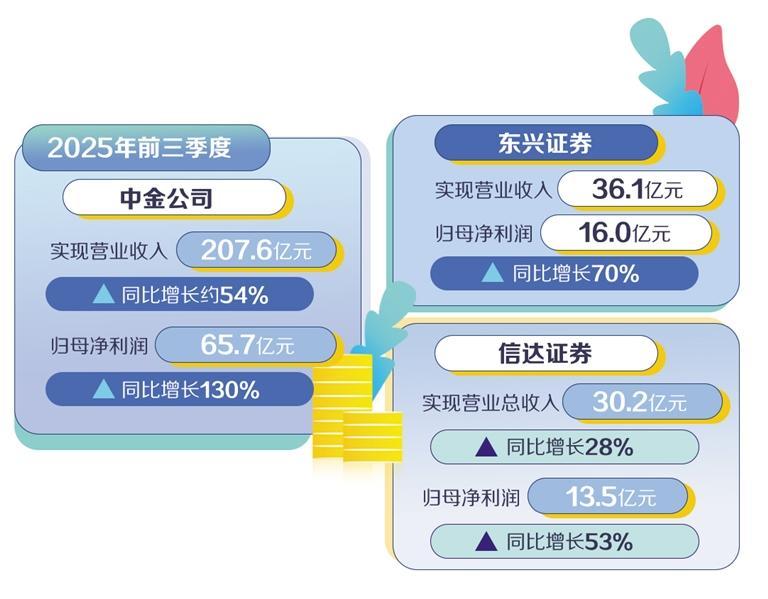
Core Viewpoint - The announcement of a major asset restructuring involving China International Capital Corporation (CICC), Dongxing Securities, and Cinda Securities marks the beginning of a significant consolidation within the brokerage industry, aiming to create a new "carrier-level" brokerage with total assets exceeding 1 trillion yuan [1][4]. Group 1: Background and Strategic Context - The restructuring aligns with the directives from the Central Financial Work Conference and the new "National Nine Articles," which emphasize the cultivation of top-tier investment banks and institutions [2]. - The restructuring is seen as a strategic arrangement to enhance core competitiveness through mergers and acquisitions, with a goal of establishing 2-3 internationally competitive investment banks by 2035 [2]. Group 2: Company Performance and Characteristics - CICC reported a revenue of 20.76 billion yuan for the first three quarters of 2025, a year-on-year increase of approximately 54%, with a net profit of 6.57 billion yuan, up 130% [3]. - Dongxing Securities achieved a revenue of 3.61 billion yuan and a net profit of 1.6 billion yuan, reflecting a 70% increase year-on-year [3]. - Cinda Securities generated total revenue of 3.02 billion yuan, with a net profit of 1.35 billion yuan, marking a 28% year-on-year growth [3]. Group 3: Industry Position and Future Prospects - Post-restructuring, the new entity will rank as the fourth largest listed brokerage in A-shares by total assets, following CITIC Securities, Guotai Junan, and Huatai Securities [4]. - The combined strengths of CICC in investment banking and cross-border business, along with Dongxing and Cinda's expertise in retail brokerage and asset management, are expected to enhance the new company's competitive position [4]. Group 4: Resource Reallocation and Market Impact - The restructuring is part of a broader initiative to optimize the structure of financial institutions in China, facilitating better resource allocation and enhancing the overall efficiency of capital markets [5][6]. - The integration aims to improve risk management capabilities and create a more robust financial platform that can handle systemic risks effectively [6]. Group 5: Expectations and Strategic Goals - The restructuring is anticipated to provide better support for national strategies and the real economy, particularly in areas like manufacturing upgrades and technological innovation [7]. - It aims to enhance the functionality and pricing efficiency of capital markets, thereby increasing the proportion of direct financing [7]. - The new CICC is expected to position itself as a significant player in the global investment banking arena, enhancing China's representation in international financial markets [7][8].
中金:全球央行配置黄金的比例可能还有上升空间
Di Yi Cai Jing· 2025-11-25 00:11
(文章来源:第一财经) 中金公司研报指出,2022年以来,在地缘政治、"去美元化"、持续增长的美债等影响下,黄金价格持续 攀高。从供需来看,黄金产量增长稳定,价格主要取决于需求,其中央行购金是近几年主要的需求来 源。不过,随着金价不断走高,有的央行的资产配置中,黄金与储备资产之比已超过其目标,出现短期 减持黄金的现象。总体而言,全球央行配置黄金的比例可能还有上升空间。 ...
年度数字金融创新大奖
Nan Fang Du Shi Bao· 2025-11-24 23:11
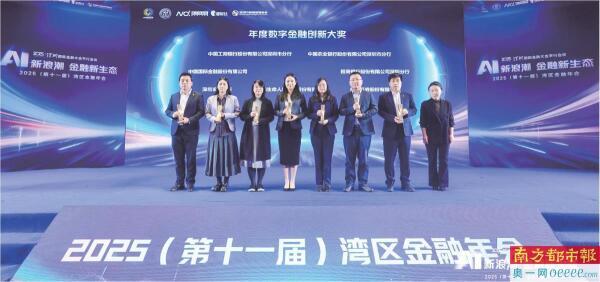
Core Insights - The awarded institutions are leveraging technologies such as cloud computing, big data, artificial intelligence, and blockchain to enhance service and security on their platforms, driving innovation and improving user experience in the financial sector [2]. Group 1: Awarded Institutions - Industrial and Commercial Bank of China Shenzhen Branch is advancing the digital transformation with its D-ICBC initiative, integrating AI models to reduce customer service response time by 50% and addressing payment challenges for foreign visitors [2]. - Agricultural Bank of China Shenzhen Branch has developed a blockchain-based prepaid platform called "Smart Payment Assurance," which provides comprehensive financial services including convenient payments and real-time settlement, serving nearly 3,000 enterprises by September 2025 [2]. - China International Capital Corporation has made significant advancements in AI, launching the intelligent platform "Jiu Zhang" in 2021 and the AI digital employee Jinn in 2022, with multiple key applications set to launch in 2024 [3]. - China Merchants Bank Shenzhen Branch offers a full range of financial services, including cross-border financing and bond underwriting, while enhancing its mobile banking app and scenario-based service capabilities [5]. - Shenzhen Rural Commercial Bank is focusing on digital transformation through cloud platforms and AI, with a major information technology project set to enhance system performance and customer experience by 2025 [6]. - Funde Sino Life Insurance has upgraded its core network to improve bandwidth utilization and data transmission efficiency, significantly enhancing service efficiency and reducing operational costs [6]. - Orient Securities is creating a comprehensive financial service platform through its "Orient Winner" app, integrating AI and big data to improve service quality and user experience [7].


券商整合提速
Jing Ji Ri Bao· 2025-11-24 22:13
Core Viewpoint - The announcement of a major asset restructuring involving China International Capital Corporation (CICC), Dongxing Securities, and Xinda Securities marks the beginning of a significant consolidation within the brokerage industry, aiming to create a new "carrier-level" brokerage with total assets exceeding 1 trillion yuan [2][3]. Group 1: Background and Strategic Context - The restructuring aligns with the directives from the Central Financial Work Conference and the new "National Nine Articles," which emphasize the cultivation of top-tier investment banks and institutions [3]. - The restructuring is seen as a strategic move to enhance core competitiveness through mergers and organizational innovation, with a goal of establishing 2-3 internationally competitive investment banks by 2035 [3][6]. Group 2: Company Performance and Characteristics - CICC reported a revenue of 20.76 billion yuan for the first three quarters of 2025, a year-on-year increase of approximately 54%, with a net profit of 6.57 billion yuan, up 130% [4]. - Dongxing Securities achieved a revenue of 3.61 billion yuan and a net profit of 1.6 billion yuan, reflecting a 70% increase year-on-year [5]. - Xinda Securities generated total revenue of 3.02 billion yuan, with a net profit of 1.35 billion yuan, marking a 28% and 53% increase respectively [5]. Group 3: Industry Implications and Future Expectations - The merger is expected to create a brokerage with total assets surpassing 1 trillion yuan, positioning it as the fourth-largest listed brokerage in A-shares [5]. - The new entity will leverage CICC's strengths in investment banking and cross-border services, while Dongxing and Xinda will contribute their expertise in retail brokerage and asset management [4][5]. - The restructuring is part of a broader trend in the Chinese securities industry, aiming to optimize participant structures and enhance the overall stability and efficiency of the capital market [7][9].
并购市场迈向价值创造新征程
Zheng Quan Ri Bao· 2025-11-24 16:22
Group 1 - The core viewpoint of the article highlights the significant transformation in the M&A market, moving from simple scale expansion to deeper strategic integration and value creation, reflecting the pulse of China's economic transformation and upgrade [1] Group 2 - The M&A market has shifted from a "scale-oriented" approach to one dominated by "industrial logic," emphasizing the need for companies to enhance their strengths and optimize their operations [2] - A notable example is the proposed merger of CICC with Dongxing Securities and Xinda Securities, which aims to leverage their complementary advantages and create a powerful synergy in the financial sector [2] - The State-owned Assets Supervision and Administration Commission (SASAC) is promoting the professional integration of central enterprises, emphasizing the importance of aligning M&A activities with future industry and technology trends [2] Group 3 - "Hard technology" has emerged as the most active sector for M&A, driven by the need for technological breakthroughs and industrial upgrades, with companies seeking to acquire cutting-edge technologies and core talent through acquisitions [3] - The integration of upstream and downstream in the industrial chain has become a mainstream model, with leading companies aiming to secure key technologies and enhance the resilience of the entire industry chain [3] - Policies such as the "Science and Technology Innovation Board Eight Articles" and "M&A Six Articles" are guiding capital towards the "hard technology" sector, providing clear direction and strong momentum for this M&A wave [3] Group 4 - The focus of successful M&A has shifted from transaction execution to integration effectiveness, with value creation becoming the key measure of success [4] - Regulatory bodies are emphasizing the importance of effective integration post-acquisition, assessing the sustainability of the target company's operations and the reasonableness of the acquisition price [4] - The strategic transformation in the M&A market represents an upgrade in the ability of the capital market to serve the real economy, with a continued focus on industrial logic, technological innovation, and integration effectiveness [4]