BANK OF CHINA(03988)

Search documents
视频|中国银行研究院中国金融团队主管李佩珈表示:四季度关注关注科技、周期等板块机会
Zhong Guo Jing Ying Bao· 2025-09-26 02:10
预计四季度A股或将维持高位向上,但也需警惕震荡风险。一是增量资金入市仍有空间。二是上市公司 基本面有望结构性改善,关注科技、周期等板块机会。不过,需警惕前期上涨过快及内外部不确定性增 加带来的调整风险。(中经记者 谭志娟) 0:00 ...

视频 丨 中国银行研究院中国金融团队主管李佩珈表示:四季度仍看好科技股
Zhong Guo Jing Ying Bao· 2025-09-26 01:43
Industry Overview - The industry is experiencing a positive development momentum supported by government policies [2] - Companies within the industry are showing high profitability [2] Risk Consideration - There has been a significant increase in the market previously, indicating a need to be cautious about potential risks [2]
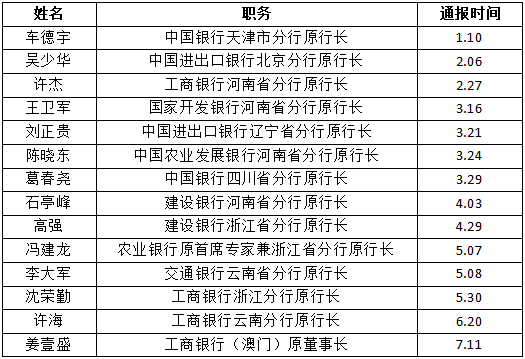
银行地方“一把手”密集落马!10家金融机构公布巡视整改情况,多方强调对“一把手”监督
Xin Lang Cai Jing· 2025-09-26 01:11
Group 1: Central Bank and Financial Regulatory Authority Actions - The Central Bank and the Financial Regulatory Authority are focusing on long-term rectification measures, including enhancing financial infrastructure, advancing information technology reforms, and promoting financial legislation [1][2] - The Financial Regulatory Authority has implemented multiple measures to prevent financial risks, such as strict market access regulations and enhancing administrative penalties to protect consumer rights [1][2] Group 2: Supervision of Leadership - Emphasis on the supervision of "one leaders" in financial institutions, with a focus on accountability and responsibility among top executives [2][9] - At least 32 financial unit officials have been investigated this year, with 23 in the first half alone, highlighting ongoing anti-corruption efforts [2][10] Group 3: Bank-Specific Initiatives - The Export-Import Bank is reinforcing its policy-oriented banking role and enhancing monitoring of policy-related business [3] - The Industrial and Commercial Bank is developing a high-quality growth strategy and improving internal governance and risk management [3] - The Agricultural Bank is focusing on supporting rural revitalization and agricultural development through increased financing [4] Group 4: Global Strategy and Regional Development - The Bank of China is continuing its global strategy by enhancing overseas operations and supporting enterprises in international expansion [5] - The Construction Bank is committed to regional development strategies, including support for the Guangdong-Hong Kong-Macao Greater Bay Area [5] Group 5: Insurance Sector Actions - China Life is addressing the negative impacts of the Wang Bin case and is implementing measures to ensure accountability among its leadership [6][7] - China Pacific Insurance is focusing on strengthening its talent pool and enhancing the political and organizational functions of its party committees [8]



2025年H1中国手机银行APP流量监测报告
艾瑞咨询· 2025-09-26 00:04
Core Insights - The mobile banking app has become a core platform for commercial banks to serve users, optimize experiences, and enhance competitiveness in the context of national digital transformation and financial technology innovation [1] - The market for mobile banking apps is entering a stage of stock competition, with user flow stabilizing between 650 million to 700 million from 2023 to 2025, indicating saturation [2] - User engagement with mobile banking apps is declining, necessitating refined operational strategies for banks to retain customers [4][6] User Flow and Behavior - The overall user flow of mobile banking apps in China is projected to fluctuate between 650 million and 700 million, with a change rate of -1.2% to 4.6% from 2023 to 2025, indicating market saturation [2] - User stickiness has significantly decreased, with average daily effective usage time dropping from 4.93 minutes to 2.70 minutes and daily usage frequency from 4.54 times to 2.86 times [4] Operational Strategies - Refined operations are essential for banks to break through in a saturated market, focusing on precise user insights and intelligent technology applications [6][7] - The strategy involves three layers: foundational user insights, scenario-based and differentiated operations, and establishing emotional connections with users [7] AI Integration - AI technology is recognized for its potential value across industries, aiding banks in refining operations by enhancing interactive experiences, risk management, and data efficiency [9] Rankings and Performance - The top 50 rankings show that state-owned banks dominate, with Agricultural Bank of China leading with an average MAU of 24.8 million, followed by Industrial and Commercial Bank of China and China Construction Bank [11][12] - Among joint-stock commercial banks, China Merchants Bank leads with over 7 million MAU, while many others face declining user engagement [16][17] - City commercial banks have shown strong performance, with Jiangsu Bank leading at 3.5 million MAU, and several banks achieving significant growth rates [19][20] Case Studies of Successful Apps - Agricultural Bank of China continues to lead the industry with a 4.8% increase in MAU, focusing on integrating financial services with daily life scenarios [28][29] - China Merchants Bank is recognized for its innovative digital services, maintaining its position as a leader among joint-stock banks [31] - Jiangsu Bank emphasizes the integration of digital capabilities with wealth management, enhancing its app to meet customer needs [33] - Beijing Bank's app showcases a digital transformation strategy that combines technology, scenarios, and services to create value [35]


智通ADR统计|9月26日




智通财经网· 2025-09-25 22:26
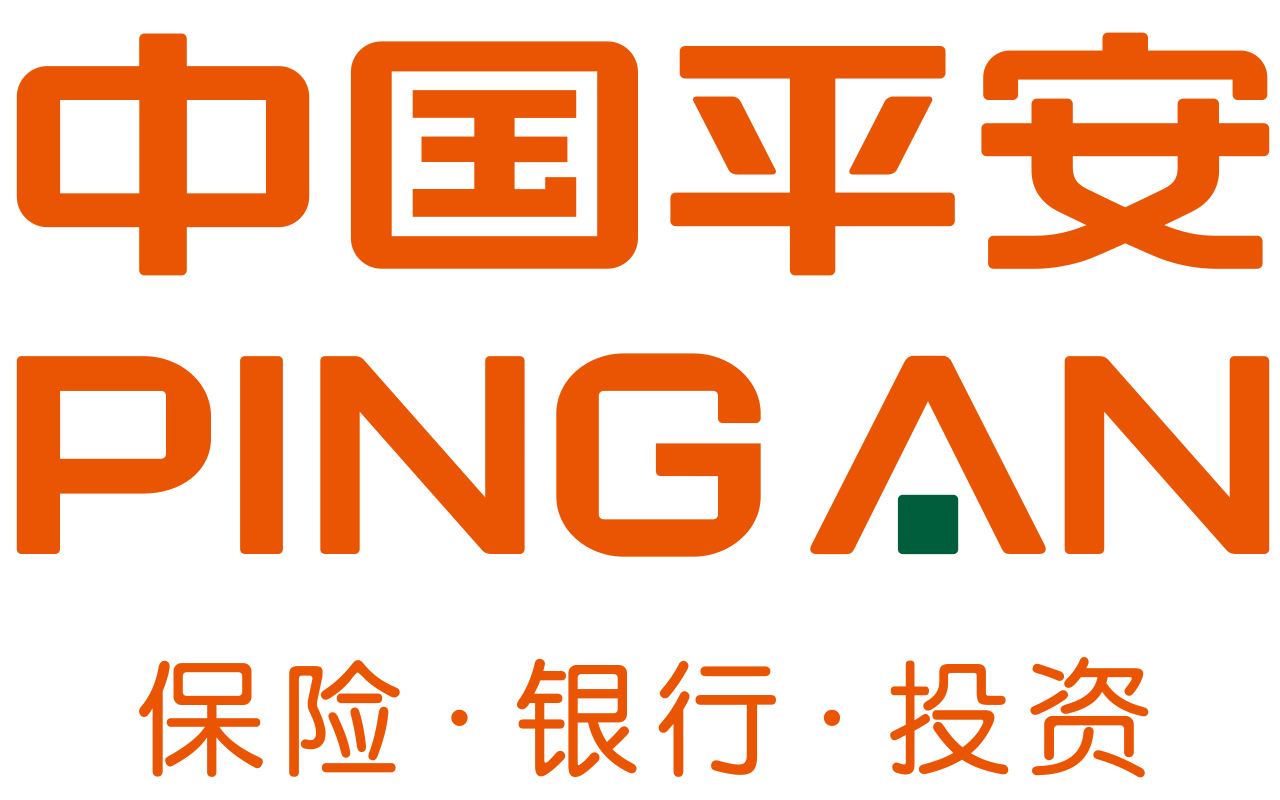
Market Overview - The Hang Seng Index closed at 26,404.18, down by 80.50 points or 0.30% on September 25 [1] - The index reached a high of 26,430.39 and a low of 26,319.63 during the trading session, with a trading volume of 66.046 million shares [1] Major Stocks Performance - HSBC Holdings closed at HKD 107.287, up by 0.17% compared to the previous close [2] - Tencent Holdings closed at HKD 648.343, down by 0.25% compared to the previous close [2] - Alibaba Group (W) saw a decline of 1.15%, closing at HKD 172.000 [3] - China Construction Bank dropped by 2.28%, closing at HKD 7.300 [3] - Xiaomi Group (W) increased by 4.48%, closing at HKD 59.450 [3] ADR Performance - Tencent's ADR price was USD 648.343, reflecting a decrease of 0.25% compared to its Hong Kong stock price [3] - Alibaba's ADR price was USD 170.695, down by 0.76% compared to its Hong Kong stock price [3] - HSBC's ADR price was USD 107.287, showing an increase of 0.17% compared to its Hong Kong stock price [3]
银行取消监事会 治理改革面临新挑战
Zhong Guo Zheng Quan Bao· 2025-09-25 22:16
由新公司法驱动的银行治理变革正加速落地。近日,齐鲁银行、兴业银行等上市银行纷纷宣布不再设立 监事会。 业内人士认为,以审计委员会取代监事会可以提升公司治理效率、降低运营成本,但需解决监督的独立 性与专业性问题。此外,如何将原则性规定转化为可行的具体方案,也是银行需要面对的挑战。 纷纷取消监事会 9月23日,齐鲁银行召开股东大会,表决通过了《关于不再设立监事会的议案》。议案表示,根据相关 法律法规、监管制度的规定,结合实际情况,该行拟不再设立监事会及其下设专门委员会,由董事会审 计委员会行使公司法和监管制度规定的监事会职权。 齐鲁银行并非是取消监事会的唯一一家银行。4月29日,工商银行、农业银行、建设银行、中国银行、 交通银行五家国有大行集体宣布撤销监事会,招商银行、兴业银行、北京银行等股份行和城商行也陆续 跟进。 银行取消监事会需要从去年7月1日起施行的新公司法说起。根据法律规定,公司可以在董事会中设置由 董事组成的审计委员会,行使监事会的职权,不设监事会或者监事。此后,国家金融监督管理总局发布 相关通知称,金融机构可以按照公司章程规定,在董事会中设置由董事组成的审计委员会,行使公司法 和监管制度规定的监事会 ...

银行竞相优化综合金融服务体系支持新型工业化
Zheng Quan Ri Bao· 2025-09-25 17:49
"建设银行充分发挥集团全牌照经营优势,不断深化'圈链群'经营理念,积极构建与新型工业化相适应的金融服务体系,为 制造业高端化、智能化、绿色化发展提供全方位金融支持。"建设银行相关部门负责人对《证券日报》记者表示。 记者从光大银行了解到,该行日前推出了支持新型工业化金融服务方案,提出40项具体工作举措,全面支持新型工业化深 入推进。 本报记者 杨洁 新型工业化是推进中国式现代化的重要引擎。今年8月份,中国人民银行等七部门联合发布《关于金融支持新型工业化的 指导意见》(以下简称《意见》),对照新型工业化重点领域,提出针对性支持举措。《证券日报》记者近日了解到,为全面 落实《意见》要求,多家商业银行聚焦新型工业化重大战略任务进行部署。 记者从中国银行获悉,该行近日正式发布《中国银行关于支持新型工业化的工作方案(2025—2027年)》,旨在充分发挥 中国银行全球化优势与综合化特色,进一步优化适配新型工业化的综合金融服务体系。 据介绍,目前,中国银行正以"商行+投行""境内+境外""融资+融智"综合服务,助力增强产业链供应链韧性和科技创新能 力。截至2025年6月末,中国银行工业领域供应链融资余额及科技型企业贷款余额 ...

银行竞相优化综合金融服务体系 支持新型工业化
Zheng Quan Ri Bao· 2025-09-25 17:44
新型工业化是推进中国式现代化的重要引擎。今年8月份,中国人民银行等七部门联合发布《关于金融 支持新型工业化的指导意见》(以下简称《意见》),对照新型工业化重点领域,提出针对性支持举 措。《证券日报》记者近日了解到,为全面落实《意见》要求,多家商业银行聚焦新型工业化重大战略 任务进行部署。 光大银行相关部门负责人对《证券日报》记者表示,在信贷支持政策方面,该行制定并进一步细化关于 集成电路、工业母机、仪器仪表等重点领域和产业链的行业授信政策,更加聚焦创新产业供应链企业的 金融服务。在服务保障方面,该行制定总分两级对接国家级产业基金、国家制造业创新平台的工作机 制。在数字金融领域,该行综合运用并购、融资租赁和资产证券化等产品持续促进数字经济与实体经济 融合发展。 "金融业亟须赋能制造业及新质生产力加快发展。"在中国银行深圳市分行大湾区金融研究院高级研究员 曾圣钧看来,具体可从以下方面发力:一是优化金融资源配置,促进产业协同发展。二是创新金融服务 模式,提升服务精准度与效率。三是加强金融服务与政府政策协同。政府可通过设立产业引导基金、提 供财政贴息等方式,引导金融机构加大对制造业重点领域和薄弱环节的支持力度。金融机 ...
中国银行研究院:更加重视消费需求牵引作用
Zhong Zheng Wang· 2025-09-25 16:12
关于全球银行业发展形势,报告认为,2025年,全球经济复苏乏力,银行业规模扩张步伐持续放缓,但 得益于资本市场回暖、经营成本压降等,盈利能力有所提升,风险形势较为复杂,资本充足状况相对平 稳;中国经济保持向优向好态势,银行业锚定服务实体经济目标,助力实体经济高质量发展积蓄增势, 规模稳健提升,盈利能力基本稳定,资产质量进一步夯实,资本充足情况良好。 中证报中证网讯(记者吴杨王昱炟)9月25日,中国银行研究院发布《2025年四季度经济金融展望报 告》。关于中国经济金融形势,报告认为,2025年三季度以来中国经济增长新旧动能转换持续,全年经 济增长预计能够实现预期目标;未来宏观政策要更加重视正向激励、改善和稳定预期的作用,更加重视 需求特别是消费需求的牵引作用,更加重视宏观政策边际效果变化,充分发挥政策"组合拳"效果,以应 对未来的不确定性。 关于全球经济金融形势,报告认为,2025年三季度,全球经济增长态势有所修复,总需求小幅反弹、总 供给整体平稳;展望四季度,全球经济增长喜忧参半,需求端不确定性增加而供给端相对稳健,美元指 数延续疲软表现,新兴市场股市更具吸引力。 ...
大消息!工行、农行、中行、建行、交行、邮储等六大行集体宣布:这一机构,不再设立!
中国基金报· 2025-09-25 16:08
【 导读 】国有六 大银行同日官宣,不再设立监事会 中国基金报记者 嘉合 9月25日晚间,工商银行、中国银行、农业银行、建设银行、交通银行相继发布公告,宣布公司章程修订已获得监管核准,不再设立监事 会。 具体来看,工商银行公告显示,该行于2025年6月27日召开的2024年度股东年会审议批准了《关于审议及撤销监事会相关事项的议 案》,并于近日收到《国家金融监督管理总局关于工商银行修改公司章程的批复》,核准该行修订后的公司章程。 确性和完整性承担法律责任。 中国工商银行股份有限公司(简称本行)于 2025年6月27日召开的2024年度股东年会审议 批准了《关于审议<中国工商银行股份有限公司 章程(2025年版)>及撤销监事会相关事项的 议案》。 近日.本行收到《国家金融监督管理总局关于工 商银行修改公司章程的批复》(金复〔2025〕 564号)。国家金融监督管理总局已核准本行修 订后的公司章程。修订后的公司章程全文请参 见上海证券交易所网站(www.sse.com.cn)和 本行网站(www.icbc-ltd.com)。《中国工商 银行股份有限公司股东会议事规则(2025年 版)》《中国工商银行股份有限公司董事 ...