TONGWEI CO.,LTD(600438)

Search documents
全球组件出货排名公布:隆基与晶科并列
Xin Lang Cai Jing· 2026-02-27 10:30
Core Insights - InfoLink has released the global component shipment rankings for 2025, indicating a total shipment volume of approximately 536GW from the listed suppliers [4][9]. Group 1: Shipment Rankings - The top four companies account for about 58% of the total shipments, with a clear division at 60GW between the leading companies and the subsequent ones [10]. - The first tier of suppliers has a shipment range of 80-90GW, with JinkoSolar and Longi Green Energy tied for first place, following the addition of U.S. component manufacturers [11]. - The second tier, with shipments between 60-70GW, includes Trina Solar and JA Solar, which are tied for third place [11]. Group 2: Additional Tiers - The third tier has shipments ranging from 30-50GW, with Tongwei and Chint New Energy maintaining their existing rankings as fifth and sixth, respectively [12]. - The fourth tier has shipments between 20-30GW, featuring GCL-Poly in seventh place, while LONGi and Canadian Solar are tied for eighth. TCL Zhonghuan, Yingli Green Energy, and Jida New Energy are tied for tenth place [12]. Group 3: Technology Trends - In terms of technology, TOPCon components have become the dominant product among the top ten suppliers, with nearly 95% of shipments attributed to this technology, while PERC accounts for only 1-2% [12]. - The statistics do not accurately reflect the global market share of BC and HJT technologies, as major HJT manufacturers were not included in the rankings, focusing instead on the mainstream companies' shipment strategies [12].






通威拟收购丽豪清能,光伏硅料行业整合加速,“反垄断”审查存不确定性
Jin Rong Jie· 2026-02-27 10:27
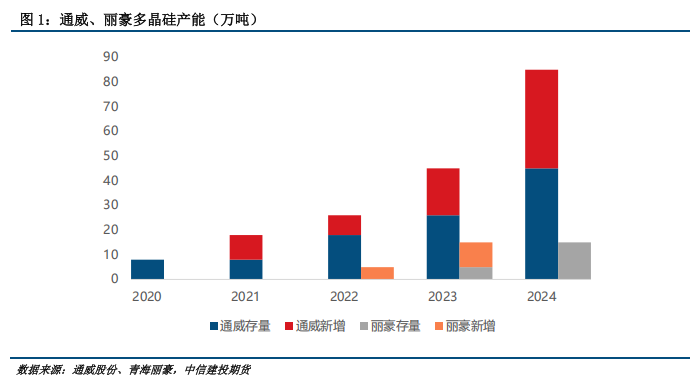
Core Viewpoint - The photovoltaic industry is witnessing a significant event as Tongwei Co., Ltd. announces its intention to acquire 100% equity of Qinghai Lihua Qingneng Co., Ltd., marking a potential major merger in the sector for 2026, which could reshape the competitive landscape of the silicon material segment and signal a market-driven capacity exit wave under the "anti-involution" policy direction [1][7]. Group 1: Acquisition Details - Tongwei has signed a share acquisition intention agreement with Lihua Qingneng's chairman Duan Yong and two other parties, indicating a strategic move to consolidate its position in the silicon material market [2]. - Lihua Qingneng, established in April 2021, specializes in the research, production, and sales of photovoltaic-grade high-purity crystalline silicon and electronic-grade polysilicon, and ranks sixth in industry capacity [2]. - The acquisition is seen as a return of an industry veteran, as Duan Yong previously played a crucial role in Tongwei's rise to the top of the global silicon material market [1][2]. Group 2: Strategic Implications - This acquisition is part of Tongwei's strategy to strengthen its leading position in the silicon material sector and optimize its production capacity structure, potentially increasing its capacity from 900,000 tons to over 1.1 million tons and market share from 30% to 36% [3]. - Tongwei has established a full industry chain layout, with capacities exceeding 300,000 tons for industrial silicon, 15 GW for silicon wafers, and 90 GW for modules, providing strong support for its risk resistance [3]. Group 3: Market Context - The acquisition occurs during a critical period of capacity excess and price decline in the photovoltaic industry, with polysilicon prices dropping below cost levels, prompting government policies to encourage orderly exit of backward capacity [7]. - The industry currently has a total polysilicon capacity of 3.354 million tons, with a monthly operating rate of less than 30%, leading to significant overcapacity and profitability erosion [7]. - Tongwei's acquisition is expected to facilitate a market-driven approach to address the current chaotic competition and align with the industry's high-quality development goals [7]. Group 4: Financial Considerations - Despite the strategic advantages, the acquisition faces uncertainties, including market skepticism due to Tongwei's previous failed acquisition attempt and potential regulatory scrutiny regarding market concentration [9]. - Tongwei's financial health is under pressure, with projected losses of 900 million to 10 billion yuan for 2025 and a debt ratio of 71.95%, raising concerns about its capacity to manage the financial implications of the acquisition [9].
光伏行业月报:通威拟收购青海丽豪加速行业洗牌,行业进入需求淡季整体表现平稳
Zhongyuan Securities· 2026-02-27 10:25
Investment Rating - The report maintains an "Outperform" rating for the power equipment and new energy sector [1]. Core Insights - The photovoltaic industry index rose by 4.41% as of February 26, significantly outperforming the CSI 300 index, which had a return of 0.44% during the same period [8]. - The report highlights that the photovoltaic industry is currently undergoing a deep adjustment phase, with expectations for new installations in 2026 to be between 180-240 GW, following a short-term market correction [5][16]. - The industry is transitioning from scale expansion to value competition, with a focus on governance to mitigate internal competition [5][14]. Summary by Sections Industry Performance Review - The photovoltaic industry index experienced a significant rise, outperforming the CSI 300 index [8]. - Sub-sectors within the photovoltaic industry showed mixed performance, with photovoltaic modules and conductive silver paste leading the gains [10]. - Individual stock performance varied widely, with notable gains from companies like GCL-Poly Energy and JinkoSolar, while others like Sungrow Power and LONGi Green Energy faced declines [13][15]. Industry and Company Dynamics - The report discusses the implementation of a unified national electricity market system by 2030, which aims to enhance market participation and price mechanisms for renewable energy [14]. - The National Energy Administration reported that new photovoltaic installations reached 315.07 GW in 2025, with a year-on-year growth of 13.67% [17]. - The report notes that the photovoltaic industry is entering a demand off-season, with supply constraints expected to continue [5][26]. Key Data Points - In January 2026, the photovoltaic inverter bidding capacity was recorded at 1,056.29 MW, marking a low point typical of the seasonal downturn [26]. - The report indicates a significant reduction in polysilicon production, with expectations of a 15% decrease in January [28]. - The average price of polysilicon decreased slightly to 52 RMB/kg, reflecting a weak balance in supply and demand [40].



光伏行业月报:通威拟收购青海丽豪加速行业洗牌,行业进入需求淡季整体表现平稳-20260227
Zhongyuan Securities· 2026-02-27 09:05
Investment Rating - The report maintains an "Outperform" rating for the power equipment and new energy sector [1]. Core Insights - The photovoltaic industry index rose by 4.41% as of February 26, significantly outperforming the CSI 300 index, which had a return of 0.44% during the same period [8]. - The photovoltaic sector is currently undergoing a deep adjustment phase, with expectations for new installations in 2026 to be between 180-240 GW, following a short-term market correction [5][16]. - The industry is transitioning from scale expansion to value competition, with a focus on governance to mitigate internal competition [5][14]. Summary by Sections Industry Performance Review - The photovoltaic industry index experienced a surge and subsequent consolidation in February, outperforming the CSI 300 index [8]. - Sub-sectors within the photovoltaic industry showed mixed performance, with photovoltaic modules and conductive silver paste leading the gains [10]. - Individual stock performance varied significantly, with notable gains from companies like GCL-Poly Energy and JinkoSolar, while others like Sungrow Power and LONGi Green Energy faced declines [13][15]. Industry and Company Dynamics - The government is enhancing the electricity pricing mechanism to support the photovoltaic sector, aiming for a unified national electricity market by 2030 [14]. - In 2025, the total new photovoltaic installations are projected to reach 317 GW, a 13.67% increase year-on-year, with significant contributions from both centralized and distributed installations [17][19]. - The industry is currently in a demand off-season, with a notable reduction in the production of polysilicon and silicon wafers due to decreased downstream demand [26][34]. Key Data Points - In January 2026, the photovoltaic inverter bidding capacity was recorded at 1,056.29 MW, marking a low point typical of the seasonal downturn [26]. - The production of polysilicon is expected to decrease by 15% in January, with further reductions anticipated in February [28]. - The average price of polysilicon has slightly decreased to 52 RMB/kg, reflecting a weak balance in supply and demand [40]. Investment Recommendations - The report suggests focusing on companies involved in perovskite solar cells, energy storage inverters, and leading integrated component manufacturers, as the photovoltaic industry remains undervalued historically [5].
一周能源要闻 | 通威股份拟收购丽豪清能;大全能源去年净亏损收窄至11.29亿元
Cai Jing Wang· 2026-02-27 08:42
Policy News - The National Energy Administration plans to implement a new energy system and sector-specific energy planning by 2026, focusing on energy security and the construction of a strong energy nation [2] - Key projects will be prioritized, including major engineering projects and the development of renewable energy bases [2] Corporate Dynamics - Tongwei Co., Ltd. plans to acquire 100% equity of Lihua Qingneng through a combination of share issuance and cash payment, aiming to enhance its position in the photovoltaic sector [5] - Huaneng Water Power's major shareholder plans to increase its stake in the company by investing between 100 million to 150 million yuan [6] - Shuangliang Energy's subsidiary won a bid for a project in the Middle East worth approximately 100 million yuan, representing 0.77% of the company's audited revenue for 2024 [4] Performance Outlook - Micro导纳米 expects a net profit of 213 million yuan for 2025, a decrease of 6.12% year-on-year, despite significant growth in semiconductor equipment orders [11] - Zhongxinbo anticipates a net loss of 9.88 million yuan for 2025, with total revenue declining by 24.09% [12] - Liancheng CNC forecasts a 77.01% drop in net profit for 2025, attributed to ongoing challenges in the photovoltaic equipment sector [13] - Trina Solar reported a net loss of 6.994 billion yuan for 2025, with revenue down 16.2% due to pressure on photovoltaic product prices [17] - Daqo New Energy expects a net loss of 1.129 billion yuan for 2025, although the loss is narrowing compared to the previous year [18] - Airo Energy reported a revenue increase of 32.84% for 2025, but net profit decreased by 43.16% due to competitive pressures in emerging markets [20][21]

通威甩出“王炸”,硅料产能整合有戏了?
投中网· 2026-02-27 08:19
Core Viewpoint - The article discusses a significant acquisition in the photovoltaic industry, where Tongwei Co., Ltd. plans to acquire 100% of Qinghai Lihua Qingneng Co., Ltd. This move is seen as a strategic step in the ongoing consolidation of the solar material sector, indicating a shift towards capacity clearing in the industry [5][12]. Group 1: Acquisition Details - On February 24, Tongwei announced its intention to acquire Qinghai Lihua, leading to a temporary suspension of its stock trading [5]. - This acquisition follows a previous attempt by Tongwei to acquire another battery company, which did not materialize, highlighting the challenges in the industry [5]. - Qinghai Lihua, founded by a former Tongwei executive, has rapidly grown to become a significant player in the silicon material market, achieving a valuation of 138 billion yuan by December 2022 [8][9]. Group 2: Industry Context - The photovoltaic industry is experiencing a prolonged downturn, with Tongwei facing substantial losses projected at 70.39 billion yuan for 2024 and 90-100 billion yuan for 2025, totaling over 160 billion yuan [15]. - The industry has seen a significant increase in silicon material inventory, reaching over 560,000 tons, the highest level historically, indicating a supply surplus [17]. - Regulatory challenges have hindered previous capacity reduction efforts, making acquisitions a viable path for market consolidation [17]. Group 3: Strategic Implications - The acquisition is expected to enhance Tongwei's production capacity, potentially increasing its total silicon production to 1.1 million tons annually, solidifying its market leadership [11]. - Qinghai Lihua's lower production costs and advanced capacity align well with Tongwei's operational strategies, facilitating smoother integration [16]. - The move is seen as a potential catalyst for further mergers and acquisitions in the photovoltaic sector, as companies seek to navigate the current market challenges [17].

通威股份(600438):公司筹划收购丽豪清能,市占率进一步提升,建议“区间操作”
CSC SECURITIES (HK) LTD· 2026-02-27 07:09
Investment Rating - The investment rating for the company is "Trading Buy" with a suggested price target of 20.5 RMB [2][8]. Core Insights - The company plans to acquire 100% of Lihau Qingneng, which will increase its silicon material production capacity to over 1.1 million tons, raising its global market share to 36% [9]. - The company has established a full industry chain layout, which enhances supply chain security and positions it to benefit from industry consolidation [9]. - The company is expected to see a gradual improvement in its fundamentals, with projected net profits of -9.6 billion RMB in 2025, 820 million RMB in 2026, and 2.83 billion RMB in 2027 [9][11]. Company Overview - The company operates in the electrical equipment industry, with a current A-share price of 18.16 RMB and a market capitalization of 81.76 billion RMB [3]. - The company has a significant shareholder, Tongwei Group, holding 45.24% of the shares [3]. - The company's stock has experienced a decline of 1.8% over the past month, 21.0% over the past three months, and 15.2% over the past year [3]. Financial Projections - The company’s projected net profits for 2025, 2026, and 2027 are -9.6 billion RMB, 820 million RMB, and 2.83 billion RMB, respectively [11]. - Earnings per share (EPS) are expected to be -2.1 RMB in 2025, 0.18 RMB in 2026, and 0.63 RMB in 2027 [11]. - The current price-to-book (PB) ratio is 1.96 [9].
通威股份:公司筹划收购丽豪清能,市占率进一步提升,建议“区间操作”-20260227
CSC SECURITIES (HK) LTD· 2026-02-27 06:44
Investment Rating - The report assigns a "Trading Buy" rating for the company, suggesting a potential price increase within the range of 5% to 15% [8][12]. Core Insights - The company plans to acquire 100% of Lihau Qinneng, which is expected to enhance its market share in the silicon material sector, potentially increasing its production capacity to over 1.1 million tons and achieving a global market share of 36% [9]. - The company has established a full industry chain layout, which is anticipated to benefit from the ongoing industry consolidation. The company currently leads in silicon material production with a market share of 30% and is expected to maintain a strong position in the market [9]. - The financial outlook indicates a gradual improvement in the company's fundamentals, with projected net profits of -9.6 billion RMB in 2025, 820 million RMB in 2026, and 2.83 billion RMB in 2027, alongside corresponding EPS of -2.1, 0.18, and 0.63 RMB [9][11]. Company Overview - The company operates in the electrical equipment industry, with a current A-share price of 18.16 RMB and a market capitalization of 81.76 billion RMB [3]. - The company has a significant shareholder, Tongwei Group, holding 45.24% of the shares [3]. - The company's stock has experienced a decline of 1.8% over the past month, 21.0% over the past three months, and 15.2% over the past year [3]. Financial Projections - The company’s revenue is projected to be 88.67 billion RMB in 2025, increasing to 128.23 billion RMB in 2026 and 146.18 billion RMB in 2027 [13]. - The operating profit is expected to recover from a loss of 12.53 billion RMB in 2025 to a profit of 1.07 billion RMB in 2026 and 3.71 billion RMB in 2027 [13]. - The company’s net profit is forecasted to improve significantly from -9.6 billion RMB in 2025 to 2.83 billion RMB in 2027, indicating a strong recovery trajectory [11].
周期轮回,老将归巢:通威与段雍的光伏并购棋局
Jin Rong Jie· 2026-02-27 02:13
Core Viewpoint - The photovoltaic industry is witnessing a significant business reunion, with Tongwei Co., Ltd. acquiring Qinghai Lihau, a company founded by former Tongwei executive Duan Yong, despite Tongwei's current losses. This acquisition reflects a strategic move to consolidate resources and enhance competitive advantage in a challenging market environment [2][5]. Group 1: Historical Context - Duan Yong joined Tongwei in 2014 during a downturn in the silicon material industry, where he implemented significant technological improvements and cost controls, leading to Tongwei's rise as a global leader in silicon production [2][3]. - After leaving Tongwei in May 2021, Duan Yong founded Qinghai Lihau, which quickly became a competitor by achieving rapid production scale and focusing on high-purity N-type silicon materials [3][4]. Group 2: Market Dynamics - The photovoltaic industry has shifted from a period of high profitability to one characterized by overcapacity and falling silicon prices, creating significant challenges for companies like Qinghai Lihau [5]. - The acquisition by Tongwei is seen as a strategic "counter-cyclical" move, allowing it to acquire high-quality assets at a low price during a market downturn [5][6]. Group 3: Acquisition Strategy - Tongwei's acquisition of Qinghai Lihau is expected to enhance its market share in the global silicon market, leveraging the existing synergies due to the shared history and operational similarities between the two companies [6][7]. - The deal's success hinges on the negotiation of terms, particularly the valuation of Qinghai Lihau amidst declining silicon prices, and the structure of the payment, which involves both cash and stock issuance [8][9]. Group 4: Industry Implications - This acquisition is viewed as a pivotal moment for the photovoltaic industry, marking a transition from chaotic growth to a more rational consolidation phase, as companies seek to address overcapacity through mergers and acquisitions [8][9].
逆势并购,通威股份有何战略考量
Xin Lang Cai Jing· 2026-02-26 06:25
Core Viewpoint - Tongwei Co., Ltd. announced a significant acquisition of 100% equity in Qinghai Lihua Qingneng Co., Ltd., which has led to a halt in trading for up to 10 days, reflecting the market's mixed reactions to this move during a challenging period for the photovoltaic industry [2][3][4]. Group 1: Acquisition Details - The acquisition is seen as a strategic move to consolidate Tongwei's leading position in the photovoltaic sector, where it currently holds over 900,000 tons of high-purity silicon production capacity, accounting for approximately 30% of the global market share [3][4]. - Qinghai Lihua has a production capacity of over 200,000 tons, ranking sixth in the industry, which would increase Tongwei's total silicon production capacity to over 1 million tons if the acquisition is successful [3][4]. Group 2: Industry Context - The photovoltaic industry is currently facing severe challenges, including overcapacity and plummeting prices, with polysilicon prices falling below the cost line since Q4 2023, leading many companies to incur significant losses [3][4]. - The acquisition is viewed as a potential means to improve market concentration and reduce vicious price competition, as Tongwei aims to enhance its market power amid regulatory challenges to previous collaborative pricing strategies [4][10]. Group 3: Strategic Considerations - The timing of the acquisition may allow Tongwei to capitalize on lower costs due to the current market downturn, as valuations are not high, making it an opportune moment for mergers and acquisitions [11][12]. - Qinghai Lihua's capabilities in electronic-grade polysilicon, with purity levels reaching 11N, align with the industry's shift towards N-type technology, providing Tongwei with a strategic advantage in high-quality silicon materials [11][12]. Group 4: Management Dynamics - The relationship between Tongwei and Qinghai Lihua's chairman, Duan Yong, who previously held key positions at Tongwei, may facilitate smoother integration post-acquisition, potentially reducing integration risks [12]. - Concerns remain regarding the valuation of the acquisition and the impact on Tongwei's shareholders, particularly given Qinghai Lihua's previous valuation of 13.849 billion yuan during a funding round in 2022 [12].