
JFL(600901)

Search documents
关于招商招享纯债债券型证券投资基金基金经理变更的公告
Zhong Guo Zheng Quan Bao - Zhong Zheng Wang· 2025-10-24 21:12
Group 1 - The announcement date for the changes is October 24, 2025 [1] - China Merchants Fund Management Co., Ltd. has added Minsheng Securities Co., Ltd. as a broker for on-site subscription and redemption for certain funds starting from October 24, 2025 [2] - Investors can consult detailed information through the company's official website [4] Group 2 - The announcement includes basic information about the new fund manager and other necessary explanations [6] - Investors are advised to read the fund contract and prospectus to understand the risk-return characteristics of the fund products [4] - The company emphasizes the importance of independent decision-making based on individual risk tolerance and investment goals [4]

上市公司动态 | 中国神华前三季度净利降10%,东方财富前三季度净利增51%,沐曦股份科创板IPO过会
Sou Hu Cai Jing· 2025-10-24 17:19
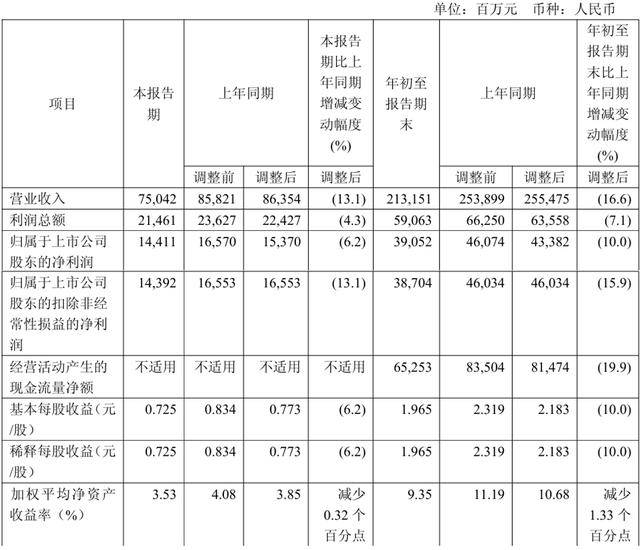
Group 1 - China Shenhua's net profit for the first three quarters decreased by 10% year-on-year, with total revenue of 213.15 billion yuan, down 16.6% [1][2] - Dongfang Caifu reported a 51% increase in net profit for the first three quarters, reaching 90.97 billion yuan, a 50.57% year-on-year growth [3][4] - Geer Co. achieved a net profit growth of 10.33% year-on-year, totaling 25.87 billion yuan, despite a 2.21% decline in revenue [5][6] Group 2 - Changan Automobile's net profit fell by 14.66% year-on-year, with total revenue of 1,149.27 billion yuan, up 3.58% [7][8] - Zhinanzhen reported a significant net profit increase of 205% year-on-year, reaching 1.16 billion yuan, driven by growth in financial information services [9] - Dongpeng Beverage's net profit grew by 42% year-on-year, totaling 37.61 billion yuan for the first three quarters [10][11] Group 3 - Ping An Bank's net profit decreased by 2.8% year-on-year, with total revenue of 1,006.68 billion yuan, down 9.8% [12][13] - Goldwind Technology reported a 171% increase in net profit for the third quarter, reaching 25.84 billion yuan for the first three quarters [15] - Yilong Co. achieved a net profit growth of 113.97% year-on-year, totaling 19.88 billion yuan in the third quarter [16][17] Group 4 - Tongwei Co. reported a net loss of 5.27 billion yuan for the first three quarters, with total revenue of 646 billion yuan, down 5.38% [18][19] - CITIC Securities' net profit increased by 52% year-on-year, reaching 231.59 billion yuan for the first three quarters [20] - Wanhua Chemical's net profit decreased by 17.45% year-on-year, totaling 91.57 billion yuan for the first three quarters [21] Group 5 - Luoyang Molybdenum's net profit increased by 96.4% year-on-year, reaching 142.80 billion yuan for the first three quarters [22] - Xiamen Tungsten's net profit grew by 41.54% year-on-year, totaling 5.52 billion yuan for the first three quarters [44] - Huazhong Cement's net profit increased by 76% year-on-year, reaching 20.04 billion yuan for the first three quarters [41]





江苏金租:2025年前三季度净利润约24.46亿元
Mei Ri Jing Ji Xin Wen· 2025-10-24 13:52
Group 1: Company Performance - Jiangsu Jinzu reported a revenue of approximately 4.638 billion yuan for the first three quarters of 2025, representing a year-on-year increase of 17.15% [1] - The net profit attributable to shareholders was about 2.446 billion yuan, showing a year-on-year increase of 9.82% [1] - Basic earnings per share decreased by 17.65% to 0.42 yuan [1] Group 2: Market Context - As of the report date, Jiangsu Jinzu's market capitalization stood at 34.8 billion yuan [2] - The Chinese innovative drug sector has seen significant overseas licensing sales totaling 80 billion dollars this year [2] - The secondary market for biopharmaceuticals is experiencing a surge, while the primary market is facing challenges in fundraising [2]
江苏金租(600901) - 江苏金租:投资者关系管理办法
2025-10-24 13:47
江苏金融租赁股份有限公司 投资者关系管理办法 第一章 总则 (五)增加信息披露透明度,改善公司治理。 第五条 投资者关系工作的基本原则是: 第一条 为推动江苏金融租赁股份有限公司(以下简称"公司") 完善公司治理结构,规范公司投资者关系管理工作,促进公司在资本 市场良性发展,特制订本办法。 第二条 投资者关系是指公司与投资者及潜在投资者之间的关 系。投资者关系管理是指公司通过信息披露与交流等各种方式的投资 者关系活动,加强与投资者和潜在投资者之间的沟通,增进投资者对 公司了解和认同,提升公司治理水平,以实现公司整体利益最大化和 股东利益最大化的战略管理行为。 第三条 公司投资者关系管理工作应严格遵守《中华人民共和国 公司法》《中华人民共和国证券法》等有关法律法规,符合中国证券 监督管理委员会《上市公司投资者关系管理工作指引》要求及上海证 券交易所有关业务规定。除非得到明确授权并经过培训,公司任何董 事、高级管理人员和员工不得在投资者关系活动中代表公司发言。 第二章 目的与基本原则 第四条 投资者关系工作的目的是: (一)促进公司与投资者之间的良性关系,增进投资者对公司的 进一步了解和熟悉; (二)建立稳定和优 ...
江苏金租(600901) - 江苏金租:信息披露暂缓与豁免管理办法
2025-10-24 13:47
江苏金融租赁股份有限公司 信息披露暂缓与豁免管理办法 第一条 为规范江苏金融租赁股份有限公司(以下简称"公司") 和其他信息披露义务人信息披露暂缓、豁免行为,加强信息披露监管, 保护投资者合法权益,根据《中华人民共和国保守国家秘密法》《中 华人民共和国证券法》《上市公司信息披露管理办法》《上市公司信 息披露暂缓与豁免管理规定》《上海证券交易所股票上市规则》及《 公司章程》等规定,制定本办法。 第二条 公司和其他信息披露义务人暂缓、豁免披露临时报告, 在定期报告、临时报告中豁免披露中国证券监督管理委员会和上海证 券交易所规定或者要求披露的内容,适用本规定。 第三条 公司和其他信息披露义务人应当真实、准确、完整、及 时、公平地披露信息,不得滥用暂缓或者豁免披露规避信息披露义务、 误导投资者,不得实施内幕交易、操纵市场等违法行为。 第四条 公司和其他信息披露义务人应当审慎确定信息披露暂缓、 豁免事项,履行内部审核程序后实施。 (一)暂缓、豁免披露原因已消除; (二)有关信息难以保密; 第五条 公司和其他信息披露义务人有确实充分的证据证明拟披 露的信息涉及国家秘密或者其他因披露可能导致违反国家保密规定、 管理要求的事 ...
江苏金租(600901) - 江苏金租:第四届监事会第九次会议决议公告
2025-10-24 13:45
江苏金融租赁股份有限公司 第四届监事会第九次会议决议公告 本公司监事会及全体监事保证本公告内容不存在任何虚假记载、 误导性陈述或者重大遗漏,并对其内容的真实性、准确性和完整性承 担法律责任。 江苏金融租赁股份有限公司(以下简称"公司")第四届监事会 第九次会议通知及议案于 2025 年 10 月 14 日以书面形式发出。会议 于 2025 年 10 月 24 日以现场会议的方式在公司召开。会议应出席监 事 6 人,实际出席监事 6 人。本次会议由陈凤艳女士主持。本次会议 的召集召开程序符合《公司法》《公司章程》及《监事会议事规则》 等有关规定,表决所形成的决议合法、有效。经与会监事的认真审议, 表决和通过了如下议案: 证券代码:600901 证券简称:江苏金租 公告编号:2025-053 一、关于《2025 年第三季度报告》的议案 表决结果:同意【 6 】票,反对【 0 】票,弃权【 0 】票。 二、关于 2025 年中期利润分配方案的议案 表决结果:同意【6】票,反对【0】票,弃权【0】票。 特此公告。 江苏金融租赁股份有限公司监事会 2025 年 10 月 25 日 ...
江苏金租(600901) - 江苏金租:第四届董事会第十四次会议决议公告
2025-10-24 13:45
证券代码:600901 证券简称:江苏金租 公告编号:2025-052 江苏金融租赁股份有限公司 第四届董事会第十四次会议决议公告 本公司董事会及全体董事保证本公告内容不存在任何虚假记载、误 导性陈述或者重大遗漏,并对其内容的真实性、准确性和完整性承担法 律责任。 江苏金融租赁股份有限公司(以下简称"公司")第四届董事会第 十四次会议的通知于 2025 年 10 月 14 日以书面形式发出。本次会议于 2025 年 10 月 24 日以现场会议的方式在公司召开。会议应出席董事 11 人,实际出席董事 10 人。吴尚岗董事因工作原因未能亲自出席本次会 议,已书面委托王海涛董事代为行使表决权。会议由董事长周柏青先生 主持。本次会议的召集召开程序符合《公司法》《公司章程》及《董事 会议事规则》等有关规定。本次会议审议通过了以下议案: 一、审议《关于<2025 年第三季度报告>的议案》 表决结果:同意【 11 】票,反对【 0 】票,弃权【 0 】票。 本议案已经第四届董事会审计委员会第八次会议审议通过。 二、审议《关于 2025 年中期利润分配方案的议案》 表决结果:同意【 11 】票,反对【 0 】票,弃权【 0 ...
江苏金租(600901) - 江苏金租:关于2025年中期利润分配方案的公告
2025-10-24 13:45
江苏金融租赁股份有限公司 关于 2025 年中期利润分配方案的公告 本公司董事会及全体董事保证本公告内容不存在任何虚假记载、 误导性陈述或者重大遗漏,并对其内容的真实性、准确性和完整性承 担法律责任。 重要内容提示 ●每股分配比例:A 股每 10 股派发现金红利人民币 1.30 元(含 税)。 ●本次利润分配以实施权益分派股权登记日登记的总股本为基 数,具体日期将在权益分配实施公告中明确。 证券代码:600901 证券简称:江苏金租 公告编号:2025-054 根据公司2024年度股东大会授权,本次利润分配方案经董事会审 议通过后实施。 二、公司履行的决策程序 2025年5月19日,公司2024年度股东大会审议通过《关于提请股 东大会授权董事会决定2025年中期利润分配事项的议案》,已授权董 事会在符合利润分配条件的情况下制定并实施具体的2025年中期利 润分配方案。 (一)董事会会议的召开、审议和表决情况 公司于2025年10月24日召开第四届董事会第十四次会议,审议通 过了《关于2025年中期利润分配方案的议案》,本方案符合公司章程 规定的利润分配政策。 ●在实施权益分派的股权登记日前若公司总股本发生变动 ...
江苏金租:前三季度净利润同比增长9.82%
Xin Lang Cai Jing· 2025-10-24 13:42
Core Insights - Jiangsu Jinzu (600901) reported a third-quarter revenue of 1.632 billion yuan, representing a year-on-year increase of 21.51% [1] - The net profit for the third quarter was 882 million yuan, showing a year-on-year growth of 11.24% [1] - For the first three quarters, the total revenue reached 4.638 billion yuan, up 17.15% year-on-year, while net profit was 2.446 billion yuan, reflecting a 9.82% increase [1] - The basic earnings per share stood at 0.42 yuan [1]
江苏金租(600901) - 2025 Q3 - 季度财报
2025-10-24 13:40
Financial Performance - The company's operating revenue for the third quarter reached CNY 163,192.47 million, an increase of 21.51% compared to the same period last year[5] - The net profit attributable to shareholders was CNY 88,161.73 million, reflecting an 11.24% year-on-year growth[5] - The net profit after deducting non-recurring gains and losses was CNY 87,744.21 million, up by 11.02% year-on-year[5] - Net profit for the first three quarters of 2025 reached ¥2.45 billion, compared to ¥2.23 billion in the same period of 2024, reflecting a year-over-year increase of 9.9%[26] - Operating income for the first three quarters of 2025 was ¥4.64 billion, an increase of 17.2% from ¥3.96 billion in the first three quarters of 2024[26] - The company reported a net interest income of ¥4.72 billion for the first three quarters of 2025, compared to ¥3.89 billion in the same period of 2024, an increase of 21.4%[26] Assets and Liabilities - Total assets increased by 18.04% year-to-date, reaching CNY 16,201,113.36 million[6] - Total assets increased to RMB 16,201,113.36 million, up from RMB 13,725,477.82 million year-over-year, representing a growth of approximately 17.9%[16] - Total liabilities rose to RMB 13,654,876.09 million, compared to RMB 11,267,333.66 million in the previous year, marking an increase of about 21.1%[16] - Total liabilities amounted to ¥136.55 billion as of September 30, 2025, up from ¥112.67 billion at the end of 2024, indicating a growth of 21.2%[25] Shareholder Information - The number of ordinary shareholders at the end of the reporting period was 59,022[12] - The total equity attributable to shareholders increased to ¥25.01 billion as of September 30, 2025, from ¥24.13 billion at the end of 2024, a growth of 3.6%[25] Earnings Per Share - The basic earnings per share for the quarter was CNY 0.15, a decrease of 16.67% compared to the previous year[6] - Basic earnings per share (EPS) for the first three quarters of 2025 is CNY 0.42, compared to CNY 0.51 in the same period of 2024[28] - Diluted earnings per share (EPS) increased to CNY 0.42 from CNY 0.40 year-over-year[28] Cash Flow - The company reported a net cash flow from operating activities of CNY -428,139.07 million year-to-date[5] - Net cash flow from operating activities for the first three quarters of 2025 is -CNY 4.28 billion, a decline from -CNY 1.11 billion in the same period of 2024[28] - Total cash inflow from operating activities reached CNY 81.99 billion, up from CNY 66.91 billion year-over-year[28] - Cash outflow from operating activities increased to CNY 86.27 billion from CNY 68.02 billion in the previous year[28] - Cash flow from investing activities resulted in a net outflow of CNY 31.77 million, compared to a net outflow of CNY 724.26 million in 2024[29] - Cash flow from financing activities generated a net inflow of CNY 2.71 billion, compared to CNY 1.33 billion in the same period of 2024[29] - The ending cash and cash equivalents balance for the first three quarters of 2025 is CNY 3.21 billion, up from CNY 2.33 billion in 2024[29] Non-Recurring Gains and Losses - Non-recurring gains totaled CNY 417.52 million for the quarter, with government subsidies contributing CNY 133.04 million[10] Capital Adequacy and Ratios - The weighted average return on equity decreased by 0.59 percentage points to 3.59%[6] - The company's core Tier 1 capital adequacy ratio decreased to 16.02% from 17.91% year-over-year[18] - The provision coverage ratio decreased to 403.01% from 430.27% year-over-year[19] - The non-performing financing lease asset ratio improved slightly to 0.90% from 0.91% year-over-year[19] - The net interest margin for leasing business increased to 3.75% from 3.67% year-over-year[19] Leasing Assets - The total amount of receivable lease payments reached RMB 14,749,560.42 million, up from RMB 12,348,281.03 million year-over-year[16] - The company reported a total of RMB 15,242,545.05 million in leasing assets, an increase from RMB 12,780,322.52 million year-over-year[22] - The proportion of normal classified assets increased to 96.90% from 96.34% year-over-year[21] Other Information - The company has not reported any changes in major shareholders or significant financing activities during the reporting period[14] - The company issued bonds worth CNY 6 billion in 2025, down from CNY 7 billion in 2024[29] - The company did not apply new accounting standards for the year 2025[30]