
QDPI(601298)

Search documents
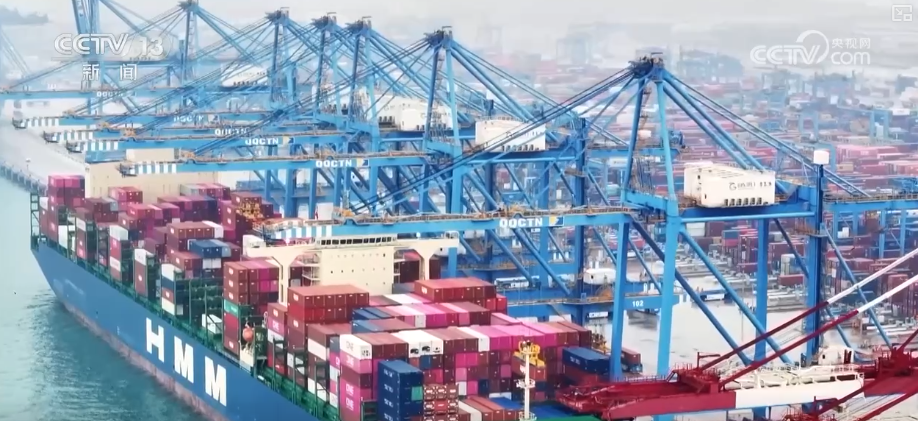
码头新年“上新”万吨巨轮“靠港即开工” 港口“朋友圈”扩容共绘蔚蓝新机遇
Yang Shi Wang· 2026-01-19 08:14
Core Viewpoint - Qingdao Port is enhancing its operational efficiency through new hardware and software upgrades, significantly improving the international transportation channel system [1] Group 1: Operational Efficiency - The new "vacuum automatic mooring system" allows ships to dock in just 30 seconds, reducing the traditional 30-minute docking time [8][11] - This efficiency is expected to save over 200 hours of docking time annually, equivalent to adding more than 10 additional vessel operations per berth each year [11] - The upgraded "Berth Intelligent System 2.0" enables seamless operations, with an increase in intelligent berthing accuracy from 75% to 90% and a reduction in planning time from 2 hours to 1 minute [14][16] Group 2: Expansion of Trade Routes - Qingdao Port has recently opened a new direct foreign trade route to Brisbane and Sydney, significantly reducing transportation time compared to previous transit routes [20] - In 2025, Qingdao Port added 20 new container routes and 5 new inland sea-rail intermodal stations, bringing the total number of foreign trade routes to nearly 240, connecting over 700 ports in more than 180 countries and regions [23] Group 3: Strategic Focus - The port is focusing on digital transformation and the construction of a smart and green port, aiming to inject new momentum into high-quality economic and social development [26]

青岛港1月15日获融资买入561.43万元,融资余额1.27亿元
Xin Lang Cai Jing· 2026-01-16 03:32
Group 1 - Qingdao Port's stock price increased by 0.36% on January 15, with a trading volume of 107 million yuan [1] - The financing buy-in amount for Qingdao Port on the same day was 5.6143 million yuan, while the financing repayment was 7.7251 million yuan, resulting in a net financing outflow of 2.1108 million yuan [1] - As of January 15, the total balance of margin trading for Qingdao Port was 12.7 million yuan, which accounts for 0.28% of its market capitalization and is above the 90th percentile of the past year [1] Group 2 - Qingdao Port International Co., Ltd. was established on November 15, 2013, and listed on January 21, 2019, with its main business involving the loading and unloading of various goods, logistics, and port value-added services [2] - The revenue composition of Qingdao Port includes 56.72% from loading and related services, 36.96% from logistics and port value-added services, and smaller percentages from other port-related services [2] - For the period from January to September 2025, Qingdao Port achieved an operating income of 14.238 billion yuan, representing a year-on-year growth of 1.86%, and a net profit attributable to shareholders of 4.180 billion yuan, with a growth of 6.33% [2] Group 3 - Qingdao Port has distributed a total of 13.77 billion yuan in dividends since its A-share listing, with 6.638 billion yuan distributed over the past three years [3] - As of September 30, 2025, the number of shareholders for Qingdao Port was 38,300, an increase of 7.23% from the previous period [3] - Notable institutional holdings include the Southern S&P China A-share Large Cap Dividend Low Volatility ETF, which increased its holdings by 2.884 million shares, and the Hong Kong Central Clearing Limited, which increased its holdings by 3.0728 million shares [3]
青岛港涨0.36%,成交额1.07亿元,后市是否有机会?
Xin Lang Cai Jing· 2026-01-15 07:26
Core Viewpoint - Qingdao Port is positioned favorably due to its strategic location and recent agreements, which are expected to enhance its operational performance and growth potential [2][6]. Group 1: Company Overview - Qingdao Port International Co., Ltd. is located in Shandong Province and was established on November 15, 2013, with its listing date on January 21, 2019 [6]. - The company primarily engages in the handling of containers, metal ores, coal, crude oil, and provides logistics and port value-added services [6]. - Revenue composition includes 56.72% from handling and related services, 36.96% from logistics and port value-added services, and smaller percentages from other port-related services [6]. Group 2: Financial Performance - For the period from January to September 2025, Qingdao Port achieved operating revenue of 14.238 billion yuan, representing a year-on-year growth of 1.86%, and a net profit attributable to shareholders of 4.180 billion yuan, up 6.33% year-on-year [6]. - The company has distributed a total of 13.770 billion yuan in dividends since its A-share listing, with 6.638 billion yuan distributed over the past three years [7]. Group 3: Market Activity - On January 15, Qingdao Port's stock rose by 0.36%, with a trading volume of 107 million yuan and a turnover rate of 0.24%, bringing the total market capitalization to 54.006 billion yuan [1]. - The stock has seen a net inflow of 7.5767 million yuan from major investors today, ranking 7th out of 35 in its industry [3][4]. Group 4: Strategic Partnerships - Huawei has signed a cooperation agreement with Qingdao Port to accelerate the development of smart port operations in major domestic ports [3]. Group 5: Industry Context - Qingdao Port is strategically located near South Korea and benefits from the China-South Korea Free Trade Agreement, enhancing its role as a key player in the Northeast Asia port network [2]. - The port is recognized as a significant node in the Belt and Road Initiative and is the only comprehensive operator in the Qingdao Port area, which is the seventh largest port globally [2].
青岛港(06198) - 海外监管公告
2026-01-14 23:40
海外監管公告 香港交易及結算所有限公司及香港聯合交易所有限公司對本公告的內容概不負責,對其準確性或完整性 亦不發表任何聲明,並明確表示,概不對因本公告全部或任何部分內容而產生或因依賴該等內容而引致 的任何損失承擔任何責任。 Qingdao Port International Co., Ltd. 青島港國際股份有限公司 (於中華人民共和國成立的股份有限公司) (股份代號:06198) 本公告乃青島港國際股份有限公司(「本公司」)根據香港聯合交易所有限公司證券上 市規則第13.10B條作出。 以下為本公司於上海證券交易所網站(www.sse.com.cn)刊發之《青島港國際股份有限 公司第五屆董事會第三次會議決議公告》,僅供參閱。 承董事會命 青島港國際股份有限公司 董事長 蘇建光 中國·青島,2026年1月15日 於本公告日期,本公司執行董事為蘇建光先生及張保華先生;本公司非執行董事為李武成先生、吳 宇女士、崔亮先生及王芙玲女士;及本公司獨立非執行董事為鄒國強先生、李曉慧女士及姜省路先 生。 青岛港国际股份有限公司 第五届董事会第三次会议决议公告 本公司董事会及全体董事保证本公告内容不存在任何虚假记载、误导性 ...
青岛港国际股份有限公司第五届董事会第三次会议决议公告
Shang Hai Zheng Quan Bao· 2026-01-14 18:58
Group 1 - The board of directors of Qingdao Port International Co., Ltd. held its third meeting of the fifth session from January 7 to January 14, 2026, via written resolutions [2] - The meeting was conducted in accordance with the company's articles of association and relevant laws, with all board members participating in the voting except for the related director who abstained [2] - The board approved the proposal to amend the articles of association of its wholly-owned subsidiary, Qingdao Port Lianhai International Logistics Co., Ltd. [2][4] Group 2 - The voting results showed 8 votes in favor, with no votes against or abstentions [3] - The proposal had previously been approved by the independent directors in a separate meeting before being submitted to the board for review [4] - The announcement was officially made by Qingdao Port International Co., Ltd. on January 15, 2026 [6]
青岛港:第五届董事会第三次会议决议公告
Zheng Quan Ri Bao· 2026-01-14 11:47
Core Viewpoint - Qingdao Port announced the approval of amendments to the articles of association of Qingdao Port Lianhai International Logistics Co., Ltd. during the third meeting of its fifth board of directors [1] Group 1 - The board of directors of Qingdao Port held its third meeting to discuss and approve the proposed amendments [1]
青岛港(601298) - H股公告
2026-01-14 09:00
香港交易及結算所有限公司及香港聯合交易所有限公司對本公告的內容概不負責,對其準確性或完 整性亦不發表任何聲明,並明確表示,概不對因本公告全部或任何部分內容而產生或因依賴該等內 容而引致的任何損失承擔任何責任。 Qingdao Port International Co., Ltd. 青島港國際股份有限公司 (於中華人民共和國成立的股份有限公司) (股份代號:06198) 公告 有關併表港聯海物流之關連交易 本次併表 於2026年1月14日,董事會審議通過了關於修訂港聯海物流章程的議案。本次修訂完 成前,港聯海物流由青港物流(本公司的全資附屬公司)及中遠物流各持有50%的股 權,港聯海物流財務報表不納入青港物流或中遠物流之合併財務報表。由於青港物流 已實際控制港聯海物流的主要生產經營活動,因此青港物流及中遠物流擬修訂港聯海 物流章程以反映前述情況。本次修訂完成後,雖然港聯海物流股權結構未發生改變, 但青港物流在港聯海物流股東會的表決權將得到進一步提升。因此,青港物流將取得 港聯海物流之控制權,並將其納入本集團之合併財務報表。港聯海物流將成為本公司 的附屬公司。 —1— 香港上市規則之涵義 於本公告日期,中遠物流 ...
青岛港拟并表港联海物流
Zhi Tong Cai Jing· 2026-01-14 08:49
Core Viewpoint - The announcement indicates that Qingdao Port (601298) will revise the articles of association of Ganglianhai Logistics to reflect the actual control of operations by Qingdao Logistics, leading to the consolidation of financial statements and enhanced voting rights for Qingdao Logistics [1][2] Group 1 - The board of directors approved the revision of the articles of association for Ganglianhai Logistics, which is currently jointly owned by Qingdao Logistics and COSCO Logistics, each holding 50% [1] - Following the revision, Qingdao Logistics will gain control over Ganglianhai Logistics, allowing it to consolidate the financial statements of Ganglianhai Logistics into its own [1][2] - Since 2025, Qingdao Logistics has effectively managed the operations and business policies of Ganglianhai Logistics, indicating a significant shift in operational control [1][2] Group 2 - The consolidation of Ganglianhai Logistics' financial performance into Qingdao Logistics' financial statements is expected to enhance the overall financial status and operational performance of the group [2] - The financial performance of Ganglianhai Logistics will be included in the consolidated financial statements starting from January 1, 2026, which is anticipated to increase the group's revenue and total profit [2]
青岛港(06198)拟并表港联海物流
智通财经网· 2026-01-14 08:45
鉴于港联海物流生产经营主导权已逐步转移至青港物流,青港物流及中远物流拟修订港联海物流章程以 反映前述情况。本次修订将进一步提升青港物流在港联海物流股东会的表决权,青港物流将相应地取得 港联海物流的控制权,并将其纳入本集团的合并财务报表。本次并表将有助于更完整、真实、准确地反 映青港物流的整体财务状况及经营业绩,提升本集团财务报告质量。 经本公司审计师信永中和确认,港联海物流的财务业绩将于2026年1月1日起被纳入本集团的合并财务报 表。本公司预计本集团的营业收入和利润总额均将因为本次并表而有所增加。本次并表对本集团整体财 务状况和经营业绩具有积极影响。 智通财经APP讯,青岛港(06198)发布公告,于2026年1月14日,董事会审议通过了关于修订港联海物流 章程的议案。本次修订完成前,港联海物流由青港物流(本公司的全资附属公司)及中远物流各持有50% 的股权,港联海物流财务报表不纳入青港物流或中远物流的合并财务报表。由于青港物流已实际控制港 联海物流的主要生产经营活动,因此青港物流及中远物流拟修订港联海物流章程以反映前述情况。本次 修订完成后,虽然港联海物流股权结构未发生改变,但青港物流在港联海物流股东会的 ...
青岛港(06198) - 公告 有关併表港联海物流之关连交易
2026-01-14 08:39
香港交易及結算所有限公司及香港聯合交易所有限公司對本公告的內容概不負責,對其準確性或完 整性亦不發表任何聲明,並明確表示,概不對因本公告全部或任何部分內容而產生或因依賴該等內 容而引致的任何損失承擔任何責任。 Qingdao Port International Co., Ltd. 青島港國際股份有限公司 (於中華人民共和國成立的股份有限公司) (股份代號:06198) 公告 有關併表港聯海物流之關連交易 本次併表 於2026年1月14日,董事會審議通過了關於修訂港聯海物流章程的議案。本次修訂完 成前,港聯海物流由青港物流(本公司的全資附屬公司)及中遠物流各持有50%的股 權,港聯海物流財務報表不納入青港物流或中遠物流之合併財務報表。由於青港物流 已實際控制港聯海物流的主要生產經營活動,因此青港物流及中遠物流擬修訂港聯海 物流章程以反映前述情況。本次修訂完成後,雖然港聯海物流股權結構未發生改變, 但青港物流在港聯海物流股東會的表決權將得到進一步提升。因此,青港物流將取得 港聯海物流之控制權,並將其納入本集團之合併財務報表。港聯海物流將成為本公司 的附屬公司。 —1— 香港上市規則之涵義 於本公告日期,中遠物流 ...