
QDPI(601298)

Search documents
外贸新航线 直连大洋洲
Zhong Guo Zi Ran Zi Yuan Bao· 2026-01-14 02:37
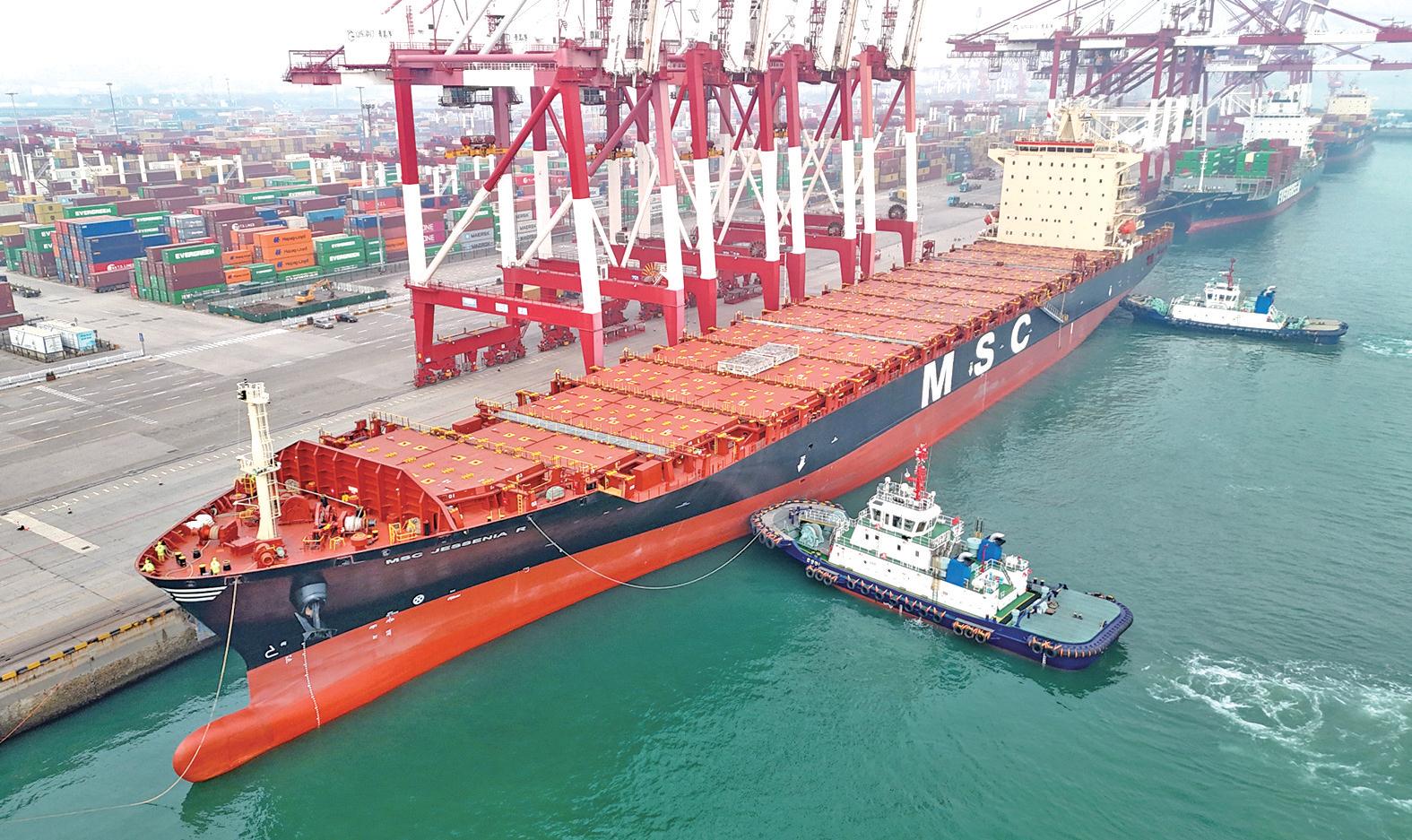
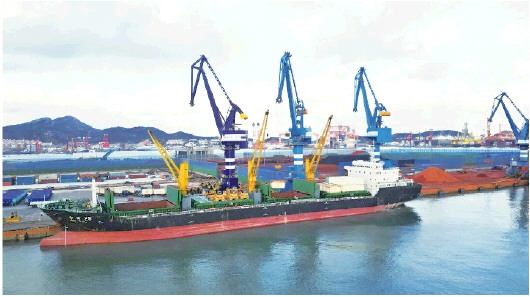
1月4日,地中海航运澳洲新航线首航船舶"地中海杰西尼亚"轮停靠山东港口青岛港,标志着该港2026年首条外贸直航航线正式开通。该航线直 连澳大利亚布里斯班与悉尼,构建起"中国北方—大洋洲"高效物流新通道。作为北方航线最密集的港口,青岛港目前拥有近240条外贸航线,联通 全球180多个国家和地区的700多个港口。张进刚 摄 ...

中国港口逆风破浪 吞吐量迭破纪录,重构全球航运棋局
2 1 Shi Ji Jing Ji Bao Dao· 2026-01-09 23:07
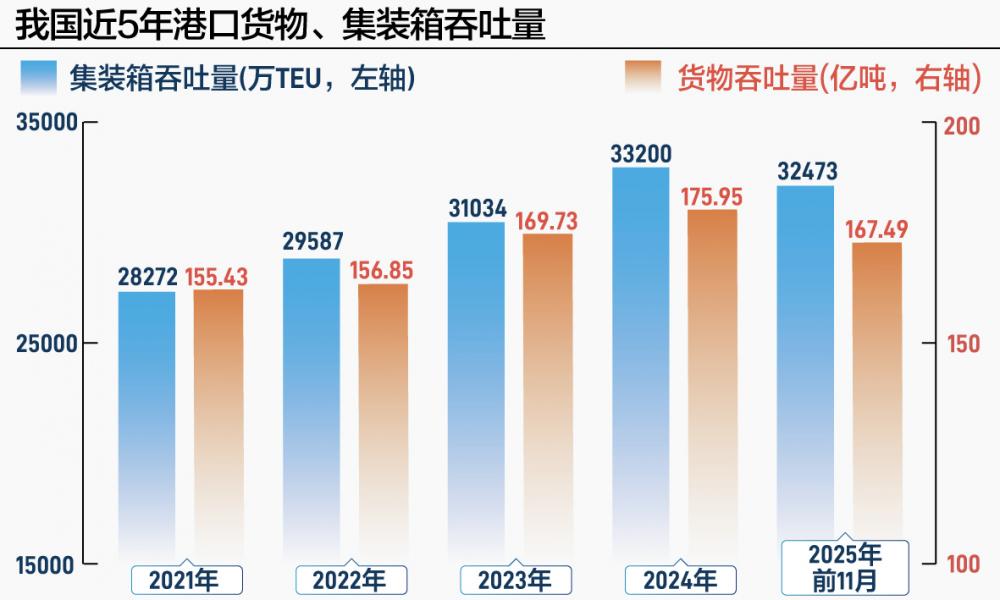
Core Insights - China's ports have demonstrated resilience and growth in cargo throughput despite global trade uncertainties, with major ports like Shanghai and Ningbo-Zhoushan maintaining their positions at the forefront of global shipping [1][3][4] Group 1: Performance Metrics - In the first eleven months of 2025, China's ports achieved a cargo throughput of 16.75 billion tons, marking a year-on-year increase of 4.4% [3] - Shanghai Port's container throughput reached 55.06 million TEUs, maintaining its status as the world's busiest port for the sixteenth consecutive year [8] - Ningbo-Zhoushan Port became the first global port to exceed 1.4 billion tons in annual cargo throughput [3][8] Group 2: Structural Changes and Trends - China's ports are transitioning from scale advantages to becoming supply chain hubs, enhancing their roles in logistics and distribution [2][4] - The growth in throughput is attributed to improved competitiveness in the global shipping system and the implementation of policies supporting smart and green shipping [3][4] Group 3: Market Expansion and Trade Dynamics - China's share of global container exports increased from 34% in 2019 to 38% in 2025, reflecting the resilience of Chinese manufacturing and technology [9] - New trade routes are being established, with ports like Beibu Gulf opening international routes to the Middle East and others expanding to emerging markets in Latin America and Africa [9][10] Group 4: Future Outlook and Innovations - The development of smart and green shipping policies is expected to accelerate the digitalization and automation of ports, enhancing their roles as intelligent hubs [16] - The establishment of new supply chain structures and trade routes will require ports to adapt and optimize their operations in response to geopolitical changes [12][15]


全国集装箱吞吐量前15港口出炉
2 1 Shi Ji Jing Ji Bao Dao· 2026-01-09 15:17
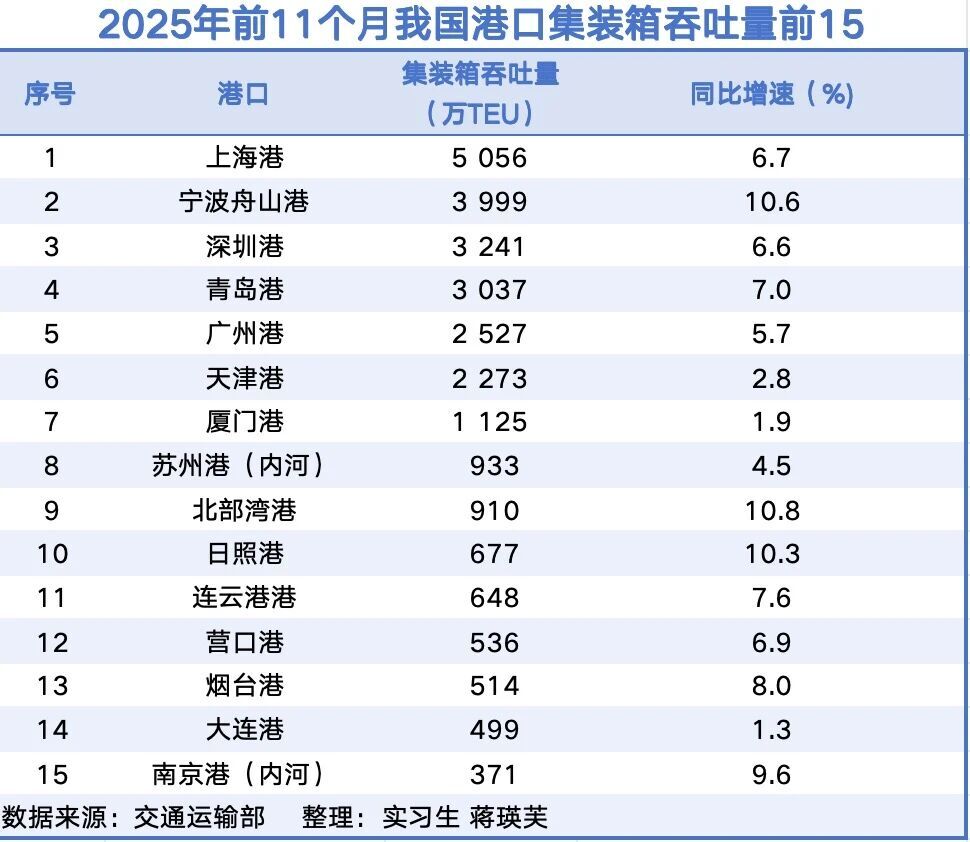
Core Insights - Despite global trade uncertainties, China's port throughput has shown resilient growth, with a total of 16.75 billion tons handled in the first eleven months of 2025, marking a 4.4% year-on-year increase [1][2] - Major ports like Shanghai and Ningbo-Zhoushan have maintained their positions as global leaders, with Ningbo-Zhoushan becoming the first port to exceed 1.4 billion tons in annual throughput and Shanghai retaining the top spot in container throughput for the sixteenth consecutive year [1][5] - The growth in port throughput is attributed to China's increasing competitiveness in the global shipping system and the implementation of policies related to free trade zones and smart and green shipping [2][3] Port Performance - In 2025, major ports in China have reported significant increases in container throughput, with Ningbo-Zhoushan at 39.99 million TEUs (10.6% increase), Shenzhen at 32.41 million TEUs (6.6% increase), and Qingdao at 30.37 million TEUs (7.0% increase) [2] - Emerging ports like Yangpu and Beibu Gulf have also shown remarkable growth, with Yangpu's container throughput increasing by 65% year-on-year [1][5] Economic Context - The stable growth in port cargo and container volumes indicates the resilience of China's economy and international trade, even amidst external instability [3][6] - China's share of global container exports has risen from 34% in 2019 to 38% in 2025, reflecting the competitiveness of Chinese manufacturing and technology [5][6] Trade Route Developments - Chinese ports are expanding into emerging markets, with new international shipping routes being established to regions like the Middle East, Latin America, and Africa [6][7] - The trade volume with ASEAN countries grew by 8.5%, and trade with the EU increased by 5.4% in the first eleven months of 2025 [6] Future Trends - The implementation of smart and green shipping policies is expected to enhance the port industry, with a focus on digitalization and automation [13] - The establishment of new shipping routes, such as the "Sea Defense Silk Road Fast Shipping" line, indicates a shift towards more efficient logistics and trade networks [7][12]


争夺出海枢纽,山东港口群加码基建
Qi Lu Wan Bao· 2026-01-09 13:53
Core Insights - The article highlights the competitive landscape among coastal ports in Shandong, driven by infrastructure investments to enhance their capabilities as key maritime gateways for Chinese exports [2][3][4][5]. Group 1: Infrastructure Developments - Yantai Port's annual cargo throughput is projected to exceed 16 million tons by 2025, reflecting a 35.5% year-on-year growth [11]. - The Qingdao Dongjiakou to Rizhao Wulian railway, with a total investment of approximately 17.577 billion yuan, is set to enhance cargo transport capacity by adding 8 million tons annually [3]. - Qingdao Port plans to invest 15.7 billion yuan to construct two new terminals, aiming to increase its comprehensive throughput capacity to 830 million tons by 2035 [4]. Group 2: Competitive Positioning - Ports in Shandong are engaged in a strategic positioning battle to become leading maritime hubs, with Jining Port aiming to solidify its status as the first inland port in northern China to handle over 100 million tons [6]. - Weifang Port is initiating a 5-million-ton channel project to increase its annual throughput by over 40 million tons, while also reducing logistics costs for local enterprises by 1.5 billion yuan [6][7]. - Yantai Port is focusing on becoming the primary trade port for China-Africa relations, with a significant increase in its cargo volume to African nations [9][10]. Group 3: Market Trends and Supply Chain Dynamics - The restructuring of global supply chains is influencing cargo throughput at major ports, with a notable increase in the importance of equipment and components in exports [9][10]. - The competition among ports is intensifying as they adapt to changes in trade structures, with Yantai Port establishing a logistics corridor to facilitate trade with over 20 African countries [11][12]. - The integration of ports into global supply chains is leading to enhanced international transit capabilities and a reduction in overall logistics costs [13].
青岛港跌1.30%,成交额1.76亿元,今日主力净流入-1270.55万
Xin Lang Cai Jing· 2026-01-07 07:42
Core Viewpoint - Qingdao Port is positioned favorably due to its strategic location and recent developments, including a partnership with Huawei to enhance smart port operations, which may lead to growth opportunities in the shipping and logistics sector [2][3]. Group 1: Company Overview - Qingdao Port International Co., Ltd. is located in Shandong Province and was established on November 15, 2013, with its listing date on January 21, 2019 [6]. - The company primarily engages in the handling of various goods, including containers, metal ores, coal, and crude oil, along with logistics and port value-added services [6]. - The revenue composition includes 56.72% from handling and related services, 36.96% from logistics and port value-added services, and smaller percentages from other port-related services [6]. Group 2: Financial Performance - For the period from January to September 2025, Qingdao Port achieved an operating income of 14.238 billion yuan, representing a year-on-year growth of 1.86%, and a net profit attributable to shareholders of 4.180 billion yuan, up 6.33% year-on-year [6]. - The company has distributed a total of 13.770 billion yuan in dividends since its A-share listing, with 6.638 billion yuan distributed over the past three years [7]. Group 3: Market Activity - On January 7, Qingdao Port's stock price fell by 1.30%, with a trading volume of 176 million yuan and a turnover rate of 0.39%, resulting in a total market capitalization of 54.395 billion yuan [1]. - The stock has shown a net outflow of 13.9072 million yuan from major investors today, with a lack of clear trends in major holdings [3][4].
青岛港1月6日获融资买入1040.52万元,融资余额1.16亿元
Xin Lang Cai Jing· 2026-01-07 01:24
Core Viewpoint - Qingdao Port's stock price increased by 1.31% on January 6, with a trading volume of 224 million yuan, indicating positive market sentiment towards the company [1] Financing Summary - On January 6, Qingdao Port had a financing buy amount of 10.41 million yuan and a financing repayment of 21.21 million yuan, resulting in a net financing outflow of 10.81 million yuan [1] - As of January 6, the total financing and securities lending balance for Qingdao Port was 116 million yuan, with the financing balance accounting for 0.25% of the circulating market value, which is above the 70th percentile of the past year [1] - The securities lending aspect showed a repayment of 48,800 shares with no shares sold on January 6, resulting in a securities lending balance of 118,900 yuan, which is below the 50th percentile of the past year [1] Company Overview - Qingdao Port International Co., Ltd. was established on November 15, 2013, and listed on January 21, 2019, with its main business involving the loading and unloading of various goods, logistics, and port value-added services [2] - The revenue composition includes 56.72% from loading and related services, 36.96% from logistics and port value-added services, and smaller percentages from other port-related services [2] - As of September 30, 2025, the number of shareholders increased by 7.23% to 38,300, with no circulating shares per capita [2] Financial Performance - For the period from January to September 2025, Qingdao Port achieved a revenue of 14.238 billion yuan, reflecting a year-on-year growth of 1.86%, and a net profit attributable to shareholders of 4.180 billion yuan, up by 6.33% [2] - The company has distributed a total of 13.770 billion yuan in dividends since its A-share listing, with 6.638 billion yuan distributed over the past three years [3] Institutional Holdings - As of September 30, 2025, the top ten circulating shareholders included Southern S&P China A-share Large Cap Dividend Low Volatility 50 ETF, which increased its holdings by 2.884 million shares [3] - Hong Kong Central Clearing Limited and ICBC Dividend Preferred Mixed A also increased their holdings, indicating growing institutional interest in Qingdao Port [3]
青岛港1月5日获融资买入1578.27万元,融资余额1.27亿元
Xin Lang Cai Jing· 2026-01-06 06:03
Group 1 - Qingdao Port's stock price increased by 0.48% on January 5, with a trading volume of 155 million yuan [1] - The financing buy-in amount for Qingdao Port on the same day was 15.78 million yuan, while the financing repayment was 8.56 million yuan, resulting in a net financing buy-in of 7.23 million yuan [1] - As of January 5, the total financing and securities lending balance for Qingdao Port was 128 million yuan, with the financing balance exceeding the 90th percentile level over the past year, indicating a high level [1] Group 2 - Qingdao Port International Co., Ltd. was established on November 15, 2013, and listed on January 21, 2019, with its main business involving the loading and unloading of various goods, logistics, and port value-added services [2] - The revenue composition of Qingdao Port includes 56.72% from loading and related services, 36.96% from logistics and port value-added services, and smaller percentages from other port-related services [2] - For the period from January to September 2025, Qingdao Port achieved an operating income of 14.24 billion yuan, a year-on-year increase of 1.86%, and a net profit attributable to shareholders of 4.18 billion yuan, up 6.33% year-on-year [2] Group 3 - Qingdao Port has distributed a total of 13.77 billion yuan in dividends since its A-share listing, with 6.64 billion yuan distributed over the past three years [3] - As of September 30, 2025, the top ten circulating shareholders of Qingdao Port included significant increases in holdings by various institutional investors, indicating growing interest [3] - Notable shareholders include the Southern S&P China A-Share Large Cap Dividend Low Volatility 50 ETF and the Hong Kong Central Clearing Limited, both of which increased their holdings compared to the previous period [3]
山东港口青岛港:电煤接卸,能源保供
Xin Hua Cai Jing· 2026-01-06 00:58
Group 1 - The core point of the article highlights that Shandong Port Qingdao completed the unloading and transfer task of 44,000 tons of supply coal on January 5, 2026, marking a successful start to the coal unloading operations for the year [1] - Qingdao Port is identified as a crucial hub for northern coal supply, focusing on core supply demands and optimizing processes for efficient unloading and transfer of coal [1] - The port's operations are aimed at ensuring regional electricity safety and heating stability, reflecting its strategic importance in the energy supply chain [1]
山东港口青岛港:电煤接卸 能源保供
Xin Hua Wang· 2026-01-06 00:45
Core Viewpoint - Shandong Port Qingdao successfully completed the unloading and transfer of 44,000 tons of supply coal on January 5, 2026, marking a strong start for coal unloading operations in the new year, which is crucial for regional power security and heating stability [1]. Group 1 - Qingdao Port is a key hub for northern coal supply, focusing on core supply demands [1]. - The port optimized processes and scientifically allocated resources to achieve fast unloading and transfer of coal [1]. - The successful operation contributes to ensuring regional electricity safety and heating stability [1].
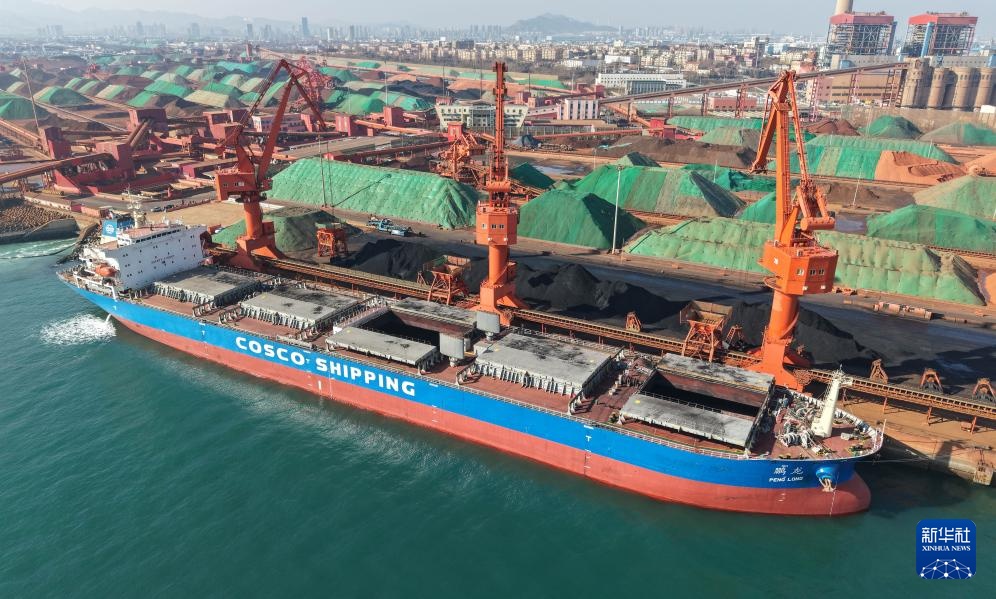
海洋生产总值2120.7亿!青岛西海岸新区向海图强逐浪高
Qi Lu Wan Bao· 2026-01-05 23:59
Core Viewpoint - Qingdao West Coast New Area is positioned as a strategic support for the development of a maritime power, with significant growth in marine economic output projected during the 14th Five-Year Plan period, increasing from 139.5 billion yuan in 2020 to 212.07 billion yuan in 2024, representing an average annual growth rate of approximately 11% [1] Group 1: Strategic Planning and System Reconstruction - The Qingdao West Coast New Area has initiated a comprehensive reform of its institutional mechanisms and policy systems to enhance marine economic development, avoiding fragmented management by integrating various committees into a unified management system [2] - A complete policy chain has been established, focusing on top-level design, industry cultivation, technological innovation, and resource support to empower marine economic development [3] Group 2: Infrastructure and Port Development - The area boasts significant natural advantages with major deep-water ports, including the Qingdao Port, which has seen cargo and container throughput increase from 630 million tons and 23.71 million TEUs in 2021 to 710 million tons and 30.87 million TEUs by 2024, ranking 4th and 5th globally respectively [4] - The Qingdao Port has become a hub for modern marine industries, with advancements such as Asia's first automated terminal and a significant increase in shipping routes, enhancing its competitiveness as an international shipping hub [4] Group 3: Technological Empowerment and Industrial Transition - The Qingdao West Coast New Area emphasizes the integration of technological innovation and industrial transformation, with a focus on developing a modern marine industry system [5][6] - The area has established numerous marine research institutions and innovation platforms, fostering a conducive environment for technological advancements and the commercialization of marine technologies [6] Group 4: Marine Industry Innovations - The region has pioneered initiatives in various sectors, including the establishment of the first deep-sea green aquaculture experimental zone in China and advancements in marine pharmaceuticals and renewable energy projects [7] - Significant projects include the world's first large-scale intelligent fishing vessel and the first factory-based seawater hydrogen production project, showcasing the area's commitment to innovation in marine industries [7] Group 5: Global Engagement and Ecological Sustainability - The Qingdao West Coast New Area actively engages in international cooperation, hosting high-level marine forums and establishing partnerships with global marine organizations [8] - The area has maintained excellent water quality and has implemented extensive ecological restoration projects, demonstrating a commitment to sustainable development alongside economic growth [9][10] Group 6: Modern Marine Governance - The establishment of a smart marine management platform integrates advanced technologies for comprehensive oversight of marine resources, enhancing governance capabilities [10] - The area is exploring innovative management models and regulatory frameworks to improve marine governance, ensuring a balance between development and ecological protection [10] Group 7: Future Outlook - As the Qingdao West Coast New Area transitions from the 14th to the 15th Five-Year Plan, it is poised to become a robust support for China's maritime power strategy through systemic reforms across various sectors [11]