
MYSE(601615)

Search documents
外交部:中方反对英国泛化国家安全概念,将经贸问题政治化
Xin Lang Cai Jing· 2025-10-23 07:50
Core Viewpoint - The Chinese government supports its enterprises in international cooperation based on mutual benefit and market principles, while also emphasizing the importance of investment security [1] Group 1: Investment Plans - Mingyang Smart Energy, a Chinese wind turbine manufacturer, plans to invest £1.5 billion in a wind turbine factory in Scotland [1] - The investment has raised concerns in the UK regarding potential threats to national security [1] Group 2: Political Context - The UK has seen a trend of politicizing economic projects, particularly those involving Chinese investments, since the introduction of the National Security and Investment Act in 2022 [1] - The UK government has prohibited or conditionally approved over ten Chinese investment projects, including taking control of a Chinese-owned steel company and requiring the sale of shares in a Chinese-acquired semiconductor firm [1] Group 3: Response to Concerns - The Chinese government opposes the broadening of the national security concept and the politicization of economic issues [1] - There are concerns that ongoing negative narratives about China could adversely affect Chinese companies' assessments of the UK investment environment [1]

明阳智慧能源集团股份公司 关于向2025年股票期权激励计划激励对象 授予股票期权的公告
Zhong Guo Zheng Quan Bao - Zhong Zheng Wang· 2025-10-23 00:58
Core Points - The company approved the stock option incentive plan for 2025, granting 20 million stock options to 260 incentive targets on October 22, 2025 [2][7][19] - The exercise price for the stock options is set at 14.03 yuan per share [13][19] - The decision was made during the 25th meeting of the third board of directors, which was legally valid and attended by all 11 directors [1][4] Summary by Sections Meeting Details - The third board of directors' 25th meeting was held on October 22, 2025, with all directors present [1] - The meeting was conducted in accordance with relevant laws and regulations [1] Stock Option Grant - The stock option grant date is October 22, 2025, with a total of 20 million options awarded [7][13] - The grant was approved after the conditions of the 2025 stock option incentive plan were met [2][19] Approval Process - The stock option plan underwent several approval stages, including a prior board meeting and a temporary shareholders' meeting [8][9] - The remuneration and assessment committee verified the eligibility of the incentive targets [19] Conditions for Granting Options - The company and the incentive targets met all conditions required for granting stock options, as outlined in the relevant regulations [10][11][19] - The company has not faced any disqualifying events in the past year that would prevent the granting of options [10][11][12] Financial Impact - The company will account for the stock options as per the relevant accounting standards, impacting financial statements over the option's validity period [21][24] - The fair value of the options was calculated using the Black-Scholes model, with specific parameters outlined [20][21]
风能展解读及十五五风电展望
2025-10-22 14:56
Summary of Wind Power Industry Conference Call Industry Overview - The wind power equipment industry has entered a mature phase, with companies adopting more stable strategies and no longer showcasing large components on a large scale. The competitive landscape is stable, with companies like United Power and XJ Electric exiting the market, indicating no imminent large-scale eliminations in the short term [1][5] - Wind turbine prices are steadily increasing, with the State Power Investment Corporation's bidding results showing a year-on-year price increase of 200-300 RMB/kW for 6-8 MW products. The possibility of significant price reductions is low due to rising raw material costs and the trend towards larger products [1][5] Market Projections - It is expected that by 2026, China's wind power equipment exports will see significant growth, with a substantial increase in equipment delivery volumes [1][6] - The delivery scale for 2025 is projected to be between 120-130 GW, with approximately 10 GW from offshore wind. For 2026, the overall delivery level may adjust to 100-110 GW, with offshore contributions of about 12-15 GW [1][9] Technological Developments - Key component quality issues are gradually being resolved, which helps reduce costs for large, high-tower wind turbines and promotes the application of offshore wind turbines rated at 12-15 MW and above [1][7][8] - Innovations in component technology focus on sliding bearings, new materials, and domestic bearings, with high tower technology also receiving attention [1][23] Regional Insights - Zhejiang and Shandong provinces are leading in offshore wind development, with significant projects expected to be operational by 2025-2026. Coastal provinces are projected to meet 10% of their electricity demand from offshore wind by the end of 2027 [1][15][16] Economic Factors - The VAT refund policy significantly impacts cash flow for offshore wind companies, effectively raising electricity prices and aiding in technology optimization and scale expansion [1][20][21] - The pricing for various wind turbine models is as follows: 6.25 MW mixed tower turbines are priced at approximately 2,100-2,200 RMB/kW, while 10 MW turbines are around 1,200 RMB/kW, and offshore turbines rated at 12-16 MW are about 2,800 RMB/kW [1][11][12] Challenges and Opportunities - The offshore wind sector faces challenges such as military and navigation issues, but demonstration projects are gradually addressing these concerns. Local government negotiations with developers can also slow progress [1][19] - Chinese wind power companies are adopting localized manufacturing strategies to mitigate trade barriers and government demands, which helps maintain profit margins despite rising local labor costs [1][13] Future Outlook - The theoretical turning point for offshore wind power commercialization is expected by 2028, with significant advancements in cost, construction capacity, and average turbine capacity anticipated by then [1][18] - The competition in offshore wind primarily affects coastal economic provinces, with limited impact on land-based wind competition [1][22] Conclusion - The wind power industry is poised for growth, driven by technological advancements, stable pricing, and increasing export opportunities. However, challenges remain in terms of local regulations and market dynamics that will need to be navigated for sustained success [1][24][30]

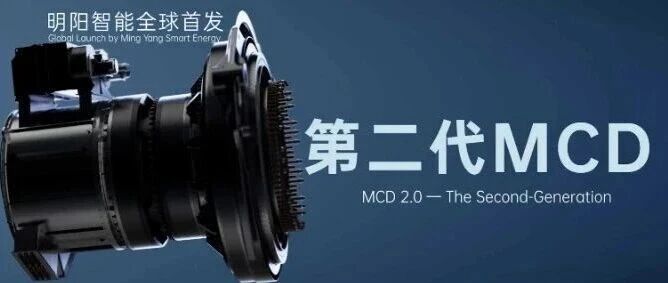
明阳重磅发布“新领军计划”:推出新一代中速紧凑半直驱产品及50MW漂浮式风电机组,定义深远海主流技术路线
中国能源报· 2025-10-22 10:14
Core Viewpoint - The article highlights the launch of the new generation of floating wind turbine technology by Mingyang Smart Energy, marking a significant advancement in the wind power industry towards commercialization and large-scale application [1][4]. Group 1: Product Launch and Innovation - Mingyang officially launched the Ocean X platform, the world's first 50MW ultra-large floating wind turbine, addressing industry pain points and customer needs [1][4]. - The innovative Y-series platform design features a "dual-head" structure with two 25MW units, specifically designed for deep-sea environments over 40 meters deep, enhancing typhoon resistance [4]. Group 2: MCD Technology Matrix - Mingyang introduced the Medium-speed Compact Drive (MCD) technology, which aims to create a new era of wind power characterized by reliability, efficiency, friendliness, economy, and intelligence [6]. - The MCD technology significantly reduces load on critical components, enhancing the lifespan of the turbines and ensuring stable operation under extreme conditions [8]. Group 3: Performance Enhancements - The new technology inherits high efficiency from the medium-speed compact drive, utilizing high-performance blades and advanced control algorithms to significantly increase power generation [9]. - The design allows for robust grid integration, adapting to various grid environments and ensuring stable operation of wind farms [10]. - The integrated design reduces the number of components and the size of the nacelle, lowering the failure rate of major components and reducing the levelized cost of electricity over the lifecycle [11]. - The AI-driven operational platform enables predictive maintenance and holistic awareness for smarter wind farm management [12]. Group 4: Comprehensive Coverage and Future Outlook - Mingyang's MCD technology covers a complete product line for both onshore and offshore applications, effectively addressing complex conditions in various regions [14]. - The technology supports DRU direct current transmission, reducing construction costs for offshore converter stations while enhancing transmission reliability [14]. - The company aims to continue leading innovation and technological advancement in the wind power sector, contributing to sustainable high-quality development and creating value for global customers [14].

CWP2025新品首发引领全球风电新风潮
中国能源报· 2025-10-22 10:14
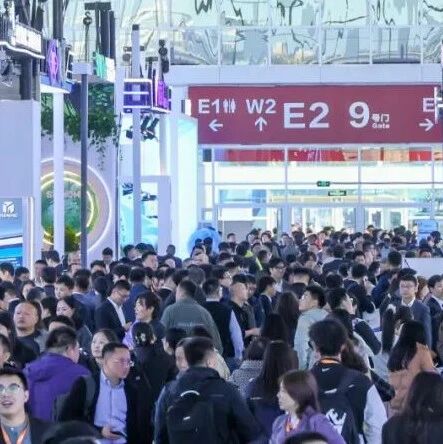
Core Viewpoint - The article highlights the advancements and innovations in the wind energy sector showcased at the Beijing International Wind Energy Conference and Exhibition (CWP2025), emphasizing China's leading position in wind power technology globally. Group 1: Turbine Innovations - Goldwind Technology introduced a trading-type wind turbine that shifts from a passive to an active generation model, potentially increasing project returns by 2% to 2.5% over its lifecycle [3] - Mingyang Smart Energy launched the world's first 50MW wind turbine, significantly increasing the maximum capacity of wind turbines and designed for deep-sea applications [7] - SANY Heavy Energy presented the SI-242 series wind turbine, capable of operating efficiently across a wide range of wind speeds, with a rotor diameter of 242 meters [8] - Envision Energy unveiled the first AI-integrated wind-storage unit, merging wind turbines, storage, and AI to enhance operational efficiency [5] Group 2: Component Innovations - Luozhou showcased the world's first 16MW offshore wind turbine main bearing, designed for large-scale wind turbine stability [23] - Pangu Intelligent launched a hydraulic motor yaw system that improves reliability and lifespan compared to traditional systems [25] - TBEA New Energy introduced the upgraded TSVG6.0 product, enhancing reliability and operational efficiency through advanced design and technology [27] Group 3: Comprehensive Solutions - China CRRC presented a comprehensive energy solution integrating wind, solar, hydrogen, and AI technologies, aimed at achieving sustainable development goals [11] - Shanghai Electric highlighted its integrated projects, including green hydrogen production and floating wind-fish integration, showcasing its capabilities in the renewable energy sector [13] - XBL Wind Power signed a strategic partnership with Multi Engineering Group to develop a dual-head floating wind power solution, focusing on cost efficiency and system performance [19]


明阳智能:10月22日召开董事会会议
Mei Ri Jing Ji Xin Wen· 2025-10-22 10:09
每经头条(nbdtoutiao)——展望"十五五"|专访贺铿:必须改变以往将资金过度集中于房屋建设和基础 设施建设的倾向,更加突出民生领域投入 每经AI快讯,明阳智能(SH 601615,收盘价:15.37元)10月22日晚间发布公告称,公司第三届第二十 五次董事会会议于2025年10月22日在公司总部大楼会议室以现场表决与通讯表决相结合的方式召开。会 议审议了《关于向2025年股票期权激励计划激励对象授予股票期权的议案》等文件。 2025年1至6月份,明阳智能的营业收入构成为:产品销售收入占比92.08%,发电及售电收入占比 4.42%,风电场发电占比2.7%,其他业务占比0.8%。 截至发稿,明阳智能市值为349亿元。 (记者 王晓波) ...
明阳智能(601615.SH):向260名激励对象授予2000万份股票期权
Ge Long Hui A P P· 2025-10-22 10:08
格隆汇10月22日丨明阳智能(601615.SH)公布,公司于2025年10月22日召开第三届董事会第二十五次会 议,审议通过了《关于向2025年股票期权激励计划激励对象授予股票期权的议案》,鉴于公司2025年股 票期权激励计划规定的授予条件已经成就,同意确定2025年10月22日为本激励计划的授予日,向260名 激励对象授予2,000万份股票期权。 ...
明阳智能:向260名激励对象授予2000万份股票期权
Ge Long Hui· 2025-10-22 10:02
格隆汇10月22日丨明阳智能(601615.SH)公布,公司于2025年10月22日召开第三届董事会第二十五次会 议,审议通过了《关于向2025年股票期权激励计划激励对象授予股票期权的议案》,鉴于公司2025年股 票期权激励计划规定的授予条件已经成就,同意确定2025年10月22日为本激励计划的授予日,向260名 激励对象授予2,000万份股票期权。 ...
明阳智能(601615) - 关于向2025年股票期权激励计划激励对象授予股票期权的公告
2025-10-22 10:01
证券代码:601615 证券简称:明阳智能 公告编号:2025-073 明阳智慧能源集团股份公司 关于向2025年股票期权激励计划激励对象 授予股票期权的公告 本公司董事会及全体董事保证本公告内容不存在任何虚假记载、误导性陈述 或者重大遗漏,并对其内容的真实性、准确性和完整性承担法律责任。 重要内容提示: 根据《上市公司股权激励管理办法》(以下简称《管理办法》)、《明阳智慧能 源集团股份公司 2025 年股票期权激励计划》(以下简称《2025 年股票期权激励计 划》)的相关规定以及公司 2025 年第三次临时股东会授权,明阳智慧能源集团股 份公司(以下简称"明阳智能"、"公司")于 2025 年 10 月 22 日召开第三届董事 会第二十五次会议,审议通过了《关于向 2025 年股票期权激励计划激励对象授 予股票期权的议案》,鉴于公司 2025 年股票期权激励计划(以下简称"本激励计 划")规定的授予条件已经成就,同意确定 2025 年 10 月 22 日为本激励计划的授 予日,向 260 名激励对象授予 2,000 万份股票期权。现将有关事项说明如下: 一、股票期权的授予情况 (一)本激励计划已履行的决策程 ...
明阳智能(601615) - 关于明阳智慧能源集团股份公司2025年股票期权激励计划授予相关事项的法律意见书
2025-10-22 10:01
致:明阳智慧能源集团股份公司 敬启者: 上海市通力律师事务所 关于明阳智慧能源集团股份公司 2025 年股票期权激励计划授予相关事项的法律意见书 上海市通力律师事务所(以下简称"本所")受明阳智慧能源集团股份公司(以下简称 "明阳智能"或"公司")委托,指派本所夏慧君律师、郑江文律师、位贝贝(以下合称"本 所律师")作为公司特聘专项法律顾问,就公司拟实施之 2025 年股票期权激励计划(以下简 称"本次股权激励计划")授予股票期权事项(以下简称"本次授予"),根据《中华人民共和 国公司法》(以下简称"《公司法》")、《中华人民共和国证券法》(以下简称"《证券法》")、 中国证券监督管理委员会(以下简称"中国证监会")发布的《上市公司股权激励管理办法》 (以下简称"《管理办法》")等法律、行政法规和其他规范性文件(以下简称"法律、法规 和规范性文件")和《明阳智慧能源集团股份公司章程》(以下简称"《公司章程》")的有 关规定出具本法律意见书。 为出具本法律意见书,本所律师已对公司向本所提交的有关文件、资料进行了我们认为 出具本法律意见书所必要的核查和验证。 本所在出具本法律意见书之前已得到公司如下保证:(1)其 ...