CNCB(601998)

Search documents
中信银行广州分行执科技金融之笔 擘画大湾区新质生产力跃升新蓝图
2 1 Shi Ji Jing Ji Bao Dao· 2025-12-26 23:07
Core Viewpoint - CITIC Bank Guangzhou Branch is leveraging technology finance to enhance direct financing channels for technology enterprises and is committed to supporting the national strategy and the development of the Guangdong-Hong Kong-Macao Greater Bay Area [1][2][3] Group 1: Financial Innovations and Services - CITIC Bank Guangzhou Branch has successfully issued a 1 billion yuan technology innovation bond, marking it as the first of its kind in the region [1] - The branch has served 1,009 specialized and innovative enterprises, achieving a 100% service coverage rate [1] - The bank is implementing a service support system focused on equity investment and integrated financial services, enhancing its role in the Greater Bay Area [2][3] Group 2: Strategic Goals and Development - The branch is aligned with the national strategy to build a competitive and vibrant Bay Area, focusing on high-quality development through technology finance [3] - It aims to create a comprehensive service ecosystem that integrates government, enterprises, and individuals, enhancing collaboration and resource sharing [4][8] - The bank is actively participating in the "Nansha Financial 30 Measures" to promote cross-border financial innovation and improve service quality [5][6] Group 3: Cross-Border Financial Services - CITIC Bank Guangzhou Branch has established itself as a leading provider of cross-border financial services, facilitating various innovative financial products and services [5][6][7] - The bank has successfully executed multiple cross-border financing projects, including the first cross-border fixed asset loan and international factoring business [5][6] - It is enhancing its service chain for foreign enterprises, offering tailored financial solutions to reduce costs and improve operational efficiency [7] Group 4: Ecosystem Development and Collaboration - The bank is building a "technology finance ecosystem" that supports the entire lifecycle of technology enterprises, from incubation to growth and listing [9] - It has organized nearly 200 events since 2025 to support over 5,000 enterprises, focusing on financing roadshows and policy seminars [8][9] - The establishment of the Xinyin Investment in Guangzhou signifies the bank's commitment to integrating into national strategies and supporting the development of strategic emerging industries [9]

中信银行(601998) - 中信银行股份有限公司董事会会议决议公告
2025-12-26 10:30
证券代码:601998 证券简称:中信银行 公告编号:临2025-087 中信银行股份有限公司董事会会议决议公告 本行董事会及全体董事保证本公告内容不存在任何虚假记载、误导性陈述或 者重大遗漏,并对其内容的真实性、准确性和完整性承担法律责任。 中信银行股份有限公司(以下简称本行)于 2025 年 12 月 10 日以书面形式 发出有关会议通知和材料,于 2025 年 12 月 26 日以书面传签形式完成召开并形 成决议。本次会议应参与表决董事 10 名,实际参与表决董事 10 名。会议的召开 符合《中华人民共和国公司法》等有关法律、行政法规、部门规章、规范性文件 和《中信银行股份有限公司章程》的规定。根据表决结果,会议审议通过了以下 议案: 一、审议通过《2025年业务连续性专项审计报告》 表决结果:赞成10票 反对0票 弃权0票 二、审议通过《关于与关联方开展授信类交易的议案》 方合英董事长、魏强董事因与该项议案存在利害关系,回避表决,该议案有 效表决票数为8票。 表决结果:赞成8票 反对0票 弃权0票 董事会同意2026年本行与中国中信金融资产管理股份有限公司开展同业借 款等授信类关联交易累计金额不超过1 ...
中信银行(601998) - 中信银行股份有限公司信息披露暂缓及豁免工作制度
2025-12-26 10:16
第二条 本工作制度所称"信息"是指所有可能对本行 证券及其衍生品种交易价格产生较大影响的信息,以及有关 上市地证券监管机构以及上市地证券交易所要求披露的其他 1 信息。 第三条 本工作制度所称"披露"是指本行及相关信息 披露义务人依据法律、行政法规、部门规章和其他有关规定, 对已经或可能对本行证券及其衍生品种交易价格产生重大影 响的信息,在规定的时间内、在符合规定条件的媒体上、按 规定的程序、以规定的方式向社会公众公布,并按规定程序 送达上市地监管部门及上市地交易所。 第四条 本行及其他信息披露义务人应当真实、准确、 完整、及时、公平地披露信息,不得滥用暂缓或者豁免披露 规避信息披露义务、误导投资者,不得实施内幕交易、操纵 市场等违法行为。 第五条 本行及其他信息披露义务人应当审慎确定信息 披露暂缓、豁免事项,履行内部审核程序后实施。 第一章 总 则 第一条 为规范中信银行股份有限公司(简称"本行") 信息披露暂缓与豁免行为,保护本行和投资者的合法权益, 根据《中华人民共和国保守国家秘密法》《上市公司信息披 露管理办法》《上市公司信息披露暂缓与豁免管理规定》(简 称"证监会《管理规定》")、《上海证券交易所股 ...
中信银行(601998) - 中信银行股份有限公司信息披露管理办法
2025-12-26 10:16
第一章 总 则 第一条 为加强中信银行股份有限公司(以下简称 "本行")信息披露工作管理,规范信息披露行为,保 护本行、股东、债权人及其他利益相关者的合法权益, 根据《中华人民共和国证券法》《上市公司信息披露管 理办法》《上海证券交易所股票上市规则》《上海证券 交易所上市公司自律监管指引第 2 号——信息披露事务 管理》《香港联合交易所有限公司证券上市规则》《内 幕消息披露指引》等相关法律、法规及部门规章的规定、 上市地证券交易所不时修改的规则及《中信银行股份有 限公司章程》(以下简称"本行章程"),制定本办法。 第二条 本办法所称"信息""重大信息"或"重 大事项"是指所有可能对本行证券及其衍生品种交易价 格产生较大影响的信息,以及有关上市地证券监管机构 以及上市地证券交易所要求披露的其他信息。 第三条 本办法所称"披露"或"公开披露"是指 本行及相关信息披露义务人将重大信息在规定的时间内、 在符合规定条件的媒体上、按规定的程序、以规定的方 式向社会公众公布,并按规定程序送达上市地证券监管 1 机构及上市地证券交易所。 第四条 本办法所称"信息披露管理部门"是指本 行董事会办公室。 第五条 本办法所称"信息 ...
中信银行(601998) - 中信银行股份有限公司内幕信息及内幕信息知情人管理工作制度
2025-12-26 10:16
第一章 总则 第一条 为规范中信银行股份有限公司(以下简称"本 行")内幕信息管理,加强内幕信息保密工作,确保信息 披露的公平公正,保护本行投资人及相关当事人的合法权 益,根据《中华人民共和国公司法》《中华人民共和国证 券法》《上市公司信息披露管理办法》《上市公司监管指 引第5号——上市公司内幕信息知情人登记管理制度》 《上海证券交易所上市公司自律监管指引第2号——信息 披露事务管理》等有关法律法规和证券交易所规则,以及 《中信银行股份有限公司章程》《中信银行股份有限公司 信息披露管理办法》《中信银行商业秘密管理办法》及其 他相关管理办法,结合本行实际情况,制定本工作制度。 第三条 董事会应当保证内幕信息知情人档案真实、 准确和完整,并按照上市地证券监督管理机构、证券交易 1 所有关监管规定以及本工作制度及时登记和报送。董事长 为主要责任人。董事会秘书负责办理本行内幕信息知情人 的登记入档及报送事宜。 第四条 董事会办公室为内幕信息及内幕信息知情人 管理的日常职能部门。 第五条 负责主办或牵头主办内幕信息事项的总行部 门、分支机构负责人是相关内幕信息和内幕信息知情人管 理的责任人。 第六条 各控股子公司及本行 ...
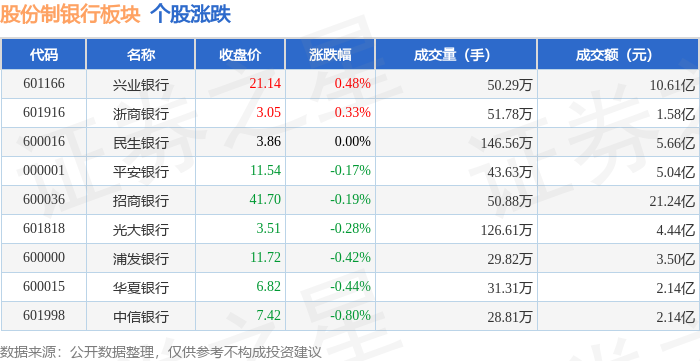
股份制银行板块12月26日跌0.18%,中信银行领跌,主力资金净流入4.48亿元
Zheng Xing Xing Ye Ri Bao· 2025-12-26 09:07
Market Overview - On December 26, the share price of the banking sector fell by 0.18% compared to the previous trading day, with CITIC Bank leading the decline [1] - The Shanghai Composite Index closed at 3963.68, up 0.1%, while the Shenzhen Component Index closed at 13603.89, up 0.54% [1] Individual Bank Performance - Industrial Bank (601166) closed at 21.14, up 0.48% with a trading volume of 502,900 shares and a transaction value of 1.061 billion [1] - Zhejiang Commercial Bank (601916) closed at 3.05, up 0.33% with a trading volume of 517,800 shares and a transaction value of 158 million [1] - Minsheng Bank (600016) closed at 3.86, unchanged with a trading volume of 1,465,600 shares and a transaction value of 566 million [1] - Ping An Bank (000001) closed at 11.54, down 0.17% with a trading volume of 436,300 shares and a transaction value of 504 million [1] - China Merchants Bank (600036) closed at 41.70, down 0.19% with a trading volume of 508,800 shares and a transaction value of 2.124 billion [1] - Everbright Bank (601818) closed at 3.51, down 0.28% with a trading volume of 1,266,100 shares and a transaction value of 444.1 million [1] - Shanghai Pudong Development Bank (600000) closed at 11.72, down 0.42% with a trading volume of 298,200 shares and a transaction value of 350 million [1] - Huaxia Bank (600015) closed at 6.82, down 0.44% with a trading volume of 313,100 shares and a transaction value of 214 million [1] - CITIC Bank (601998) closed at 7.42, down 0.80% with a trading volume of 288,100 shares and a transaction value of 214 million [1] Fund Flow Analysis - The banking sector saw a net inflow of 448 million from main funds, while retail funds experienced a net outflow of 231 million and 217 million respectively [1] - In terms of individual banks, China Merchants Bank had a main fund net inflow of 241 million, while retail funds saw a net outflow of 79.09 million [2] - Industrial Bank had a main fund net inflow of 159 million, with retail funds experiencing a net outflow of 108 million [2] - Shanghai Pudong Development Bank recorded a main fund net inflow of 62.09 million, while retail funds had a net outflow of 776,980 [2] - Everbright Bank had a main fund net inflow of 39.78 million, with retail funds seeing a net outflow of 1.45 million [2] - Ping An Bank had a main fund net inflow of 29.27 million, while retail funds experienced a net outflow of 4.01 million [2] - Minsheng Bank had a significant main fund net outflow of 67.19 million, but retail funds saw a net inflow of 27.19 million [2]




以赛为媒筑创新生态,中信银行济南分行赋能新材料产业高质量发展
Qi Lu Wan Bao· 2025-12-26 08:46
Group 1 - The sixth Shandong Province New Materials Industry Innovation and Entrepreneurship Competition concluded successfully in Jinan, organized by various provincial departments and institutions [1] - The competition aimed to stimulate innovation, promote high-quality development in the new materials industry, and cultivate new productive forces, serving as an efficient platform for industry innovation and financial empowerment [1] - Over a hundred innovative entrepreneurial teams participated, showcasing strong innovation capabilities in the new materials sector, with projects from companies like Shandong Daon Special Elastomers and Binzhou Huafang Engineering Research Institute winning top awards [1] Group 2 - China CITIC Bank Jinan Branch was the only cooperating bank and played a significant role throughout the competition, leveraging its comprehensive financial service platform to support participating enterprises [2] - The bank provided a comprehensive technology finance service plan covering policy adaptation, investment and financing support, and industry chain collaboration, establishing connections with several outstanding participating companies [2] - Moving forward, the bank aims to deepen the integration of finance, technology, and industry, using professional industry research as a driving force to support the development of new materials and strategic emerging industries in Shandong [2]
中信银行呼和浩特分行以“联合舰队”模式为内蒙古高质量发展赋能
Zhong Guo Jin Rong Xin Xi Wang· 2025-12-25 11:51
Core Viewpoint - The collaboration between CITIC Bank Hohhot Branch and CITIC Group, termed the "CITIC Joint Fleet," is focused on high-quality development in Inner Mongolia, providing significant financial support to local enterprises and government projects [1][2]. Group 1: Financial Contributions - The "CITIC Joint Fleet" has invested nearly 10 billion yuan in local government bonds and provided over 3 billion yuan in joint financing for various enterprises in Inner Mongolia this year [1]. - The bank offers comprehensive financial support through a model that integrates commercial banking, investment banking, and financial consulting, optimizing collaboration with local governments and enterprises [1]. Group 2: Strategic Focus Areas - The bank is tailoring comprehensive financial solutions around key areas such as energy strategy, green development, and rural revitalization, advancing financial services for the real economy [2]. - The "Joint Fleet" employs a combination of loans, bonds, equity, and consulting services to support key enterprises and projects in sectors like new energy, ecological agriculture, and modern chemical industries [2]. Group 3: Future Directions - CITIC Bank Hohhot Branch plans to continue expanding the scope and depth of the "Joint Fleet," focusing on ecological protection, infrastructure development, and modern energy economy in Inner Mongolia [2].
中信银行包头分行:科技金融精准赋能企业“拔节生长”
Zhong Guo Jin Rong Xin Xi Wang· 2025-12-25 11:34
Core Insights - The article highlights the commitment of China CITIC Bank's Baotou branch to support the development of Baotou's "two rare earth bases" and strategic emerging industry clusters by focusing on technology finance as a key area for high-quality growth [1] Group 1: Service Foundation and Mechanism - China CITIC Bank's Baotou branch has established a specialized mechanism for technology finance, offering preferential internal fund transfer pricing for technology loans, prioritizing approvals, and expediting processing to support technology enterprises throughout their growth lifecycle [2] - The bank has provided nearly 10 billion yuan in credit support to key technology enterprises in advanced manufacturing sectors such as steel, rare earth, and crystalline silicon photovoltaic [2] Group 2: Product Support and Financing Solutions - The bank addresses challenges faced by technology enterprises, such as "first loan difficulties, slow financing, and diverse needs," by leveraging core enterprise credit and utilizing supply chain financial products like "Commercial Bill e-loan, Order e-loan, and Distributor e-loan" to provide convenient financing support [3] - In the current year, the bank has disbursed a total of 3.252 billion yuan in online financing and has supported 8 specialized and innovative enterprises with approximately 100 million yuan through the "Science and Technology e-loan" product, along with an 800 million yuan stock pledge financing [3] Group 3: Digital Services and Financial Management - The bank has enhanced its digital service capabilities, having implemented the "Tianyuan Treasury" system for 8 private technology enterprises, enabling dynamic visibility of funds, one-click allocation, and automatic synchronization of financial and operational data [4] - The bank has completed nearly 200 million USD in foreign exchange transaction settlements this year, providing one-stop services for cross-border technology enterprises, including financing, settlement, and exchange rate hedging [4] Group 4: Scene Integration and Targeted Services - The bank actively integrates into the local innovation ecosystem, shifting from a passive service model to proactive engagement by collaborating with key park management committees to conduct policy briefings and business matching activities [5] - By 2025, the bank has served 68 technology enterprises, disbursed 6.8 billion yuan in technology finance loans, and achieved a loan balance exceeding 4.4 billion yuan, covering cutting-edge fields such as rare earth functional materials, new energy equipment, and intelligent manufacturing [5] - The bank's leadership emphasizes a commitment to serving the real economy and deepening technology finance to contribute to Baotou's development as a regional innovation hub and modern industrial system [5]
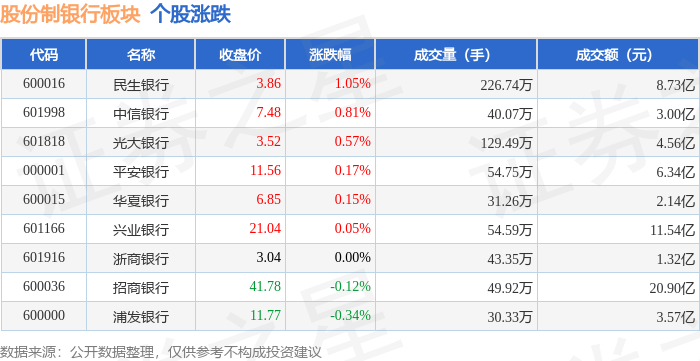
股份制银行板块12月25日涨0.12%,民生银行领涨,主力资金净流入1.22亿元
Zheng Xing Xing Ye Ri Bao· 2025-12-25 09:03
Group 1 - The banking sector saw a slight increase of 0.12% on December 25, with Minsheng Bank leading the gains [1] - The Shanghai Composite Index closed at 3959.62, up 0.47%, while the Shenzhen Component Index closed at 13531.41, up 0.33% [1] - The trading volume for Minsheng Bank was 2.2674 million shares, with a transaction value of 873 million yuan [1] Group 2 - The net inflow of main funds in the banking sector was 122 million yuan, while retail funds experienced a net outflow of 69.36 million yuan [1] - The detailed fund flow for individual banks shows that Ping An Bank had a net inflow of 51.47 million yuan from main funds [2] - Industrial Bank experienced the highest net outflow from main funds at 70.30 million yuan [2]