
HitGen(688222)

Search documents
成都先导:预计2025年度净利润为1.04亿元至1.29亿元,主营业务稳健增长和新技术业务板块的商业转化逐步显现
Cai Jing Wang· 2026-01-28 06:39
Core Viewpoint - Chengdu Xian Dao expects to achieve a net profit attributable to shareholders of 104 million to 129 million yuan in 2025, representing an increase of 52.64 million to 75.64 million yuan compared to the previous year, with a year-on-year growth of 102.50% to 147.29% [1] Financial Performance - The expected net profit after deducting non-recurring gains and losses is projected to be between 106 million and 129 million yuan, an increase of 48.56 million to 71.56 million yuan year-on-year, reflecting a growth of 84.55% to 124.59% [1] - The main reasons for the performance change include steady growth in core business and gradual commercialization of new technology business segments [1] Business Segments - The core business segment, DEL, continues to grow steadily, and the UK subsidiary's FBDD/SBDD platform has achieved phased progress [1] - The decrease in fair value change losses in non-operating gains and losses is primarily due to reduced impacts from changes in the fair value of trading financial liabilities [1]

未知机构:国信医药成都先导发布2025年年度业绩预增公告2025年公司-20260128
未知机构· 2026-01-28 02:00
Summary of the Conference Call Record Company Overview - The document pertains to **Guoxin Pharmaceutical** (国信医药), specifically regarding its performance forecast for the year 2025. Key Points and Arguments 1. **Projected Financial Performance**: - The company expects to achieve a net profit attributable to shareholders of **CNY 1.04 to 1.27 billion**, representing a growth of **102.50% to 147.29%** compared to the previous year's profit of **CNY 0.51 billion** [1] - The non-recurring net profit is projected to be **CNY 1.06 to 1.29 billion**, reflecting an increase of **84.55% to 124.59%** from last year's **CNY 0.57 billion** [1] 2. **Core Business Growth**: - The **DEL (DNA-Encoded Library)** business is experiencing steady growth with a high gross margin, contributing significantly to profit enhancement [2] - The UK subsidiary **Vernalis** is also seeing stable growth in its **FBDD/SBDD (Fragment-Based Drug Discovery/Structure-Based Drug Discovery)** platform, with milestone revenues achieved from client projects [2] 3. **New Business Segment Development**: - The **OBT (Oligonucleotide-Based Therapeutics)** segment is expanding its traditional business while leveraging delivery molecule-related services to achieve commercial transformation of small nucleic acid projects, showing significant year-on-year revenue growth [2] - The **ChemSer** segment's revenue has also increased year-on-year due to the high operational efficiency of the automated high-throughput chemical synthesis platform [2] 4. **Reduction in Fair Value Change Losses**: - The company anticipates a decrease in fair value change losses for 2025, primarily due to reduced impacts from changes in the fair value of trading financial liabilities [2]
证券代码:688222 证券简称:成都先导 公告编号:2026-003
Zhong Guo Zheng Quan Bao - Zhong Zheng Wang· 2026-01-27 23:42
Performance Forecast - The company expects a net profit attributable to shareholders of the parent company for 2025 to be between 104 million to 127 million yuan, representing an increase of 52.64 million to 75.64 million yuan compared to the previous year, which is a year-on-year increase of 102.50% to 147.29% [1] - The forecasted net profit attributable to shareholders after deducting non-recurring gains and losses is expected to be between 106 million to 129 million yuan, an increase of 48.56 million to 71.56 million yuan year-on-year, translating to a growth of 84.55% to 124.59% [1] Previous Year Performance - In 2024, the company reported a total profit of 62.76 million yuan, with a net profit attributable to shareholders of the parent company at 51.36 million yuan, and a net profit after deducting non-recurring gains and losses at 57.44 million yuan [1] - The earnings per share for 2024 was 0.13 yuan [1] Main Reasons for Performance Change - The company has established long-term stable collaborations with global partners, leading to steady progress in commercial projects. The core business segment, DEL, has maintained steady growth and high gross margins, contributing to overall profit improvement. The UK subsidiary has further solidified the development of the FBDD/SBDD platform, with revenue growth from key business segments and milestone income from DEL and FBDD/SBDD projects [1] - The OBT segment has shown significant commercial transformation, with revenue growth driven by the expansion of traditional nucleotide monomer synthesis and the introduction of delivery molecule-related services. The automated high-throughput chemical synthesis platform has also operated efficiently, boosting revenue from ChemSer services [1]
成都先导药物开发股份有限公司2025年年度业绩预增公告
Shang Hai Zheng Quan Bao· 2026-01-27 19:46
Core Viewpoint - Chengdu XianDao Pharmaceutical Development Co., Ltd. expects significant growth in net profit for the year 2025, projecting an increase of 102.50% to 147.29% compared to the previous year [1] Financial Performance Forecast - The company anticipates a net profit attributable to shareholders of the parent company between 104 million yuan and 127 million yuan for 2025, representing an increase of 52.64 million yuan to 75.64 million yuan from the previous year [1] - The expected net profit after deducting non-recurring gains and losses is projected to be between 106 million yuan and 129 million yuan, an increase of 48.56 million yuan to 71.56 million yuan, which corresponds to a growth of 84.55% to 124.59% year-on-year [1] Previous Year Performance - In 2024, the company reported a total profit of 62.76 million yuan, with a net profit attributable to shareholders of the parent company at 51.36 million yuan, and a net profit after deducting non-recurring gains and losses of 57.44 million yuan [2][1] Reasons for Performance Change - The company has established long-term stable collaborations with global partners, leading to steady growth in core business segments, particularly in DEL (Design, Synthesis, and Screening of Drug Libraries), which has maintained a high gross margin [3] - The UK subsidiary has further solidified the development of the FBDD/SBDD platform, contributing to revenue growth from key business segments and milestone income from client projects [3] - The OBT segment has shown significant commercial transformation, with revenue growth driven by the integration of delivery molecule services and the efficient operation of an automated high-throughput chemical synthesis platform [3] - The decrease in fair value losses from financial liabilities has also positively impacted the overall profit [4]
成都先导:预计2025年净利润同比增102.50%到147.29%
Zheng Quan Ri Bao· 2026-01-27 13:41
证券日报网讯 1月27日,成都先导发布公告称,公司预计2025年年度实现归属于母公司所有者的净利润 为10,400.00万元到12,700.00万元,与上年同期相比,将增加5,264.29万元到7,564.29万元,同比增 加102.50%到147.29%。 (文章来源:证券日报) ...

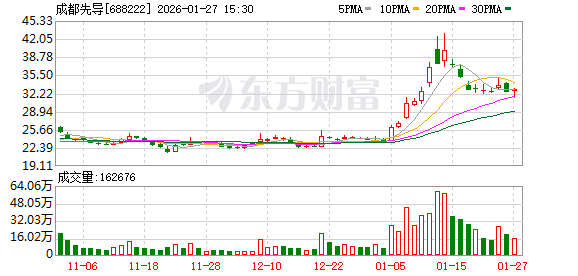
成都先导:成都先导业务广泛覆盖北美、欧洲、亚洲及大洋洲等主要医药研发市场
Zheng Quan Ri Bao Wang· 2026-01-27 13:12
证券日报网讯1月27日,成都先导在互动平台回答投资者提问时表示,成都先导作为拥有全球已知最大 的DNA编码小分子实体化合物库的药物研发公司,业务广泛覆盖北美、欧洲、亚洲及大洋洲等主要医 药研发市场。2020年底,通过对英国Vernalis公司的收购,公司进一步拓展了欧洲市场。Vernalis深耕 FBDD/SBDD技术领域近30年,不仅是公司位于剑桥的重要研发中心,也承担了欧洲地区商务拓展、客 户关系维护及部分项目交付的职能,实现了研发与商业的协同。此外,公司也会根据客户与项目的具体 情况,灵活采用由境内主体直接对接或与其他合作伙伴协作的方式开展业务。 ...
成都先导发预增,预计2025年归母净利润1.04亿元到1.27亿元,同比增加102.50%到147.29%
Zhi Tong Cai Jing· 2026-01-27 12:26
成都先导(688222.SH)发布公告,公司预计2025年年度实现归属于母公司所有者的净利润为1.04亿元到 1.27亿元,与上年同期相比,将增加5,264.29万元到7,564.29万元,同比增加102.50%到147.29%。 ...
成都先导(688222.SH)发预增,预计2025年归母净利润1.04亿元到1.27亿元,同比增加102.50%到147.29%
智通财经网· 2026-01-27 12:20
智通财经APP讯,成都先导(688222.SH)发布公告,公司预计2025年年度实现归属于母公司所有者的净 利润为1.04亿元到1.27亿元,与上年同期相比,将增加5,264.29万元到7,564.29万元,同比增加102.50% 到147.29%。 ...
成都先导:预计2025年年度净利润为1.04亿元~1.27亿元,同比增加102.5%~147.29%
Mei Ri Jing Ji Xin Wen· 2026-01-27 10:31
Group 1 - The company Chengdu XianDao expects a net profit attributable to shareholders of 104 million to 127 million yuan for the year 2025, representing an increase of 52.64 million to 75.64 million yuan compared to the previous year, which is a year-on-year increase of 102.5% to 147.29% [1] - The main reason for the performance change is the impact of the core business, with steady growth in the DEL business, which maintains a high gross margin, contributing to overall profit improvement [1] - The UK subsidiary has further consolidated the steady development of the FBDD/SBDD platform, with revenue from major business segments showing steady growth and milestone revenue achieved from DEL and FBDD/SBDD client projects [1] Group 2 - The new technology business segment is gradually showing commercial transformation, with the OBT segment expanding traditional nucleoside monomer synthesis while achieving significant year-on-year revenue growth through delivery molecule-related services [1] - The company’s self-designed and built automated high-throughput chemical synthesis platform is operating efficiently, driving year-on-year revenue growth in ChemSer [1] - The steady growth in main business revenue and simultaneous improvement in gross margin have led to an increase in profits for the reporting period [1]
成都先导(688222.SH):预计2025年净利润同比增加102.50%到147.29%
Ge Long Hui A P P· 2026-01-27 10:19
Group 1 - The company expects a net profit attributable to shareholders of the parent company for 2025 to be between 104 million to 127 million yuan, representing a year-on-year increase of 102.50% to 147.29% [1] - The expected net profit attributable to shareholders of the parent company, after deducting non-recurring gains and losses, is projected to be between 106 million to 129 million yuan, reflecting a year-on-year increase of 84.55% to 124.59% [1] Group 2 - The core business segment, DEL, which includes design, synthesis, and screening of DEL libraries, has maintained steady growth and high gross margins, contributing to overall profit improvement [2] - The UK subsidiary has further solidified the steady development of the FBDD/SBDD platform, with milestone revenues achieved from client projects in both DEL and FBDD/SBDD [2] - The OBT segment has shown significant revenue growth by expanding traditional nucleotide monomer synthesis and achieving commercial transformation of small nucleic acid projects [2] - The automated high-throughput chemical synthesis platform designed and built by the company has operated efficiently, driving revenue growth in ChemSer services [2]