
REMEGEN(688331)

Search documents
荣昌生物(09995.HK)拟将A股回购价格上限调整至每股116元
Ge Long Hui· 2026-01-15 13:50
格隆汇1月15日丨荣昌生物(09995.HK)公告,鉴于近期公司股价持续超过每股人民币95元,即股份回购 计划规定的回购价格上限,基于对公司未来可持续稳定发展的信心和对公司价值的认可,为确保本次股 份回购计划顺利实施,公司提议将回购价格上限由每股人民币95元(包括人民币95元)调整至每股人民币 116元(包括人民币116元)。除上述股份回购价格上限调整外,有关股份回购计划的所有其他事宜维持不 变。 ...
荣昌生物(09995) - 有关调整A股回购价格上限的公告
2026-01-15 13:40
香港交易及結算所有限公司及香港聯合交易所有限公司對本公告之內容概不負責,對其準確性 或完整性亦不發表任何聲明,並明確表示,概不就因本公告全部或任何部分內容而產生或因倚 賴該等內容而引致的任何損失承擔任何責任。 RemeGen Co., Ltd.* 榮 昌 生 物 製 藥( 煙 台 )股 份 有 限 公 司 (於中華人民共和國註冊成立的股份有限公司) (股份代號:9995) 有關調整A股回購價格上限的公告 茲提述(i)榮昌生物製藥(煙台)股份有限公司(「本公司」)日期為2025年12月25日 的公告(「公告」)。除另有界定者外,本公告所用詞彙與公告、價格上限調整決議 案及股份回購計劃中所界定者具有相同涵義。 I. 有關股份回購計劃的資料 本公司於2025年12月15日召開第二屆董事會第三十二次會議,審議並通過《關於 以集中競價交易方式回購本公司股份計劃的議案》,同意本公司以集中競價交易方 式使用其自有資金及╱或自籌資金回購部分本公司已發行以人民幣計值的普通股 (A股)。擬回購總金額不低於人民幣2,000萬元(包括人民幣2,000萬元)且不超過 人民幣4,000萬元(包括人民幣4,000萬元)。回購股份將用於日後 ...
今日晚间重要公告抢先看——华胜天成公告目前涉及AI业务相关收入占公司整体营收比例较低 利欧股份将核查股票交易波动情况,16日起停牌




Jin Rong Jie· 2026-01-15 13:37
Group 1 - Huasheng Tiancheng's AI-related revenue currently accounts for a low proportion of overall revenue, indicating that it does not significantly impact the company's performance [2] - CICC's merger with Dongxing Securities and Xinda Securities is still undergoing audit work, which has not yet been completed [2] - Xinhua Department Store confirmed that there are no undisclosed major matters related to semiconductor asset injections, addressing market rumors [3] Group 2 - Zhong Rare Metals signed a strategic cooperation agreement with Xian Dao Group to enhance market share and industry influence in rare metals [4] - Zhongtian Rocket reported losses in its carbon/carbon thermal field materials business due to intensified competition in the photovoltaic industry [5] - Zhongyuan Nepe proposed to acquire 59% of Zhongyuan Jikean's equity for 143 million yuan, which will make it a wholly-owned subsidiary [5] Group 3 - Jiangxi Copper's subsidiary signed a cooperation agreement with First Quantum Minerals for exploration projects [6] - China Nuclear Power's Jiangsu Xuwei Nuclear Energy Heating Power Plant's first unit is set to pour its first concrete on January 16, 2026 [6] - ST Aowei's stock may be delisted if it continues to trade below par value [6] Group 4 - Triangle Tire plans to invest 3.219 billion yuan in a new high-performance tire project in Cambodia, expected to generate annual revenue of 2.585 billion yuan [7] - Baoxin Technology intends to publicly sell part of its subsidiary's assets, with a valuation of 50.2334 million yuan [7] - Nong Shang Environment's computing infrastructure project has not progressed as planned due to funding issues [8] Group 5 - Golden Dragon Fish plans to transfer stakes in two subsidiaries to Mars China for a total of 60 million USD, which is expected to impact its 2026 earnings significantly [8] - Jin Dao Technology intends to issue convertible bonds to raise up to 306 million yuan for various projects [8] - Aerospace Information expects a net loss of 700 million to 980 million yuan for 2025 due to industry changes [10] Group 6 - Tianji Co. forecasts a net profit of 70 million to 105 million yuan for 2025, recovering from a previous loss [10] - Muyuan Foods anticipates a net profit decrease of 12.2% to 17.79% for 2025 [11] - SAIC Group expects a net profit increase of 438% to 558% for 2025, driven by sales growth [12] Group 7 - Haolaike expects a significant drop in net profit for 2025, projecting a decrease of 75.16% to 83.23% [13] - Hainan Development anticipates a net loss of 440 million to 565 million yuan for 2025 [13] - Shuangliang Energy expects to report a loss for 2025 [14] Group 8 - Aijian Group also anticipates a loss for 2025 [14] - Meijin Energy forecasts a net loss of 850 million to 1.25 billion yuan for 2025 [14] - Kunlun Wanwei expects to report a loss for 2025 [14] Group 9 - Xue Rong Biological expects a net profit of 29 million to 40 million yuan for 2025, recovering from a previous loss [15] - Xin Nuo Wei anticipates a net loss of 170 million to 255 million yuan for 2025 due to increased R&D expenses [15] - Shengnuo Biological expects a net profit increase of 204.42% to 280.53% for 2025 [16] Group 10 - Longyuan Construction forecasts a net loss of 1 billion to 1.5 billion yuan for 2025 [17] - Kosen Technology expects a net loss of 245 million to 330 million yuan for 2025 [17] - Daqian Ecology anticipates a net loss of 100 million to 120 million yuan for 2025 [17] Group 11 - Lianfa Co. expects a net profit increase of 38.92% to 58.77% for 2025 [18] - Chongqing Steel anticipates a net loss of 2.5 billion to 2.8 billion yuan for 2025, but expects to reduce losses compared to the previous year [18] - Tongxing Technology forecasts a net profit increase of 74.2% to 125.44% for 2025 [19] Group 12 - Siyuan Electric expects a net profit of 3.163 billion yuan for 2025, a 54.35% increase year-on-year [19] - Luoyang Molybdenum expects a net profit increase of 47.8% to 53.71% for 2025 [20] - Nawei Technology anticipates a net profit increase of 54.51% to 75.03% for 2025 [20] Group 13 - Jingjia Micro expects a net loss of 120 million to 180 million yuan for 2025 [21] - Southwest Securities forecasts a net profit increase of 47% to 57% for 2025 [22] - Wankai New Materials expects a net profit of 156 million to 203 million yuan for 2025, recovering from a previous loss [22] Group 14 - Yilian Network anticipates a slight decrease in net profit for 2025, projecting a decline of 0% to 4% [23] - Baofeng Energy expects a net profit increase of 73.57% to 89.34% for 2025 [23] - Sanmei Co. forecasts a net profit increase of 155.66% to 176.11% for 2025 [23] Group 15 - Zhenyu Technology expects a net profit increase of 96.89% to 116.58% for 2025 [24] - Fute Technology anticipates a net profit increase of 121.98% to 164.26% for 2025 [24] - Guoli Electronics expects a net profit increase of 124.89% to 164.57% for 2025 [24] Group 16 - Shenyu Co. expects a slight decrease in net profit for 2025, projecting a decline of 0.05% to 11.37% [25] - Rongchang Biological plans to increase its share repurchase price limit to 116 yuan per share [26] - Defu Technology plans to repurchase shares for 75 million to 150 million yuan [26] Group 17 - ST Chengchang's stock will resume trading on January 16 after completing a trading fluctuation investigation [27] - Zhi Te New Materials will also resume trading on January 16 after confirming no major changes in business operations [27] - Lio Co. will suspend trading starting January 16 for stock fluctuation investigation [27]
荣昌生物拟上调回购价格上限至116元/股
Bei Jing Shang Bao· 2026-01-15 13:33
北京商报讯1月15日晚间,荣昌生物(688331)发布公告称,拟将回购价格上限由95元/股(含)调整为 116元/股(含)。 荣昌生物表示,鉴于近期公司股票价格持续超出回购股份方案拟定的回购价格上限95元/股 (含),基 于对公司未来持续稳定发展的信心和对公司价值的认可,同时为了保障本次回购股份方案的顺利实施, 公司拟将回购价格上限调整为116元/股(含) 。 (文章来源:北京商报) ...

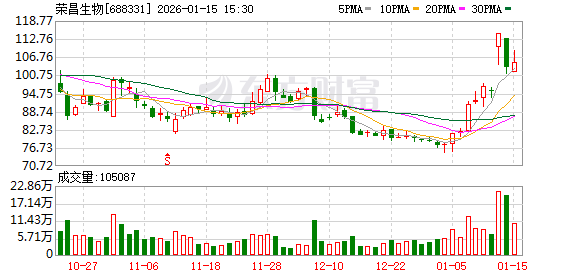
荣昌生物:关于调整回购股份价格上限的公告
Zheng Quan Ri Bao· 2026-01-15 13:19
(文章来源:证券日报) 证券日报网讯 1月15日,荣昌生物发布公告称,拟将回购价格上限由人民币 95元/股(含)调整为人民 币 116 元/股(含)。 ...
荣昌生物:拟上调回购价格上限为116元/股
Zheng Quan Shi Bao Wang· 2026-01-15 11:05
人民财讯1月15日电,荣昌生物(688331)1月15日公告,为保障回购股份方案顺利实施,拟将回购公司股 份的价格上限由95元/股(含)调整为116元/股(含)。 ...
1月15日晚间重要公告一览
Xi Niu Cai Jing· 2026-01-15 10:25
Group 1 - Siyuan Electric reported a total operating revenue of 21.205 billion yuan for 2025, a year-on-year increase of 37.18%, with a net profit attributable to shareholders of 3.163 billion yuan, up 54.35% year-on-year [1] - VisiOn expects a negative net profit for 2025, indicating a loss in operating performance [2] - Chongqing Steel anticipates a net loss of 2.5 billion to 2.8 billion yuan for 2025, which is an improvement from a net loss of 3.196 billion yuan in the previous year [3] - Lianfa Co. forecasts a net profit of 280 million to 320 million yuan for 2025, representing a year-on-year growth of 38.92% to 58.77% [4] Group 2 - CICC announced that the audit work related to the absorption merger with Dongxing Securities and Xinda Securities has not yet been completed [5] - Dalong Real Estate's subsidiary won a project bid worth 763 million yuan [6] - Zhongchuang Zhiling plans to issue convertible bonds to raise no more than 4.35 billion yuan for various projects [7] - Jintong Co. intends to acquire a 24% stake in Jinsha Molybdenum for 1.731 billion yuan [8] Group 3 - Nami Technology expects a net profit of 128 million to 145 million yuan for 2025, an increase of 54.51% to 75.03% year-on-year [9] - China State Construction reported a new contract total of 4.5458 trillion yuan for 2025, a 1% increase year-on-year [12] - China Metallurgical Group's new contract amount for 2025 is expected to decrease by 10.8% to 1.1136 trillion yuan [13] Group 4 - Beiding Co. reported a net profit of 111 million yuan for 2025, a year-on-year increase of 59.05% [14] - Southwest Securities expects a net profit of 1.028 billion to 1.098 billion yuan for 2025, an increase of 47% to 57% [15] - China Eastern Airlines reported a 4.93% year-on-year increase in passenger capacity for December 2025 [20] Group 5 - *ST Aowei's stock may be delisted due to a closing price below par value [21] - Yilian Network expects a net profit of 2.542 billion to 2.648 billion yuan for 2025, a decrease of 0% to 4% year-on-year [22] - Huochen Co. anticipates a net profit of 420 million to 540 million yuan for 2025, recovering from a loss of 2 million yuan in the previous year [17] Group 6 - Guoli Electronics expects a net profit of 68 million to 80 million yuan for 2025, an increase of 124.89% to 164.57% [28] - Jinchuan Group forecasts a net profit of 11 billion to 12 billion yuan for 2025, a year-on-year increase of 73.57% to 89.34% [41] - Triangle Tire plans to invest 3.219 billion yuan in a new tire project in Cambodia [42]





跨国巨头艾伯维锚定本土创新,全球资源如何加速落地中国?
2 1 Shi Ji Jing Ji Bao Dao· 2026-01-15 09:36
Core Insights - The Chinese biopharmaceutical industry is witnessing a significant transformation, moving from a focus on generic drugs to innovative drug development, as evidenced by recent high-value licensing deals involving local biotech firms and multinational corporations [1][4][18] - Multinational pharmaceutical companies are increasingly engaging with local biotech innovations at earlier stages, utilizing open innovation models and partnerships with local incubators to integrate into China's biotech ecosystem [1][2][10] Industry Transformation - The shift in China's biopharmaceutical landscape began around 2015 with government reforms aimed at enhancing drug innovation, leading to a substantial increase in the approval of innovative drugs [4][5] - Data from the National Healthcare Security Administration indicates that the number of approved innovative drugs is expected to rise significantly, with 48 new drugs projected for approval in 2024, more than five times the number in 2018 [4] - China's clinical trial costs are approximately one-third of those in the U.S., and the speed of patient recruitment is notably faster, contributing to the surge in licensing agreements for innovative drugs [5][10] Collaboration Models - The collaboration between AbbVie and local incubators like ATLATL aims to address common challenges faced by local biotech firms, such as regulatory alignment and commercialization readiness [3][6] - The "China Innovation Award" launched by AbbVie emphasizes a "running alongside" approach, providing not just funding but also comprehensive support throughout the R&D process [8][10] - This new collaboration model promotes mutual empowerment, allowing multinational companies to become co-builders of the innovation ecosystem rather than just technology outputters [10][17] Project Selection Criteria - Multinational companies like AbbVie prioritize projects with significant sales potential, focusing on unmet clinical needs and innovative therapeutic candidates [11][12] - The selection process emphasizes the importance of safety and efficacy, with a keen eye on the global intellectual property strategy of projects to enhance their attractiveness for international markets [13][15] Early Engagement and Global Integration - AbbVie’s approach includes early involvement in projects to ensure alignment in clinical design, regulatory compliance, and commercialization strategies, which can significantly reduce integration costs later on [15][16] - The collaboration is designed to enhance the global competitiveness of local biotech firms by integrating international standards and practices into their development processes [9][10] Future Outlook - The success of this collaborative model hinges on the commitment of multinational companies to long-term investment strategies and the willingness of local biotech firms to leverage global resources while maintaining their innovative edge [17] - The ultimate goal is to create a more resilient and vibrant Chinese biopharmaceutical innovation ecosystem that aligns closely with international standards and practices [17][18]

荣昌生物(688331) - 荣昌生物关于调整回购股份价格上限的公告
2026-01-15 09:32
荣昌生物制药(烟台)股份有限公司 关于调整回购股份价格上限的公告 证券代码:688331 证券简称:荣昌生物 公告编号:2026-003 本公司董事会及全体董事保证本公告内容不存在任何虚假记载、误导性陈述 或者重大遗漏,并对其内容的真实性、准确性和完整性承担法律责任。 重要内容提示: ● 为保障回购股份方案顺利实施,荣昌生物制药(烟台)股份有限公司(以 下简称"公司")于 2026 年 1 月 15 日召开第二届董事会第三十五次会议,审议 通过了《关于调整回购股份价格上限的议案》,拟将回购价格上限由人民币 95 元/股(含)调整为人民币 116 元/股(含)。 本次回购股份方案调整符合《公司法》、《上市公司股份回购规则》、《上海证 券交易所上市公司自律监管指引第 7 号——回购股份》及《公司章程》等相关规 定,公司综合考虑证券市场变化以及股份回购进展等因素,拟将股份回购价格上 限调整为 116 元/股(含)。调整后的回购股份价格上限不高于董事会审议通过《关 于调整回购股份价格上限的议案》决议前 30 个交易日公司股票交易均价的 150%。 一、回购股份的基本情况 公司于 2025 年 12 月 15 日召开第 ...
荣昌生物:拟将回购股份价格上限由95元/股调整为116元/股
Xin Lang Cai Jing· 2026-01-15 08:53
Core Viewpoint - Rongchang Biotech announced a plan to repurchase shares between 20 million to 40 million yuan at a price not exceeding 95 yuan per share, intended for employee stock ownership plans or equity incentives, with the implementation still pending as of the announcement date [1] Group 1 - The company plans to hold a board meeting on January 15, 2026, to review a proposal to raise the repurchase price ceiling from 95 yuan per share to 116 yuan per share, while keeping other terms unchanged [1] - The adjustment to the repurchase price is due to the recent stock price consistently exceeding the previous upper limit [1] - There is a risk that the repurchase plan may not be implemented if the stock price exceeds the new upper limit during the repurchase period [1]