
XNTS(000720)

Search documents
从“质造”到“智造”,这家公司引领线缆行业新趋势
Qi Lu Wan Bao Wang· 2025-08-20 10:36
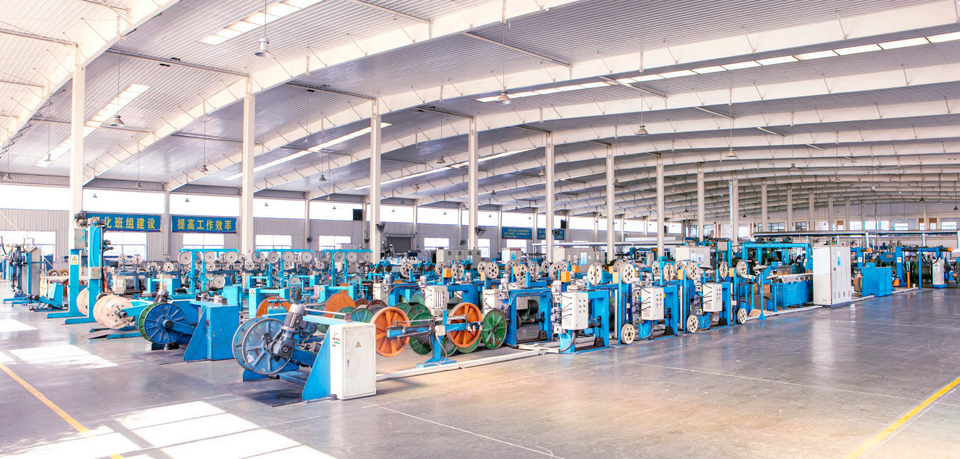
Core Insights - The company has successfully developed a new type of energy-saving wire that improves the conductivity of aluminum wires to 62.5%, reducing energy loss and enhancing transmission efficiency, which has made it a market favorite [1][5][6] - The company has received nearly 70 million yuan in orders for high-conductivity overhead energy-saving wires in the first half of the year, indicating strong market demand [5] - The company has implemented over 400 upgraded machines and introduced digital management systems, resulting in a 35.32% year-on-year sales growth in the first half of the year, reaching over 700 million yuan [8] Technological Innovation - The company has been focusing on research and development, with 43 authorized national patents and 41 utility model patents, investing 3% of its sales revenue annually into product development [6] - The company has established a comprehensive product testing center to ensure quality across various performance metrics, including physical, electrical, and environmental [5][6] Digital Transformation - The company has implemented over 20 high-automation production lines and digital business systems such as PLM, ERP, and MES, achieving full-process digital management from order receipt to production execution [8] - The company has been recognized as an excellent scenario for intelligent manufacturing in Shandong Province for 2025, showcasing its commitment to digital innovation [8] Market Position - The new energy-saving wire and other products like aluminum alloy power cables have been widely adopted in the market, contributing to the company's competitive edge [8] - The company aims to deepen collaboration with key clients such as State Grid, China Huaneng, and China Unicom to ensure stable production and operations [8]


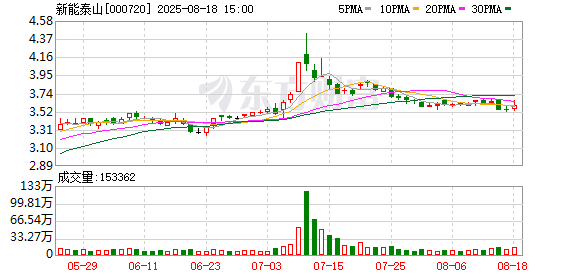
新能泰山:公司以产业园开发、综合资产运营及电线电缆生产为主业
Zheng Quan Ri Bao· 2025-08-18 13:35
Core Viewpoint - The company Xineng Taishan is focusing on industrial park development, comprehensive asset operation, and wire and cable production while exploring business expansion opportunities to enhance its internal value and competitiveness [2] Group 1: Business Operations - The main business operations of the company include industrial park development, comprehensive asset operation, and wire and cable production [2] - The company is currently managing its ongoing business operations effectively [2] Group 2: Strategic Initiatives - The company is leveraging the opportunity presented by the deepening reform of state-owned enterprises to explore new market opportunities suitable for its business transformation [2] - There is an emphasis on seeking new growth points to improve the company's internal value and competitiveness [2]
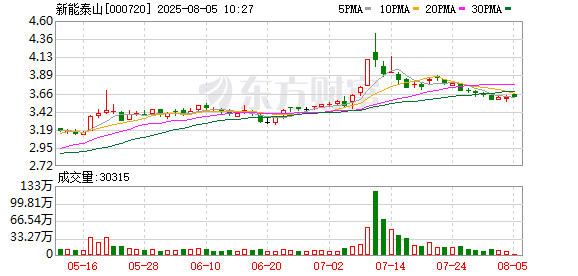
新能泰山:截至7月31日股东总户数为47655户
Zheng Quan Ri Bao Wang· 2025-08-05 12:14
Group 1 - The company Xineng Taishan (000720) responded to investor inquiries on August 5, indicating that as of July 31, the total number of shareholders was 47,655 [1]
新能泰山最新股东户数环比下降5.20% 筹码趋向集中
Zheng Quan Shi Bao Wang· 2025-08-05 02:27
7月15日公司发布上半年业绩预告,预计实现净利润450.00万元至600.00万元。(数据宝) (文章来源:证券时报网) 证券时报·数据宝统计,截至发稿,新能泰山最新股价为3.65元,上涨1.11%,本期筹码集中以来股价累 计下跌2.14%。具体到各交易日,6次上涨,6次下跌。 公司发布的一季报数据显示,一季度公司共实现营业收入2.99亿元,同比增长74.53%,实现净利润 1623.16万元,同比增长243.67%,基本每股收益为0.0129元,加权平均净资产收益率0.69%。 新能泰山8月5日披露,截至7月31日公司股东户数为47655户,较上期(7月20日)减少2612户,环比降 幅为5.20%。这已是该公司股东户数连续第2期下降。 ...
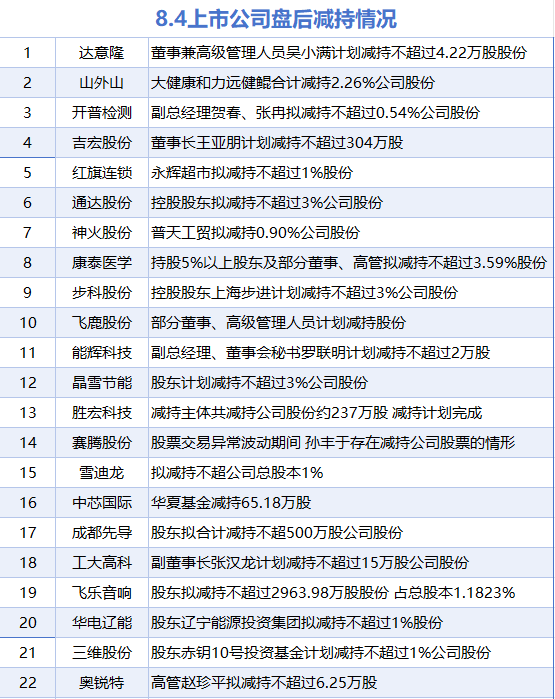
8月4日增减持汇总




Xin Lang Cai Jing· 2025-08-04 14:43
据统计,8月4日,盘后包括达意隆、山外山、开普检测、吉宏股份、红旗连锁、通达股份、神火股份、 康泰医学、步科股份、飞鹿股份、能辉科技、晶雪节能、胜宏科技、赛腾股份、雪迪龙、中芯国际、工 大高科、成都先导、飞乐音响、华电辽能、三维股份、奥锐特在内的22家A股上市公司披露减持情况。 当日暂无A股上市公司披露增持情况。 | 1 | 达意障 | 董事兼高级管理人员吴小满计划减持不超过4.22万股股份 | | --- | --- | --- | | 2 | 山外山 | 大健康和力远健鲲合计减持2.26%公司股份 | | 3 | 开普检测 | 副总经理贺春、张冉拟减持不超过0.54%公司股份 | | 4 | 吉宏股份 | 毒事长干亚朋计划减持不超过304万股 | | 5 | 红旗连锁 | 永辉超市拟减持不超过1%股份 | | 6 | 通达股份 | 控股股东拟减持不超过3%公司股份 | | 1 | 神火股份 | 普天工贸拟减持0.90%公司股份 | | 8 | 康泰医学 | 持股5%以上股东及部分董事、高管拟减持不超过3.59%股份 | | 9 | 步科股份 | 控股股东上海步进计划减持不超过3%公司股份 | | 10 | ...
新能泰山股价微跌0.54% 股东会通过保理融资议案
Jin Rong Jie· 2025-07-29 16:34
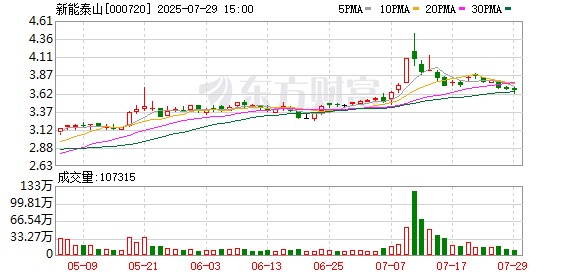
Group 1 - The stock price of Xineng Taishan closed at 3.66 yuan on July 29, down 0.02 yuan, a decrease of 0.54% from the previous trading day [1] - The trading volume on that day was 107,315 hands, with a transaction amount of 0.39 billion yuan, and the price fluctuation was 2.45% [1] - Xineng Taishan operates in the power grid equipment industry, focusing on power equipment manufacturing and renewable energy development, with a presence in wind energy and other new energy sectors [1] Group 2 - On the evening of July 29, Xineng Taishan announced that its third extraordinary general meeting of shareholders in 2025 approved several proposals, including the application for factoring financing from Huaneng Yuncheng Factoring Company [1] - On July 29, the net outflow of main funds was 149.64 thousand yuan, accounting for 0.03% of the circulating market value [1]
新能泰山: 2025年第三次临时股东会决议公告
Zheng Quan Zhi Xing· 2025-07-29 16:34
Meeting Overview - The shareholder meeting of Shandong Xinneng Taishan Power Co., Ltd. was held on July 29, 2025, with both on-site and online voting options available [1][2] - A total of 3 shareholders attended the meeting in person, representing 590,334,322 shares, which is 46.9813% of the total voting shares [1] - Online voting included 242 shareholders, representing 10,823,468 shares, or 0.8614% of the total voting shares [1] Voting Results - The proposals were approved with significant majority votes, with 71,320,468 shares (92.3366%) in favor and 5,827,958 shares (7.5453%) against [2] - The voting results from minority shareholders showed 4,904,310 shares (53.8456%) in favor, with 91,200 shares abstaining [2] Related Transactions - The proposals included related party transactions involving the controlling shareholder, Huaneng Energy Transportation Industry Holdings Co., Ltd., and its subsidiary [3] - The proposal received 595,197,932 shares (99.0086%) in favor, with 5,863,658 shares (0.9754%) against, achieving the required two-thirds majority for special resolutions [3][4] Legal Compliance - The meeting was attended by the company's board members and legal representatives, ensuring compliance with relevant laws and regulations [6] - The legal opinions confirmed the legitimacy of the meeting's procedures and voting results [6] Documentation - The resolutions from the shareholder meeting will be filed for record-keeping and future reference [6]
新能泰山: 北京植德律师事务所关于山东新能泰山发电股份有限公司2025年第三次临时股东会的法律意见书
Zheng Quan Zhi Xing· 2025-07-29 16:34
Core Viewpoint - The legal opinion letter from Beijing Zhide Law Firm confirms the legality and validity of the procedures, qualifications, and voting results of the third extraordinary general meeting of Shandong New Energy Taishan Power Co., Ltd. held in 2025 [1][14]. Group 1: Meeting Procedures - The meeting was convened by the company's board of directors and announced through public channels, detailing the time, location, voting methods, and other relevant information [2][3]. - The meeting combined on-site and online voting, held on July 29, 2025, in Nanjing, Jiangsu Province, with specific time slots for online voting [3][4]. Group 2: Qualifications of Participants - The convenor of the meeting was the company's board of directors, meeting the legal qualifications required [4]. - A total of 245 shareholders (or their proxies) attended the meeting, representing a valid voting share count [4]. Group 3: Voting Procedures and Results - The meeting reviewed and voted on all proposed resolutions, including financing and amendments to the company's articles of association [5][6]. - The resolution regarding financing was approved with 71,320,468 votes in favor, representing 92.34% of the valid votes [5]. - The resolution to amend the articles of association received 99.01% approval, with 595,197,932 votes in favor [7]. - Other resolutions, including amendments to the rules of shareholder meetings and board meetings, also received overwhelming support, with approval rates exceeding 99% [8][9][10][11][12][13].
新能泰山:2025年第三次临时股东会决议公告
Zheng Quan Ri Bao· 2025-07-29 13:25
证券日报网讯 7月29日晚间,新能泰山发布公告称,公司2025年第三次临时股东会审议通过了《关于公 司及子公司向华能云成保理公司申请办理保理融资的议案》等多项议案。 (文章来源:证券日报) ...
新能泰山(000720) - 股东会议事规则(2025年7月)
2025-07-29 11:01
山东新能泰山发电股份有限公司 股东会议事规则 第一章 总则 第一条 为规范山东新能泰山发电股份有限公司(以下简 称公司)行为,保证公司股东会依法行使职权,根据《中华人 民共和国公司法》(以下简称《公司法》)、《中华人民共和国证 券法》(以下简称《证券法》)以及中国证监会《上市公司股东 会规则》等有关规定,制定本规则。 第二条 公司股东会的召集、提案、通知、召开等事项适 用本规则。 第三条 公司应当严格按照法律、行政法规、本规则及《公 司章程》的相关规定召开股东会,保证股东能够依法行使权利。 公司董事会应当切实履行职责,认真、按时组织股东会。 公司全体董事应当勤勉尽责,确保股东会正常召开和依法行使 职权。 第四条 股东会应当在《公司法》和《公司章程》规定的 范围内行使职权。 第五条 股东会分为年度股东会和临时股东会。年度股东 会每年召开一次,应当于上一会计年度结束后的 6 个月内举 行。临时股东会不定期召开,出现《公司法》第一百一十三条 规定的应当召开临时股东会的情形时,临时股东会应当在 2 个 1 月内召开。 公司在上述期限内不能召开股东会的,应当报告公司所在 地中国证监会派出机构和深圳证券交易所(以下简称证 ...