CR Sanjiu(000999)

Search documents
中药上市公司董秘PK:华润三九邢健年薪255.87万元行业第一 任职董秘尚不足一年
Xin Lang Zheng Quan· 2025-08-01 05:13
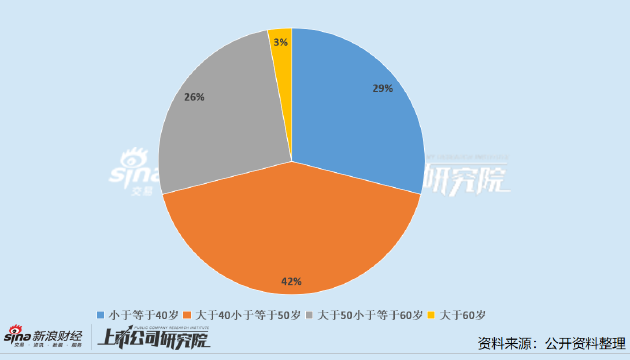
Group 1 - The total salary of A-share listed company secretaries in 2024 reached 4.086 billion yuan, with an average annual salary of 754,300 yuan [1] - Among the A-share listed companies, 1,144 secretaries earned over 1 million yuan annually, accounting for over 21% [1] - The age distribution of secretaries shows that those aged 40-50 constitute 42%, while those over 50 account for 29%, and those under 40 make up 26% [1] Group 2 - The educational background of secretaries indicates that 5% have an associate degree, 42% hold a bachelor's degree, 49% possess a master's degree, and 4% have a doctoral degree, with over half holding a master's or higher [3] - Only three secretaries hold a doctoral degree, specifically from Yiling Pharmaceutical, Kunming Pharmaceutical Group, and Jinhua Co., Ltd. [3] Group 3 - The average annual salary of secretaries in A-share listed Chinese medicine companies is 742,400 yuan, with 39% earning below 500,000 yuan, 42% earning between 500,000-1 million yuan, 15% between 1-2 million yuan, 3% between 2-3 million yuan, and 1% above 3 million yuan [5] - The top five highest-paid secretaries are from China Resources Sanjiu, Jichuan Pharmaceutical, Tianjin Tasly, Yiling Pharmaceutical, and Yibai Pharmaceutical, with salaries of 2.5587 million yuan, 2.4107 million yuan, 2.525 million yuan, 1.89 million yuan, and 1.3935 million yuan respectively [7] Group 4 - There is significant variation in the number of investor receptions among listed companies, with 59% receiving fewer than 10 times a year, 25% between 10-100 times, 13% between 100-300 times, and 3% between 300-1000 times [9] - The five companies with the highest number of investor receptions are Zoli Pharmaceutical, Qizheng Tibetan Medicine, Yunnan Baiyao, Jinghua Pharmaceutical, and Pianzihuang, with receptions of 410, 404, 298, 221, and 207 respectively [9]


中药上市公司董秘PK:益佰制药蒋先洪任董秘一年即收获140万年薪 显著高于行业均值
Xin Lang Zheng Quan· 2025-08-01 05:13
Core Insights - The report highlights that the total salary for A-share listed company secretaries in 2024 reached 4.086 billion yuan, with an average annual salary of 754,300 yuan [1] - A total of 1,144 company secretaries earn over 1 million yuan annually, accounting for more than 21% of the total [1] Salary Distribution - The average annual salary for company secretaries in the A-share traditional Chinese medicine sector is 742,400 yuan [5] - The distribution of salaries is as follows: - Below 500,000 yuan: 27 individuals (39%) - 500,000-1,000,000 yuan: 29 individuals (42%) - 1,000,000-2,000,000 yuan: 10 individuals (15%) - 2,000,000-3,000,000 yuan: 2 individuals (3%) - Above 3,000,000 yuan: 1 individual (1%) [5] Age and Educational Background - The age distribution of company secretaries shows that those aged 40-50 constitute 42%, while those over 50 account for 29%, and those under 40 make up 26% [1] - The educational background indicates that 5% have an associate degree, 42% hold a bachelor's degree, 49% possess a master's degree, and 4% have a doctoral degree, with over half of the secretaries holding a master's degree or higher [3] Top Earning Company Secretaries - The top five highest-paid company secretaries are: - Xing Jian from China Resources Sanjiu: 2.5587 million yuan - Cao Wei from Jichuan Pharmaceutical: 2.4107 million yuan - Yu Jie from Tianjin Tasly: 2.525 million yuan - Wu Rui from Yiling Pharmaceutical: 1.89 million yuan - Jiang Xianhong from Yibai Pharmaceutical: 1.3935 million yuan - Their tenure at the companies ranges from less than 1 year to 15 years [7] Investor Engagement - There is significant variation in the number of investor meetings held by companies: - Less than 10 meetings: 41 companies (59%) - 10-100 meetings: 17 companies (25%) - 100-300 meetings: 9 companies (13%) - 300-1000 meetings: 2 companies (3%) [7] - The five companies with the highest number of investor meetings are: - Zoli Pharmaceutical: 410 meetings - Qizheng Pharmaceutical: 404 meetings - Yunnan Baiyao: 298 meetings - Jinghua Pharmaceutical: 221 meetings - Pianzihuang: 207 meetings [9]


中药上市公司董秘PK:特一药业许紫兰为行业最年轻董秘 年薪57.78万元低于行业均值
Xin Lang Zheng Quan· 2025-08-01 05:09
Core Insights - The report highlights that in 2024, the total salary for A-share listed company secretaries reached 4.086 billion yuan, with an average annual salary of 754,300 yuan [1] - The data indicates that over 21% of company secretaries earn more than 1 million yuan annually [1] Group 1: Salary Distribution - The average annual salary for company secretaries in the A-share traditional Chinese medicine sector is 742,400 yuan [7] - The distribution of salaries shows that 39% earn below 500,000 yuan, 42% earn between 500,000 and 1 million yuan, 15% earn between 1 million and 2 million yuan, 3% earn between 2 million and 3 million yuan, and 1% earn above 3 million yuan [7] - The top five highest-paid company secretaries are from Huaren Sanjiu, Jichuan Pharmaceutical, Tianshili, Yiling Pharmaceutical, and Yibai Pharmaceutical, with salaries of 2.5587 million yuan, 2.4107 million yuan, 2.525 million yuan, 1.89 million yuan, and 1.3935 million yuan respectively [7] Group 2: Age Distribution - Company secretaries aged between 40 and 50 constitute 42% of the market, while those over 50 account for 29%, and those under 40 make up 26% [3] - The youngest company secretary is 32 years old, representing Te Yi Pharmaceutical [3] Group 3: Educational Background - The educational background of company secretaries shows that 5% have an associate degree, 42% hold a bachelor's degree, 49% have a master's degree, and 4% possess a doctoral degree [5] - More than half of the company secretaries hold a master's degree or higher, with only three having a doctoral degree [5] Group 4: Investor Engagement - There is significant variation in the number of investor meetings held by listed companies, with 59% of companies hosting fewer than 10 meetings annually [9] - The top five companies with the most investor meetings are Zoli Pharmaceutical, Qizheng Tibetan Medicine, Yunnan Baiyao, Jinghua Pharmaceutical, and Pianzihuang, with 410, 404, 298, 221, and 207 meetings respectively [9]


沪深300制药指数报12999.93点,前十大权重包含恒瑞医药等
Jin Rong Jie· 2025-07-31 08:07
Group 1 - The core viewpoint of the news is that the Shanghai Stock Exchange 300 Pharmaceutical Index has shown significant growth, with a 12.60% increase over the past month, 13.11% over the past three months, and 19.34% year-to-date [1] - The Shanghai Stock Exchange 300 Pharmaceutical Index is composed of listed companies in the pharmaceutical sector selected from the Shanghai and Shenzhen 300 Index, reflecting the overall performance of these companies [1] - The index was established on December 31, 2004, with a base point of 1000.0 [1] Group 2 - The top ten weighted companies in the Shanghai Stock Exchange 300 Pharmaceutical Index include: Heng Rui Medicine (44.25%), Pian Zai Huang (9.6%), Yunnan Baiyao (7.98%), Kelun Pharmaceutical (6.66%), East China Pharmaceutical (6.13%), Fosun Pharmaceutical (5.62%), New Harmony (5.46%), Baillie Tianheng (4.07%), Tong Ren Tang (3.93%), and China Resources Sanjiu (3.33%) [1] - The market share of the index's holdings is 70.43% from the Shanghai Stock Exchange and 29.57% from the Shenzhen Stock Exchange [1] - The composition of the index by industry shows that drug formulations account for 66.73%, traditional Chinese medicine for 27.81%, and raw materials for 5.46% [1] Group 3 - The index sample is adjusted every six months, with adjustments implemented on the next trading day following the second Friday of June and December each year [2] - Weight factors are adjusted in accordance with the sample adjustments, which occur at the same time [2] - In special circumstances, the index may undergo temporary adjustments, such as when a sample company is delisted or undergoes mergers, acquisitions, or splits [2]



正在解套的医疗独角兽:长路,大梦,灯火又上楼台
Hu Xiu· 2025-07-31 01:50
Core Insights - The Chinese healthcare investment market has experienced significant fluctuations over the past decade, with a peak in financing reaching over 380 billion yuan in 2021, followed by a period of stagnation [1] - Many healthcare unicorns emerged during the investment boom, but high valuations and slow commercialization have led to persistent losses and survival challenges for many companies [1][2] - The current market environment is shifting, with nearly 40 healthcare companies filing for IPOs in the first half of the year, indicating potential recovery [2][3] Group 1: Market Dynamics - Since 2021, several companies, including Yuanxin Technology and Yingsi Intelligent, have struggled to enter the secondary market despite multiple IPO attempts [2] - The withdrawal of dollar funds and the cautious approach of domestic RMB funds have changed the funding landscape, leading to difficulties in financing and exits for many unicorns [2][4] - The healthcare sector is undergoing a profound reshaping, with a collective recalibration of expectations among industry participants [4][5] Group 2: Business Strategies - Many unicorns are shifting focus from IPO aspirations to mergers and acquisitions as a means of exit, with notable transactions occurring in the sector [2][10] - Companies are adopting survival strategies such as layoffs, product line cuts, and focusing on more profitable business areas to navigate the current challenges [12][11] - The emphasis has shifted from high valuations to sustainable business models and cash flow, with investors now prioritizing immediate returns over long-term visions [18][23] Group 3: Investment Landscape - The investment criteria have evolved, with a greater focus on clear profitability paths and customer retention, while technological innovation has become a secondary consideration [18][14] - The previous era of high valuations driven by ambitious narratives has given way to a more cautious investment approach, emphasizing realistic financial performance [21][22] - The market is no longer celebrating valuations but is instead focused on cash returns, reflecting a significant shift in investor sentiment [23][29] Group 4: Future Outlook - IPOs remain a preferred exit strategy for many companies, but not all are equipped to pursue this path, leading to a reliance on mergers as an alternative [24][26] - The potential for recovery in the secondary market may provide new opportunities for companies to secure funding and navigate the current landscape [28] - Companies that can adapt to the changing environment and demonstrate sustainable business practices are more likely to succeed in the long term [29]



华润三九荣获证券之星ESG新标杆企业奖并入选ESG投资价值榜
Sou Hu Cai Jing· 2025-07-30 02:58
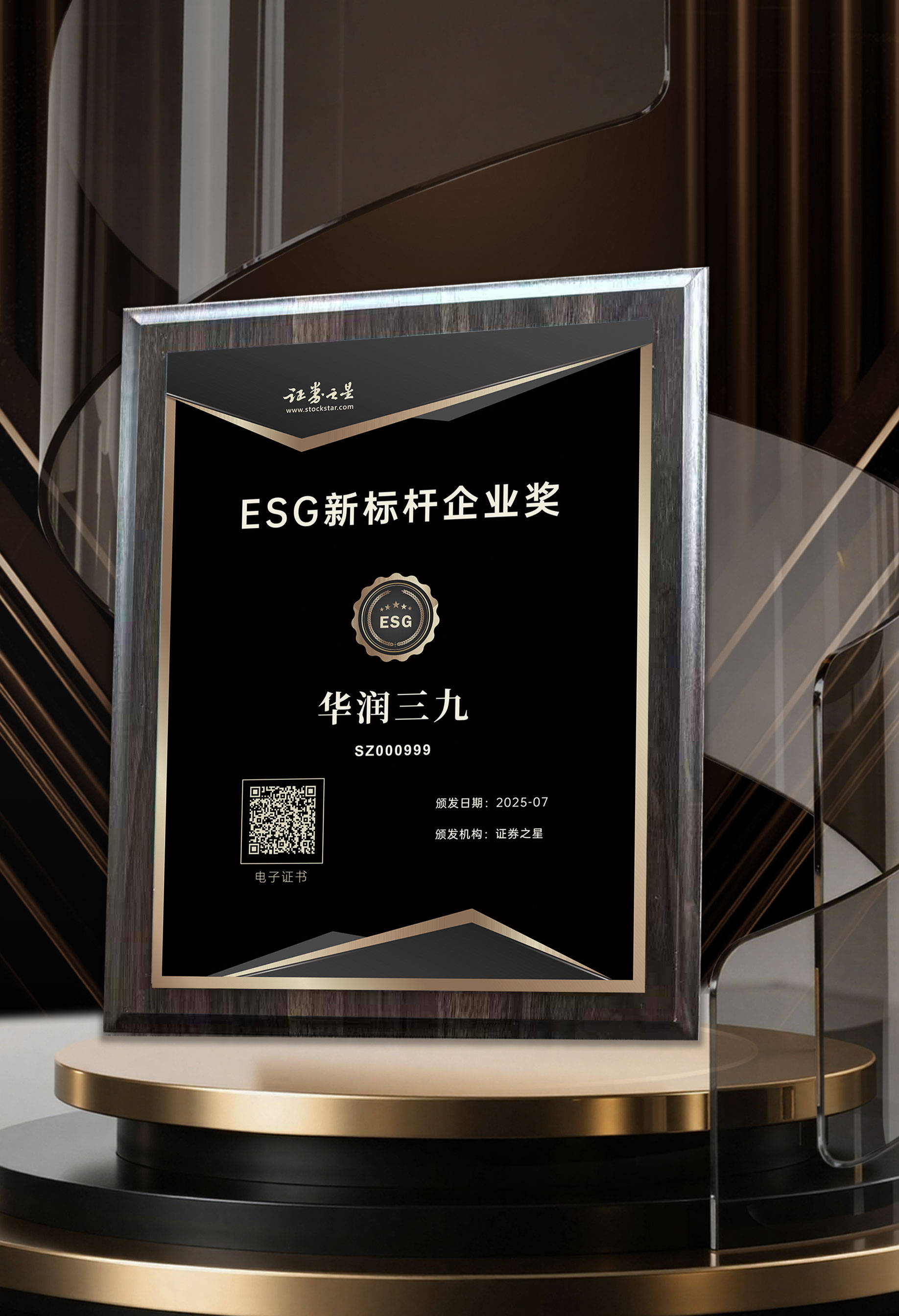
Core Viewpoint - China Resources Sanjiu has been awarded the "ESG New Benchmark Enterprise Award" and "ESG Investment Value List" for its outstanding practices in Environmental, Social, and Governance (ESG) fields, highlighting its commitment to integrating economic efficiency with social responsibility [1] Environmental Dimension (E) - The company is focused on green and low-carbon development, with over 40% of its subsidiaries certified by ISO 14001 [4] - Pollution emissions are strictly controlled, with greenhouse gas emissions significantly reduced by 19.65% in 2024 compared to the previous year [4] - The innovative "Pharmaceutical Light Complementarity" zero-carbon demonstration project integrates photovoltaic power generation with traditional medicinal herb cultivation, providing over 220 million kWh of green electricity and reducing carbon emissions by over 1.23 million tons [4] - The total installed capacity of photovoltaic systems has exceeded 20 MWp, and the use of renewable energy has been steadily increased to 6.33% [4] Social Responsibility Dimension (S) - The company adheres to the principle of "Quality Safeguards Life," establishing a comprehensive quality management system that ensures full traceability throughout the drug lifecycle [5] - In 2024, the drug inspection pass rate remained at 100%, with no major responsibility accidents reported [5] - Customer rights protection is meticulous, achieving a complaint resolution rate and satisfaction rate of 100%, with zero data security incidents [5] - The company has invested in education and health support, building eight primary schools in Ya'an and benefiting millions of patients through health assistance [5] - In 2024, the company purchased over one million yuan worth of agricultural products to support rural revitalization [5] Governance Dimension (G) - The company promotes compliance operations through high-quality party building, integrating political leadership with business operations [5] - A comprehensive risk management system based on the COSO framework has been established to systematically identify and control risks [5] - The board of directors has made progress in diversity, with female directors accounting for 18.18% [5] Future Outlook - Looking ahead to 2025, the company aims to strengthen quality management, enhance independent research and intelligent manufacturing, and deepen its green and low-carbon transformation [6] - The company is committed to expanding the breadth and depth of its ESG practices and supporting rural revitalization, contributing to the "Healthy China" strategy [6]
医疗器械走强,医疗创新ETF(516820.SH)现涨0.51%
Xin Lang Cai Jing· 2025-07-30 02:16
Group 1 - The medical device sector is active, with the Medical Innovation ETF (516820.SH) rising by 0.51% and key stocks like Baillie Tianheng (688506) up by 3.01%, Mindray Medical (300760) up by 2.50%, and WuXi AppTec (603259) up by 2.41% [1] - The National Healthcare Security Administration held a seminar to support the high-quality development of innovative drugs and medical devices, indicating strong government backing for the sector [1] - The securities firm Guotai Junan noted that while the industry faces tightening internal environments and external uncertainties, growth rates are expected to rebound as external disturbances diminish [1] Group 2 - Market funds are shifting from high-valued sectors to reasonably valued tracks, with core assets in medical innovation gradually rebounding [2] - The Medical Innovation ETF (516820) is highlighted as a potential entry point for investors looking to capitalize on the recovery of the medical sector [2] - Many of the top ten component stocks are currently valued below the historical 20th percentile, indicating a significant margin of safety for investors [2]


心血管最后的战场,心衰治疗技术大爆发
3 6 Ke· 2025-07-28 01:04
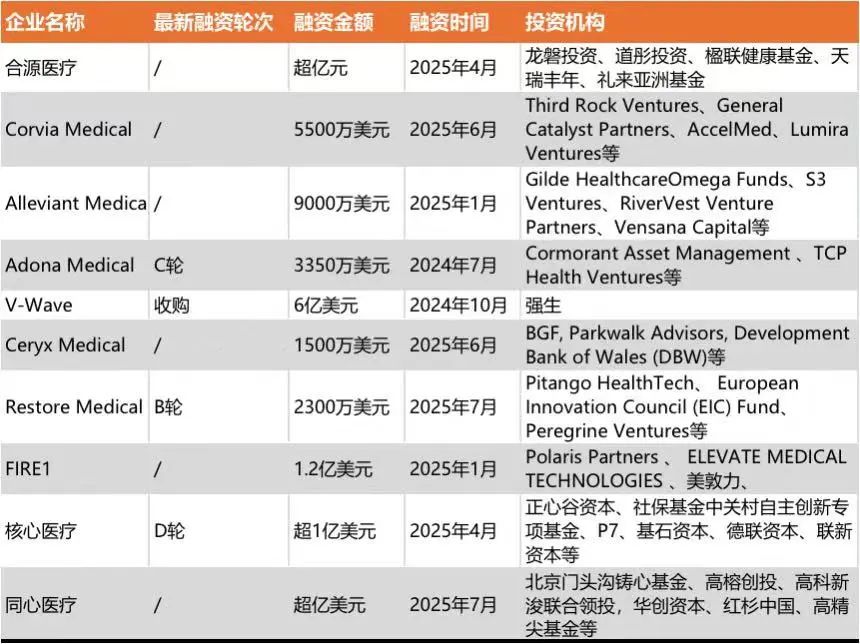
Core Insights - Heart failure (HF) is increasingly recognized as a critical area in cardiovascular medicine, with numerous companies making advancements in treatment technologies [1] - The prevalence of heart failure in developed countries is 1%-2%, while in China, it has reached 1.3% among individuals over 35, totaling approximately 13.7 million patients [1] - Current first-line medications only alleviate symptoms without halting disease progression, highlighting the urgent need for innovative treatments [1] Financing Events - Recent financing activities in the heart failure sector include companies like Alleviant Medical raising $90 million, and V-Wave being acquired for $600 million by Johnson & Johnson [2] - A total of over $1 billion has been raised across various companies in the heart failure treatment space, indicating strong investor interest [2] Innovation Directions - The innovation in heart failure treatment can be categorized into four main directions: reducing cardiac load, improving cardiac efficiency, promoting cardiac repair and regeneration, and preventing fluctuations in cardiac load [6][7] - Multiple innovative products are being developed to address different stages of heart failure, including left ventricular assist devices (LVADs) which have seen rapid adoption in recent years [6] Breakthrough Technologies - The FDA's "Breakthrough Devices" designation has been granted to over ten products in the heart failure space, reflecting the clinical demand for innovative therapies [3] - Notable products include Alleviant Medical's atrial shunt device for heart failure with preserved ejection fraction, and various monitoring systems aimed at managing heart failure [4][5] iPSC Cell Therapy - Induced pluripotent stem cell (iPSC) technology is emerging as a promising avenue for heart regeneration, with companies like Alleviant and Heartseed leading the way in clinical trials [8][11] - Alleviant's iPSC-derived cardiac cells have shown safety and potential efficacy in early trials, with plans for further studies and potential commercialization by 2028 [11][13] Atrial Shunt Devices - Atrial shunt devices have gained attention as a viable treatment option, with significant financing activity in this area, although they are still considered a palliative rather than a curative solution [14][16] - The market for atrial shunt devices is evolving, with ongoing clinical trials and a focus on improving patient outcomes through innovative designs [18] Future Directions - The heart failure treatment landscape is shifting from symptomatic management to addressing underlying causes, with a focus on personalized and multimodal approaches [18] - The ultimate goal is to achieve a state where heart failure is preventable, controllable, and potentially curable, driven by advancements in cell and gene therapies, monitoring technologies, and device innovations [18]


谁在加仓?外资公募调仓路径显现
财联社· 2025-07-27 14:35
Core Viewpoint - The article highlights the accelerated rebound of A-shares in Q2, emphasizing the critical role of foreign public funds' portfolio adjustments in this context [1] Group 1: Foreign Fund Adjustments - Major foreign public funds such as JPMorgan, BlackRock, and Morgan Stanley have revealed their portfolio adjustments for Q2 2025, indicating a shift in their market expectations [1] - Notably, the significant increase in stock market value for funds like LGM and LGT, with growth rates of 491.66% and over 340% respectively, showcases a more aggressive adjustment strategy compared to traditional players [2] - The focus of these funds has shifted towards "core assets" in the technology sector, with companies like Xinyiseng and Shenghong Technology becoming key targets for investment [2][3] Group 2: Investment Strategies - The current round of foreign investment is characterized by a focus on "industrial hubs" rather than just technology, with companies spanning multiple segments of the hardware supply chain being prioritized [3] - Leading institutions like JPMorgan and Morgan Stanley have adopted a more stable investment approach, maintaining significant positions in high-profit assets while balancing short-term themes with mid-term fundamentals [4][5] - The strategy of Morgan Stanley emphasizes "performance first," focusing on sectors like AI chips and pharmaceuticals, which are expected to deliver consistent profits [5] Group 3: Core Assets and Defensive Positions - Despite a trend of reducing positions in the pharmaceutical sector, Morgan Stanley continues to hold substantial stakes in innovative pharmaceutical companies, indicating a belief in their long-term potential [5][6] - Foreign funds are maintaining or increasing their holdings in core financial and consumer assets such as Kweichow Moutai and China Ping An, which serve as stable anchors in their portfolios [6] Group 4: Localization of Investment Strategies - The article notes a shift in foreign funds from a mechanical strategy of "low valuation + large blue chips" to a more localized approach that adapts to the high volatility and rotation of the Chinese market [7] - Funds like BlackRock are demonstrating a dual-driven strategy of thematic flexibility and fundamental stability, indicating a more nuanced approach to portfolio construction [7][8] - New entrants like Fidelity and Allianz are exploring innovative small-cap technology stocks, reflecting a strategy aimed at identifying future consensus assets [8]






2025年中国ERP软件行业商业模式、产业链、发展历程、供需规模、市场结构及发展趋势研判:市场规模将增长至505.3亿元,制造领域占40.53%[图]
Chan Ye Xin Xi Wang· 2025-07-27 01:14
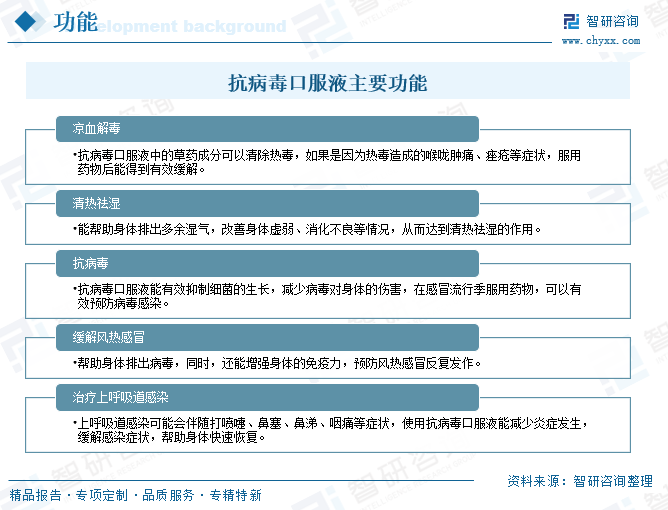
Core Viewpoint - The antiviral oral liquid market is experiencing significant growth driven by the rising incidence of viral diseases and increasing health awareness among consumers, with a projected market size increase from 1.1 billion yuan in 2020 to 1.469 billion yuan in 2024, reflecting a compound annual growth rate of 7.5% [1][12]. Industry Overview - Antiviral oral liquids are common traditional Chinese medicine formulations, primarily composed of ingredients like Banlangen, Shigao, and Lugen, used for treating viral infections such as influenza and respiratory infections [3][5]. - The industry has evolved since the 1980s, transitioning from basic herbal formulations to more sophisticated products due to technological advancements, leading to improved efficacy and safety [5]. Market Dynamics - The demand for antiviral oral liquids is increasing due to the high prevalence of viral diseases and an aging population, alongside a shift in consumer perception of these products as essential for daily health protection [1][12]. - The rise of e-commerce platforms has further facilitated market growth by providing convenient access to these products [1][12]. Industry Chain - The industry chain consists of upstream raw material cultivation, production equipment, and packaging materials; midstream involves the manufacturing of antiviral oral liquids; and downstream includes sales through hospitals, pharmacies, clinics, and e-commerce platforms [8]. Competitive Landscape - The market is becoming increasingly competitive with numerous companies entering the field, necessitating continuous innovation and marketing efforts to stand out [13]. - Key players in the industry include ST Xiangxue, China Resources Sanjiu, Kangyuan Pharmaceutical, and others, each with unique product offerings and market strategies [1][13]. Development Trends - There is significant growth potential in the central and rural markets, where the penetration of antiviral oral liquids is currently low due to insufficient medical resources [21]. - Future innovations in nanotechnology and targeted drug delivery systems are expected to enhance product efficacy and reduce side effects, driving further advancements in the industry [22]. - The market is likely to see increased concentration as leading companies leverage technology and brand development to capture larger market shares, while new entrants may adopt innovative strategies to compete [23].