LEO(002131)

Search documents
利欧股份(002131) - 股票交易异常波动公告
2026-01-14 12:02
利欧集团股份有限公司 证券代码:002131 证券简称:利欧股份 公告编号:2026-005 利欧集团股份有限公司 二、公司关注并核实情况的说明 股票交易异常波动公告 本公司及董事会全体成员保证信息披露的内容真实、准确、完整,没有虚假记 载、误导性陈述或重大遗漏。 一、股票交易异常波动情况 利欧集团股份有限公司(以下简称"公司")股票价格于2026年1月13日、2026 年1月14日连续二个交易日收盘价格涨幅偏离值累计超过20%,根据《深圳证券交易 所交易规则》的有关规定,属于股票交易异常波动的情况。 公司董事会确认,公司目前没有任何根据《深圳证券交易所股票上市规则》等 有关规定应予以披露而未披露的事项或与该事项有关的筹划、商谈、意向、协议等; 董事会也未获悉本公司有根据《深圳证券交易所股票上市规则》等有关规定应予以 披露而未披露的、对本公司股票交易价格产生较大影响的信息。公司前期披露的信 第 1 页 共 2 页 利欧集团股份有限公司 针对公司股票交易异常波动,公司董事会对公司和控股股东、实际控制人就相 关事项进行了核实,有关情况说明如下: 1、公司前期披露的信息不存在需要更正、补充之处。 2、公司未发现近期 ...
4连板利欧股份:目前经营情况正常 不存在应披露而未披露的重大事项
Di Yi Cai Jing· 2026-01-14 12:02
利欧股份发布异动公告称,公司股票价格连续二个交易日收盘价格涨幅偏离值累计超过20%,属于股票 交易异常波动的情况。经核实,公司前期披露的信息不存在需要更正、补充之处,近期经营情况正常, 内外部经营环境未发生重大变化,公司及控股股东、实际控制人不存在关于公司的应披露而未披露的重 大事项,或处于筹划阶段的重大事项。 (文章来源:第一财经) ...

利欧股份“爆炒”AI应用概念,“风口猎手”王相荣又赢一局
Huan Qiu Lao Hu Cai Jing· 2026-01-14 11:55
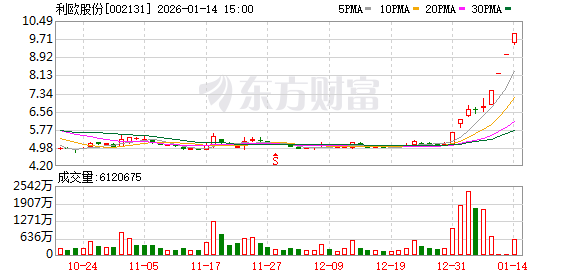
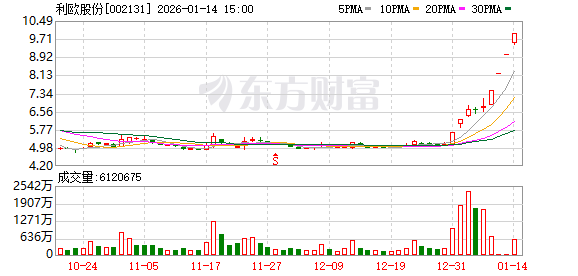
Core Viewpoint - Lio Co., Ltd. has become a focal point for capital, experiencing a significant stock price surge driven by AI applications and GEO concepts, reflecting effective market engagement strategies [1][2][5] Group 1: Stock Performance - On January 14, Lio Co., Ltd. achieved its fourth consecutive trading limit increase, closing at 9.93 yuan, marking a historical high and a total market capitalization of 67.24 billion yuan [2] - The stock has seen a cumulative increase of 76.07% in 2026, ranking 21st in terms of performance across major markets [2] - Notable institutional investments included net purchases of 2.67 billion yuan, 1.59 billion yuan, and 1.3 billion yuan from various funds over three consecutive trading days [2] Group 2: Company Strategy and Market Engagement - Lio Co., Ltd. has effectively engaged with market trends by conducting high-intensity institutional research, responding promptly to market interests, particularly in AI applications [1][3] - The company has been proactive in addressing investor inquiries regarding its AI and GEO strategies, showcasing its commitment to transparency and market responsiveness [3][4] - The management's approach to market sentiment and capital perception is largely attributed to the leadership of Wang Xiangrong, who has a strong understanding of market dynamics [5] Group 3: Business Segments and Historical Context - Lio Co., Ltd.'s main business segments include mechanical manufacturing and digital marketing, with recent popularity linked to its timely responses to hot market concepts [3][6] - The company underwent a strategic transformation in 2014, acquiring multiple advertising firms to integrate internet traffic and digital marketing capabilities [6][7] - Wang Xiangrong's previous investments, including significant stakes in companies like Li Auto, have contributed to Lio's financial performance, particularly through capital gains [7][13] Group 4: Financial Performance and Challenges - Lio Co., Ltd. has experienced significant fluctuations in its financial performance, with net profits varying dramatically from 47.72 billion yuan in 2020 to a loss of 10.19 billion yuan in 2021 [11][12] - The company's reliance on stock market performance, particularly from investments in Li Auto, has led to substantial profit variations, highlighting a potential risk in its business model [13][14] - The current digital marketing business lacks clear performance signals, raising questions about its ability to meet strategic goals in AI application and market leadership [14]
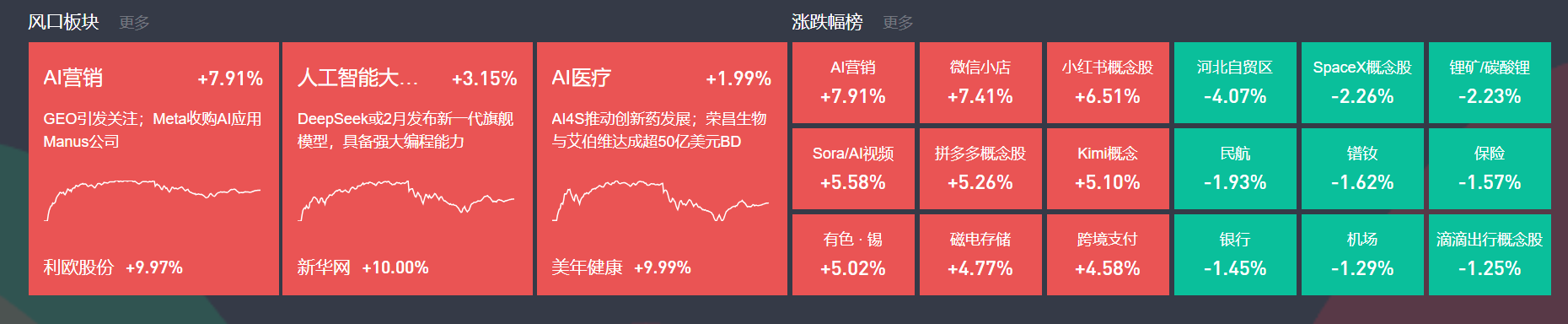
涨停复盘:今日全市场共108只股涨停,连板股总数19只,AI应用概念股利欧股份9天6板、省广集团4连板!
Jin Rong Jie· 2026-01-14 11:43
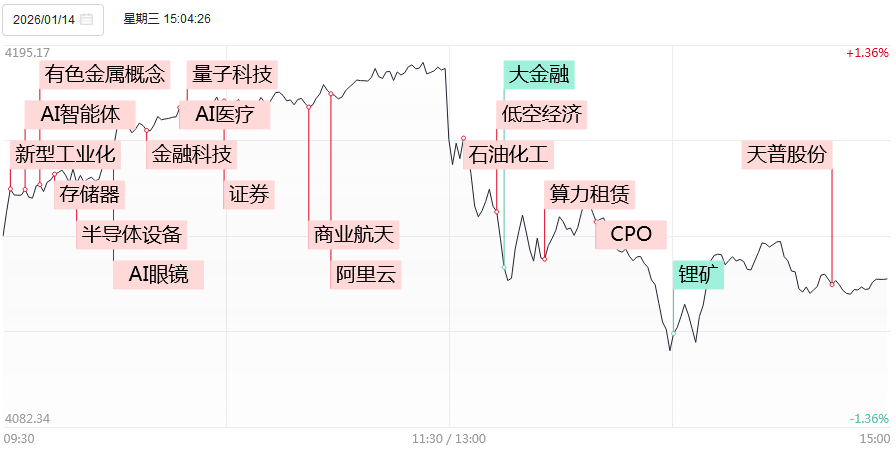
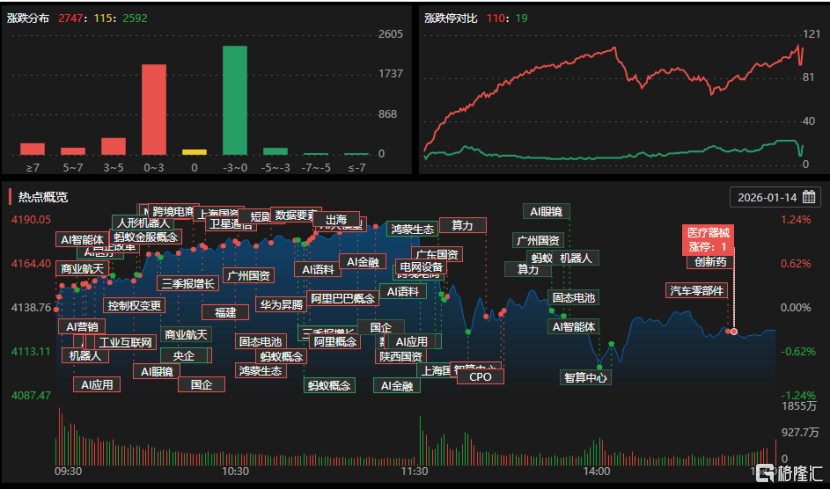
Market Overview - The market experienced a pullback after an initial rise, with the Shanghai Composite Index closing down 0.31% at 4126.09 points, while the Shenzhen Component Index rose 0.56% to 14248.60 points, and the ChiNext Index increased by 0.82% to 3349.14 points [1] - The total trading volume in the Shanghai and Shenzhen markets reached 3.94 trillion yuan, an increase of 290.4 billion yuan from the previous trading day, marking the third consecutive day of exceeding 3.5 trillion yuan [1] Sector Performance - AI application concepts surged, with over twenty constituent stocks hitting the daily limit, including Liou Co., which achieved six consecutive limit-ups in nine days, and other notable stocks like Shengguang Group and Xinhua Net [1] - The computing hardware sector saw a significant rise, with Guangxun Technology hitting a daily limit and reaching a new high [1] - The semiconductor sector also performed well, with Yaxiang Integration hitting a daily limit and achieving a historical high [1] - The commercial aerospace sector showed localized activity, with Haige Communication achieving three consecutive limit-ups and other stocks like Datang Telecom and Jiayuan Technology also hitting daily limits [1] Stock Performance - A total of 102 stocks hit the daily limit across the market (excluding ST and delisted stocks), with 19 stocks achieving consecutive limit-ups and a 63% limit-up rate [1] - Key focus stocks included Jiamei Packaging, which had 14 limit-ups in 19 days, and Youbang Ceiling, which achieved 8 limit-ups in 10 days [1] Hot Topics 1) AI Applications: Institutions indicate that domestic large models have entered a systematic layout and ecological construction phase, suggesting rapid development opportunities for AI applications [11] 2) Commercial Aerospace: CCTV reports that China's application for 203,000 satellite frequency resources is a long-term strategic action, expected to profoundly change the digital lives of millions [11] 3) Alibaba Concepts: Alibaba Cloud has released a multimodal interaction development kit, pre-setting over ten agents and tools for various life and work efficiency applications [11] 4) Automotive Industry Chain: The Ministry of Industry and Information Technology emphasized that 2026 marks the beginning of the "14th Five-Year Plan," presenting significant opportunities for the development of smart connected new energy vehicles [12]


龙虎榜 | 深南东路、宁波桑田路会师利欧股份,消闲派3.71亿打板山子高科
Sou Hu Cai Jing· 2026-01-14 11:19
Group 1 - A-shares trading volume reached a record high of 3.99 trillion yuan, with over 2,700 stocks rising, particularly in the medical services, AI applications, computing hardware, and semiconductor sectors [2] - Key stocks include Jia Mei Packaging with 14 consecutive trading limits, Youbang Ceiling with 8 limits in 10 days, and Galaxy Electronics with 7 limits in 8 days [2] - The market saw significant activity in stocks related to AI and computing, indicating strong investor interest in these sectors [2] Group 2 - Stock performance highlights include Hongxiang Co. with a 20.03% increase, LaKala with a 20.02% rise, and Qida Chemical with a 20.01% gain, all showing strong trading activity [1][3] - The top net buying stocks on the day included Shanzikao Technology, Guangxun Technology, and Huasheng Tiancai, with net purchases of 9.97 billion yuan, 8.35 billion yuan, and 7.70 billion yuan respectively [4][6] - Conversely, the top net selling stocks included Yanshan Technology, Haige Communication, and Leike Defense, with net sales of 6.27 billion yuan, 5.78 billion yuan, and 5.41 billion yuan respectively [5][7] Group 3 - Shanzikao Technology is actively involved in the restructuring of Nezha Automobile and has reported a net profit of 437 million yuan for the first three quarters, indicating a turnaround [11] - Guangxun Technology is focusing on next-generation optical modules and has seen significant growth in its product shipments, positioning itself as a leader in the optical device market [15] - Huasheng Tiancai is advancing its AI and computing strategy, with a notable increase in revenue from AI-related products, reflecting strong market demand [20]


龙虎榜复盘丨AI应用持续大涨,AI医疗也有强势表现
Xuan Gu Bao· 2026-01-14 11:05
Group 1: Stock Market Activity - On the day, 67 stocks were listed on the institutional leaderboard, with 44 seeing net purchases and 19 experiencing net sales [1] - The top three stocks with the highest net purchases by institutions were: Guangxun Technology (516 million), Liao Co., Ltd. (397 million), and Hengwei Technology (346 million) [1] Group 2: AI Applications - Shiji Information launched an AI smart agent eGenius for the hotel and travel industry, generating initial AI marketing revenue [2] - Kaichun Co., Ltd. developed the "Smart Listening" AI analysis system to support 24/7 intelligent customer service and automated operations, enhancing brand sales [2] - Northeast Securities noted that companies with traffic entry points and strong algorithm advantages in the GEO field are likely to gain market share in new marketing models [2] Group 3: GEO Market Insights - According to Changjiang Securities, the global GEO market is expected to reach $11.2 billion by 2025 and could reach $100 billion by 2030 [3] - Advertising agencies may transition from traditional advertising services to marketing technology services, potentially increasing profitability through new business models [3] Group 4: AI in Healthcare - Meinian Health, a leader in the third-party health examination industry, is collaborating with major tech companies to develop an AI health management model [4] - International Medicine focuses on integrating information systems, big data, and AI products to enhance healthcare management [4] - CITIC Securities predicts that 2026 will see a significant shift in AI healthcare commercialization, with a clearer payment structure and stronger payment capabilities [4]
龙虎榜丨机构今日买入这50股,卖出南方传媒2.55亿元


Di Yi Cai Jing· 2026-01-14 10:13
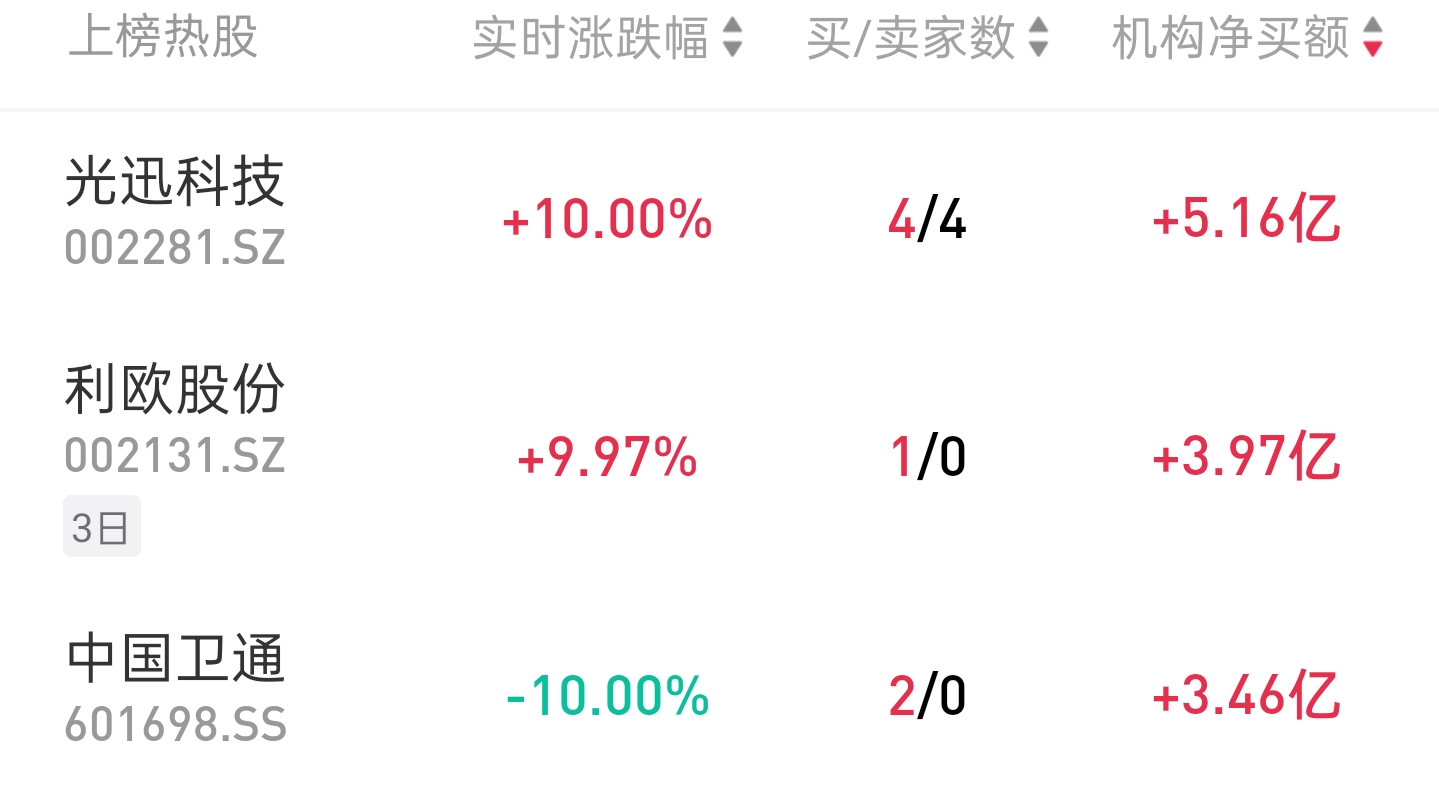
共69只个股出现了机构的身影。 盘后数据显示,1月14日龙虎榜中,共69只个股出现了机构的身影,有50只股票呈现机构净买入,19只 股票呈现机构净卖出。 当天机构净买入前三的股票分别是光迅科技、利欧股份、中国卫通,净买入金额分别是5.16亿元、3.97 亿元、3.46亿元。 当天机构净卖出前三的股票分别是南方传媒、岩山科技、浙文互联,净流出金额分别是2.55亿元、2.23 亿元、1.6亿元。 | | 吃虎榜 1.14 | | | --- | --- | --- | | 证券简称 | 目涨跌幅 | 机构净买入(万元) | | 光迅科技 | 10.00% | 51578.19 | | 利欧股份 | 9.97% | 39662.88 | | 中国卫通 | -10.00% | 34609.85 | | 佳缘科技 | 20.00% | 29838.52 | | 醬藏医药 | -7.46% | 19082.63 | | 石基信息 | 9.97% | 15894.15 | | 陕西旅游 | -2.97% | 13939.55 | | 捷顺科技 | 9.99% | 13841.48 | | 山子高科 | 10.10% | 1 ...

利欧股份涨停,深股通龙虎榜上净买入6196.29万元
Zheng Quan Shi Bao Wang· 2026-01-14 09:18
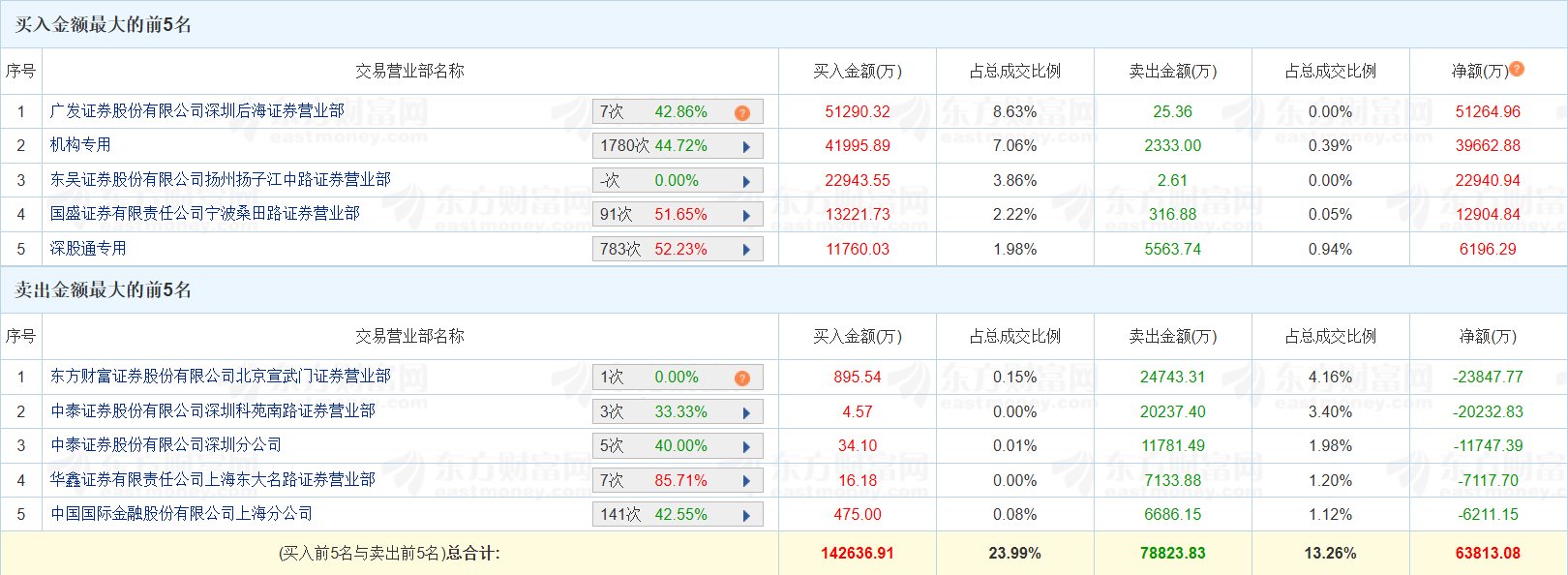
利欧股份今日涨停,全天换手率10.46%,成交额59.45亿元,振幅5.53%。龙虎榜数据显示,机构净买入 3.97亿元,深股通净买入6196.29万元,营业部席位合计净买入1.80亿元。 深交所公开信息显示,当日该股因日涨幅偏离值达9.35%上榜,机构专用席位净买入3.97亿元,深股通 净买入6196.29万元。 证券时报·数据宝统计显示,上榜的前五大买卖营业部合计成交22.15亿元,其中,买入成交额为14.26亿 元,卖出成交额为7.88亿元,合计净买入6.38亿元。 具体来看,今日上榜的营业部中,共有1家机构专用席位现身,即买二,买入金额4.20亿元,卖出金额 2333.00万元,合计净买入3.97亿元,深股通为第五大买入营业部,买入金额为1.18亿元,卖出金额为 5563.74万元,合计净买入6196.29万元。 近半年该股累计上榜龙虎榜15次,上榜次日股价平均涨3.29%,上榜后5日平均涨13.71%。 资金流向方面,今日该股主力资金净流入3130.62万元,其中,特大单净流入3.46亿元,大单资金净流出 3.15亿元。近5日主力资金净流入17.76亿元。 融资融券数据显示,该股最新(1月13日)两 ...
龙虎榜丨利欧股份4连板创新高,一机构净买入3.97亿元,深南东路净买入5.13亿元
Ge Long Hui A P P· 2026-01-14 09:13
格隆汇1月14日|利欧股份(002131.SZ)今日涨停4连板,股价创历史新高,换手率10.46%,成交额59.45亿元。龙虎榜数据显示,一家机构买入4.2亿元,卖出 2333万元,净买入3.97亿元;游资"深南东路"位列买一席位,净买入5.13亿元;"宁波桑田路"位列买四席位,净买入1.29亿元;"低位挖掘"位列卖四席位,净 卖出7117万元;"量化基金"位列卖五席位,净卖出6211万元。上榜席位全天买入14.26亿元,卖出7.88亿元,合计净买入6.38亿元。(格隆汇) | 序号 | 交易营业部名称 | | | | 买入金额(万) | 占总成交比例 | | --- | --- | --- | --- | --- | --- | --- | | 1 | 东方财富证券股份有限公司北京宣武门证券营业部 | 1次 | 0.00% | 2 | 895.54 | 0.15% | | 2 | 中泰证券股份有限公司深圳科苑南路证券营业部 | 3次 | 33.33% | | 4.57 | 0.00% | | 3 | 中泰证券股份有限公司深圳分公司 | 5次 | 40.00% | | 34.10 | 0.01% | | 4 ...
1月14日主题复盘 | 全市场成交近4万亿,AI应用持续大涨,AI医疗、数据中心等也表现不俗
Xuan Gu Bao· 2026-01-14 09:09
Market Overview - The market experienced fluctuations with mixed performance across the three major indices, with a total trading volume reaching nearly 4 trillion, setting a new historical high [1] - AI application sectors, particularly AI marketing and AI healthcare, showed strong performance, with several stocks hitting the daily limit [1][7] - Conversely, lithium mining stocks declined, with Zhongmin Resources dropping over 7%, and financial stocks like China Pacific Insurance fell by more than 3% [1] AI Marketing - The AI marketing sector continued to surge, with stocks such as Liou Co., Shenguang Group, Tianxiao, and People's Daily hitting the daily limit [4][5] - Liou Co. achieved a 9.97% increase, marking its sixth consecutive day of gains, with a market cap of 580.88 billion [5] - Long-term projections suggest the global GEO market could reach $11.2 billion by 2025 and potentially $100 billion by 2030, indicating a shift towards new business models in advertising [6] AI Healthcare - The AI healthcare sector also saw significant gains, with Meinian Health achieving a fourth consecutive limit-up, and other companies like International Medicine and New Mileage also performing well [7][8] - Meinian Health's stock rose by 9.99%, with a market cap of 315.75 billion, driven by advancements in AI health management [8] - Analysts predict that by 2026, AI healthcare will experience a fundamental shift, with clearer payment structures and stronger commercialization potential [9] Cloud Computing Data Centers - The cloud computing data center sector experienced a notable rise, with companies like Dazhi Technology, Huasheng Tiancheng, and Jerey Co. hitting the daily limit [10][11] - Alibaba Cloud aims to capture 80% of the incremental AI cloud market in China by 2026, indicating aggressive growth plans [11] - The demand for AI data centers is expected to accelerate due to increasing usage of tokens by major domestic companies and the maturation of domestic GPU manufacturers [12] Smart Glasses - The smart glasses sector showed positive performance, with companies like Liding Optoelectronics and Doctor Glasses experiencing significant stock increases [13][15] - Meta's strong sales of Ray-Ban Meta glasses have prompted discussions about increasing production capacity significantly by 2026 [14] - Analysts believe that the integration of generative AI will transform smart glasses into more interactive devices, potentially making them a mainstream consumer product [15]