
Visionox(002387)

Search documents
维信诺联合桐力光电推出车规级柔性OLED新材料
WitsView睿智显示· 2025-11-26 03:38
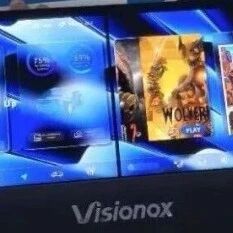
图片来源:桐力光电 11月21日,苏州桐力光电股份有限公司(下文简称"桐力光电")发文称,历经近两年的联合研 发,在一年一度的全球显示盛会"上海色之美"现场,公司与维信诺共同发布了车规级柔性OCA技 术。该技术结合维信诺最新的柔性OLED屏幕,首次实现了极致无边框双联屏柔性折叠的创新应 用。 资料显示,苏州桐力光电股份有限公司成立于2012年,注册资本8178.4359万元,专注于光电领 域的纳米新材料研发及应用。公司提供涵盖光电显示产业一体化触控显示解决方案,包括自主研 发的全贴合纳米有机硅胶粘剂、全贴合加工工艺、全自动生产设备等。(来源:桐力光电、集邦D isplay整理) 【集邦Display显示产业交流群】 ! . 00 i ▶ 关于集邦 桐力光电表示,当前,手机行业的折叠OCA尚在攻克-15℃的低温折叠难题,而车规级OCA则面 临-35℃的严苛低温环境与更长使用寿命的双重挑战。过去几年,受限于OCA材料性能,众多主 机厂在推进柔性OLED的创新应用时屡屡受阻。 面对上述问题,桐力光电与维信诺通过战略合作,从核心树脂的全面国产化入手,实现了超低温 光学胶粘剂的突破。新材料在满足主机厂对低温耐受性与耐久 ...


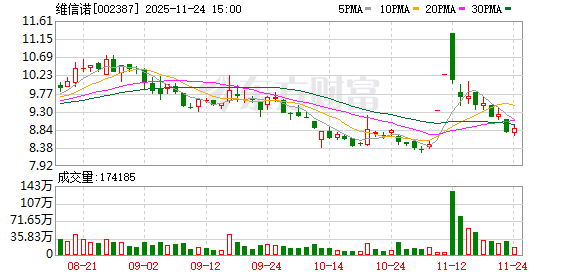
维信诺涨2.02%,成交额4583.04万元,主力资金净流出168.95万元
Xin Lang Cai Jing· 2025-11-26 01:59
Core Viewpoint - The stock of Visionox Technology Co., Ltd. has shown fluctuations, with a recent increase of 2.02% to 9.11 CNY per share, while the company has experienced a year-to-date decline of 11.38% [1] Financial Performance - For the period from January to September 2025, Visionox reported a revenue of 6.051 billion CNY, reflecting a year-on-year growth of 3.50%. However, the net profit attributable to shareholders was -1.623 billion CNY, which is an increase of 9.67% compared to the previous year [2] Shareholder Information - As of November 20, 2025, the number of shareholders for Visionox increased to 71,700, marking a rise of 14.69%. The average circulating shares per person decreased by 12.81% to 19,444 shares [2] Dividend Distribution - Since its A-share listing, Visionox has distributed a total of 53.2384 million CNY in dividends, with no dividends paid in the last three years [3] Institutional Holdings - As of September 30, 2025, Hong Kong Central Clearing Limited was the eighth largest circulating shareholder of Visionox, holding 11.0486 million shares, which is an increase of 2.8175 million shares from the previous period [3]
中尺寸OLED市场应用激增 产业链产能扩张与技术创新齐加速
Zheng Quan Ri Bao Wang· 2025-11-25 13:59
Core Insights - The mid-size OLED display is leading a surge in the popularity of OLED panels, driven by its technical advantages in picture quality, color gamut, contrast, and response speed, particularly with refresh rates exceeding 240Hz, which is boosting demand in the high-end gaming market [1] - By 2025, OLED display shipments are expected to reach 2.62 million units, representing an 84% year-on-year growth [1] Industry Trends - OLED technology is expanding from mobile devices to mid-size screens in computers and automotive applications, with increasing demand noted [2] - The launch of the OLED-equipped iPad Pro by Apple is seen as a significant signal of the transition from LCD to OLED in high-end mid-size displays [2] - Companies like BOE Technology Group, Visionox, TCL Technology, and Lite-On Optoelectronics have already begun to position themselves in the OLED supply chain [2] Capacity Expansion - TCL Technology's subsidiary, TCL Huaxing, has initiated the construction of the world's first mass production line for 8.6-generation printed OLED panels in Guangzhou, with a total investment of 29.5 billion yuan and a designed monthly capacity of 22,500 glass substrates [2] - BOE's AMOLED production line in Chengdu is set to achieve mass production by Q4 2026, with a monthly capacity of 32,000 substrates, primarily for high-end laptops and tablets [3] Technological Innovation - The OLED industry is experiencing rapid technological innovation alongside capacity expansion, which is crucial for reducing costs and increasing market penetration [4] - Major players are adopting different technological routes: TCL Huaxing is focusing on printed OLED, BOE is using mature evaporation technology, and Visionox is betting on ViP technology [4] - The strategic significance of TCL's t8 project is not only in capacity expansion but also in a technological leap [4] Material Development - Lite-On Optoelectronics is accelerating breakthroughs in OLED terminal materials, achieving significant advancements in domestic OLED material production [5] - The company has developed Red Prime materials and completed the localization of Green Host and Red Host materials, with ongoing efforts in new generation narrow-spectrum dopant materials [5] - Lite-On Optoelectronics plans to raise up to 766 million yuan through convertible bonds to fund various projects, including the construction of new material production bases and smart upgrades [6] Market Outlook - The domestic OLED industry is transitioning from merely existing to focusing on quality, with technological innovation being key to meeting high-end demands [6] - The overall layout of the domestic OLED supply chain is becoming more comprehensive and mature, with expectations for accelerated advancement into high-end markets and increased international market share [6]



维信诺:无逾期担保
Zheng Quan Ri Bao· 2025-11-24 11:45
证券日报网讯 11月24日晚间,维信诺发布公告称,公司无逾期担保,无涉及诉讼的担保,未因担保被 判决败诉而承担损失。 (文章来源:证券日报) ...
供货京东方、维信诺等,多家韩国设备厂受益
WitsView睿智显示· 2025-11-24 10:08
Core Viewpoint - The article highlights the recovery of the South Korean display equipment industry, with seven companies turning profitable in Q3 compared to the previous year, largely due to investments by Chinese panel manufacturers in OLED production lines [1][2]. Group 1: Financial Performance of Companies - Seven South Korean display equipment companies reported a turnaround in profitability, with the number of loss-making companies decreasing from nine to two [1]. - Device and Sunic Systems showed the highest revenue growth, with increases of 638% and 587% respectively, reflecting the impact of Chinese panel manufacturers' investments [1]. - Sunic System transitioned from a loss of 1.6 billion KRW in Q3 last year to a profit of 19.5 billion KRW this year, attributed to contracts with BOE for OLED production line equipment [1][2]. Group 2: Specific Company Developments - Device achieved revenues of 39.1 billion KRW and an operating profit of 13.3 billion KRW in Q3, marking a 637% year-on-year revenue increase and a 504% rise in operating profit [5]. - ICD significantly reduced its operating loss from 3.1 billion KRW last year to 300 million KRW this year, with a cumulative profit shift from a loss of 16.8 billion KRW to a profit of 260 million KRW [6]. - TSI's cumulative operating profit increased from 26.2 billion KRW to 29.4 billion KRW, benefiting from orders from BOE and Visionox [6][7]. Group 3: Market Trends and Implications - The article notes that companies focusing on the Chinese market have shown significant performance improvements, with ICD's revenue from exports reaching 70% in Q3 [6]. - The increasing reliance on the Chinese market for equipment suppliers is seen as a necessary trend due to the rapid advancements in OLED technology by companies like BOE and TCL Huaxing [7].

维信诺(002387) - 关于为控股孙公司提供担保的进展公告
2025-11-24 08:15
证券代码:002387 证券简称:维信诺 公告编号:2025-140 维信诺科技股份有限公司 关于为控股孙公司提供担保的进展公告 本公司及董事会全体成员保证信息披露的内容真实、准确、完整,无虚 假记载、误导性陈述或者重大遗漏。 特别提示: 截至目前,维信诺科技股份有限公司(以下简称"公司")及控股公司对外担 保总额(含对合并报表范围内子公司担保)已超过公司最近一期经审计净资产的 100%,担保金额超过公司最近一期经审计净资产的 50%,公司对合并报表外单 位担保金额超过最近一期经审计净资产的 30%,敬请广大投资者注意投资风险。 一、担保情况概述 公司分别于 2025 年 3 月 20 日和 2025 年 4 月 10 日召开第七届董事会第十七 次会议和 2024 年度股东大会,审议通过了《关于 2025 年度为公司及子公司提供 担保额度预计的议案》,同意公司 2025 年度为控股子公司云谷(固安)科技有 限公司、控股孙公司昆山国显光电有限公司(以下简称"国显光电")、全资公 司昆山工研院新型平板显示技术中心有限公司、全资公司江苏汇显显示技术有限 公司和公司提供总额度不超过人民币 226.2 亿元的担保。担保 ...
三星瑕疵屏幕引爆手机业“绿线门”,大厂售后按闹分配被吐槽
Di Yi Cai Jing· 2025-11-21 11:25
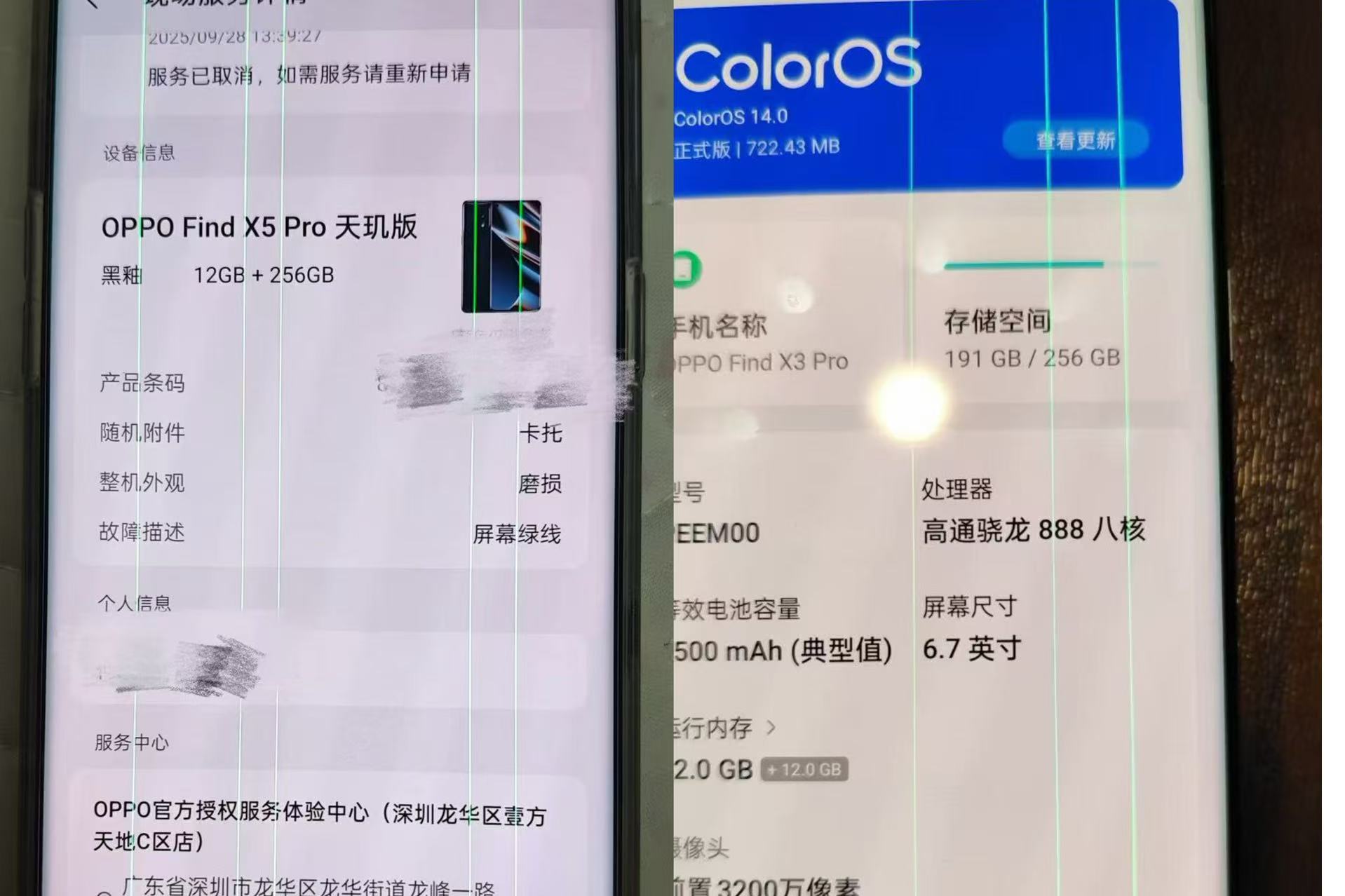
Core Viewpoint - The article discusses the consumer rights issues arising from the "green line" problem in smartphone screens, affecting major brands like OPPO, Vivo, Samsung, Xiaomi, and Huawei, highlighting the inconsistent after-sales service and warranty policies among these manufacturers [1][9]. Group 1: After-Sales Service Policies - OPPO and Vivo offer a warranty period of around four years, while Xiaomi, Huawei, and Honor typically provide one year of warranty service [3]. - OPPO announced free screen replacement for devices with green line issues within four years of purchase, while users with devices older than four years can receive discounted repair services [3]. - There are significant discrepancies in after-sales service experiences among OPPO users, with some receiving free replacements while others are denied service due to lack of purchase receipts [4][5]. Group 2: Consumer Complaints and Experiences - Many consumers report unreasonable demands for proof of purchase, such as requiring original receipts and packaging, which complicates the warranty claim process [4][8]. - Some users have successfully obtained free screen replacements after escalating complaints through various channels, despite being initially denied service [4][5]. - The article notes that even within the same brand, different service centers may apply different policies regarding the green line issue, leading to confusion and frustration among consumers [7][8]. Group 3: Technical Background of the Issue - The green line issue is a common fault in OLED displays, potentially caused by various factors such as chip failure or circuit issues [9][11]. - The problem has been linked to specific batches of screens supplied by Samsung, affecting multiple smartphone models [11]. - High temperatures and humidity are noted as conditions that can exacerbate the green line problem, with summer months being particularly problematic [12]. Group 4: Industry Response and Consumer Trust - There is a growing consumer expectation for a transparent and fair after-sales service system, especially in light of the marketing claims of high-quality products [13]. - The article emphasizes that the lack of a unified standard in after-sales service undermines consumer trust, as users feel that the service does not match the promised product quality [13].


维信诺:公司参与投资的第8.6代AMOLED产线,主要面向未来快速增长的中尺寸市场
Mei Ri Jing Ji Xin Wen· 2025-11-21 09:56
Core Viewpoint - The company provides detailed information about its production lines and investment in AMOLED technology, highlighting its focus on various applications such as smart wearables, smartphones, and other emerging markets [1] Production Lines - The company controls the Kunshan 5.5-generation AMOLED production line, which primarily supplies AMOLED screens for smart wearables, smartphones, smart home devices, smart imaging, and gaming entertainment [1] - The company also controls the Gu'an 6-generation AMOLED production line, mainly producing flexible AMOLED screens for smart wearables and smartphones [1] - The company has a stake in the Hefei 6-generation AMOLED production line, which focuses on high-end AMOLED screens for smart wearables, smartphones, foldable phones, IT, and automotive displays [1] - The company is involved in the investment of the 8.6-generation AMOLED production line, targeting the rapidly growing mid-size market [1] Investment Information - The company encourages investors to refer to previous announcements for detailed investment information regarding each production line [1]
四年暴涨121%!OLED还要疯涨?
半导体芯闻· 2025-11-20 10:49
Core Insights - The global IT OLED shipment is projected to grow from 24 million units in 2025 to 53 million units by 2029, indicating a structural growth phase in the next four years [1] - Samsung Display is expected to maintain over 60% market share as the largest producer of OLED panels for laptops, tablets, and monitors, with competitors like LG Display, EverDisplay, BOE, and Visionox following closely [1] Group 1: Market Trends - IT OLED products primarily utilize medium to large panels, necessitating production lines that maximize panel utilization based on large substrates [2] - Major terminal manufacturers, particularly Apple, are rapidly increasing the OLED share in their IT product lines, prompting panel manufacturers to prioritize investments in 8.6G OLED production lines [2] Group 2: Investment and Competition - Samsung Display announced an investment of approximately 4 trillion KRW in April 2023 for the construction of an 8.6G OLED production line, with other companies like BOE, Visionox, and TCL CSOT following suit [2] - Tianma Microelectronics is also exploring investments in 8.6G OLED production lines, highlighting a shift in the OLED market focus from smartphones to laptops, tablets, and monitors [2] Group 3: Technological Advancements - As the market expands, the technical requirements for IT OLED are evolving, with longer replacement cycles and higher white screen usage leading to burn-in issues [3] - The 2 Stack Tandem OLED structure, characterized by long lifespan, high brightness, and efficiency, is becoming a critical evaluation metric [3] - Samsung Display is focusing on Apple as a core customer for OLED panels for MacBook Pro, while Chinese manufacturers are targeting the broader market for laptops, tablets, and smartphones [3]

维信诺涨2.40%,成交额1.01亿元,主力资金净流出871.05万元
Xin Lang Zheng Quan· 2025-11-20 02:34
Core Points - The stock price of Visionox increased by 2.40% on November 20, reaching 9.38 CNY per share, with a trading volume of 1.01 billion CNY and a market capitalization of 13.102 billion CNY [1] - Year-to-date, Visionox's stock price has decreased by 8.75%, with a recent 5-day decline of 2.90%, a 20-day increase of 9.07%, and a 60-day decrease of 3.20% [2] - Visionox has been listed on the stock market since April 13, 2010, and specializes in the research, production, and sales of AMOLED display products, with 96.92% of its revenue coming from OLED products [2] - As of November 10, 2023, Visionox had 62,600 shareholders, a decrease of 0.99% from the previous period, with an average of 22,301 circulating shares per shareholder, an increase of 1.00% [2] - For the period from January to September 2025, Visionox reported a revenue of 6.051 billion CNY, a year-on-year increase of 3.50%, while the net profit attributable to shareholders was -1.623 billion CNY, a year-on-year increase of 9.67% [2] - Visionox has distributed a total of 53.2384 million CNY in dividends since its A-share listing, with no dividends paid in the last three years [3] - As of September 30, 2025, Hong Kong Central Clearing Limited was the eighth largest circulating shareholder of Visionox, holding 11.0486 million shares, an increase of 2.8175 million shares from the previous period [3]