KHPG(002773)

Search documents
康弘药业:关于公司证券事务代表辞职的公告
Zheng Quan Ri Bao· 2026-02-03 12:07
Group 1 - The core point of the article is that Kanghong Pharmaceutical announced the resignation of its securities affairs representative, Liu Gaolei, due to personal reasons, effective immediately upon delivery of the resignation to the board of directors [2] Group 2 - Liu Gaolei will no longer hold any position within the company following his resignation [2]


康弘药业(002773) - 关于公司证券事务代表辞职的公告
2026-02-03 08:00
证券代码:002773 证券简称:康弘药业 公告编号:2026-004 刘高磊先生辞职不会影响公司相关工作的正常开展,公司将根据 《深圳证券交易所股票上市规则》《深圳证券交易所上市公司自律监 管指引第 1 号——主板上市公司规范运作》等相关规定,尽快聘任符 合任职资格的相关人士担任证券事务代表,协助公司董事会秘书开展 工作。 特此公告。 成都康弘药业集团股份有限公司董事会 2026 年 2 月 3 日 成都康弘药业集团股份有限公司 关于公司证券事务代表辞职的公告 本公司及董事会全体成员保证信息披露内容的真实、准确和完 整,没有虚假记载、误导性陈述或重大遗漏。 成都康弘药业集团股份有限公司(以下简称"公司")董事会于 近日收到公司证券事务代表刘高磊先生的书面辞职报告,刘高磊先生 因个人原因,申请辞去公司证券事务代表职务,辞呈自送达公司董事 会之日起生效,刘高磊先生辞职后将不再担任公司任何职务。 ...
趋势研判!2026年中国妇科用药行业发展背景、产业链、市场规模、重点企业及未来趋势:妇科疾病高发促进用药需求,行业规模增至595.3亿元[图]
Chan Ye Xin Xi Wang· 2026-02-02 01:09
Industry Overview - The gynecological medication industry encompasses drugs for the prevention, diagnosis, and treatment of gynecological diseases, including traditional hormone therapies, antibiotics, analgesics, and immunomodulators [1][3] - The market for gynecological medications in China has shown rapid growth, with the market size increasing from 27.735 billion yuan in 2012 to an estimated 56.137 billion yuan in 2024, reflecting a compound annual growth rate (CAGR) of 6.05% [1][9] - By 2025, the market size is projected to reach approximately 59.53 billion yuan, driven by increasing awareness of women's health and societal emphasis on female health [1][9] Market Dynamics - The prevalence of gynecological diseases among adult women in China is high, with an estimated incidence rate between 40% and 70%, including conditions such as tumors, cysts, reproductive-related diseases, and gynecological inflammation [6] - The rise in gynecological disease rates and the growing health consciousness among women are contributing to the steady expansion of the gynecological medication market [6] Industry Chain - The gynecological medication industry chain consists of upstream raw materials, intermediates, and pharmaceutical equipment; midstream production; and downstream distribution through pharmacies, hospitals, and e-commerce platforms [6][7] Key Companies - Notable companies in the gynecological medication sector include Qianjin Pharmaceutical, Tongrentang, Kangyuan Pharmaceutical, Jiuzhitang, Yunnan Baiyao, and others, which are focusing on R&D and product differentiation [10][11] Development Trends - Future product development in gynecological medications is expected to shift towards precision and individualized treatment, utilizing diagnostic technologies to enhance treatment efficacy and reduce side effects [12] - Innovations in drug formulations and delivery methods will improve patient compliance and experience, with a focus on long-acting, user-friendly options [13] - The role of gynecological medication companies is evolving from mere drug suppliers to providers of comprehensive health management solutions for women throughout their life stages [14]




生物制品板块1月29日跌1.3%,华兰疫苗领跌,主力资金净流出8.66亿元
Zheng Xing Xing Ye Ri Bao· 2026-01-29 09:03
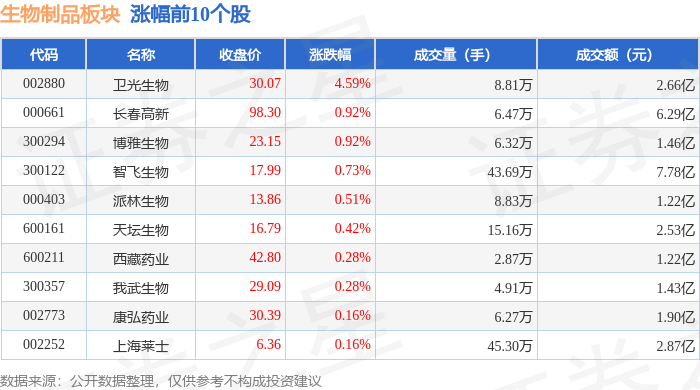
Market Overview - The biopharmaceutical sector experienced a decline of 1.3% on January 29, with Hualan Vaccine leading the drop [1] - The Shanghai Composite Index closed at 4157.98, up 0.16%, while the Shenzhen Component Index closed at 14300.08, down 0.3% [1] Individual Stock Performance - Weigao Bio (002880) saw a closing price of 30.07, with an increase of 4.59% and a trading volume of 88,100 shares, totaling a transaction value of 266 million yuan [1] - Changchun High-tech (000661) closed at 98.30, up 0.92%, with a trading volume of 64,700 shares and a transaction value of 629 million yuan [1] - Other notable performers include Boya Bio (300294) and Zhifei Biological (300122), both with a closing price increase of 0.92% and 0.73% respectively [1] Declining Stocks - Hualan Bio (301207) reported a significant decline of 9.05%, closing at 22.62, with a trading volume of 300,600 shares and a transaction value of 689 million yuan [2] - Junshi Biosciences (688180) fell by 6.02%, closing at 36.82, with a trading volume of 266,100 shares and a transaction value of 1 billion yuan [2] - Other stocks such as Jinkang (688670) and Bohui Innovation (300318) also experienced declines of 5.81% and 4.95% respectively [2] Capital Flow Analysis - The biopharmaceutical sector saw a net outflow of 866 million yuan from institutional investors, while retail investors contributed a net inflow of 682 million yuan [2] - Notable net inflows from retail investors were observed in stocks like Shanghai Laishi (002252) and Weigao Bio (002880) [3] - Conversely, stocks such as Zhixiang Quantai (688443) and Weigao Bio (002880) experienced significant net outflows from institutional and speculative investors [3]




生物制品板块1月28日跌1.98%,百普赛斯领跌,主力资金净流出12.52亿元
Zheng Xing Xing Ye Ri Bao· 2026-01-28 08:58
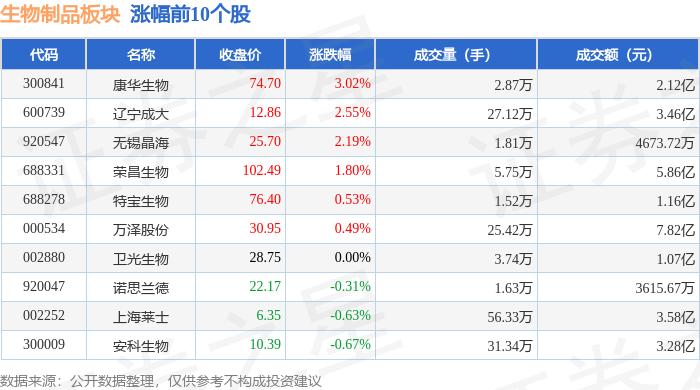
Group 1 - The biopharmaceutical sector experienced a decline of 1.98% on January 28, with Baipusais leading the drop [1] - The Shanghai Composite Index closed at 4151.24, up 0.27%, while the Shenzhen Component Index closed at 14342.9, up 0.09% [1] - Notable gainers in the biopharmaceutical sector included Kanghua Biological, which rose by 3.02% to a closing price of 74.70, and Liaoning Chengda, which increased by 2.55% to 12.86 [1] Group 2 - Baipusais saw a significant drop of 10.57%, closing at 58.18, with a trading volume of 57,400 shares and a transaction value of 342 million [2] - Other notable decliners included Kangla Weishi, down 6.16% to 10.97, and Jinchuan Protein, down 5.90% to 46.58 [2] - The biopharmaceutical sector experienced a net outflow of 1.252 billion in main funds, while retail investors saw a net inflow of 653 million [2] Group 3 - Rongchang Biological had a net inflow of 38 million from main funds, representing 6.49% of its total, while it faced a net outflow of 58.99 million from retail investors [3] - Liaoning Chengda also saw a net inflow of 14.86 million from main funds, but a net outflow of 15.01 million from retail investors [3] - The overall trend indicates a mixed sentiment in the biopharmaceutical sector, with main funds withdrawing while retail investors are actively buying [3]


成都建起二十四个政企微信交流群 企业群内“下单” 政府线下“跑腿”
Si Chuan Ri Bao· 2026-01-28 06:15
Group 1 - The core idea of the article is the establishment of WeChat groups in Chengdu to facilitate communication between businesses and government, enhancing the efficiency of problem-solving for enterprises [1][2] - The initiative aims to address urgent and emerging needs of key enterprises by creating a "virtual reception room" that allows direct communication with decision-makers [2] - The program has successfully connected over 5,000 key enterprises in Chengdu, forming a rapid response service network that improves problem identification and resolution efficiency [2] Group 2 - The Chengdu Municipal Economic Development Promotion Center has been instrumental in providing tailored services to businesses, likening the service to a "dedicated customer service channel" provided by the government [4] - A notable case involved the expedited import process for a critical cancer treatment drug, where a multi-department coordination meeting led to a streamlined "fast customs clearance" mechanism, reducing delivery time by 80% [4] - As of now, the initiative has engaged with 182,600 enterprises, collected 45,100 issues, and achieved a resolution rate of over 99% [5]
基金持仓重回底部,建议持续加配医药底部资产
ZHONGTAI SECURITIES· 2026-01-25 13:14
Investment Rating - The industry investment rating is maintained at "Overweight" [2] Core Insights - The report highlights that the pharmaceutical sector is showing resilience, with a focus on capturing opportunities from companies that can deliver on their growth potential. The report suggests that investors should continue to allocate to pharmaceutical bottom assets as fund holdings have returned to a low level [3][10] - The report indicates that the A-share funds' top ten holdings in the pharmaceutical sector account for 9.15%, a decrease of 1.93 percentage points from the previous period. Excluding pharmaceutical funds, the allocation drops to 3.43%, down 1.39 percentage points [3][10] - The report emphasizes the strong performance of certain pharmaceutical companies, particularly in innovative drugs and upstream life sciences, with notable profit growth forecasts for companies like Zhaoyan New Drug and Kangchen Pharmaceutical [3][10] Summary by Sections Market Dynamics - The pharmaceutical sector has outperformed the broader market, with a return of 6.66% compared to the CSI 300's 1.57% since the beginning of 2026, indicating a 5.10 percentage point advantage [14] - Recent performance shows a mixed trend, with pharmaceutical commercial, traditional Chinese medicine, and medical devices showing positive growth, while chemical pharmaceuticals and medical services have declined [10][14] Valuation Metrics - The current valuation of the pharmaceutical sector is at 23.3 times PE based on 2026 earnings forecasts, which is a premium of 11.3% compared to the overall A-share market (excluding financials) at approximately 21.0 times PE [17] - Using the TTM valuation method, the pharmaceutical sector is valued at 30.3 times PE, which is below its historical average of 34.9 times PE, indicating a relative premium of 11.2% over the broader market [17] Recommended Stocks - Key recommended stocks include WuXi Biologics, Sangfor Technologies, Tigermed, and others, with an average increase of 13.41% in January, outperforming the pharmaceutical sector by 6.74 percentage points [26][27] - The report notes that the top ten pharmaceutical stocks held by public funds include companies like Hengrui Medicine and WuXi AppTec, with a strong preference for innovative drugs and leading players in niche markets [3][10]



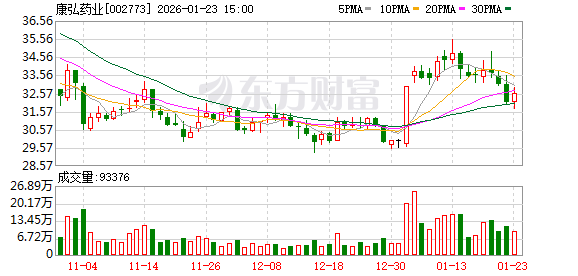
康弘药业:KH110项目Ⅲ期临床试验正在多家医院开展,招募对象为50~80岁轻、中度阿尔茨海默病患者
Mei Ri Jing Ji Xin Wen· 2026-01-23 08:28
Core Viewpoint - The company is currently conducting a Phase III clinical trial for its KH110 project, targeting patients aged 50 to 80 with mild to moderate Alzheimer's disease [2] Group 1 - The clinical trial is being carried out at multiple hospitals across the country [2] - The recruitment criteria for the trial specify that participants must be between the ages of 50 and 80 [2] - Information regarding the trial has been registered and made publicly available on the National Medical Products Administration's clinical trial registration platform [2] Group 2 - The company encourages interested individuals or their families to check the registration platform for specific inclusion criteria [2] - Participants are advised to visit nearby research hospitals for evaluation if they wish to join the trial [2]
生物制品板块1月22日跌0.73%,艾迪药业领跌,主力资金净流出5.51亿元
Zheng Xing Xing Ye Ri Bao· 2026-01-22 09:01
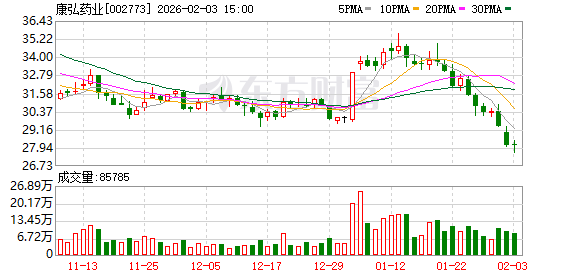
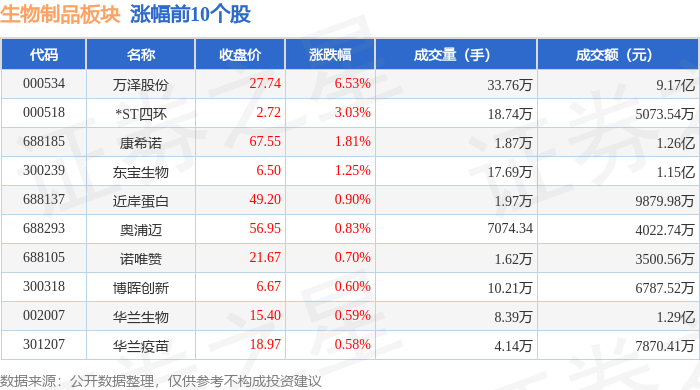
Market Overview - The biopharmaceutical sector experienced a decline of 0.73% on January 22, with Aidi Pharmaceutical leading the drop [1] - The Shanghai Composite Index closed at 4122.58, up 0.14%, while the Shenzhen Component Index closed at 14327.05, up 0.5% [1] Individual Stock Performance - Wanze Co., Ltd. (000534) saw a significant increase of 6.53%, closing at 27.74 with a trading volume of 337,600 shares and a transaction value of 917 million [1] - Aidi Pharmaceutical (688488) reported a substantial decrease of 13.48%, closing at 18.17 with a trading volume of 281,700 shares and a transaction value of 537 million [2] - Other notable performers included ST Sihuan (000518) with a rise of 3.03% and Kanghong Pharmaceutical (002773) with a decline of 3.03% [1][2] Capital Flow Analysis - The biopharmaceutical sector experienced a net outflow of 551 million from institutional investors, while retail investors saw a net inflow of 279 million [2] - The main capital inflow was observed in Wanze Co., Ltd. with 81.16 million from institutional investors, while Kanghong Pharmaceutical had a net outflow of 50.59 million from retail investors [3]


四川上市公司ESG-V评级出炉:资源型经济如何走向价值型定价?|上市公司观察
Xin Lang Cai Jing· 2026-01-22 05:49
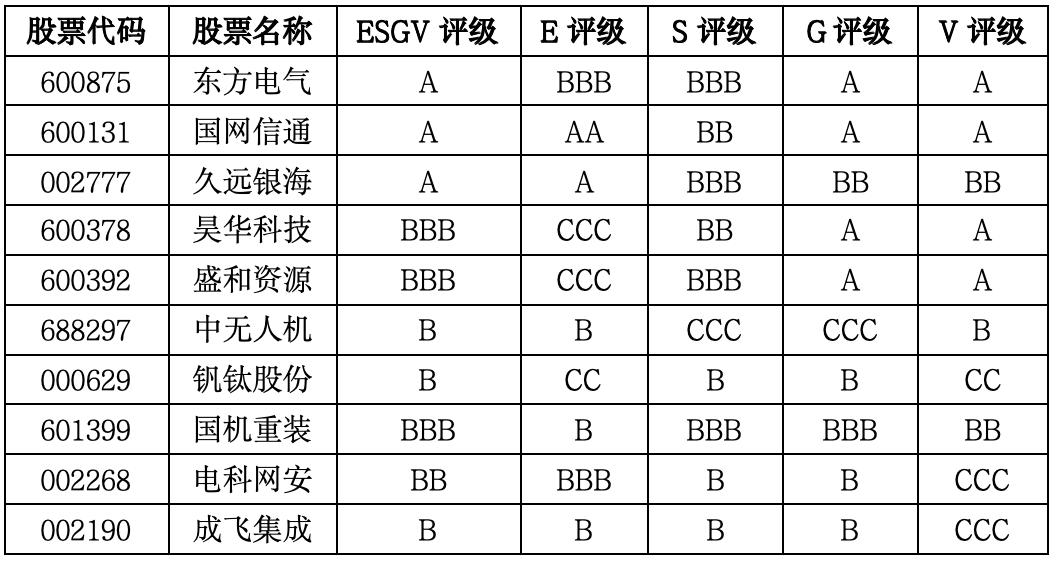
Core Insights - Sichuan plays a unique role in the western economic landscape, possessing rare energy, mineral, and agricultural resources, along with a concentration of leading enterprises in sectors like liquor, equipment manufacturing, biomedicine, and electronic information [1] - The recent ESG-V rating report by Jiaan Jinxin evaluates Sichuan's listed companies on environmental, social, governance, and value dimensions, addressing the critical question of how resource advantages can be transformed into sustainable governance and long-term value [1][2] - The ESG-V rating system introduces "value" as a key variable, assessing whether companies can achieve sustainable profitability and stable capital returns, highlighting a structural differentiation among Sichuan's listed companies [1][2] ESG-V Ratings Overview - New Yiseng is the only company in Sichuan to receive the highest ESG-V rating of AAA, demonstrating strong governance and value dimensions, indicative of a technology-intensive enterprise with controllable resource consumption [2] - The AA tier includes companies like Wuliangye, Kanghong Pharmaceutical, and Xinhua Wencuan, which, despite not having absolute advantages in environmental dimensions, exhibit strong governance structures and value stability [2] - The majority of Sichuan's listed companies fall into the A and BBB rating categories, indicating established compliance and governance frameworks but facing challenges in environmental performance and value stability [3] Industry Challenges and Transition - Many energy, mining, and heavy manufacturing companies face significant pressure in the environmental dimension, while some firms have a foundation in social responsibility but need to improve capital efficiency [3] - The overall ESG-V structure of Sichuan's listed companies reflects a transition from a resource-based economy to a value-based pricing model, with leading firms establishing stable long-term value through technology and governance [3][4] - The ESG-V rating list serves as a "health report" for regional capital structures, emphasizing that long-term investment should focus on companies that integrate resource advantages, governance capabilities, and value creation [4]