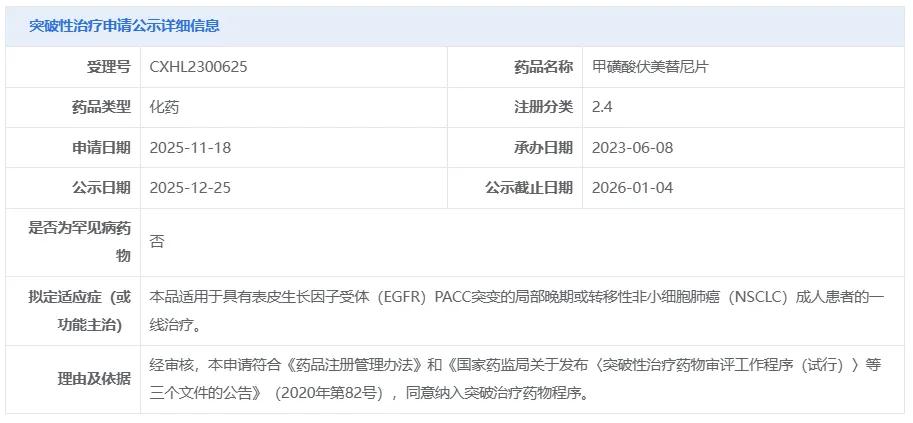
甲磺酸伏美替尼片

Search documents
研判2026!全球及中国抗肿瘤药物行业背景、发展现状、治疗方式、竞争格局及未来发展趋势研判:创新迭代赋能产业升级,精准诊疗打开广阔市场空间[图]
Chan Ye Xin Xi Wang· 2026-02-28 01:08
Core Insights - The anti-tumor drug industry is crucial for treating malignant tumors, with a shift from traditional chemotherapy to precision-targeted therapies driven by high cancer incidence globally and in China [1][2][5] Industry Overview - Anti-tumor drugs, also known as anti-cancer drugs, are designed to inhibit tumor cell growth and proliferation, playing a central role in systemic treatment for malignant tumors [2][3] - The industry is characterized by a transition towards innovative therapies such as immunotherapy and antibody-drug conjugates (ADCs), reflecting a global trend towards precision medicine [1][6] Development Background in China - China's cancer incidence and mortality rates are on the rise, with lung cancer, gastric cancer, and liver cancer being the most prevalent, creating a strong clinical demand [5][6] - The government has introduced various policies to support the development of the anti-tumor drug industry, including optimizing clinical trial approvals and enhancing drug accessibility through insurance [5][6] Current Market Analysis - The global anti-tumor drug market is projected to grow from $167 billion in 2020 to $295 billion by 2025, representing a cumulative growth of 76.7% [6][7] - In China, the anti-tumor drug market is expected to increase from 185.8 billion yuan in 2020 to 318.7 billion yuan by 2025, with a growth rate of 71.5% [8][9] Competitive Landscape - The Chinese anti-tumor drug industry features a competitive landscape where multinational companies lead in high-end markets while domestic firms are rapidly emerging [7][9] - Key domestic players like Heng Rui Medicine and BeiGene are making significant strides in core segments such as PD-1 inhibitors and small molecule targeted drugs [8][9] Future Trends - The industry is expected to focus on innovation, with a shift from generic drugs to original innovations and differentiated breakthroughs in areas like ADCs and cell therapies [10][11] - Domestic companies will continue to enhance their market share through policy support and cost advantages, while also working towards self-sufficiency in critical supply chains [11][12] - The regulatory environment will evolve to improve drug accessibility and quality, fostering a competitive ecosystem that prioritizes clinical value and patient affordability [12]





艾力斯:2025年净利润增长52.55%至21.81亿元,核心产品甲磺酸伏美替尼片销售收入大幅增长
Cai Jing Wang· 2026-02-27 07:10
Core Viewpoint - The company reported preliminary financial results for the fiscal year 2025, showing significant growth in both revenue and net profit driven by the sales of its core product, Furmonertinib tablets [1] Financial Performance - The total operating revenue reached 5.172 billion yuan, representing a year-on-year increase of 45.36% [1] - The net profit attributable to the parent company was 2.181 billion yuan, reflecting a year-on-year growth of 52.55% [1] Key Growth Drivers - The substantial increase in revenue and profit was primarily attributed to the significant growth in sales of the core product, Furmonertinib tablets [1] - The company effectively implemented cost-reduction measures, which further enhanced profit levels despite the increase in sales revenue [1]
艾力斯2025年度归母净利润21.81亿元,同比增长52.55%
Zhi Tong Cai Jing· 2026-02-26 08:33
Core Insights - The company,艾力斯(688578.SH), reported a total operating revenue of 5.172 billion yuan for the fiscal year 2025, representing a year-on-year increase of 45.36% [1] - The net profit attributable to the parent company reached 2.181 billion yuan, marking a year-on-year growth of 52.55% [1] Revenue Growth - The significant increase in total operating revenue is primarily driven by the strong sales performance of the core product,甲磺酸伏美替尼片, which has seen a substantial rise in sales volume [1]
艾力斯(688578.SH)2025年度归母净利润21.81亿元,同比增长52.55%
智通财经网· 2026-02-26 08:32
Core Viewpoint - The company,艾力斯, reported a significant increase in both total revenue and net profit for the fiscal year 2025, driven primarily by strong sales of its core product,甲磺酸伏美替尼片 [1] Financial Performance - The total revenue for 2025 reached 5.172 billion yuan, representing a year-on-year growth of 45.36% [1] - The net profit attributable to the parent company's shareholders was 2.181 billion yuan, showing a year-on-year increase of 52.55% [1] Product Performance - The substantial revenue growth was mainly attributed to the increased sales volume of the core product,甲磺酸伏美替尼片, which significantly boosted sales income [1]
艾力斯:2025年营收51.72亿元,净利润同比增52.55%
Xin Lang Cai Jing· 2026-02-26 07:39
Core Insights - The company reported a total operating revenue of 5,171.71 million yuan for the fiscal year 2025, representing a year-on-year growth of 45.36% [1] - The net profit attributable to the parent company was 2,181.29 million yuan, showing a year-on-year increase of 52.55% [1] - As of the end of the reporting period, total assets reached 7,878.66 million yuan, an increase of 33.17% compared to the beginning of the year [1] - The equity attributable to the parent company's owners was 7,075.39 million yuan, reflecting a growth of 33.93% from the start of the year [1] - The growth in performance is primarily attributed to the increased sales of the core product, Fumetinib Mesylate Tablets, along with effective cost reduction measures implemented by the company [1]
芦康沙妥珠单抗新适应症获批上市,联手跨国龙头深化全球战略!
Ge Long Hui· 2026-02-09 21:24
Core Viewpoint - The approval of the new indication for TROP2 ADC drug Sacituzumab (sac-TMT) marks a significant advancement in the treatment of HR+/HER2- breast cancer, highlighting its clinical value and market urgency [1][5][13]. Group 1: Drug Approval and Indications - Sacituzumab has been approved for treating adults with unresectable locally advanced or metastatic HR+ and HER2- breast cancer who have previously received endocrine therapy and other systemic treatments [1][5]. - The approval is based on positive data from the OptiTROP-Breast02 Phase III study, which demonstrated significant survival benefits and manageable safety in a difficult-to-treat patient population [7][13]. Group 2: Drug Characteristics and Development - Sacituzumab is an innovative ADC targeting TROP2, composed of a humanized monoclonal antibody, a cleavable linker, and a novel topoisomerase I inhibitor, with a drug-antibody ratio (DAR) of 7.4, indicating strong drug delivery capabilities [5]. - The drug has multiple approved indications, including treatment for adult patients with unresectable locally advanced or metastatic triple-negative breast cancer (TNBC) and non-small cell lung cancer (NSCLC) [5][6]. Group 3: Global Collaboration and Market Strategy - In May 2022, a strategic collaboration was established with MSD, granting exclusive rights for development and commercialization of Sacituzumab outside Greater China, indicating a global expansion strategy [8]. - MSD has initiated 16 global Phase III clinical studies across various cancer types, aiming to position Sacituzumab as a broad-spectrum ADC [8]. Group 4: Competitive Landscape - Currently, three TROP2 ADCs have been approved globally, including Sacituzumab, highlighting the competitive nature of the ADC market [9]. - In the domestic market, in addition to Sacituzumab, three other products are in Phase III clinical trials, intensifying competition [10]. Group 5: Market Demand and Future Outlook - HR+/HER2- breast cancer accounts for approximately 70% of all breast cancer cases, with significant unmet clinical needs due to treatment resistance and multiple lines of therapy failures [13]. - The approval of Sacituzumab not only enhances treatment options for this patient population but also strengthens the position of domestic ADCs in the international market [13][14]. - The future of the ADC industry will focus on maintaining first-mover advantages, expanding combination therapies, and improving patient accessibility [14].

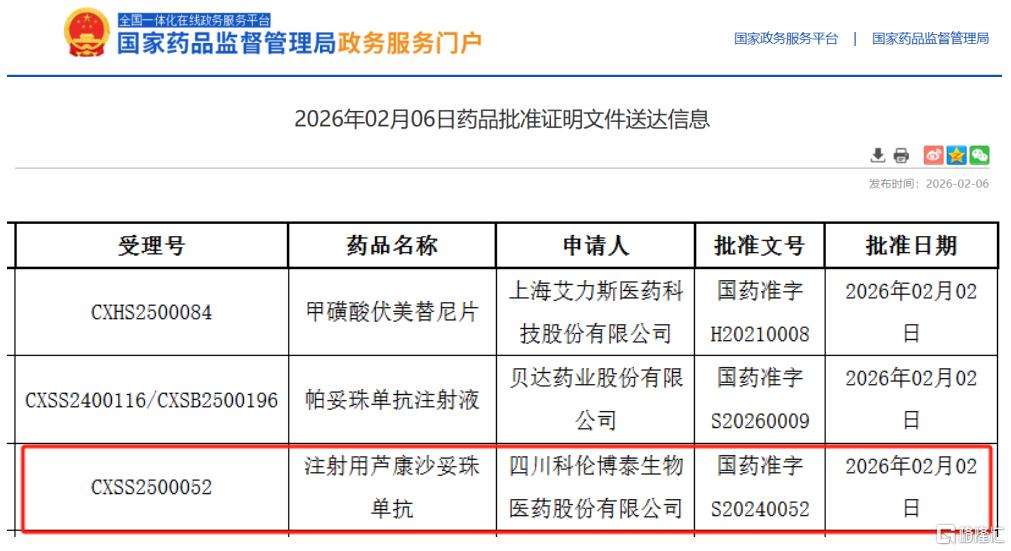
艾力斯:关于甲磺酸伏美替尼片EGFR 20号外显子插入突变NSCLC二线治疗适应症药品注册进展的公告
Zheng Quan Ri Bao· 2026-02-03 12:07
Group 1 - The core point of the article is that Ailis has updated the registration status of its self-developed small molecule targeted drug, Fumetinin Mesylate Tablets, for the treatment of EGFR exon 20 insertion mutation NSCLC to "Approval Completed - Awaiting Certification" [2] - The indication is for adult patients with locally advanced or metastatic NSCLC who have progressed on or are intolerant to prior platinum-based chemotherapy and have confirmed EGFR exon 20 insertion mutations [2] - Phase II clinical trials showed an overall response rate (ORR) of 44.3%, a median progression-free survival (PFS) of 8.3 months, and a median overall survival (OS) of 22.9 months, indicating potential for expanding patient coverage and increasing sales [2]
医药生物行业周报(12月第4周):医疗器械有望开启大航海时代-20251229
Century Securities· 2025-12-29 10:39
Investment Rating - The report does not explicitly state an investment rating for the industry, but it suggests a positive outlook for the medical device sector, indicating potential for growth and innovation [2][3]. Core Insights - The medical device sector is expected to enter a "great sailing era" with the initiation of centralized procurement for drug-coated balloons and urological intervention consumables, indicating a significant policy shift that could benefit domestic manufacturers [3]. - The report highlights that after extensive centralized procurement, domestic medical device manufacturers have gained substantial market share, leading to a concentration of the industry towards leading enterprises, which are expected to benefit from scale effects and favorable export policies [3]. - The report emphasizes the potential for domestic medical device companies to replicate the path of domestic pharmaceutical companies, using centralized procurement to drive innovation and enhance global competitiveness [3]. Market Weekly Review - The pharmaceutical and biotechnology sector experienced a slight decline of 0.18% from December 22 to December 26, underperforming compared to the Wind All A index (2.78%) and the CSI 300 index (1.95%) [8]. - Among sub-sectors, raw materials (2.05%), blood products (1.28%), and medical research outsourcing (0.77%) showed gains, while hospitals (-2.82%), pharmaceutical distribution (-1.8%), and offline pharmacies (-1.3%) faced declines [8]. - Notable individual stock performances included Hongyuan Pharmaceutical (59.4%), Luyuan Pharmaceutical (37.3%), and Huakang Medical (21.1%) with significant gains, while ST Bailin (-18.5%), Huaren Health (-15.8%), and Haiwang Biological (-14.9%) saw substantial losses [11]. Industry News and Key Company Announcements - The National Medical Products Administration announced new regulations for the management of medical device export sales certificates, effective May 1, 2026, which aims to facilitate the export of Chinese medical devices [13]. - The centralized procurement for high-value medical consumables has officially started, marking a significant policy development in the industry [13]. - Sanofi reached an acquisition agreement with Dynavax for $2.2 billion, highlighting ongoing consolidation in the pharmaceutical sector [13]. - Notable collaborations and agreements were reported, including licensing agreements and partnerships among various pharmaceutical companies, indicating active M&A and collaboration trends in the industry [16][17].
渤海证券研究所晨会纪要(2025.12.29)-20251229
BOHAI SECURITIES· 2025-12-29 02:39
Macroeconomic and Strategy Research - The U.S. labor market remains in a weak balance, with inflation showing signs of slowing down, prompting the Federal Reserve to lower interest rates again in December. The Fed's cautious stance indicates only one rate cut is expected in 2026, which is less than market predictions [2][3] - In Europe, a weak economic recovery is coupled with the European Central Bank's increased tolerance for inflation, leading to market expectations of a rate hike in 2026 [3] - Domestic consumption and investment are slowing due to high bases and weak expectations, while external demand remains strong, particularly in export-oriented sectors. Structural support for service consumption is anticipated as policies support recovery [3][3] - The Central Economic Work Conference emphasized the need for stable economic growth and quality improvement, with a focus on the integrated effects of monetary and fiscal policies. A reserve requirement ratio cut is expected to be implemented first, with interest rate cuts being more structural [3][3] Fixed Income Research - Panda bonds, which are RMB-denominated bonds issued by foreign entities in China, have seen their market scale exceed 1.14 trillion RMB, reflecting the ongoing internationalization of the RMB and the opening of China's bond market [6][6] - The panda bond market has evolved through three stages: initial exploration (2005-2013), development with increased participation (2014-2022), and rapid expansion and product innovation (2023-present) [6][6] - Panda bonds offer lower financing costs compared to offshore dollar bonds and provide flexibility in fund usage, while also serving as a risk diversification tool for investors [7][7] - As of December 5, 2025, there are 263 panda bonds with a market size of 414.886 billion RMB, indicating a significant increase in issuance driven by policy optimization [7][7] Industry Research - The sixth batch of high-value medical consumables procurement has been initiated, with significant developments including the approval of a domestic anti-CTLA-4 monoclonal antibody and the introduction of a weight-loss version of semaglutide for cardiovascular indications [11][11] - The Shanghai Composite Index rose by 2.15% and the Shenzhen Component Index by 3.66% during the week of December 19-25, 2025, with the SW Pharmaceutical and Biological Index increasing by 1.43% [11][11] - The report suggests focusing on pharmaceutical companies whose products enter medical insurance and the investment opportunities arising from structural optimization in innovative drug payments, as well as the progress in the medical device sector following the initiation of high-value consumables procurement [12][12]
肺癌一线!「伏美替尼」新适应症拟纳入突破性疗法
Xin Lang Cai Jing· 2025-12-26 12:21
Core Viewpoint - The article discusses the inclusion of a new indication for the drug Vomeletinib, which is intended for first-line treatment of adult patients with locally advanced or metastatic non-small cell lung cancer (NSCLC) harboring EGFR PACC mutations, as a breakthrough therapy [1][4]. Group 1: Drug Information - Vomeletinib is a third-generation EGFR-TKI that has previously been approved for two indications in China, targeting adult patients with EGFR mutations in NSCLC for second-line and first-line treatments [6]. - The new indication for Vomeletinib targets approximately 70 subtypes of EGFR PACC mutations, which account for about 12.5% of all EGFR mutation NSCLC patients, and currently, there are no approved drugs for this specific mutation in China [3][6]. Group 2: Clinical Research - The FURMO-002 study is the first prospective study globally to evaluate the efficacy and safety of Vomeletinib in treating NSCLC patients with EGFR PACC mutations [3][6]. - As of June 2025, the study reported an objective response rate (ORR) of 81.8% and a confirmed ORR of 68.2% for Vomeletinib at a dosage of 240 mg, with a disease control rate (DCR) of 100%, a median duration of response (DOR) of 14.6 months, and a median progression-free survival (PFS) of 16.0 months [7]. Group 3: Financial Performance - Vomeletinib is a major revenue source for the company, with sales increasing year-on-year. In 2024, the total revenue from Vomeletinib reached 3.506 billion yuan, representing a year-on-year growth of 77.27% [4][7]. - In the first half of 2025, Vomeletinib continued to show strong growth, achieving product sales revenue of 2.36 billion yuan, a nearly 51% increase compared to the previous year [7].