JRCB(002807)

Search documents
江阴银行:副行长王凯因工作调动辞职
news flash· 2025-07-07 09:38
江阴银行(002807)公告,近日董事会收到副行长王凯的书面辞职报告。王凯因工作调动辞去副行长职 务,辞职报告自送达董事会时即生效,辞职后将不在本行任职。王凯持有本行股票22万股,不存在未履 行的承诺事项,将遵守相关法律法规进行股份管理。 ...

江阴银行因基金销售违规收警示函 去年手续费及佣金净收入同比增长20.74%
Sou Hu Cai Jing· 2025-07-04 13:22
Core Viewpoint - The banking industry is entering a new era of stringent regulation for fund sales, highlighted by recent inspections and penalties imposed on Jiangyin Bank and other local banks for various compliance failures [2][3][5]. Group 1: Regulatory Actions - Jiangyin Bank was publicly penalized for the first time regarding its fund sales business, receiving a warning letter from the Jiangsu Securities Regulatory Bureau [3][5]. - Since the beginning of 2024, there has been a significant increase in penalties related to fund sales, with 15 banks facing regulatory actions for violations, including inadequate internal controls and unqualified personnel [3][5]. - Jiangyin Bank is required to rectify identified issues and submit a written report within 30 days [5]. Group 2: Compliance Issues - Jiangyin Bank's fund sales operations were found lacking in several areas: absence of a risk monitoring mechanism for investor information security, unclear internal controls, and insufficient qualifications among sales personnel [4][10]. - The bank's internal control mechanisms were criticized for not establishing a product admission committee and failing to assess potential conflicts of interest adequately [4][10]. - A notable issue was the presence of unqualified personnel in fund sales roles, which is a common violation in the industry [5][10]. Group 3: Financial Performance - Jiangyin Bank reported a revenue of 3.962 billion yuan for the end of 2024, reflecting a year-on-year growth of 2.51%, with a net profit of 2.037 billion yuan, up 7.88% [8]. - The bank's net interest margin decreased to 1.76% by the end of 2024, down from 2.18% in 2022, indicating ongoing pressure on profitability [9]. - Non-interest income, particularly from fees and commissions, showed a significant increase, with net income from this segment reaching 96.67 million yuan, a growth of 20.74% [9]. Group 4: Future Regulatory Landscape - A new regulatory framework for fund sales will come into effect on October 1, 2025, aimed at enhancing oversight and ensuring compliance within the banking sector [9][10]. - The upcoming regulations emphasize the need for banks to implement performance assessments that go beyond sales metrics, focusing on compliance and customer feedback [10].

江阴银行基金销售业务问题频出 现场检查后被出具警示函
Xi Niu Cai Jing· 2025-07-03 03:11
Core Viewpoint - Jiangyin Rural Commercial Bank has been issued a warning letter by the Jiangsu Securities Regulatory Bureau due to multiple violations in its fund sales business, highlighting issues in internal controls, risk management, and information reporting processes [2][5]. Regulatory Actions - The Jiangsu Securities Regulatory Bureau conducted an on-site inspection and identified several key violations, including the lack of a risk monitoring mechanism for investor information security and rights protection [5]. - The bank's internal control and risk management systems were found inadequate, with no clear committee for fund sales product approval, and some staff lacking necessary qualifications [5]. - Jiangyin Bank has been required to rectify these issues and submit a written report within 30 days of receiving the decision [5]. Previous Violations - In the first half of 2025, Jiangyin Bank was named for regulatory issues for the second time, having been fined 600,000 yuan for inaccuracies in key data and underreporting of off-balance-sheet financial derivatives [6][7]. - Specific personnel from the bank were also subjected to administrative warnings due to these violations [6]. Financial Performance - In Q1 2025, Jiangyin Bank reported revenue of 1.127 billion yuan, a year-on-year increase of 6.00%, and a net profit attributable to shareholders of 357 million yuan, up 2.22% year-on-year [8]. - The bank's asset scale has continued to expand, maintaining a level above 200 billion yuan [8]. - However, the bank's profitability has been pressured, with a weighted average return on equity of 1.91%, down 0.18 percentage points from the previous year, and a net interest margin narrowing to 1.51% [8].

江阴银行监事惠国语增持1.00万股,成交均价4.75元
Sou Hu Cai Jing· 2025-07-01 14:52
Group 1 - Jiangyin Bank's supervisor, Hui Guo, increased his shareholding by 10,000 shares at an average price of 4.75 yuan, resulting in a total investment of 47,500 yuan [1] - As of June 30, 2025, the total market capitalization of Jiangyin Bank is 11.913 billion yuan [3] - The bank's main business includes accepting public deposits, issuing loans, handling domestic settlements, and providing various financial services [2] Group 2 - As of December 31, 2024, Jiangyin Bank's business income is 1.808 billion yuan, with a composition of 45.64% from corporate business, 29.39% from personal business, and 23.70% from funding business [2] - The bank's income from other sources amounts to 50.34 million yuan, accounting for 1.27% of total income [2] - Recent shareholding changes include Hui Guo's increase of 10,000 shares and other executives' transactions, indicating active trading among management [3]
苏南三家农商行被罚,事关基金销售!这些业务成重灾区
券商中国· 2025-06-30 15:24
Core Viewpoint - The article highlights regulatory issues faced by Jiangyin Rural Commercial Bank, Wuxi Rural Commercial Bank, and Jiangnan Rural Commercial Bank regarding their fund sales operations, emphasizing the need for compliance and internal control improvements [1][3][19]. Regulatory Findings - Jiangsu Securities Regulatory Bureau conducted on-site inspections revealing systemic issues in fund sales practices across the three banks, including inadequate internal controls and risk management [1][4]. - Specific violations included fund sales personnel lacking necessary qualifications and failure to establish proper risk monitoring mechanisms [2][5][10]. Compliance Actions - Wuxi and Jiangyin Rural Commercial Banks received warning letters, while Jiangnan was ordered to rectify its practices, with a requirement to submit a written report within 30 days [3][4]. Internal Control Issues - Common deficiencies included the absence of long-term investment return assessments in performance evaluations and inadequate conflict of interest management [9][10]. - Jiangnan and Jiangyin banks had personnel involved in fund sales without the required qualifications, and compliance reviews for new fund products were lacking [10][11]. Business Performance - Fund sales are a significant source of fee and commission income for banks, with mixed performance reported in recent financial statements. For instance, Wuxi Rural Commercial Bank's net commission income increased by 3.63% to approximately 137 million yuan, while Jiangnan's decreased by 37% to 388 million yuan [14][15]. Market Context - The article notes that the banking sector's fee and commission income has been under pressure due to market volatility affecting asset management product returns, leading to a decline in intermediary business income [16][18]. - In a low-interest-rate environment, banks are encouraged to diversify their income sources, with intermediary business seen as a strategic focus for growth [18]. Regulatory Environment - The article discusses the tightening regulatory landscape for bank agency sales, with new guidelines set to take effect in October 2025, aimed at enhancing oversight and compliance in fund sales practices [21][22].

江阴银行等3家苏南地区农商行基金销售业务被要求整改
Xin Lang Cai Jing· 2025-06-30 09:26
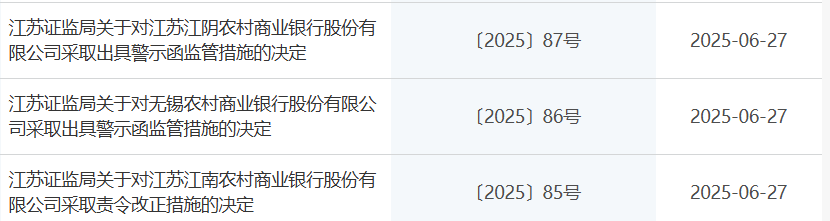
Core Viewpoint - Jiangsu Securities Regulatory Bureau has mandated three rural commercial banks in southern Jiangsu to rectify their fund sales operations due to identified deficiencies in their practices [1][2]. Summary by Category Regulatory Actions - Jiangsu Securities Regulatory Bureau issued warning letters to Jiangyin Rural Commercial Bank and Wuxi Rural Commercial Bank, while Jiangnan Rural Commercial Bank was ordered to make corrections [1][2]. Issues Identified - The regulatory inspections revealed issues primarily in the areas of system construction, business norms, internal controls, risk management, and information reporting [2]. Specific Findings - **Jiangyin Bank**: Lacked a risk monitoring mechanism for investor information security; internal controls were inadequate, with no clear committee for fund product approvals; some staff lacked necessary qualifications; failed to assess potential conflicts of interest; anti-money laundering reporting was insufficient [3]. - **Wuxi Bank**: Fund sales policies were not updated; risk assessments for fund products were inadequate; lacked proper management systems for online promotions; compliance personnel were not involved in product approvals; anti-money laundering reporting was insufficient [6]. - **Jiangnan Bank**: Did not establish risk assessment standards for fund products; promotional content was not reviewed for compliance; some staff lacked qualifications; failed to assess conflicts of interest; anti-money laundering reporting was insufficient [9]. Contextual Background - All three banks are rural commercial banks in southern Jiangsu, which have previously faced disciplinary actions for issues related to bond trading practices [11].
本周聚焦:短暂回调后,银行股怎么看?
GOLDEN SUN SECURITIES· 2025-06-29 07:31
Investment Rating - The report maintains an "Overweight" rating for the banking sector, indicating a positive outlook for bank stocks despite recent short-term corrections [4]. Core Insights - The banking sector is expected to maintain its performance due to the relative advantage of dividend yields, stable earnings, and predictable dividends. The average dividend yield for major state-owned banks is 4.07%, with a significant spread of 2.42% over the 10-year government bond yield, placing it in the 49.10th percentile over the past decade [1][17]. - The report highlights that the insurance sector is likely to increase its allocation to high-dividend bank stocks, especially with anticipated reductions in preset interest rates for insurance products [1]. - The report anticipates a stable profit growth for banks, with a projected profit growth rate of 2.35% for listed banks in 2024, supported by substantial unrealized gains from self-owned bonds and a robust provisioning coverage ratio of 238% as of Q1 2025 [3][7]. Summary by Sections Section 1: Market Performance - The banking index experienced a nearly 3% decline on June 27, 2025, but the overall market sentiment remains positive due to the sector's dividend yield advantages and stable earnings [1]. Section 2: Fund Flows - Since the beginning of 2025, southbound funds have significantly increased their allocation to Hong Kong bank stocks, with a net inflow of approximately 680 billion yuan, of which 146.2 billion yuan is directed towards bank stocks [2]. Section 3: Earnings Stability - Historical data indicates that the banking sector has low earnings volatility, with profits showing stable positive growth. The report emphasizes the importance of unrealized gains from bond investments and strong provisioning as key factors supporting profit stability [3][7][8]. Section 4: Sector Outlook - The report suggests that while short-term export impacts may arise from tariff policies, long-term domestic policies aimed at stabilizing the real estate market and boosting consumption will benefit the banking sector. Specific banks such as Ningbo Bank, Postal Savings Bank, and China Merchants Bank are highlighted as potential investment opportunities [9]. Section 5: Key Data Tracking - The report includes various financial metrics, such as the average daily trading volume of stocks at 14,868.42 billion yuan and a margin balance of 1.83 trillion yuan, indicating active market engagement [10].




江阴银行(002807) - 2025年6月25日投资者关系活动记录表
2025-06-25 09:52
Group 1: Competitive Landscape and Loan Growth - The competition in the banking industry is intensifying, posing greater challenges for rural commercial banks [2] - From 2024, the loan growth rate is expected to slow down, reflecting a cautious adjustment based on macroeconomic conditions and regulatory guidance [2] - The bank emphasizes "quality growth," focusing on optimizing loan structures and managing risks in a stable economic environment [2] Group 2: Manufacturing Loan Structure - Jiangyin Bank maintains a high proportion of manufacturing loans, with a dual focus on upgrading traditional industries and supporting emerging sectors [3] - Key sectors for manufacturing loans include textiles, machinery, high-end equipment, and intelligent manufacturing, which are critical to Jiangyin's economy [3] - The bank is increasing support for advanced manufacturing and new energy sectors, which are seen as new growth drivers for manufacturing loans [3] Group 3: Impact of US-China Trade Relations - The impact of US-China trade tensions is characterized as structural, with traditional export-oriented enterprises facing cost pressures and order fluctuations [3] - Despite challenges, companies are adapting through green transformations and expanding domestic markets, keeping overall risks manageable [3] - Emerging industries like new energy and semiconductors are experiencing growth, serving as important factors for optimizing loan structures and mitigating risks [3]
银行业,再次大降薪
商业洞察· 2025-06-21 09:39
Core Viewpoint - The banking industry is experiencing a significant salary reduction trend, particularly affecting high-level executives, with a notable increase in the number of banks reporting salary cuts and the extent of these reductions [2][3][5]. Group 1: Salary Reduction Trends - In 2023, 14 out of 42 listed banks in A-shares reported a decline in average salary, with the maximum drop reaching 13.59%. This number increased to 18 banks in 2024, with the maximum decline expanding to 15% [2]. - The total compensation for bank management decreased from 870 million yuan in 2023 to 700 million yuan in 2024, a drop of 19.5%. Meanwhile, the average salary for bank employees fell from 462,300 yuan to 444,900 yuan, a decrease of 2.68% [6][7]. Group 2: Executive Salary Cuts - A significant 78.5% of the management teams in listed banks saw their salaries decrease year-on-year in 2024. The average salary for executives in various banks has been notably impacted, with some banks experiencing drastic reductions [5][10]. - Specific banks like Everbright Bank and Zhejiang Commercial Bank saw executive salary reductions of 57.9% and 39.72%, respectively, indicating a trend where executive pay is being cut more severely than that of general employees [10]. Group 3: Factors Influencing Salary Changes - The primary driver of salary fluctuations in banks is the variable component of compensation, which is heavily influenced by the banks' revenue and profit conditions. The floating salary constitutes 65% of the total compensation, making it a critical factor [12][13]. - The banking sector is facing significant revenue pressures, with the average net interest margin dropping to 1.52% in 2024, a decline of 17 basis points from 2023. This has led to a 2.20% decrease in net interest income, marking two consecutive years of negative growth [14][15]. Group 4: Structural Adjustments and Policy Impacts - The banking industry is undergoing structural adjustments, with a focus on risk management and governance. Policies such as the "salary limit order" have imposed constraints on executive compensation, leading to a shift in how salaries are structured [16][17]. - The emphasis on "cost reduction and efficiency enhancement" has resulted in banks prioritizing compensation for frontline and value-creating positions, further contributing to the decline in executive salaries [18][17]. Group 5: Performance-Based Salary Recovery - The trend of "reverse salary recovery" has emerged, where banks reclaim performance bonuses from executives based on risk management failures. This practice aims to align compensation with long-term risk management rather than short-term performance [20][21]. - The total amount reclaimed through reverse salary recovery has approached 99 million yuan, indicating a significant shift in the banking industry's approach to executive compensation and risk management [20].





坚挺!银行ETF逆转收红,年内已超额12%!机构:当下不是行情下半场,而是长周期的开始
Sou Hu Cai Jing· 2025-06-19 10:26
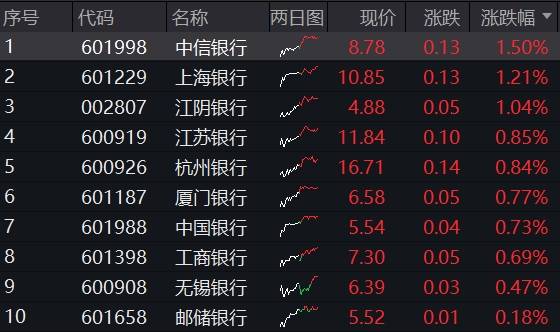
Core Viewpoint - The A-share market experienced a downward trend on June 19, 2025, with the banking sector showing relative resilience, only declining by 0.15%, second only to the oil and petrochemical sector [1] Banking Sector Performance - Individual bank stocks showed localized activity, with notable gains from CITIC Bank, Shanghai Bank, and Jiangyin Bank, each rising over 1% [1] - The banking ETF (512800) opened lower but turned positive during the day, ultimately closing slightly down by 0.12%, continuing its strong performance throughout the year [2][3] ETF and Index Performance - The banking ETF (512800) has repeatedly set historical highs this year, with the index it tracks, the China Securities Banking Index, having increased by 11.87% year-to-date, outperforming the Shanghai Composite Index and CSI 300 by 12.18 and 14.2 percentage points, respectively [3][4] - The banking sector's strong performance is attributed to its status as a stable asset class, characterized by steady operations, consistent dividends, and high dividend yields, making it attractive in a volatile market [4] Fund Allocation and Future Outlook - Short-term drivers include regulatory changes encouraging public funds to increase their allocation to the banking sector, which currently has a significantly lower representation in active funds compared to its weight in the CSI 300 [5] - Analysts believe the core investment logic for the banking sector will persist, driven by its high dividend yield, potential for institutional fund inflows, and supportive policies for interest margins [5] - The current market environment is viewed as the beginning of a long-term trend, with low interest rates and the revaluation of RMB assets serving as foundational logic for this market cycle [5] Investment Opportunities - Investors looking for value in the banking sector are encouraged to consider the banking ETF (512800) and its associated funds, which provide exposure to a diversified portfolio of 42 listed banks in A-shares [6]