
Adobe(ADBE)

Search documents
开年最惨!美国软件股崩了,因为Claude Code太火了
华尔街见闻· 2026-01-19 09:46
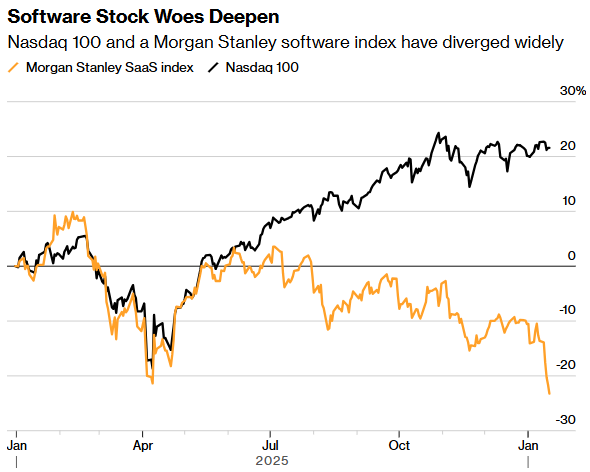
Core Viewpoint - The release of Claude Code has reignited concerns about the disruption of the software industry by AI, leading to the worst annual start for U.S. software stocks in years, with a 15% decline in a basket of SaaS stocks tracked by Morgan Stanley since the beginning of the year [1][4]. Group 1: Market Performance - Software stocks have experienced a significant downturn, with a 15% drop since the start of the year, following an 11% decline in 2025, marking the worst opening performance since 2022 [1]. - Current valuations for software stocks are at a record low, trading at 18 times expected earnings for the next 12 months, significantly below the average of over 55 times in the past decade [1]. Group 2: Impact of AI Developments - The panic in the market was triggered by Anthropic's release of "Claude Cowork," which showcased capabilities that alarmed investors about the future of software companies [5][6]. - Users reported completing complex projects in a week that would typically take a year, highlighting the disruptive potential of AI tools [2]. Group 3: Analyst Perspectives - Many buy-side institutions believe there is currently "no reason to hold" software stocks due to the uncertainty brought by AI, with no catalysts for valuation recovery in the short term [4][6]. - Analysts note that existing software companies have not demonstrated significant appeal in their AI products, with Salesforce and Adobe showing limited revenue impact from their AI initiatives [8]. Group 4: Comparative Sector Performance - The earnings growth forecast for software and services companies in the S&P 500 is expected to slow from approximately 19% in 2025 to 14% in 2026, contrasting with the semiconductor sector, which is projected to see profit growth of nearly 45% in 2025 and accelerate to 59% in 2026 [8][9]. - Major tech companies like Microsoft, Amazon, Alphabet, and Meta Platforms are expected to invest heavily in AI infrastructure, providing clearer visibility for revenue growth compared to software firms [8]. Group 5: Valuation Discrepancies - Despite low valuations, there is a divide in market sentiment regarding the future of software stocks, with some analysts optimistic about a rebound by 2026 due to stable customer spending and attractive valuations [10][11]. - Concerns remain about how software companies will compete against AI agents capable of completing tasks rapidly, complicating the assessment of appropriate valuation multiples [11].



Three Reasons To Own Adobe In 2026 (NASDAQ:ADBE)
Seeking Alpha· 2026-01-19 04:19
Core Viewpoint - The article emphasizes the importance of understanding that past performance does not guarantee future results, highlighting the need for careful analysis before making investment decisions [2][3]. Group 1: Company Insights - The article does not provide specific insights or data regarding any particular company or its performance [1][2][3]. Group 2: Industry Analysis - The article does not include any detailed analysis or commentary on industry trends or dynamics [1][2][3].

开年最惨!美国软件股崩了,因为Claude Code太火了
Hua Er Jie Jian Wen· 2026-01-19 00:23
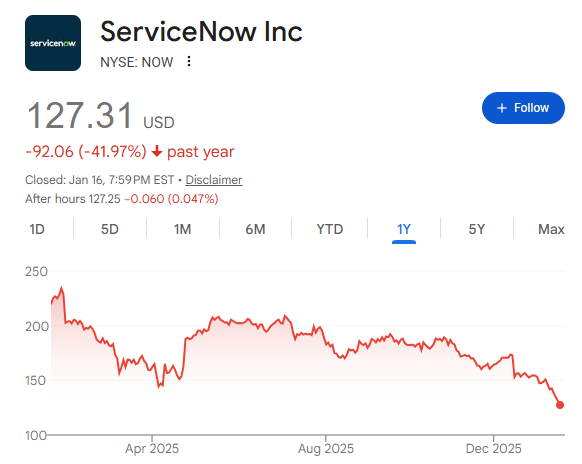
Core Viewpoint - The release of Claude Code has reignited concerns about the disruption of the software industry by AI, leading to a significant decline in U.S. software stocks, marking one of the worst starts to the year in recent history [1][5]. Group 1: Market Performance - Since the beginning of the year, a basket of SaaS stocks tracked by Morgan Stanley has dropped by 15%, following an 11% decline in 2025, marking the worst opening performance since 2022 [1]. - Software stocks are currently trading at a record low valuation of 18 times expected earnings for the next 12 months, significantly below the past decade's average of over 55 times [1]. - Companies like ServiceNow Inc. have seen their stock prices fall to multi-year lows, while Intuit Inc. experienced a 16% drop, the largest weekly decline since 2022 [2]. Group 2: Investor Sentiment - Many buy-side institutions believe there is "no reason to hold" software stocks amid the disruptive uncertainty brought by AI, with no visible catalysts for valuation recovery in the short term [4][6]. - The release of the "Claude Cowork" service by Anthropic has intensified fears among investors regarding the future growth prospects of software companies [5][6]. Group 3: AI Integration Challenges - Most software manufacturers have not demonstrated significant appeal in their AI products, with Salesforce and Adobe struggling to show revenue impact from their AI initiatives [7]. - Existing software companies need to exhibit accelerated growth to drive stock price rebounds, which appears unlikely in the short term [7]. - In contrast, other tech sectors, particularly semiconductor companies, are expected to see substantial profit growth, with projections of nearly 45% profit growth in 2025 and 59% in 2026 [7][8]. Group 4: Valuation Discrepancies - Despite low valuations, there remains a divide in market sentiment regarding the future of software stocks, with some analysts optimistic about a rebound by 2026 due to stable customer spending and attractive valuations [8]. - Barclays and Goldman Sachs predict that rising AI adoption will expand the total addressable market for software companies, potentially benefiting them in the long run [8]. - Wealthspire's chief market strategist notes that while the sector is not yet a clear buy opportunity, it is approaching a more attractive point for investment [9].
机构称“没有理由持有”!美股软件股陷入“AI焦虑”,板块估值跌至多年低位
智通财经网· 2026-01-19 00:04
Core Viewpoint - The software sector in the U.S. stock market is experiencing its worst start in years, with a 15% decline in software-as-a-service stocks tracked by Morgan Stanley, contrary to earlier expectations of a 11% drop by 2025 [1][4]. Group 1: Market Performance - The stock prices of major software companies like Intuit, Adobe, and Salesforce have seen significant declines, with Intuit dropping 16%, Adobe and Salesforce both falling over 11% [1]. - Despite the Nasdaq 100 index nearing historical highs, companies like ServiceNow have reached multi-year lows, indicating a disconnect between overall market performance and software stock valuations [5]. Group 2: AI Innovations and Concerns - Anthropic's launch of the Claude Cowork service has raised concerns about disruptive innovations in AI, which could further impact software manufacturers' growth prospects [4]. - The rapid development of AI tools has created unprecedented uncertainty regarding future growth, as highlighted by investment managers [4]. Group 3: Earnings and Valuation Trends - Earnings growth for software and service companies in the S&P 500 is expected to slow to 14% in 2026, down from an anticipated 19% in 2025, contrasting with more optimistic fundamentals in other tech sectors [6]. - The price-to-earnings ratio for Morgan Stanley's software company portfolio has dropped to 18 times expected earnings, a historical low compared to an average of over 55 times in the past decade [6][7]. Group 4: Future Outlook - Some analysts believe that the current low valuations of software stocks could lead to a rebound by 2026, driven by stable customer spending and the potential benefits of AI [7][8]. - There is a cautious optimism about the software sector's attractiveness, although it is not yet deemed a definitive buy opportunity [8].
四大投行齐看空!Adobe股价狂跌45%,AI让专业设计门槛“大跳水”
Sou Hu Cai Jing· 2026-01-18 15:19
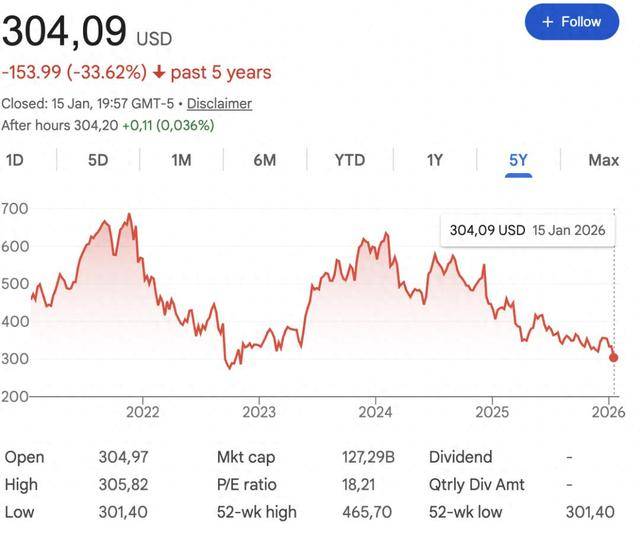
Core Viewpoint - Adobe is facing significant challenges as major investment banks have downgraded its ratings, leading to a nearly 8% drop in its stock price and a market value decline of almost 50% since the end of 2023, contrasting sharply with the rising Nasdaq index and software sector ETFs [1][3] Group 1: Market Reaction and Ratings Downgrade - Multiple investment banks, including Goldman Sachs and Oppenheimer, have downgraded Adobe's ratings, citing a slowdown in its growth engine primarily due to the impact of AI technology [3] - The consensus rating for Adobe has fallen to its lowest level in a decade, reminiscent of its previous crisis when it transitioned from selling software on discs to a subscription model [5] Group 2: AI Impact on Creative Workflows - The emergence of generative AI has drastically lowered the barriers to creating professional-quality content, allowing users to generate images and videos with simple language prompts, which undermines Adobe's traditional value proposition [7][8] - Competing tools like Midjourney and Runway, as well as established rivals like Canva and Figma, are integrating AI to offer user-friendly solutions at lower prices, further challenging Adobe's market position [10] Group 3: Adobe's Response and Challenges - Adobe is actively developing its own generative AI models, such as Firefly, and integrating them into its flagship products like Photoshop, but these efforts have not yet translated into significant revenue growth [12] - The shift in user habits towards simpler, cheaper AI tools poses a long-term threat to Adobe, as new creators may prefer these alternatives over Adobe's complex software suite [14] Group 4: Industry Implications - Adobe's situation illustrates a broader trend where technology is democratizing professional skills, challenging traditional business models based on the scarcity of specialized tools [16] - The company's future hinges on finding a balance between maintaining professional depth and embracing the accessibility brought by AI, as the industry adapts to these technological shifts [16]
昔日软件霸主遭腰斩!华尔街集体“叛变”,AI正让Adobe过时?
Sou Hu Cai Jing· 2026-01-18 08:19
Core Viewpoint - The article discusses the challenges Adobe faces due to the rise of AI tools that democratize design, potentially undermining its traditional business model and user base [3][5][18] Group 1: Market Performance - Adobe's stock price has dropped over 45% from the end of 2023, contrasting sharply with the Nasdaq 100 index, which has risen over 50% in the same period [3] - Analysts from Goldman Sachs express concerns that AI is limiting growth among Adobe's core professional user base, indicating a structural headwind for years to come [3] Group 2: Competitive Landscape - The emergence of AI-native tools like OpenAI's Sora and Midjourney is attracting casual users who prefer simplicity over traditional software complexity [8] - Traditional competitors like Canva and Figma are enhancing their offerings with AI features, posing a significant threat to Adobe's market position [8][10] Group 3: Business Model Challenges - Adobe's integration of AI into its products has led to a paradox where increased efficiency may reduce the need for multiple software licenses, threatening its subscription-based revenue model [13][15] - The traditional value of "skill scarcity" that Adobe relied on for success is being eroded by AI, which makes powerful tools more accessible [15][18] Group 4: Future Outlook - Despite the challenges, some analysts remain optimistic about Adobe's brand loyalty and the costs associated with switching for enterprise customers [16] - The management expresses hope for AI-driven growth, but skepticism is growing regarding a potential systemic re-evaluation of traditional software business values due to technological advancements [18]
3 Stocks to Avoid as Software Sector Stumbles
Yahoo Finance· 2026-01-17 15:04
Core Viewpoint - The software sector, particularly Software as a Service (SaaS) companies, is facing significant challenges due to the emergence of AI tools like Claude Code, which can drastically reduce the time required for software development and potentially disrupt traditional revenue models based on annual licensing [2][5][4]. Group 1: Impact of AI on Software Companies - Claude Code has demonstrated the ability to recreate a year's worth of work in just one hour, raising concerns for SaaS firms that rely heavily on yearly licensing for revenue [2]. - The introduction of Claude Code has shifted the perception of software from being an AI beneficiary to an AI victim, as it automates entire workflows and reduces the need for expensive software licenses [5][4]. - Major software companies, including Salesforce, DocuSign, and Atlassian, are at risk of losing revenue due to the capabilities of AI tools like Claude Code [4][5]. Group 2: Company-Specific Challenges - Salesforce, the original SaaS company, faces the risk of losing high-margin license revenue as AI agents can perform the work of hundreds of human representatives [6][5]. - DocuSign, which thrived during the pandemic, is now at risk of obsolescence as e-signature solutions are increasingly bundled into larger platforms like Microsoft 365, and AI agents may bypass its offerings entirely [8][9]. - Atlassian, known for its workflow tools, risks redundancy of its platforms as AI agents simplify workflow integration, potentially impacting its bottom line significantly [11]. Group 3: Stock Performance and Market Sentiment - Adobe shares have declined over 25% in the last 12 months, reflecting broader struggles within the software sector [1]. - Salesforce shares dropped 7% in a single session following negative news about Adobe and Claude Code, indicating heightened selling pressure [7]. - DocuSign shares have reached a new 52-week low, with strong resistance at the 50-day simple moving average, suggesting ongoing challenges in regaining investor confidence [10]. - Atlassian shares have lost more than 15% in the last ten days, with a bearish MACD crossover indicating a potential continuation of the downtrend [12].


Adobe Systems (ADBE) Suffers a Larger Drop Than the General Market: Key Insights
ZACKS· 2026-01-16 23:46
Company Performance - Adobe Systems (ADBE) shares decreased by 2.62% to $296.12, underperforming the S&P 500's daily loss of 0.06% and the Dow's loss of 0.17% [1] - Over the last month, ADBE's stock has declined by 14.54%, contrasting with the Computer and Technology sector's gain of 2.88% and the S&P 500's gain of 1.99% [1] Upcoming Financial Results - Adobe is expected to report an EPS of $5.88, reflecting a 15.75% growth year-over-year [2] - Revenue is projected to be $6.28 billion, indicating a 9.88% increase compared to the same quarter last year [2] Full-Year Estimates - Zacks Consensus Estimates forecast earnings of $23.44 per share and revenue of $26.03 billion for the full year, representing year-over-year changes of +11.94% and +9.5%, respectively [3] Analyst Forecast Revisions - Recent revisions to analyst forecasts for Adobe are important as they reflect changes in short-term business dynamics, with positive revisions indicating a favorable outlook on business health and profitability [4] Zacks Rank and Performance - The Zacks Rank system, which ranges from 1 (Strong Buy) to 5 (Strong Sell), currently rates Adobe at 3 (Hold) [6] - The consensus EPS projection has decreased by 0.01% in the past 30 days [6] Valuation Metrics - Adobe's Forward P/E ratio is 12.97, which is a discount compared to the industry average of 22.22 [7] - The PEG ratio for ADBE is 0.97, while the average PEG ratio for Computer - Software stocks is 1.72 [7] Industry Context - The Computer - Software industry is part of the Computer and Technology sector, currently holding a Zacks Industry Rank of 100, placing it in the top 41% of over 250 industries [8]
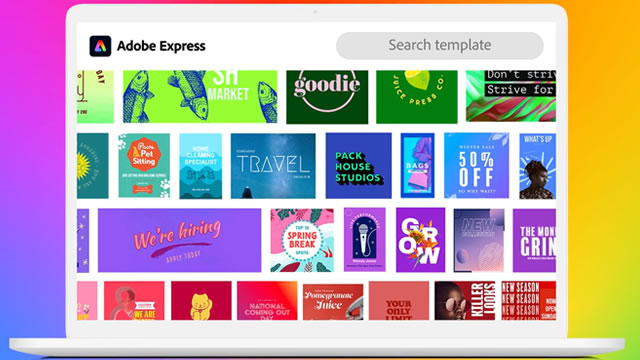
Adobe Drops 9% in 3 Months: Buy, Sell or Hold the Stock in 2026?
ZACKS· 2026-01-16 17:46
Core Insights - Adobe's shares have declined by 8.8% over the past three months, underperforming the broader Zacks Computer and Technology sector, which returned 3.9% [1] - The decline is attributed to an uncertain macroeconomic environment, fears of an AI bubble, and intense competition from major players like Microsoft, OpenAI, Alphabet, Salesforce, Midjourney, and Canva [1] AI Initiatives and Growth - Adobe's future prospects heavily rely on the success of its AI initiatives, which are enhancing its presence among business, creative, and marketing professionals [2] - The company reported over 15% year-over-year growth in total monthly active users across its solutions in fiscal 2025 [2] - Adobe aims for an annualized recurring revenue growth of 10.2% for fiscal 2026, driven by its AI-powered portfolio and expanding enterprise adoption [2] Product Demand and Competition - Strong demand for AI-powered products like Creative Cloud Pro and Acrobat is evident, with new features improving user experiences [3] - Despite this, Adobe's AI-related revenue remains small compared to competitors like Microsoft, Alphabet, and Salesforce, which are seeing significant growth in their AI services [4] Stock Performance - Over the past 12 months, Adobe has outperformed Microsoft but lagged behind Alphabet and Salesforce, with Alphabet shares increasing by 31.4% [5] Financial Projections - Adobe projects fiscal 2026 revenues between $25.9 billion and $26.1 billion, with expected non-GAAP earnings per share between $23.30 and $23.50 [11] - The Zacks Consensus Estimate for fiscal Q1 earnings is $5.88 per share, indicating a 15.8% growth from the previous year [12] - For fiscal 2026, the revenue estimate is $26.02 billion, suggesting a 9.5% growth from fiscal 2025 [13] Valuation Concerns - Adobe's valuation is considered stretched, with a Value Score of C, trading at 10.95X price/book compared to the sector average of 10.73X [15] - The stock faces valuation concerns amid strong market competition [7] Strategic Partnerships - Adobe is expanding its partner base, integrating with leading AI ecosystems such as Amazon Web Services, Azure, and Google [9] - The company added 45 new partners in the fiscal fourth quarter, enhancing its offerings for business professionals and consumers [10]

Adobe(ADBE) - 2025 Q4 - Annual Report
2026-01-15 22:01
Financial Performance - Total Adobe ARR reached approximately $25.20 billion as of November 28, 2025, reflecting an 11.5% increase from $22.61 billion as of November 29, 2024[243]. - Digital Media ARR grew to $19.20 billion at the end of fiscal 2025, representing an 11.5% year-over-year growth from $17.22 billion[224]. - Digital Media segment revenue increased to $17.65 billion in fiscal 2025, up from $15.86 billion in fiscal 2024, marking an 11% year-over-year growth[224]. - Digital Experience revenue was $5.86 billion in fiscal 2025, up from $5.37 billion in fiscal 2024, representing a 9% year-over-year growth[226]. - Net income for fiscal 2025 was $7.13 billion, an increase of $1.57 billion or 28% compared to fiscal 2024[243]. - Total revenue for fiscal 2025 reached $23,769 million, an increase of 11% compared to $21,505 million in fiscal 2024[246]. Revenue Breakdown - Subscription revenue for fiscal 2025 was $22.90 billion, representing a 12% increase from $20.52 billion in fiscal 2024[239]. - Digital Media segment revenue grew by $1.79 billion to $17,649 million, representing an 11% increase from $15,864 million in fiscal 2024[246]. - Subscription revenue for Digital Media increased by 12% to $17,389 million, driven by strong performance in Creative Cloud Pro and Acrobat[247]. - Revenue from the Americas was $14,120 million, accounting for 59% of total revenue, with a 10% increase from $12,891 million in fiscal 2024[251]. Expenses and Costs - Cost of revenue for fiscal 2025 was $2.55 billion, which increased by $193 million or 8% compared to fiscal 2024[243]. - Operating expenses for fiscal 2025 were $12.51 billion, remaining relatively flat compared to fiscal 2024[243]. - Research and development expenses increased by 9% to $4,294 million, maintaining 18% of total revenue[259]. - Operating expenses totaled $12,512 million, a slight increase of 1% from $12,406 million in fiscal 2024[259]. - Interest expense rose by 56% to $263 million, primarily due to new senior notes issued in January 2025[267]. - Provision for income taxes increased by 17% to $1,604 million, with an effective tax rate of 18%[273]. Cash Flow and Investments - Cash flows from operations amounted to $10.03 billion during fiscal 2025, increasing by $1.98 billion or 25% compared to fiscal 2024[243]. - Net cash provided by operating activities for fiscal 2025 was $10.03 billion, an increase from $8.06 billion in fiscal 2024[292]. - Net cash used for investing activities in fiscal 2025 was $1.19 billion, primarily due to purchases of short-term and long-term investments[293]. - Net cash used for financing activities in fiscal 2025 was $11.06 billion, mainly due to common stock repurchases and repayment of notes[294]. Acquisitions and Agreements - The company entered into a definitive agreement to acquire Semrush Holdings, Inc. for approximately $1.9 billion, expected to close in the first half of fiscal 2026[299]. Financial Position - As of November 28, 2025, the company had $5.43 billion in cash and cash equivalents, down from $7.61 billion as of November 29, 2024[291]. - The company has a $1.5 billion senior unsecured revolving credit agreement, with no outstanding borrowings as of November 28, 2025[300]. - The stock repurchase program authorized up to $25 billion through March 14, 2028, with $11.28 billion spent on repurchases during fiscal 2025[305][306]. - The total valuation allowance for deferred tax assets was $806 million as of November 28, 2025, primarily related to certain U.S. state and federal credits and capital loss carryforwards[275]. Foreign Currency Exposure - For fiscal 2025, significant foreign currency revenue exposures include €3.43 billion in Euros, ¥163.83 billion in Japanese Yen, and £942 million in British Pounds[312]. - As of November 28, 2025, the gross notional amounts of outstanding foreign exchange contracts totaled $6.54 billion, with $3.27 billion in Euros and $884 million in Japanese Yen[312]. - A sensitivity analysis indicates that a 10% increase in the U.S. Dollar would increase the fair value of financial hedging instruments by $456 million[313]. - Long-term investment exposure in non-U.S. Dollar functional currency foreign subsidiaries totaled $1.32 billion as of November 28, 2025, with no hedging applied[314]. - The company does not use foreign exchange contracts for speculative trading or to entirely offset foreign currency exposure[315]. - Cash flow hedges for foreign currency revenue and expenses are utilized to mitigate risks, with maturities of up to 24 months[316]. Interest Rate Risk - As of November 28, 2025, the company had $1.16 billion in short-term investments, with a potential $4 million market value change from a 150 basis point shift in interest rates[322]. - The company has $6.15 billion of senior notes outstanding, with interest rate swaps converting $2.70 billion of fixed rates to floating rates[323]. - An immediate 50 basis point change in market interest rates would result in a $71 million change in the fair value of the hedged fixed-rate debt[323]. - The total carrying amount of senior notes was $6.21 billion, with a fair value of $6.18 billion based on observable market prices[324].