Amazon(AMZN)

Search documents
Could Investing $1,000 in Amazon Make You Richer?
The Motley Fool· 2026-02-14 08:25
Core Viewpoint - Amazon's recent stock performance has been underwhelming, with a 8.2% decline over the past year, contrasting with the S&P 500's 16.5% gain, raising questions about its long-term investment potential [2] Group 1: Business Segments and Performance - Amazon operates through three segments: North America, international, and Amazon Web Services (AWS), with the first two contributing 82% of total sales, amounting to $716.9 billion in 2025 [4] - AWS remains the largest profit generator for Amazon, achieving a 14.5% increase in operating income to $45.6 billion [5] - The North America and international segments generated $34.7 billion in operating income, representing 43% of the total [4] Group 2: Competitive Advantage and Market Position - AWS holds a leading market share of 30% as of mid-2025, outperforming Microsoft's Azure at 20% and Alphabet's Google Cloud at 13%, benefiting from the growing demand for data and resources for data centers [8] - The emergence of generative artificial intelligence (AI) is expected to further accelerate AWS's growth [8] Group 3: Financial Outlook and Valuation - Following the fourth-quarter earnings release, Amazon's stock price declined due to management's announcement of a significant increase in capital expenditures to $200 billion for the year, up from $131.8 billion in 2025 [9] - Despite the increased spending, management anticipates a substantial return on capital, which is expected to benefit shareholders [10] - Amazon's current price-to-earnings (P/E) ratio is 28, down from 40 a year ago, making its valuation more attractive compared to the S&P 500's P/E ratio of 30 [11] Group 4: Investment Considerations - The question remains whether investing in Amazon will yield better returns than an index fund replicating the S&P 500, with the potential for greater gains based on Amazon's valuation and growth prospects [12]



News Corporation (NWSA) PT Lowered to $39 from $40 by Citi
Insider Monkey· 2026-02-14 06:29
Core Insights - Generative AI is viewed as a transformative technology by Amazon's CEO Andy Jassy, indicating its potential to significantly enhance customer experiences across the company [1] - Elon Musk predicts that humanoid robots could create a market worth $250 trillion by 2040, representing a major shift in the global economy driven by AI innovation [2] - Major firms like PwC and McKinsey acknowledge the multi-trillion-dollar potential of AI, suggesting a broad consensus on its economic impact [3] Company and Industry Analysis - A breakthrough in AI technology is believed to be redefining work, learning, and creativity, attracting significant interest from hedge funds and top investors [4] - There is speculation about an under-owned company that may play a crucial role in the AI revolution, with its technology posing a threat to competitors [4] - Prominent figures in technology and investment, including Bill Gates and Warren Buffett, recognize AI as a major technological advancement with the potential for substantial social benefits [8] Market Trends - The AI ecosystem is expected to reshape how businesses, governments, and consumers operate globally, indicating a shift in market dynamics [2] - The investment landscape is becoming increasingly competitive, with various tech giants like Tesla, Nvidia, and Microsoft being highlighted, while a smaller company is suggested to have significant growth potential [6]




3 Stocks That Will Be Worth $3 Trillion or More in 3 Years
The Motley Fool· 2026-02-14 05:00
Core Viewpoint - The $3 trillion market cap club is expected to expand significantly in the coming years, with three companies likely to reach this milestone within three years [1]. Company Summaries Amazon (AMZN) - Currently valued at $2.4 trillion, Amazon needs to achieve an 8% growth rate over the next three years to reach a $3 trillion market cap [4]. - Amazon has consistently grown its revenue above double digits for the past four years, with its cloud computing service, AWS, showing a 24% revenue growth in Q4, indicating strong business performance [10]. - The acceleration of AI spending is expected to further enhance Amazon's growth potential, making it a strong candidate to reach the $3 trillion mark [10]. Taiwan Semiconductor (TSM) - Taiwan Semiconductor has a current market cap of $1.72 trillion and requires a compounded annual growth rate (CAGR) of 20% to reach $3 trillion in three years [5]. - The company is integral to the AI sector, with expectations of AI chip revenue growing at nearly 60% CAGR, while overall company growth is projected at nearly 25% from 2024 to 2029, surpassing the required growth threshold [11][12]. Broadcom (AVGO) - Broadcom currently has a market cap of $1.47 trillion and needs a CAGR of 27% to achieve a $3 trillion valuation in three years [5]. - The company is focusing on custom AI chips, which are expected to drive significant revenue growth, with plans to double AI segment revenue year over year by Q1 2026 [13]. - Broadcom's growth strategy involves designing chips tailored to specific workloads, which is gaining popularity among AI hyperscalers, positioning the company for rapid growth [13].



中概股全线走低、美股全线大跌,有色金属、半导体芯片、苹果重挫
Sou Hu Cai Jing· 2026-02-14 04:30
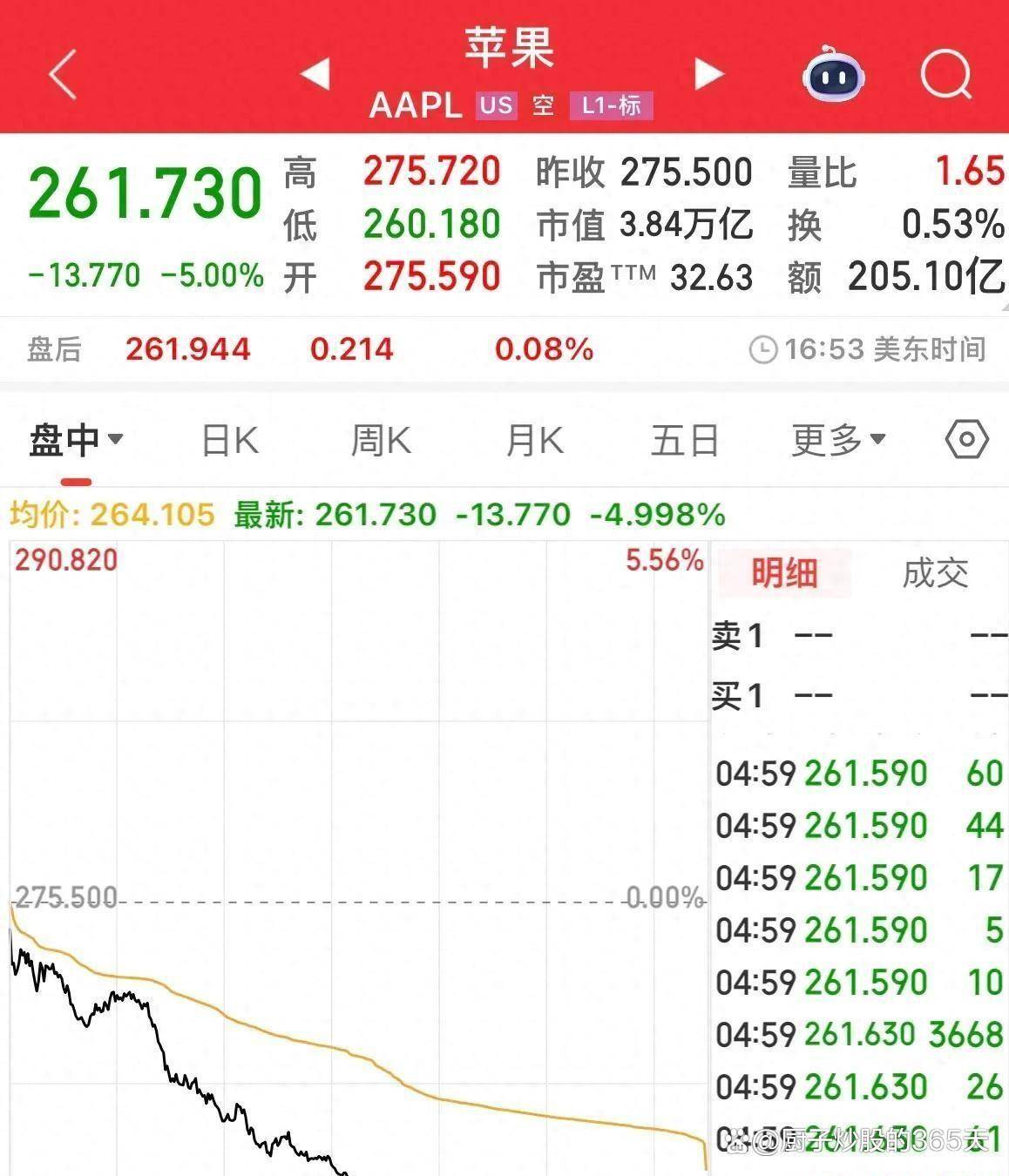
Market Overview - The US stock market experienced a significant decline, with the Dow Jones Industrial Average dropping 669.42 points (1.34%) to close at 49,451.98 points, the Nasdaq Composite falling 469.32 points (2.03%) to 22,597.15 points, and the S&P 500 decreasing by 108.71 points (1.57%) to 6,832.76 points [1][2][3] Market Sentiment - Over 4,100 stocks declined, indicating widespread market panic as investors rushed to sell assets, particularly in the tech and growth sectors. The VIX index surged, reflecting heightened risk aversion [2][3] Sector Performance - The sell-off affected nearly all sectors, with notable declines in precious metals and semiconductor stocks. The precious metals sector saw significant drops, with gold futures down 3.08% and silver futures plummeting 10.62% [4][5][6][8] - The Philadelphia Semiconductor Index fell by 2.5%, with individual stocks like AEHR Test Systems down 17.58% and Intel down over 3% [8][10] Major Companies - Apple Inc. experienced a substantial drop of 5.00%, resulting in a market cap loss of over $120 billion, attributed partly to regulatory concerns [12] - Other major tech companies also faced declines, with Tesla down 1.62%, Amazon down 2.20%, and Meta Platforms down nearly 3% [12] Financial Sector - Bank stocks fell across the board, with JPMorgan Chase down over 2%, Goldman Sachs down over 4%, and Citigroup down over 5%, driven by concerns over AI disrupting traditional wealth management [13][14] Economic Indicators - Recent economic data, including a drop in initial jobless claims and lower-than-expected existing home sales, contributed to market anxiety about potential economic overheating and prolonged high interest rates [24][25][26] Global Market Impact - The sell-off in the US markets had a ripple effect on global markets, with European indices also closing lower after initially opening higher, indicating a widespread sentiment of fear [18][19][20] AI Concerns - The market's decline was exacerbated by fears regarding the disruptive impact of AI technologies on various industries, leading to significant stock price drops in sectors perceived to be at risk [21][22][30] Storage Chip Sector - In contrast to the overall market trend, storage chip stocks saw gains, with companies like SanDisk and Seagate Technology rising significantly, reflecting a belief that AI's growth will increase demand for data storage [29]


晚间暴雷!黄金、白银、原油、美股全线崩盘,42只中概集体下跌
Sou Hu Cai Jing· 2026-02-14 04:22
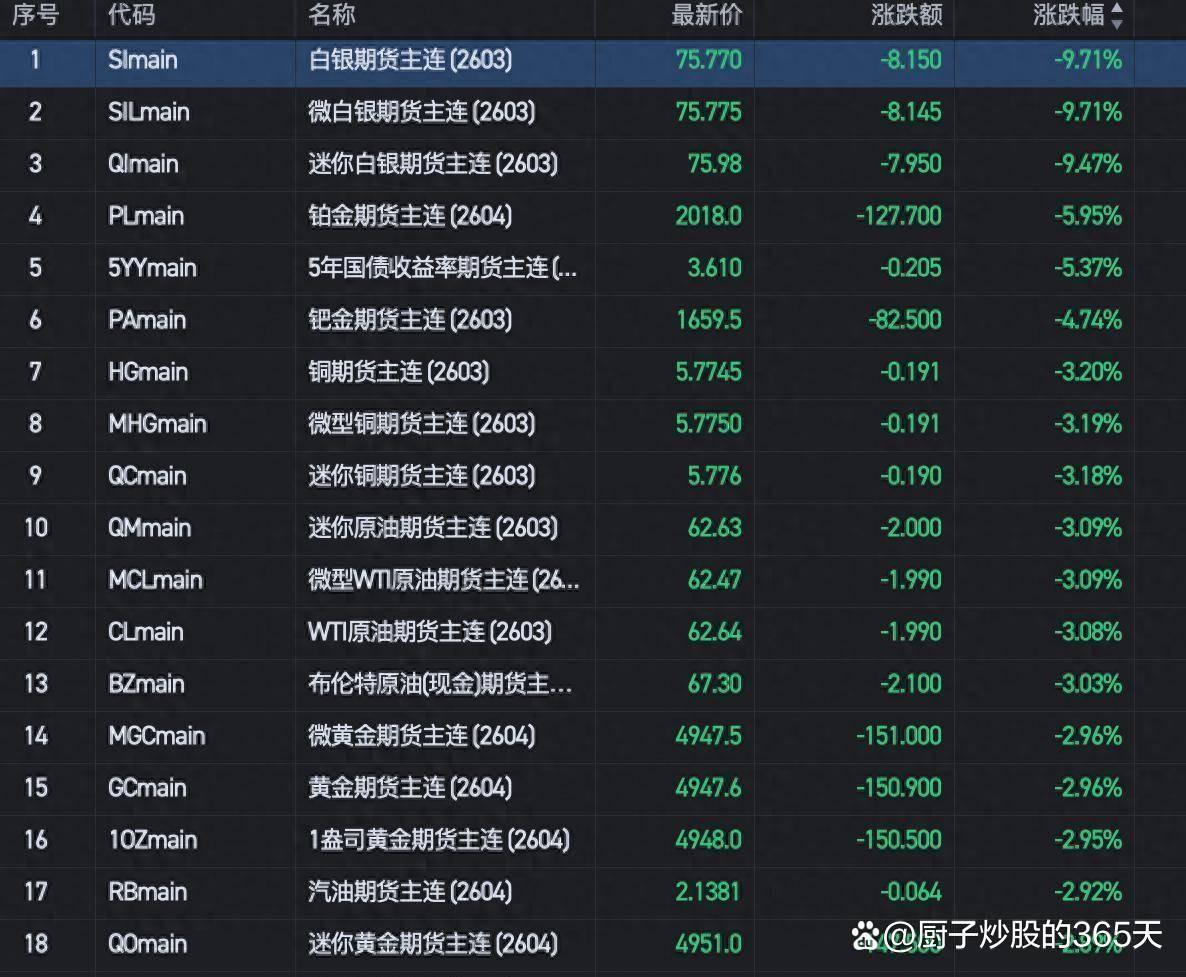
Market Overview - On February 13, 2026, a significant asset sell-off occurred in global financial markets, particularly impacting U.S. stock indices. The Dow Jones Industrial Average fell by 669.42 points (1.34%) to close at 49,451.98, while the Nasdaq Composite Index dropped 469.32 points (2.03%) to 22,597.15. The S&P 500 Index also declined by 108.71 points (1.57%) to 6,832.76 [1]. Commodity Market Impact - The sell-off extended to the commodity markets, with gold and silver experiencing substantial declines. COMEX gold futures fell by 3.08% to $4,941.4 per ounce, while COMEX silver futures plummeted by 10.62% to $75.01 per ounce [2][3]. Technology Sector Reaction - Major technology companies were severely affected, with Apple’s stock price dropping by 5%, resulting in a market value loss of over $120 billion (approximately 800 billion RMB). Other tech giants like Microsoft, Amazon, Tesla, Meta, and Nvidia also saw significant declines [3][4]. Chinese Concept Stocks - The Nasdaq Golden Dragon China Index, which includes many Chinese concept stocks, fell by 3% on the same day, indicating a collective sell-off in this sector. Over 40 Chinese concept stocks experienced substantial declines, with Tencent Music down 10.57% and Alibaba down 3.40% [3][4][6]. Employment Data Influence - The catalyst for this market turmoil was a strong U.S. employment report released on February 11, showing a non-farm payroll increase of 130,000 in January, significantly above the expected 70,000. This led to a shift in market expectations regarding Federal Reserve interest rate cuts, with the probability of a March rate cut dropping from 19.6% to 6% [5][6]. Capital Expenditure Concerns - Major tech companies announced aggressive capital expenditure plans for 2026, with Alphabet projecting $175 billion to $185 billion and Amazon estimating $200 billion, both nearly doubling their 2025 expenditures. This raised investor concerns about the return on such investments, especially as many companies reported record profits but saw stock price declines [10][11]. Market Sentiment and Volatility - The market's fear and volatility increased sharply, with the VIX index rising significantly. The sell-off was exacerbated by algorithm-driven trading, which triggered stop-loss orders and led to extreme price movements [15][16][17]. Global Market Impact - The financial turmoil that began in Wall Street quickly spread to global markets, with Asian and European stock markets opening lower in response to the U.S. declines [18].



9连跌!“资本开支最高”的亚马逊跌入熊市,投资者对Mag 7“用脚投票”
美股IPO· 2026-02-14 04:12
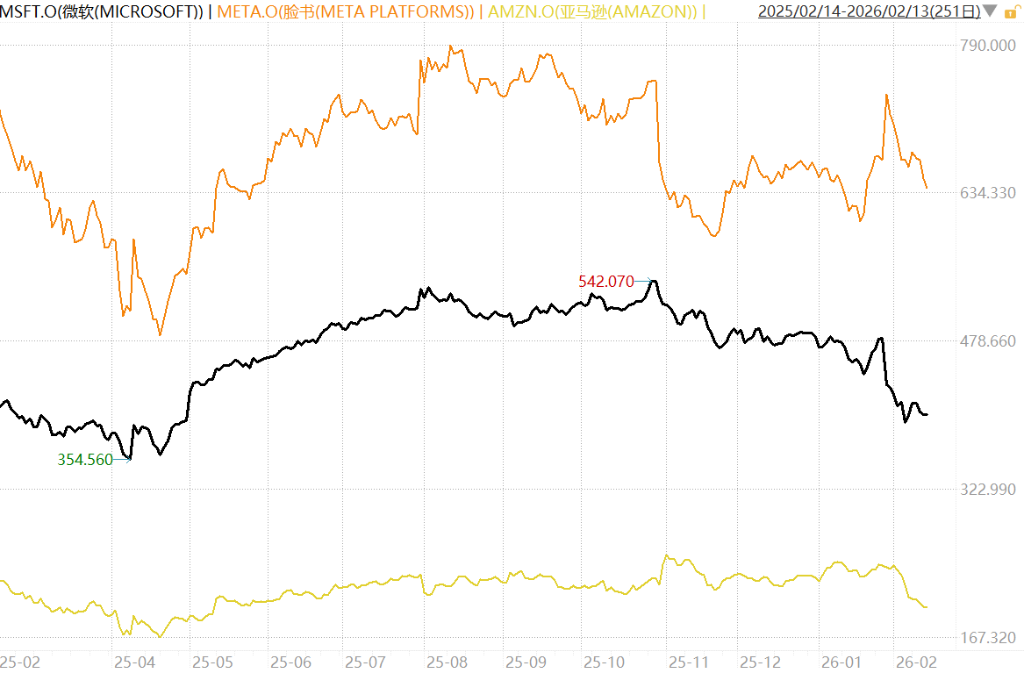
Core Viewpoint - Amazon's stock has entered a technical bear market, marking the second company in the Mag7 group to do so, driven by investor resistance to aggressive AI spending plans [2] Group 1: Amazon's Stock Performance - Amazon's stock closed at $198.79, down over 23% from recent highs, officially entering bear market territory on Thursday [2] - Amazon plans to spend $200 billion on capital expenditures by 2026, the highest among the four major cloud service providers [2] - The total expected capital expenditure in AI by Amazon, Microsoft, Meta, and Alphabet by 2026 is projected to reach $650 billion [2] Group 2: Meta and Microsoft's Market Position - Meta is close to entering a bear market, with a cumulative decline of 19.6% from last year's peak, just 0.4% away from the 20% threshold [2] - Despite exceeding Wall Street expectations for Q4 revenue and earnings, Meta's increased AI spending and pressure on profit margins have undermined investor confidence [2] - Microsoft was the first Mag7 member to enter a bear market, with its stock down 27.8% from recent highs following disappointing Azure cloud business growth [2] Group 3: Investor Sentiment and Market Dynamics - Recent sell-offs highlight the growing divergence among Mag7 members, with investors shifting away from OpenAI-related stocks like Microsoft and Nvidia towards Alphabet and Broadcom [4] - Alphabet's vertically integrated technology stack has somewhat mitigated concerns over excessive spending, allowing it to avoid the worst impacts of the tech stock sell-off [4] - Increased capital expenditure levels for Amazon may lead to negative free cash flow this year, prompting the company to seek additional capital through debt markets [4] - The next significant catalyst for AI stocks is expected to be Nvidia's earnings report on February 25, which will indicate whether the AI boom is cooling or if Nvidia is successfully capturing billions in investments from its largest clients [4]


凌晨重磅!黄金、白银,突然暴涨
Xin Lang Cai Jing· 2026-02-14 01:55
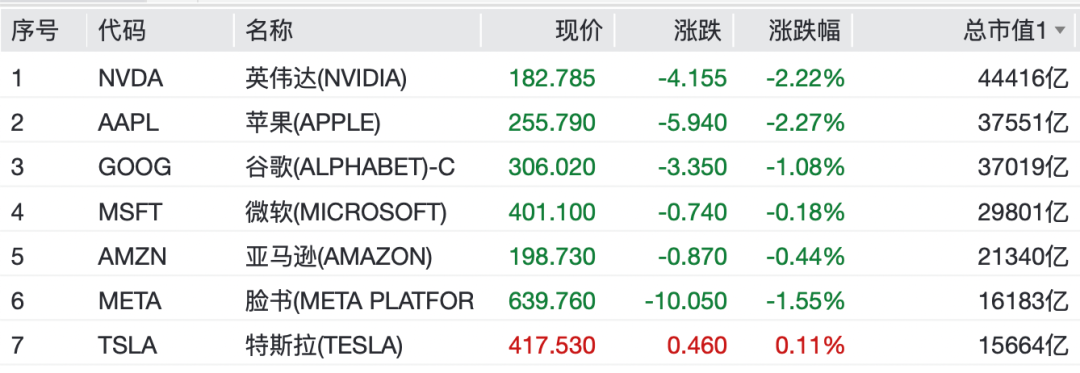
Market Performance - On February 13, the US stock market showed mixed results, with large tech stocks declining while Chinese concept stocks had varied performances [2] - The Dow Jones Industrial Average rose by 0.1% to close at 49,500.93 points, the S&P 500 increased by 0.05% to 6,836.17 points, and the Nasdaq Composite gained 0.22% to 22,546.67 points. However, all three indices experienced weekly declines, with the Nasdaq down 2.1%, the Dow down 1.23%, and the S&P 500 down 1.39% [3] Individual Stock Performance - Major tech stocks saw declines, with NVIDIA down 2.22% to $182.785, Apple down 2.27% to $255.790, and Google down 1.08% to $306.020. Microsoft fell slightly by 0.18% to $401.100, while Amazon decreased by 0.44% to $198.730. Meta Platforms dropped by 1.55% to $639.760, while Tesla saw a slight increase of 0.11% to $417.530 [4] - In the Chinese concept stock market, Tencent Music rose over 4%, while Alibaba fell over 2%, and JD Group, Baidu Group, Beike, and Li Auto all dropped by more than 1% [6] Commodity Market - Spot gold prices increased by 2.41% to a high of $5,046.261 per ounce, currently trading at $5,042.808 per ounce [8] - Spot silver prices also rose, breaking the $79 per ounce mark with a daily increase of 2.81% [8] - Gold futures contracts rose by 1.4% this week, marking an upward trend in 8 out of the last 10 weeks [9] - Silver futures contracts increased by 1.5% this week, ending a two-week decline and showing an upward trend in 11 out of the last 15 weeks [11] Market Insights - NVIDIA's CEO Jensen Huang addressed concerns about excessive spending in data centers, asserting that spending levels are reasonable and sustainable. He emphasized the growing utility and functionality of artificial intelligence, dismissing the recent sell-off in software stocks as "the most illogical thing in the world" [5] - Despite volatility in the precious metals market, demand for safe-haven assets continues to support rising gold and silver prices, according to a report by Antonio Di Giacomo from XS.com [10]


继微软后,亚马逊成第二家跌入熊市的七巨头
Xin Lang Cai Jing· 2026-02-14 00:47
Core Viewpoint - Concerns over excessive AI spending persist in the market, leading to significant stock declines among the "Big Seven" tech companies [1] Group 1: Company Impact - Investors are strongly resisting aggressive AI investment plans from tech giants, resulting in a sharp drop in stock prices [1] - Amazon's stock has been on a continuous decline, with Wall Street worried that its large-scale investments may lead to negative free cash flow by 2026, making it the first cloud business giant to experience this [1]
美股三大指数周线齐跌
财联社· 2026-02-14 00:39
Market Overview - The three major indices showed mixed performance, with the Dow Jones up 0.10% to 49,500.93 points, the S&P 500 up 0.05% to 6,836.17 points, and the Nasdaq down 0.22% to 22,546.67 points [3] - All three indices recorded weekly declines, with the S&P 500 down 1.4%, the Dow down 1.2%, and the Nasdaq down 2.1% [3] Economic Indicators - The U.S. Bureau of Labor Statistics reported that the January CPI rose 2.4% year-over-year and 0.2% month-over-month, both below market expectations [3] - The core CPI, excluding volatile food and energy prices, increased by 2.5% year-over-year and 0.3% month-over-month, aligning with market expectations [3] - Phil Blancato, Chief Market Strategist at Osaic, indicated that this data could pave the way for interest rate cuts and inflation control if the trend continues [3] Sector Performance - Concerns over AI disruption led to market sell-offs, affecting various sectors including software, real estate, trucking, and financial services [6] - Financial stocks such as Charles Schwab and Morgan Stanley fell by 10.8% and 4.9%, respectively, while software company Workday dropped 11% and commercial real estate firm CBRE fell 16% [6] - The media sector was also impacted, with Disney down approximately 3% and Netflix down 6% [7] Technology Stocks - Major tech stocks mostly declined, with Nvidia down 2.21%, Apple down 2.27%, Microsoft down 0.13%, Google down 1.06%, and Amazon down 0.41% [7] - Tesla saw a slight increase of 0.09%, while Oracle rose by 2.34% and Netflix increased by 1.33% [7] Chinese Stocks - The Nasdaq Golden Dragon China Index fell by 0.10%, with Alibaba down 1.89%, JD.com down 1.38%, and Pinduoduo up 0.06% [7] - NIO remained flat, while Xpeng rose by 1.36% and Li Auto fell by 1.81% [7]


9连跌!“资本开支最高”的亚马逊跌入熊市,投资者对Mag 7“用脚投票”
智通财经网· 2026-02-14 00:02
微软则是首家进入熊市的Mag7成员。该公司股价于1月29日跌入熊市,此前一天公司公布的Azure云业务增长未达投资者预期。截至周五收盘,微 软股价较近期高点下跌27.8%。 (亚马逊、微软和Meta近一年走势图) 亚马逊股价九连跌。周四进入技术性熊市,成为Mag7中第二家跌入熊市的公司后,周五继续下挫。投资者对科技巨头激进的人工智能支出计划发 起强烈抵制,导致这些明星股票大幅下挫。 周五,亚马逊股价收于198.79美元,较近期高点下跌超23%,前一天周四正式跌破熊市门槛。在四大超大规模云服务商中,亚马逊2026年计划资 本支出最高,达到2000亿美元。亚马逊、微软、Meta和Alphabet四家公司预计2026年在AI领域的资本支出总计将达6500亿美元。 Meta可能成为下一个跌入熊市的Mag7成员,截至周五收盘,较去年高点累跌19.6%,距离熊市的20%跌幅门槛仅差0.4%。尽管Meta第四季度营 收和盈利超出华尔街预期,但AI支出增加和利润率压力打击了投资者信心。 亚马逊、微软和Meta股价遭受更大冲击,因为投资者对这些公司AI支出能否带来足够投资回报信心不足。对于亚马逊而言,资本支出水平的提高 可能导 ...