
Amazon(AMZN)

Search documents
通信行业月报:北美云厂商资本开支强劲,CPO商业化应用拐点临近-20260213
Zhongyuan Securities· 2026-02-13 07:38
Investment Rating - The report maintains an "Outperform" investment rating for the communication industry [4][7]. Core Insights - In January 2026, the communication industry index increased by 5.47%, outperforming the Shanghai Composite Index (+3.76%), CSI 300 Index (+1.65%), Shenzhen Component Index (+5.03%), and ChiNext Index (+4.47%) [3][13]. - The capital expenditure of the four major North American cloud providers is expected to grow significantly, with a projected increase of over 60% in 2026 [6][24]. - The procurement results for special optical cables by China Mobile indicate that eight manufacturers, including Tongding Interconnection and Yangtze Optical Fibre and Cable, have been selected, highlighting the focus on key sectors such as industrial manufacturing and digital government [6][7]. Summary by Sections Industry Performance - The communication industry index showed a strong performance in January 2026, with a 5.47% increase, outperforming major indices [3][13]. - Sub-sectors within the communication industry saw varied performance, with cable, other communication equipment, and system equipment rising by 19.70%, 10.72%, and 7.85% respectively [16]. Telecommunications Sector - In 2025, the telecommunications business revenue reached CNY 1.75 trillion, a year-on-year increase of 0.7% [6][45]. - By December 2025, 5G mobile phone users accounted for 65.9% of total mobile phone users, with a monthly data usage (DOU) of 23.04GB per user, reflecting a 17.0% year-on-year increase [6][45]. Cloud Infrastructure Investment - The combined capital expenditure of the four major North American cloud providers in Q4 2025 was USD 126 billion, marking a 62.0% year-on-year increase [24][25]. - For 2026, the total capital expenditure guidance for these providers exceeds USD 660 billion, with an expected growth of 61.0% [24][25]. AI and Smartphone Market - The retail sales of communication equipment in China increased by 20.9% year-on-year in December 2025, driven by the demand for smartphones [44]. - The global smartphone shipment is projected to grow by 2% in 2025, reaching 1.25 billion units, with AI smartphones expected to penetrate 34% of the market by 2025 [6][44]. Investment Recommendations - The report suggests focusing on companies involved in optical devices, optical chips, optical modules, and AI smartphones, including Tianfu Communication, ZTE, and China Mobile [7][6].






新闻分析丨为何各国争相“上天”组网
Xin Hua She· 2026-02-13 07:28
新华社北京2月13日电 新闻分析|为何各国争相"上天"组网 新华社记者 2月12日,一枚欧洲阿丽亚娜6型运载火箭从法属圭亚那库鲁航天中心升空,为美国亚马逊公司的低 地轨道卫星计划(Amazon Leo)部署32颗卫星。此次发射是多国竞相布局卫星互联网的又一缩影。 卫星互联网是一种通过人造地球卫星作为信号中转站,为用户提供宽带互联网接入服务的通信网络 系统。随着技术进步与需求爆发,该系统已从地面通信网络的补充,演变为数字时代的关键太空基础设 施。 太空组网竞争"升温" 美国企业正密集布局卫星互联网。其中,美国太空探索技术公司推进最快,其"星链"项目2019年开 始部署卫星,目前在轨卫星超过9000颗,服务用户超900万,是全球规模最大、部署最快的低轨卫星互 联网系统。 美国亚马逊公司、蓝色起源公司、AST太空移动公司等企业也推出自己的卫星互联网项目,只是在 组网规模、目标客户、应用场景等方面存在差异。例如,蓝色起源公司的卫星互联网项目"泰拉波"系统 专门面向企业级用户,AST太空移动公司则主推卫星与普通智能手机直连服务。 多种因素驱动"入局" 以"星链"为代表的卫星互联网项目主要聚焦低地球轨道卫星组网。低轨卫星 ...
软件股遭遇2010年来最大做空潮,高盛惊呼:市场“无处可藏”!
Hua Er Jie Jian Wen· 2026-02-13 06:51
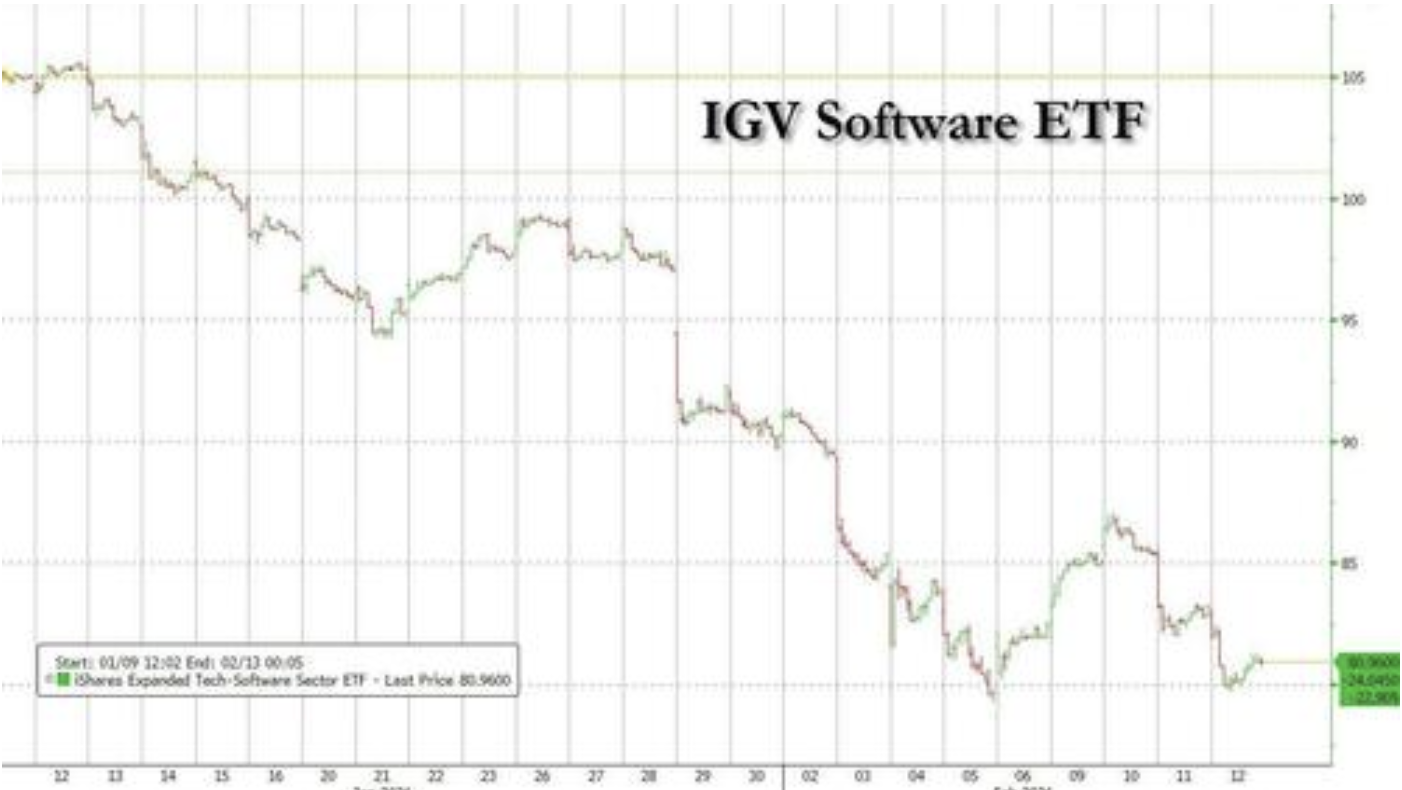
Group 1 - The software sector is experiencing the most intense short-selling attack in over a decade, with Morgan Stanley reporting that the short-selling volume in the software and SaaS sectors reached one of the highest levels since 2010 [1][7] - Hedge funds have quickly resumed short-selling strategies after a brief period of covering, with new short positions in the software sector exceeding levels seen at the end of January [2][7] - Concerns about AI replacing human jobs are spreading across more sub-industries, significantly impacting market sentiment, as evidenced by a notable drop in the stock price of CH Robinson [4][8] Group 2 - Defensive sectors are outperforming cyclical stocks, with Goldman Sachs noting the worst two-day performance for cyclical stocks since the "Liberation Day," with a cumulative drop of over 350 basis points [6][8] - The 10-year U.S. Treasury yield has fallen to around a three-month low of 4.08%, indicating increased market risk aversion, while the VIX index closed above 20 [6][8] - The market is becoming increasingly sensitive to the potential disruptive impacts of AI, with major tech companies experiencing valuation declines [9] Group 3 - Goldman Sachs described the current trading environment as one of the most volatile seen, with many tech and growth stocks appearing oversold as the Russell Tech Index falls to its 200-day moving average [6][10] - There is a discussion on whether the valuation adjustments in the market have been excessive, with some companies not returning to pre-earnings release levels despite the rapid pricing in of perceived technological changes [10] - The large tech stocks, referred to as "Mag 7," have underperformed the market by approximately 7.5 percentage points over the past few months, indicating a significant pullback [11]


黄金白银深夜重挫!苹果等大跌!
Sou Hu Cai Jing· 2026-02-13 04:23
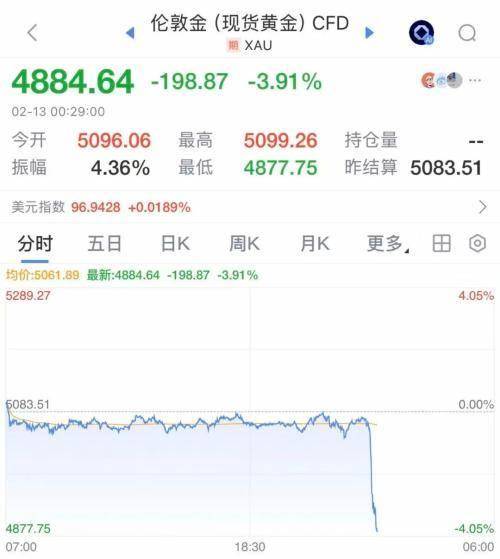
Group 1 - Gold and silver prices experienced significant declines, with spot gold dropping over 3% and spot silver's intraday decline reaching 11% [1][3] - Major U.S. tech stocks saw widespread declines, with Apple down 5%, Broadcom down over 3%, and Amazon, Meta, and Tesla down over 2%. Nvidia fell over 1%, while Google's A shares saw a slight decrease [3] - Concerns have arisen among investors regarding the impact of newly launched AI tools on various sectors, including software companies, publishers, and financial services, as these tools may replicate business models or erode profit margins [3] Group 2 - As of the latest update, gold prices rebounded, with spot gold reported at $4,979.69 per ounce and spot silver at $76.65 per ounce [4] - The London gold price showed fluctuations, with a recent buy price of $4,912.80 and a sell price of $4,980.36, indicating a 1.25% change [5]


大西洋月刊:美国还没准备好迎接人工智能对就业的影响
美股IPO· 2026-02-13 03:27
Core Argument - The article discusses the profound impact of artificial intelligence (AI) on the job market, suggesting that the U.S. is unprepared for the potential disruptions it may cause to employment and economic stability [1]. Group 1: Historical Context and Current Trends - The establishment of the U.S. Bureau of Labor Statistics (BLS) aimed to measure labor conditions and create fair outcomes amidst industrial changes, highlighting the importance of data in understanding economic realities [5][6]. - The BLS has documented significant job growth in various sectors, such as a 907% increase in mobile food service jobs since 2000, indicating a dynamic labor market [6]. - However, the BLS is limited in its predictive capabilities, particularly regarding the impact of emerging technologies like AI on the workforce [7]. Group 2: AI's Impact on Employment - AI is rapidly transforming job functions, enabling tasks to be completed more efficiently than ever before, which raises concerns about job displacement [8][9]. - Predictions from industry leaders suggest that AI could lead to a 10% to 20% increase in unemployment rates and potentially eliminate half of entry-level white-collar jobs within the next decade [10]. - A Reuters/Ipsos survey indicates that 71% of Americans fear AI will lead to permanent job losses, reflecting widespread anxiety about the future of work [9]. Group 3: Economic Resilience and Job Creation - Economists argue that capitalism has a strong resilience, often leading to job creation following technological advancements, as seen with ATMs and software like Excel [8]. - The BLS forecasts a 3.1% employment growth rate over the next decade, which, while lower than previous years, still represents the addition of 5 million jobs [8]. Group 4: The Role of Policy and Corporate Responsibility - There is a growing concern that corporate leaders are prioritizing automation and efficiency over employee welfare, leading to potential mass layoffs [22][23]. - The article suggests that CEOs are under pressure to demonstrate the benefits of AI quickly, often resulting in job cuts rather than exploring ways to integrate AI while supporting their workforce [22][23]. - Proposals for policies such as retraining programs and a robot tax to support displaced workers are discussed, but there is skepticism about their implementation [33][28]. Group 5: Political and Social Implications - The political landscape is characterized by a lack of proactive measures to address the challenges posed by AI, with many lawmakers adopting a hands-off approach [26][27]. - The article emphasizes the need for a coordinated response to the potential upheaval caused by AI, suggesting that without intervention, the consequences could be severe for both the economy and society [30][31].



8连跌!“资本开支最高”的亚马逊跌入熊市,投资者对Mag 7“用脚投票”
美股IPO· 2026-02-13 03:27
Core Viewpoint - Amazon has officially entered a technical bear market after its stock price dropped 21.4% from recent highs, while Microsoft became the first member of the Mag7 to enter a bear market. Investor confidence in the return on investment from AI spending by these companies is low, with Amazon planning capital expenditures of up to $200 billion by 2026 [1][3]. Group 1: Amazon and Microsoft Performance - Amazon's stock closed at $199.60 after eight consecutive days of decline, marking its entry into a technical bear market as the second company in the Mag7 to do so [3]. - Microsoft’s stock price fell 25.9% from recent highs after its Azure cloud business growth failed to meet investor expectations, leading to its entry into a bear market on January 29 [3]. Group 2: AI Spending and Investor Sentiment - The total projected capital expenditure for AI by Amazon, Microsoft, Meta, and Alphabet is expected to reach $650 billion by 2026, with Amazon having the highest planned expenditure [3]. - Meta's stock is close to entering a bear market, just 2.3% away from the threshold, despite exceeding Wall Street expectations for Q4 revenue and earnings, as increased AI spending and profit margin pressures have affected investor confidence [3]. Group 3: Market Dynamics and Cash Flow Concerns - There is a noticeable rotation among Mag7 members, with investors moving away from Microsoft, Nvidia, and Oracle-related OpenAI trades towards Alphabet and Broadcom ecosystems [5]. - Alphabet's vertically integrated technology stack has somewhat mitigated concerns over excessive spending, allowing it to avoid the worst impacts of the tech stock sell-off, with its stock down 9.2% from recent highs [5]. - Increased capital expenditure levels for Amazon may lead to negative free cash flow this year, prompting the company to seek additional capital through debt markets [5].
32颗亚马逊低轨卫星搭乘欧洲火箭入轨
Xin Hua She· 2026-02-13 03:21
阿丽亚娜集团首席执行官马丁·西翁说,这次成功发射是阿丽亚娜6型火箭四个助推器版本的首次飞行。 阿丽亚娜6型火箭于2024年7月9日完成首次发射,本次任务是其第六次发射。该火箭有两种型号,分别 装配两个和四个助推器。 新华社巴黎2月12日电(记者罗毓)当地时间12日下午,欧洲阿丽亚娜6型火箭从法属圭亚那库鲁航天中 心成功发射。火箭搭载美国亚马逊低地轨道卫星计划的32颗卫星,约两小时后所有卫星被顺利部署到预 定轨道。 据阿丽亚娜集团官网介绍,这次任务编号为VA267,是该公司与亚马逊低地轨道卫星计划签订的18次阿 丽亚娜6型火箭发射计划中的首次任务。 亚马逊低地轨道卫星计划是亚马逊旗下的近地轨道卫星宽带网络项目,原名"柯伊伯计划",起初计划部 署3200颗卫星,通过人造地球卫星作为信号中转站,为用户提供宽带互联网接入服务。这一项目近期获 批扩大规模,使计划部署卫星的总数增至约7700颗。(完) ...
AI热潮再遇“当头棒喝”,纳指重挫逾2%
2 1 Shi Ji Jing Ji Bao Dao· 2026-02-13 02:38
近期市场基调已转变为对AI颠覆性潜力的担忧,软件、法律服务和财富管理领域等多个行业因此遭到 冲击,投资者正重新思考如何评估这些企业的价值。 南方财经 21世纪经济报道记者吴斌 报道 投资者对AI热潮的追捧促成了美股三年牛市,如今这股热潮已经跌跌撞撞。 美国东部时间2月12日,道琼斯指数收跌1.34%,报49,451.98点;标普500指数跌1.57%,报6,832.76点; 纳斯达克指数跌2.03%,报22,597.15点。 近期,美股市场轮动的趋势正愈发明显。亚马逊、谷歌母公司Alphabet等科技巨头公布了巨额资本支出 计划,加上投资者们对Anthropic新工具的担忧再度加剧,导致众多人工智能相关的企业股票遭到抛 售,资金纷纷涌入其他板块的价值型股票。 即使是近期相对稳健的就业数据也难以提振美股。美国1月份非农就业岗位新增13万个,远超华尔街预 期,失业率也从去年12月的4.4%降至4.3%,但市场在短暂的上扬之后再度疲软。 美国银行认为,2020年以来,以"七巨头"为代表的科技巨头在美股市场上的领导地位正面临"重大威 胁"。随着美国中期选举的临近,投资者应逐步倾向于投资中小盘股票。 巨额支出回报存疑 ...
Nasdaq slumps 2% as tech and transport stocks slide on AI disruption fears
BusinessLine· 2026-02-13 02:22
Market Overview - Wall Street indexes experienced a sharp decline, with the Nasdaq falling 2% as investors sold off tech shares and transportation stocks due to concerns over AI disruption [1][2] - The Dow Jones Industrial Average dropped 669.42 points (1.34%) to 49,451.98, the S&P 500 fell 108.71 points (1.57%) to 6,832.76, and the Nasdaq Composite decreased by 469.32 points (2.03%) to 22,597.15 [3] Sector Performance - Investors shifted from riskier sectors to more defensive investments such as utilities, consumer staples, and real estate [2] - Cisco Systems reported a quarterly adjusted gross margin below estimates, leading to a 12.3% drop in its shares, which negatively impacted the broader technology sector [5] - The S&P 500 software index fell 1.7%, with AppLovin being the largest decliner at 19.7% after disappointing fourth-quarter results [6] Transportation Sector - The Dow Jones Transportation Average fell 4%, with significant losses in companies like Landstar (down 15.6%), CH Robinson (down 14.5%), and Expeditors International (down 13.2%) [7] - Concerns about AI disruption in the transportation sector were heightened by a new tool from Algorhythm Holdings, which caused investor worries [7] Economic Indicators - A stronger-than-expected jobs report raised concerns that the Federal Reserve may be less likely to cut rates, impacting investor sentiment [4] - The latest data showed a decrease in new applications for unemployment benefits, but the decline was less than expected, indicating lingering disruptions from winter storms [4][8] Semiconductor and Technology Stocks - The Philadelphia SE Semiconductor index fell 2.5%, while Equinix shares rose 10.4% after forecasting annual revenue above estimates, driven by strong AI-linked demand [9] - Personal-computer makers faced pressure, with Lenovo warning of shipment issues due to a memory-chip shortage, affecting shares of HP (down 4.5%) and Dell Technologies (down 9%) [9]

高盛闭门会-美股互联网财报季要点-ai担忧云计算再加速-首选metaai颠覆错杀游戏股
Goldman Sachs· 2026-02-13 02:17
Investment Rating - The report indicates a favorable investment rating for Meta, highlighting it as the most attractive stock in terms of risk-reward ratio within the sector [2][6]. Core Insights - The digital advertising and cloud computing sectors are performing strongly, alleviating investor concerns regarding AI capital expenditure returns. Meta shows slight earnings, while Alphabet maintains substantial earnings, but Amazon is expected to incur losses in 2026-2027, prompting a reevaluation of long-term free cash flow valuations [2][3]. - The advertising industry is evolving towards AI and machine learning, with major players like Amazon, Meta, and Alphabet benefiting from this trend. Meta's new growth pillars in AI and its core advertising business leverage AI applications effectively, making it a compelling investment opportunity [2][6]. - Capital intensity among tech companies is expected to peak between 2025 and 2027, but investor skepticism remains regarding the returns on these expenditures. In the next six months, the market will focus more on capacity support, semiconductor industry dynamics, and data center construction [2][6]. Summary by Sections Digital Advertising and Cloud Computing - The digital advertising sector is experiencing robust growth, with search business growing nearly 17% and Meta achieving a mid-20% growth rate. The advertising ecosystem is increasingly driven by AI and machine learning, benefiting only a few large companies [5][6]. - Amazon's strong start in 2026 is overshadowed by unexpected operating profit guidance and capital expenditure intensity, leading to investor concerns about AWS growth compared to Alphabet's cloud services [3][4]. Company Performance and Valuation - Meta is highlighted as having the strongest leverage effect in AI applications within its core advertising business, making it the most attractive investment in the sector [6]. - Amazon's valuation is considered low, trading below 20 times the adjusted earnings per share for 2027, indicating a potential undervaluation [9]. - Google Cloud's (GCP) profit margin increased by 7 percentage points, but it is expected to revert to around 25%. Despite this, GCP has significant growth potential due to a doubling of backlog orders and strong overall market demand [7][8]. Future Outlook - The report anticipates that the growth rate for cloud services will remain around 45% in 2026, although profit margins may experience significant declines. Investor expectations are high regarding the conversion of backlog orders into revenue and capital expenditures into capacity [8]. - The report emphasizes the need for clearer visibility on returns from capital expenditures, as investor confidence remains low despite strong demand in the terminal market [3][4].