Citi(C)

Search documents
花旗财管:市场尚未出现转折点 美股牛市仍有空间
Zhi Tong Cai Jing· 2025-11-24 06:26
Core Viewpoint - The U.S. stock market bull run still has room for growth, as there is no excessive optimism or irrational exuberance among investors [1] Group 1: Market Sentiment - The market has not reached a turning point, with strong earnings expectations still prevailing [1] - Wealthy clients are holding idle cash and focusing on structured products to maintain downside protection when entering the market [1] Group 2: Business Focus - The company is fully committed to its Citigold business in Asia, targeting clients with approximately $200,000 in assets, with no plans to sell this business [1] - Growth in Hong Kong and Singapore is significantly driven by clients from China, showcasing a robust economic recovery post-COVID-19 [1] Group 3: Outlook on China - The company has a positive outlook on its business in China, noting a vitality in economic development that has not been seen since before the pandemic [1]

中国经济 - 中央经济工作会议后或迎来下一个政策窗口-China Economics-Post-CEWC Could Be Next Policy Window
2025-11-24 01:46
Summary of Key Points from the Conference Call Industry Overview - The conference call discusses the economic outlook and policy measures in China, particularly focusing on the People's Bank of China (PBoC) and the Ministry of Finance (MoF) [1][2][3][4]. Core Insights and Arguments - **Interest Rates Held Steady**: The PBoC has maintained the Loan Prime Rates (LPRs) at 3.0% for the 1-year tenor and 3.5% for the 5-year tenor for six consecutive months, indicating a cautious approach to monetary policy [2][3]. - **Fiscal Consolidation Observed**: Recent fiscal data shows an 8.6% year-over-year increase in tax revenue for October, while overall expenditure has contracted by 19.1% year-over-year, suggesting a trend towards fiscal consolidation [2][3]. - **Weakness in Property Sector**: There is a notable absence of new support measures for the property sector despite ongoing data weakness, with home sales and prices showing limited signs of stabilization [2][5]. - **Growth Target Feasibility**: The report suggests that achieving the 5% annual growth target for 2025 remains feasible, with a projected growth of approximately 4.5% year-over-year in Q4 2025 [3][4]. - **Policy Space for 2026**: Policymakers are likely to conserve policy space for 2026, the first year of the 15th Five-Year Plan (FYP), with expectations for potential rate cuts and fiscal measures to support consumer spending and welfare [1][4][5]. Additional Important Insights - **Next Policy Window**: The next significant policy window is anticipated to be after the Central Economic Work Conference (CEWC), with potential for a new round of property support measures and front-loading of government bond issuance for 2026 [1][4][5]. - **Incremental Property Support**: There are hints at possible incremental measures for property support, including interest subsidies for mortgage borrowers and additional funding for property developers, although the central government is not expected to utilize its balance sheet directly [5][9]. - **Long-term Constraints**: Long-standing constraints on further easing remain, particularly concerning debt levels for the MoF and net interest margin (NIM) concerns for the PBoC [3][4]. This summary encapsulates the key points discussed in the conference call, providing insights into the current economic landscape and anticipated policy actions in China.
X @Bloomberg
Bloomberg· 2025-11-23 23:15
Market Trends - Citigroup's wealth chief believes the equity bull market still has "some room to run" [1] - The Wall Street giant is attracting record inflows from wealthy clients this year [1]
Banks, FBI Assessing Hack of Real Estate Finance Tech Vendor
MINT· 2025-11-23 19:05
Core Insights - A data breach at SitusAMC Group Holdings has raised concerns among major American banks and mortgage lenders regarding the potential impact on their operations [1][3] - The breach involved the compromise of client data, including accounting records and legal agreements, with the company stating that the situation is now contained [1][4] - The FBI is investigating the incident but has reported no operational impact on banking services [3] Company Summary - SitusAMC Group Holdings confirmed the hack on November 15 and began notifying its residential mortgage customers about the potential impact [3] - The CEO of SitusAMC stated that the breach is contained and the company is focused on analyzing affected data [4] Industry Impact - Major banks, including JPMorgan Chase and Citigroup, received notifications regarding the breach but have not disclosed specific details about their involvement [1][2] - The incident is being investigated by the FBI, indicating a broader concern within the financial services sector regarding third-party vendor security [3]



美股深夜跳水,甲骨文跌7%,英伟达跌4%,小马智行跌超5%,黄金、比特币集体下跌
2 1 Shi Ji Jing Ji Bao Dao· 2025-11-21 15:59
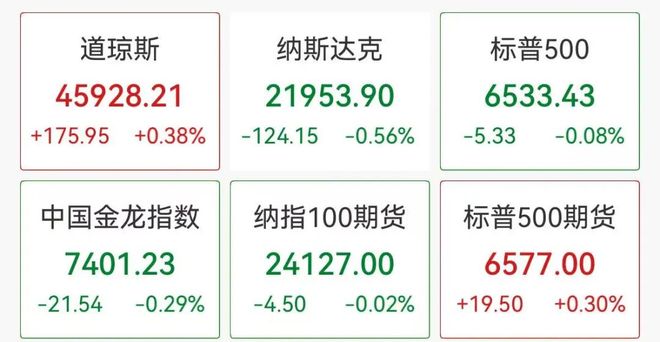
记者丨吴斌 金珊 编辑丨包芳鸣 11月21日,美股开盘上涨,截至北京时间23:40,道指涨0.38%,标普500指数转跌0.08%,纳指转跌 0.56%。科技股涨跌不一,谷歌涨超2%,英伟达跌超4%,甲骨文跌超7%。费城半导体指数跌近3%, ARM跌超5%,AMD跌超4%。纳斯达克中国金龙指数跌0.29%,唯品会涨超4%,乐信、霸王茶姬涨超 3%,小马智行跌超5%,阿里巴巴跌超2%。 现货黄金短线拉升后继续下跌,最新报4065美元/盎司,现货白银跌近2%,报49.6美元/盎司。 加密货币方面,主要币种集体下挫,比特币从8.06万美元回升至8.3万美元,日内跌幅收窄至7%。过去 24小时,全市场超40万人被爆仓。 | 排名 | 而种 | 价格 | 价格(24h%) | | --- | --- | --- | --- | | 1 | B BTC | $83835 | -7.39% | | 2 | ETH | $2729.49 | -8.30% | | 3 | SOL | $126.74 | -9.11% | | 4 | XRP | $1.9276 | -8.32% | | 5 | HYPE | $33.067 | ...




X @Bloomberg
Bloomberg· 2025-11-21 15:21
Wells Fargo bank analyst Mike Mayo, a long-time Citigroup bull, says the firm’s “mini-reorg” isn’t encouraging for the stock heading into year-end as the newly named chief financial officer seems “unproven and unknown” https://t.co/076005lidB ...
Citi Announces CFO Transition and Integration of Some Businesses
PYMNTS.com· 2025-11-21 15:19
Leadership Changes - Mark Mason will transition out of the role of chief financial officer in March 2026, becoming executive vice chair and senior executive adviser to Chair and CEO Jane Fraser [2] - Gonzalo Luchetti will succeed Mason as CFO; he has been with Citi since 2006 and led U.S. Personal Banking since 2021 [3] Performance and Achievements - Under Luchetti's leadership, U.S. Personal Banking achieved 12 consecutive quarters of positive operating leverage and more than doubled its return on tangible common equity (RoTCE) year to date compared to the previous year [4] Business Integration - Citi will integrate its Retail Bank into its Wealth business, consolidating various relationship tiers into a single group led by Kate Luft [5] - The Branded Cards and Retail Services businesses will be combined to form U.S. Consumer Cards, led by Pam Habner, which will become one of Citi's five core businesses [6] Strategic Outlook - CEO Jane Fraser expressed confidence in meeting the 2026 return target, emphasizing the importance of the leadership evolution ahead of the upcoming Investor Day [7] - Citi's restructuring efforts initiated in September 2023 are showing positive results, with record quarterly revenues across all five core businesses in the third quarter [7]
Citi CFO Mason to step down after CEO Fraser’s power consolidation
Yahoo Finance· 2025-11-21 13:51
Management Reshuffle - Mark Mason, CFO of Citi, will be succeeded by Gonzalo Luchetti, head of Citi's US consumer bank, by early March 2024, with Mason leaving the bank at the end of next year [1] - Citi is restructuring its US consumer bank, moving its retail banking unit under the wealth division led by Andy Sieg, while the credit card portfolio and retail services will remain a standalone division under Pam Habner [2] Leadership and Legacy - Mason has been with Citi for 25 years and has served as CFO since 2019, and he is of similar age to CEO Jane Fraser, who has recently been appointed as board chair [3] - Fraser acknowledged Mason's contributions in a note to staff, highlighting his role in the bank's transformation and focus on shareholder returns [4] Strategic Changes and Performance - The management reshuffle occurs at a critical time as Citi aims to improve performance and boost stock prices after years of underperformance compared to rivals [5] - Citi faced a $135 million fine last year for slow progress in enhancing its data management and risk infrastructure, stemming from a 2020 consent order [6] - The bank is working towards achieving a return on tangible common equity (ROTCE) target, having posted an 8% ROTCE as of September, down from an earlier target of 11% to 12% [7]
花旗金融服务部:为全球约19000位客户提供服务
Zhong Zheng Wang· 2025-11-21 12:25
Group 1 - Citigroup's Financial Services Division serves approximately 19,000 clients globally, with a daily trading volume of around $5 trillion, catering to various client types including corporations, institutional investors, and local companies [1] - The division aims to support Chinese enterprises in their overseas financing and cash management needs while providing banking services to Fortune 500 companies and other global institutions entering and developing in China [1] - Citigroup China is one of the first foreign banks to participate in trade facilitation reforms and is a direct participant in the Cross-Border Interbank Payment System (CIPS), assisting multinational corporations and Chinese enterprises with cross-border cash pooling and centralized payment solutions [1] Group 2 - Technology is identified as the core driver of business progress, with traditional financial services rapidly transforming towards 24/7 real-time and instant services [2] - Citigroup invests $1.5 billion annually in technology to support ongoing digitalization, including modernizing existing infrastructure and integrating traditional and digital financial tracks [2]
Citigroup Names New CFO, Announces Major Overhaul In Personal Banking Business - Citigroup (NYSE:C), JPMorgan Chase (NYSE:JPM)
Benzinga· 2025-11-21 09:36
Core Viewpoint - Citigroup Inc. has appointed a new Chief Financial Officer and restructured its U.S. personal banking business, indicating a strategic shift aimed at growth and development [1][5]. Reorganization Across Divisions - Gonzalo Luchetti, currently head of U.S. personal banking, will become CFO in March, while Mark Mason transitions to executive vice chair and senior executive advisor to CEO Jane Fraser [2]. - The bank is merging its retail operations with its wealth business, with Andy Sieg expanding his responsibilities. The new U.S. Retail Banking and Citigold division will be led by Kate Luft [3]. - Citigroup is consolidating its branded cards and retail-services operations into a single unit called U.S. Consumer Cards, overseen by Pam Habner [3]. Analyst Confidence - Following a strong Q3 earnings report with a 9% year-over-year revenue increase, analysts have raised their forecasts for Citigroup, with Keefe, Bruyette & Woods increasing the price target from $112 to $118 while maintaining an Outperform rating [4]. - Citigroup's stock has surged 39.59% year-to-date, although it fell 2.20% to close at $97.63 recently [5].