
CMS(CNMMY)

Search documents
大行评级丨招商证券国际:继续看好龙头车企配置价值,推荐吉利汽车、比亚迪和小鹏汽车
Ge Long Hui· 2026-03-18 02:32
Group 1 - The core viewpoint of the report is that the pessimistic expectations for the automotive sector have been fully released, and valuations remain at relatively low historical levels [1] - The report highlights the positive outlook for leading automotive companies driven by the new vehicle cycle and the push for smart technology [1] - Recommended stocks include Geely Automobile (target price of 32 HKD, rating "Buy"), BYD, and Xpeng Motors, while also noting short-term trading opportunities for NIO [1]

招商证券国际:给予吉利汽车“增持”评级 极氪新车需求旺盛
Zhi Tong Cai Jing· 2026-03-18 02:31
招商证券国际发布研报称,给予吉利汽车(00175)目标价32港元和"增持"评级。该行表示,当前汽车板 块悲观预期已充分释放,估值仍处于历史相对低位,在新车周期与智能化催化推动下,该行继续看好头 部车企配置价值,推荐吉利、比亚迪(002594)股份(01211)、小鹏汽车-W(09868),同时关注蔚来- SW(09866)短期交易性机会。 3月16日,极氪发表全新高性能大五座旗舰SUV极氪8X并开启预售,预售价37.68万–51.68万元人民币 (下同)。公司揭露,开启预售38分钟小订突破1万台,并持续向2万台冲刺,市场需求旺盛。根据第三方 渠道调查,大部分潜在消费者选择39.68万元配置区间,处于预售价格中位数区,占比接近40%。截止3 月16日晚订单已达1.7万辆,其中高配版耀影占比达29%。考虑到新车正式上市后通常会配合价格或权 益调整,预计4月正式上市后订单可望进一步释出。极氪产品矩阵持续向上,高端品牌定位强化。高端 车型放量或带来盈利预期差,继续推荐吉利汽车。 ...

招商证券:节后白鸡价格小幅回落 黄羽鸡仍有较好盈利
智通财经网· 2026-03-17 07:52AI Processing
招商证券主要观点如下: 白羽鸡:节后毛鸡价格回落,鸡产品价格显著好于往年 2月主产区毛鸡均价7.49元/千克,同比+24%,环比-1.9%;鸡苗均价2.52元/羽,同比+19.2%,环比 +4.4%;鸡产品均价9300元/吨,同比+2.8%,环比+0.5%;毛鸡养殖端羽均亏损0.02元。本月鸡源相较充 足,但节后需求端承接有限,鸡价自春节后逐步小幅回落;而由于前期鸡苗成本处于低位水平,养殖端 仍有一定盈利;鸡产品价格显著好于往年。节后鸡苗供应量不大,种禽企业挺价意愿明显,支撑苗价向 好。 智通财经APP获悉,招商证券发布研报称,2月鸡源相较充足,但节后需求端承接有限,鸡价自春节后 逐步小幅回落;而由于前期鸡苗成本处于低位水平,养殖端仍有一定盈利;鸡产品价格显著好于往年。 节后鸡苗供应量不大,种禽企业挺价意愿明显,支撑苗价向好。春节期间黄羽鸡餐饮消费及家庭消费改 善,尤其节前慢速鸡价更为坚挺,而节假日期间快速鸡也保持着较好盈利。当前黄羽肉鸡出栏成本已回 落至低位,2月份头部养殖企业羽均盈利或已提升至2元左右,同时看好26年黄鸡高景气延续。 结合产能来看,当前父母代产能已降至历史偏低位水平,再加之2025年行业亏 ...
招商证券涨1.01%,成交额9.70亿元,今日主力净流入3398.77万
Xin Lang Cai Jing· 2026-03-17 07:24
Core Viewpoint - On March 17, 2025, China Merchants Securities saw a stock price increase of 1.01%, with a trading volume of 970 million yuan and a turnover rate of 0.81%, resulting in a total market capitalization of 139.579 billion yuan [1][11]. Company Overview - China Merchants Securities Co., Ltd. is located in Shenzhen, Guangdong Province, and was established on August 1, 1993. It was listed on November 17, 2009. The company's main business includes wealth management and institutional business (56.39%), investment and trading (24.32%), other services (10.57%), investment management (4.90%), and investment banking (3.83%) [8][18]. - As of September 30, 2025, the number of shareholders reached 175,900, an increase of 23.14% compared to the previous period, with an average of 0 shares per shareholder [19]. Financial Performance - For the period from January to September 2025, China Merchants Securities achieved operating revenue of 18.244 billion yuan, representing a year-on-year growth of 27.76%. The net profit attributable to shareholders was 8.871 billion yuan, up 24.08% year-on-year [19]. - The company has distributed a total of 37.668 billion yuan in dividends since its A-share listing, with 8.992 billion yuan distributed in the last three years [20]. Shareholding Structure - Among the top ten circulating shareholders, China Securities Finance Corporation holds 171 million shares, unchanged from the previous period, while Hong Kong Central Clearing Limited holds 149 million shares, a decrease of 79.6112 million shares compared to the previous period. The Guotai CSI All-Index Securities Company ETF is a new shareholder, holding 95.9001 million shares [20]. Market Activity - The main capital inflow for the stock today was 35.1593 million yuan, accounting for 0.04% of the total, with the stock ranking 19th out of 50 in its industry. There is currently no continuous increase or decrease in positions, indicating an unclear trend for the main capital [4][14]. - The average trading cost of the stock is 17.09 yuan, with the current price near a support level of 15.95 yuan. A break below this support level could trigger a downward trend [7][17].
招商证券:光模块扩产&技术迭代趋势发展 建议重点关注光模块设备行业
Zhi Tong Cai Jing· 2026-03-17 02:30
Core Insights - The report from China Merchants Securities emphasizes that optical modules are a core sector for AI computing infrastructure, with downstream capital expenditures for high-speed pluggable optical modules increasing to meet rapidly growing demand [1] - The industry is experiencing an expansion cycle and a technology iteration cycle, which are beneficial for equipment [1] - The reliance on manual labor in optical module production lines is decreasing, and the trend of major players expanding production capacity overseas is evident, leading to a sustained increase in demand for automation equipment [1] Summary by Sections Optical Module Production Process - Pluggable optical modules are essential components for optical communication, enabling optical-electrical conversion and serving as critical hardware for high-speed interconnections within data centers [2] - Key production processes include: - **Die Bonding**: Attaching optical chips to carriers using manual or automated methods, primarily utilizing die bonders and eutectic machines [2] - **Wire Bonding**: Connecting the chip's bonding pads to the printed circuit board using metal wires, requiring bonding machines [2] - **Optical Coupling**: Efficiently coupling light into optical fibers to ensure transmission performance, using fully automated optical coupling platforms and high-precision six-axis adjustment platforms [2] - **Packaging**: Protecting and sealing the internal optical path and chips with an outer shell, with ongoing automation upgrades in this stage [2] - **Aging Testing**: Conducting tests on lasers at both chip and module levels using specialized aging fixtures [2] CPO Technology vs. Traditional Optical Modules - CPO technology offers higher integration and smaller size compared to traditional pluggable optical modules, significantly improving bandwidth, power consumption, and space efficiency [2] - Key differences in production processes include: - **Chip Interconnection**: Traditional modules primarily use wire bonding, while CPO employs advanced techniques like flip-chip soldering and micro-bump bonding, resulting in higher density and precision [3] - **Optical Coupling**: Traditional modules couple light with discrete devices, while CPO directly couples light into silicon photonic waveguides with sub-micron alignment precision, increasing complexity [3] - **Packaging and Heat Dissipation**: Traditional modules use TO, BOX, and COB packaging with lower thermal pressure, whereas CPO requires advanced cooling techniques due to high thermal density [3] - **Testing Systems**: Traditional modules allow for component-level testing, while CPO requires integrated testing post-packaging, necessitating the development of new testing solutions [3]
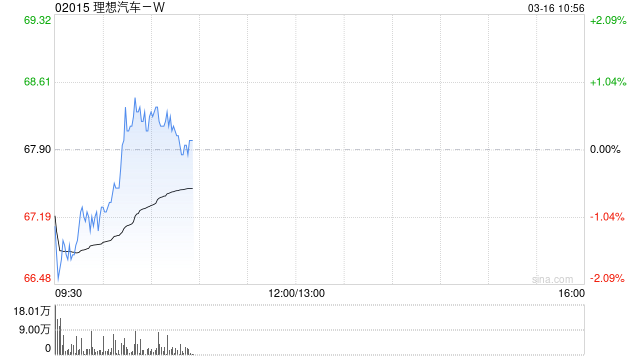
招商证券国际:维持理想汽车(02015)目标价74港元 维持“中性”
智通财经网· 2026-03-16 03:00
Core Viewpoint - The report from China Merchants Securities International maintains a target price of HKD 74 for Ideal Automotive (02015) and USD 19 for LI.US, while keeping a "Neutral" rating, reflecting a decline in the company's competitiveness amid high investments in AI [1] Group 1: Financial Performance - The company has lowered its non-GAAP net profit forecast by 82% and 20% for the upcoming periods [1] - The first quarter is characterized as a product transition and profit recovery period, with the second quarter's new L9 model's competitiveness still under observation and limited incremental contribution expected, leading to significant performance pressure in the first half of the year [1] - The company's fourth-quarter performance fell short of expectations, with product structure decline and industry competition negatively impacting average selling price (ASP) and profit margins [1] Group 2: Strategic Focus - The company is increasing investments in AI and embodied intelligence, which is seen as a correct direction, although the product line is not yet fully developed [1] - Despite the weak performance in the first half due to a weakened product line, there is an expectation for improvement in the second half of the year as the company actively expands into the AI sector [1]

招商证券国际:维持理想汽车目标价74港元 维持“中性”
Xin Lang Cai Jing· 2026-03-16 02:57
Group 1 - The core viewpoint of the report is that Ideal Automotive (02015) is facing declining competitiveness and high investments in AI, leading to a maintained target price of HKD 74 and USD 19 for LI.US, with a "neutral" rating [1][5] - The company has revised its non-GAAP net profit forecast down by 82% and 20%, citing that the first quarter is a period of product transition and profit recovery, while the competitiveness of the new L9 in the second quarter remains to be observed, with limited incremental contribution and significant performance pressure in the first half of the year [1][5] - The report indicates that the company's fourth-quarter performance fell short of expectations, with a decline in product structure and industry competition negatively impacting the average selling price (ASP) and profit margins [1][5]

招商证券:投资者持仓风格可能进一步均衡 向偏价值、涨价顺周期方向漂移
Xin Lang Cai Jing· 2026-03-15 11:30
Core Viewpoint - Geopolitical conflicts have shifted market focus towards supply security and strategic resources, changing the driving logic from risk aversion to concerns about re-inflation [1] Group 1: Market Impact - Rising oil prices are reinforcing inflation expectations, suppressing interest rate cut prospects, and impacting most asset classes [1] - The sustained increase in oil prices is leading to re-inflation trades and delaying Federal Reserve rate cut expectations, which will affect market risk appetite [1] Group 2: A-Share Market Dynamics - The A-share market is expected to remain volatile, with significant structural differentiation, benefiting resource sectors [1] - With the Producer Price Index (PPI) expected to rebound and turn positive, investor positioning may further balance, shifting towards value and inflation-sensitive sectors [1]
招商证券:A股投资者持仓风格可能进一步均衡,向偏价值、涨价顺周期方向漂移
Sou Hu Cai Jing· 2026-03-15 11:17
Core Viewpoint - Geopolitical conflicts have shifted market focus towards supply security and strategic resources, changing the driving logic from risk aversion to concerns about re-inflation [1] Group 1: Market Impact - Rising oil prices have strengthened inflation expectations, suppressing the outlook for interest rate cuts and impacting most asset classes [1] - The continued upward trend in oil prices is expected to influence market risk appetite, leading to a predominantly volatile A-share market with significant structural differentiation [1] Group 2: Sector Performance - Resource sectors are likely to benefit from the current market dynamics, as the PPI is expected to rebound and turn positive [1] - Investor positioning may further balance towards value-oriented and inflation-sensitive sectors in response to the changing economic indicators [1]
招商证券:十五五规划纲要印发 可能带来哪些投资机会?
Xin Lang Cai Jing· 2026-03-15 06:47
Core Insights - The article focuses on the incremental information from the 15th Five-Year Plan, highlighting four key areas for investment opportunities [2][4]. Group 1: Incremental Information from the 15th Five-Year Plan - The length of the 15th Five-Year Plan has decreased slightly, with a significant increase in the frequency of technology-related terms, particularly a rise of 31 mentions for "technology" [9]. - Key changes in major goals include a shift from "reducing energy consumption per unit of GDP" to "increasing the proportion of non-fossil energy in total energy consumption." The target for reducing carbon dioxide emissions per unit of GDP is set at 17%, down from 18% in the previous plan [9]. - The order of indicators related to livelihood has changed, with the urban unemployment rate now prioritized over the growth of per capita disposable income. A new indicator for the number of registered nurses per thousand people has also been introduced [9]. Group 2: Changes in Major Projects - There is a significant increase in the number and proportion of major engineering projects related to new productive forces, including ten new sectors such as integrated circuits and bio-manufacturing [10]. - New areas of focus in cutting-edge technology include controlled nuclear fusion and deep space exploration, while clinical medicine has been redefined to emphasize major disease prevention and innovative drug development [10]. - Infrastructure projects now include new types of infrastructure, such as a national integrated computing network and satellite internet, with a separate focus on clean coal consumption and zero-carbon initiatives [10]. Group 3: Market Trends Post-Plan Release - Historical analysis shows a high probability of market increases following the release of the Five-Year Plan, particularly favoring small-cap stocks. The average returns of the CSI 1000 index have outperformed the CSI 300 index in the weeks following the plan's release [11]. - Industries that tend to perform well post-release include construction materials and social services, with coal and construction materials showing high probabilities of price increases [11]. - Sectors highlighted in previous plans, such as technology and industrial transformation, have historically yielded significant excess returns [11]. Group 4: Future Investment Focus Areas - Recommended areas for future investment include deep space exploration, computing power, and sectors addressing structural contradictions in industries like steel, petrochemicals, and shipbuilding [12]. - New infrastructure related to computing power, low-altitude economy, and satellite technology is also suggested for attention [12].