
Airbus(EADSY)

Search documents
HII or EADSY: Which Is the Better Value Stock Right Now?
ZACKS· 2025-07-15 16:41
Core Insights - Investors are evaluating Huntington Ingalls (HII) and Airbus Group (EADSY) for potential undervalued stock opportunities in the Aerospace - Defense sector [1] Valuation Metrics - HII has a forward P/E ratio of 17.93, while EADSY has a forward P/E of 29.43 [5] - HII's PEG ratio is 1.59, indicating a more favorable valuation compared to EADSY's PEG ratio of 7.30 [5] - HII's P/B ratio stands at 2.13, significantly lower than EADSY's P/B of 7.28 [6] - Based on these valuation metrics, HII is rated with a Value grade of B, while EADSY has a Value grade of C [6] Earnings Outlook - Both HII and EADSY currently hold a Zacks Rank of 2 (Buy), indicating positive earnings estimate revisions and improving earnings outlooks [3]


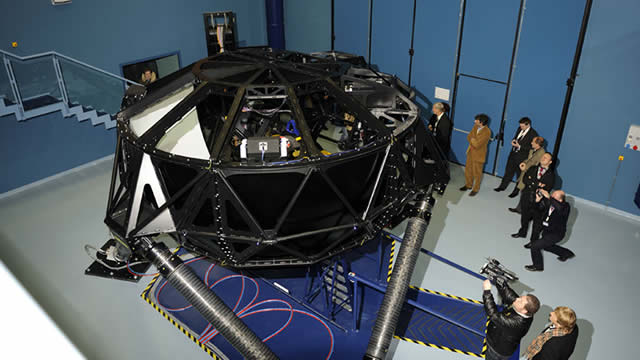
空客最畅销窄体客机首次在中国进行高难度机身系统装配
Xin Hua She· 2025-07-15 11:31
Core Points - Airbus has officially launched the A321 fuselage system assembly project in collaboration with AVIC Xi'an Aircraft Industry (Group) Company Limited, marking the first time this assembly is conducted in China, indicating Airbus's confidence in the resilience of the Chinese supply chain and its commitment to deepening its industrial presence in China [1][3][5] - The A321 aircraft is a key model in Airbus's new generation of single-aisle aircraft, with approximately 40% of the A320 series aircraft delivered from Tianjin starting in 2024 being A321 models [1][3] - The fuselage system assembly involves the installation and testing of relevant systems on the front and rear fuselage structures, which is a crucial step before the fuselage enters the final assembly phase [1][3] Industry Insights - The first A321 fuselage, which arrived in Tianjin via sea transport in early July, is expected to be delivered to the Airbus Tianjin A320 series final assembly line for final assembly by October [3] - Airbus's global market forecast indicates that over the next 20 years, China will require more than 9,500 new passenger and cargo aircraft, accounting for over 20% of the total global demand during the same period [3] - Airbus has been continuously upgrading its industrial facilities and enhancing the industrial resilience and capacity of its Tianjin operations to meet the growing market demand in China [5] - The Chinese supply chain is considered an indispensable part of the global aviation industry, demonstrating strong resilience and competitiveness, with around 200 suppliers currently supporting Airbus's civil aircraft production [5] - Airbus is committed to deepening cooperation with Chinese suppliers and continues to vertically integrate its supply chain in China, aiming to expand its industrial footprint and promote high-quality development in the Chinese aviation industry [5]

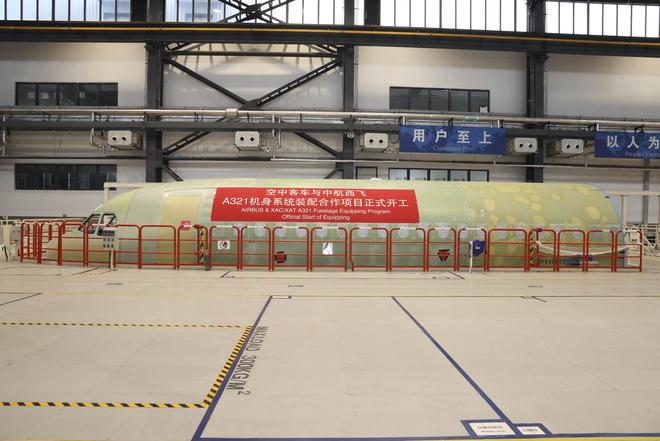
据华尔街日报:空中客车硅谷创新中心飞行了150小时以测试新型量子导航技术。
news flash· 2025-07-15 11:06
Group 1 - The core point of the article is that Airbus has conducted 150 hours of flight testing for its new quantum navigation technology at its Silicon Valley innovation center [1] Group 2 - The flight tests are aimed at evaluating the performance and potential applications of the quantum navigation technology [1]
据华尔街日报:空客硅谷创新中心与AI初创公司SandboxAQ发布采用量子技术的新导航技术成果。
news flash· 2025-07-15 11:02
据华尔街日报:空客硅谷创新中心与AI初创公司SandboxAQ发布采用量子技术的新导航技术成果。 ...
空中客车与西飞天津合作启动A321机身系统装配工作
news flash· 2025-07-15 06:58
Core Viewpoint - Airbus has officially initiated cooperation with AVIC Xi'an Aircraft Industry (Group) Company Limited's Tianjin subsidiary to start the assembly of the A321 fuselage systems in China [1] Group 1 - The first A321 aircraft fuselage, which is being assembled in China, has arrived at Tianjin Port in early July and has been successfully transferred to the Xi'an Aircraft Tianjin facility [1] - Over the next approximately 50 working days, the Airbus team will collaborate with Xi'an Aircraft Tianjin to complete a series of processes including factory inspection, isolation installation, bracket installation, and the installation and testing of electrical, electronic, drainage, oxygen, flight control, and hydraulic systems [1] - The system assembly of the fuselage is expected to be completed and delivered to the Airbus Tianjin A320 series final assembly line by October of this year [1]
匈牙利维兹航空首席执行官:在退出阿布扎比业务后,计划“缩减”47架空客A321XLR飞机的订单。正在与空客谈判,将部分订单转换为A321机型。
news flash· 2025-07-14 09:34
Core Insights - The CEO of Wizz Air announced plans to "reduce" an order of 47 Airbus A321XLR aircraft following the exit from the Abu Dhabi market [1] - The company is currently in negotiations with Airbus to convert part of the order to the standard A321 model [1] Company Actions - Wizz Air is taking steps to adjust its aircraft orders in response to strategic changes in its business operations [1] - The decision to reduce the order reflects a shift in focus after exiting the Abu Dhabi market [1] Industry Implications - The move may indicate broader trends in the airline industry regarding fleet management and market adaptability [1] - Negotiations with Airbus could set a precedent for other airlines considering similar adjustments in their aircraft orders [1]
美媒:为解决飞机短缺与规避关税,达美航空拆下欧洲空客新飞机发动机并运回美国使用
Huan Qiu Wang· 2025-07-11 18:49
Core Viewpoint - Delta Air Lines is addressing aircraft shortages by dismantling engines from new Airbus jets in Europe and shipping them to the U.S. tax-free to reactivate grounded planes [1][3]. Group 1: Aircraft Shortage Solutions - Delta Air Lines has been removing engines from its new Airbus A321neo aircraft in Europe and shipping them to the U.S. to resolve aircraft shortages [1]. - The airline has grounded some older A320neo series planes due to issues with their original engines [1]. Group 2: Trade and Tariff Implications - The inability to import new aircraft is partly due to a 10% tariff on European-made planes, a consequence of trade tensions initiated by former President Trump [1]. - Delta's CEO Ed Bastian confirmed that the airline is transporting a "small number" of new engines and intends to continue this practice to avoid tariffs [3]. - Earlier this year, Delta Air Lines transported new Airbus long-haul aircraft via Japan to circumvent import costs [3].


Airbus Group (EADSY) Upgraded to Strong Buy: Here's What You Should Know
ZACKS· 2025-07-11 17:01
Core Viewpoint - Airbus Group has received an upgrade to a Zacks Rank 1 (Strong Buy), indicating a positive outlook based on rising earnings estimates, which significantly influence stock prices [1][4]. Earnings Estimates and Stock Ratings - The Zacks rating system is primarily driven by changes in a company's earnings picture, with the Zacks Consensus Estimate reflecting EPS estimates from sell-side analysts [2][3]. - The recent upgrade for Airbus Group suggests an improvement in its earnings outlook, which could lead to increased buying pressure and a rise in stock price [4][6]. Impact of Earnings Estimate Revisions - There is a strong correlation between changes in earnings estimates and near-term stock price movements, with institutional investors using these estimates to assess fair value [5][7]. - The Zacks Rank system effectively utilizes earnings estimate revisions to classify stocks, with Zacks Rank 1 stocks historically generating an average annual return of +25% since 1988 [8]. Specifics on Airbus Group's Earnings - For the fiscal year ending December 2025, Airbus Group is expected to earn $1.82 per share, unchanged from the previous year, but the Zacks Consensus Estimate has increased by 6.4% over the past three months [9]. Conclusion on Zacks Rating System - The Zacks rating system maintains a balanced approach, with only the top 5% of stocks receiving a "Strong Buy" rating, indicating superior earnings estimate revisions and potential for market-beating returns [10][11].
Best Momentum Stock to Buy for July 11th
ZACKS· 2025-07-11 15:00
Group 1: Airbus Group - Airbus Group manufactures airplanes and military equipment, holding a Zacks Rank 1 (Strong Buy) [1] - The Zacks Consensus Estimate for its current year earnings increased by 0.6% over the last 60 days [1] - Shares gained 39.6% over the last three months, outperforming the S&P 500's gain of 17.1% [1] - The company possesses a Momentum Score of A [1] Group 2: Virtus Investment Partners - Virtus Investment Partners provides investment management products and services to individuals and institutions in the U.S., also holding a Zacks Rank 1 [2] - The Zacks Consensus Estimate for its current year earnings increased by 2.8% over the last 60 days [2] - Shares gained 35.5% over the last three months, again outperforming the S&P 500's gain of 17.1% [2] - The company possesses a Momentum Score of A [2] Group 3: Interactive Brokers - Interactive Brokers specializes in routing orders and executing trades in various financial instruments, holding a Zacks Rank 1 [3][4] - The Zacks Consensus Estimate for its current year earnings increased by 4.6% over the last 60 days [3] - Shares gained 37.8% over the last three months, surpassing the S&P 500's gain of 17.1% [4] - The company possesses a Momentum Score of B [4]

空中客车:Lars Wagner将于2026年1月1日成为空中客车商用飞机业务首席执行官。
news flash· 2025-07-10 11:10
空中客车:Lars Wagner将于2026年1月1日成为空中客车商用飞机业务首席执行官。 ...