Airbus(EADSY)

Search documents
行游WEEKLY|六大上市航司客运量4861.5万 2025年11月民航稳中有进,空中客车天津总装线交付第800架A320系列飞机
Sou Hu Cai Jing· 2025-12-19 00:55
Group 1: Airline Industry Performance - In November 2025, the six major listed airlines in China achieved a total passenger transport volume of approximately 48.615 million, representing an 18.4% increase compared to the same period in 2019 [1] - China National Airlines led with a passenger transport volume of 13.0717 million, including 1.6374 million on international routes, which is a 19.7% increase from 2019 [1] - The international routes became a key growth driver, with a total of 6.305 million passengers transported, marking a 16.6% increase compared to 2019 [1] Group 2: Capacity and Load Factor - The overall load factor for the six major airlines remained high, with Spring Airlines leading at 92.3%, an increase of 5.8 percentage points from 2019 [2] - Other airlines also reported healthy load factors: China Eastern Airlines at 87.4% (up 7.2 percentage points), China Southern Airlines at 86.3%, and China National Airlines at 83.3% [2] Group 3: Competitive Landscape and Strategy - The aviation industry is experiencing a clear pattern of "overall recovery with internal differentiation," with hub airlines leveraging their network advantages for steady growth [3] - Private airlines like Juneyao Airlines and Spring Airlines are adopting flexible strategies to penetrate international markets, showcasing significant results [3] - The competition is shifting from scale expansion to quality improvement, indicating a transition towards high-quality development in the aviation sector [3] Group 4: Airbus A320 Production Milestone - Airbus delivered its 800th A320 series aircraft from the Tianjin assembly line, marking a significant milestone in its operations in China [5] - The A321neo aircraft, received by China National Airlines, features advanced engines and a comfortable cabin layout, reflecting Airbus's commitment to enhancing its production capabilities in China [5] - The establishment of a second A320 assembly line in Tianjin further strengthens Airbus's global production network, which includes ten assembly lines worldwide [5][8] Group 5: Sustainable Aviation Initiatives - The A320neo series aircraft is designed to reduce fuel consumption and CO2 emissions by 20% compared to previous generations [6] - Airbus aims for all its aircraft to operate on up to 100% sustainable aviation fuel (SAF) by 2030, highlighting its commitment to sustainability in aviation [6] Group 6: Localization and Global Integration - The delivery of the 800th A320 aircraft signifies China's evolution from a market and component supplier to a core assembly and delivery center in the global aviation manufacturing landscape [8] - This development underscores the quality and efficiency of China's high-end manufacturing system, aligning with international standards in aircraft manufacturing [8]





X @Bloomberg
Bloomberg· 2025-12-18 13:28
Airbus has won a major order for 100 military helicopters from Spain — the defense ministry’s largest ever — as the country modernizes its forces https://t.co/TaFbXrMcHk ...
“迄今为止规模最大”,西班牙军方大采购:向空客订购100架直升机
Huan Qiu Wang· 2025-12-18 13:16
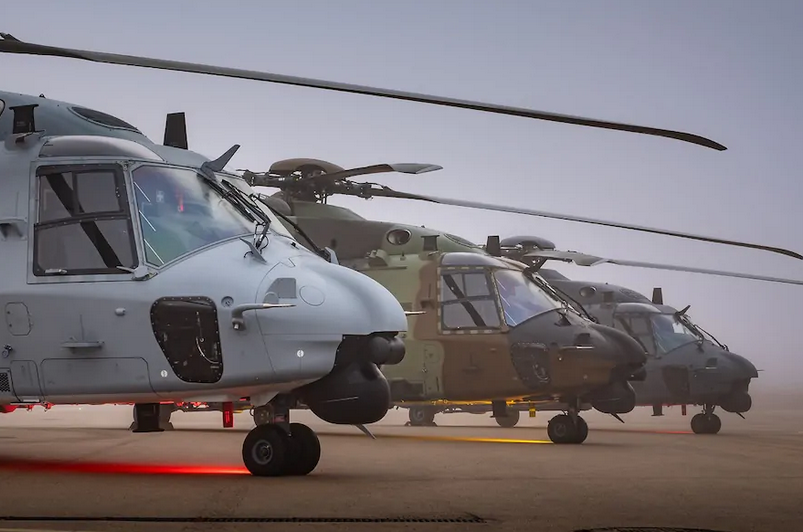
Group 1 - The core point of the article is that Airbus has received a significant order from the Spanish Ministry of Defense for 100 helicopters, marking the largest helicopter procurement by the Spanish military to date [1][3] Group 2 - The order consists of four contracts covering three branches of the Spanish armed forces and includes four different helicopter models [1][3] - The breakdown of the order includes 13 H135 helicopters (12 for the Air Force and 1 for the Navy), 50 H145M helicopters for the Army Aviation, 6 H175M helicopters for the Air Force and Space Force, and 31 NH90 helicopters (13 for the Army, 12 for the Air Force and Space Force, and 6 for the Navy) [3]
Spain orders 100 Airbus helicopters
Reuters· 2025-12-18 11:40
Core Insights - The Spanish government has placed an order for 100 Airbus helicopters, marking the largest helicopter purchase in the history of Spanish defense procurement [1] Group 1 - The order is part of a broader strategy to modernize the Spanish military's aviation capabilities [1] - Airbus, as a leading player in the aerospace sector, is expected to benefit significantly from this large-scale order [1] - This procurement is likely to enhance Spain's defense readiness and operational capabilities [1]

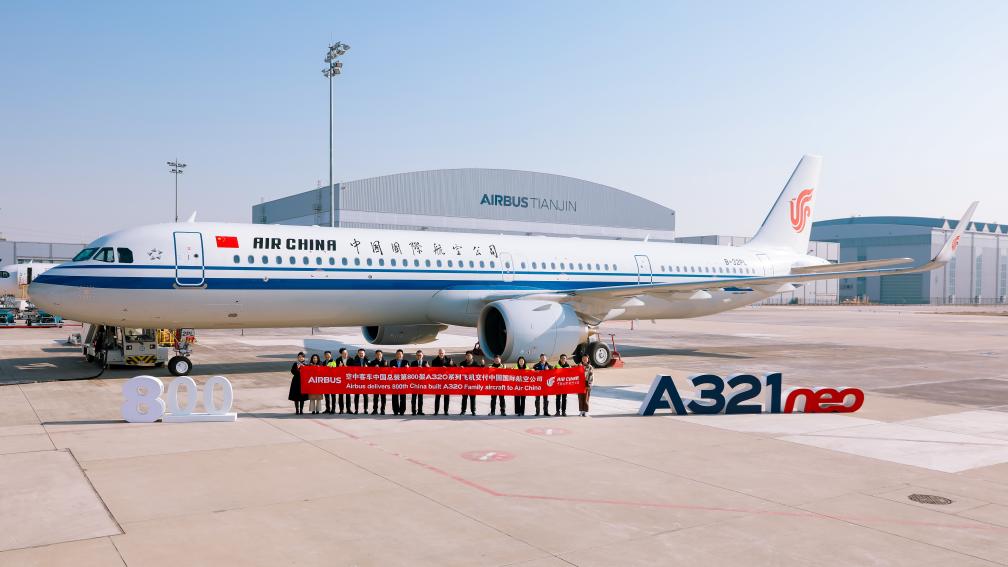
空客中国总装第800架A320系列飞机交付
Zhong Guo Min Hang Wang· 2025-12-18 00:55
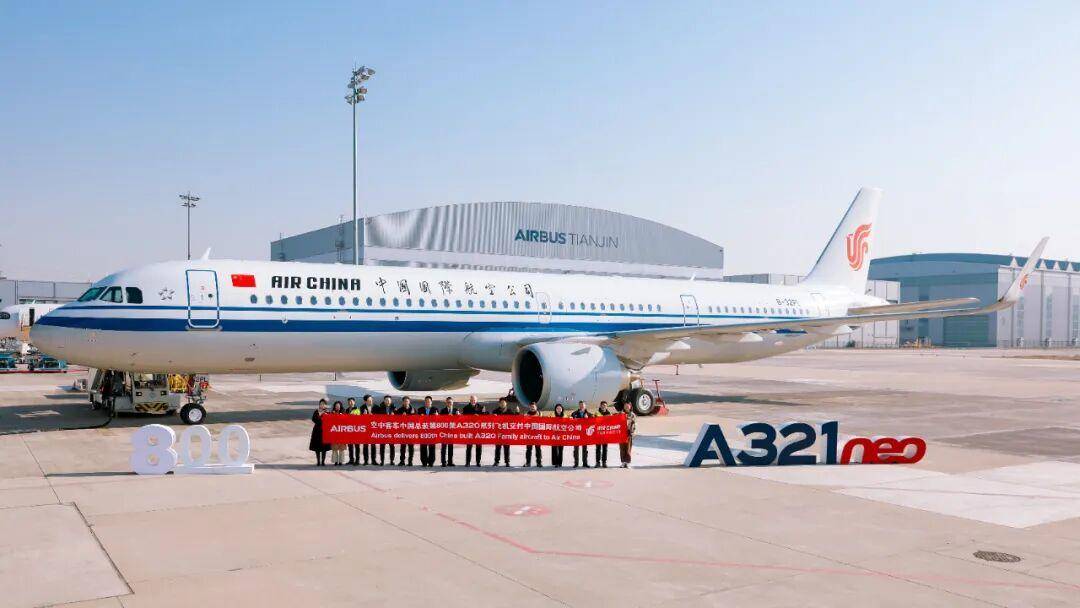
Group 1 - The core point of the article highlights that Airbus delivered its 800th aircraft from the Tianjin A320 assembly line, marking a significant milestone in its operations in China [1][2] - The delivered aircraft is an A321neo, operated by Air China, featuring CFM International's Leap-1A engines and an "Airspace" cabin layout with 12 business class seats and 186 economy class seats [1] - Airbus's Tianjin assembly line, operational since 2008, has become a successful example of Sino-European cooperation, with plans to enhance production capacity to 75 A320 series aircraft per month by 2027 [2] Group 2 - Airbus's global executive vice president and CEO for China, Xu Gang, emphasized the company's commitment to deepening strategic partnerships in China, reflecting a long-term commitment over the past 40 years [2] - The Tianjin facility has been operational for over 17 years and is part of a global production network consisting of 10 assembly lines, with four located in Hamburg, two in Toulouse, two in Mobile, and two in Tianjin [2] - A second A320 assembly line is set to be operational in Tianjin by October 2025, further enhancing Airbus's production capabilities in China [2]
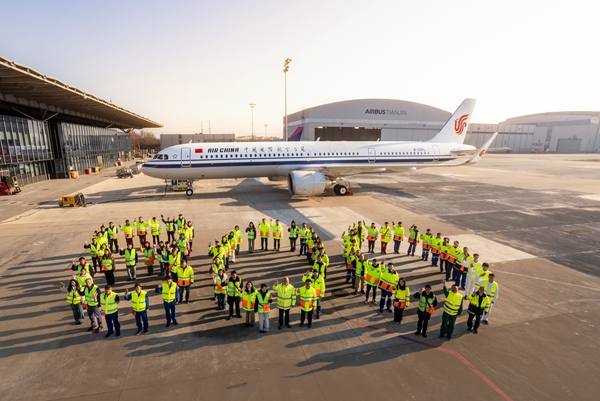
空客中国总装的第800架A320系列飞机交付
Xin Hua Wang· 2025-12-18 00:34
Core Points - The Airbus A320 assembly line in Tianjin delivered its 800th aircraft, an A321neo model, to Air China, highlighting Airbus's commitment to deepening strategic cooperation in China [1][3] - The Tianjin assembly line, operational since 2008, is Airbus's first civil aircraft production line outside Europe, capable of producing A319, A320, and A321 models [1][3] - China has become Airbus's largest single-country market, with approximately 20% of Airbus's global deliveries going to Chinese customers, and the market share of Airbus in China has increased from about 20% in 2008 to over 50% now [1][3] Industry Insights - The second A320 assembly line in Tianjin commenced production on October 22, contributing to Airbus's global network of 10 assembly lines, with 2 located in Tianjin [3] - Approximately 200 Chinese suppliers support Airbus's civil aircraft production, providing components for all Airbus models, which enhances the stability of the aviation industry ecosystem in China [3] - China's aviation population has reached 470 million, with an annual increase of around 40 million over the past two years, making it the largest aviation population globally [3] - Airbus predicts a 5.3% annual growth rate in air passenger traffic in China over the next 20 years, compared to a global growth rate of 3.6% [3]
X @Bloomberg
Bloomberg· 2025-12-17 16:18
The European Union Aviation Safety Agency is mandating inspections of some Airbus SE A320 jets and requiring carriers to repair any out-of-spec panels found on the fuselages. https://t.co/Og3I7Whj1P ...
空中客车中国总装第800架A320系列飞机交付
Bei Jing Shang Bao· 2025-12-17 09:49
Core Points - Airbus delivered its 800th aircraft, an A321neo, on December 17, which was assembled at the Airbus Tianjin A320 assembly line [1] - The aircraft is operated by Air China and features CFM International's Leap-1A engines and Airbus's "Airspace" cabin, with a two-class layout including 12 business class seats and 186 economy class seats [1] Group 1 - Airbus has established a second A320 assembly line in Tianjin, China, which became operational in October 2025, enhancing its global production network consisting of 10 assembly lines [3] - The global production network includes 4 lines in Hamburg, Germany, 2 in Toulouse, France, 2 in Mobile, USA, and 2 in Tianjin, China [3]

空客中国总装第800架A320系列飞机今日交付
Yang Shi Xin Wen· 2025-12-17 06:07
Core Viewpoint - The Airbus A320 series assembly line in Tianjin has officially delivered its 800th aircraft assembled in China, marking a significant milestone for the company in the Asian market [1] Group 1: Company Achievements - The 800th aircraft delivered is an Airbus A321neo, which is now operated by Air China [1] - The aircraft features 12 business class seats and 186 economy class seats, indicating a focus on both premium and mass-market segments [1]
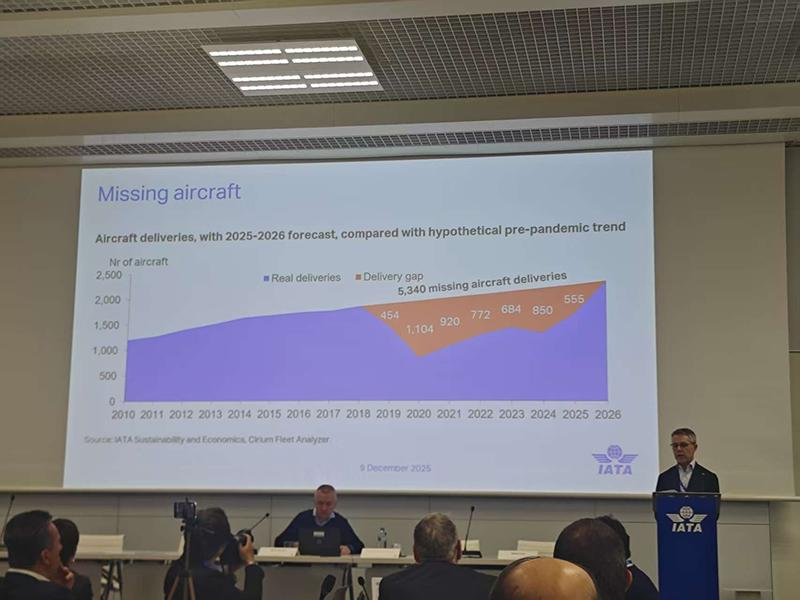
“心脏”梗阻!飞机交付缺口超5300架!全球航空产业链修复路漫漫|人民智行
Zheng Quan Shi Bao Wang· 2025-12-17 04:48
Core Insights - The global aviation industry is facing a significant supply-demand imbalance, with over 5,300 aircraft delivery gaps and 17,000 backlogged orders, leading to a prolonged struggle within the industry [1][5][6] - The International Air Transport Association (IATA) warns of a heated competition affecting the entire supply chain, which could hinder revenue growth, green transformation, and passenger travel costs for airlines [1][5] - The shortage of engines, technical faults, slow production ramp-up, and geopolitical risks are major factors contributing to the supply chain bottlenecks [1][9] Industry Overview - The number of grounded aircraft remains historically high, exceeding 5,000, as evidenced by recent actions from various airlines and industry players [3][4] - Engine issues are a primary cause of aircraft grounding, with airlines like JetBlue and Cathay Pacific experiencing significant operational disruptions due to engine faults [3][4] - The aviation industry's supply-demand conflict has reached a critical stage, with expectations of rising engine and material prices due to shortages [5][6] Market Dynamics - IATA projects that global passenger traffic will reach 4.98 billion by 2025 and 5.2 billion by 2026, marking a 4.4% increase from 2025, despite the backlog of orders expected to exceed 17,000 aircraft by the end of 2025 [5][7] - The backlog represents 60% of the current fleet, a significant increase from the historical range of 30%-40% [5][6] - The delivery gap is projected to widen, with airlines still pursuing fleet expansion despite delivery challenges [6][7] Supply Chain Challenges - The supply chain bottlenecks are attributed to multiple factors, including engine supply shortages, certification issues, and trade barriers, which collectively hinder industry capacity [8][9] - Engine production has slowed due to quality optimization efforts, leading to a mismatch between aircraft production rates and engine availability [9][10] - Tariff pressures have increased manufacturing costs, further straining the supply chain and impacting profitability for airlines and manufacturers [11] Operational Impacts - The aging fleet is leading to higher maintenance costs and reduced fuel efficiency, with the average age of the global airline fleet reaching historical highs [12] - The reliance on suboptimal aircraft models limits airlines' ability to optimize capacity based on route demand, potentially missing revenue opportunities [13] - The aviation industry is facing additional costs exceeding $11 billion by 2025 due to supply chain bottlenecks, which could affect passenger fares and service quality [14] Strategic Recommendations - Policy support is crucial for addressing the supply-demand imbalance, including international cooperation to reduce trade barriers and enhance supply chain resilience [15] - Airlines are encouraged to optimize fleet management and improve operational efficiency to mitigate short-term pressures [15][16] - The Chinese aviation sector is seen as a potential game-changer, with advancements in domestic aircraft and engine technology that could reshape the global aviation landscape [15][19]