IBM(IBM)

Search documents
芯片产业的下一个颠覆性突破!
半导体芯闻· 2025-07-07 09:49
Core Viewpoint - The article discusses the future of semiconductor technology, emphasizing the transition from traditional silicon-based materials to two-dimensional (2D) semiconductor materials as a key focus for innovation and development in the industry [2][12][53]. Group 1: Industry Trends and Predictions - IMEC predicts that by 2039, the second generation of 2D Field Effect Transistors (2DFET) will become mainstream, highlighting the growing importance of 2D materials in semiconductor technology [4][53]. - The global market for 2D semiconductor materials is expected to reach $1.8 billion in 2024, with graphene being the largest segment, accounting for 45% of the market share [16]. - The market is projected to grow at a compound annual growth rate (CAGR) of 24%-26.5% from 2025 to 2030, driven by demand in 5G communication, AIoT, and high-performance computing [16]. Group 2: Material Innovations - The transition to 2D semiconductor materials is seen as a solution to the challenges posed by traditional silicon-based devices, which face physical limitations such as quantum tunneling and short-channel effects [5][12]. - 2D materials, such as graphene and transition metal dichalcogenides (TMDs), offer unique electrical properties and the potential for higher integration densities, with vertical field-effect transistors (VFETs) achieving densities ten times that of FinFETs [6][14]. - Research has shown that 2D materials can be engineered to exhibit a wide range of electronic properties, making them suitable for various applications, including neuromorphic devices and quantum computing [9][12]. Group 3: Industrial Applications and Developments - Companies like TSMC, Intel, and Samsung are investing heavily in the research and integration of 2D semiconductor materials, pushing the industry from laboratory experiments to large-scale production [16]. - The first domestic engineering demonstration line for 2D semiconductors has been launched, aiming to develop commercial production lines within three years [17]. - Significant advancements have been made in the development of flexible integrated circuits based on 2D materials, with successful demonstrations of medium-scale circuits that integrate over 100 transistors [45][50]. Group 4: Challenges and Solutions - The integration of 2D materials into existing semiconductor processes presents challenges, including the need for compatible substrates and the management of high-temperature growth processes [54][57]. - Researchers are exploring various methods to overcome these challenges, such as using low-resistance source/drain contacts and alternative doping techniques to enhance the performance of 2D devices [58][59]. - The industry is also focusing on developing heterogeneously integrated chip technologies that leverage existing silicon ecosystems while incorporating 2D materials [59].


IBM's Neudesic Boosts Cloud Security Capabilities: An Ace Up Sleeve?
ZACKS· 2025-07-04 15:16
Group 1: Company Developments - Neudesic, a subsidiary of IBM, has renewed its Cloud Security Specialization with Microsoft to enhance enterprise-grade security solutions across hybrid and multi-cloud environments [1][7] - The renewal of the Microsoft certification validates Neudesic's capability to protect critical infrastructure and data across Azure and on-premises systems [1][3] - IBM's acquisition of Neudesic in February 2022 significantly expanded its portfolio of hybrid multi-cloud services, enhancing its digital transformation offerings across various industries [2] Group 2: Market Position and Performance - Neudesic's Microsoft certification provides clients with confidence in reducing risk and improving resiliency, which is expected to strengthen its leadership position in cloud security and potentially increase revenues for IBM [3][7] - IBM's stock has surged 65.9% over the past year, outperforming the industry's growth of 8.9% [6] - IBM currently trades at a forward price-to-sales ratio of 4, which is above the industry average [8] Group 3: Industry Context - Other tech firms like Rubrik and CDW have also achieved Microsoft Cloud Security Specialization, showcasing their capabilities in securing Azure-based environments and implementing multi-layered protection [4][5] - The Microsoft certification for these firms indicates a competitive landscape in cloud security, emphasizing the importance of advanced security solutions in hybrid environments [4][5] Group 4: Future Outlook - The Zacks Consensus Estimate for IBM's earnings for 2025 has been on the rise over the past 60 days, indicating positive market sentiment [9]
IBM Concert Gains Traction: Can This AI-Driven Solution Aid the Stock?
ZACKS· 2025-07-03 14:36
Core Insights - IBM has partnered with Deutsche Telekom to implement the IBM Concert solution, which aims to enhance efficiency in IT operations through AI-powered automation [1][8] - The IBM Concert solution significantly reduces patching time from 90 minutes to 20 minutes, optimizing security management across hybrid cloud environments [2][8] - IBM's Watsonx platform serves as the foundational technology for AI capabilities, facilitating productivity through its suite of AI and data tools [3] Industry Trends - The demand for hybrid cloud and AI solutions is increasing, leading to a complex infrastructure landscape that necessitates cloud-agnostic management strategies [4] - IBM is expected to benefit from favorable trends in hybrid cloud and AI, which will support growth in its Software and Consulting segments [5] Financial Performance - IBM's stock has increased by 63.7% over the past year, outperforming the industry average of 9.4% and competitors like Microsoft and Amazon [6] - Earnings estimates for IBM have seen upward revisions, with 2025 estimates rising by 4.6% to $10.95 and 2026 estimates increasing by 4.5% to $11.66, indicating positive market sentiment [9] Competitive Landscape - Despite strong demand for hybrid cloud and AI, IBM faces significant competition from AWS and Microsoft Azure, which is putting pressure on margins [10] - IBM's current valuation metrics indicate it is trading at a premium compared to the industry, with a price/book ratio of 9.92 versus the industry average of 3.95 [14] Strategic Developments - IBM's hybrid cloud strategy integrates public, private, and on-premises infrastructure, aiming to create a flexible and cost-effective IT environment [15] - The acquisition of HashiCorp has enhanced IBM's capabilities in delivering a comprehensive hybrid cloud platform, focusing on AI-driven solutions [15]

2 Soaring Tech Stocks With Amazing Dividends
The Motley Fool· 2025-07-03 11:15
Core Viewpoint - The tech sector offers attractive dividend opportunities, with IBM and AT&T being prime examples of companies that have delivered solid dividends and impressive gains for investors over recent years [1]. Group 1: IBM - IBM's shares have more than doubled in the past three years due to a successful turnaround, driven by its focus on hybrid cloud computing and artificial intelligence [3]. - The company anticipates at least 5% growth in currency-adjusted revenue for 2025, alongside projected free cash flow of approximately $13.5 billion [3]. - IBM has secured $6 billion in generative AI-related bookings, leveraging its watsonx platform and consulting services to address enterprise needs [4]. - The latest dividend increase was minimal, raising the quarterly dividend to $1.68 per share, resulting in a yield of around 2.3% [5]. - With rising free cash flow, IBM's dividend is expected to consume less than half of its free cash flow in 2025, allowing for potential debt reduction and future dividend hikes [6]. Group 2: AT&T - AT&T's shares have surged about 110% since mid-2023, as investor sentiment has improved following previous challenges related to media acquisitions [7]. - The company is concentrating on expanding its 5G wireless and fiber networks, having recently reached its 30 millionth fiber location and planning to double this by 2030 [8]. - For 2025, AT&T projects a 3% growth in mobility service revenue and a mid-teens percentage increase in consumer fiber revenue, with free cash flow expected to exceed $16 billion [9]. - The current quarterly dividend stands at $0.2775 per share, yielding 3.8%, with approximately $8 billion allocated for dividends this year, representing about half of its free cash flow [10]. - AT&T has maintained its dividend payments since cutting them during the WarnerMedia spin-off, but plans to resume share repurchases and may consider a dividend increase soon [11].


中美AI差距有多大,AI竞争焦点在哪?《全球人工智能科研态势报告》全球首发
Tai Mei Ti A P P· 2025-07-03 10:36
Core Insights - The report titled "Global AI Research Landscape Report (2015-2024)" analyzes the evolution of AI research over the past decade, highlighting the competitive landscape between China and the United States in AI talent and publication output [2][7]. Group 1: AI Research Trends - The report identifies four distinct phases in AI research: initial phase (2015-2016), rapid development phase (2017-2019), maturity peak phase (2020-2023), and adjustment phase (2024) [4][5]. - The number of AI papers published globally increased significantly, with a peak of 17,074 papers in 2023, representing nearly a fourfold increase from 2015 [5][6]. - The year 2024 is expected to see a decline in publication volume to 14,786 papers, indicating a shift towards more specialized and application-oriented research [6]. Group 2: Talent Distribution - China has emerged as the second-largest hub for AI talent, with a total of 52,000 researchers by 2024, growing at a compound annual growth rate of 28.7% since 2015 [8]. - The United States leads with over 63,000 AI researchers, with significant contributions from institutions like Stanford and MIT, as well as tech giants like Google and Microsoft [8][9]. - Chinese institutions such as the Chinese Academy of Sciences, Tsinghua University, and Peking University are leading in terms of publication output and talent concentration [7][9]. Group 3: Institutional and Corporate Performance - The Chinese Academy of Sciences published 4,639 top-tier papers, while Tsinghua University and Peking University followed closely, showcasing China's institutional strength in AI research [7][9]. - In contrast, U.S. companies like Google, Microsoft, and Meta have a significantly higher average publication output compared to their Chinese counterparts, reflecting a disparity in research investment and output capabilities [9][10]. - The top three U.S. companies published 5,896 papers, which is 1.8 times the output of the top three Chinese companies [9][10]. Group 4: Gender Disparity in AI Talent - The report highlights a significant gender imbalance in AI research, with women making up only 9.3% of AI talent in China compared to 20.1% in the U.S. [12][13]. - Chinese institutions like Tsinghua University and Peking University have low female representation in AI, at 7.88% and 9.18% respectively, compared to 25%-30% in top U.S. institutions [12][13]. Group 5: Future Trends in AI Research - The report indicates that "deep learning" has been the dominant focus in AI research over the past decade, but its growth rate is expected to slow down, suggesting a need for new approaches [14][15]. - Emerging technologies such as "Transformers" are gaining traction, particularly in natural language processing and multimodal AI, indicating a shift in research focus [15]. - The integration of traditional AI fields with deep learning techniques is becoming more prevalent, reflecting a trend towards collaborative and interdisciplinary research [15].






Deutsche Telekom selects IBM Concert to accelerate IT processes with AI-powered automation
Prnewswire· 2025-07-02 17:44
Core Insights - IBM has launched an AI-powered solution, IBM Concert, to enhance intelligent automation in patch management and security orchestration for Deutsche Telekom [1][4] - The solution aims to address the challenges of software lifecycle management, particularly in patching, which is essential for maintaining system security and functionality [2][3] Company Overview - Deutsche Telekom is a leading telecommunications and IT services provider, serving over 261 million mobile customers and 25 million fixed-network lines globally [9] - The company sought a scalable solution to improve efficiency in patch management, leading to the partnership with IBM [4][8] Technology and Implementation - IBM Concert automates the patching process, reducing the time required from 90 minutes to a maximum of 20 minutes per instance, significantly enhancing operational efficiency [6] - During the pilot implementation, Deutsche Telekom achieved a 10x reduction in "Median Time To Patch," decreasing from 80 hours to 8 hours for critical vulnerabilities [7] Market Trends - An IDC study predicts that by 2028, there will be one billion additional applications, driven by AI innovations, necessitating efficient patch management to mitigate risks [3] - The increasing complexity of IT operations and the number of vulnerabilities highlight the need for advanced automation solutions like IBM Concert [8] Strategic Importance - The partnership between IBM and Deutsche Telekom emphasizes the critical role of security and trust in telecommunications, with IBM Concert providing a foundation for a secure IT operating model [8][11] - By leveraging AI and automation, Deutsche Telekom can respond more swiftly to threats and optimize resource allocation [8]

This Artificial Intelligence (AI) Stock Has Quietly Outperformed Nvidia All Year
The Motley Fool· 2025-07-02 10:30
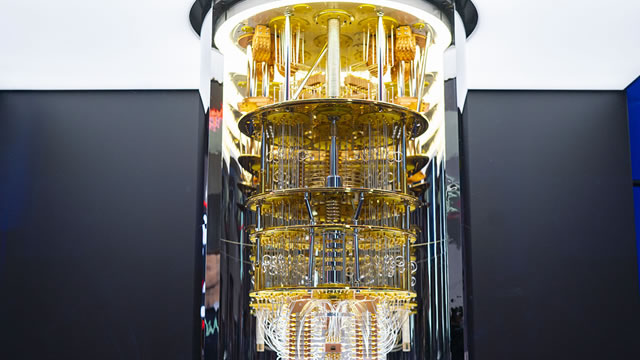
Group 1: Nvidia Overview - Nvidia is now the largest publicly traded company in the world with a market capitalization of nearly $4 trillion, driven by significant investment in artificial intelligence (AI) [1] - Analysts highlight Nvidia's monopoly in critical technology and its strong pricing and margin power, indicating robust demand for its products [2] Group 2: IBM's Position in AI - IBM, referred to as "Big Blue," has historically faced challenges but continues to invest in AI, with its generative AI business generating $6 billion in annual revenue [3][4] - The demand for AI solutions is projected to grow by over 30% in the next decade, positioning IBM's AI segment as a potential major profit driver [4] Group 3: Quantum Computing Potential - IBM is also focusing on quantum computing, with plans to launch a large-scale, fault-tolerant quantum computer by 2030, which could represent a significant technological breakthrough [5] - Analysts note that IBM's dual focus on AI and quantum computing may provide a long-term competitive advantage over companies that specialize in only one area [8] Group 4: Comparative Analysis of IBM and Nvidia - Despite IBM's exciting prospects, it is a diversified company with only a small portion of its business currently benefiting from AI, leading to a projected revenue growth of just 5.5% for IBM compared to 53% for Nvidia this year [10] - Nvidia's AI GPUs are recognized as the best in the industry, maintaining over 90% market share in data center GPUs, while IBM faces stiff competition in its markets [11][12] Group 5: Investment Considerations - Investors are advised not to abandon Nvidia for IBM at this stage, as Nvidia remains a critical infrastructure provider for the AI industry, while IBM's services are one of many options available [12][13] - A diversified portfolio that includes both companies allows investors to capitalize on the entire AI supply chain, from hardware to software [13]


金十图示:2025年07月01日(周二)美股热门股票行情一览(美股收盘)





news flash· 2025-07-01 20:10
Market Capitalization Summary - Oracle has a market capitalization of 806.88 billion, while Visa stands at 655.99 billion [2] - Procter & Gamble has a market capitalization of 378.02 billion, and ExxonMobil is at 512.70 billion [2] - Mastercard's market capitalization is 470.87 billion, and Bank of America is at 375.11 billion [2] - UnitedHealth has a market capitalization of 308.53 billion, while ASML is at 310.77 billion [2] - Coca-Cola's market capitalization is 295.75 billion, and T-Mobile US Inc is at 273.60 billion [2] Stock Performance - Oracle's stock increased by 0.46 (+0.47%), while Visa's rose by 0.47 (+0.13%) [2] - Procter & Gamble's stock saw a slight increase of 2.68 (+0.48%), while ExxonMobil's stock increased by 1.92 (+1.20%) [2] - Mastercard's stock increased by 1.46 (+1.35%), and Bank of America's stock rose by 3.15 (+2.06%) [2] - UnitedHealth's stock decreased by 11.21 (-1.40%), while ASML's stock increased by 0.93 (+1.31%) [2] - Coca-Cola's stock increased by 14.05 (+4.50%), and T-Mobile US Inc's stock rose by 3.31 (+1.39%) [2] Additional Company Insights - McDonald's has a market capitalization of 212.78 billion, while AT&T is at 207.73 billion [3] - Uber's market capitalization is 192.79 billion, and Verizon's is at 184.08 billion [3] - Caterpillar's market capitalization is 183.87 billion, while Qualcomm is at 174.99 billion [3] - BlackRock has a market capitalization of 163.25 billion, and Citigroup is at 161.13 billion [3] - Boeing's market capitalization is 158.16 billion, while Pfizer is at 142.36 billion [3] Recent Market Movements - Intel's stock increased by 0.45 (+1.99%), while Dell Technologies rose by 0.82 (+0.16%) [4] - Rio Tinto's market capitalization is 746.07 billion, and Newmont is at 654.78 billion [4] - General Motors has a market capitalization of 494.87 billion, while Target is at 472.00 billion [4] - Ford's market capitalization is 451.14 billion, and Valero Energy is at 432.26 billion [4] - Vodafone's market capitalization is 241.45 billion, while Pinterest is at 270.30 billion [5]

Forget IBM: Accenture's AI Momentum Is Your Next Buy
MarketBeat· 2025-07-01 20:07
Core Viewpoint - The market has reacted differently to IBM and Accenture, two leaders in Gen-AI consulting, with IBM's stock soaring while Accenture's remains stagnant despite both companies having multi-billion-dollar Gen-AI businesses [1][2]. Group 1: Company Performance - IBM's Gen-AI business grew to $6 billion from inception through March 2023, achieving an average quarterly booking growth of approximately $850 million over seven quarters [3]. - Accenture's Gen-AI business stands at $4.1 billion as of May 31, 2023, with an average quarterly growth of nearly $1.37 billion, and a last quarter booking growth of $1.5 billion, which is 50% higher than IBM's "more than $1 billion" figure [4][3]. Group 2: Market Reactions and Analyst Predictions - Accenture's stock has not captured gains like IBM, leading analysts to predict notable upside potential for Accenture while forecasting downside for IBM [2][10]. - The consensus price target for Accenture is $370, implying nearly 24% upside, while IBM's target suggests over 13% downside from its June 30 closing price [10]. Group 3: Challenges Facing Accenture - Accenture's overall bookings declined by 6% last quarter, overshadowing its Gen-AI success, and the company faces a 2% headwind to overall revenue growth due to a slowdown in its federal government business [5][7]. - The company is experiencing leadership losses and a long-term internal restructuring, which complicates its ability to capitalize on its Gen-AI achievements [8]. Group 4: Long-term Outlook - Despite current challenges, Gen-AI is crucial for Accenture's long-term success, positioning the company favorably in the AI consulting space [9]. - Accenture's forward P/E ratio of approximately 22x is lower than IBM's 26x, reflecting the headwinds Accenture is facing but also indicating potential for future growth as these issues subside [12].


IonQ vs IBM: Which Quantum Computing Stock Is the Better Buy Today?
ZACKS· 2025-06-27 15:20
Core Insights - Quantum computing is a transformative technology with potential across various industries, with IonQ and IBM as key players in this field [1][2] Company Overview - IonQ is a pure-play quantum computing company focused on commercializing quantum technology, while IBM is a diversified tech giant with a significant quantum computing division [2][7] IonQ's Positioning - IonQ has established itself as a leader in quantum computing, developing advanced trapped-ion quantum computers with high qubit fidelity and all-to-all connectivity [3] - The flagship system, IonQ Forte, has demonstrated superior performance over classical computing in specific tasks, such as simulating a medical device 12% faster than a classical supercomputer [3] - IonQ's growth is driven by securing high-value government contracts, including over $75 million with the U.S. Air Force, and international partnerships with companies like Toyota Tsusho and Hyundai [4] - The company has made strategic acquisitions in quantum networking, holding nearly 400 patents, and plans to launch a quantum computing and networking hub in early 2025, generating $22 million in revenues [5] Financial Performance of IonQ - IonQ reported first-quarter 2025 revenues of $7.6 million, with expectations of $75–$95 million for the full year, indicating strong growth momentum [6] - Despite a first-quarter net loss of $32.3 million, IonQ has a solid financial foundation with $697.1 million in cash and investments as of March 31, 2025 [6] IBM's Positioning - IBM has been investing in quantum computing for over two decades and operates one of the largest quantum fleets, integrating quantum capabilities into its broader enterprise ecosystem [7][8] - In first-quarter 2025, IBM reported revenues of $14.5 billion, with a 0.6% year-over-year increase, and $2 billion in free cash flow, supporting its investments in quantum and AI [9] Financial Performance of IBM - IBM's high-margin software segment grew by 7%, and the company maintained a gross margin of 55.2% [9] - The Zacks Consensus Estimate for IBM's 2025 earnings per share indicates a 6% growth from the previous year, with revenue growth of 5.5% expected [22] Investment Outlook - IonQ is positioned as a high-risk, high-reward investment with strong near-term upside potential, reflected in its Zacks Rank 2 (Buy) [25] - IBM offers a balanced investment with reliable income and proven execution in cloud and software, categorized as a Zacks Rank 3 (Hold) [26]