
Intel(INTC)

Search documents
Stocks Settle Sharply Higher as President Trump Claims Deal on Greenland
Yahoo Finance· 2026-01-21 21:46
Natural Gas Industry - Natural gas prices surged over +24% to a 6-week high, following a +26% increase the previous day, driven by an Arctic cold front expected to raise heating demand and disrupt US production [1][17] Gold Market - Gold prices increased by another 1%, reaching a new record high amid the Greenland crisis and concerns over Japan's fiscal policies leading to higher deficits, which are driving demand for gold as a safe-haven asset [2] Stock Market Performance - Stock indexes rebounded sharply, recovering over half of the previous day's losses after President Trump announced a framework for a deal regarding Greenland and refrained from imposing tariffs on European nations [4][5] - The S&P 500 Index closed up +1.16%, the Dow Jones up +1.21%, and the Nasdaq 100 up +1.36% [5] Mortgage Applications and Housing Market - US MBA mortgage applications rose by +14.1%, with the purchase mortgage sub-index up +5.1% and refinancing up +20.4% [6] - Pending home sales in December fell by -9.3% month-over-month, marking the largest decline in 5.5 years, while construction spending in October rose by +0.5% month-over-month [6] Earnings Season - The Q4 earnings season has been positive, with 81% of the 38 S&P 500 companies that reported beating expectations, and S&P earnings growth is projected to increase by +8.4% in Q4 [8] Interest Rates and Treasury Notes - The 10-year T-note yield fell by -4 bp to 4.25%, supported by lower bond yields and strong demand for a $13 billion auction of 20-year T-bonds [11] - Rising inflation expectations limited gains in T-notes, with the 10-year breakeven inflation rate reaching a 3.25-month high of 2.358% [12] Company-Specific Movements - Chip makers saw significant gains, with Intel closing up more than +11% and AMD up more than +7%, contributing to the overall market rally [16] - Progressive Software's stock rose over +10% after forecasting stronger-than-expected full-year adjusted EPS [18] - Citizens Financial Group's stock increased by more than +6% after reporting total deposits above consensus expectations [19]



Earnings live: Netflix stock tumbles, Johnson & Johnson falls, Charles Schwab climbs
Yahoo Finance· 2026-01-21 21:26
Group 1 - The fourth quarter earnings season is gaining momentum, with major financial institutions like Charles Schwab and regional banks such as Fifth Third set to report results, alongside Netflix and Intel, which are expected to be focal points [1][5] - An optimistic consensus is emerging, with 7% of S&P 500 companies having reported fourth quarter results as of January 16, and analysts projecting an 8.2% increase in earnings per share for the quarter, marking the 10th consecutive quarter of annual earnings growth for the index [2] - Analysts had initially anticipated an 8.3% increase in earnings per share heading into the reporting period, a decrease from the previous quarter's 13.6% growth rate, but expectations have been raised recently, particularly for technology companies [3] Group 2 - The current earnings season is expected to test the improved stock market breadth observed at the beginning of 2026, with ongoing themes from 2025, such as artificial intelligence and economic policies, continuing to influence market dynamics [4] - This week's earnings releases will also include reports from notable companies such as United Airlines, 3M Company, D.R. Horton, Johnson & Johnson, GE Aerospace, Procter & Gamble, Abbott Laboratories, and Capital One [5]





Markets Rebound Amid Easing Tariff Fears, Energy Sector Leads Wednesday’s Recovery
Stock Market News· 2026-01-21 19:07
Market Recovery and Performance - U.S. equities experienced a recovery on January 21, 2026, as investor anxieties eased following President Trump's remarks at the World Economic Forum, particularly regarding Greenland [1] - The Dow Jones Industrial Average (DJIA) rose approximately 0.6% to 0.7%, recovering from a 1.8% decline on Tuesday, while the S&P 500 (SPX) advanced by 0.5% to 0.6% after a 2.1% drop [2] - The Nasdaq Composite (IXIC) also gained between 0.2% and 0.5%, following a 2.4% slide on Tuesday, indicating a cautious return of risk appetite [2] Sector Performance - The Energy sector was the standout performer, with the S&P 500 Energy Sector climbing 2.3%, driven by individual stocks like Halliburton (HAL), which rose 4.9% after reporting stronger-than-expected quarterly profits [4] - Nine out of the eleven S&P 500 sectors were in positive territory, while defensive sectors such as Consumer Staples and Utilities lagged behind, down 0.5% and 0.1% respectively [4] Notable Stock Movements - Chipmakers Intel (INTC) and Advanced Micro Devices (AMD) saw significant gains, with shares up approximately 9% and 5.5%, respectively, as Intel's stock surged over 10% on Wednesday, reaching a four-year high [5] - United Airlines (UAL) gained 2.9% after reporting better-than-expected profits for the end of 2025 [5] - Conversely, Kraft Heinz (KHC) fell roughly 6% due to a regulatory filing suggesting Berkshire Hathaway might sell a significant portion of its shares [6] - Netflix (NFLX) continued its downward trend, falling 4.8% on Wednesday, extending losses from a 5.1% drop on Tuesday, attributed to slowing subscriber growth and a lower-than-expected profit forecast [6] Upcoming Economic Events - Investors are awaiting key economic data releases, including the final estimate for Q3 US GDP and November US core Personal Consumption Expenditures (PCE) data, crucial for gauging inflationary pressures [7] - The earnings season is gaining momentum, with major companies, including Intel, set to release quarterly results [8] - The Bank of Japan (BOJ) is scheduled to meet to set interest rates, expected to remain at 0.75% [9] Broader Market Trends - Gold prices reached new record highs, with futures trading up 1.4% to around $4,830 an ounce, driven by safe-haven demand amidst global uncertainties [10] - Treasury yields eased slightly, with the 10-year Treasury yield slipping to 4.27% after closing at 4.30% the previous day [10] - Natural gas prices surged 26% on Tuesday due to forecasts of cold weather across parts of the U.S. [10] Geopolitical Context - The European Union has reportedly halted its trade deal with the U.S. in response to the Greenland situation, indicating ongoing transatlantic trade tensions [11] - The complex interplay of economic data, corporate performance, and geopolitical events continues to shape the stock market's trajectory [11]


Intel's stock jumps 10% to highest since early 2022 ahead of earnings
CNBC· 2026-01-21 19:03
Intel CEO Lip-Bu Tan holds a wafer of CPU tiles for the Intel Core Ultra series 3, code-named Panther Lake, outside the Intel Ocotillo campus in Chandler, Arizona. Panther Lake is the first client system-on-chips (SoCs) built on the Intel 18A process node.Wall Street is piling into Intel ahead of the chipmaker's quarterly earnings report scheduled for after the close on Thursday.The stock jumped about 10% on Wednesday to its highest since January 2022, continuing a rally that lifted it 84% last year, and br ...
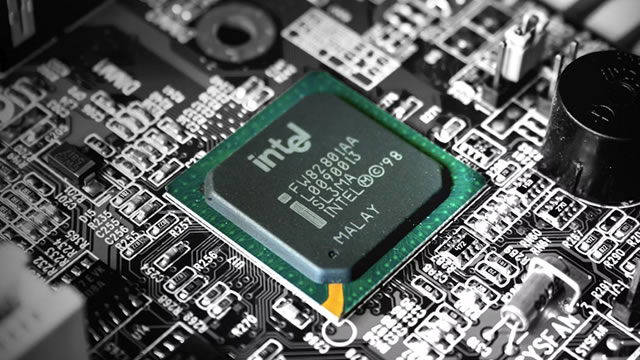
Intel's stock soars toward a four-year high, raising the bar for earnings
MarketWatch· 2026-01-21 17:05
Core Insights - The article focuses on the advancements and market position of Nvidia in the semiconductor and AI sectors [1] Group 1: Nvidia's Market Position - Nvidia continues to dominate the GPU market, with a significant share that has increased due to the rising demand for AI applications [1] - The company's revenue from data center products has surged, contributing to a substantial portion of its overall earnings [1] Group 2: Industry Trends - The semiconductor industry is experiencing rapid growth, driven by the increasing integration of AI technologies across various sectors [1] - Companies are investing heavily in AI and machine learning capabilities, which is expected to further boost demand for high-performance chips [1]
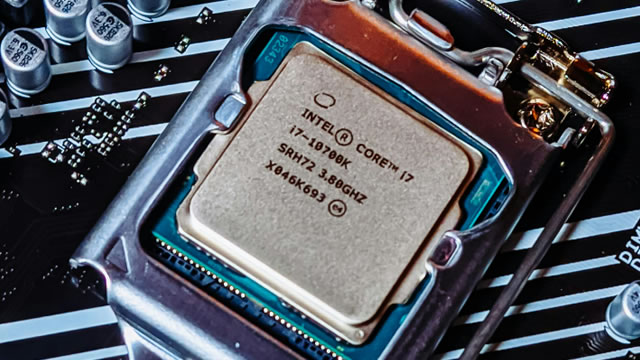
Stocks Rally as Greenland Tensions Ease
Yahoo Finance· 2026-01-21 16:22
Natural Gas Industry - Natural gas prices have surged over +21% today, reaching a 6-week high, following a +26% increase on Tuesday, which is benefiting natural gas producers [1][17] - An Arctic cold front is expected to increase heating demand in the eastern US, potentially causing freeze-offs in wells and disrupting natural gas production [1] Gold and Precious Metals - Gold prices have increased by another 1% today, reaching a new record high, driven by safe-haven buying amid the Greenland crisis and concerns over Japan's fiscal policies leading to higher deficits [2] Stock Market Performance - The S&P 500 Index is up +1.06%, the Dow Jones is up +0.97%, and the Nasdaq 100 is up +1.33%, indicating a recovery after a sharp sell-off on Tuesday [5] - Stocks are rebounding following President Trump's announcement of seeking negotiations to acquire Greenland, which has alleviated some market fears [4] Economic Indicators - US MBA mortgage applications rose by +14.1% in the week ended January 16, with the refinancing mortgage sub-index up +20.4% [6] - US pending home sales fell by -9.3% month-over-month in December, marking the largest decline in 5.5 years, while construction spending rose by +0.5% month-over-month in October [6] Earnings Reports - The Q4 earnings season has begun positively, with 88% of the 33 S&P 500 companies that reported beating expectations, and S&P earnings growth is projected to increase by +8.4% in Q4 [8] - Progressive Software's stock rose over +18% after forecasting full-year adjusted EPS of $5.82 to $5.96, exceeding consensus expectations [18]
今夜,暴涨!特朗普,改口了!
Zhong Guo Ji Jin Bao· 2026-01-21 16:15
【导读】特朗普改口,市场暴涨 中国基金报记者 泰勒 大家好,今晚好消息,涨跌全看特朗普,外围市场全线大涨了! 一起看看发生了什么事情。 1月21日晚间,美股三大指数高开高走,道指涨约500点,纳斯达克指数涨超1%,标普500指数也涨超 1%。 尽管特朗普排除了军事行动,但他仍表示,他正在"寻求立即谈判,再次讨论由美国收购格陵兰的事 宜"。 特朗普还在达沃斯讲话中表示,他将要求国会落实其提出的10%信用卡利率上限方案。鉴于国会内部支 持不足,这一前景仍不确定。该表态推动美股银行股上涨。 此外,美国财长贝森特周三在达沃斯对记者表示,特朗普政府"并不担心"前一交易日的抛售。 分析师表示,关键不在于特朗普说了什么,而在于他没有说什么。"他没有重申对欧洲的关税威胁;他 没有说政府会动用武力夺取格陵兰;他也没有说要给信用卡利率设上限,而是让国会去做。这更像是在 降低实质内容的烈度,尽管风格仍然是典型的特朗普"。 摩根大通资产管理的Bob Michele表示,周二市场的抛售是在向特朗普政府传递信息:需要采取行动恢 复秩序,就像去年"解放日"关税扰动投资者之后,官员们所做的那样。 在特朗普对世界经济论坛表示他不会以武力收购格 ...



今夜,暴涨!特朗普,改口了!
中国基金报· 2026-01-21 16:08
【导读】特朗普改口,市场暴涨 中国基金报记者 泰勒 大家好,今晚好消息,涨跌全看特朗普,外围市场全线大涨了! 一起看看发生了什么事情。 1月21日晚间,美股三大指数高开高走,道指涨约500点,纳斯达克指数涨超1%,标普500指数也涨超1%。 在特朗普对世界经济论坛表示他不会以武力收购格陵兰之后,股市上涨,市场对这一问题的担忧缓解;此前该担忧曾扰动市场并引发资金 撤离美国资产。 特朗普在达沃斯的讲话中谈到,他认为美国在北约承担了财政和军事负担。以下这段话提振了股市: 特朗普还在达沃斯讲话中表示,他将要求国会落实其提出的10%信用卡利率上限方案。鉴于国会内部支持不足,这一前景仍不确定。该表 态推动美股银行股上涨。 此外,美国财长贝森特周三在达沃斯对记者表示,特朗普政府"并不担心"前一交易日的抛售。 分析师表示,关键不在于特朗普说了什么,而在于他没有说什么。"他没有重申对欧洲的关税威胁;他没有说政府会动用武力夺取格陵 兰;他也没有说要给信用卡利率设上限,而是让国会去做。这更像是在降低实质内容的烈度,尽管风格仍然是典型的特朗普" 。 摩根大通资产管理的Bob Michele表示,周二市场的抛售是在向特朗普政府传递信息 ...

美股异动 | 纳指涨1% 明星科技股多数上涨 英特尔(INTC.US)涨近11%


智通财经网· 2026-01-21 15:55
智通财经APP获悉,周三,美股涨幅扩大,纳指涨1%,明星科技股多数上涨,英特尔(INTC.US)股价攀 升近11%,总市值超2500亿美元,达到四年来的最高点;美国超微公司(AMD.US)涨超8%,美光科技 (MU.US)涨超6%,特斯拉(TSLA.US)涨超2%,英伟达(NVDA.US)、谷歌A(GOOGL.US)涨超1%。消息面 上,美国总统特朗普在瑞士达沃斯出席世界经济论坛期间发表讲话,引发国际政界与市场高度关注。在 格陵兰问题上,特朗普明确表示不会动用军事力量,称"我不需要使用武力,也不想使用武力"。 此外,特朗普称:"我将在不久的将来宣布一位新的美联储主席。他将是一名男性。我觉得他会做得非 常好,将是一位备受尊敬的人。" ...
费城半导体指数涨2.6%
Mei Ri Jing Ji Xin Wen· 2026-01-21 15:49
Core Viewpoint - The Philadelphia Semiconductor Index experienced a significant increase of 2.6% during the trading day, indicating a positive trend in the semiconductor sector [1] Company Performance - Intel saw a notable rise of over 10% in its stock price, reflecting strong investor confidence [1] - AMD's stock increased by more than 6%, suggesting positive market sentiment towards the company [1] - Micron Technology's shares rose by over 5%, indicating a favorable outlook for the company [1] - Marvell Technology and ON Semiconductor both experienced stock price increases of over 3%, contributing to the overall positive performance of the sector [1] - NVIDIA's stock also saw a gain of 1.5%, further supporting the upward trend in the semiconductor industry [1]
