Microsoft(MSFT)

Search documents
Is Microsoft's $500 Million AI Pivot to Anthropic an Admission of Failure?
247Wallst· 2026-01-14 18:37
Core Insights - Microsoft is projected to spend approximately $500 million annually on artificial intelligence models from Anthropic [1] Company Summary - The investment in AI models indicates Microsoft's commitment to enhancing its capabilities in artificial intelligence [1]


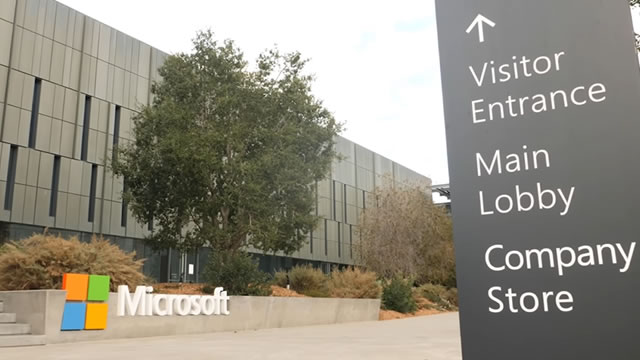
Is Microsoft’s $500 Million AI Pivot to Anthropic an Admission of Failure?
Yahoo Finance· 2026-01-14 18:37
For example, Claude Sonnet 4.5 shows noticeable advantages in tricky Excel tasks. Reports suggest it performs about 15% better than GPT-4o in "Agent Mode" for things like building complex financial models or spotting errors across multiple spreadsheets. Claude Opus 4.1 handles super-long context -- up to 500,000 tokens -- making it great for summarizing massive piles of company documents, reports, or legal files, something earlier GPT versions struggled with.The answer lies in real-world performance. Micros ...
Microsoft Spending on Anthropic Approaches $500 Million a Year
PYMNTS.com· 2026-01-14 18:27
Core Insights - Microsoft is increasing its investment in Anthropic, a competitor to OpenAI, with plans to spend approximately $500 million annually on Anthropic's AI for its products [2] - The company is incentivizing its Azure sales team to sell Anthropic AI models, aligning their sales goals with those of OpenAI products, thereby enhancing competition between the two AI models [3] - Microsoft's investment in Anthropic follows a previous commitment of up to $5 billion, while it has invested over $13 billion in OpenAI, holding a 27% stake in the latter [4][5] Investment and Revenue Strategy - Microsoft aims to drive revenue by selling Anthropic AI models to its cloud customers, which could benefit both Microsoft and Anthropic [2] - The new sales incentive structure for Azure salespeople indicates a strategic shift to promote Anthropic's offerings alongside OpenAI's, reflecting a competitive landscape in AI [3] Industry Trends - The shift towards intelligence-driven retail operating models is evident, with Microsoft enhancing its AI capabilities to improve efficiency and customer engagement in retail [6][7] - This approach aims to unify various retail functions into coordinated workflows, demonstrating Microsoft's commitment to integrating AI deeper into retail operations [7]

Microsoft (MSFT) Announces Agentic AI Solutions Focused on Bringing Intelligent Automation to Retail Business
Yahoo Finance· 2026-01-14 17:53
Group 1 - Microsoft Corporation (NASDAQ:MSFT) announced agentic AI solutions aimed at enhancing intelligent automation in the retail sector, which is expected to improve speed, relevance, resilience, and efficiency for retailers [1][2] - The new AI solutions will integrate various aspects of retail operations, including merchandising, marketing, store operations, and fulfillment, creating a connected layer of intelligence that streamlines fragmented workflows [2] - Wells Fargo has reduced its price target for Microsoft’s stock from $700 to $665 while maintaining an "Overweight" rating, citing that AI will continue to gain momentum through 2026, with three key areas of focus: infrastructure, incumbents, and innovation [3] Group 2 - Despite recognizing Microsoft's potential, some analysts suggest that other AI stocks may offer greater upside potential and lower downside risk, indicating a competitive landscape in the AI investment space [4]
These 2 "Magnificent Seven" Stocks May Announce Stock Splits in 2026
Yahoo Finance· 2026-01-14 16:20
Key Points Most of the Magnificent Seven have split their stocks since 2020. The two that haven't look due for a stock split in the year ahead. 10 stocks we like better than Microsoft › The "Magnificent Seven" stocks are a popular grouping that makes up some of the biggest and most prominent names in the stock market. It includes: Nvidia (NASDAQ: NVDA) Alphabet (NASDAQ: GOOG) (NASDAQ: GOOGL) Apple (NASDAQ: AAPL) Microsoft (NASDAQ: MSFT) Amazon (NASDAQ: AMZN) Meta Platforms (NASDAQ: META) Te ...
今晚不平静 美股跳水下跌
Zhong Guo Ji Jin Bao· 2026-01-14 16:19
Group 1: Chinese Market Reactions - Multiple A-share companies announced "cooling" measures, including Jia Mei Packaging, InGravity Media, and others, indicating potential stock price suspensions if abnormal increases continue [1] - The FTSE China A50 index futures declined, and Hong Kong's Hang Seng Index futures also fell [1] Group 2: U.S. Market Performance - Major U.S. indices experienced significant declines, with the Dow Jones down approximately 270 points, the Nasdaq falling over 1.5%, and the S&P 500 dropping nearly 1% [3] - Technology stocks broadly declined, with notable drops in companies such as Applovin Corporation (-9.86%), Arm (-5.00%), and Broadcom (-4.63%) [4] Group 3: Geopolitical Influences - The U.S. military began withdrawing personnel from the Al Udeid Air Base in Qatar as a precaution amid escalating tensions with Iran [5][6] - Oil prices reached their highest levels since October due to geopolitical concerns, particularly regarding U.S. military actions and threats against Iran [4]



3 AI ETFs Underperforming the S&P 500 That Are Set to Surge 26% or More
Yahoo Finance· 2026-01-14 16:04
Core Insights - The article discusses the performance and composition of several AI-focused exchange-traded funds (ETFs), highlighting their recent underperformance compared to the S&P 500 and their potential for recovery [5][15]. Fund Composition - The Ark Next Generation ETF has a significant focus on technology stocks, which make up 42% of its holdings, along with communication services (23%), consumer cyclical stocks (17.8%), and financial services (16.4%) [1]. - The iShares Future Exponential Technologies ETF has a heavy concentration of technology stocks (38.9%) and includes healthcare stocks (28.7%), with the top 10 holdings accounting for 33% of the fund's weight [9]. - The Roundhill Generative AI & Technology ETF has the highest weighting of technology stocks at 72.3%, with smaller allocations in communication services (20.1%) and consumer cyclical stocks (6%) [12]. Fund Performance - The Ark Next Generation ETF has a one-year return of 38.7%, while the Roundhill ETF has a return of nearly 50%, and the iShares ETF shows a one-year gain of 26.2% [3]. - Despite recent underperformance, these funds are expected to rebound, as their historical performance suggests that the current weakness is temporary [6][15]. Fund Management and Structure - The Ark Next Generation ETF, managed by Cathie Wood, has $2.1 billion in assets and an expense ratio of 0.76% [2]. - The iShares Future Exponential Technologies ETF, managed by BlackRock, has an expense ratio of 0.46% and was created in March 2015 [8]. - The Roundhill Generative AI & Technology ETF, launched in May 2023, has total assets of $1 billion and an expense ratio of 0.75% [11][14].

IBM vs. MSFT: Which Cloud & AI Tech Giant is a Better Buy?
ZACKS· 2026-01-14 15:41
Core Insights - IBM and Microsoft are leading players in the global cloud computing industry, focusing on hybrid cloud and AI solutions to meet enterprise demands [1][3] - IBM is benefiting from strong demand for hybrid cloud and AI, with growth driven by analytics, cloud computing, and security [4] - Microsoft’s Azure platform holds a significant market share and integrates well with existing Microsoft products, enhancing customer retention [8][9] IBM Insights - IBM's growth is supported by the increasing complexity of cloud workloads and a shift towards cloud-agnostic management, leading to higher demand for its hybrid cloud solutions [4] - The acquisition of HashiCorp enhances IBM's capabilities in managing complex cloud environments, complementing its existing offerings [5] - IBM's watsonx platform is central to its AI strategy, providing tools for enterprises to scale AI effectively [6] - Despite these strengths, IBM faces intense competition from AWS and Azure, with margin pressures and challenges in transitioning its business model to the cloud [7] Microsoft Insights - Microsoft Azure commands approximately 25% of the enterprise cloud market, benefiting from deep integration with Microsoft’s product ecosystem [8][9] - The adoption of Azure AI and tools like Copilots is expected to significantly enhance productivity across Microsoft’s platforms [10] - Microsoft’s investment in OpenAI provides a competitive edge in enterprise AI, leveraging existing customer relationships to monetize AI capabilities [11] - However, rising capital expenditures for infrastructure and AI capabilities raise concerns about financial sustainability [12] Financial Performance - The Zacks Consensus Estimate indicates IBM's 2025 sales and EPS growth of 6.8% and 10.2%, respectively, with positive trends in EPS estimates [13] - For Microsoft, the fiscal 2026 sales and EPS growth is projected at 15.4% and 14.4%, respectively, also showing upward trends in EPS estimates [14] - Over the past year, IBM's stock has increased by 37.7%, while Microsoft's has risen by 10.2% [15] - From a valuation perspective, IBM's price/earnings ratio is 24.7, lower than Microsoft's 27.59, making IBM appear more attractive [16] Investment Outlook - IBM holds a Zacks Rank of 3 (Hold), while Microsoft has a Zacks Rank of 2 (Buy), indicating a preference for Microsoft based on current rankings [20] - Both companies anticipate improvements in sales and profits, but Microsoft has demonstrated more consistent revenue and EPS growth, while IBM offers better price performance and valuation metrics [20]


美股异动 | 科技股普遍走低 甲骨文(ORCL.US)跌超3%


智通财经网· 2026-01-14 15:14
Core Viewpoint - Technology stocks experienced a widespread decline on Wednesday, with significant drops in major companies' stock prices [1] Group 1: Company Performance - Meta (META.US) fell over 1.7% [1] - Amazon (AMZN.US) decreased by more than 1.8% [1] - Tesla (TSLA.US) dropped over 1.9% [1] - Nvidia (NVDA.US) saw a decline of more than 2.6% [1] - AMD (AMD.US) decreased by over 2.3% [1] - Oracle (ORCL.US) fell by more than 3% [1] - Netflix (NFLX.US), Microsoft (MSFT.US), and Google (GOOG.US, GOOGL.US) each dropped over 1.3% [1] - Apple (AAPL.US) experienced a decline of 0.6% [1]
Cadence & Microsoft Redefine Data Center Memory With Advanced Solutions
ZACKS· 2026-01-14 15:01
Core Insights - Cadence Design Systems Inc. (CDNS) has launched the first LPDDR5X 9600Mbps memory IP system for enterprise and data center applications, in partnership with Microsoft, marking a significant advancement in memory architecture [2][9] - The new solution integrates Cadence's LPDDR5X IP with Microsoft's RAIDDR error correction code (ECC) technology, providing high performance, low power consumption, and enhanced reliability [2][3] Product Development - The LPDDR5X system supports 40-bit channels and delivers 9600 Mbps performance while maintaining low power usage and enterprise-grade reliability features similar to DDR5 [5] - Microsoft's RAIDDR ECC technology enhances the reliability of the LPDDR5X system, enabling data center architects to deploy this memory solution at scale without compromising performance or power efficiency [4][3] Market Trends - The demand for LPDDR5X is increasing in data centers due to its energy efficiency and performance in AI and high-performance computing (HPC) workloads [3][8] - Long-term trends such as 5G, hyperscale computing, and autonomous driving are driving design wins for Cadence, while the rise of Generative, Agentic, and Physical AI is increasing computing needs [8] Competitive Landscape - Cadence faces competitive pressure from rivals like Synopsys and Siemens, which may impact pricing power and margins [11] - The company's focus on AI solutions increases exposure to competition and the cyclical nature of AI infrastructure spending [11] Strategic Initiatives - Cadence is expanding its portfolio with next-generation memory IP, including LPDDR6 memory IP expected to operate at 14.4Gbps by July 2025, positioning itself as a key player in future memory subsystems [7] - Collaborations with major players like Qualcomm and NVIDIA are aimed at developing next-generation AI chips for training and inference [8][10]