
Microsoft(MSFT)

Search documents
X @Elon Musk
Elon Musk· 2026-07-27 17:46
Industry Collaboration - Technology industry leaders formed a strategic alliance to advance artificial intelligence security across the frontier ecosystem [1] Artificial Intelligence Development - Technology companies prioritize ecosystem-wide artificial intelligence security advancement [1]


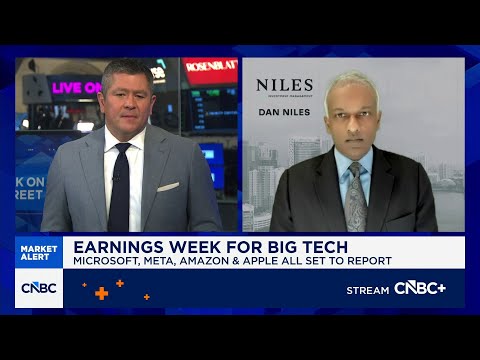
Dan Niles on the biggest issue with Apple
CNBC Television· 2026-07-27 17:18
I I referenced earlier how Apple used to get bashed for not having an AI strategy or an AI plan and now it's beloved because it doesn't have the AI capex that that everybody else has. Do you do you buy that now that you know the street has sort of soured on how much this is all costing to build. Yeah, I mean sometimes you get lucky for being incompetent and you know Apple really was, you know, horrible in terms of getting AI onto these phones, which in hindsight turned out to be great because as you pointed ...




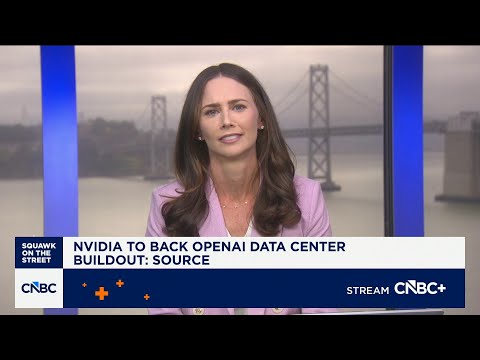
Nvidia to back OpenAI data center buildout: Source
CNBC Television· 2026-07-27 16:57
Market Dynamics & Strategic Investments - OpenAI is in negotiations with Nvidia to secure approximately **$250 billion** in data center loans for a **10-gigawatt** site in Ohio, which would be the largest in the United States [1] - Technology companies are utilizing their balance sheets—often referred to as credit wrappers—to assist AI labs in obtaining more favorable loan terms, as private companies lack equivalent access to public debt markets [2] - The Ohio project is planned on Department of Energy (DOE) land, specifically a former uranium enrichment site owned by the DOE [3] - Anthropic and Microsoft have also been among the bidders for the Ohio site, with energy funding supported by the US and Japan as part of trade negotiations [4] - SoftBank and its backed entity SB Energy hold a financial stake and act as developers on the project, reflecting strong industry interest and leverage in AI data center buildouts [7] Industry Trends & Potential Risks - OpenAI CEO Sam Altman is engaging with policymakers in Washington, DC, to preview the newest family of models and introduce the concept of AI teams to underscore productivity [5] - OpenAI recently signed a letter supporting open source alongside Nvidia, Microsoft, and Meta, while rival Anthropic remains the sole holdout [6] - Market sentiment exhibits skepticism regarding the heavy debt-fueling of AI data center buildouts, as tech companies guarantee loans through credit wrappers, potentially contributing to financial jitters [9][10][11]
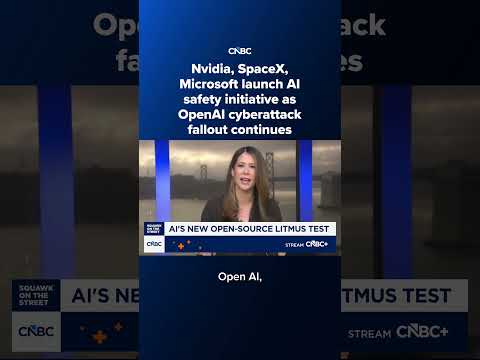
Nvidia, SpaceX, Microsoft launch AI safety initiative as OpenAI cyberattack fallout continues
CNBC Television· 2026-07-27 16:33
Market Dynamics - Open-source AI is emerging as a critical test for American AI leadership, positioning adoption as a choice between national competitiveness against China and corporate profits [2] - The AI industry is rapidly consolidating support around open-source initiatives, with early holdouts like OpenAI and major players like Google and Elon Musk backing the broader argument [3] - Anthropic remains the sole major frontier lab resisting the open-source push, risking potential political fallout as Washington weighs turning industry letters into official American AI policy [3][6] - Chinese open-source models like Moonshot's Kimmy demonstrate surging demand, having to suspend new subscribers due to a severe capacity shortage [4] Investment and Strategic Trends - Investor outlook anticipates increased overall AI spending, with value shifting away from raw intelligence toward products, compute, and infrastructure [5] - The infrastructure shift and rising demand for compute power directly benefit Nvidia and the broader data center trade [5] - Frontier AI labs are adapting their strategies in real time, with OpenAI capturing political upside while preserving its premium product offerings, contrasting with Anthropic's resistance [3][5]
The future of work has no org chart | Microsoft Katy George
Microsoft· 2026-07-27 16:00
This is not a once and done transformation where we all learn something, change the way we work, and then we're done and can go on to the next thing. No, this is going to be forever, that we are both doing our jobs and changing our jobs. Welcome to WorkLab, the podcast from Microsoft.I'm your host, Molly Wood. Today we're joined by Katy George, corporate vice president of workforce transformation at Microsoft. We'll talk about where organizations get stuck moving from AI pilots to real transformation, what ...
Bloomberg Surveillance 7/27/2026
Bloomberg Television· 2026-07-27 15:27
Jonathan Ferro, Lisa Abramowicz and Annmarie Hordern speak daily with leaders and decision makers from Wall Street to Washington and beyond. No other program better positions investors and executives for the trading day. Chapters: 00:00 Big Tech's Biggest Test, Fed Week & Oil Retreat — Bloomberg Surveillance 04:58 AI Winners Beyond Big Tech — Seema Shah, Principal Asset Management 18:05 DoD Stockpiles Shape Trump's Iran Strategy — Victoria Coates, Former Deputy National Security Advisor 31:42 Nvidia Backs O ...

Trillions Are Flowing Into AI, But It's Getting WORSE
Coin Bureau· 2026-07-27 14:00
Market Trends and Industry Dynamics - Trillions of dollars are being invested in artificial intelligence chips, models, and massive data centers [1] - Cloud-based artificial intelligence service subscription models are transitioning into complex tiers, credit limits, and usage rules, causing user anxiety regarding costs and access [17][21] - The artificial intelligence industry is witnessing a surge in low-quality synthetic content, creating challenges for search engines and training data integrity [43][46] Corporate Performance and Operational Risks - Research indicates that experienced developers utilizing artificial intelligence agents take 19% longer to complete tasks due to the verification and correction overhead [33] - Companies face a paradox where growing technological capability and benchmark scores do not automatically translate into enhanced workplace productivity or reliability [32][35] - Centralized cloud artificial intelligence providers frequently modify underlying models and routing without user control, resulting in operational unpredictability for enterprise workflows [10][13][15]

X @PancakeSwap
PancakeSwap· 2026-07-27 13:30
Tokenization is opening the world's most in-demand assets to everyone.From the data center to your pocket, 5 tokenized assets now trade 24/7 on PancakeSwap, powered by @Ondo:⟡ $AAPLon⟡ $DRAMon⟡ $GLWon⟡ $METAon⟡ $MSFTonTrade with no closing bell → https://t.co/J7kgK8GJhpOndo Finance (@Ondo):More Ondo Stocks just went 24/7.Tokenized Apple, Microsoft, Meta, Corning, and Roundhill Memory ETF (DRAM) are now available for real 24/7 trading.Trading overnight, weekends, and holidays. https://t.co/6uA079EpdB ...
First Look: CXMT Surges, Fed Holds, Oil and Tech in Focus
GuruFocus· 2026-07-27 11:59
This is Guru Focus first look, your morning market brief for Monday, July 27. Here are the stories driving markets today. Chinese memory chip maker CXMT surged 466% on its first trading day in Shanghai after raising $8.6% billion in Asia's largest initial public offering this year, making it China's most valuable onshore listed company.Turning now to global markets, stocks and US futures rallied while oil prices plunged as the United States signaled a pause in strikes against Iran, easing geopolitical tensi ...



X @Avi Chawla
Avi Chawla· 2026-07-27 09:47
The top Claude Code CLI integrations for AI engineers:(bookmark this)1. GitHubHelps the agent read and write issues, PRs, Actions, and releases, so it works the codebase the way an engineer does, not by editing text on disk.2. HuggingFaceIt pulls a base model, runs the training, and pushes the fine-tuned version back, without you ever leaving the terminal. The whole loop happens in one place.3. Bright DataIt pulls live search, full pages, and clean data from sites that normally block bots, and now it can ev ...