
Microsoft(MSFT)

Search documents
马斯克起诉 OpenAI 和微软,索赔最高 1340 亿美元;ChatGPT 推出廉价版订阅;春晚完成首次彩排,机器人再次登台 | 极客早知道
Sou Hu Cai Jing· 2026-01-18 07:33
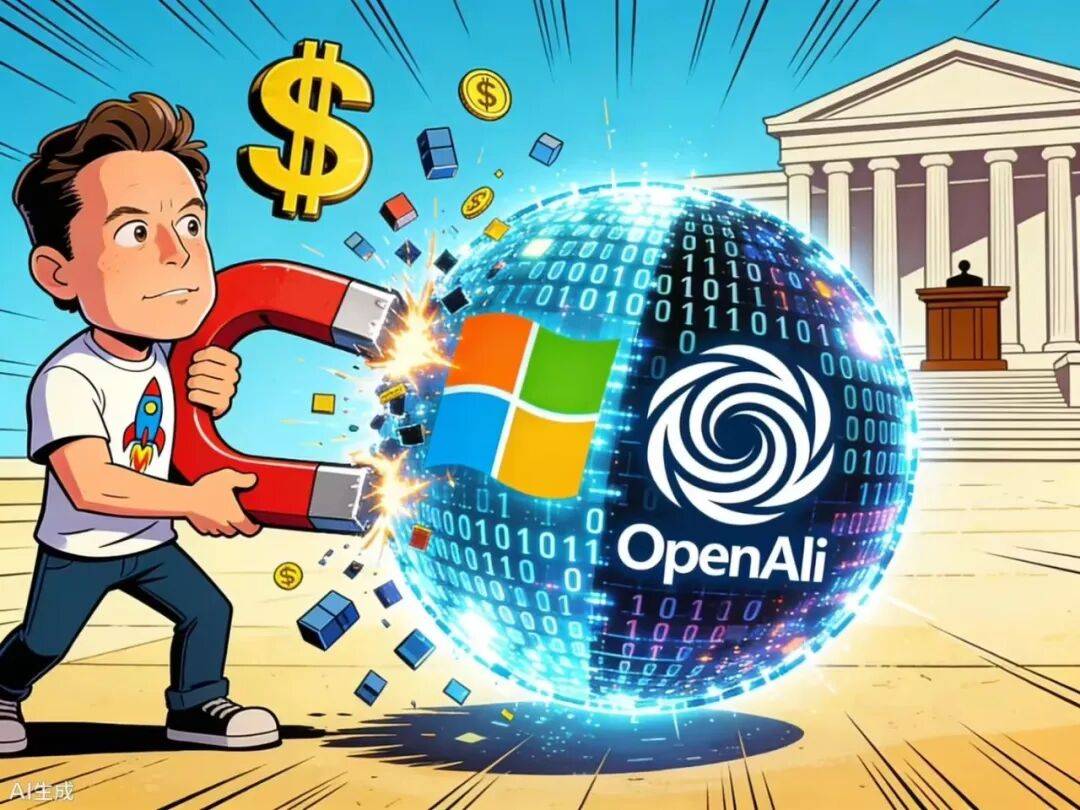
Group 1 - Elon Musk has filed a lawsuit against OpenAI and Microsoft, seeking damages between $79 billion and $134 billion, claiming that he contributed significantly to OpenAI's revenue during his involvement [1] - Musk asserts that OpenAI generated approximately $65.5 billion to $109.4 billion in revenue, while Microsoft earned about $13.3 billion to $25.1 billion from this collaboration [1] - The court proceedings for this case are expected to commence in April of this year [1] Group 2 - Lisa Jackson, Apple's head of environmental affairs, is set to retire after 13 years with the company, having played a key role in Apple's sustainability initiatives [2][4] - Jackson led Apple's Racial Equity and Justice Initiative, focusing on improving fairness in education, economic opportunities, and criminal justice [2] - OpenAI's Andrea Vallone, responsible for mental health safety research, has left the company to join Anthropic, highlighting ongoing challenges in addressing user mental health issues in AI interactions [3]



Technology Stocks To Consider – January 16th
Defense World· 2026-01-18 07:28
Group 1: Technology Stocks Overview - Seven technology stocks to watch include NVIDIA, Micron Technology, Apple, Alphabet, Microsoft, Palantir Technologies, and Advanced Micro Devices, identified by MarketBeat's stock screener tool [2] - Technology stocks are characterized as growth-oriented and higher-volatility holdings, influenced by innovation, product adoption, competitive dynamics, and regulatory changes [2] Group 2: Company Profiles - **NVIDIA**: Provides graphics, compute, and networking solutions globally, with offerings including GeForce GPUs for gaming, cloud-based visual computing, and automotive platforms [3] - **Micron Technology**: Designs and manufactures memory and storage products, operating through four segments: Compute and Networking, Mobile, Embedded, and Storage, offering high-speed data retrieval and non-volatile memory devices [4] - **Apple**: Designs and markets a range of consumer electronics including iPhones, Macs, iPads, and wearables, with a strong global presence [5] - **Alphabet**: Operates through segments like Google Services and Google Cloud, providing a variety of products including ads, Android, and YouTube [5] - **Microsoft**: Develops software and services, with offerings in productivity and business processes, including Microsoft 365 and Teams [6] - **Palantir Technologies**: Builds software platforms for commercial and government clients, focusing on operational systems [7] - **Advanced Micro Devices**: Operates in the semiconductor industry, offering microprocessors, GPUs, and embedded processors across various segments [8]





员工公开群“怒怼”追觅CEO?俞浩发声:专项整改!携程回应被立案调查;“死了么”APP征新名:谐音梗玩脱了?| Q资讯
Sou Hu Cai Jing· 2026-01-18 07:16
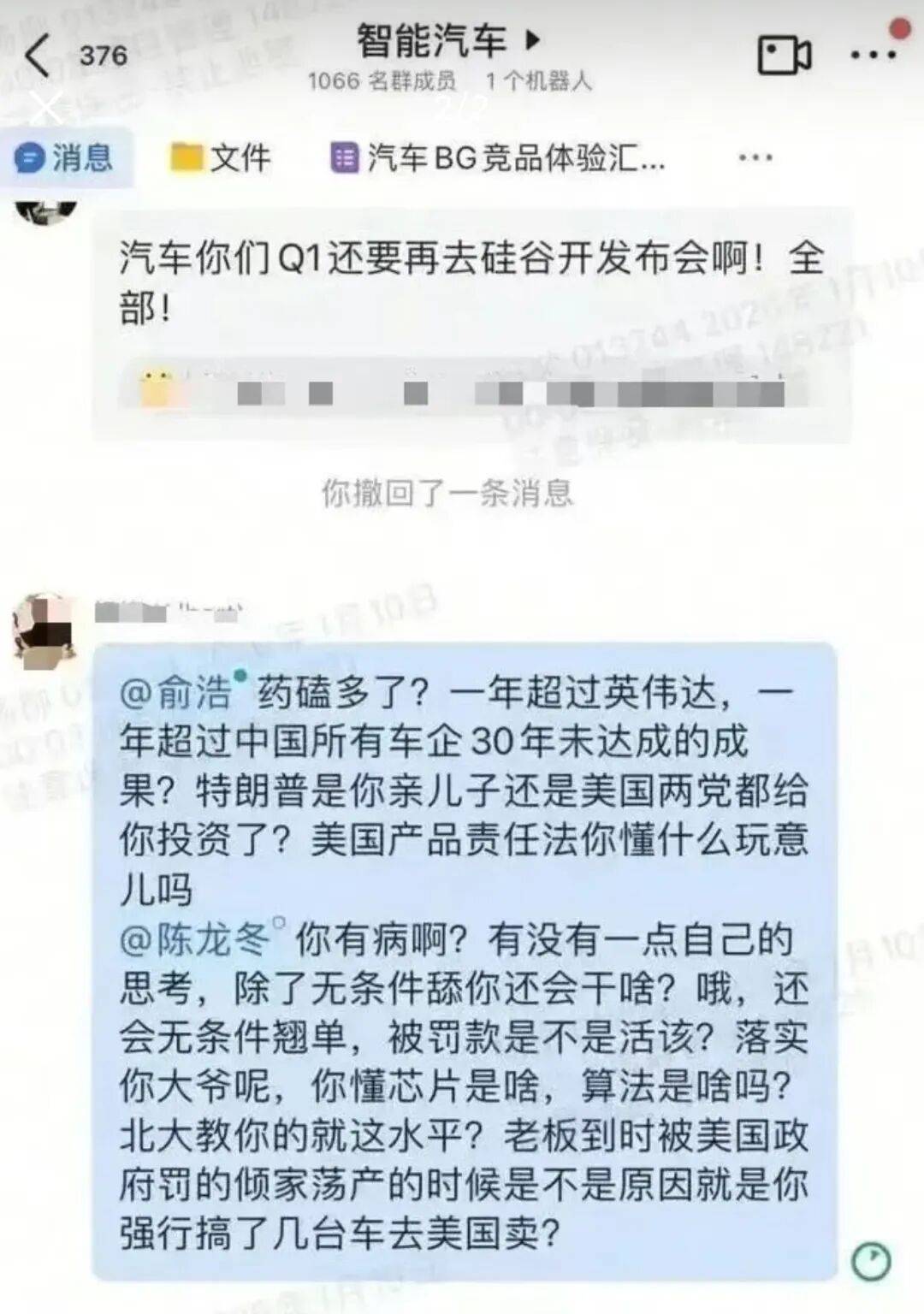
Group 1: Company Developments - The CEO of Chasing Technology, Yu Hao, aims to create the world's first company valued at one trillion dollars, expressing that this goal is not expected to be achieved within a year [1][2] - Ctrip announced it is under investigation by the State Administration for Market Regulation for suspected monopolistic behavior, stating that it will cooperate fully with the investigation while maintaining normal business operations [5] - Elon Musk is suing OpenAI and Microsoft for damages ranging from $79 billion to $134 billion, claiming that OpenAI has deviated from its non-profit mission and engaged in fraudulent activities [7] Group 2: Industry Trends - Google has filed an appeal against a court ruling that found it guilty of illegal monopoly in the search and search advertising sectors, which could delay regulatory measures requiring changes to its business model [9] - The "Dead or Alive" app is seeking a new Chinese name, inviting users to contribute ideas and offering a cash reward for the best suggestion [8][9] - OpenAI plans to test targeted advertising within the ChatGPT application, marking a significant shift in its revenue strategy ahead of a potential IPO [11] Group 3: Technological Innovations - The upcoming Spring Festival Gala will feature advanced AI technologies, including real-time scene adaptation and immersive experiences, showcasing the country's technological progress [10] - ByteDance is developing a new generation of AI headphones, which will be manufactured by GoerTek, indicating a strategic shift in its hardware approach [12] - Qianwen App has integrated with Alibaba's ecosystem, allowing users to perform various tasks through AI, highlighting the competitive landscape for AI service platforms [13]


马斯克向OpenAI和微软索赔1340亿美元
新浪财经· 2026-01-18 07:10
Group 1 - Elon Musk is seeking compensation between $79 billion and $134 billion from OpenAI and Microsoft, claiming fraud due to OpenAI's shift from its non-profit origins to a partnership with Microsoft [2] - Musk's legal documents state that he contributed $38 million in seed funding to OpenAI in 2015 and argues he is entitled to a significant portion of OpenAI's current valuation of $500 billion [2] - The compensation calculation includes both financial and non-monetary contributions Musk made to OpenAI, such as technical and business advice [2] Group 2 - OpenAI and Microsoft have denied the allegations, with OpenAI describing Musk's lawsuit as baseless and a form of harassment [3] - OpenAI has warned investors that Musk is likely to make sensational claims as the case progresses [3] - In October 2025, OpenAI announced a restructuring plan, granting Microsoft a 27% stake while maintaining control over its non-profit entity [3]
马斯克向OpenAI微软索赔千亿美元,奥特曼回怼/韩国「自研AI」被抓包用中国模型代码/机器人将再登春晚|Hunt Good 周报
Sou Hu Cai Jing· 2026-01-18 07:04
Group 1 - South Korea's initiative to develop a fully domestic AI model has faced controversy as three out of five finalists were found to have used foreign open-source code, including from China [1][3] - Upstage admitted to using elements from a Chinese open-source model, while other competitors like Naver and SK Telecom also acknowledged similarities with foreign technologies but claimed their core engines were independently developed [3][4] - The competition rules did not explicitly prohibit the use of foreign open-source code, raising questions about the integrity of the initiative [3] Group 2 - OpenAI has reportedly chosen to forgo a partnership with Apple to focus on developing its own AI hardware, which has implications for Apple's recent collaboration with Google [4][7] - The deal between Apple and Google could be worth tens of billions, with estimates suggesting it may add up to $5 billion in value for Google [4] - OpenAI's hardware ambitions may have influenced Apple's decision to partner with Google, as the latter has narrowed the gap with OpenAI in model capabilities [7] Group 3 - Elon Musk is suing OpenAI and Microsoft for damages ranging from $79 billion to $134 billion, claiming that OpenAI has deviated from its non-profit mission [8][10] - Musk's claims are based on an analysis suggesting he is entitled to a significant share of OpenAI's current valuation due to his initial investment of $38 million [8][10] - OpenAI has dismissed Musk's lawsuit as a form of harassment rather than a legitimate economic claim [11] Group 4 - Meta has announced significant layoffs, cutting approximately 1,500 jobs from its Reality Labs division and closing three VR game studios, indicating a shift in focus from the metaverse to AI wearable devices [16][18] - The Reality Labs division has incurred over $70 billion in losses since early 2021, prompting a budget reduction and a pivot towards mobile devices and AI glasses [18] - Meta's collaboration with EssilorLuxottica on Ray-Ban AI smart glasses has exceeded expectations, with plans to double production capacity by the end of the year [18] Group 5 - AI-native startups have seen their annualized revenue double in just seven months, reaching over $30 billion, although OpenAI and Anthropic dominate the market, capturing nearly 85% of the revenue [19][22] - Despite the revenue growth, many AI startups are burning over $20 billion annually, raising concerns about their long-term viability [19][23] - Some successful applications, like Suno and Cognition, have surpassed $1 billion in annualized revenue, but they face increasing competition from model providers like OpenAI and Anthropic [22][23] Group 6 - Neuralink's first human subject reported that the brain chip can be updated wirelessly, marking a significant advancement in brain-computer interface technology [25][26] - The device can evolve through cloud updates, enhancing performance without the need for surgical intervention, and may allow for dual-chip implantation in the future [26] - Approximately 20 patients have undergone the brain-machine surgery, with a significant number waiting for the procedure [26] Group 7 - Zhizhu's GLM-Image model has topped the Hugging Face Trending chart, marking a breakthrough for domestically developed AI models trained entirely on Chinese chips [27] - The model showcases the feasibility of training state-of-the-art models using domestic computing power and has demonstrated superior performance in specific tasks [27] - GLM-Image is now available for public use on various platforms, highlighting advancements in China's AI capabilities [27][28]

Microsoft Corporation (MSFT) Seen with 37% Upside as Goldman Highlights AI and Cloud Leadership
Insider Monkey· 2026-01-18 05:53
Core Insights - Artificial intelligence (AI) is identified as the greatest investment opportunity of the current era, with a strong emphasis on the urgency to invest now [1][13] - The energy demands of AI technologies are highlighted, with data centers consuming as much energy as small cities, leading to concerns about power grid strain and rising electricity prices [2][3] Investment Opportunity - A specific company is presented as a critical player in the AI energy sector, owning essential energy infrastructure assets that are poised to benefit from the increasing energy demands of AI [3][7] - This company is described as a "toll booth" operator in the AI energy boom, collecting fees from energy exports and positioned to capitalize on the onshoring trend driven by tariffs [5][6] Financial Position - The company is noted for being debt-free and holding a significant cash reserve, amounting to nearly one-third of its market capitalization, which provides a strong financial foundation [8][10] - It also has a substantial equity stake in another AI-related venture, offering investors indirect exposure to multiple growth opportunities without the associated premium costs [9] Market Trends - The article discusses the broader trends of AI, energy, tariffs, and onshoring, emphasizing the interconnectedness of these sectors and the company's strategic positioning within them [6][14] - The influx of talent into the AI sector is mentioned, indicating a continuous stream of innovation and advancements that will drive future growth [12] Future Outlook - The potential for significant returns is highlighted, with projections suggesting a possible 100% return within 12 to 24 months for investors who act quickly [15][19] - The narrative encourages investors to engage with the AI revolution, framing it as not just a financial opportunity but also a chance to be part of a transformative technological shift [11][15]
被员工怒怼“磕了”,追觅CEO:我有肚量;AI恋人陪聊涉黄被判刑,2.4万人付费;马斯克、奥特曼又开撕|AI周报
AI前线· 2026-01-18 05:32
Group 1: AI-related Legal Issues - The first criminal case involving AI-related obscenity in China was brought to trial, with the accused facing charges for providing chat services through the AlienChat software, which had 116,000 users, including 24,000 paying members, generating over 3 million yuan in revenue [3][4]. - The court found that out of 12,495 chat segments sampled from paying users, 3,618 segments were deemed obscene, leading to convictions for the founders [4]. Group 2: Corporate Developments in Technology - Pursuing a goal to create the world's first trillion-dollar company, the CEO of Chasing Technology, Yu Hao, stated that achieving this target is not expected within a year, despite facing internal criticism from employees regarding ambitious strategic goals [5][6][7]. - Ctrip is under investigation for alleged monopolistic practices, with the company confirming it will cooperate with regulatory authorities [10][11]. - The "Dead or Not" app, previously renamed "Demumu," is seeking a new brand name after feedback indicated the original name was considered inauspicious [12]. Group 3: Semiconductor and Tariff Changes - The U.S. government announced a 25% tariff on certain imported semiconductors and related products, effective January 15, 2026, as part of ongoing trade policy adjustments [14][15]. Group 4: Talent Movements in AI - Chen Lijie, a notable figure from Tsinghua University's Yao Class, has joined OpenAI to focus on mathematical reasoning, alongside the return of former OpenAI executives [16][18]. Group 5: Legal Actions and Financial Claims - Elon Musk is suing OpenAI and Microsoft for up to $134 billion, claiming that OpenAI has deviated from its non-profit mission and misled him regarding its financial dealings [19][20]. - OpenAI has characterized Musk's lawsuit as part of a pattern of harassment rather than a legitimate economic claim [20]. Group 6: AI Infrastructure and Innovations - Elon Musk announced the operational status of the "Colossus 2" supercomputer, which is designed to support the Grok AI chatbot, with plans for further upgrades [24][25]. - Meta is launching a new infrastructure initiative called "Meta Compute" to enhance its AI capabilities, while also planning to cut about 10% of jobs in its Reality Labs division [26][27]. Group 7: New AI Models and Technologies - Baichuan Intelligence released a new medical AI model, Baichuan-M3, which outperformed GPT-5.2 in various assessments, showcasing advanced diagnostic capabilities [39]. - Tencent's WeDLM model aims to improve inference efficiency in AI applications, addressing traditional limitations in model performance [35].


9300亿元!马斯克索赔!
Zheng Quan Shi Bao· 2026-01-18 04:46
(原标题:9300亿元!马斯克索赔!) OpenAI和微软均否认马斯克的相关指控。 从理念分歧到法庭对峙,美国企业家马斯克正将昔日亲手参与创立的OpenAI及其核心伙伴微软推向被 告席——他以"欺诈"为由索赔790亿美元至1340亿美元(约合人民币5505亿元—9338亿元)。 理由是OpenAI背弃了其非营利初衷、转而与微软合作,从而对他构成欺诈。 5000亿美元估值的背叛? 根据周五(1月16日)提交至美国联邦法院的一份文件,马斯克在诉状中称,自2015年联合创立OpenAI 以来,他不仅提供了约3800万美元资金,占早期种子融资的60%,还在组织搭建、关键人才招募、战略 方向以及对外公信力方面发挥了决定性作用。因此有权获得OpenAI当前5000亿美元估值中的一大部 分。 马斯克的首席律师Steven Molo表示:"没有埃隆?马斯克,就没有如今的OpenAI。他不仅提供了绝大部 分种子资金,还凭借个人声誉为公司背书,并毫无保留地向团队传授了企业规模化运营的经验。" 文件援引其专家证人、金融经济学家C.Paul Wazzan的评估称,OpenAI因马斯克的综合性贡献,获得的 经济价值在655亿美元至10 ...
9300亿元!马斯克索赔!
证券时报· 2026-01-18 04:26
从理念分歧到法庭对峙,美国企业家马斯克正将昔日亲手参与创立的OpenAI及其核心伙伴微软推向被告席——他以"欺诈"为由索赔790亿美元至1340 亿美元(约合人民币5505亿元—9338亿元)。 理由是 OpenAI 背弃了其非营利初衷、转而与微软合作,从而对他构成欺诈。 马斯克 方面强调,这并非普通投资回报争议,而是在 OpenAI 背离非营利使命、向营利性结构转型后,对原始贡献价值的"制度性攫取"。 值得注意的是,这场诉讼背后藏着行业竞争暗线:马斯克于 2018 年退出 OpenAI 董事会, 2023 年创办竞品公司 xAI ,如今正与 OpenAI 的 ChatGPT 展开直接对抗。 另外, 估值 5000 亿美元的 OpenAI 正推进 IPO 计划 。 5000 亿美元估值的背叛? 根据周五(1月16日)提交至美国联邦法院的一份文件, 马斯克 在诉状中称,自 2015 年联合创立 OpenAI 以来,他不仅提供了约 3800 万美元资金,占早期种子融资的 60% ,还在组织搭建、关键人才招募、战略方向以及对外公信力方面发挥了决定性作用。 因此有权获得 OpenAI 当前 5000 亿美元估值中的一 ...
马斯克,索赔9300亿元
Sou Hu Cai Jing· 2026-01-18 04:23
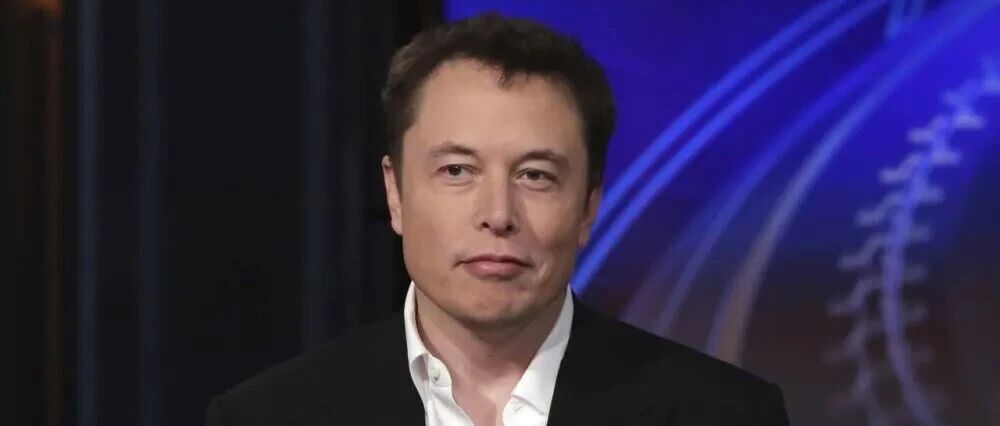
据环球时报援引美国彭博社、路透社当地时间1月17日报道,美国亿万富翁埃隆·马斯克(以下简称"马 斯克")要求美国开放人工智能研究中心(OpenAI)和微软公司向其支付790亿至1340亿美元的赔偿, 理由是OpenAI背弃了其非营利初衷、转而与微软合作,从而对他构成欺诈。 彭博社称,马斯克的律师16日在法庭文件中详细说明了这一赔偿请求。 该文件援引金融经济学家、专家证人保罗·瓦赞的估算称,马斯克在2015年协助创立OpenAI时,向其捐 赠了3800万美元种子资金,却遭到欺诈,因此有权获得OpenAI当前5000亿美元估值中的一大部分。 编辑:曹諵 审核:知晏 报道称,该文件显示,专家证人瓦赞在计算赔偿金额时,将马斯克对OpenAI的财务及非金钱贡献一并 纳入考量,包括其提供的技术和商业建议。 瓦赞的估值方法综合考量了马斯克对OpenAI的财务支持与非财务贡献(包括技术与商业建议),最终 计算出不当收益范围在655亿至1094.3亿美元(OpenAI)及133亿至250.6亿美元(微软)。文件同时显 示,马斯克还计划进一步主张惩罚性赔偿。 马斯克于2018 年退出 OpenAI 董事会,并在 2023 年成立 ...